What appears to be diplomacy is underway regarding the Iran war. President Trump has paused his threatened US strikes on Iranian energy infrastructure for five days, citing what he calls “Very good and productive conversations.” Pakistan’s army chief has spoken directly with Trump. Senior Pakistani officials are backchanneling between Tehran and Trump envoy Steve Witkoff, with Islamabad potentially hosting direct US-Iranian talks. Turkish Foreign Minister Hakan Fidan is working the phones across the region, and Washington has even floated negotiations between Vice President J.D. Vance and Parliament Speaker Mohammad-Bagher Ghalibaf, with Turkey as intermediary.
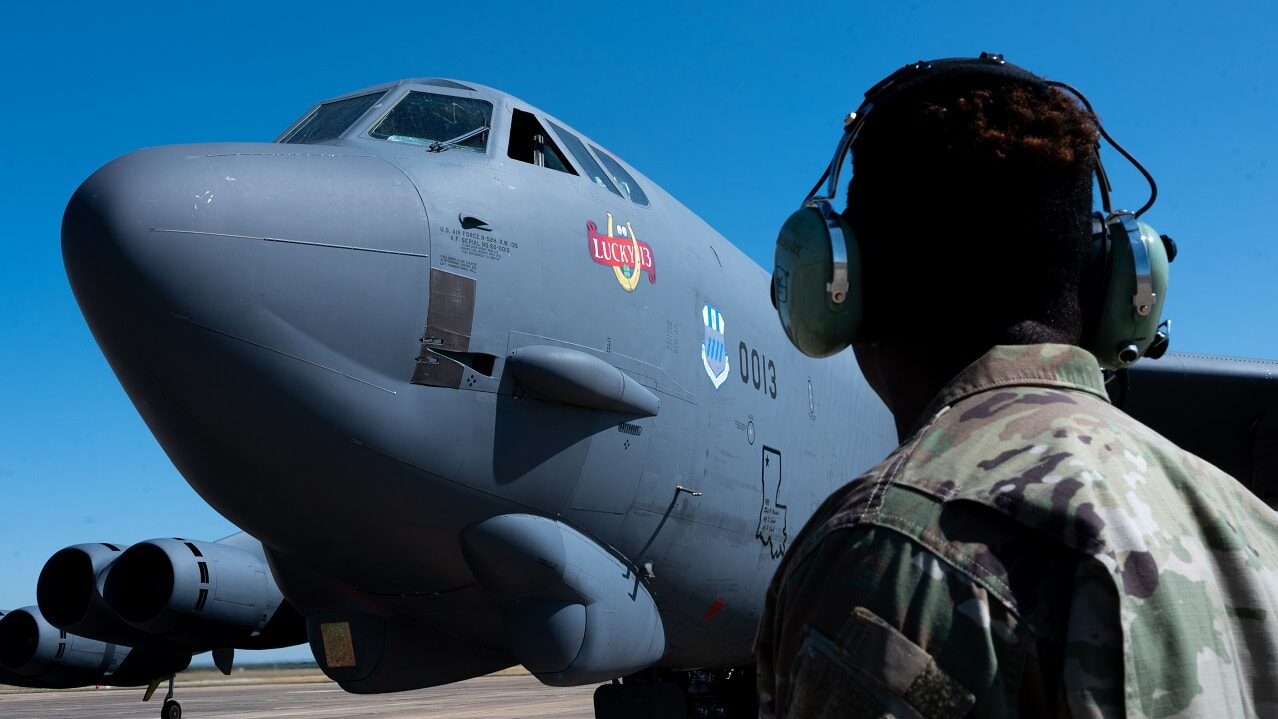
A U.S. Air Force maintainer conducts a visual inspection of a B-52H Stratofortress at Morón Air Base, Spain in support of Bomber Task Force 21-3, May 24, 2021. Strategic bomber missions enhance the readiness and training necessary to respond to any potential crisis or challenge across the globe. (U.S. Air Force photo by Staff Sgt. Jason Allred)
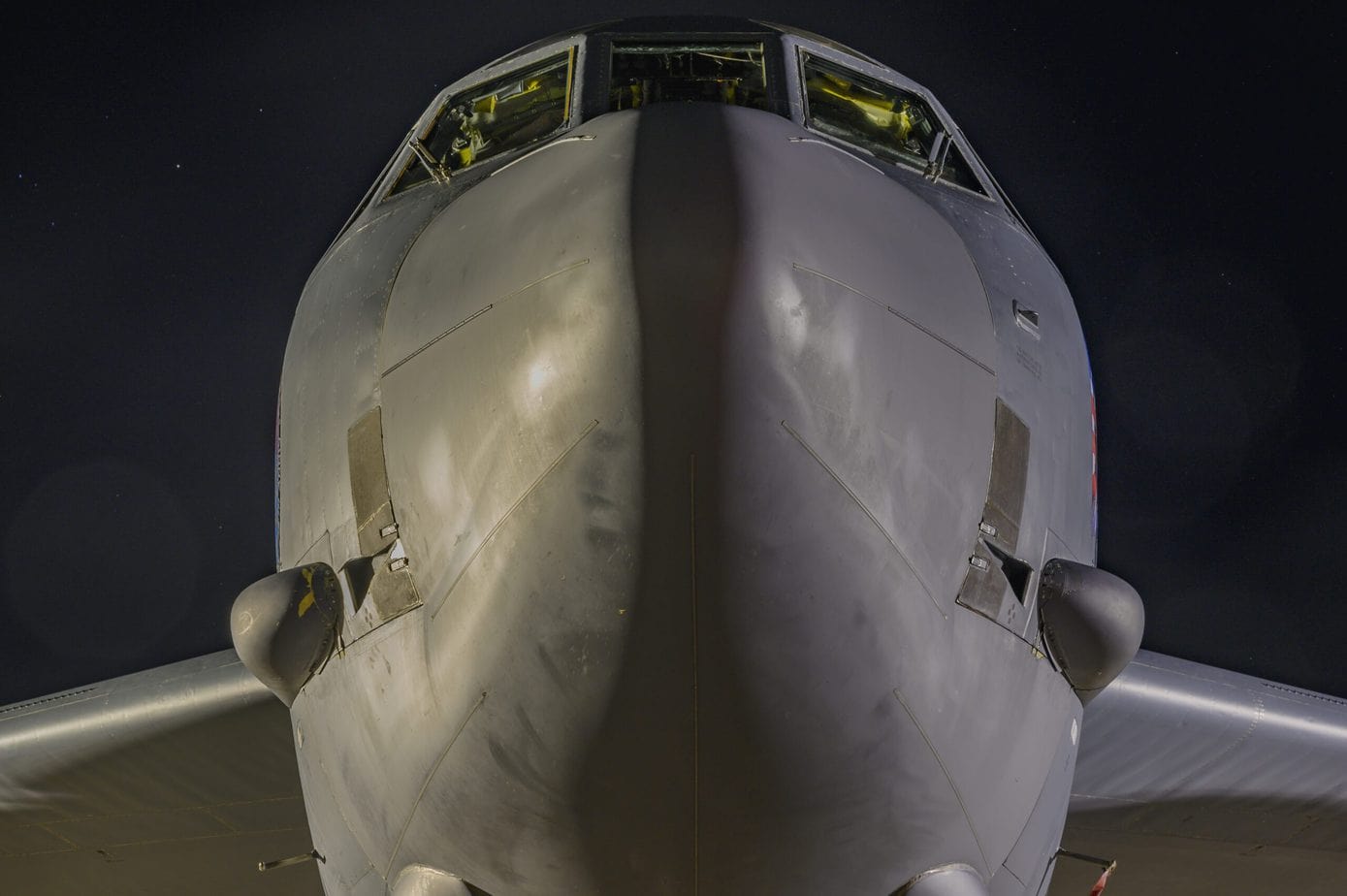
A U.S. Air Force B-52 Stratofortress assigned to Barksdale Air Force Base, La., is prepared for a Mark-82 munitions load, in support of a Bomber Task Force deployment, Feb. 1, 2020, at Andersen Air Force Base, Guam. The bomber deployment underscores the U.S. military’s commitment to regional security and demonstrates a unique ability to rapidly deploy on short notice. (U.S. Air Force photo by Senior Airman Jacob M. Thompson)
Backchannelling Talks on Iran War
And yet Abbas Araghchi, Iran’s Foreign Minister, has flatly denied that any ceasefire talks are happening. The Strait of Hormuz stays closed. Ghalibaf has also denied that any negotiations are taking place.
The problem is not the desperation to end the war. As I argued in Small Wars Journal and Afkar, Pakistan is caught in a three-way commitment trap: it cannot fully back Iran without alienating its Gulf partners and Washington, and it cannot abandon Iran without catastrophic domestic and economic consequences. It shares a land border with Iran, has the world’s second-largest Shia Muslim population, and officials say the country will run out of liquefied natural gas by April without further deliveries. Turkey faces a structurally similar bind. Both countries are genuinely desperate. Desperation, however, is not leverage.
Desperation is Not a Peacemaker
Some analysts would argue that this desperation is precisely what makes Pakistan and Turkey credible mediators. There is something to that. In earlier scholarship examining the Peace of Westphalia, I argued that biased or interested-party mediators can be effective precisely because they have a vested interest in the success of a settlement — unlike neutral mediators, who can walk away. The Westphalia precedent suggests that skin in the game can translate into the sustained commitment needed to make a deal stick.
But that argument depends on conditions that are absent here. At Westphalia, biased mediators had the leverage, longevity, and authority to enforce what they brokered. Pakistan and Turkey have the desperation without the enforcement capacity. Neither can compel Israel to comply with any deal. Fidan himself has said plainly that “Israel does not want peace,” and Ankara’s own insiders are privately pessimistic that any arrangement can survive Israeli pressure.
Mediation Without the Ability to Enforce
The broader mediation literature reinforces the concern. Kyle Beardsley’s foundational The Mediation Dilemma (Cornell University Press, 2011) finds that when mediators enter under pressure, with significant stakes on all sides, among parties who cannot afford to wait, the result tends to be agreements that paper over unresolved differences rather than resolve them. What makes the current situation especially fraught is not one mediator but a crowded field (Pakistan, Turkey, and the Gulf states), each with competing interests. Multiple mediators, the research finds, tend to perform poorly in securing durable peace.
Iran’s demands compound the problem. Tehran reportedly wants guarantees against future strikes and compensation for war damages. Washington can potentially offer financial relief. It recently freed up roughly $14 billion in Iranian oil trade by lifting sanctions on 140 million barrels. Sanctions that were reimposed after the JCPOA was ripped up will have to be removed. Furthermore, a credible, durable guarantee against future Israeli or American military action is something neither Pakistan nor Turkey can deliver. Without it, any ceasefire leaves Iran’s core security concerns intact and its incentive to reopen hostilities very much alive.
None of this means the current diplomatic scramble is worthless. A pause, even a fragile one, stops continued escalation and buys time. If it holds long enough, a more durable arrangement may become possible.
But policymakers should be clear-eyed about what “success” in the next five days would actually mean, beyond stabilizing the markets. A handshake in Ankara or a joint communiqué from Islamabad would be a precarious beginning. The conditions that allow even biased, interested-party mediators to succeed are absent: no single mediator has an enforcement capacity, and they face a potential spoiler with the ability to project air power across the region.
Washington should welcome any breathing room. But it should not confuse a temporary pause with a solution.
About the Author: Albert B. Wolf
Albert B Wolf is a global fellow at Habib University. He has acted as a consultant on US foreign policy in the Middle East for three US presidential campaigns.