Summary and Key Points: As of March 21, 2026, the Strait of Hormuz has become the primary laboratory for the U.S. Navy’s most advanced Mine Countermeasures (MCM) “kill web” in the Iran war.
-In the context of Operation Epic Fury, the challenge isn’t just the lethality of Iranian mines, but their ability to deny strategic access.

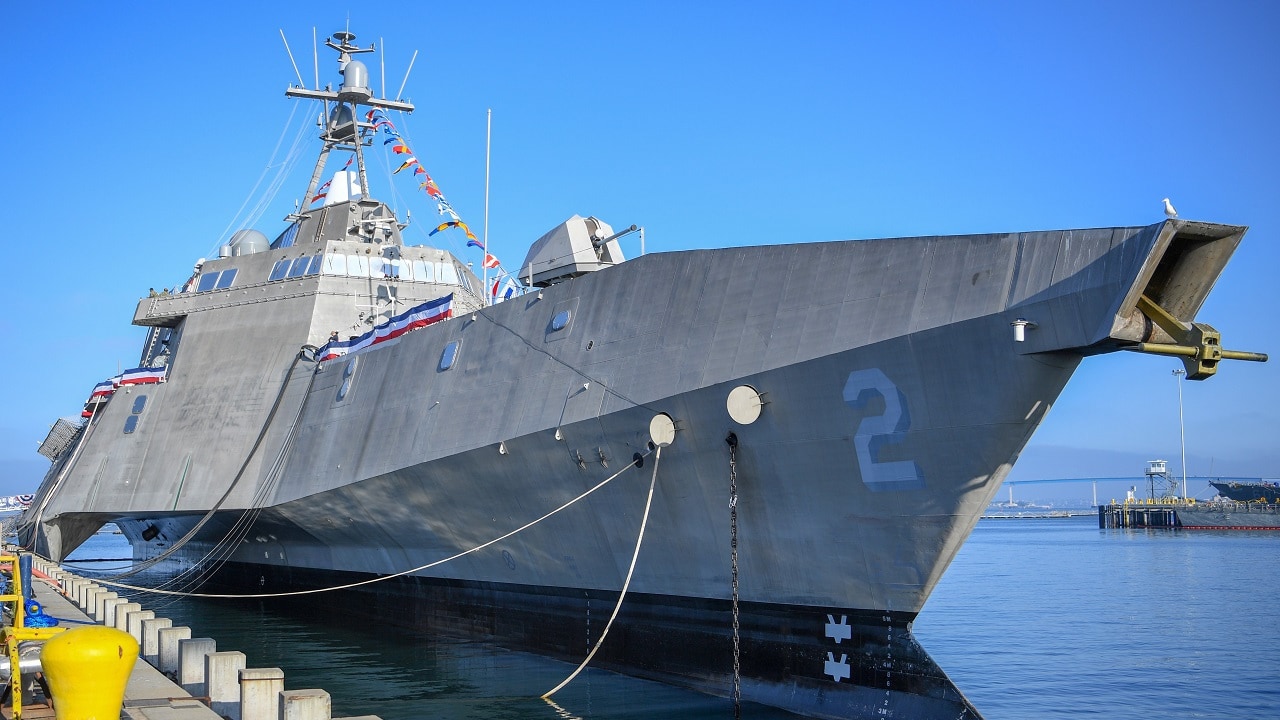
Littoral Combat Ship from Fleet Week 2025. Image Credit: Stephen Silver/19FortyFive.com

USS Billings Littoral Combat Ship 2025 Fleet Week. Image by Stephen Silver for 19FortyFive.com
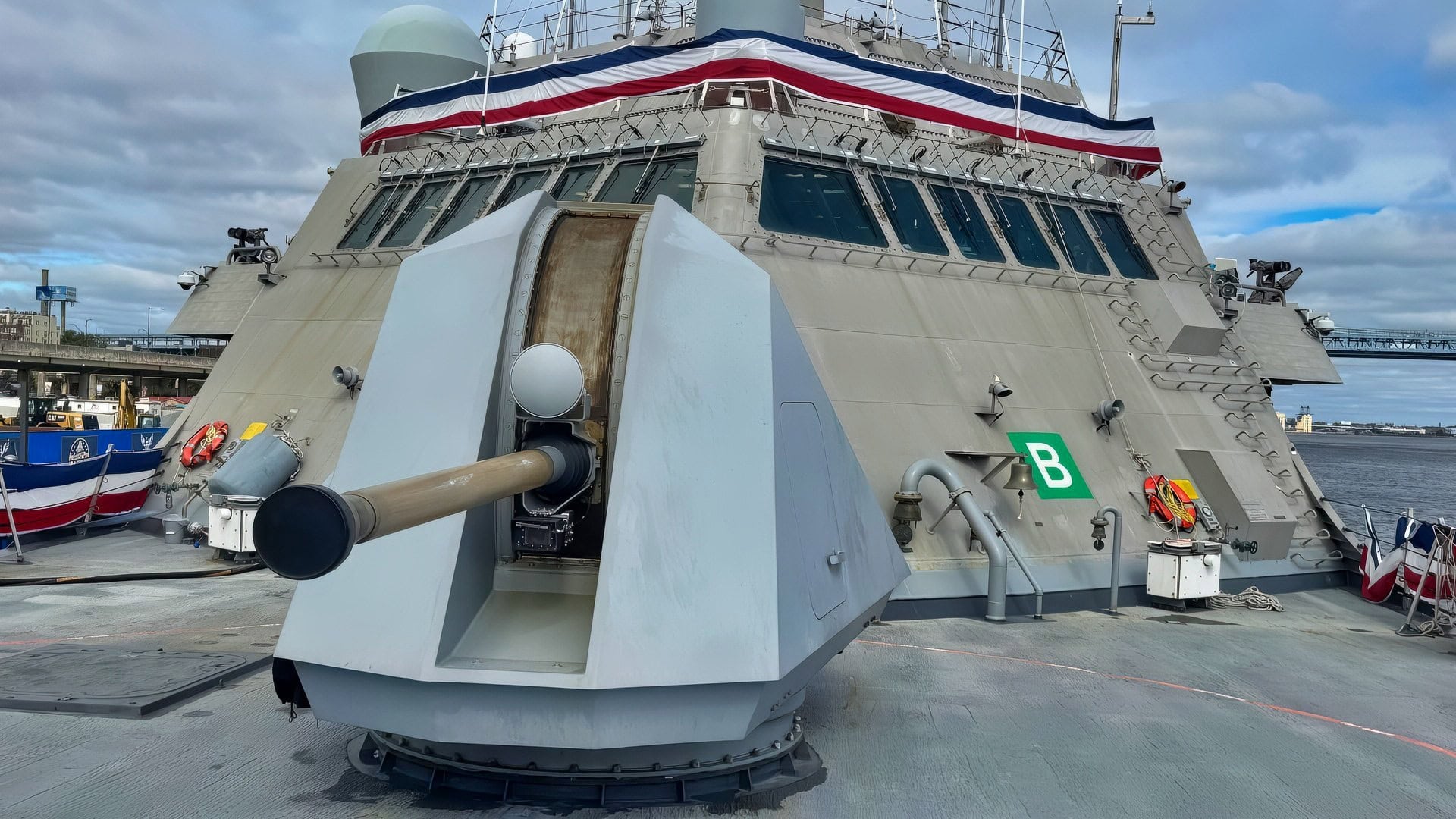
Littoral Combat Ship USS Cooperstown. Image Credit: 19FortyFive.com
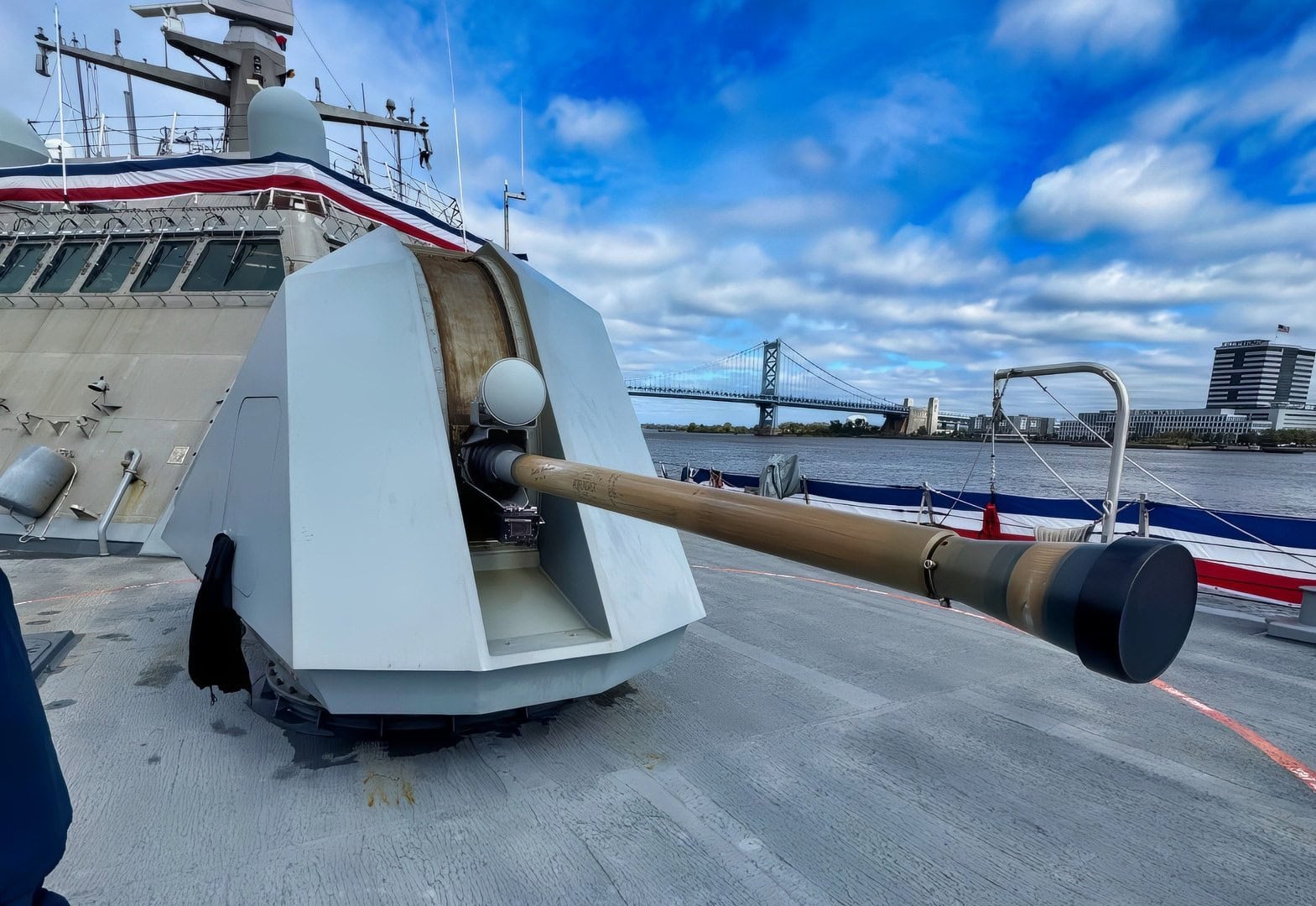
Littoral Combat Ship Deck Gun U.S. Navy. Image Credit: 19FortyFive.com
-By utilizing a multi-layered approach—combining MH-60S-mounted ALMDS lasers, AQS-20C sonar cylinders, and the Barracuda semiautonomous neutralizer—the Navy is transitioning from slow, “man-in-the-minefield” sweeps to high-speed, autonomous clearance.
-This ensures that the combined Navy-Marine Corps force can project power without being stalled by the “asymmetric threat” of underwater explosives.
Lasers in the Strait of Hormuz: How ALMDS Technology is Clearing the Path to Iran
The U.S. military employs numerous mine countermeasure (MCM) methods, including helicopter-mounted lasers, undersea drones, and high-speed surface vessels equipped with advanced sonar. These tools could prove necessary during the conflict against Iran.
Undersea mines have been a threat in the Strait of Hormuz for many years, but the war with Iran makes them a leading concern for the Pentagon. If the United States sends a combined Navy-Marine Corps force to secure the strait, the U.S. Navy will need to counter drone swarms, small boats, and Iranian sea mines.
Mines may linger just beneath the surface or rest at the bottom of the ocean, set to detonate in response to underwater sound waves.
Mines are as ubiquitous as they are dangerous. They are often cheap for adversaries to acquire, yet increasingly sophisticated and proliferating at a worrisome rate. While mines can, of course, cause casualties, destroy ships, and present real kinetic threats, they may also simply deny access to a sensitive area by making the price of entry too high for manned vessels.
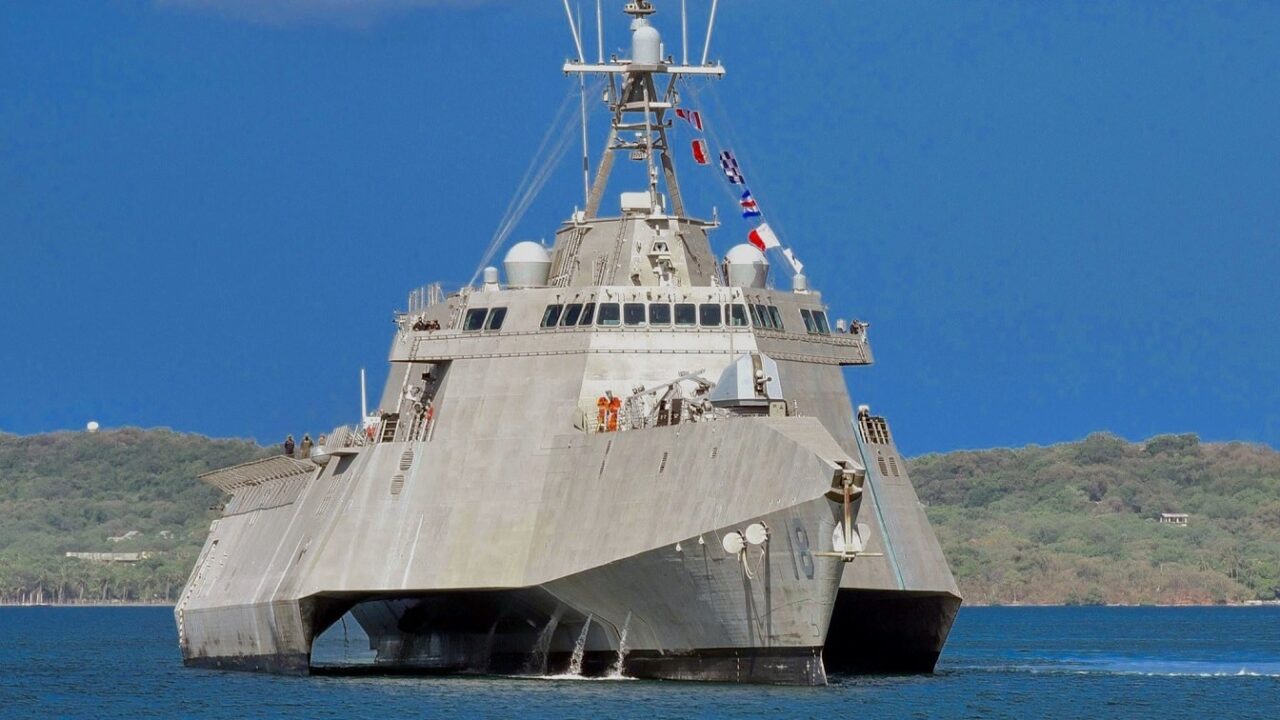
Littoral Combat Ship. Image Credit: US Navy.
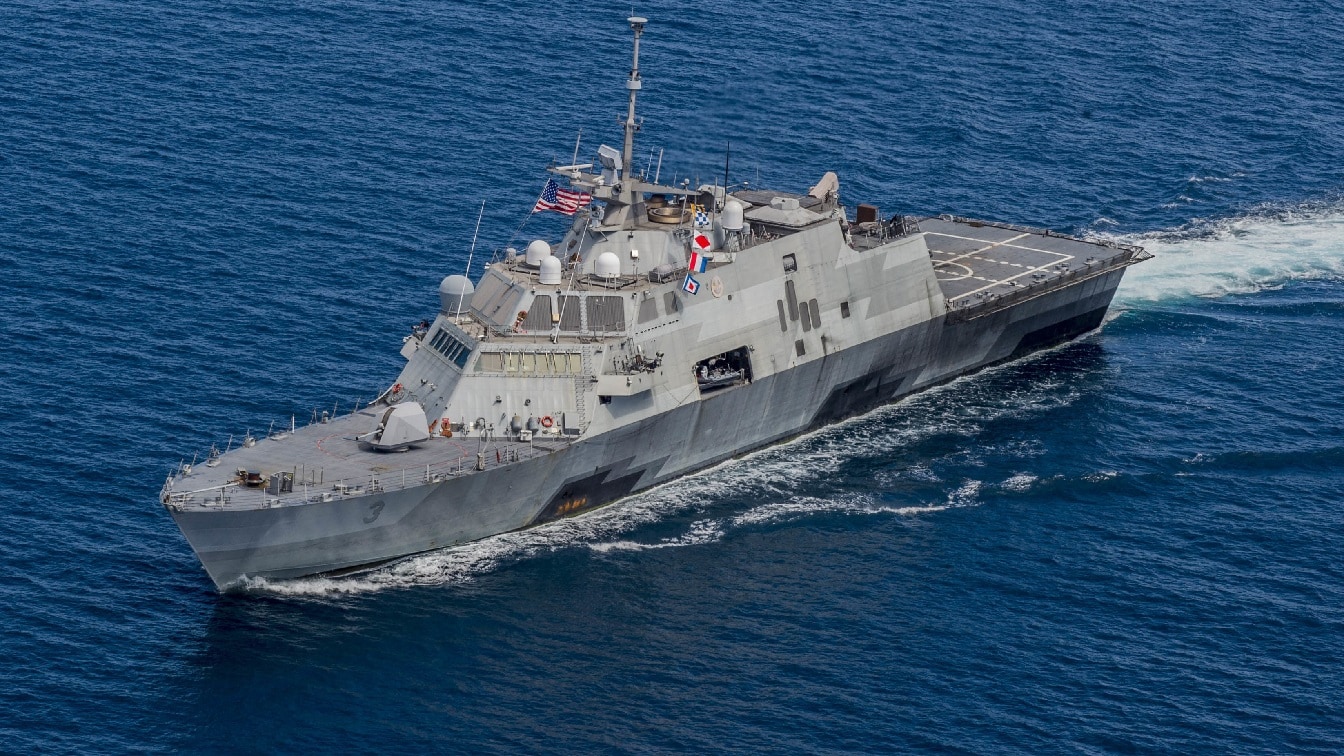
(Aug. 19, 2015) The littoral combat ship USS Fort Worth (LCS 3) assembles in formation with ships from the Royal Malaysian Navy as part of Cooperation Afloat Readiness and Training (CARAT) Malaysia 2015. CARAT is an annual, bilateral exercise series with the U.S. Navy, U.S. Marine Corps and the armed forces of nine partner nations. (U.S. Navy photo by Mass Communication Specialist 2nd Class Joe Bishop/Released)
Drone Boats & Sonar
It may seem almost too obvious to mention the growing importance of drones, sensors, and unmanned boats in finding or neutralizing enemy mines.
In recent years, the Navy has fast-tracked a growing suite of AI-enabled, high-tech multidomain mine countermeasures, including laser sensors that scan the top portions of the water column; small semi-autonomous mine-hunting drones such as Raytheon’s Barracuda; or side-scanning towed synthetic-aperture sonar lowered beneath highly maneuverable groups of unmanned boats that send data to a manned host ship.
Naval Sea Systems Command has also been working with industry for years to develop, assess, and analyze mine-neutralization technologies for its high-speed drone boat, the Mine Countermeasures Unmanned Surface Vehicle.
This multi-mission surface drone counter-mine platform is designed to autonomously hunt and destroy mines using sonar.
As a result, the current exploration of mine-neutralization technology is happening alongside the ongoing integration of advanced sonar mine-hunting payloads onto the USV, such as the AQS-20 and AQS-24.
Mine-Hunting Drones
When networked together, manned boats performing command and control can oversee a semiautonomous mine detection and destruction process during which a lowered sonar system, such as the AN/AQS-20C, can work in tandem with the Barracuda to find, identify, and wirelessly detonate mines.
The AQS-20 is a submersible, cylinder-like system with four built-in sonars to detect mines from the “sea-floor to the near surface in a single pass,” according to Raytheon data. It operates with side-scanning synthetic aperture sonars, a “wide-band” forward-looking sonar, and a “digital gap” filler sonar to survey mines underneath. Using acoustic ID technology, the AQS-20 generates a high-resolution rendering of an object using advanced automatic target recognition.
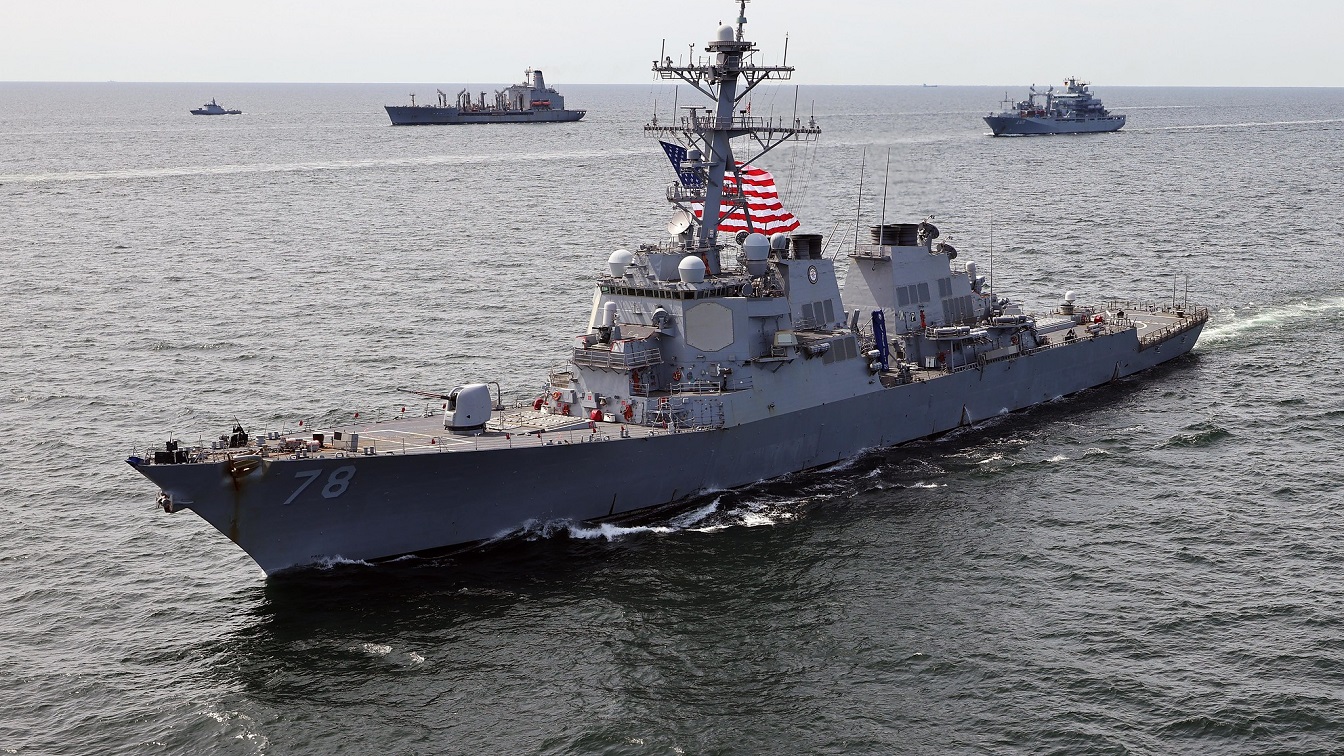
BALTIC SEA (June 6, 2022) The Arleigh Burke-class guided-missile destroyer USS Porter (DDG 78) sails in formation in the Baltic Sea, June 6, 2022, during exercise BALTOPS22. BALTOPS 22 is the premier maritime-focused exercise in the Baltic Region. The exercise, led by U.S. Naval Forces Europe-Africa, and executed by Naval Striking and Support Forces NATO, provides a unique training opportunity to strengthen combined response capabilities critical to preserving freedom of navigation and security in the Baltic Sea. (U.S. Navy photo) 220606-N-NO901-3008
As communications and networking technologies continue to evolve rapidly, drones will increasingly be able to operate across air, sea, land, and undersea domains.
A human at a control station, using a low-bandwidth connection, can perform command and control functions without needing to drive the vessels.
Thanks to algorithms governing autonomous maritime navigation, USVs can respond more effectively to their surroundings while in transit. Small, high-tech autonomy kits can be integrated onto unmanned surface vessels.
The kits, called Control Architecture for Robotic Agent Command and Sensing, or CARACaS, are engineered to provide USVs with the ability to handle dynamic operational situations. These can include executing search patterns, deploying harbor defenses, conducting surveillance, or even conducting swarm boat attacks.
Laser Mine Detection
The Navy can also deploy an MH-60S-mounted laser system to scan and detect underwater mines. This now-operational technology, called the Airborne Laser Mine Detection System (ALMDS), enables efficient, high-speed shallow-water mine detection for the Navy’s littoral combat ships (LCSs) and other helicopter-launching vessels, such as amphibious assault ships.
Instead of using more narrowly configured mechanized or towed mine-detection systems, ALMDS massively expands the surface area over which mine detection occurs. Naturally, this enables shallow-water warships such as the LCS to have a much safer sphere of operations, as commanders will have much greater advanced warning of mine-cluttered areas.
The ALMDS pod is mechanically attached to the MH-60S via a standard Bomb Rack Unit 14 mount and electrically via primary and auxiliary umbilical cables to the operator console, according to a statement from the systems maker, Northrop Grumman.
The company explains that the system does not use bombs but instead flies at a specific altitude and speed to emit laser beams at a set rate. Cameras beneath the helicopter capture reflections from the water, which are then processed to create images.
The camera or receiver on the helicopter is called a Streak Tube Imaging LIDAR (STIL). The laser is emitted in a fan pattern, and the returning photons are converted into electrons, creating a camera-like image. Northrop writes that ALMDS provides accurate target geolocation to support the neutralization of detected mines.
Counter-Mine Laser Research
Some of the technical details of the ALMDS system are further delineated in a research paper written by Arete Associates, a science and technology consulting firm with a history of supporting entities such as the Office of Naval Research and the Air Force.
“A high resolution 3-D image of the scene is produced from multiple sequential frames formed by repetitively pulsing the laser in synchrony with the CCD (Charge Coupled Device) frame rate as an airborne platform, “push broom” scans or as a single-axis scanner on a ground-based platform scans the laser fan beam over the scene,” the Arete Associates essay explains. “The backscattered light from the objects and the terrain intersecting the fan beam is imaged by a lens.”
STIL technology has been operational with ALMDS for only recently, but it has been under development as a maritime surveillance system for many years. A 2003 study from the Naval Surface Warfare Center states that “pulsed light” emitted by a three-dimensional electro-optic sensor STIL system can “identify objects of interest on the ocean bottom.”
The Arete essay adds that STIL technology is also being tested for use as a “missile seeker” by weapons and as a sensor system for Air Force C-130 aircraft.
About the Author: Kris Osborn
Kris Osborn is the Military Technology Editor of 19FortyFive and President of Warrior Maven – Center for Military Modernization. Osborn previously served at the Pentagon as a Highly Qualified Expert with the Office of the Assistant Secretary of the Army—Acquisition, Logistics & Technology. Osborn has also worked as an anchor and on-air military specialist at national TV networks. He has appeared as a guest military expert on Fox News, MSNBC, The Military Channel, and The History Channel. He also has a Master’s Degree in Comparative Literature from Columbia University.