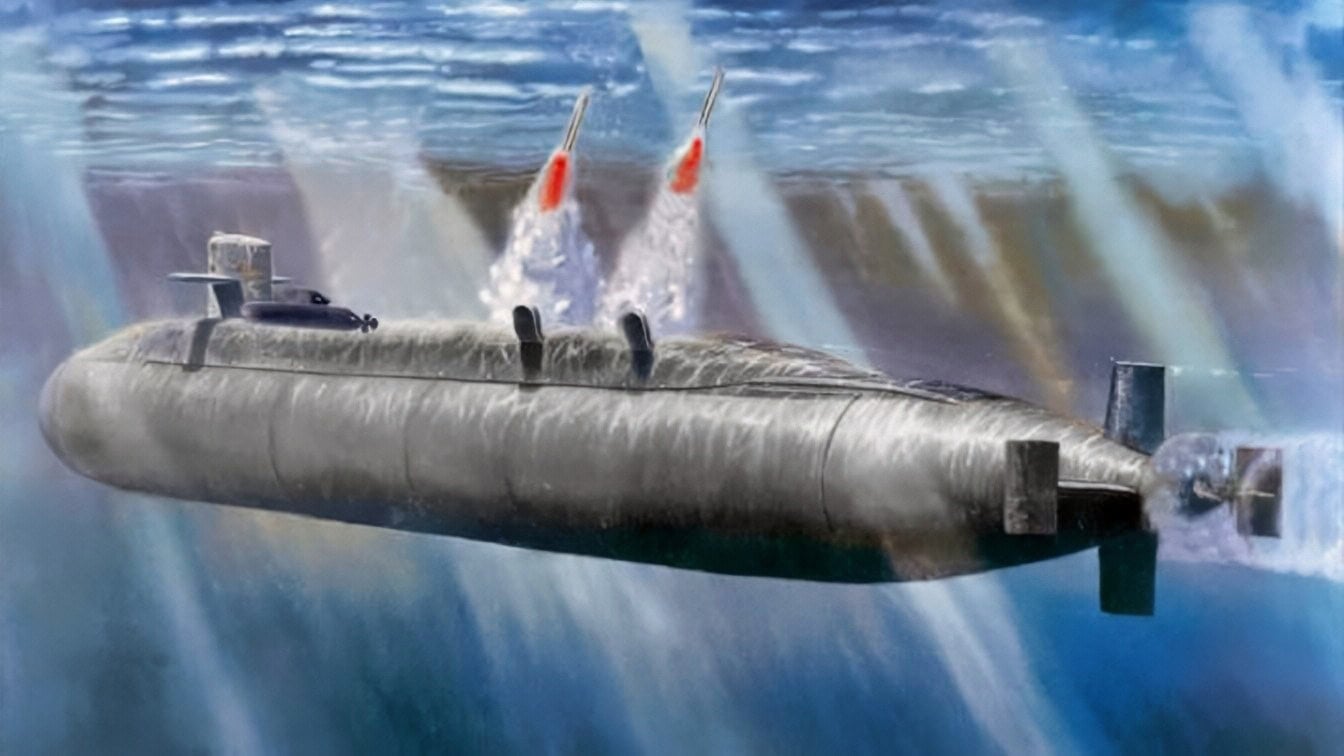
Summary and Key Points: Defense journalist Caleb Larson reports that the U.S. Navy has launched 319 Tomahawk missiles during Operation Epic Fury, consuming approximately 10% of its total inventory.
-Unlike mass-produced munitions, the Tomahawk is a “semiautonomous aircraft” with complex turbofan engines and TERCOM guidance systems, making rapid replenishment nearly impossible.
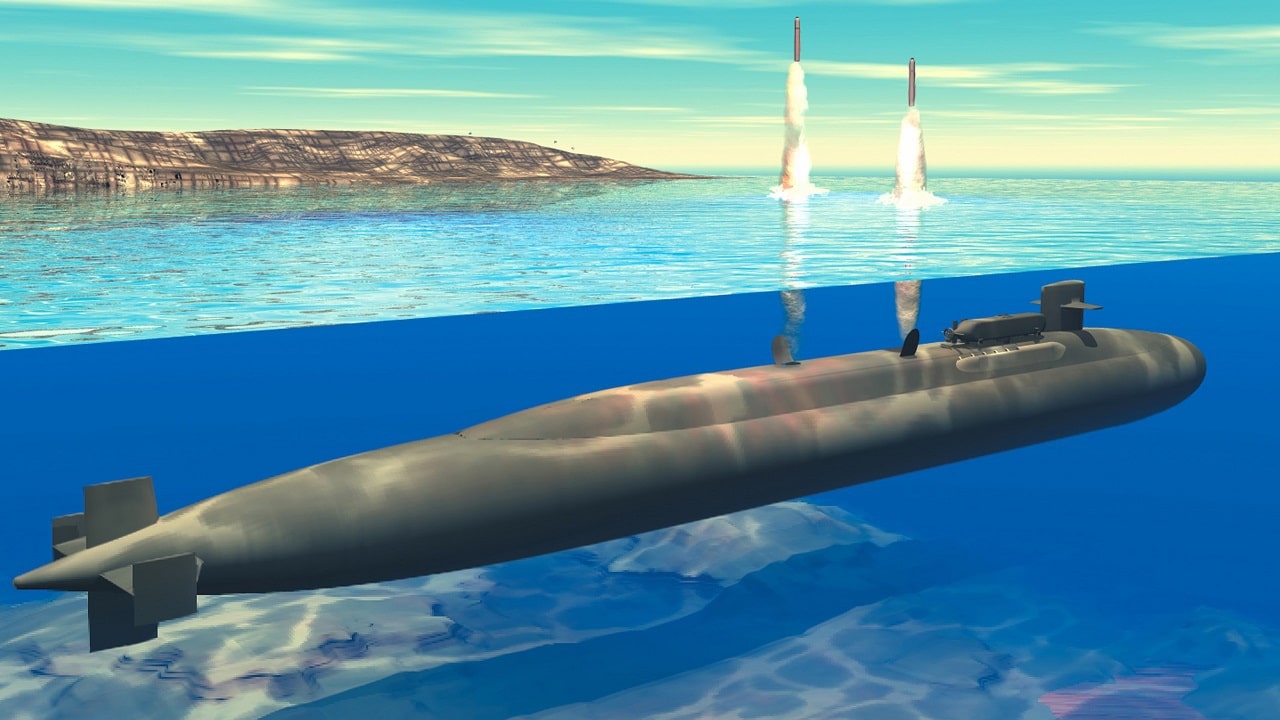
Artist’s concept of an Ohio-class SSGN launching Tomahawk Land Attack Missiles.
-To address this “magazine depth” crisis, the Department of Defense and RTX Corporation recently inked a seven-year agreement to surge annual production to 1,000 units.
-While JDAM kits currently offset the strain, the long-lead supply chain for microelectronics remains a primary strategic bottleneck.
The 10% Threshold: Why 319 Tomahawk Launches Have the Pentagon Scrambling
With strikes against the Iranian regime ongoing, much has been made about American defense industrial base constraints and how difficult it is to rebuild stockpiles of expended precision munitions. One of the pillars of the United States offensive firepower is the Tomahawk missile.
According to reporting by the Center for Strategic and International Studies, a defense think tank, 319 Tomahawk missiles have been launched, representing about ten percent of the Tomahawk missiles the U.S. Navy has available.
They’re powerful, precise, long-range weapons fired from U.S. Navy ships and submarines — but cannot be quickly manufactured to replenish expended stockpiles. Here’s why.
Semiautonomous Aircraft
The Tomahawk cruise missile is not a missile in the traditional sense. Instead, it’s more like a small, semiautonomous aircraft with extremely precise manufacturing tolerances and many specialized components in its subsystems.
The Tomahawk’s complexity, as well as how it is produced, is why the production timeline for a single Tomahawk missile is not easily shortened.
The Guts
The Tomahawk is much more than simply a warhead and rocket engine. It is powered by a turbofan engine and guided by several precision guidance systems, including GPS, internal navigation, and terrain counter matching.
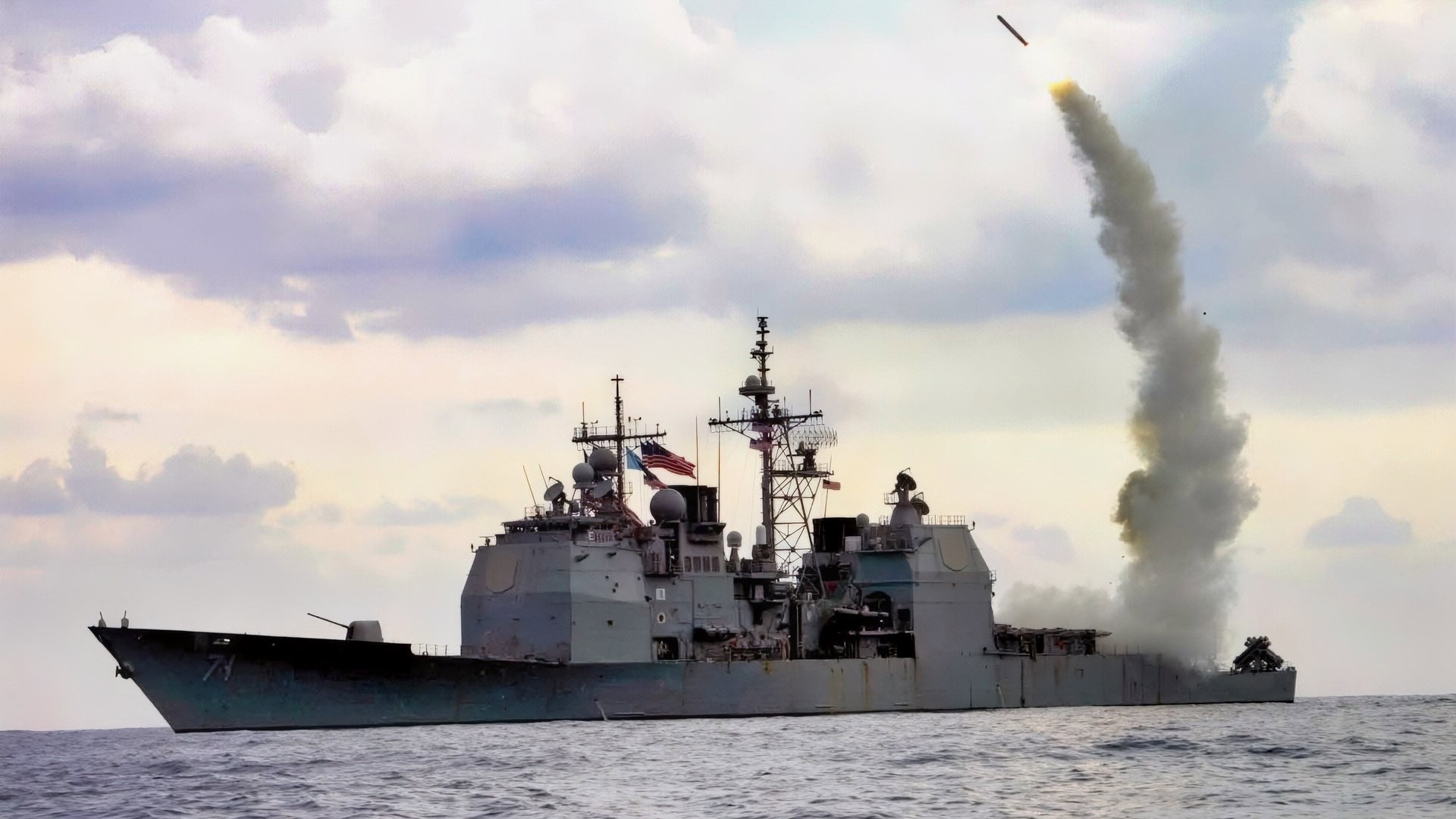
ABOARD USS CAPE ST. GEORGE (CG 71) AT SEA — A Tomahawk cruise missile launches from USS Cape St. George, operating in the eastern Mediterranean Sea in support of Operation Iraqi Freedom. (Photo by IS1 Kenneth Moll, USS Cape St. George) (Released by Sixth Fleet Public Affairs)
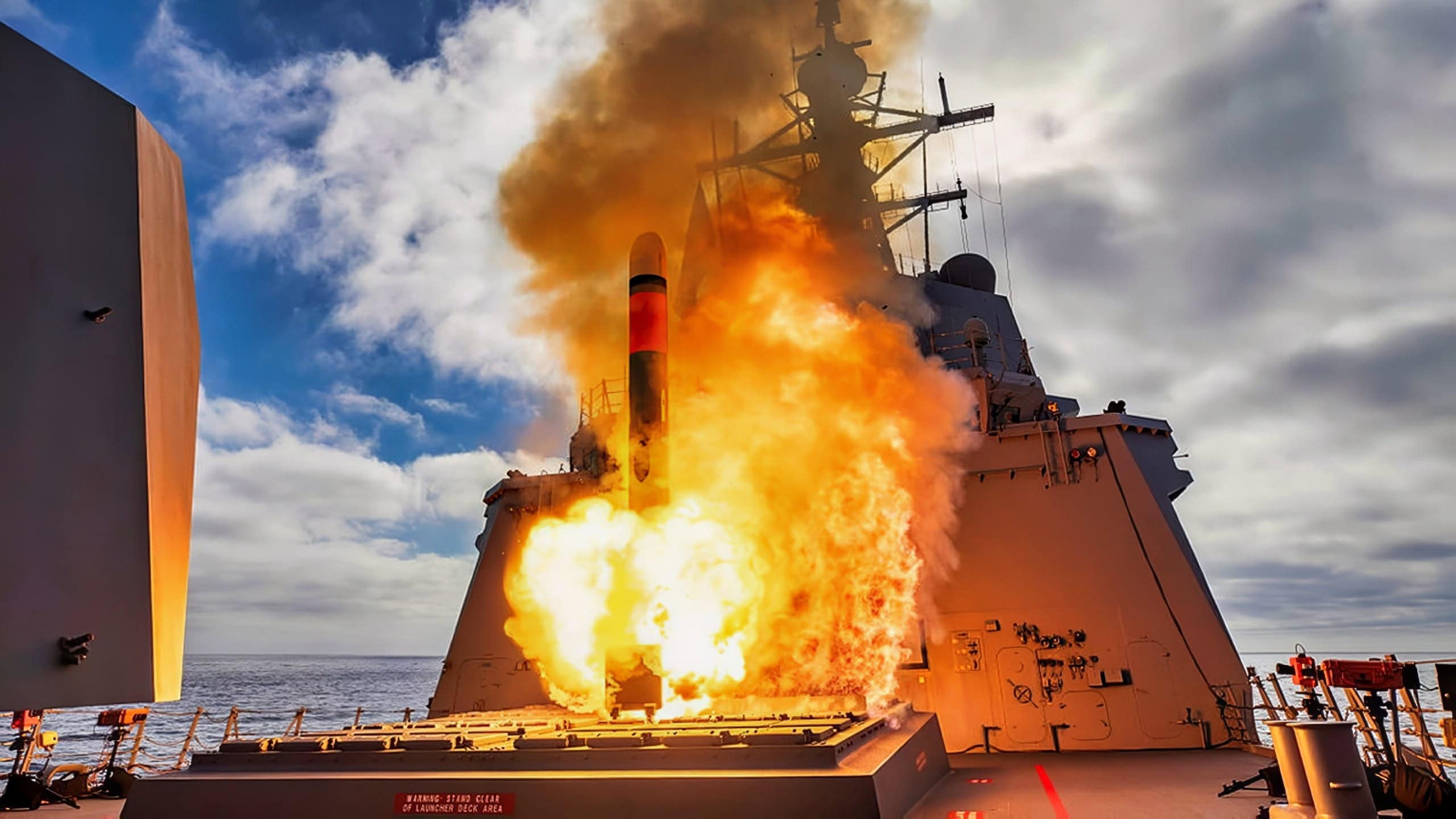
Tomahawk Missile Firing. Image Credit: Government of Australia.
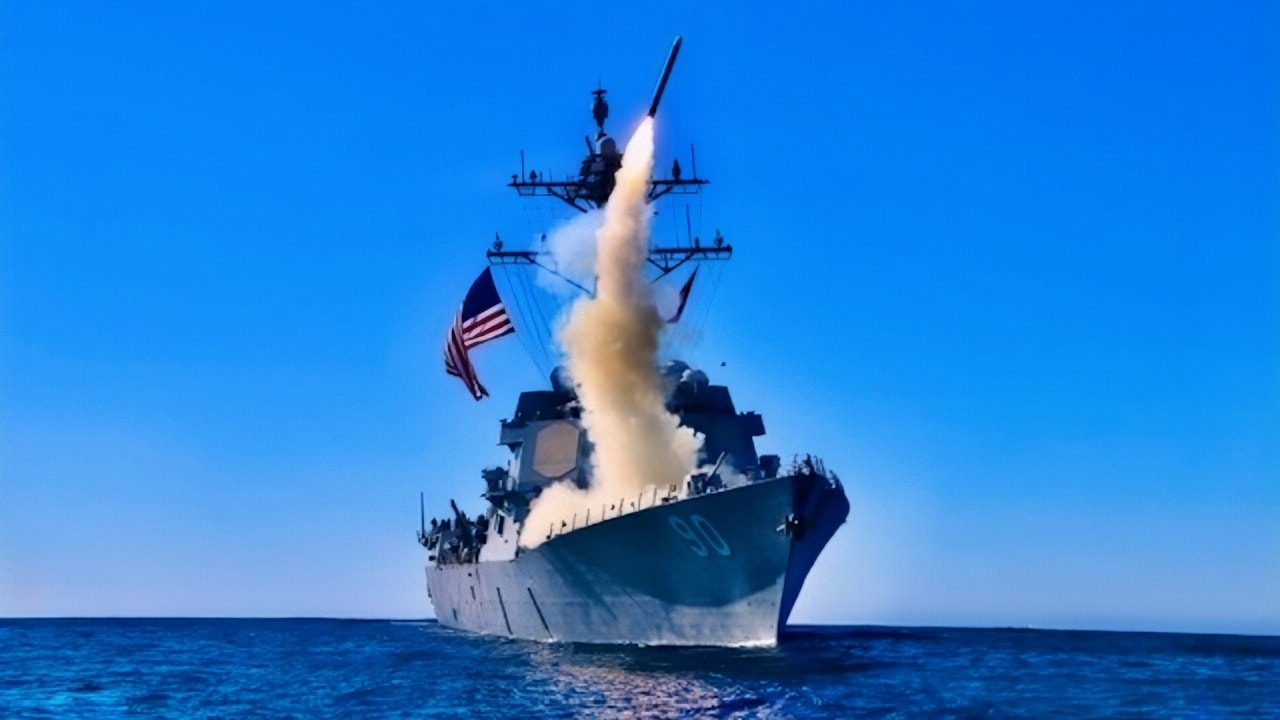
(Dec. 01, 2020) – The guided-missile destroyer USS Chafee (DDG 90) launches a Block V Tomahawk, the weapon’s newest variant, during a missile exercise. This event marked the first time a Block V Tomahawk missile was operationally tested, marking the Navy’s transition to a more advanced capability for the fleet. Block V includes an upgrade that will enhance navigation performance and provide robust and reliable communications. Chafee is currently assigned to Carrier Strike Group ONE and is homeported in Pearl Harbor. (U.S. Navy photo by Ens. Sean Ianno/Released)
Flight control computers and more robust communication links are two additional vital subsystems contained within each and every Tomahawk missile. Most of the Tomahawk’s subsystems are highly specialized, requiring precise manufacturing and rigorous testing validation.
Tomahawk parts must perform perfectly when the cruise missiles are fired, and most survive years of storage, withstand launch stress, and fly hundreds of miles with pinpoint accuracy. The Tomahawk is, in essence, not a mass-produced consumer electronic, but an aerospace-grade precision tool produced in relatively low volumes.
Supply Chain Woes
A number of Tomahawk components and subcomponents, including onboard sensors, propulsion parts, and microchips and other electronics, are sourced from a relatively small number of suppliers — and some of these are sourced from single companies.
If just a single firm experiences a supply bottleneck or goes out of business, the entire Tomahawk production line is at risk of slowing down or coming to a standstill.
Though some substitute parts could, in theory, be used in Tomahawk production — Russia infamously sources electronics for their cruise missiles and other weapons from a variety of vendors to skirt sanctions — confidence in quality requires testing and qualifying those parts, which cannot be achieved overnight.
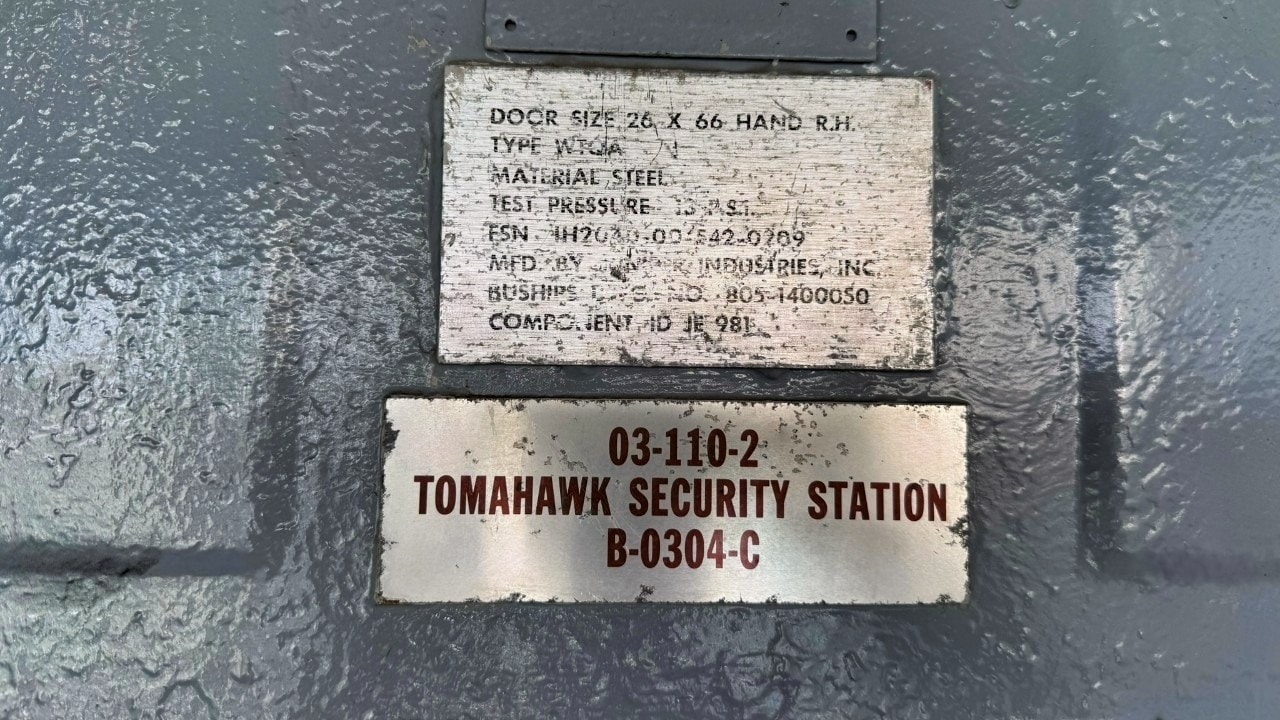
Battleship USS Iowa Tomahawk Missile Container. Taken by Harry J. Kazianis for 19FortyFive.com aboard USS Iowa.
Though production rates are increasing, peacetime production numbers require longer lead times. RTX Corporation, the firm that produces Tomahawk missiles, has historically built Tomahawks in numbers that reflect peacetime usage, typically in the hundreds per year, and the defense industrial base is optimized for relatively steady, predictable demand, with little excess capacity for surge, wartime output. An expansion of production is, therefore, far from quick
New tooling, a highly skilled and qualified workforce, securing regulatory approvals, and expanding physical factory production space all take time.
Testing, One, Two, Three
Another significant constraint on rapidly expanding Tomahawk production is testing and quality control.
Each Tomahawk missile is subjected to extensive and rigorous validation. Electronics, software, components, and subsystems are validated.
Failures can pause production to investigate failures and fix issues. And as Tomahawk cruise missiles are strategic weapons, their reliability standards are extremely high.
Stockpiling
But during a wartime scenario, stockpiles can be quickly burned through.
Strikes in Iran against regime targets have quickly shown that high-tempo operations can risk exceeding annual production and jeopardize stockpiles of a variety of munitions, not only Tomahawk missiles. Unlike, say, a consumer goods line, missile production cannot simply be turned up. Shortages are a very real risk.
Even if funding for additional Tomahawk munitions can be sourced very quickly, upscaling output lags behind demand due to workforce limitations and supply chain realities.
Component lead times are long, and some components, particularly in propulsion and microelectronics, have lead times measured in many months, even during peacetime.
Rebuilding Tomahawk stockpiles can take years, even with production moderately increased.
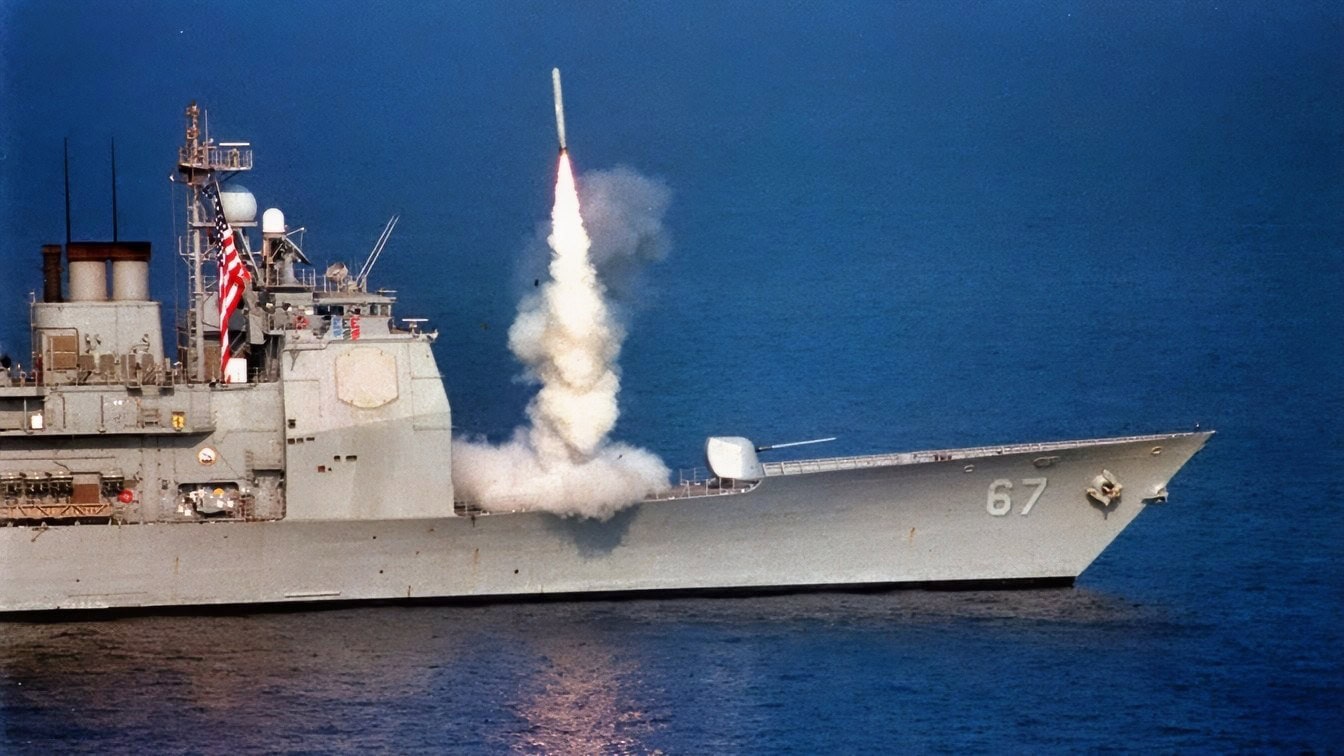
A Tomahawk cruise missile launches from the forward vertical launch system of the USS Shiloh (CG 67) to attack selected air defense targets south of the 33rd parallel in Iraq on Sept. 3, 1996, as part of Operation Desert Strike. The attacks are designed to reduce risks to the pilots who will enforce the expanded no-fly zone. President Clinton announced an expanded no-fly zone in response to an Iraqi attack against a Kurdish faction. The larger no-fly zone in Southern Iraq will make it easier for U.S. and coalition partners to contain Saddam Hussein’s aggression. The U.S. Navy Ticonderoga Class cruiser launched the missiles as it operated in the Persian Gulf.
This is partly about the production of decision-making at the strategic level.
The United States has typically opted to maintain a relatively small, but very high-quality, missile inventory rather than a massive, rapidly replaceable, but less precise stock.
For more limited conflicts, this is a sensible strategy, but during a high-demand wartime scenario, munitions shortages are not only possible but also expected.
Boosted Production
Cognizant of the looming shortage of a variety of precision munitions, including Tomahawk missiles as well as air defense interceptors, the U.S. Department of Defense inked an agreement with RTX, the Tomahawk missile’s manufacturer, to significantly boost production just last month.
The agreement will see an increase in “production capacity and speed deliveries of Land Attack and Maritime Strike variants of Tomahawk, AMRAAM® missiles, Standard Missile-3® Block IB interceptors (SM-3 IB), Standard Missile-3® Block IIA interceptors (SM-3 IIA), and Standard Missile-6 (SM-6),” the company announced in a press release.
“As global demand for these precision munitions continues to grow, these up-to-seven-year agreements establish frameworks to build on the company’s previous investments to expand production. Under the frameworks announced today, RTX will increase annual production of Tomahawks to more than 1,000, AMRAAMs to at least 1,900, and SM-6 to more than 500. RTX will also increase production of SM-3 IIA and accelerate SM-3 IB production. Many of these munitions will grow 2 to 4 times their existing production rates.”
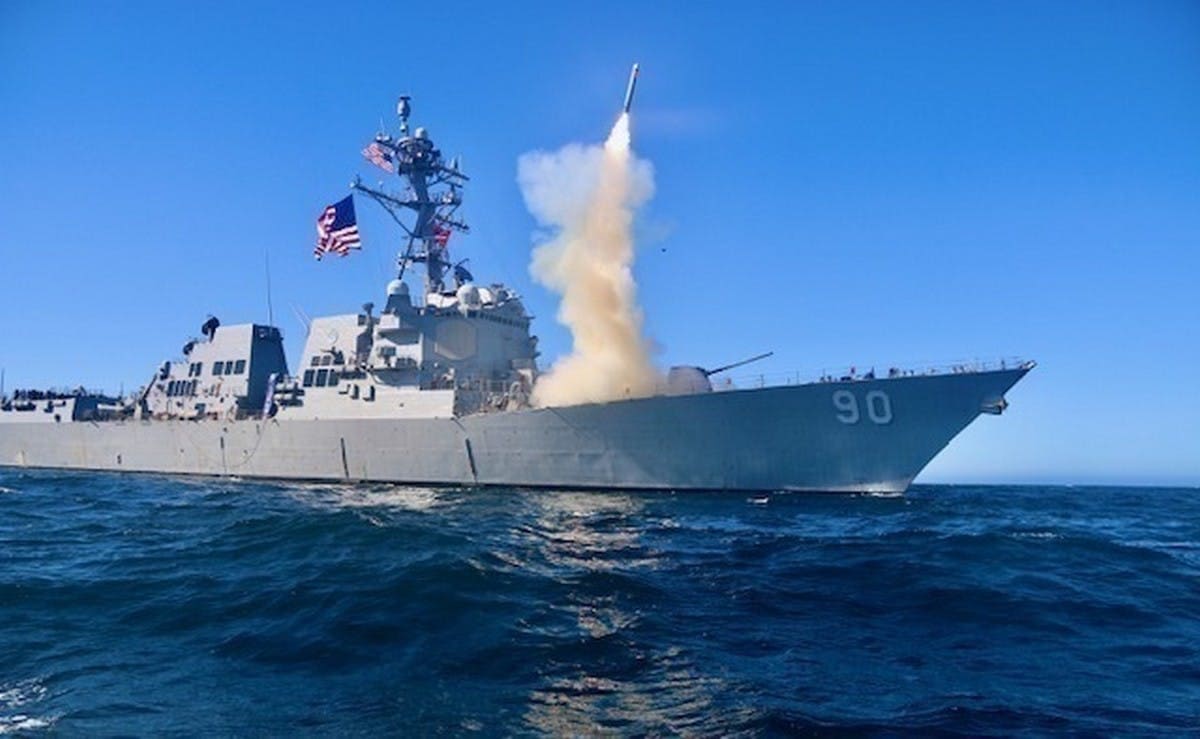
Tomahawk Missile. Image: Creative Commons.
Though Operation Epic Fury is ongoing, the American portion of those strikes, at this juncture, appears to be largely Joint Direct Attack Munition, or JDAM, bombs.
These are, in essence, free-fall bombs equipped with GPS guidance kits and control surfaces that afford them the accuracy of precision weapons.
They are available in the tens of thousands and significantly reduce the strain on the Tomahawk stockpile.
About the Author: Caleb Larson
Caleb Larson is an American multiformat journalist based in Berlin, Germany. His work covers the intersection of conflict and society, focusing on American foreign policy and European security. He has reported from Germany, Russia, and the United States. Most recently, he covered the war in Ukraine, reporting extensively on the war’s shifting battle lines from Donbas and writing on the war’s civilian and humanitarian toll. Previously, he worked as a Defense Reporter for POLITICO Europe. You can follow his latest work on X.