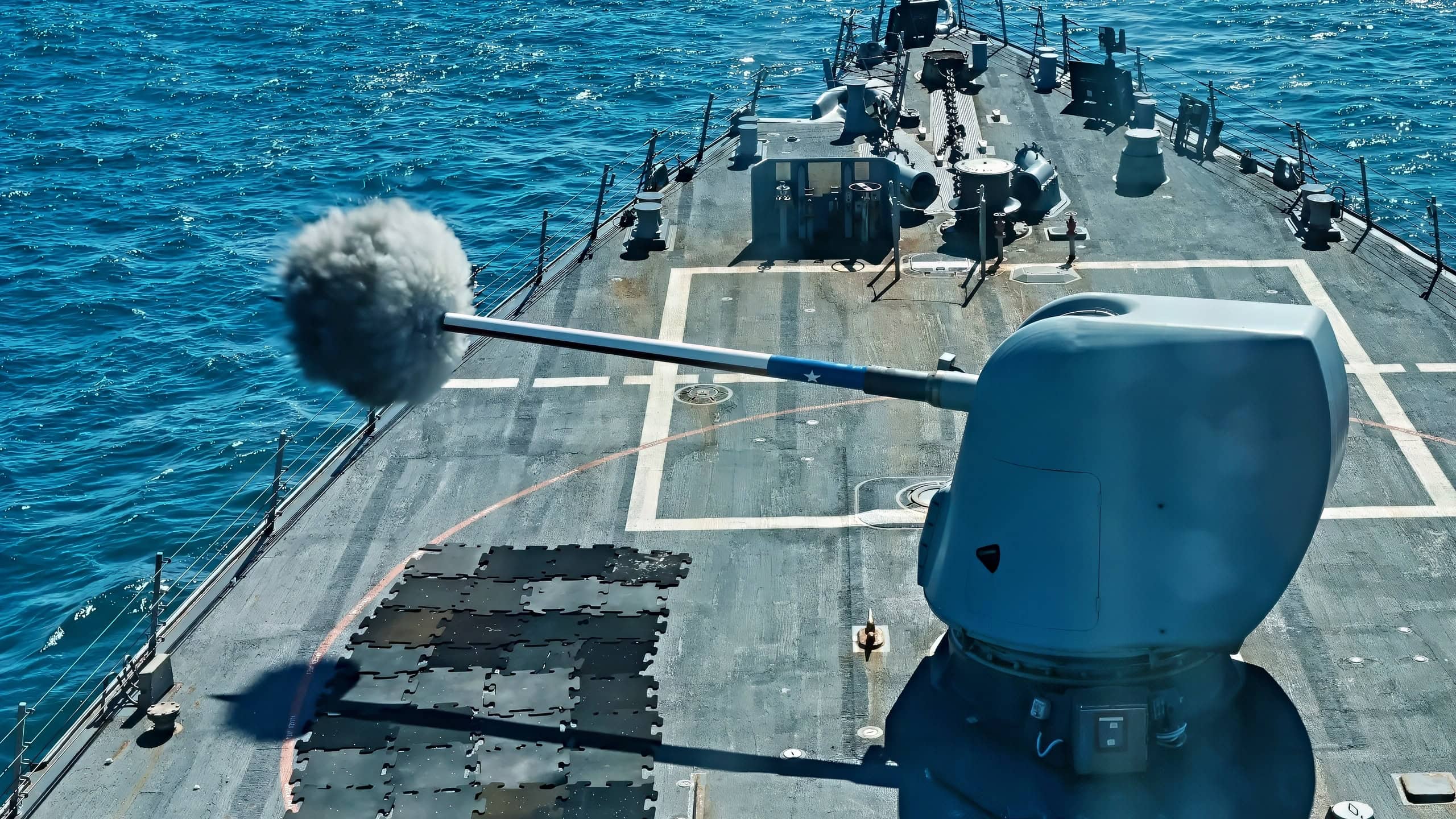
Hung Cao, the new Acting Secretary of the Navy, is wasting no time pushing his vision for what the U.S. Navy should be in the wake of conflicts in the Middle East and Ukraine. Speaking at the Modern Day Marine Expo, Cao said the Navy needs “alpha males and alpha females,” wants to source munitions from multiple vendors, and intends to overhaul acquisitions through the Trump administration’s Golden Fleet project.
The U.S. Navy Is Making Big Changes in 2026
The recently appointed Acting Secretary of the Navy, Hung Cao, is rapidly implementing his vision of what the Navy should be today in remarks at one of his first public appearances since taking office.
Speaking during the Modern Day Marine Expo last week, Cao touched on Navy modernization, the Golden Fleet, and the kinds of Marines and Sailors he would like to see in uniform, citing his own combat experience in the Navy and his understanding of the task of war-fighting.
Cao has been vocal about who he believes should be in uniform, and previously criticized a sailor who had participated in a drag queen performance. “I don’t need cross-dressers in the military,” Cao stated. “I need alpha males and alpha females.” The Acting Secretary added that instead of “leaf eaters,” the Navy needs “meat eaters.”
Cao’s vision for the Navy was exemplified in an update to the rules for the Navy working uniform and dress blues. “NWU Type III wear is authorized in the Pentagon,” the Navy message from Cao reads. “This change is being made to ensure the Navy is aligned with the uniforms being worn in the Pentagon by other members of the Joint Force and in an effort to continue to instill a warrior ethos in our Sailors.”
Munition Woes
The ongoing conflicts in the Middle East and Ukraine have exposed just how precarious the Navy’s mission situation is at the moment, particularly for air defense interceptors as well as Tomahawk cruise missile munitions.
Though highly effective and precise, they are expensive and slow to build. As the American defense industrial base slowly ramps up production of the weapons, the Navy is facing an acute shortfall of both types of munitions, one that, unless addressed, could pose a danger on the horizon.
Cognizant of this pressing problem, Cao asked why the U.S. Navy can’t get creative with weapons sourcing. “Why can’t I buy my munitions from multiple sources? As long as it fits in that tube, as long as it fits on the aircraft, that’s all that matters,” Cao said.
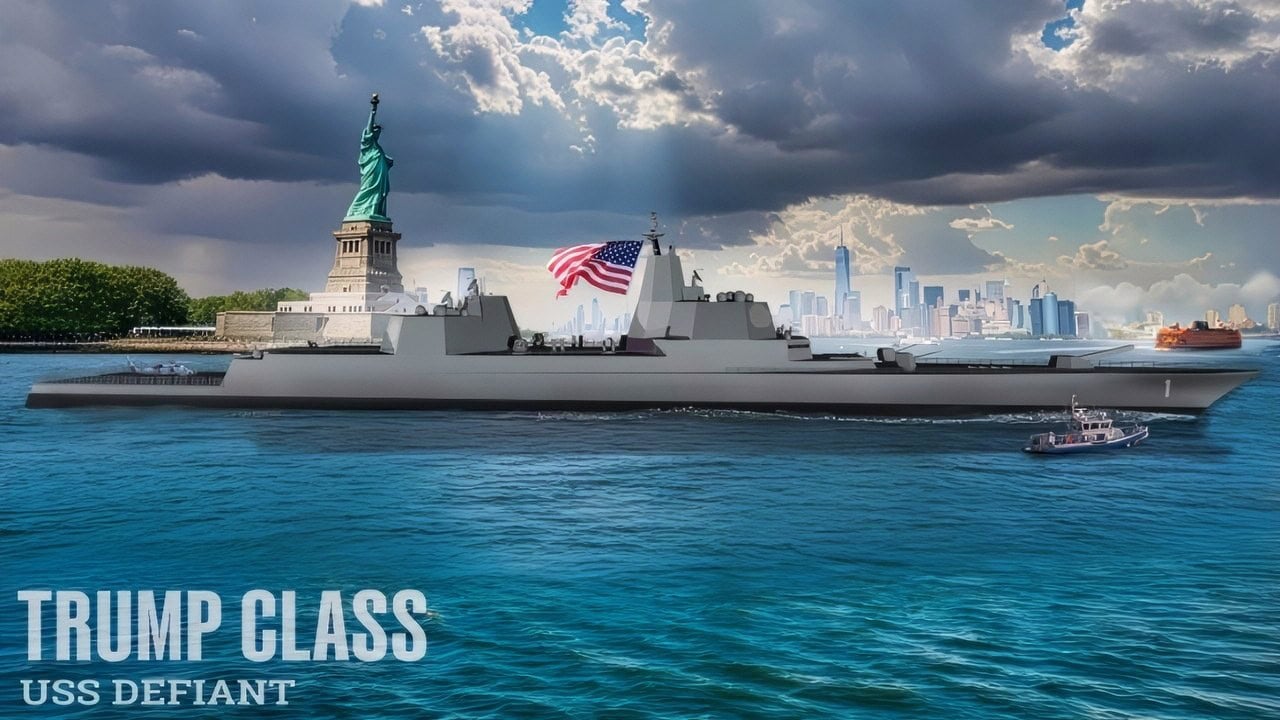
Trump-Class Battleship. Image Credit: Creative Commons/White House.
Though defense primes have long been the Pentagon’s go-to suppliers, there may be space for other entrants to meet the Navy’s needs. “Let’s just say I need 1,000 of these missiles. If this guy can give me 100, this other guy can give me 50, and this other guy can give me 200, eventually we’ll get to that 1,000, and not have to go through one single vendor.”
The Pentagon has allocated $70.5 billion for missiles and other munitions for Fiscal Year 2027, nearly a 200 percent increase from the previous year. But the Navy has other big-ticket items that it would like to fund as well, including the upcoming Columbia-class submarines, the upcoming SSN(X)-class attack submarines, and the last of the Virginia-class submarines, too.
Production Bottleneck
So acute is the production squeeze that the Pentagon is mulling foreign designs and foreign shipyards to alleviate production bottlenecks at home.
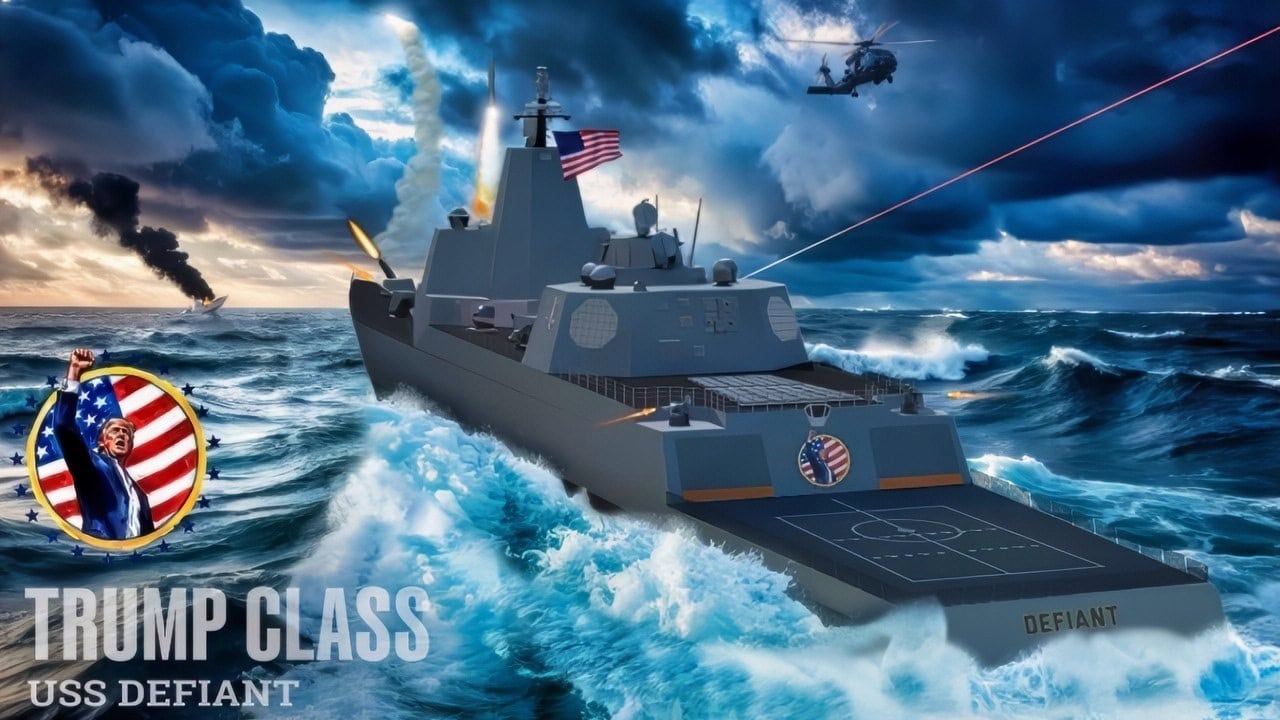
Trump-Class Battleship. Image Credit: Creative Commons/White House Photo.
And the Navy’s desired ships have to find a place within President Trump’s Golden Fleet project, which would like to cement U.S. Navy superiority — but also includes what is, in essence, a vanity project for President Trump, and reportedly part of the reason Cao is now Acting Secretary of the Navy. Cao takes over the role formerly filled by John Phelan, the previous Navy Secretary, who was relieved, reportedly due to his advocacy for the Trump-class battleship, an effort to ingratiate himself with President Trump.
But, Cao said, “the Golden Fleet is not just about ships.” Instead, Cao said, it is “the whole concept of reforming acquisitions and getting ships out there from high, low, right? You can’t use a destroyer for everything. It’s like, you don’t want to use a brain surgeon just to suture up some stitches. I mean, you can use a corpsman for that, right?”
Handshake Agreements
Implementing these changes will require the industry and the Navy to reach agreements on protection — contracts from the Navy and capacity from defense firms that manufacture ships, submarines, and munitions, Cao said. “I’m asking you, our partners in industry, to help us develop the best things out there, because lives that you saved are going to be our sons and daughters.”
“And that’s why I’m here today, to tell industry we need to move forward. The time is now. This is, this is a time for us to do generational changes for our military.”
About the Author: Caleb Larson
Caleb Larson is an American multiformat journalist based in Berlin, Germany. His work covers the intersection of conflict and society, focusing on American foreign policy and European security. He has reported from Germany, Russia, and the United States. Most recently, he covered the war in Ukraine, reporting extensively on the war’s shifting battle lines from Donbas and writing on the war’s civilian and humanitarian toll. Previously, he worked as a Defense Reporter for POLITICO Europe. You can follow his latest work on X.