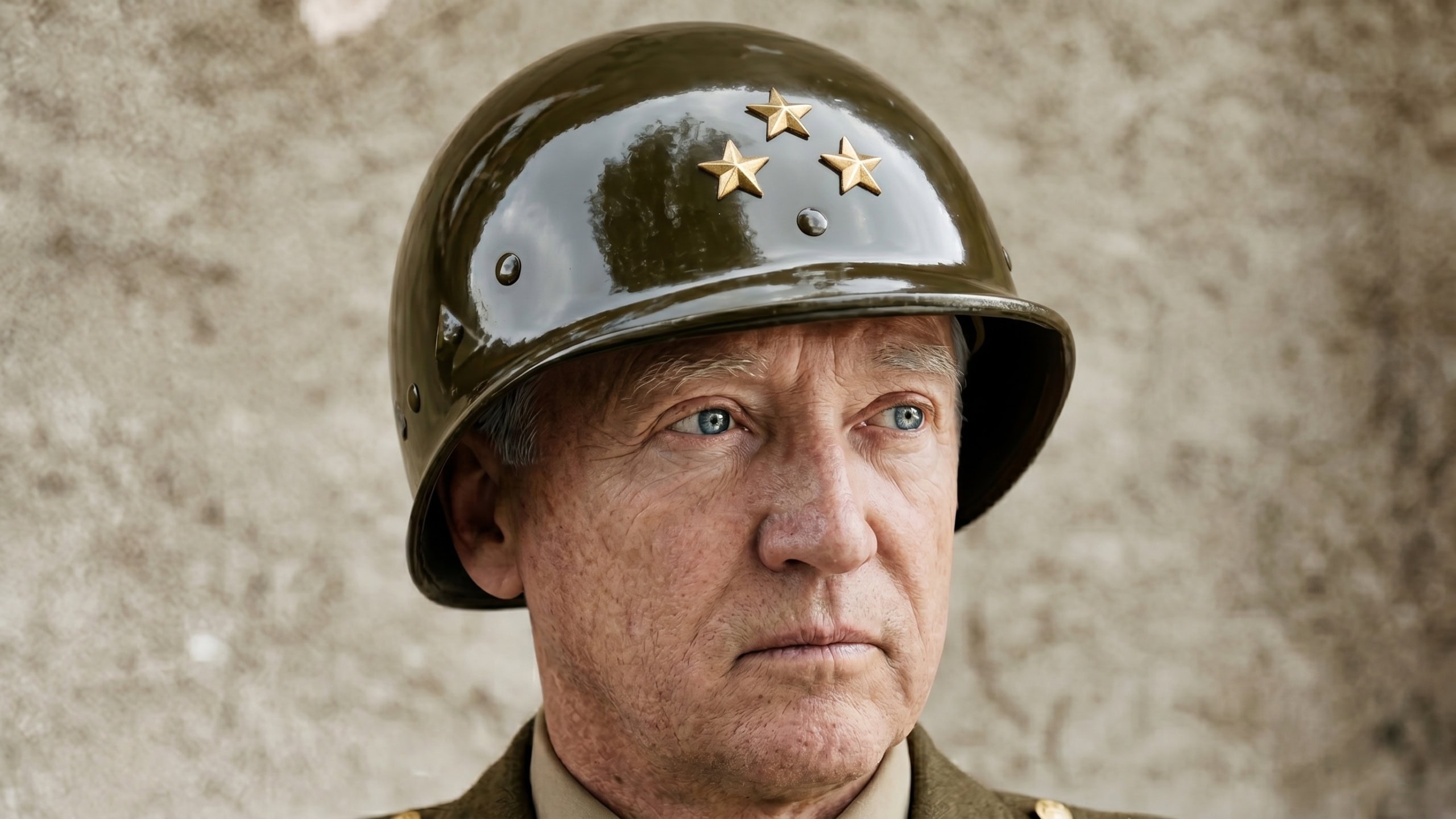
General George S. Patton’s Third Army racked up some of the highest American casualties in the entire European theater during the brutal Lorraine Campaign of 1944—around 50,000 men, nearly a third of all his army’s WWII losses. The legendary “Old Blood and Guts” was psychologically worn down, fuel-starved, and grinding through mud against an enemy he should have bypassed.
Patton Quote of the Day: Do Not Make Excuses
“Do not make excuses, whether it’s your fault or not.” – U.S. Army General George S. Patton
George S. Patton was one of the most accomplished American generals of the Second World War.
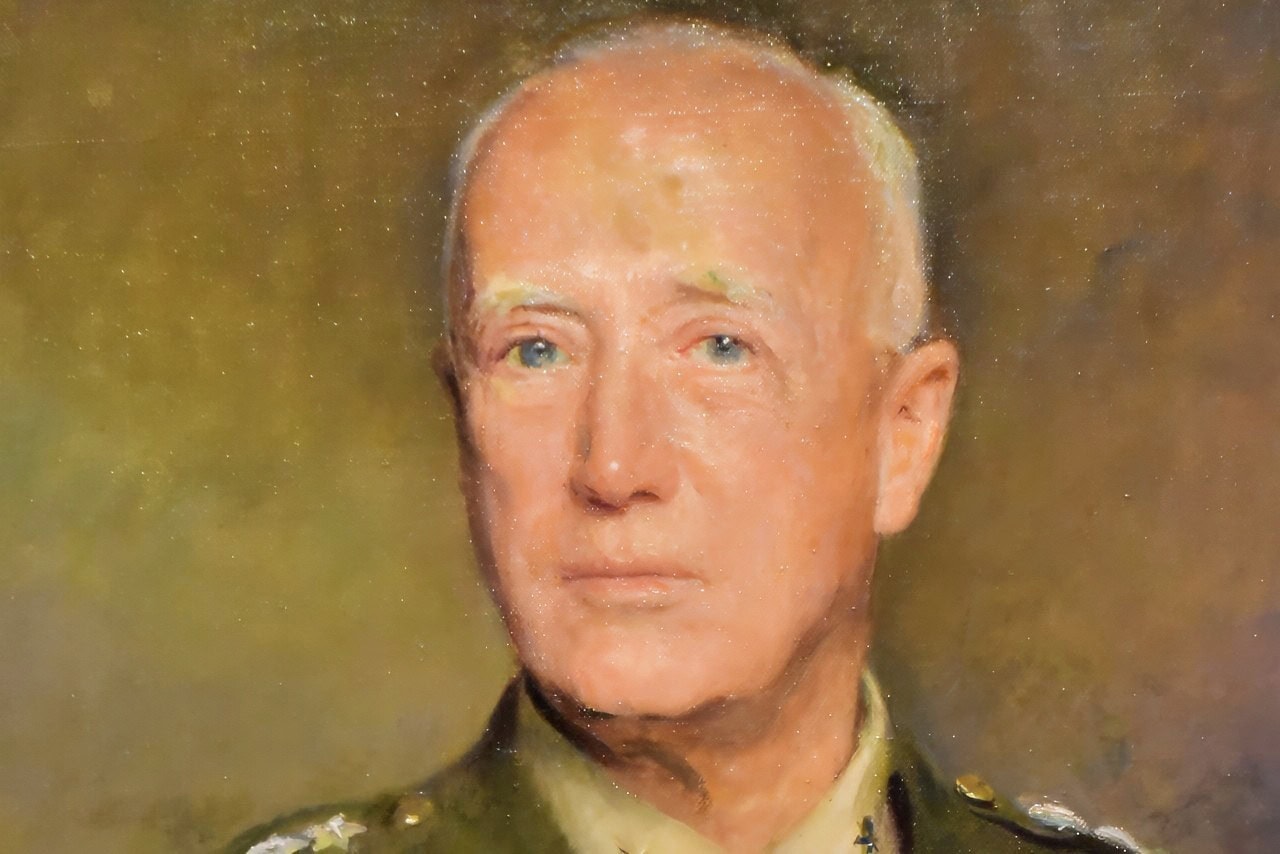
General George Patton National Portrait Gallery Photo. Image Taken by 19FortyFive on 1/23/2026 in Washington, DC.
His leadership in Africa, Sicily, and later Europe was vital for the war effort. As adept as he was in tactics and strategy, he was still prone to making mistakes. While Patton never strictly lost a battle, he sometimes failed to adapt to his circumstances and instead defaulted to his usual strategy of aggression.
During the Lorraine of 1944, he would find himself at his lowest point of the war. With a shortage of fuel and ammunition, Patton and his Third Army undertook a grueling campaign in the Lorraine region of France, which resulted in needlessly high casualties.
Why Lorraine?
After the rapid advance across France, the Third Army was sent to Lorraine.
Although there were few major military objectives in the region, Patton was determined to take the fortresses of Nancy and Metz, then the Saar industrial region.
Despite its proximity to Germany, Lorraine was not the Allies’ preferred invasion route into Germany; instead opting for the more strategically significant Ruhr industrial complex. Nevertheless, Patton was determined to take the region in what he thought would be a quick operation.
The Operation Bogs Down
The campaign quickly stalled as the Third Army ran out of fuel.
Patton believed, with some justification, that if his Third Army were given sufficient gasoline, he could cross the Rhine before the Germans had time to reorganize.
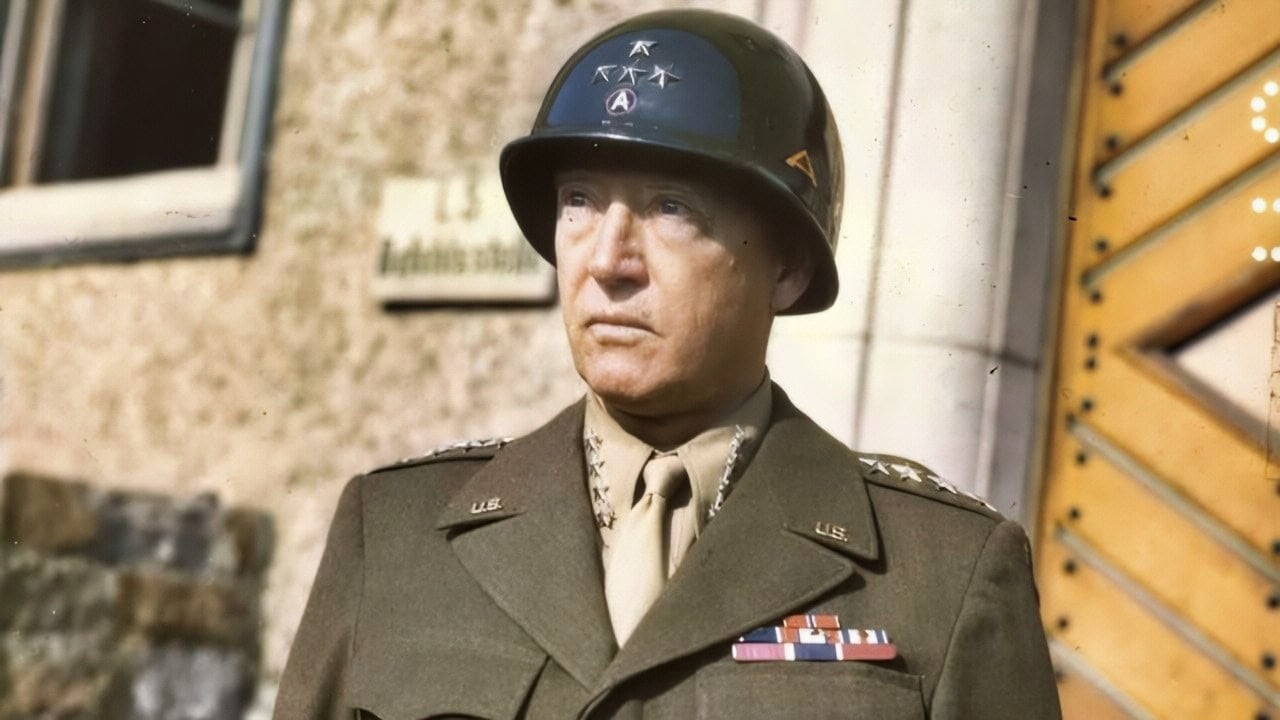
General George Patton U.S. Army Photo
Instead, fuel was rationed under Eisenhower’s broad-front strategy, and priority was often given to other Allied armies in more strategically significant areas. By early September 1944, Third Army units were immobilized along the Moselle River, with some tanks and vehicles literally running out of fuel on the battlefield. This unexpected halt denied Patton the opportunity to exploit German weakness and allowed the enemy precious time to regroup and reinforce Lorraine.
Once the Germans stabilized the front, the fighting bogged down to a grueling slog. Lorraine was vastly different from the open terrain that Patton had exploited earlier in France. The terrain favored the German defenders.
The Moselle River, in particular, presented a serious obstacle. With its high banks, the few crossable areas were heavily defended, and any attempted crossings would result in high casualties. Compounding these challenges was the weather. The heavy Autumn rains had turned most of the roads into mud, which further slowed down the Third Army’s advance. Worse yet, the unfavorable weather limited Allied air support, which Patton had relied upon for earlier offensives. What Patton envisioned as a brief operational pause quickly became a prolonged, exhausting campaign of attrition.
The Battle of Metz Fortress
The slow pace of the Third Army’s advance allowed the Germans ample time to reinforce the Fortress of Metz. Metz was a massive fortified zone originally built in the seventeenth century.
The fortress had deteriorated after several decades of French control, but it was still positioned such that a direct result would incur heavy casualties on the attackers. Patton had originally intended to bypass the fortress and head straight for the cities of Mainz and Mannheim to cut off the German First Army at Metz. However, the Third Army lacked the supplies necessary to perform such a maneuver.
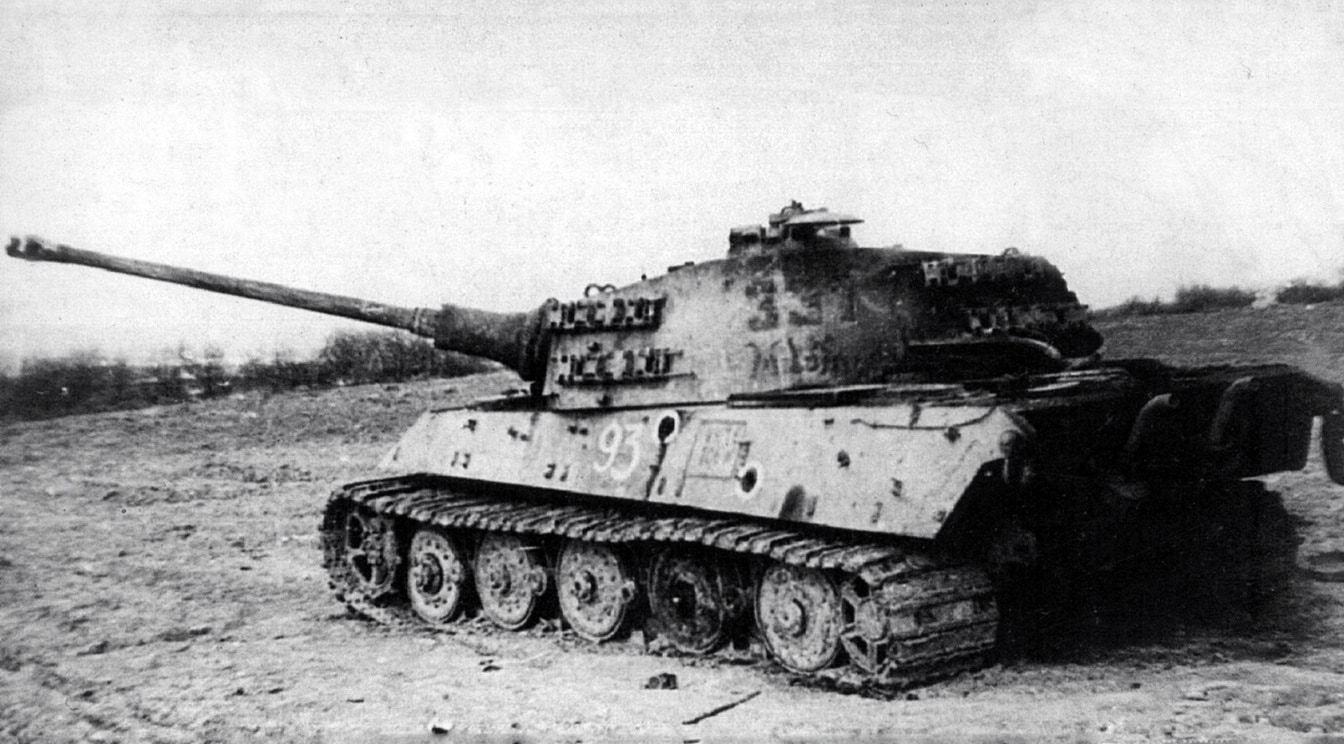
King Tiger Tank. Image Credit: Creative Commons.
As a result, the U.S. was forced to assault the well-fortified city with a shortage of fuel and ammunition and with poor weather. The initial German assaults on Metz were repelled. Gradually, however, the U.S. managed to gain a foothold in the city and push the defenders out. After three months of fighting, the fortress city of Metz had finally fallen.
While the U.S. had ultimately won the battle, the cost was high. Metz resulted in some of the highest American casualties in the entire European theater of the Second World War. The combination of supply shortages and Patton’s own aggressive strategy resulted in around 50,000 casualties, around a third of all of the Third Army Casualties in the European war.
Patton’s Lowest Point in the War
The Lorraine Campaign was one of Patton’s lowest moments during the entire war. Known for boundless confidence and offensive zeal, he found it difficult to accept the constraints imposed by Eisenhower’s fuel rationing.
His impatience with delays, combined with his reluctance to fully adapt his approach to static, siege-like conditions, worked against him during the battle. Lorraine was one of the rare occasions in which Patton appeared psychologically worn down by circumstances beyond his control. Many historians have criticized him for failing to employ his units more decisively and aggressively.
As the Germans in charge of the defense of fortress Metz later remarked, had Patton bypassed the fortress, he could have threatened the flank of the German Seventh Army while also cutting off the defenders at the fortress itself.
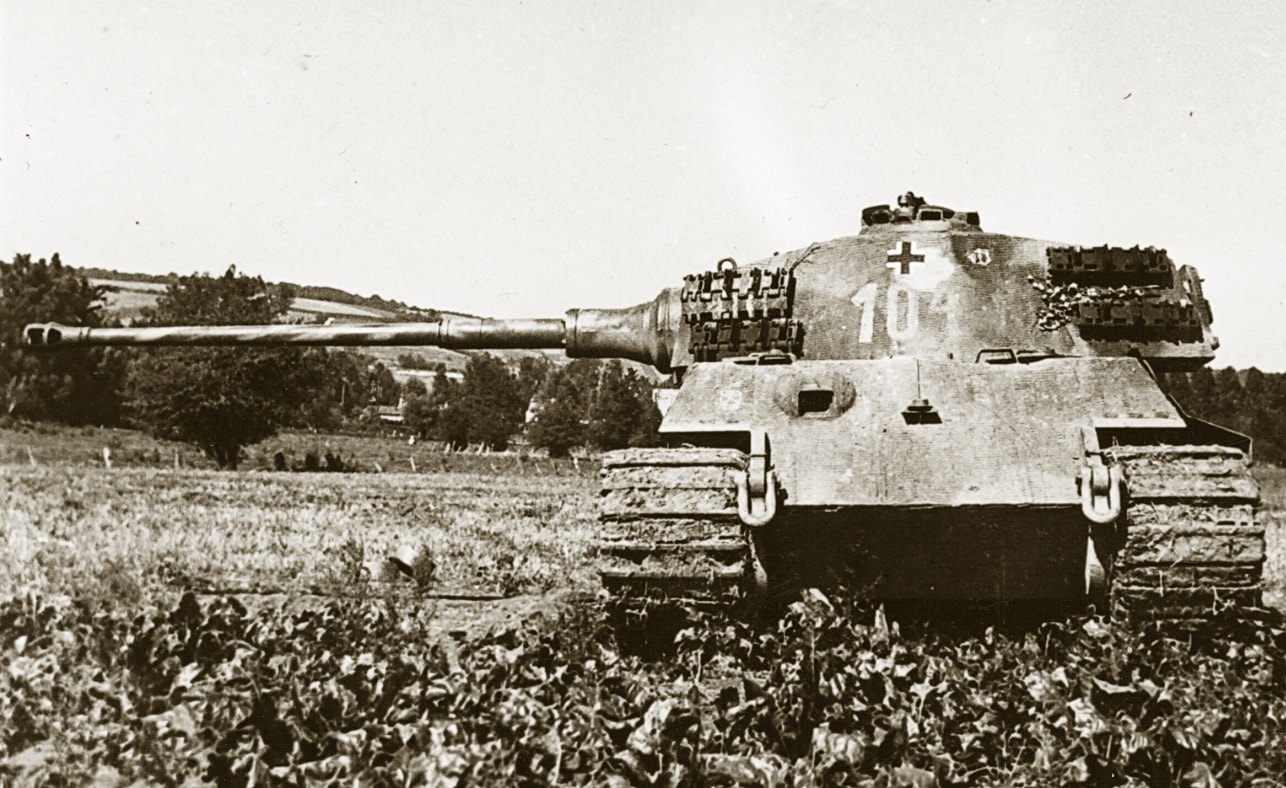
Tiger II. Image Credit: Creative Commons.
Despite these setbacks, the Lorraine Campaign was not a failure in a strictly military sense.
By November and December 1944, Metz finally fell, German forces suffered heavy losses, and the Third Army advanced toward the German frontier and the Siegfried Line. Nevertheless, the cost was high. Tens of thousands of American casualties were sustained, and months of fighting were required to achieve an objective that wasn’t even that important.
While the campaign had sapped the Third Army’s strength and morale, Patton would soon bounce back when Germany launched their last dispatch offensive into the Ardennes region.
Third Army would then take part in the miraculous maneuver that lifted the siege on Bastogne, one of the most ambitious and well-executed maneuvers of Patton’s career.
About the Author: Isaac Seitz
Isaac Seitz, a Defense Columnist, graduated from Patrick Henry College’s Strategic Intelligence and National Security program. He has also studied Russian at Middlebury Language Schools and has worked as an intelligence Analyst in the private sector.