Summary and Key Points: Former U.S. Army Special Forces Warrant Officer Steve Balestrieri connects the aggressive, hard-charging philosophy of General George S. Patton to the stunning opening moves of Operation Epic Fury.
-When sudden intelligence revealed a massive gathering of senior Iranian leadership in Tehran, the U.S. and Israel fully embraced Patton’s famous mantra: “A good plan violently executed now, is better than a perfect plan executed next week.”
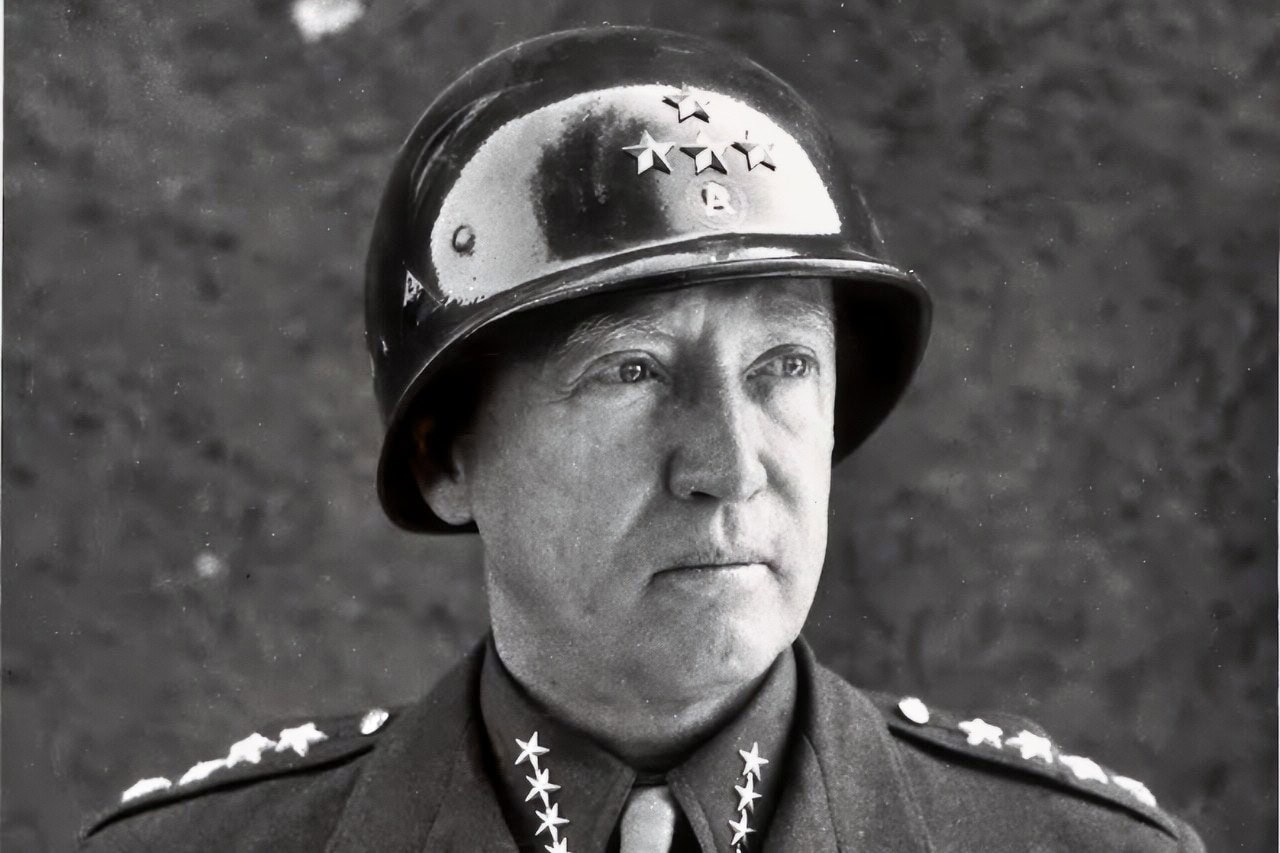
U.S. Army General George Patton

U.S. Army General George Patton. Image Credit: Creative Commons.
-The resulting immediate, overwhelming air campaign successfully dismantled Iran’s command structure and severely crippled its retaliatory capabilities before it could even react.
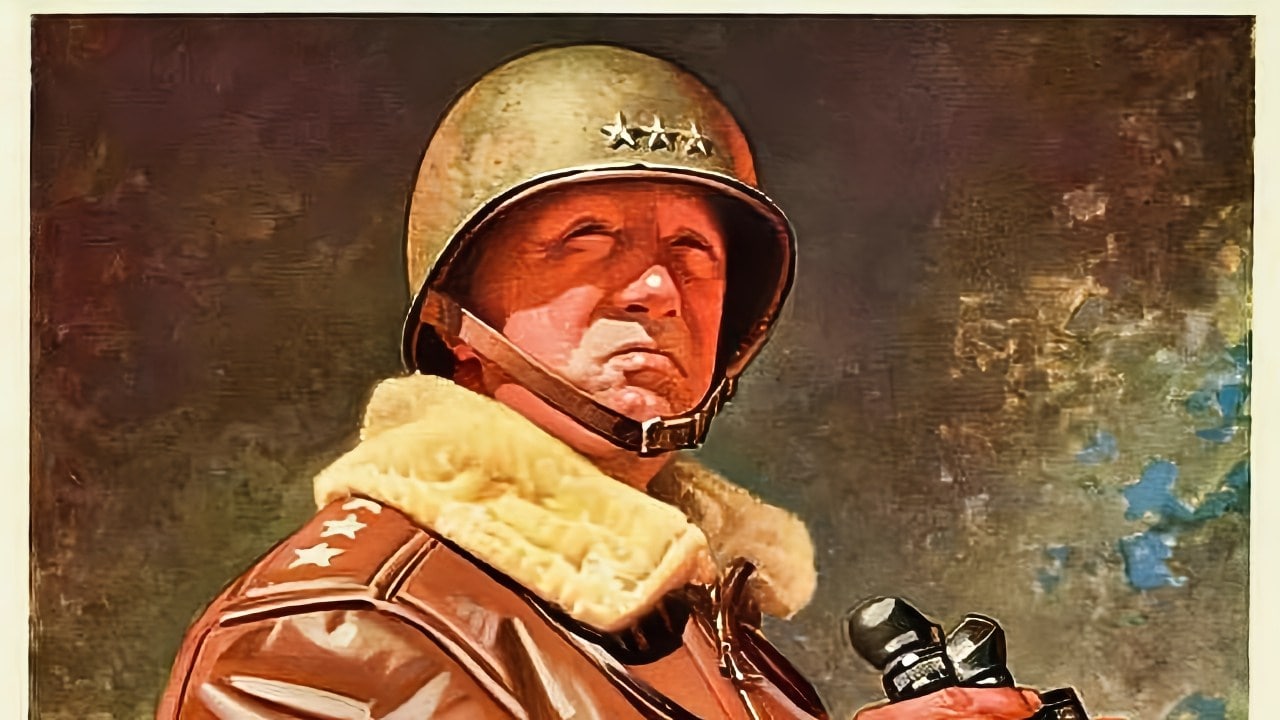
Army Quote of the Day From Legendary General George Patton
“A Good Plan Violently Executed Now, Is Better Than A Perfect Plan Executed Next Week” – General George Patton, U.S. Army
General George Patton was an outstanding combat leader, going from a lieutenant in Mexico during the Punitive Expedition chasing Pancho Villa, to commanding a battalion of the new armored forces in World War I, to commanding the Third Army in Europe during World War II.
Patton was arguably the finest combat commander that the United States ever produced. He was adamantly against defensive warfare, believing that wars are won by relentless aggression, speed, and audacity, frequently quoting Frederick the Great, with the phrase “L’audace, l’audace, toujours l’audace” (Audacity, audacity, always audacity).
Patton saw himself as a student of history, often invoking Frederick’s relentless, offensive mindset regarding discipline and speed to motivate his troops.
What Does The Quote Signify?
Patton’s philosophy was rooted in his cavalry upbringing in the Army. Patton insisted on speed, the violence of action, and aggression to keep the enemy off balance. He was looking to break through the enemy’s lines and exploit gaps before the enemy could react.
This philosophy contrasted with British Field Marshall Montgomery, who favored a set-piece” battle, ensuring his forces were fully prepared, supplied, and secured before attacking to minimize casualties.
The Germans’ View Of Patton
Of all the Allied commanders, German military leaders generally regarded General Patton as the most aggressive, skilled, and dangerous Allied armored commander.
They feared his rapid, “blitzkrieg” tactics and admired his ability to take risks and achieve large successes, often viewing him as the “American Guderian”. German general Günther Blumentritt called Patton the most aggressive Panzer general of the Allies, whose operations closely matched German concepts of classical command.
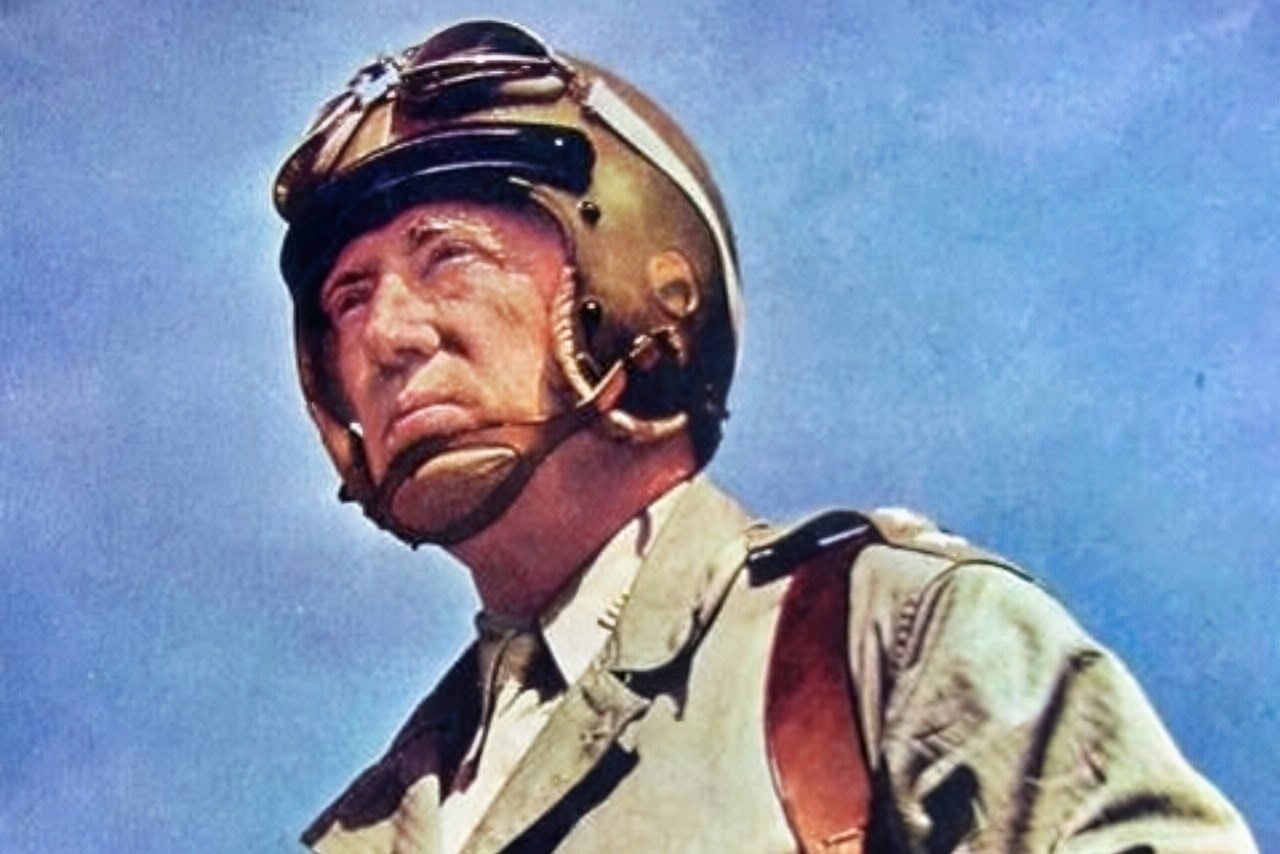
General George Patton of the U.S. Army. Image Credit: Creative Commons.
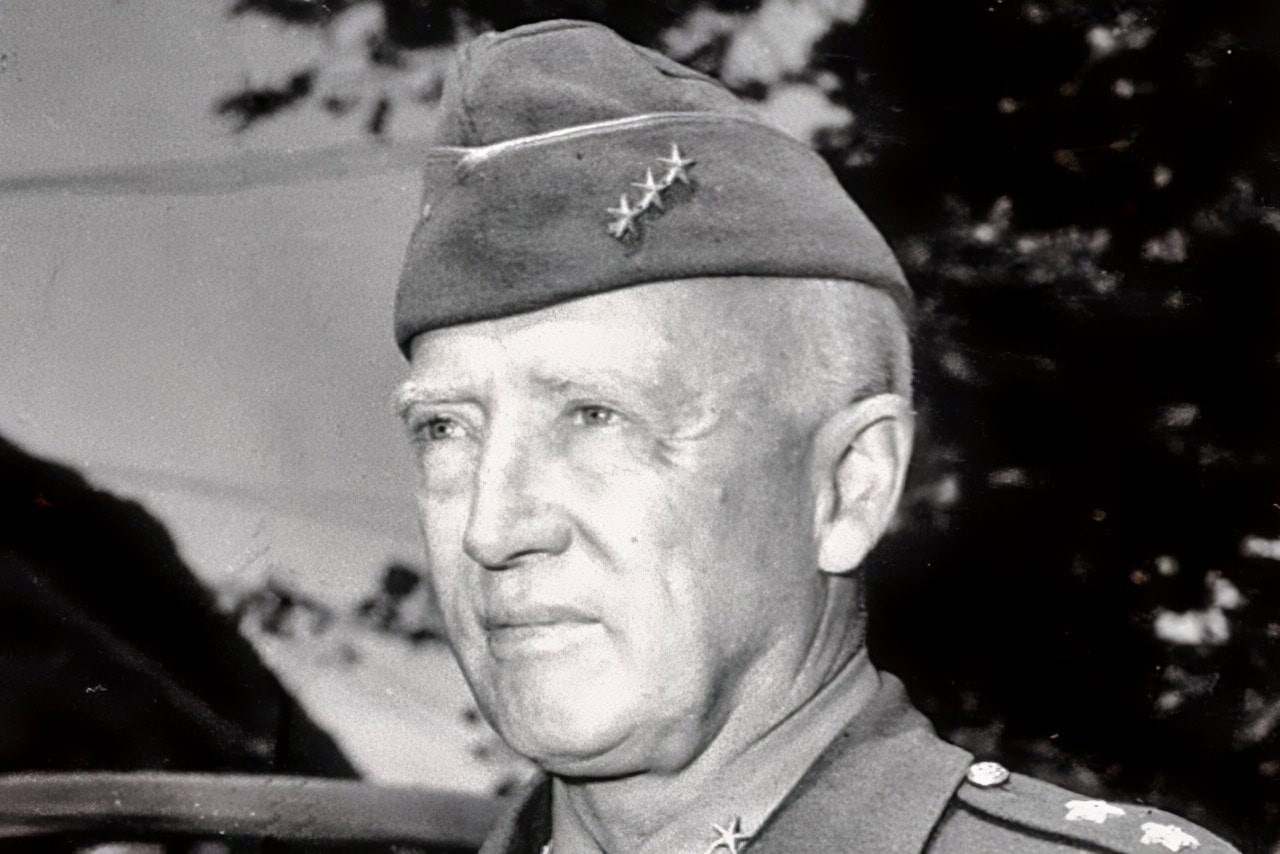
George S. Patton Quote of the Day. Creative Commons Image.
His aggressive armored tactics largely mirrored theirs.
There Was No Thought Of Being Defensive In Nature
Patton espoused the offensive and considered fixed defenses a folly.
“No form of defense is worth a damn.” Surveying history, as well as the tactics of the contemporary Germans, proved, he said, “that people who build walls or ditches or pillboxes, or think that the ocean can defend them are gullible fools.”
Before the Third Army’s activation in France, Patton told his officers and soldiers they would be in constant motion.
“I don’t want to get any messages saying, ‘I am holding my position!’ We’re not holding anything. Let the Hun do that. We are advancing constantly and are not interested in holding onto anything, except the enemy. We’re going to hold by the nose, and we’re going to kick him in the ass. We’re going to kick the hell out of him all the time.”
How Does This Apply To “Operation Epic Fury” Today
Patton’s quote, “A good plan violently executed now is better than a perfect plan executed next week,” could be attributed to the United States’ and Israel’s war effort against the Iranian regime right now.
At the end of February, US and Israeli intelligence learned that senior Iranian leadership was meeting on a Saturday morning above ground in Tehran with the Ayatollah.
Rather than wait for a perfect plan, they came up with a “good plan executed now” rather than waiting until the following week. Thus, Operation Epic Fury commenced perhaps earlier than either the United States or Israel was preparing for. But there was no arguing about the results.
Like the Patton philosophy, the two allies launched a violently aggressive air campaign to keep the enemy, in this case Iran, completely off balance. US and Israeli aircraft attacked over 900 targets in the first 12 hours.
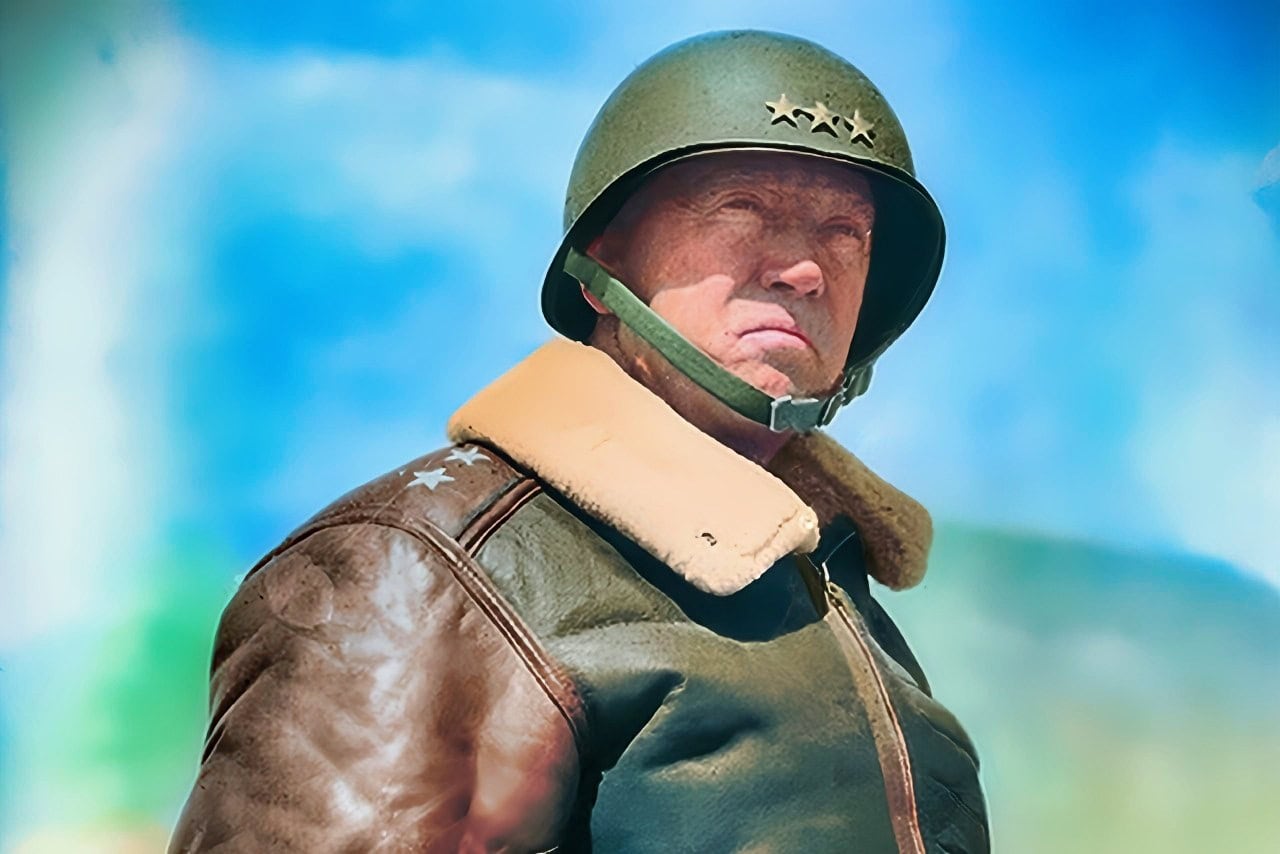
George Patton U.S. Army Photo

General Patton Portrait. Image Credit: Creative Commons.
The combined airstrikes eliminated more than 40 members of Iran’s senior leadership. Airstrikes pummeled Iranian air defenses, command centers, and missile infrastructure. The campaign rapidly dismantled IRGC capabilities, destroying 50+ Iranian Navy ships, significantly reducing missile launch capability, and maintaining air superiority.
The Allies quickly gained air superiority over Tehran; the only US or Israeli aircraft shot down were in a mistaken friendly fire incident.
The combined air operation saw the two allies displaying incredible proficiency in destroying Iranian combat capability, with 93 percent fewer missile launches and 80 percent fewer drone attacks after the initial airstrikes.
While Iran engaged in large-scale retaliation and hit some targets in the region, including in the Gulf States and against Israel, the overall operational success of Epic Fury’s first phase severely limited Tehran’s ability to wage a sustained, effective counter-offensive.
General George S. Patton’s quote remains as relevant today as it was more than 80 years ago. And while the Pentagon planners may not have thought about Patton’s words when this operation began, they followed his tenets perfectly.
About the Author: Steve Balestrieri
Steve Balestrieri is a National Security Columnist. He served as a US Army Special Forces NCO and Warrant Officer. In addition to writing on defense, he covers the NFL for PatsFans.com and is a member of the Pro Football Writers of America (PFWA). His work has been regularly featured in many military publications.