
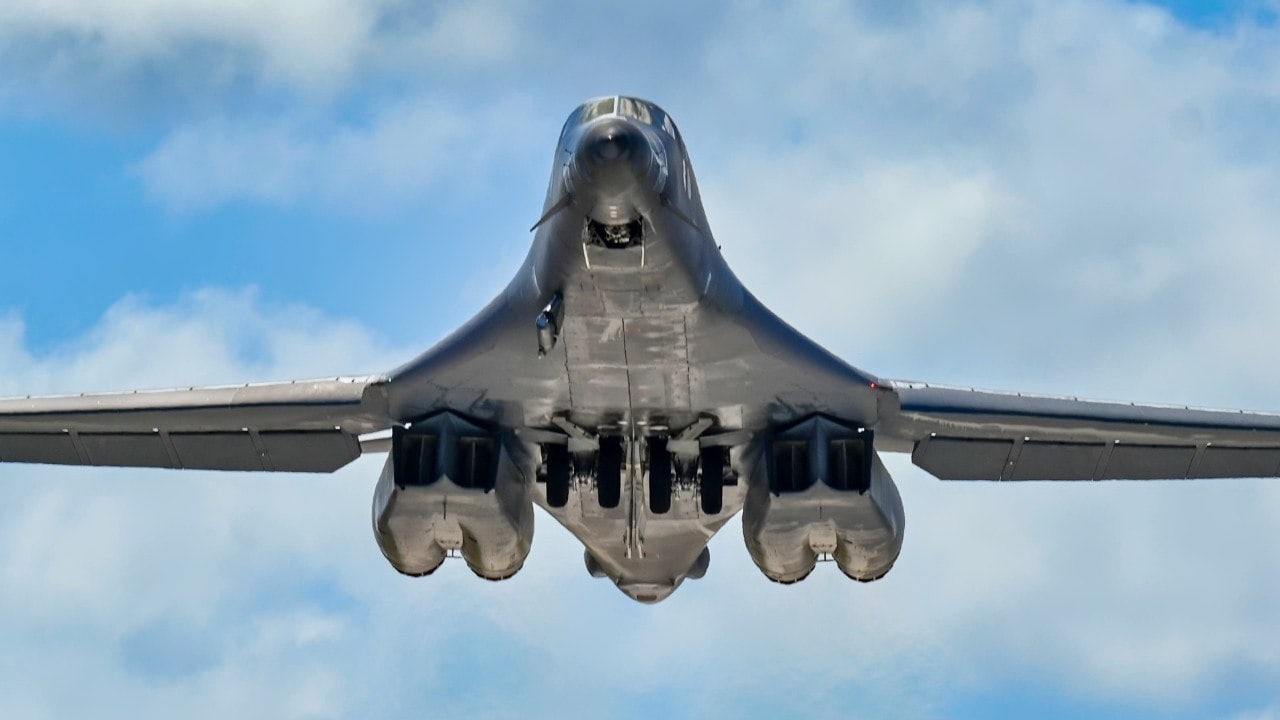
Summary and Key Points: British defense researcher Jack Buckby analyzes the devastating role of the B-1B Lancer during the March 2, 2026, strikes deep inside Iran.
-While the Lancer lacks the radar-evading stealth of the B-2 or upcoming B-21, its true power lies in its unmatched 75,000-pound payload capacity.
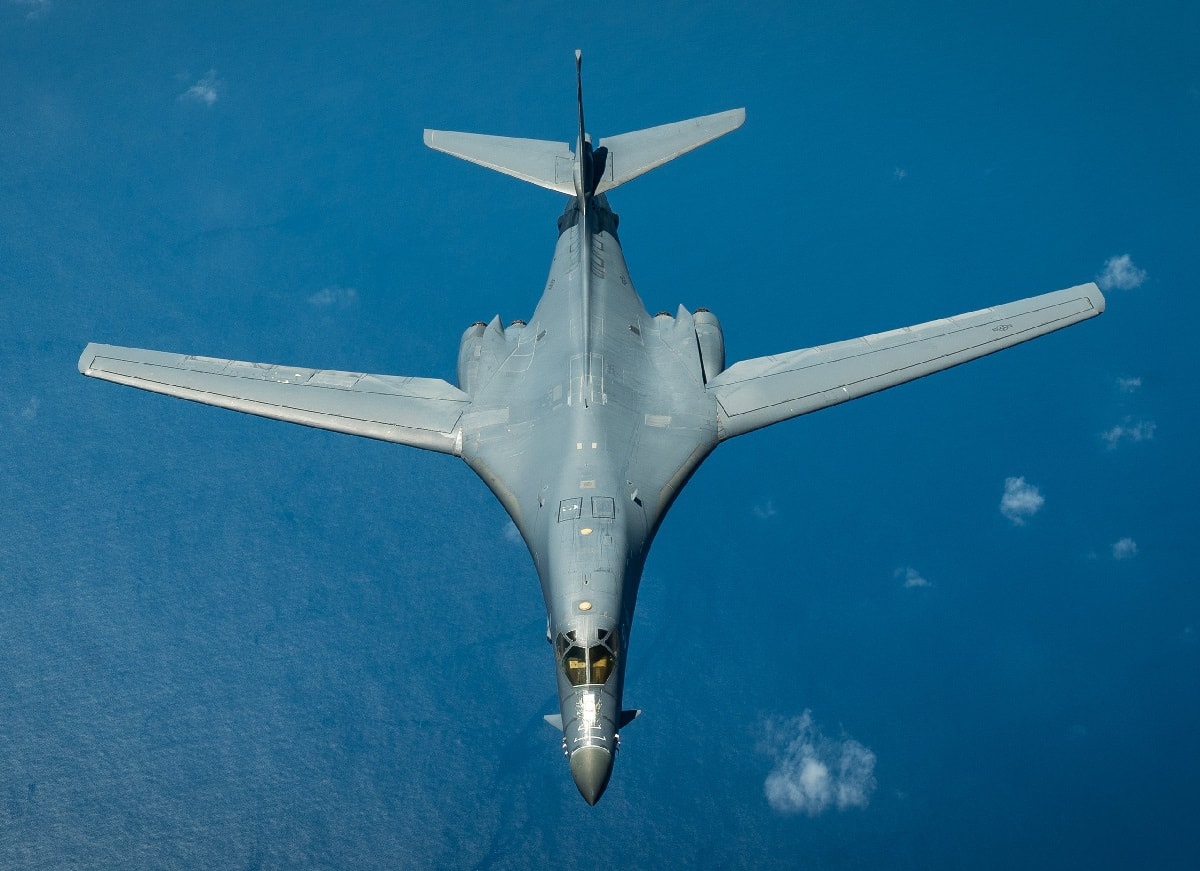
A U.S. Air Force B-1B Lancer assigned to the 37th Expeditionary Bomb Squadron, deployed from Ellsworth Air Force Base, S.D. to Andersen AFB, Guam, flies a training mission over the Pacific Ocean Aug. 16, 2017. During the mission two B-1s were joined by Japan Air Self-Defense Force F-15s in the vicinity of the Sankaku Islands. These training flights with Japan demonstrate the solidarity and resolve we share with our allies to preserve peace and security in the Indo-Asia-Pacific. (U.S. Air Force photo/Staff Sgt. Joshua Smoot)

A B-1B Lancer assigned to the 28th Bomb Wing at Ellsworth Air Force Base, S.D., takes off on the first day of Red Flag 16-2 Feb. 29, 2016, at Nellis AFB, Nev. (U.S. Air Force photo/Airman First Class Keven Tanenbaum).
-Transitioned from a Cold War nuclear deterrent to a conventional “bomb truck” in the 1990s, the B-1B utilizes precision-guided JDAMs and JASSM cruise missiles to deliver overwhelming, rapid-succession firepower once air superiority is established, making it a uniquely lethal asset in the current Middle East conflict.
The B-1B Lancer’s Payload Is Its Real Strength
On March 2, 2026, U.S. Air Force B-1B Lancer bombers carried out long-range strikes against Iranian ballistic missile and command targets as part of the opening phase of the ongoing campaign. U.S. Central Command confirmed that multiple B-1Bs were used to hit targets deep inside Iran, with the aircraft flying extended missions from faraway bases to deliver the precision strikes.
Those missions represent the great strength of the B-1B: no, it’s not stealthy, and it is not designed to slip past advanced air defenses on its own, but it is extraordinarily capable once air superiority is established. And its payload capacity is what makes it one of the most lethal conventional bombers in the U.S. arsenal today, particularly in conflicts like Iran, where multiple targets must be struck quickly.
The B-1B and Why It Still Matters
The B-1B Lancer is a supersonic, long-range bomber developed during the Cold War and introduced into service in 1986.
It features variable-sweep wings, allowing it to adjust for high-speed flight or long-range efficiency depending on the mission.
Originally, the aircraft was designed as a nuclear strike platform intended to penetrate Soviet air defenses at low altitude. Its mission profile focused on speed, terrain-following flight, and survivability against radar systems.
That role changed after the Cold War. By the mid-1990s, the B-1B’s nuclear mission was removed, and it was converted into a purely conventional bomber.
Since then, it has been used extensively in conflicts, including Iraq and Afghanistan, where it became known for delivering large volumes of precision-guided munitions in support of ground forces.
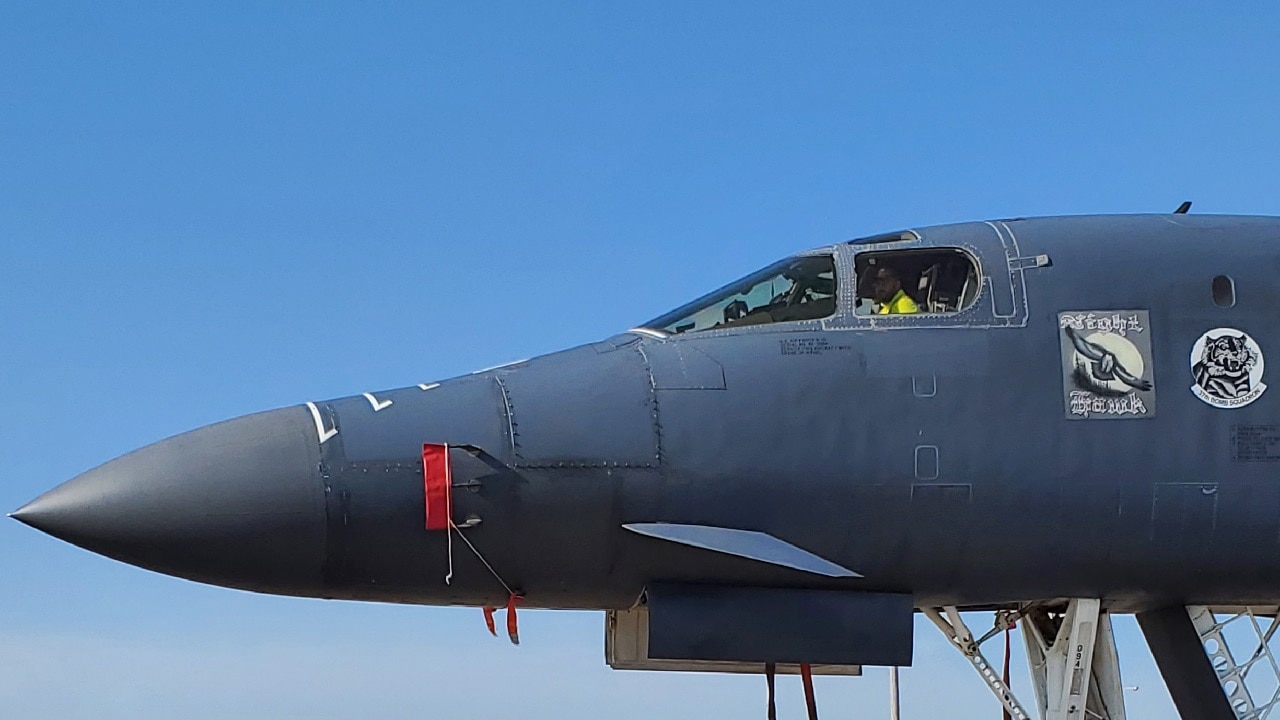
A B-1B Lancer, tail number 86-0094, is moved across Douglas Blvd. to the Maintenance Repair and Overhaul Technology Center (MROTC) to receive an initial portion of Gate 1 of programmed depot maintenance April 21. 567th AMXS personnel will perform three days of maintenance which include single system checks on 40 individual actuators validating voltage outputs as
well as interrogating each actuator for hydraulic leaks. After single systems are completed, the horizontal stabilizers will be removed from the aircraft. This is the first time that horizontal stabilizers have ever been removed at the MROTC. Once complete, the aircraft and horizontal stabilizers will be brought back across Douglas to the 569th AMXS strip facility for plastic media blasting. Once stripped, the horizontal stabilizers will be routed to the 76th Commodities Maintenance Group for overhaul and repairs. (U.S. Air Force photo/Kelly White)
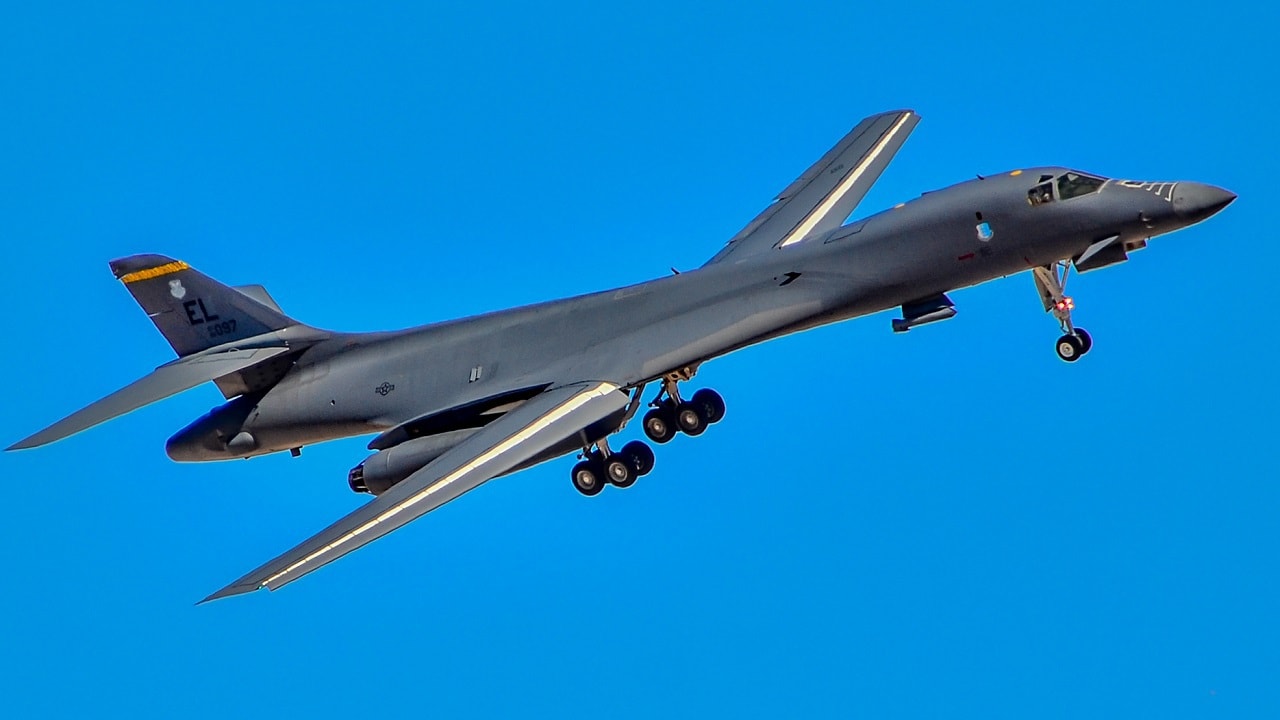
B-1B Bomber. Image Credit: Creative Commons.
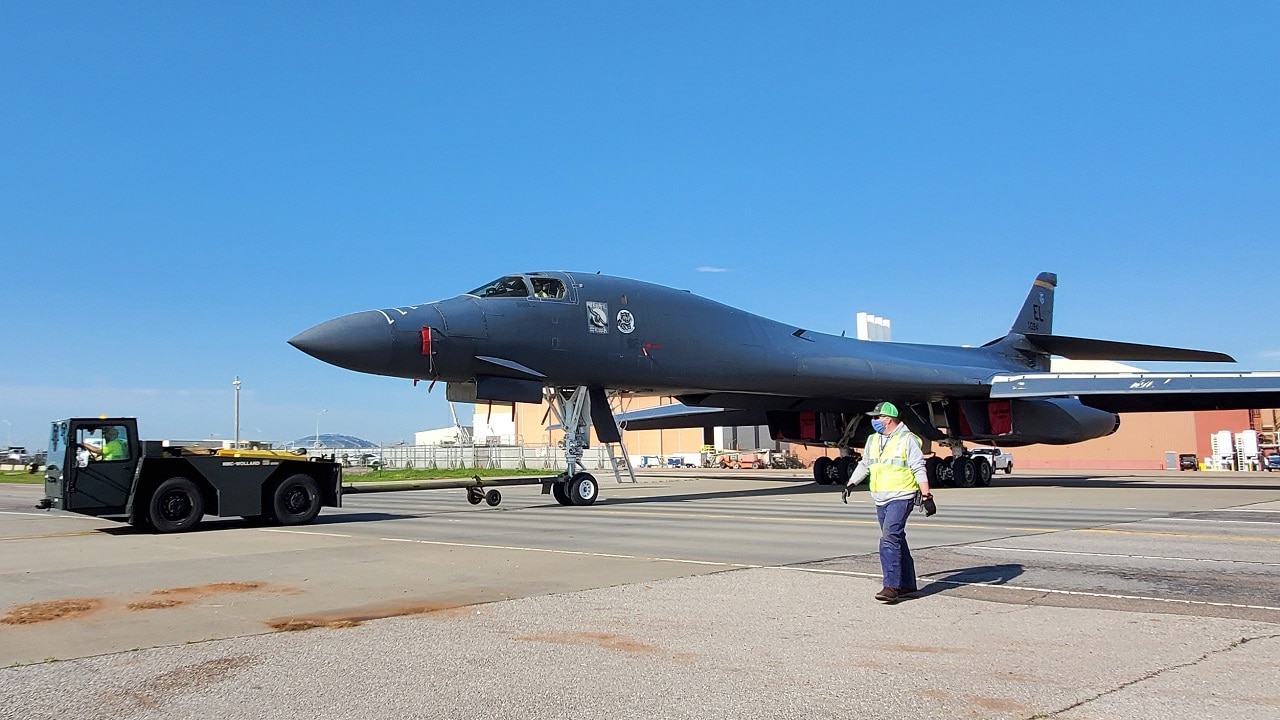
A B-1B Lancer, tail number 86-0094, is moved across Douglas
Blvd. to the Maintenance Repair and Overhaul Technology Center (MROTC) to receive an initial portion of Gate 1 of programmed depot maintenance April 21. 567th AMXS personnel will perform three days of maintenance which include single system checks on 40 individual actuators validating voltage outputs as
well as interrogating each actuator for hydraulic leaks. After single systems are completed, the horizontal stabilizers will be removed from the aircraft. This is the first time that horizontal stabilizers have ever been removed at the MROTC. Once complete, the aircraft and horizontal stabilizers will be brought back across Douglas to the 569th AMXS strip facility for plastic media blasting. Once stripped, the horizontal stabilizers will be routed to the 76th Commodities Maintenance Group for overhaul and repairs. (U.S. Air Force photo/Kelly White)
Today, the aircraft occupies a very specific niche in the U.S. bomber fleet. It lacks the stealth of the B-2, but it offers far greater payload flexibility than most other platforms. That combination of range, speed, and payload capacity is what keeps it operationally relevant decades after its introduction.
How Many Bombs Can the B-1 B Carry?
The B-1B’s defining feature is its payload. The aircraft can carry up to 75,000 lbs of weapons across three internal bomb bays, which is the largest conventional payload of any U.S. Air Force bomber. That payload translates into enormous strike capacity in a single aircraft and single mission, with a typical maximum configuration potentially including as many as 84 500-lb JDAMs or 24 2,000-lb JDAMs.
The JDAM (Joint Direct Attack Munition) is a guidance kit that turns unguided bombs into GPS-guided precision weapons. JASSM (Joint Air-to-Surface Standoff Missile) weapons, meanwhile, are long-range cruise missiles designed to strike targets from outside heavily defended airspace.
The B-1B’s internal launcher system allows it to release large numbers of these weapons in quick succession.
That means a single aircraft can strike dozens of targets in a single sortie, or saturate a single area with multiple precision strikes. That’s precisely what makes the aircraft so lethal, because while stealth bombers focus on penetrating defenses, the B-1B focuses on delivering overwhelming firepower once access to the battlefield has been secured.
From Nuclear to Precision Strike
The B-1 program was originally meant for nuclear purposes: the aircraft was a nuclear bomber capable of carrying weapons like gravity bombs and short-range nuclear missiles. Early variants, including the B-1A, were designed to carry large numbers of nuclear weapons as part of Cold War deterrence.
That mission no longer exists. Following arms control agreements in the 1990s, the B-1B was stripped of its nuclear capability and reconfigured for conventional warfare.
Since then, its weapons integration has evolved quite significantly, with the B-1 now routinely carrying JDAM precision-guided bombs, the AGM-158 cruise missile, and Long Range Anti-Ship Missiles (LRASM) for maritime strike roles. That change means that the B-1 no longer relies on unguided “dumb bombs” and instead uses precision weapons better suited to modern operations.
It means the platform is now far more flexible than the original design intended. It is more than a mere strategic bomber, having become a multi-role strike aircraft capable of supporting ground forces and hitting both infrastructure and naval targets.
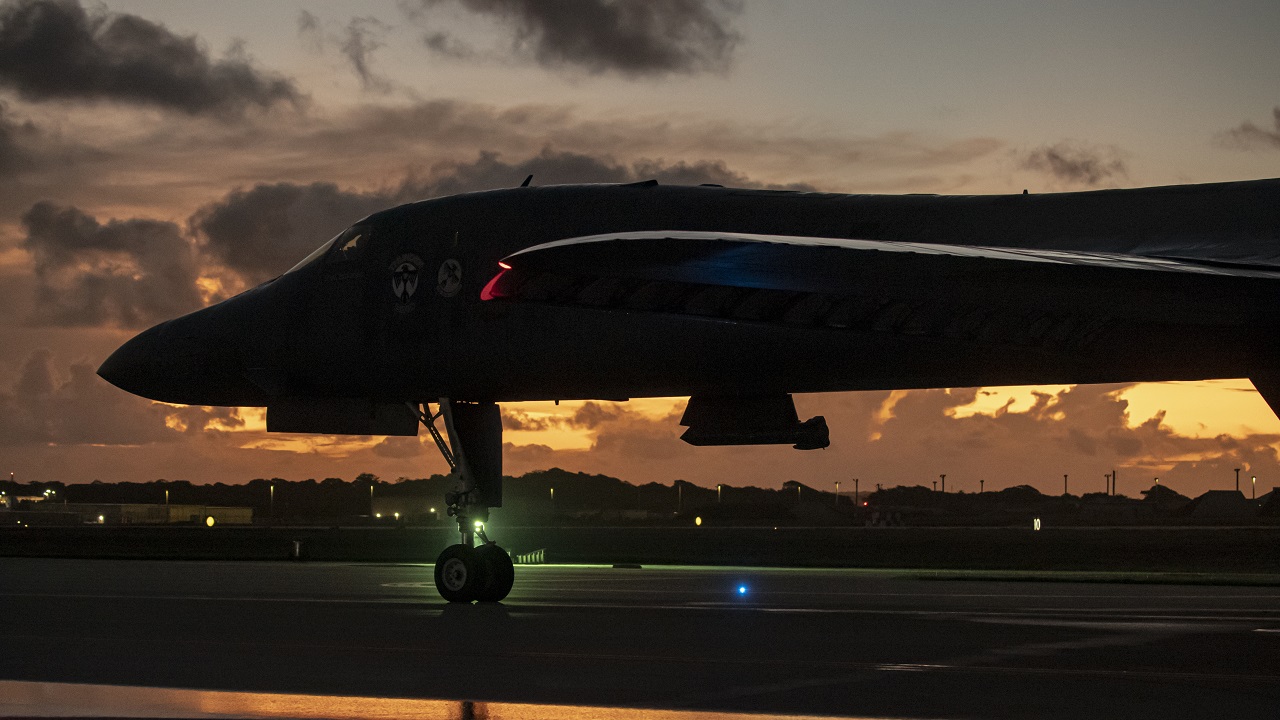
A U.S. Air Force B-1B Lancer attached to the 34th Expeditionary Bomb Squadron, Ellsworth Air Force Base, South Dakota, prepares to park as the sun sets at Anderson Air Force Base, Guam, June 8, 2022. Bomber Task Force missions strengthen the collective ability of the U.S. and our allies and partners to maintain a free and open Indo-Pacific. (U.S. Air Force Photo by Tech. Sgt. Chris Hibben)
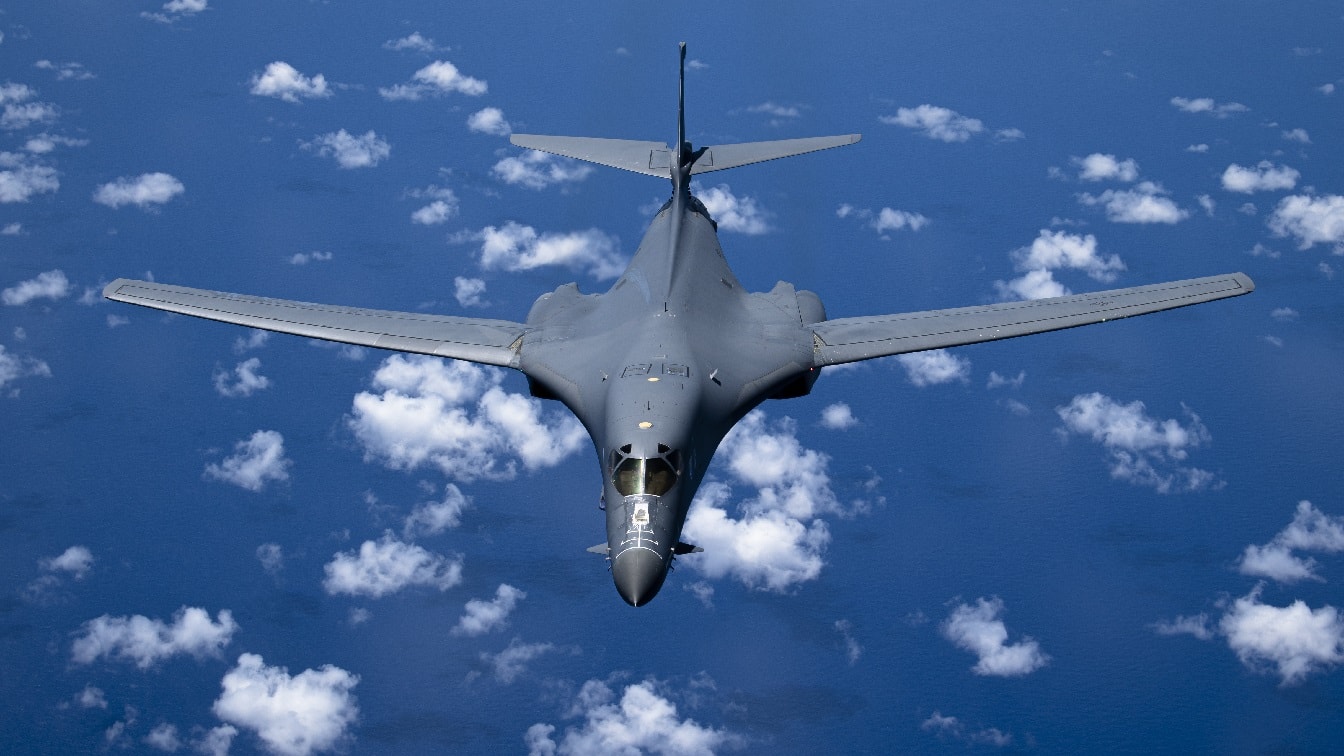
A U.S. Air Force B-1B Lancer, attached to the 34th Expeditionary Bomb Squadron, Ellsworth Air Force Base, South Dakota, flies over the Pacific Ocean after taking off from Andersen Air Force Base, Guam, June 12, 2022. Bomber Task Force missions contribute to joint force lethality and deter aggression in the Indo-Pacific by demonstrating the United States Air Force’s ability to operate anywhere in the world at any time in support of the National Defense Strategy. (U.S. Air Force Photo by Tech. Sgt. Chris Hibben)
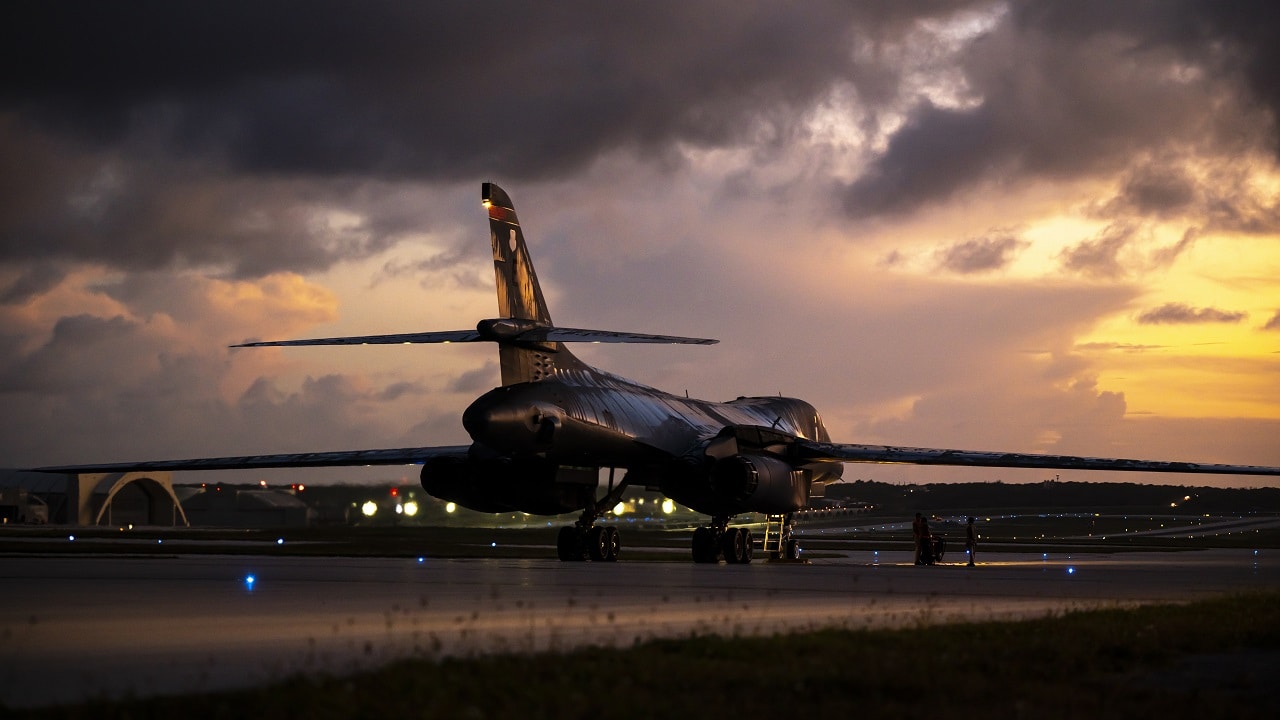
A B-1B Lancer bomber assigned to the 34th Expeditionary Bomb Squadron, Ellsworth Air Force Base, S.D., waits to be guided into a parking spot after returning to Andersen Air Force Base, Guam, from a bomber task force mission, June 8, 2022. U.S. Air Force photo by Master Sgt. Nicholas Priest.
What the B-1B Carries Today – and What Comes Next
Today, and including during the strikes on Iran, the B-1B is primarily used as a conventional strike platform carrying precision-guided munitions and standoff weapons.
Typical loadouts include JDAMs for direct attack missions and JASSM missiles for longer-range strikes. And while it remains effective, the platform is aging.
The U.S. Air Force has already reduced the fleet size, and the aircraft is expected to be gradually replaced by the next-generation B-21 Raider over the coming years.
Even so, the B-1B continues to fill a critical role. It can deliver large quantities of precision weapons quickly and over long distances, even at short notice. That capability is difficult to replace, even with newer aircraft entering service.
About the Author: Jack Buckby
Jack Buckby is a British researcher and analyst specialising in defence and national security, based in New York. His work focuses on military capability, procurement, and strategic competition, producing and editing analysis for policy and defence audiences. He brings extensive editorial experience, with a career output spanning over 1,000 articles at 19FortyFive and National Security Journal, and has previously authored books and papers on extremism and deradicalisation.