
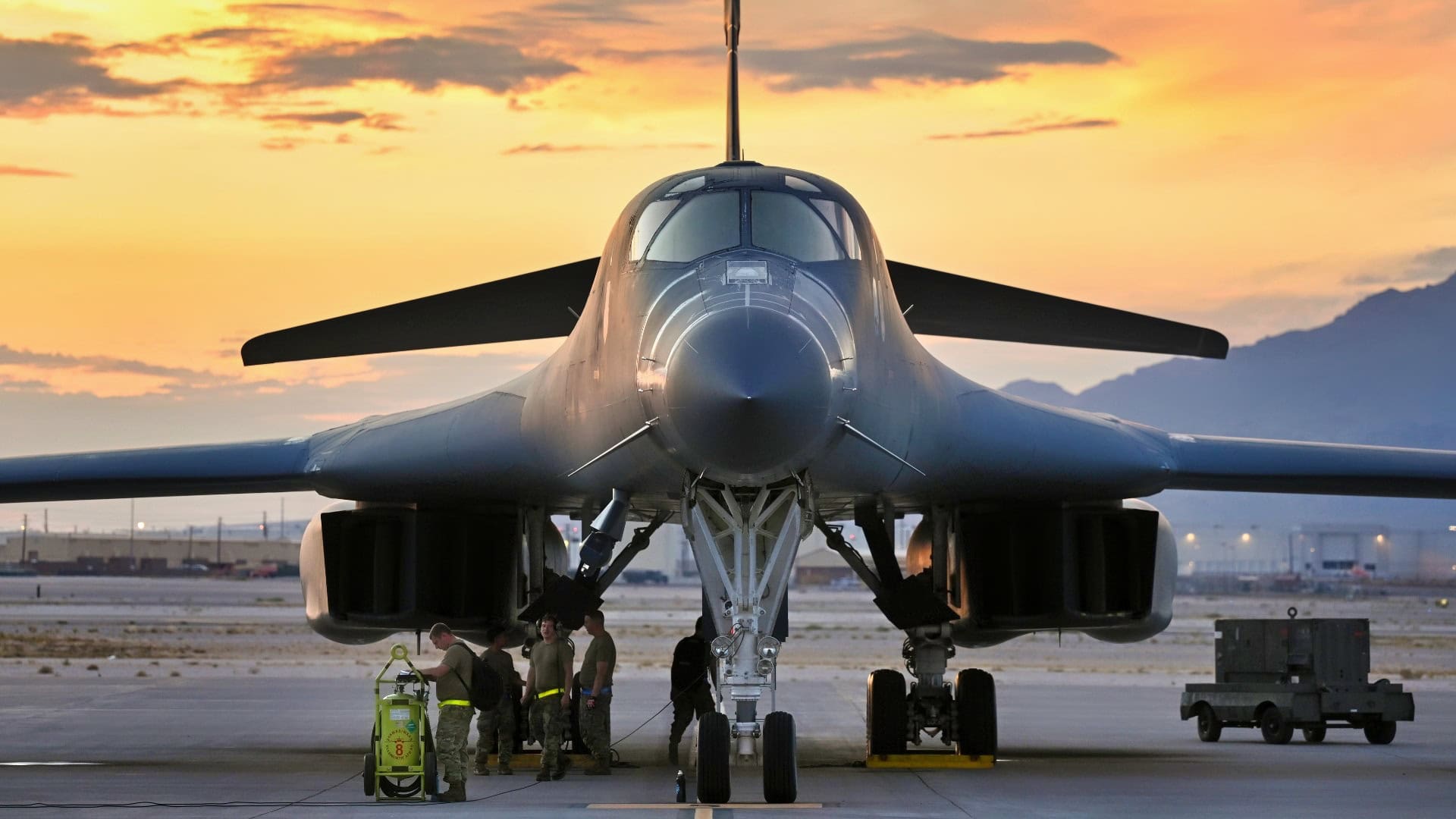
Key Points and Summary – The second B-21 Raider has arrived at Edwards AFB as Northrop Grumman builds out a fleet the Air Force hopes will reach at least 100—and maybe 145—stealth bombers.
-That ambition collides with reality: just 140 bombers are in service today, while threats from Iran, China, Russia, and North Korea are multiplying.
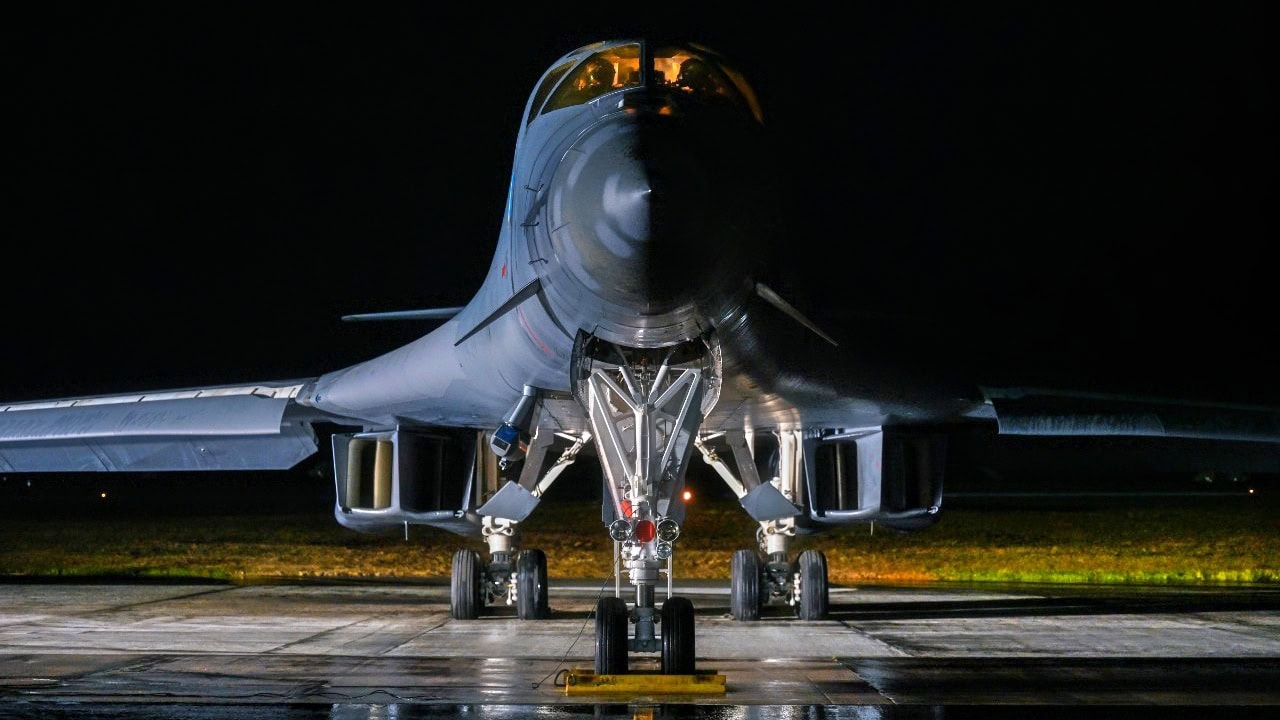
A U.S. Air Force B-1B Lancer assigned to the 34th Expeditionary Bomb Squadron, prepares to taxi onto the runway at Andersen Air Force Base, Guam, prior to a mission in support of Bomber Task Force 25-1, Feb. 27, 2025. Bomber missions demonstrate the credibility of U.S. Air Forces to address a complex and uncertain security environment. (U.S. Air Force photo by Airman 1st Class Alec Carlberg)
-Until enough B-21s are on the ramp, the non-stealth B-1B Lancer will stay in the fight as a stand-off “missile truck,” carrying JASSMs and future hypersonic weapons on new external pylons.
-Costly and maintenance-intensive or not, the B-1B will be essential well into the 2030s.
The B-1B Lancer Is Going Full Missile-Truck Beast Mode
The Air Force has recently announced that the second B-21 Raider has arrived at Edwards Air Force Base in California for testing.
The third is being built at the Northrop Grumman plant in Palmdale, and three others are in various stages of production. Meanwhile, a few airframes are undergoing evaluation before assembly. The new stealth bomber is on time and under budget. The Air Force plans to purchase at least 100 B-21s, with the first aircraft expected to be delivered by 2026.
The Air Force would like to build and procure ten a year in the 2030s. That might be too low to meet the glaring need for bombers. Some analysts and members of the Air Force brass have even called for the production of 145 B-21s. Will the service branch be able to hit those numbers?
B-1B Service Until the Next Decade
If there are delays and cost overruns in the program, which have historically been recurring issues, the B-21 may not be able to replace the B-1B Lancer fully.
This could mean the Lancer will remain in production into the 2030s.
Would this be a bad thing?

A B-1B Lancer assigned to Ellsworth Air Force Base, S.D, takes off in support of a Bomber Task Force mission at Naval Support Facility Diego Garcia, Nov. 2, 2021. Bomber missions provide opportunities to train and work with our allies and partners in joint and coalition operations and exercises. (U.S. Air Force photo by Staff Sgt. Hannah Malone)
At least the Air Force would still have a dependable bomber, but the Lancer is not stealthy. The recent bombing of Iranian nuclear sites with B-2 Spirits showed that stealth strike aircraft are desperately needed in the fleet.
Changing Threat Environment
The ideal bomber mix would have the B-21, the B-2, and the B-52J. This may take a while to achieve. The B-21 Raider program goes back nearly 15 years to when the airplane was first conceptualized. That’s when the U.S. military became more involved in counterinsurgency and counter-terrorism efforts in the Middle East and South Asia.
Now the threat environment has changed. Iran could always begin work on nuclear weapons again. China could attack Taiwan.
Russia could try to annex the Baltics, and North Korea could invade South Korea. This is a multiplication of geopolitical threats that requires as many bombers as possible to be in the mix.
There are currently 140 bombers in the fleet with B-1Bs, B-2s, and B-52s. The Air Force would like to have 75 B-52s to complement a minimum of 100 B-21s.
Nineteen B-2 Spirits are in service. President Trump wants to order 28 new B-2s, but the Spirit’s production line is not open, and re-starting it would be difficult and time-consuming – perhaps not even possible. However, this highlights the significant value of stealth bombers in meeting America’s strategic needs.
The bomber fleet could then comprise 75 B-52Js and 145 B-21s in the 2030s. This would result in 220 bombers, but achieving this goal will require a transition that necessitates the B-1B’s continued service.
Quick History of the B-1 Program
The B-1 program has been around for 40 years. It has the largest conventional payload of precision and non-precision weapons at a monstrous 75,000 pounds. The B-1B was meant to replace the B-52, but that didn’t happen as planned. The B-52 proved a sturdy and updatable airframe that could fly at higher altitudes. The B-1B flies faster than the Stratofortress.
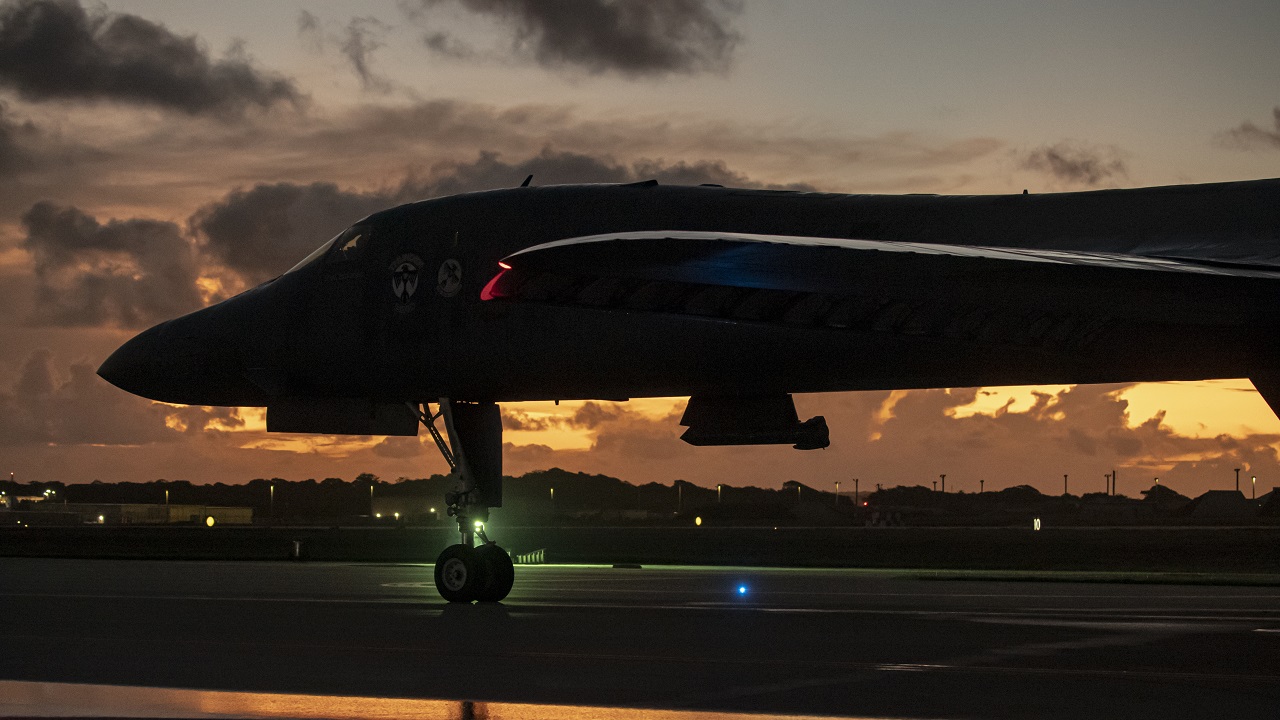
A U.S. Air Force B-1B Lancer attached to the 34th Expeditionary Bomb Squadron, Ellsworth Air Force Base, South Dakota, prepares to park as the sun sets at Anderson Air Force Base, Guam, June 8, 2022. Bomber Task Force missions strengthen the collective ability of the U.S. and our allies and partners to maintain a free and open Indo-Pacific. (U.S. Air Force Photo by Tech. Sgt. Chris Hibben)
“The B-1’s ability to deploy quickly, operate at supersonic speeds, and carry the largest conventional payload makes it inherently unpredictable to adversaries and a flexible combat asset. Whether it’s integrating with our allies or responding to our adversaries, the B-1 enables a forward presence alongside critical strategic reach. Our adversaries never know when or where a B-1 will show up, but they all know exactly what it can do when it does,” said Lt. Col. Ryan Stillwell, 9th Bomb Squadron commander, during the 40th anniversary of the B-1 program in June.
In 2024, B-1Bs flew a 34-hour mission from Dyess Air Force Base to hit terrorist targets in Iraq and Syria. The B-1Bs were refueled in the air, and all weapons were deployed in the successful strike.
Is This More of a Cold War Relic?
However, the B-1B was designed for the Cold War. The high speed was considered an advantage against Soviet surface-to-air missiles. It started as a strategic nuclear-capable bomber but transitioned to a conventional-only role after arms control treaties with Russia during the 1990s.
B-1Bs are now difficult and expensive to maintain. Approximately 42 are on active duty, with some retired personnel then re-entering active duty from the “Boneyard” at Davis-Monthan Air Force Base in Arizona. The years of flying in the Middle East’s hot, dusty, and sandy environment have taken a toll on the B-1B fleet.
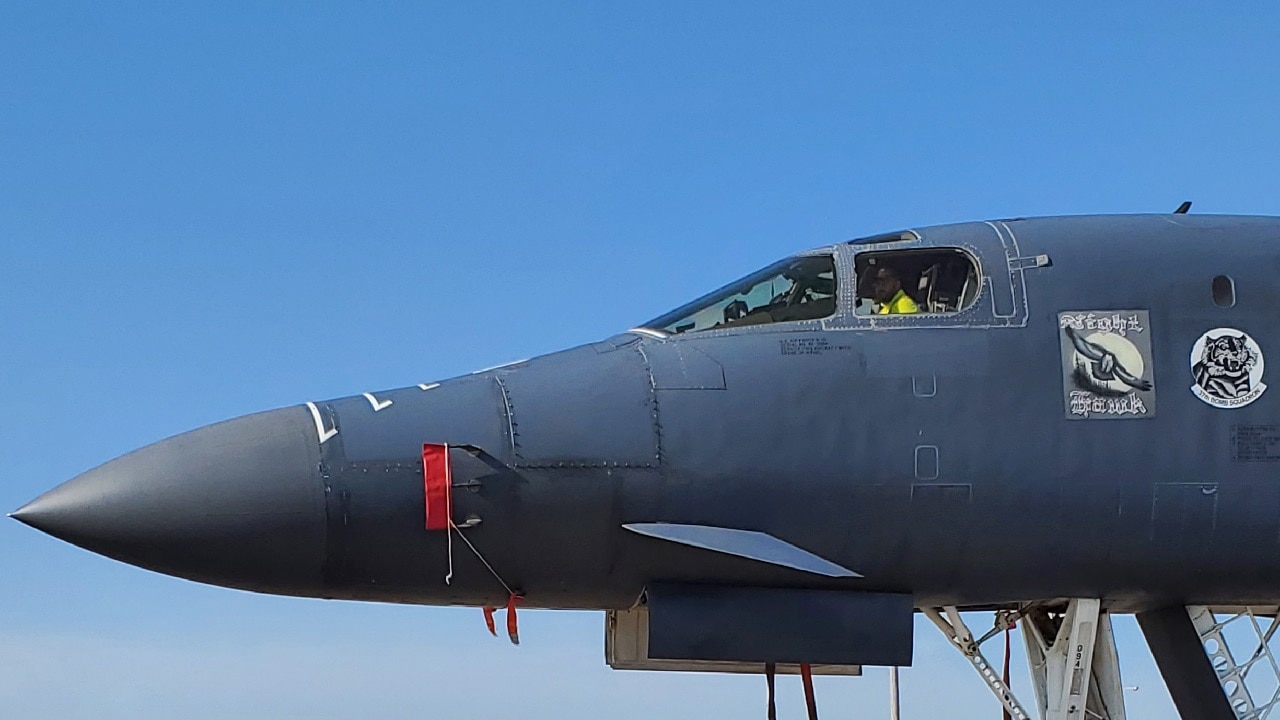
A B-1B Lancer, tail number 86-0094, is moved across Douglas
Blvd. to the Maintenance Repair and Overhaul Technology Center (MROTC) to receive an initial portion of Gate 1 of programmed depot maintenance April 21. 567th AMXS personnel will perform three days of maintenance which include single system checks on 40 individual actuators validating voltage outputs as
well as interrogating each actuator for hydraulic leaks. After single systems are completed, the horizontal stabilizers will be removed from the aircraft. This is the first time that horizontal stabilizers have ever been removed at the MROTC. Once complete, the aircraft and horizontal stabilizers will be brought back across Douglas to the 569th AMXS strip facility for plastic media blasting. Once stripped, the horizontal stabilizers will be routed to the 76th Commodities Maintenance Group for overhaul and repairs. (U.S. Air Force photo/Kelly White)
B-1B Lancer Goes Missile Truck Beast Mode
The B-1B is still receiving upgrades, though, as the Air Force knows, the venerable airplane will have to fly longer until the B-21 enters active duty.
The service branch is adding external Load Adaptable Modular (LAM) pylons to carry more ordnance, advanced cruise missiles, and hypersonic weapons.
The JASSM standoff cruise missile, ARRW hypersonic weapon, and HACM hypersonic cruise missile will be part of this potent mix for the B-1B.
The Lancer will thus become a stand-off missile truck, and that is just fine with the Air Force.
The B-1B, despite its maintenance issues, remains a relevant aircraft with these weapons. The Air Force has no choice but to upgrade it for more munition potential with modernized hypersonic missiles.
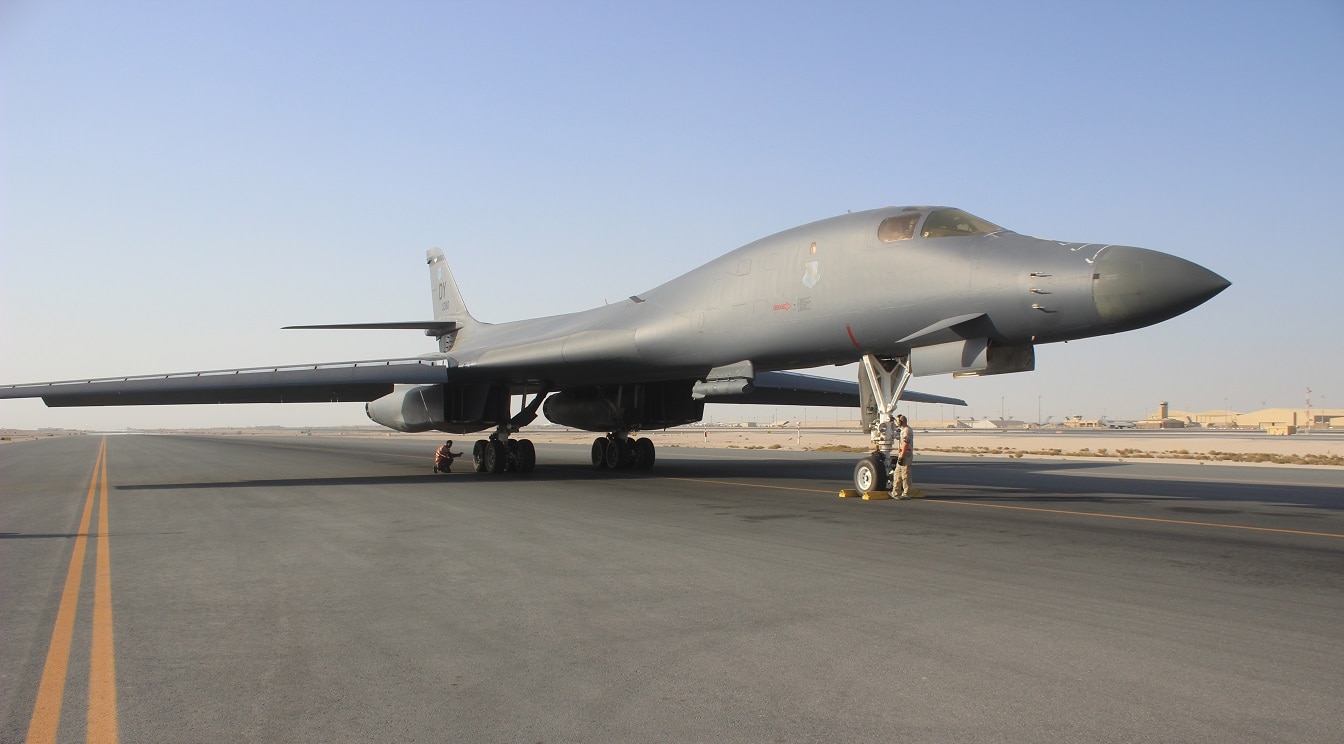
U.S. Air Force maintainers from Ellsworth Air Force Base, South Dakota, work 24/7 servicing and inspecting the B-1B Lancer. They are maintainers within the 379th Air Expeditionary Wing’s 34th Expeditionary Aircraft Maintenance Unit (nicknamed “the backbone of the bone”) and provide hundreds of thousands of manpower hours during six month deployments to Al Udeid Air Base, Qatar. Maintainers comprise approximately a dozen different career specialties to ensure the aircraft flies and meets mission throughout the Middle East. The Lancer carries the largest conventional payload of guided and unguided weapons in the Air Force inventory.
This means that the B-1B will require attention from congressional lawmakers and additional funding to remain updated before the B-21 is ready.
The Lancer is still ready to answer the call and be a valuable asset. They may be retired one for one as the Raider comes on to active duty in the coming years.
The B-1B is not stealthy, but due to its stand-off mission, it may act like a B-52. This capability will allow it to serve until at least 2030.
About the Author: Brent M. Eastwood
Brent M. Eastwood, PhD is the author of Don’t Turn Your Back On the World: a Conservative Foreign Policy and Humans, Machines, and Data: Future Trends in Warfare plus two other books. Brent was the founder and CEO of a tech firm that predicted world events using artificial intelligence. He served as a legislative fellow for US Senator Tim Scott and advised the senator on defense and foreign policy issues. He has taught at American University, George Washington University, and George Mason University. Brent is a former US Army Infantry officer. He can be followed on X @BMEastwood.