
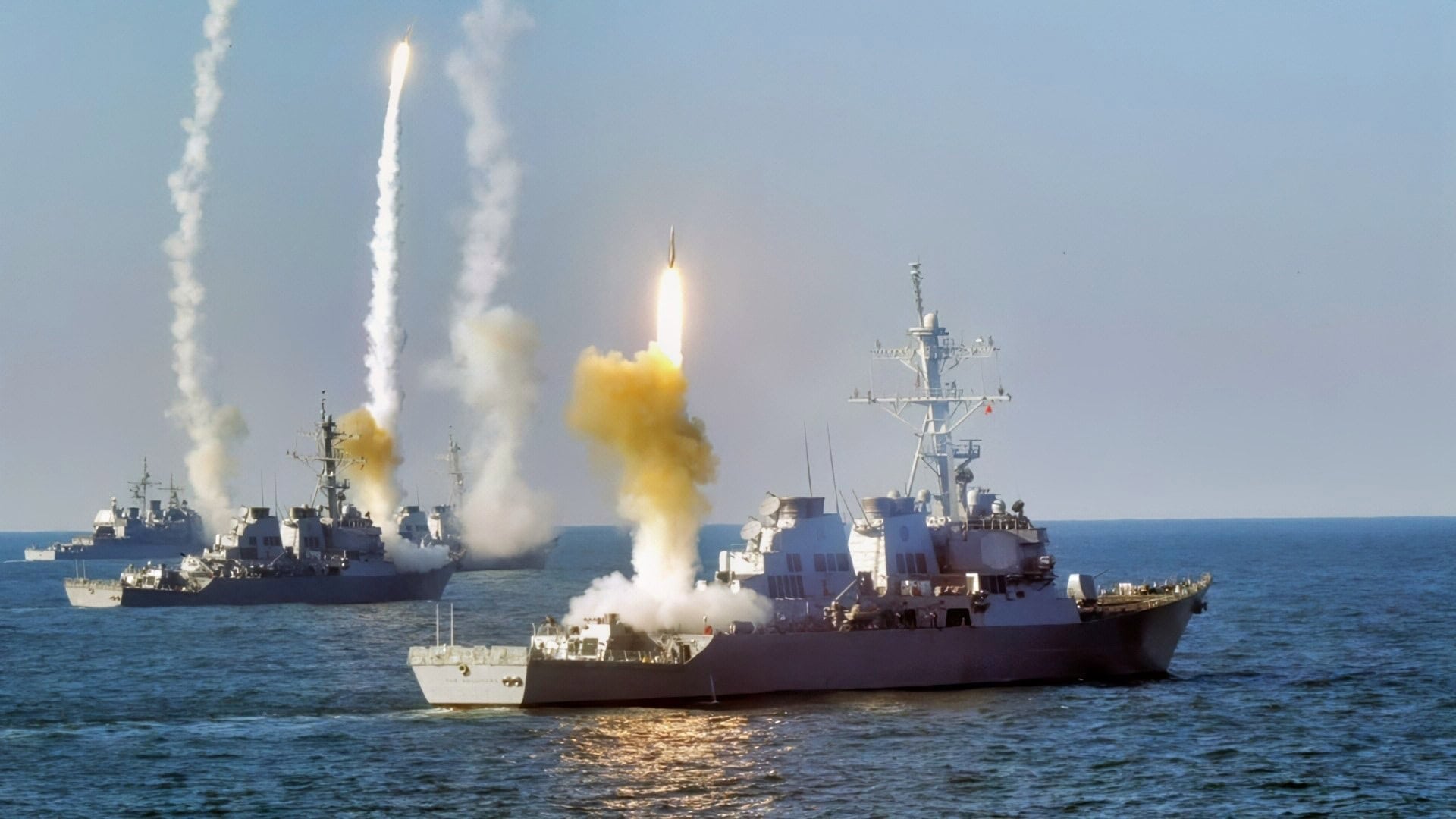
Summary and Key Points: While most of the U.S. Navy’s modernization portfolio is struggling, delayed, or stuck on a Pentagon slide, one platform is quietly running circles around the rest of the fleet: the Arleigh Burke Flight III destroyer. At roughly $2.5 billion per hull, the Navy gets a 9,700-ton multi-mission warship with 96 vertical launch cells, the most advanced shipboard radar in the world, and a real-world combat record from the Iran war that no other surface platform can match.
Why The Arleigh Burke Flight III Is The Best Platform The U.S. Navy Has Today
The U.S. Navy is short of submarines. The F/A-XX is still three months from contract decision. The Constellation-class frigate program was canceled. The Ford-class is years late and over budget. The Trump-class battleship is a presidential announcement and a couple of renderings. Looked at honestly, most of the Navy’s modernization portfolio in 2026 is either struggling, delayed, or still sitting on a slide somewhere in the Pentagon.
And then there is the Arleigh Burke Flight III destroyer. Which is delivering on schedule, with a radar that does things no other shipboard system on Earth can do, and which has spent the past two months doing the actual work of the Iran war — clearing mines in the Strait of Hormuz, enforcing the blockade of Iranian ports, and disabling the first Iranian merchant vessel that tried to defy that blockade with a 5-inch gun fired in anger.
The case for the Flight III is straightforward. At roughly $2.5 billion per hull, the Navy gets a 9,700-ton multi-mission warship with 96 vertical launch cells, integrated air and ballistic missile defense, the most advanced shipboard radar in the world, and a combat record from the past two years that nothing else in the surface fleet can match. There is no other platform in the U.S. inventory that delivers this much capability per dollar.
Arleigh Burke-class: The History Lesson
The Arleigh Burke-class began life in the early 1980s as the U.S. Navy’s solution to a specific problem.
Soviet anti-ship missile threats were growing more capable. The Spruance-class destroyers were aging out. The Ticonderoga-class cruisers, while extraordinarily capable, were too expensive to build in the numbers the surface fleet needed. The Navy wanted a smaller, cheaper, more producible warship that could carry the same Aegis Combat System as the Ticonderogas — and could be built at multiple yards for sustained serial production.
Bath Iron Works received the lead-ship contract in April 1985. The lead hull, USS Arleigh Burke (DDG-51), was commissioned on the Fourth of July, 1991, with Admiral Burke himself attending the ceremony. The original Flight I ships displaced about 8,300 tons. They carried a 90-cell Mk 41 Vertical Launch System, the SPY-1D radar, and the original Aegis combat suite.
The class was supposed to give way to the Zumwalt destroyer in the early 2000s. That did not happen. The Zumwalt program was truncated to three hulls in 2009 after costs ballooned past $7 billion per ship, and the Navy went back to building Burkes. Flight II added improved electronics. Flight IIA added a flight deck and helicopter hangar for two embarked SH-60s, plus combat system updates. Restart of construction at Bath Iron Works and HII Ingalls Shipbuilding kept the production line going through the 2010s while the surface combatant community figured out what came next.
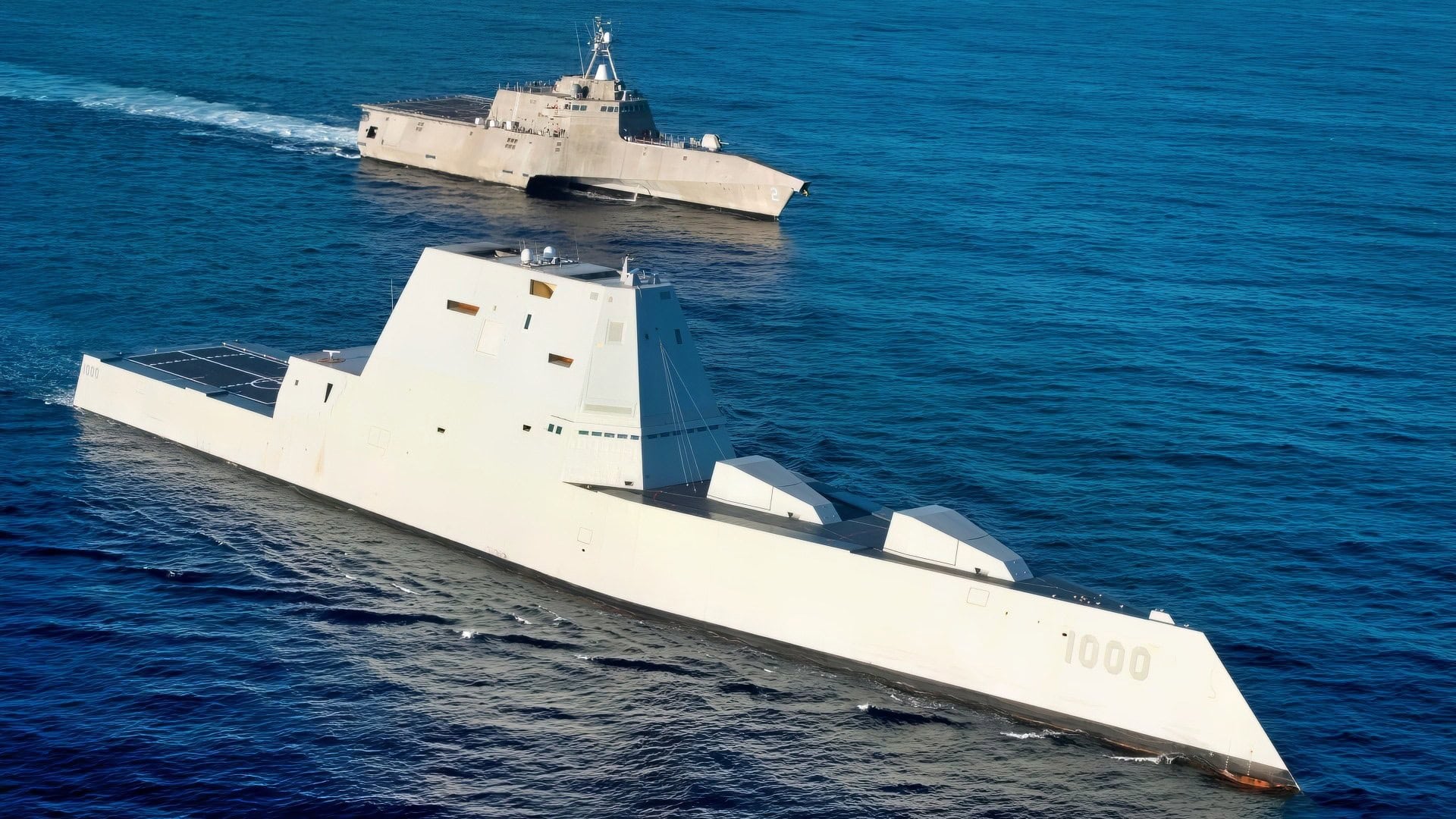
Dec. 8, 2016) The guided-missile destroyer USS Zumwalt (DDG 1000), left, the Navy’s most technologically advanced surface ship, is underway in formation with the littoral combat ship USS Independence (LCS 2) on the final leg of its three-month journey to its new homeport in San Diego. Upon arrival, Zumwalt will begin installation of its combat systems, testing and evaluation, and operation integration with the fleet. (U.S. Navy photo by Petty Officer 1st Class Ace Rheaume/Released)
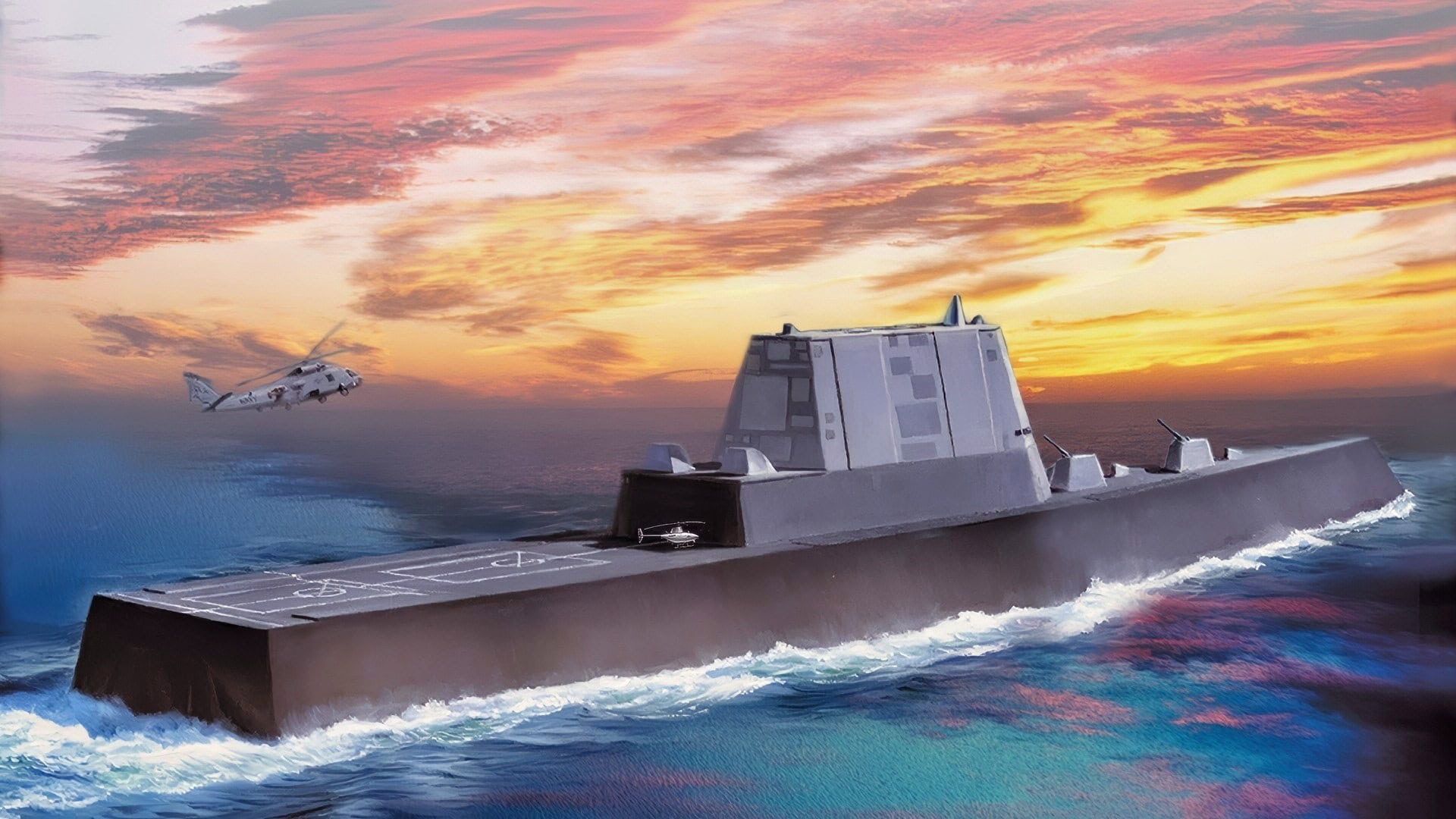
Zumwalt-Class Artist Rendering. Image Credit: Creative Commons.
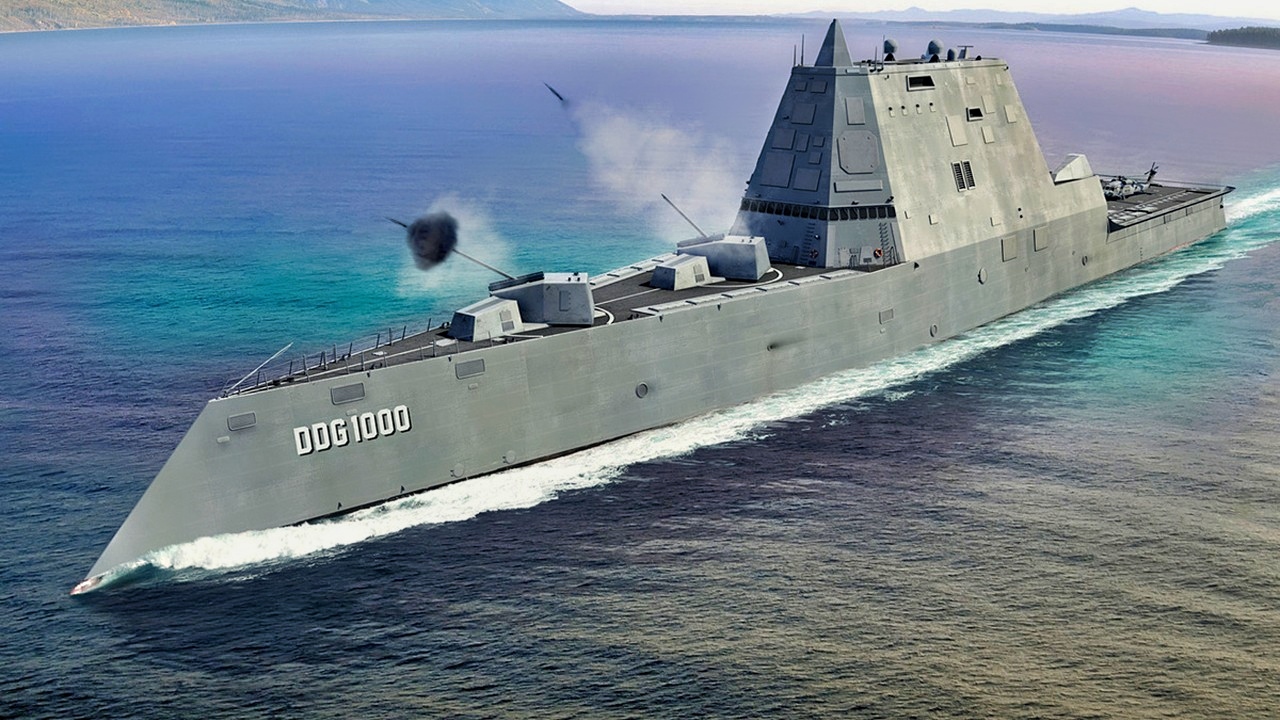
Zumwalt-Class U.S. Navy Destroyer. Image Credit: Creative Commons.
What came next was Flight III.
The Radar That Changed Everything
The single most important upgrade on the Flight III is the AN/SPY-6(V)1 Air and Missile Defense Radar. Built by Raytheon, the SPY-6 is a four-sided active electronically scanned array with 37 Radar Modular Assemblies per face, providing full 360-degree coverage.
Each RMA is a self-contained two-foot cube AESA module that can be linked with adjacent modules to focus radar energy on a specific task. The architecture is modular, scalable, and gallium nitride-based — meaning the same radar family can be configured for a destroyer, a frigate, a carrier, or an amphibious ship.
The performance numbers are not subtle. The SPY-6 delivers a 15 dB sensitivity improvement over the SPY-1D it replaces, capable of detecting targets half the size at twice the distance of the older radar. It conducts air defense and ballistic missile defense simultaneously rather than choosing between them — a limitation that defined the operational employment of the SPY-1D for thirty years. It tracks ballistic missiles, hypersonic glide vehicles, cruise missiles, drones, and surface contacts at the same time, in any combination, with higher discrimination accuracy than any previous shipboard sensor.
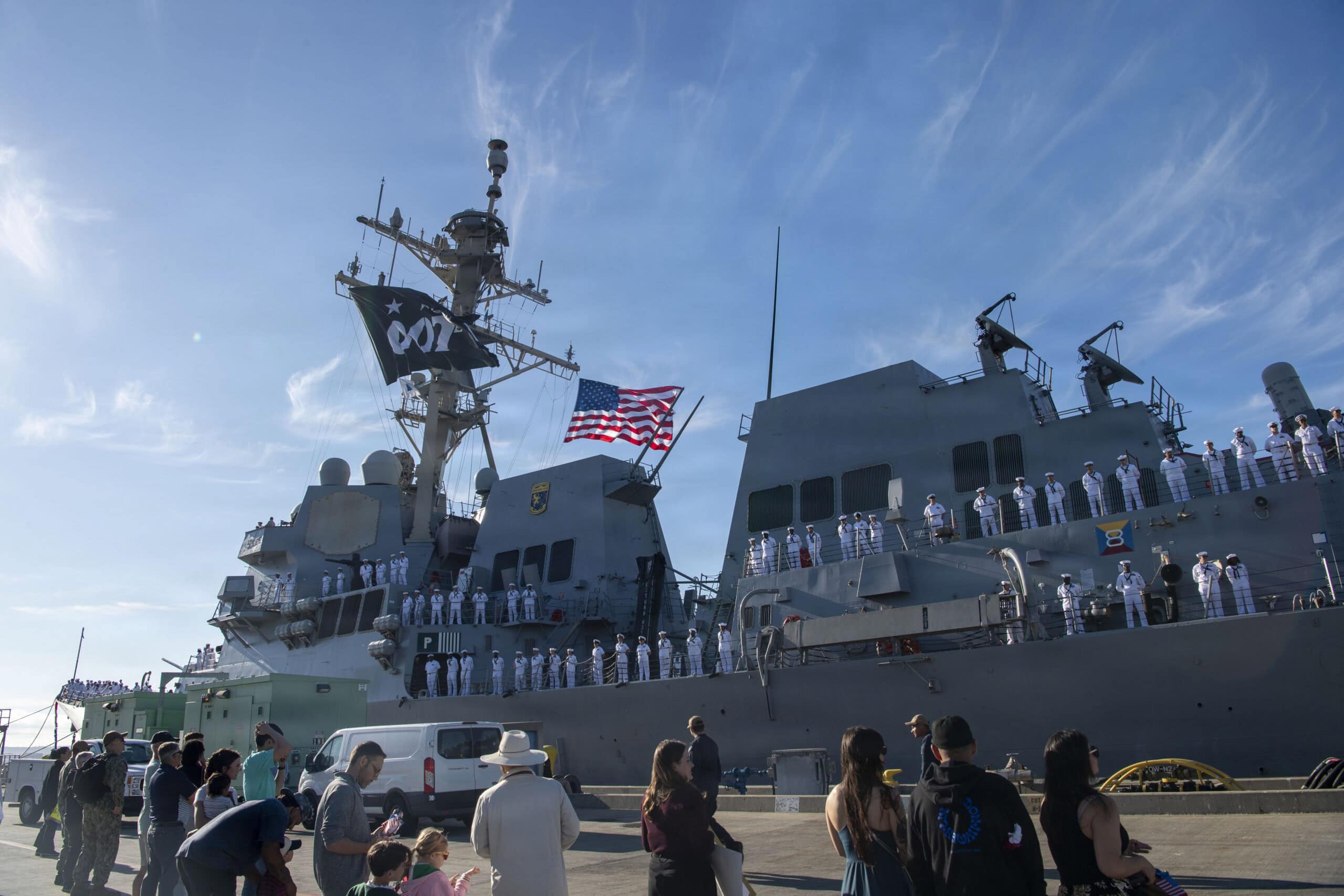
SAN DIEGO, Ca. (April 10, 2026) – Friends and family greet Arleigh Burke-class guided-missile destroyer USS Stockdale (DDG 106) from the pier, as the ship returns to its homeport of Naval Base San Diego following a seven-month underway to the U.S. 4th Fleet area of operations, April 10. Stockdale returns safely home having successfully carried out sustained operations at sea, maintaining peace through strength and sustaining credible deterrence alongside our allies and partners. (U.S. Navy Photo by Mass Communication Specialist 1st Class Sara Eshleman)
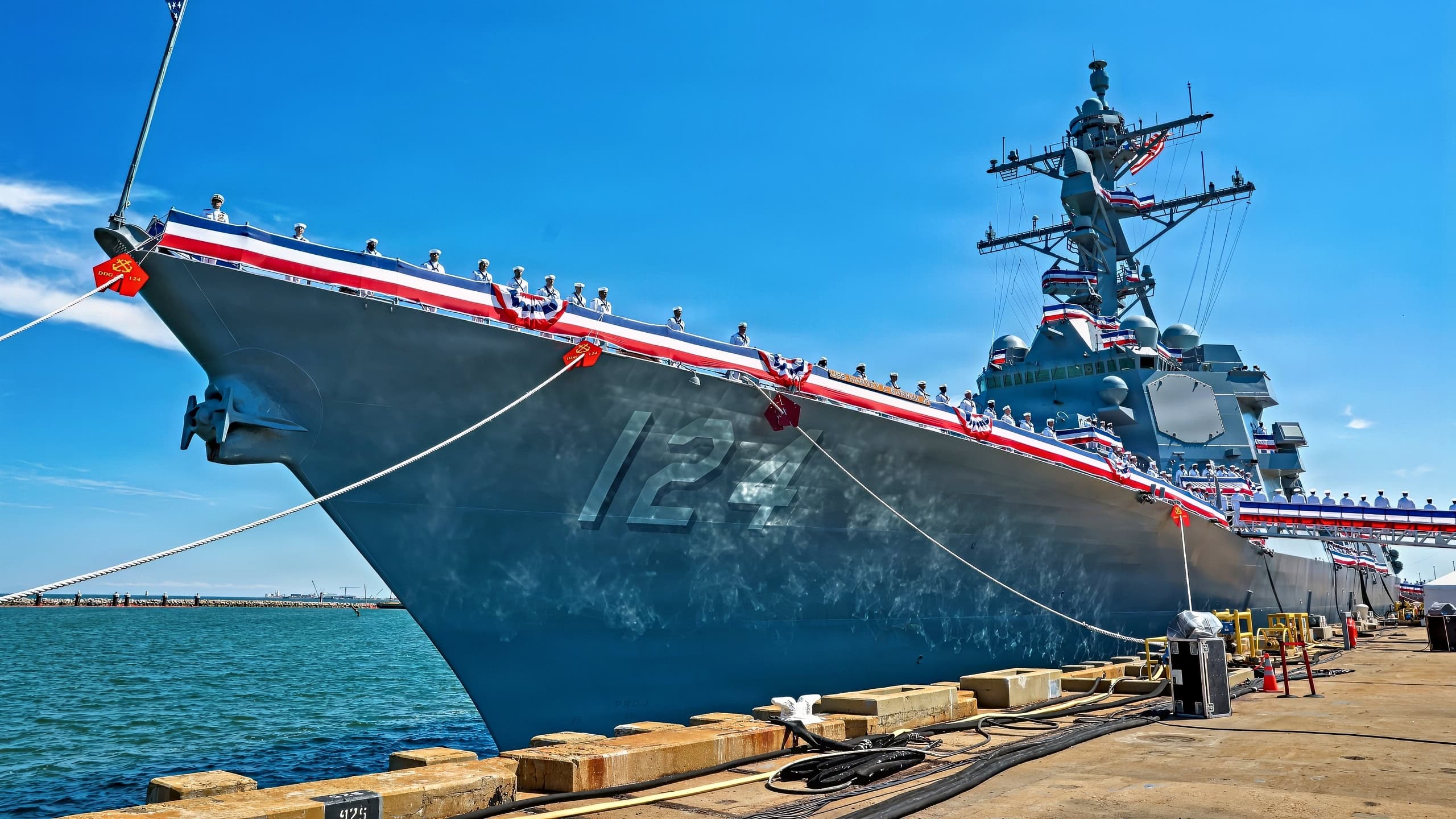
(April 11, 2026) – Sailors man the rails aboard the Navy’s newest Arleigh Burke-class guided-missile destroyer USS Harvey C. Barnum Jr. (DDG 124) during the commissioning ceremony in Norfolk, Virginia, April 11, 2026. The warship bears the name of a living Medal of Honor recipient, retired Col. Harvey C. “Barney” Barnum Jr. (U.S. Navy photo by Mass Communication Specialist 1st Class Theoplis Stewart)
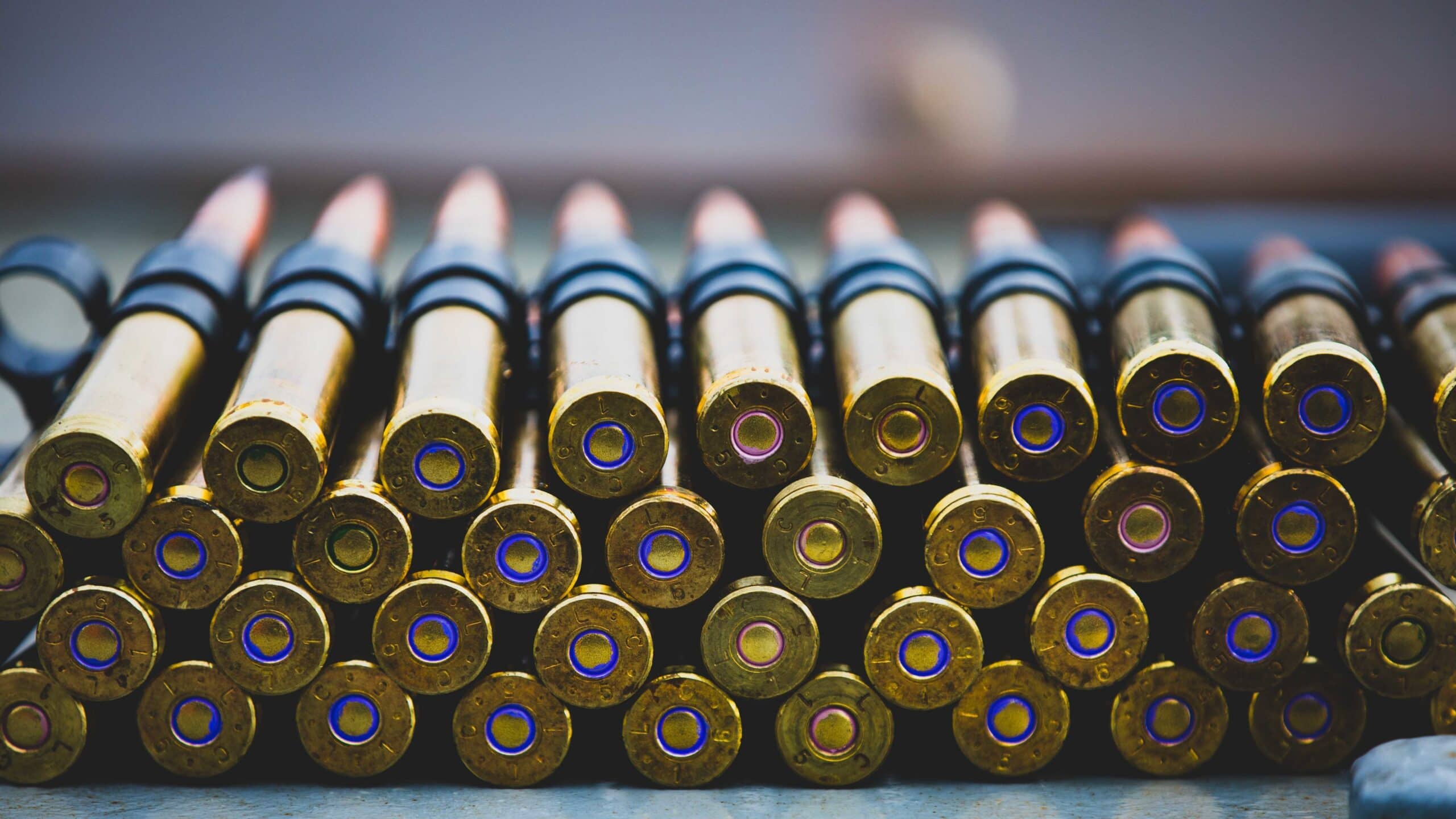
Ammunition is prepared for a .50 caliber machine gun during a live-fire crew certification exercise aboard the Arleigh Burke-class guided-missile destroyer USS Ramage (DDG 61) as part of the Gerald R. Ford Carrier Strike Group, Oct. 26, 2022. The first-in-class aircraft carrier USS Gerald R. Ford (CVN 78) is on its inaugural deployment conducting training and operations alongside NATO Allies and partners to enhance integration for future operations and demonstrate the U.S. Navy’s commitment to a peaceful, stable and conflict free Atlantic region. (U.S. Navy photo by Mass Communication Specialist 2nd Class Sawyer Connally)
Paired with the SPY-6 is Aegis Baseline 10, the latest version of the combat system that has anchored American surface warfare since the Ticonderoga-class entered service in 1983. Baseline 10 was specifically designed to take advantage of the SPY-6’s improved sensitivity, and it integrates with the Mk 41 VLS to support the full Standard Missile family — SM-2 for medium-range air defense, SM-3 for exo-atmospheric ballistic missile intercepts, SM-6 for terminal ballistic missile defense and anti-ship strikes, and the Evolved SeaSparrow Missile for short-range air defense.
The Flight III ships also carry the standard Burke-class loadout that has made the platform the workhorse of the surface fleet: a 5-inch Mk 45 Mod 4 deck gun, a Phalanx CIWS for last-ditch close-in defense, two Mk 38 25mm autocannons, two triple-tube Mark 32 torpedo launchers, Tomahawk land-attack cruise missiles in the VLS, and SEWIP Block 3 electronic warfare systems for jamming and signature management.
The lead Flight III ship, USS Jack H. Lucas (DDG-125), was commissioned on October 7, 2023 in Tampa Bay after delivery from HII Ingalls Shipbuilding earlier that summer. She is named after the youngest Marine to receive the Medal of Honor in World War II — a 17-year-old who threw himself onto two grenades at Iwo Jima and survived.
What The Flight III Is Actually Being Asked To Do
The mission set for the Flight III variant is broader than that of any previous Burke variant.
Carrier strike group air defense is the headline mission. The Flight IIIs are taking over the air defense role that the Ticonderoga-class cruisers have held since the 1980s as those cruisers age out of the fleet. With SPY-6 and Baseline 10, a single Flight III can defend a strike group against ballistic missiles, cruise missiles, drones, and aircraft simultaneously — a mission the Ticonderoga-class could perform but with substantially less capability against modern threats.
Ballistic missile defense is the second core mission. Forward-deployed Burkes at Naval Station Rota in Spain, plus the BMD-equipped boats in the Pacific Fleet, provide the seaborne component of America’s integrated air and missile defense network. SPY-6’s improved discrimination capability against ballistic missile reentry vehicles directly addresses the Iranian, North Korean, and Chinese threat sets that have grown sharper over the past decade.
Land-attack strike is the third. Each Flight III carries 96 VLS cells, any of which can be loaded with Tomahawk cruise missiles for theater-level strike missions. Tomahawk strikes from Burke-class destroyers have been a staple of American crisis response since 1991, and the Flight III continues that role at higher ordnance density.
Surface and anti-submarine warfare round out the package. The class carries embarked MH-60R Seahawk helicopters for ASW, a hull-mounted SQS-53 sonar, and the SQR-19 towed array. Surface engagement uses the SM-6 in anti-ship mode, the Naval Strike Missile being deployed across the surface fleet, and the 5-inch deck gun for close-in surface action.
The Combat Record Is Being Written Right Now
Most modern American warships have not been shot at in combat. The Burkes have been — and are being — repeatedly, in operations that are still active as of this writing.
The Iran war began on February 28, 2026, with coordinated U.S. and Israeli strikes on Iranian nuclear and military infrastructure. Iran responded by closing the Strait of Hormuz with a combination of mines, drone harassment, missile threats, and maritime interdiction. By early April, transit through the strait had collapsed from 110-120 ships per day to fewer than 10, with several days recording zero transits.
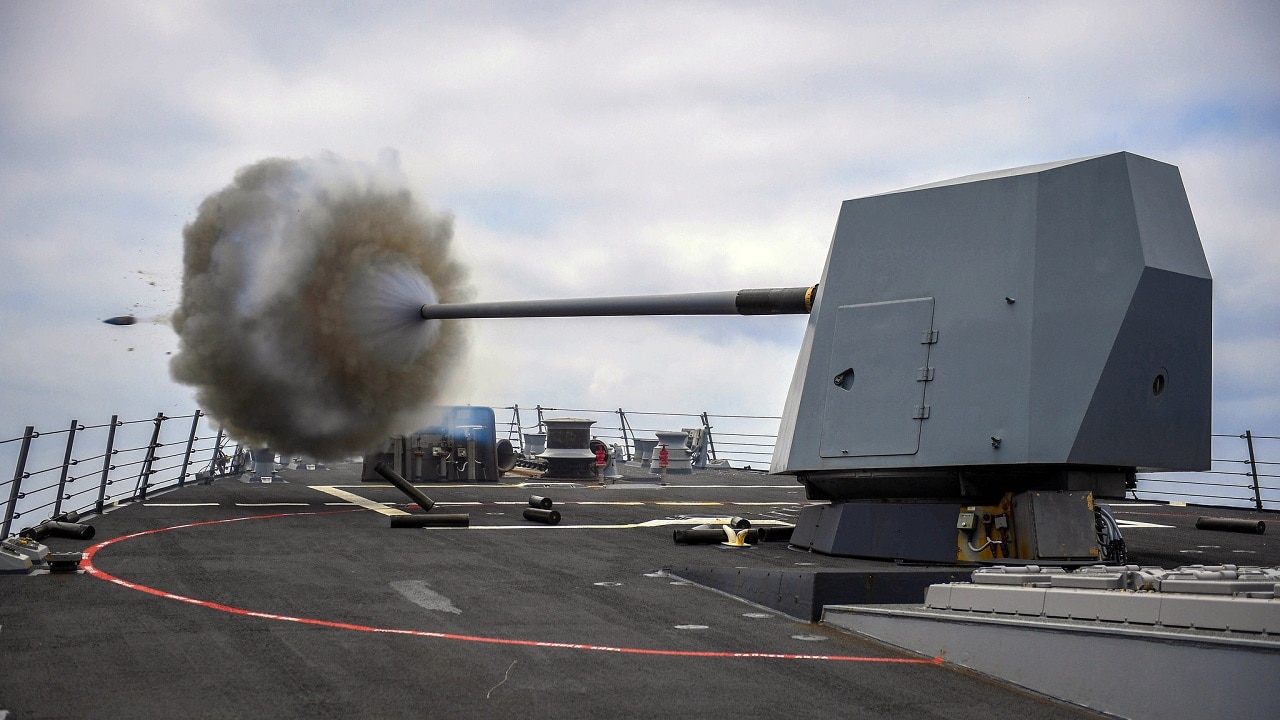
ATLANTIC OCEAN (June 30, 2018) The Arleigh Burke-class guided-missile destroyer USS Bainbridge (DDG 96) fires its Mark 45 five-inch gun during a live-fire exercise. Bainbridge, homeported at Naval Station Norfolk, is conducting naval operations in the U.S. 6th Fleet area of operations in support of U.S. national security interests in Europe and Africa. (U.S. Navy photo by Mass Communication Specialist 1st Class Theron J. Godbold/Released)180630-N-FP878-566
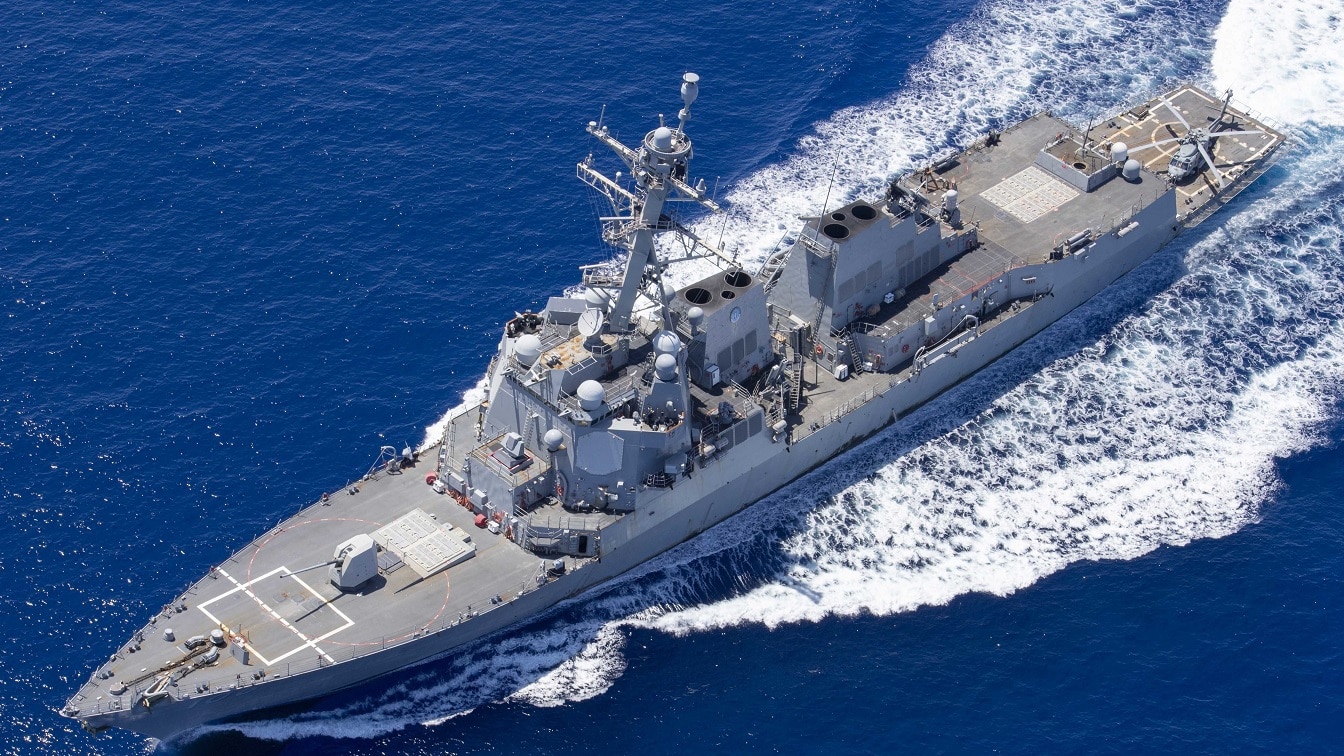
(Dec. 17, 2021) Arleigh Burke-class guided-missile destroyer USS Stockdale (DDG 106) transits the Indian Ocean during a bilateral training exercise with the Royal Australian Air Force, Dec. 17, 2021. Carl Vinson Carrier Strike Group and elements of the Royal Australian Navy and Air Force are conducting a bilateral training exercise to test and refine warfighting capabilities in support of a free and open Indo-Pacific. (U.S. Navy photo by Mass Communication Specialist 1st Class Tyler R. Fraser)

The guided-missile destroyer USS Arleigh Burke (DDG 51) fires its MK 45 5-inch gun during a live-fire exercise. Arleigh Burke is deployed in the U.S. 5th Fleet area of responsibility supporting maritime security operations and theater security cooperation efforts. (U.S. Navy photo by Mass Communication Specialist 2nd Class Carlos M. Vazquez II/Released)
The Burkes were the platform that CENTCOM sent in to fix it.
On April 11, 2026, Arleigh Burke-class destroyers USS Frank E. Petersen Jr. and USS Michael Murphy transited the Strait of Hormuz to begin mine-clearing operations — the first major U.S. naval action in the strait since the start of the war. Both ships entered Iranian-mined waters with the explicit mission of “setting conditions” for a broader clearance campaign.
On April 19, USS Spruance — operating as part of the parallel naval blockade of Iranian ports — became the first U.S. warship of the war to fire her main gun in anger. The Iranian-flagged container ship Touska, a 965-foot vessel, attempted to breach the U.S.-enforced control zone in the Gulf of Oman. After multiple hails and warning shots, Spruance used her Mk 45 Mod 4 5-inch gun to disable the vessel with precision inert munitions, allowing boarding teams to secure and inspect the ship. It was a rare real-world combat use of precision naval gunnery, and it was conducted without destroying the target — a calibrated escalation the Burke platform was specifically designed to be capable of.
By April 24, the U.S. had 12 Arleigh Burke-class destroyers operating in the CENTCOM area of responsibility, enforcing the blockade and providing carrier strike group air defense for USS Abraham Lincoln and USS George H.W. Bush. The blockade itself has diverted at least 49 vessels and intercepted more than 30 ships linked to Iranian ports.
On May 4, 2026, two days ago, CENTCOM launched Operation Project Freedom — the now-paused campaign to reopen the Strait of Hormuz to commercial shipping. The force structure is built around Arleigh Burke-class destroyers operating alongside more than 100 aircraft, multi-domain unmanned platforms, and 15,000 service members. The Burkes are the centerpiece. They are the platform doing the air defense, the surface engagement, the blockade enforcement, and the escort work simultaneously.
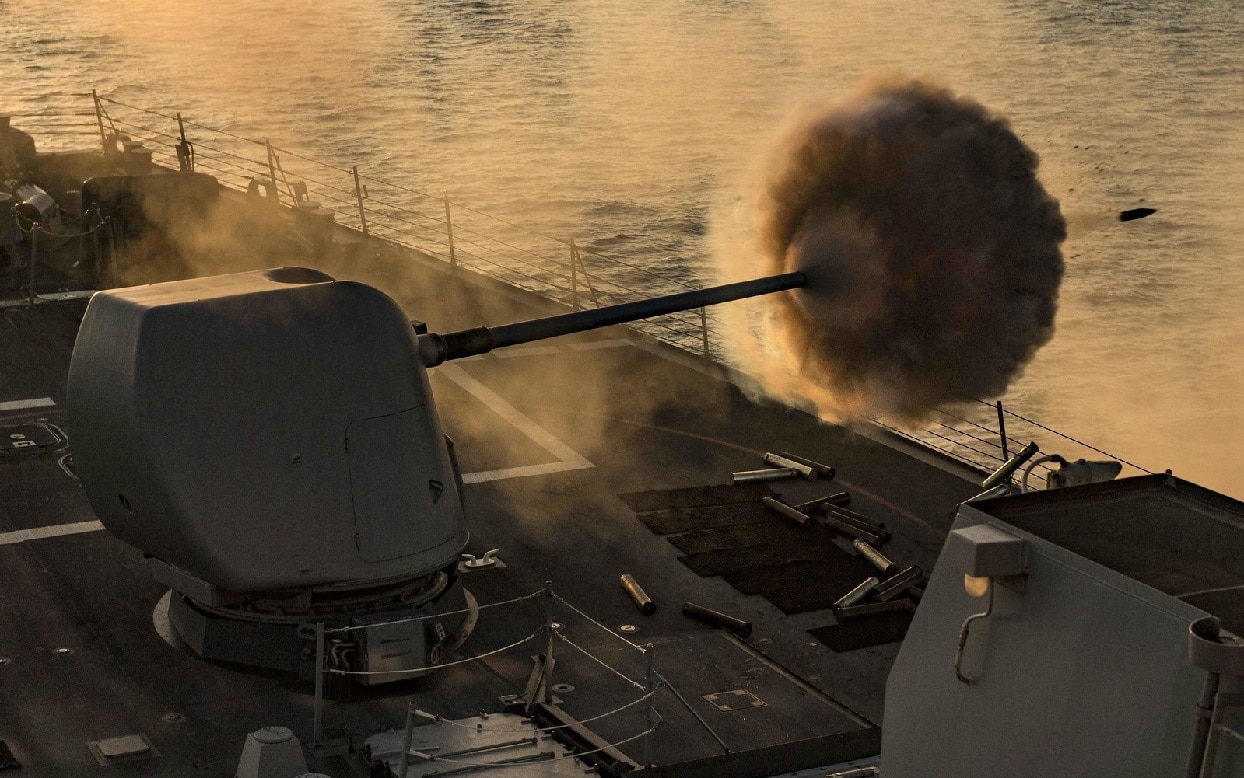
MEDITERRANEAN SEA (Sept. 24, 2018) The Arleigh Burke-class guided-missile destroyer USS Carney (DDG 64) fires its 5-inch gun during a live-fire exercise, Sept. 24, 2018. Carney, forward-deployed to Rota, Spain, is on its fifth patrol in the U.S. 6th Fleet area of operations in support of regional allies and partners as well as U.S. national security interests in Europe and Africa.

SOUTH CHINA SEA (Oct. 19, 2021) The Arleigh Burke-class guided-missile destroyer USS Milius (DDG 69), rear, and the Japan Maritime Self-Defense Force (JMSDF) Akizuki-class destroyer JS Akizuki (DD 115) transit the South China Sea in formation. Milius is assigned to Commander, Task Force (CTF) 71/Destroyer Squadron (DESRON) 15, the Navy’s largest forward-deployed DESRON and the U.S. 7th Fleet’s principal surface force. (U.S. Navy photo by Mass Communication Specialist 3rd Class Christine Montgomery) 211019-N-TC847-1020

PACIFIC OCEAN (May 7, 2018) The Arleigh Burke-class guided-missile destroyer USS Stockdale (DDG 106) maneuvers following a replenishment-at-sea with the aircraft carrier USS John C. Stennis (CVN 74). Stockdale is underway with the ships and squadrons of Carrier Strike Group (CSG) 3 conducting group sail training in preparation for its next scheduled deployment. (U.S. Navy photo by Mass Communication Specialist 2nd Class David A. Brandenburg/Released) 180507-N-UD522-0157
This is the broader Burke combat record extended forward from earlier in the decade. In October and November 2023, USS Carney and USS Thomas Hudner shot down numerous Houthi drones and missiles in the Red Sea.
USS Gravely intercepted Houthi anti-ship ballistic missiles on December 30, 2023, and survived a cruise missile that came within one mile before being knocked down by her Phalanx CIWS on January 30, 2024.
That is 2.5 years of nearly continuous combat operations. No other platform in the U.S. surface fleet can claim that record.
The Honest Cost Conversation on the Block III
The Flight III is not cheap, and the cost has been climbing.
Per the Congressional Budget Office’s January 2025 assessment of the Navy’s 30-year shipbuilding plan, the average per-hull cost has jumped from $2.1 billion to approximately $2.5 billion. The 23 Flight IIIs in the long-range plan are projected to average $2.7 billion each. The Navy has briefed Congress that the increases reflect shipbuilding inflation outpacing economy-wide inflation, plus declining shipyard performance — both real problems that need to be addressed.
That sounds expensive. It is expensive. But the comparison set is what matters.
The DDG(X) — the actual Burke successor program — is currently projected by the Navy at $3.3 billion per hull, with CBO estimating the real cost at $4.4 billion given the size and capability requirements being baked into the design. The Constellation-class frigate, before it was cancelled, was running at $1.4 billion per hull on a vastly less capable platform. The Zumwalt-class came in at roughly $7.5 to $8 billion per ship for three hulls. The Ford-class costs $13 billion per carrier.
A $2.5 billion warship that can do air defense, ballistic missile defense, anti-submarine warfare, surface engagement, land-attack strike, and integrated combat operations across a carrier strike group — and that has been doing exactly that, in actual combat, for the past two and a half years — is a value proposition the rest of the Navy’s surface portfolio cannot match.
What Comes Next
Production at HII Ingalls and General Dynamics Bath Iron Works continues. A multi-year procurement contract authorized by Congress runs from FY2023 through FY2027 for 10 ships, with options for additional hulls under future agreements. Beyond Lucas, the Flight III hulls under construction or authorized — USS Louis H. Wilson Jr., USS Gallagher, USS Ted Stevens, USS Jeremiah Denton, and others — are at varying stages, with 18 Flight IIIs in the build pipeline as of CBO’s most recent count.
The SPY-6 family is also being back-fitted onto the older Flight IIA hulls. The Navy plans to install the SPY-6(V)4 — a four-sided fixed array with 24 RMAs per face — onto 15 Flight IIA destroyers, beginning with USS Pinckney. That program will give the older Burkes most of the SPY-6’s discrimination and sensitivity advantages without requiring a clean-sheet redesign.
The DDG(X) program — the eventual Burke successor — has run into the same problem every other large surface combatant program has run into in the past decade: ambitious requirements, integration risk, and a hull that does not have enough volume for everything the Navy wants to put on it. Until DDG(X) actually gets built, the Flight III is the answer. And given the state of the rest of the Navy’s surface combatant portfolio, the Flight III may end up being the answer for a lot longer than originally planned.
For roughly $2.5 billion per hull, the Navy gets the most capable multi-mission destroyer in the world, built by two American yards, on a serial production schedule that has been delivering since 1991, carrying a sensor-and-combat-system suite that has demonstrated against live threats in two ongoing combat theaters. That is not the kind of value proposition the Navy gets from any other current shipbuilding program.
The Flight III is the platform working — and working right now, in the Strait of Hormuz, escorting tankers and clearing mines under fire. In May 2026, that puts it in a category of one.
About the Author: Harry J. Kazianis
Harry J. Kazianis (@Grecianformula) was the former Senior Director of National Security Affairs at the Center for the National Interest (CFTNI), a foreign policy think tank founded by Richard Nixon based in Washington, DC. Harry has over a decade of experience in think tanks and national security publishing. His ideas have been published in the NY Times, The Washington Post, The Wall Street Journal, CNN, and many other outlets worldwide. He has held positions at CSIS, the Heritage Foundation, the University of Nottingham, and several other institutions related to national security research and studies. He is the former Executive Editor of the National Interest and the Diplomat. He holds a Master’s degree focusing on international affairs from Harvard University. Kazianis is Editor-In-Chief of 19FortyFive.

