
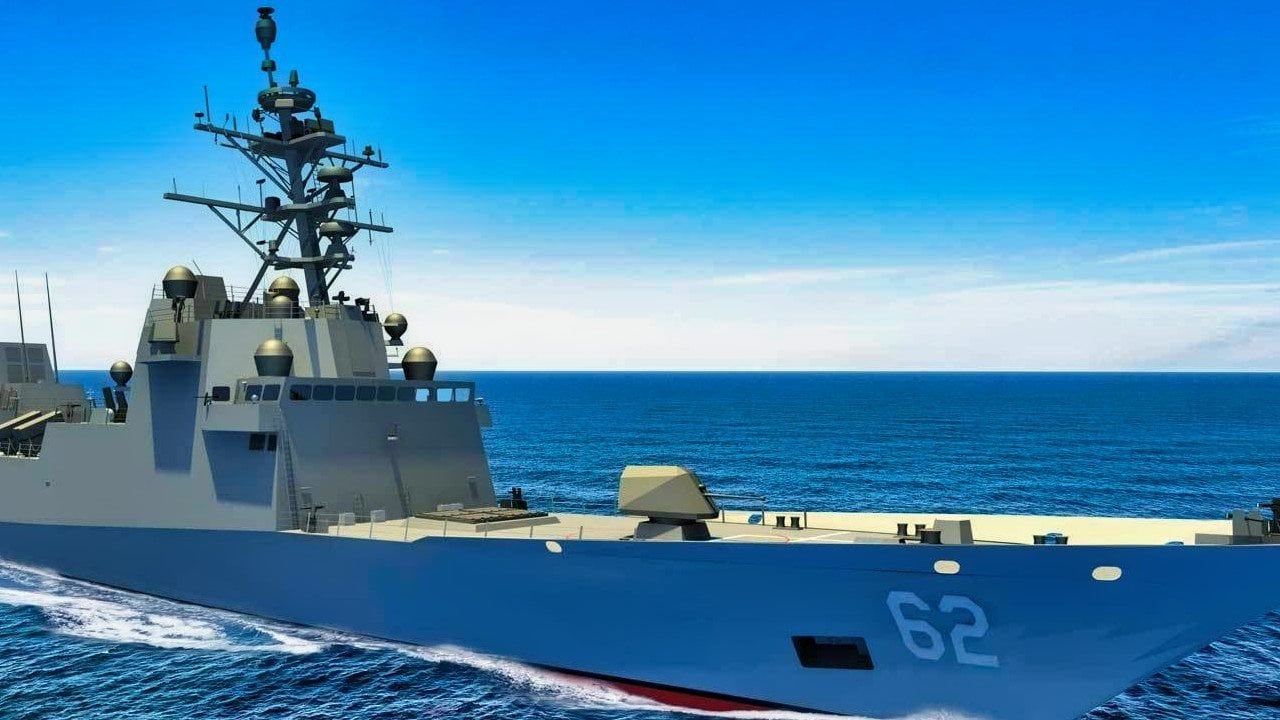
The Constellation-Class Frigate: The U.S. Navy’s Great Mistake
In its definition of the word “constellation,” NASA notes that “These stars are far away from Earth. They are not connected to each other at all.” This is a reflection on the sheer vastness of the universe.
Given the sheer vastness, it figures that the United States Navy would bestow the name “USS Constellation” on more than one large warship. (The Lockheed Constellation airliner of the 1940s and 50s, meanwhile, is a whole separate discussion topic in and of itself.)
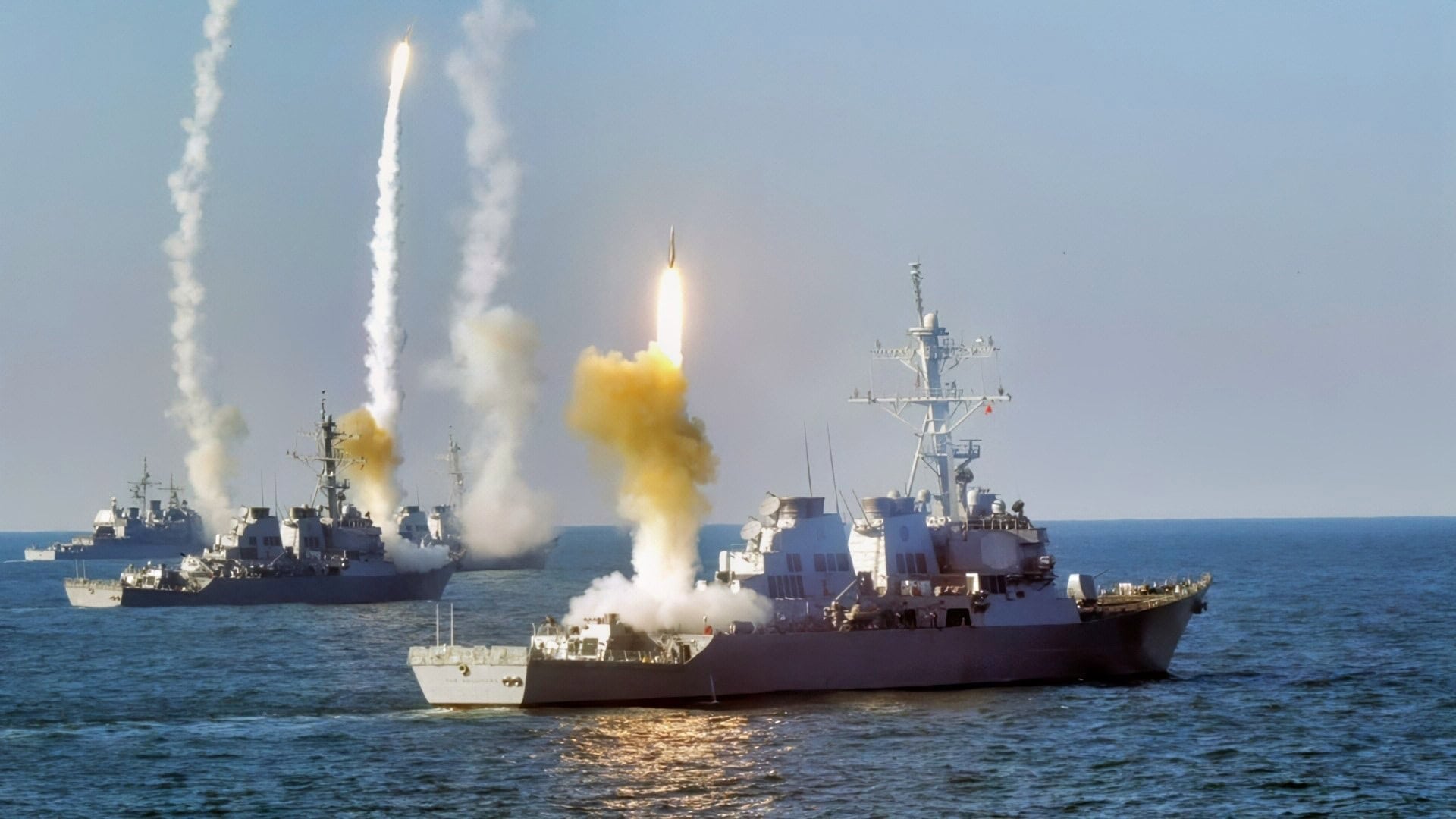
Arleigh Burke Class Destroyer US Navy. Image Credit: Creative Commons.
In the case of the supercarrier USS Constellation (CV-64), that worked out rather swimmingly (aquatic pub intended).
However, in the case of the would-be Constellation-class frigates.
This project got too big for its (metaphorical) britches, and in the process, the Navy brass disregarded the principles of both “If it ain’t broke, don’t fix it” and “Keep It Simple, Stupid.”
Constellation-Class Frigate Initial Premise and Promise
The notion behind the Constellation-class was that they were to be multi-mission guided missile frigates (FFGs) that would both (1) succeed the Oliver Hazard Perry-class FFGs and (2) serve as follow-ons to the Littoral Combat Ships (LCS) of the Freedom-class and Independence-class.
The design was based on the Italian Navy’s (Marina Militare) version of the European multipurpose frigate, or FREMM (Fregata Europea Multi-Missione).
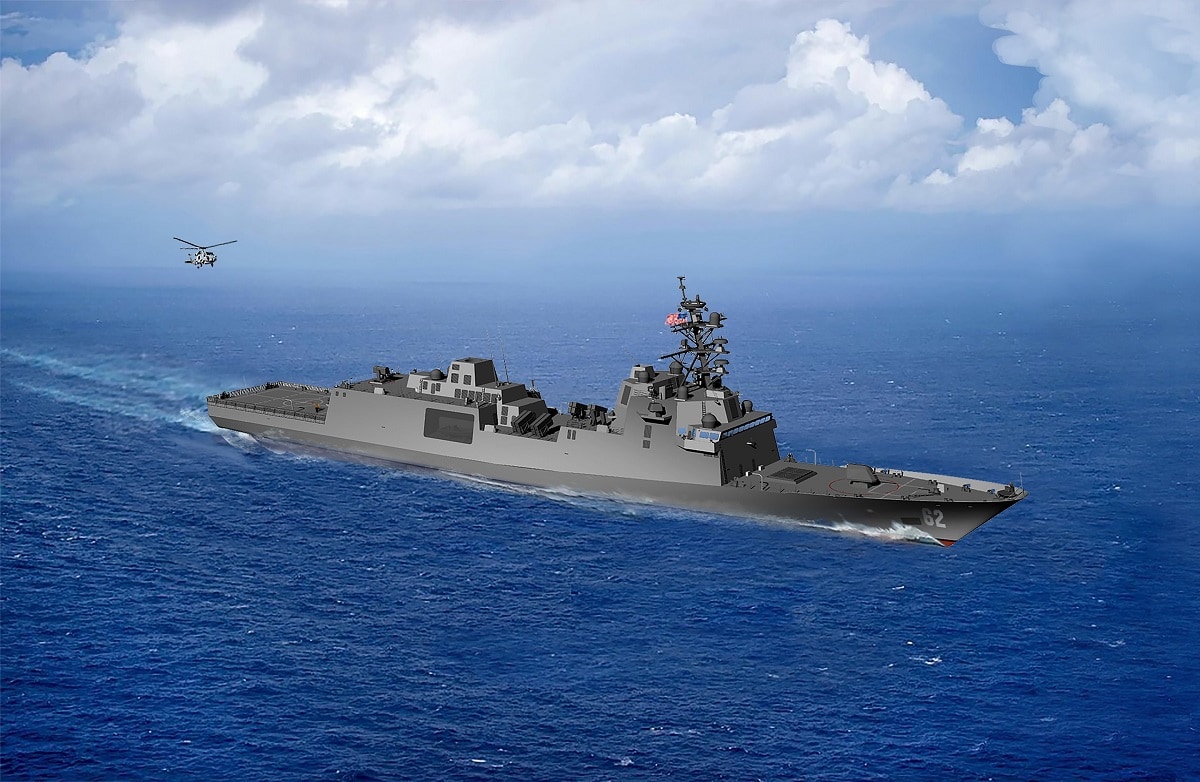
An artist rendering of the U.S. Navy guided-missile frigate FFG(X). The new small surface combatant will have multi-mission capability to conduct air warfare, anti-submarine warfare, surface warfare, electronic warfare, and information operations. The design is based on the FREMM multipurpose frigate. A contract for ten ships was awarded to Marinette Marine Corporation, Wisconsin (USA), on 30 April 2020.
Had these Constellations come to fruition, they would have displaced 7,291 tons fully laden, sported a hull length of 496 feet, reached a max speed of 26 knots, and wielded an arsenal consisting of 32 Mark 41 vertical launching system (Mk 41 VLS; capable of launching a variety of different missiles) and a BAE Systems’ 57mm Mk110 gun (internationally known as the Bofors’ 57Mk3).
A Promising Start…
Accordingly, on April 30, 2020, the Navy ordered a half-dozen of these vessels, out of what was expected to be an initial tranche of at least 10 (and possibly as many as 20) ships, with an accompanying $20 billion windfall for the manufacturer.
They awarded the contract to Marinette Marine in Wisconsin, a wholly owned subsidiary of Italy’s Fincantieri (highly apropos in the light of the aforementioned Italian inspiration).
Actual construction of the first two ships of the class, USS Constellation (FFG-62) and USS Congress (FFG-63), began in August 2022, with a projected commissioning year of 2029 for FFG-62.
…But an Ignominious Finish
So, what went wrong?
Well, one could crack a cynical joke that naming a warship for Congress had a jinxing effect on the class as a whole, especially given the prior history of USN vessels bearing that name.
But of course, the real answer lies far beyond any simplistic superstitions. Basically, instead of (as previously indicated) refusing to fix what wasn’t broke, the Navy took the approach of “If it ain’t broke, fix it ‘til it *is* broke!” To put it another way, the brass wanted an “off-the-shelf” design (meaning a product sold by the manufacturer as produced, with no additional changes or modifications)…and then they started messing with it in stereotypically bureaucratic, meddling fashion. How bloody dumb.
How much of this dumb “fixing” did they do? They wound up altering a whopping 85 percent of the original Constellation-class design. To use a small arms analogy, that’s like taking a caveman simple AK-47 rifle and over-customizing it to try to make it run like an M16/AR-15/M4.
The results of this meddling, needle-nosing, and nitnoy nitpicking? A warship class which, whilst still in the proverbial womb, experienced significant weight growth (presumably at least partially negating the speed advantages of a frigate), poor performance projections, a need to rewrite major control system software…and worst of all, those ever-cliched, ever-dreaded cost overruns.
As of April 2025, FFG-62 was only 10 percent completed.
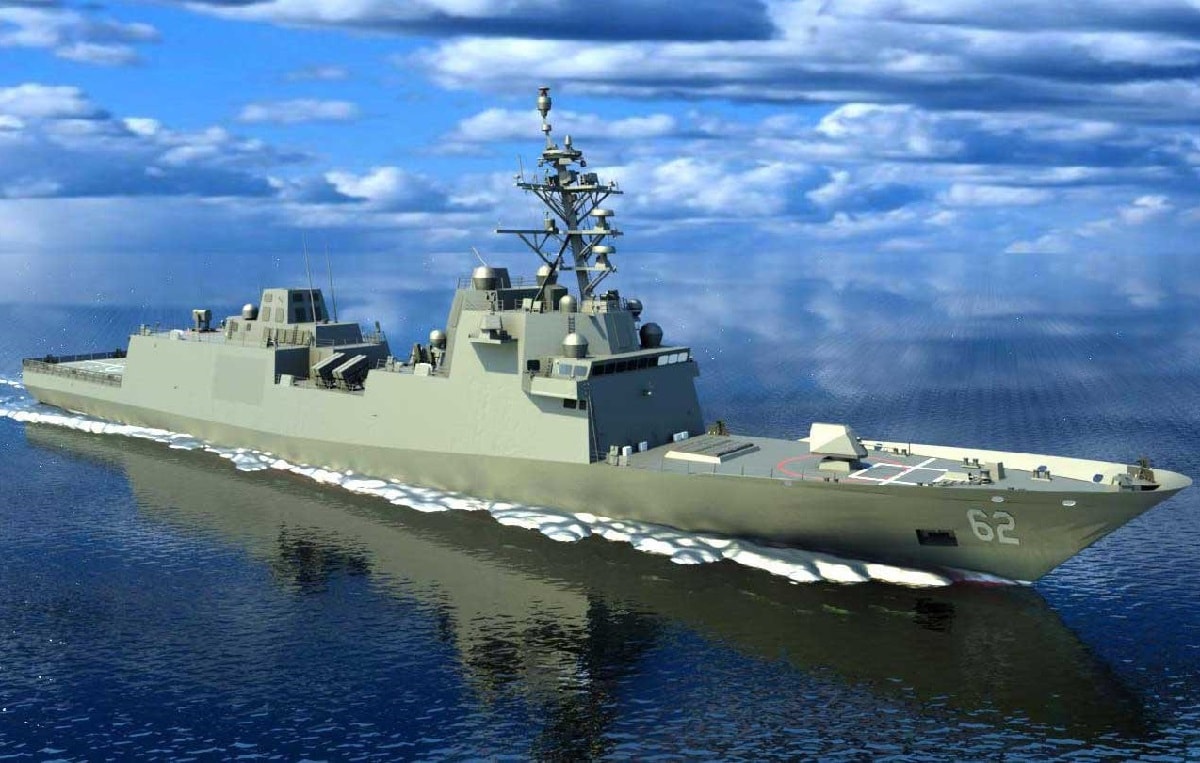
Image: Rendering of USS Constellation (FFG-62). Fincantieri media handout.
By November 2025, Secretary of the Navy (SECNAV) John Cartwright Phelan had had enough and decided to pull the plug on the Constellation program. In the SECNAV’s own blunt words, “From day one, I made it clear: I won’t spend a dollar if it doesn’t strengthen readiness or our ability to win. To keep that promise, we’re reshaping how we build and field the Fleet—working with industry to deliver warfighting advantage, beginning with a strategic shift away from the Constellation-class frigate program.” (Promises made, promises kept; what a refreshingly rare gem for a political figure, eh.)
SECNAV Phelan stressed that “We greatly value the shipbuilders of Wisconsin and Michigan” and added that work would continue on the USS Constellation and USS Congress, but they would also remain under review.
So then, what does that mean for the beleaguered shipyard workers of Fincantieri?
Jerry McGinn of the Center for Strategic and International Studies (CSIS) thinks that it will be “devastating” for them.
If there’s any silver lining behind the cloud, it’s the hope that the continuation of those first two frigates will enable the company to “get its ship together” (so to speak).
MORE: The Dorito Bomber Almost Flew from the U.S. Navy’s Aircraft Carriers
About the Author: Christian D. Orr
Christian D. Orr is a Senior Defense Editor. He is a former Air Force Security Forces officer, Federal law enforcement officer, and private military contractor (with assignments worked in Iraq, the United Arab Emirates, Kosovo, Japan, Germany, and the Pentagon). Chris holds a B.A. in International Relations from the University of Southern California (USC) and an M.A. in Intelligence Studies (with a concentration in Terrorism Studies) from American Military University (AMU). He is also the author of the book “Five Decades of a Fabulous Firearm: Celebrating the 50th Anniversary of the Beretta 92 Pistol Series, the second edition of which was recently published.