
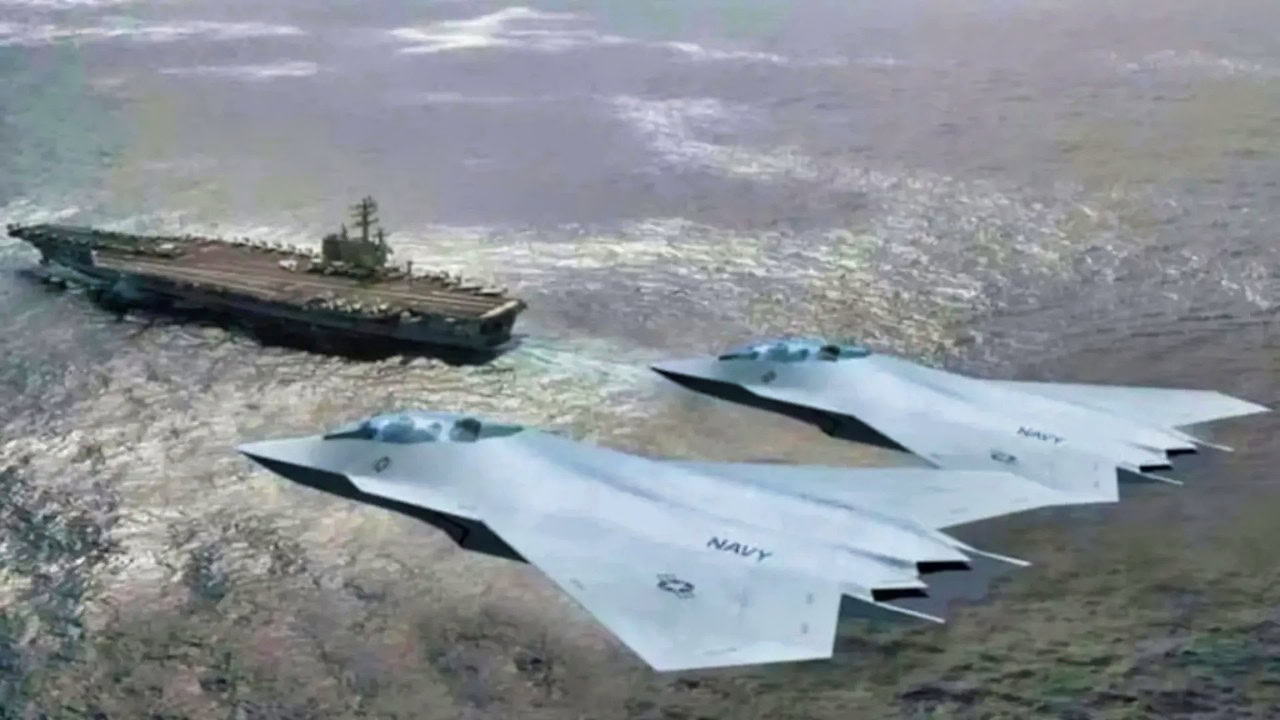
A senior U.S. Navy official just delivered a brutal warning about the Pentagon’s most consequential August 2026 decision: failing to fund the F/A-XX sixth-generation carrier-based fighter would “cripple the U.S. Navy” and hand a major strategic win to China and Russia. The downselect between Boeing and Northrop Grumman is now just months away—and the program has already been delayed nearly a year by an internal Trump administration fight that Congress had to overrule with $1.69 billion in emergency funding.
The F/A-XX Fighter Looks Like a Crisis
“This would cripple the U.S. Navy, having no F/A-XX fighter in a world where China has large amounts of 6th generation fighters.” That’s what a senior U.S. Navy offical told me last week when I asked him if the F/A-XX 6th-generation fighter would never fly from a U.S. Navy aircraft carrier flight deck. He was pretty blunt: “If you want to hand a major win to nations like China and Russia, simple: don’t fund or build the F/A-XX. We need it. Now.”
And all of that is hard to argue with. The United States Navy is supposed to decide in August 2026 which company will build the F/A-XX, the carrier-based sixth-generation fighter that will eventually replace the F/A-18E/F Super Hornet and EA-18G Growler. The Air Force has already moved ahead — Boeing won the F-47 Next Generation Air Dominance contract in March 2025, and that aircraft is targeted for first flight in 2028. China has been flight-testing two sixth-generation fighter prototypes — the Chengdu J-36 and the Shenyang J-50 — since December 2024. The Pentagon’s own assessment, published in late 2025, projects both Chinese aircraft to reach operational capability by the mid-2030s.
F/A-XX Delay Could Be Major Challenge
If the F/A-XX downselect slips past August 2026, or if the program continues to be funded as a low-priority modernization line behind the F-47, the Navy will enter the 2030s without a credible carrier-based sixth-generation fighter, while the Air Force has one and the People’s Liberation Army Navy is preparing to field one of its own. That is not a manageable strategic position. It is the position the Navy is closest to right now—and the reason the August downselect cannot slip.
This is what is at stake, why the program nearly died, and why the contract decision needs to happen on schedule, and the production work needs to start immediately.
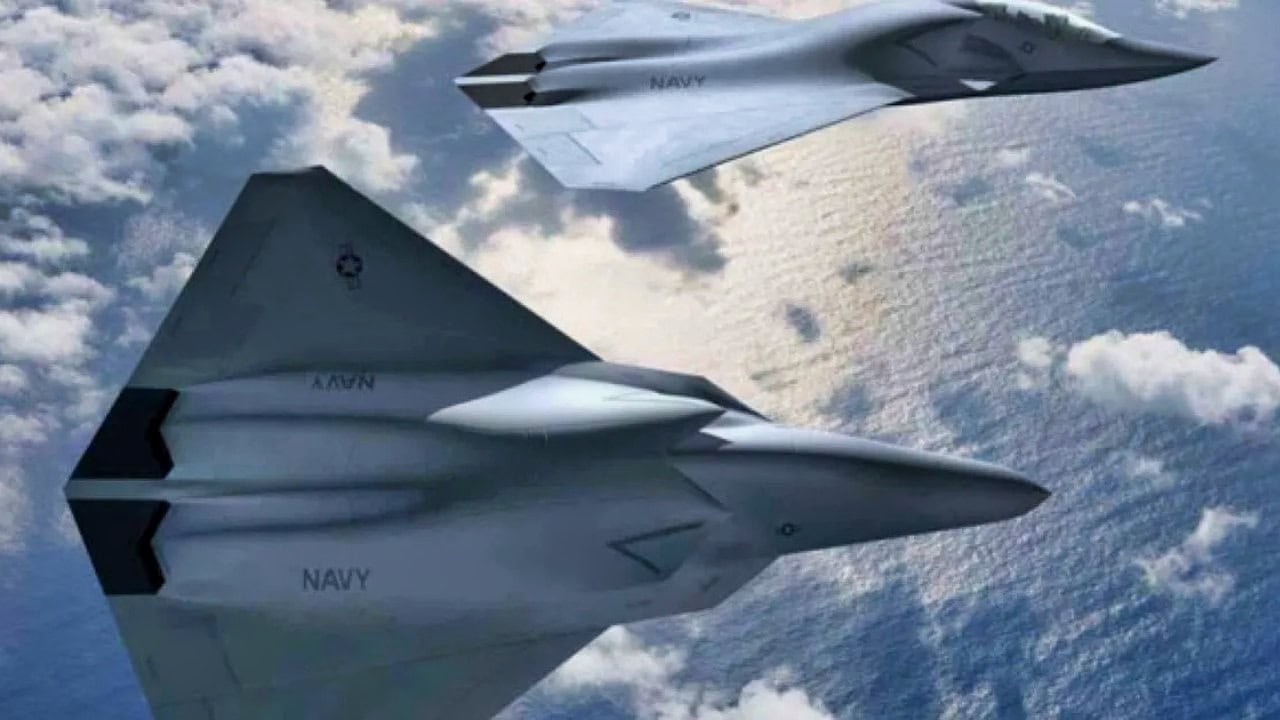
F/A-XX Fighter. Image Credit: Boeing.
Where The F/A-XX Stands Today
The F/A-XX is the centerpiece of the Navy’s Next Generation Air Dominance family of systems — a separate program from the Air Force NGAD that produced the F-47, sharing some technology development but built around fundamentally different operational requirements.
The carrier-based fighter must be reinforced for arrested recovery, equipped for catapult launch, designed with folding wings for deck storage, and built from corrosion-resistant materials that can withstand sustained saltwater operations. Land-based stealth fighters do not have to do any of those things.
The current state of the competition is straightforward. Boeing and Northrop Grumman are the two remaining finalists. Lockheed Martin was eliminated in early 2025 after its proposal failed to meet program requirements. Chief of Naval Operations Admiral Daryl Caudle confirmed at the Sea-Air-Space conference in April 2026 that the downselect will happen in August 2026 — about a year later than the program’s original schedule, after the Trump administration spent much of fiscal year 2025 attempting to defer F/A-XX in favor of concentrating funding on the F-47.

X-44 MANTA and F-47 NGAD. Image Credit: Banana Nano Image.
The deferral attempt was based on a stated concern about the American aerospace industrial base’s capacity. The Pentagon’s argument, articulated by senior administration officials throughout 2025, was that the United States could not realistically support two parallel sixth-generation fighter programs simultaneously — and that prioritizing the F-47 represented the responsible procurement choice.
Congress disagreed. In the fiscal year 2026 reconciliation legislation, lawmakers appropriated approximately $1.69 billion specifically to keep the F/A-XX program moving — a substantial increase over the $76 million baseline the administration had originally requested. An additional $750 million was earmarked under the Reconciliation Act to support the contract decision itself, with the funds available through fiscal year 2029. Defense Secretary Pete Hegseth confirmed the program’s continuation during congressional testimony on April 29, 2026, describing the F/A-XX as a critical future capability.
The political support is real. The funding is in place. The two contractors have produced detailed concept renderings. Northrop Grumman in particular released a polished concept video on April 20, 2026 showing a tailless naval fighter on the deck of a Ford-class carrier — the most detailed public rendering either competitor has produced.
What remains is the actual decision and the rapid transition into engineering and manufacturing development that the Navy now cannot afford to delay further.
What The F/A-XX Is Supposed To Deliver
The Navy’s specifications for the F/A-XX have been disclosed in general terms by program officials over the past 18 months. The aircraft is supposed to deliver a substantial step-change over the Super Hornet across every measure that matters in modern carrier aviation.
The headline requirement is range. Rear Admiral Michael “Buzz” Donnelly, the Navy’s program director, has publicly stated that increased range is “an essential attribute” — specifically requiring a combat radius of approximately 125 percent over current Super Hornet capability. That translates to roughly 1,250 nautical miles of unrefueled combat radius, with some assessments projecting up to 1,700 miles when conformal fuel tanks and advanced propulsion are factored in. The strategic significance of that range increment is straightforward: it allows a Navy carrier strike group operating against the Chinese A2/AD network to launch strikes from outside the engagement envelope of land-based long-range anti-ship missiles. The current Super Hornet fleet cannot do that. The F/A-XX is supposed to.
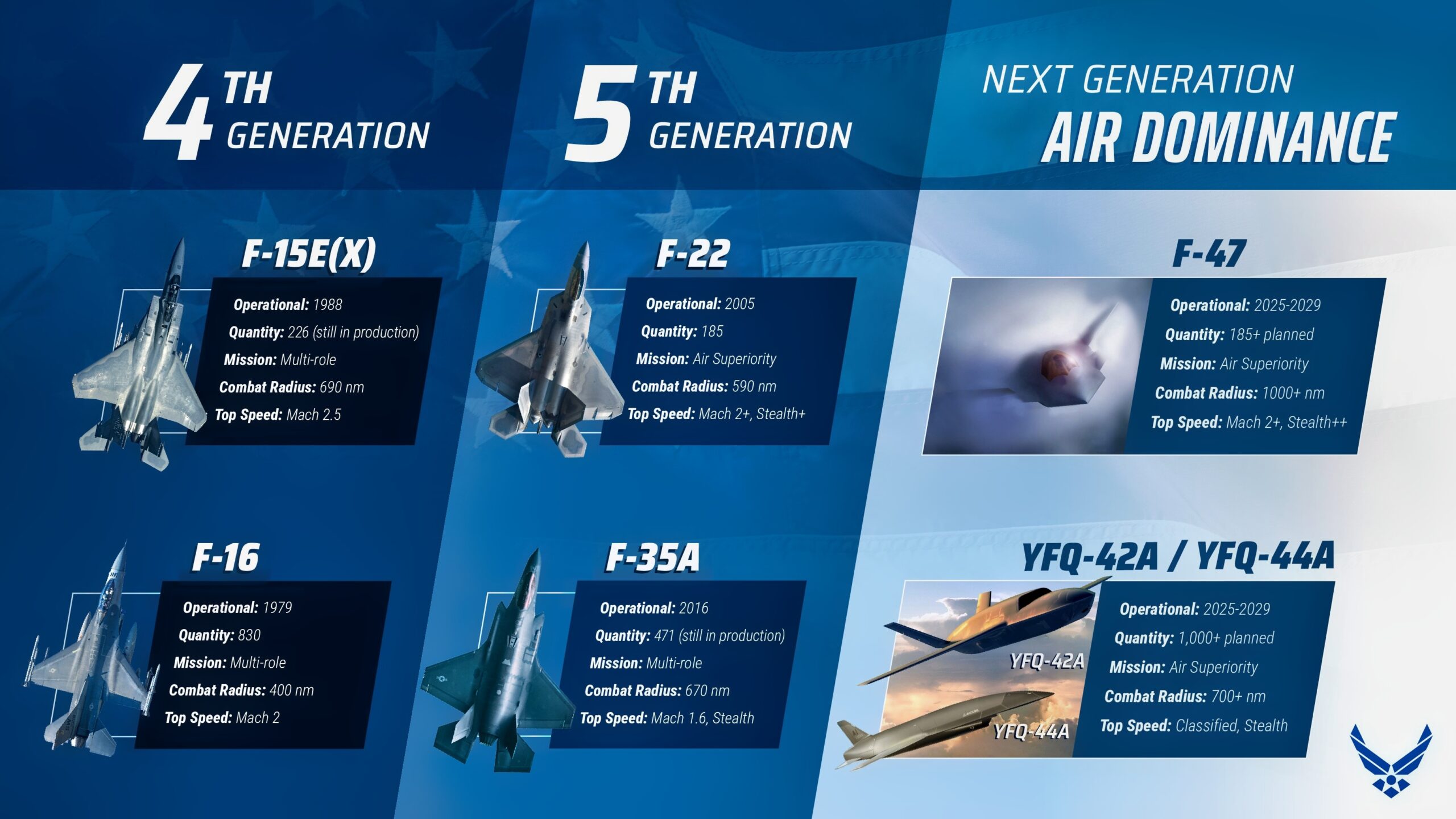
F-47 Infographic. Image Credit: U.S. Air Force
The aircraft is also being designed as the command-and-control center for an unmanned air wing. F/A-XX pilots will operate as “man-on-the-loop” controllers for collaborative combat aircraft — semi-autonomous unmanned fighters like the Anduril YFQ-42A Fury — and for MQ-25 Stingray refueling drones that extend the carrier air wing’s effective reach. The combination of a longer-range crewed fighter coordinating an unmanned support network is supposed to expand the Navy’s effective carrier strike radius from approximately 8 million square miles of operational coverage to roughly 11 million.
Stealth is the third critical attribute. Both the Boeing and Northrop Grumman concept renderings show tailless airframes with dorsal air intakes — design choices specifically optimized for all-aspect radar signature reduction across both crewed and unmanned operations. Carrier operations impose constraints on stealth that land-based fighters do not face: the requirement for arrested recovery means heavier landing gear, the requirement for catapult launch means structural reinforcement, and the requirement for folding wings means joint surfaces that are harder to keep low-observable. Northrop Grumman’s concept rendering, released in April 2026, shows how the company has approached those trade-offs.
The China Problem
The strategic urgency of the F/A-XX is driven more than anything else by what China has been doing.
In late December 2024, two distinct sixth-generation fighter prototypes appeared in Chinese flight testing within days of each other. The Chengdu J-36 — a large, trijet, tailless, modified-delta-wing aircraft — flew at Chengdu Aircraft Corporation’s facility in Sichuan on December 26. The Shenyang J-50 (also designated J-XDS) — a smaller twin-engine tailless fighter with a lambda wing planform — flew near Shenyang Aircraft Corporation’s facility in northeastern China on or around December 20. Both aircraft have continued flight testing throughout 2025 and into 2026.
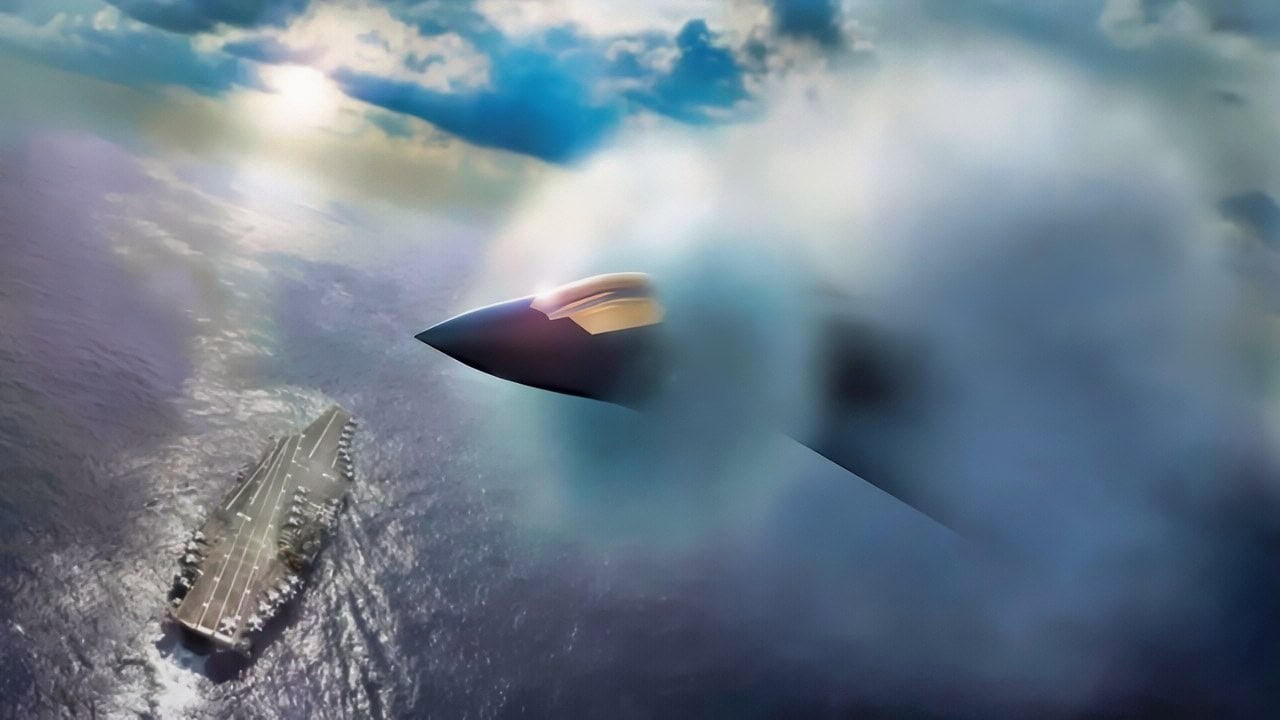
F/A-XX Boeing Image.
By August and September 2025, satellite imagery confirmed both aircraft operating from a remote Chinese test base near Lop Nur — the same facility historically associated with China’s most sensitive aerospace test flights. The August 27, 2025, image of the J-36 showed an aircraft with a wingspan of approximately 65 feet and an overall length of roughly 62 feet — substantially larger than the Chinese J-16 or American F-15 fighters, comparable in scale to the variable-geometry F-111 of an earlier era.
A third J-36 prototype was observed flying in late December 2025 accompanied by a J-10 chase aircraft. The Shenyang J-50 began its 2026 flight test campaign in March 2026.
Western intelligence assessment of the Chinese trajectory has been consistent across multiple official and analytic sources. The Pentagon’s 2025 China Military Power Report, released in late 2025, formally acknowledged the rapid progress of China’s sixth-generation programs and projected both aircraft to reach operational capability by 2035. Open-source analysts, including Army Recognition, assess the J-50 as the more likely candidate for carrier operations from China’s Type 003 Fujian and follow-on aircraft carriers — the Chinese counterpart to the F/A-XX.
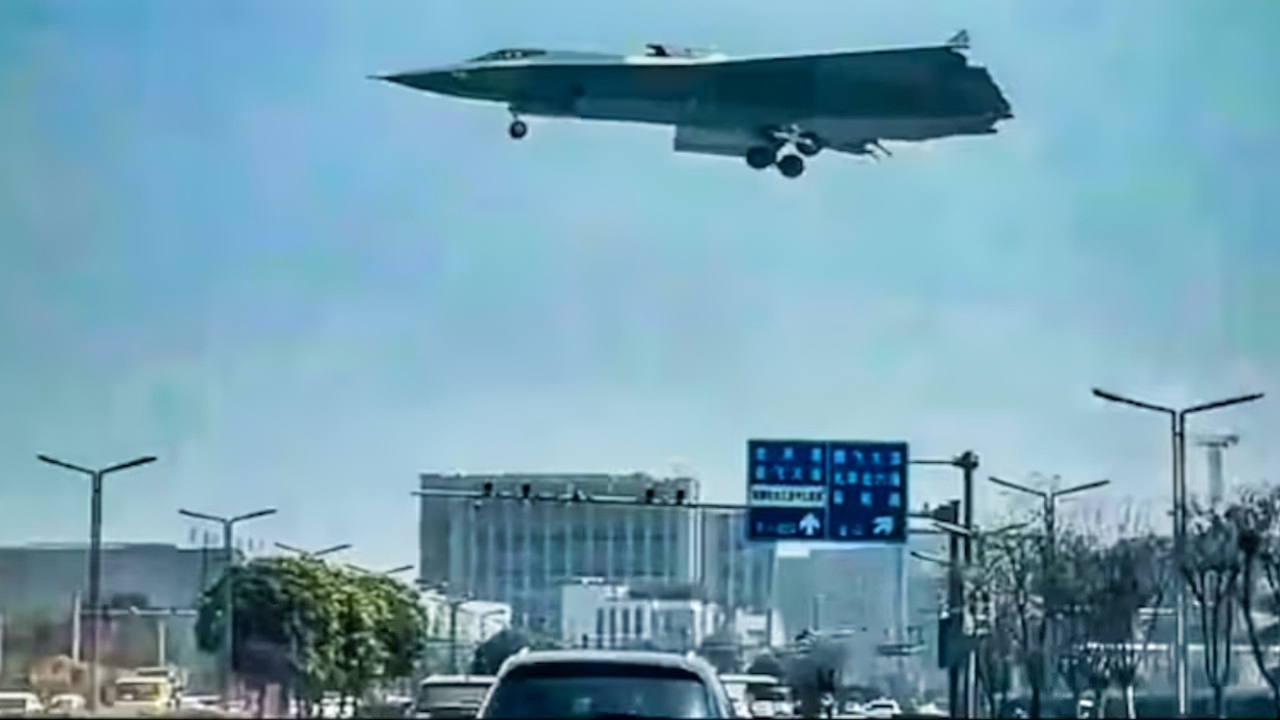
J-50 Fighter from the Road. Image Credit: Creative Commons/Screenshot.
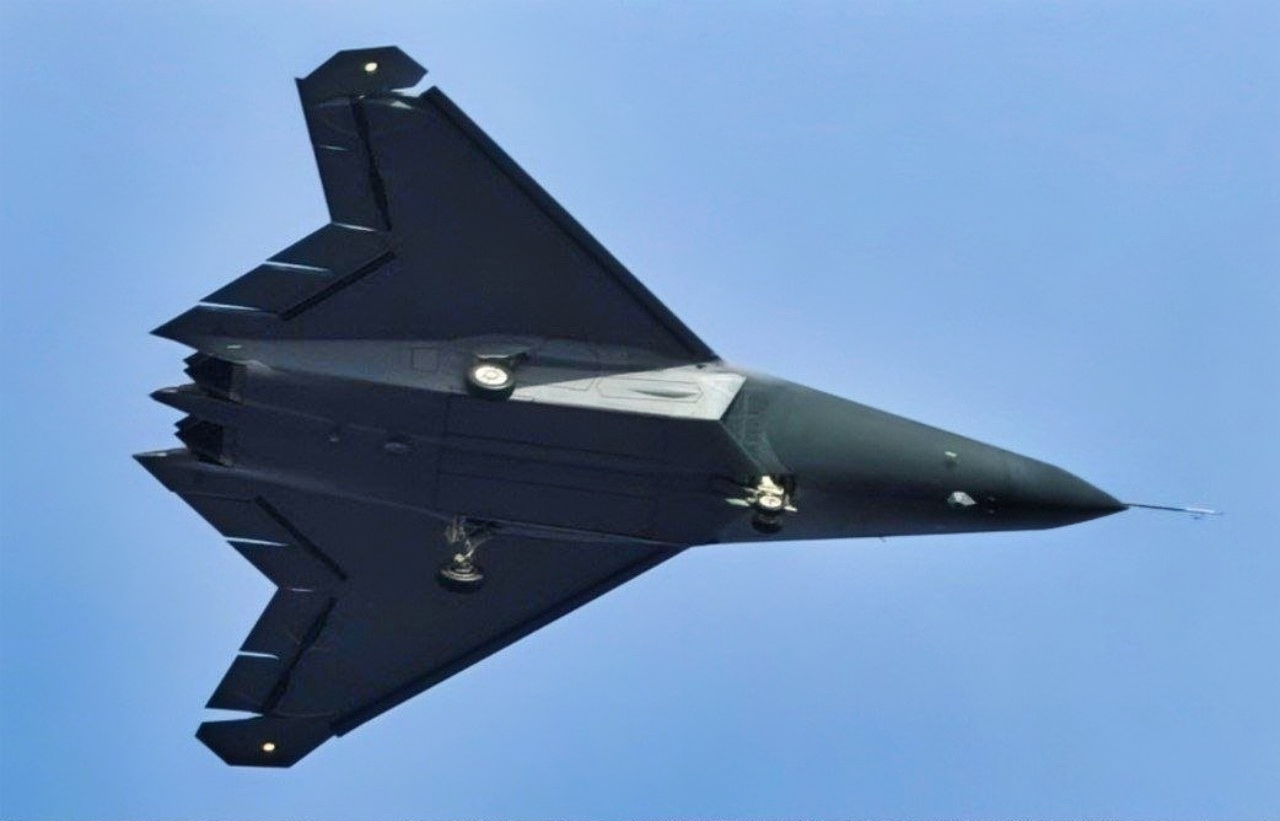
J-50 Fighter. Image Credit: Creative Commons.
The implication for the U.S. Navy is straightforward. By the mid-2030s, China expects to operate a carrier-capable sixth-generation fighter in numbers. The Navy, on the current F/A-XX schedule, projects initial operational capability for its sixth-generation fighter in the early-to-mid 2030s — but only if the August 2026 contract decision happens on time and the engineering and manufacturing development phase begins immediately. Any further delay pushes the Navy’s IOC into the late 2030s or beyond.
That is the timeline mismatch the program cannot afford to allow.
Why The Navy Will Be Behind If The Program Slips Further
A force comparison projection for 2035 looks like this if the F/A-XX comes in on the current schedule.
The U.S. Air Force operates the F-47 NGAD in initial operational quantities. The U.S. Navy operates the F/A-XX in initial operational quantities aboard at least two carrier air wings. China operates the J-36 in numbers from land bases and the J-50 from Type 003 carriers. The qualitative balance between American and Chinese sixth-generation aviation is roughly even, with the United States holding advantages in operational doctrine, networked combat experience, and unmanned systems integration that China is still developing.
A force comparison projection for 2035, if the F/A-XX slips by another three years, looks substantially worse.
The Air Force still operates the F-47. China still operates the J-36 and J-50. The U.S. Navy operates F/A-18E/F Super Hornets and F-35Cs against carrier-based Chinese sixth-generation fighters with stealth, range, and unmanned-teaming capabilities the Super Hornet was never designed to compete against. The qualitative balance shifts against the United States in the maritime air superiority mission—the most strategically consequential mission set in any future Indo-Pacific conflict.
That second projection is what concerns the Navy’s senior leadership most. Northrop Grumman President Tom Jones and Boeing Defense and Space CEO Steve Parker have both publicly pushed back on the industrial-base capacity argument that nearly killed the program, asserting that their respective companies are ready to execute the contract immediately on award. Caudle himself has been unequivocal — “the need for the F/A-XX is unquestionable” — and the August 2026 timeline has been confirmed across multiple services and Pentagon principals.
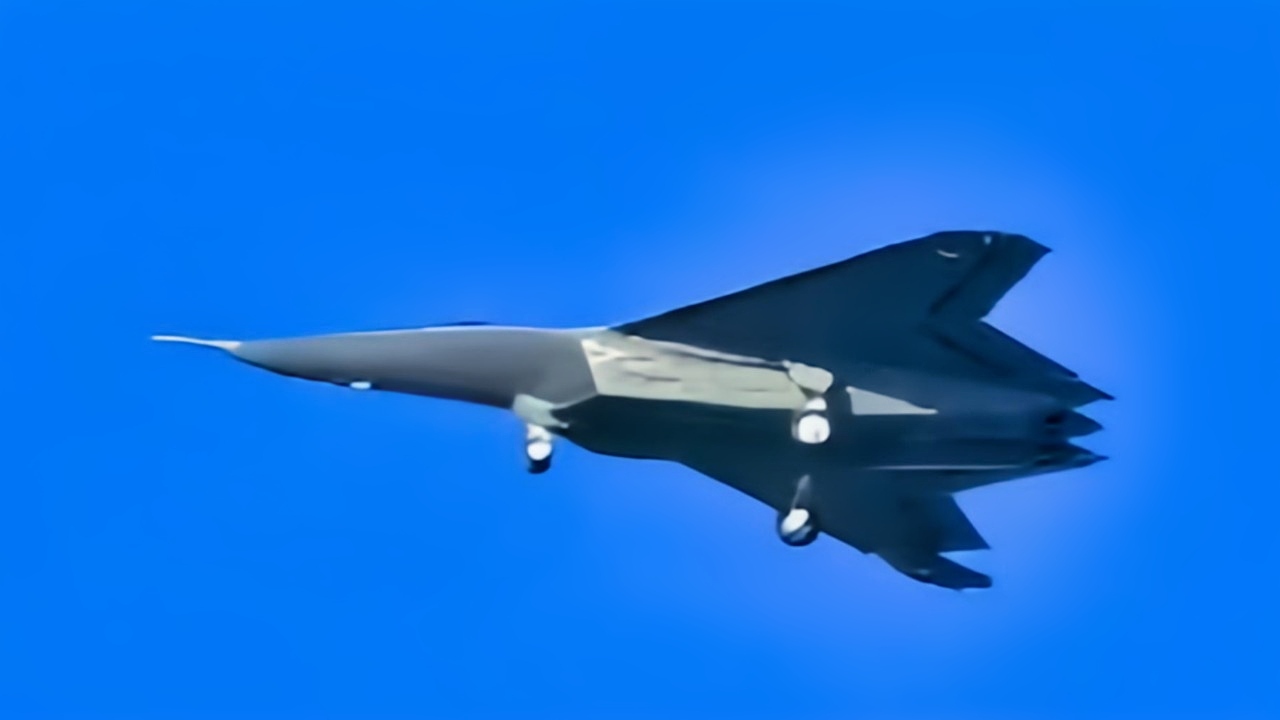
J-50 Fighter from China. Image Credit: Creative Commons.
What Has To Happen Now
Three things have to happen between August 2026 and the end of fiscal year 2027 if the F/A-XX is going to deliver on the timeline that keeps the Navy competitive.
First, the contract has to be awarded on schedule. Either Boeing or Northrop Grumman, with no further deferral. The August 2026 downselect is approximately 5 months away. Industry has produced concept renderings, demonstrated industrial-base readiness, and absorbed the year of delay imposed by the administration’s 2025 funding fight. Further slippage is procurement malpractice given the strategic context.
Second, the engineering and manufacturing development phase has to begin immediately. The $1.69 billion that Congress appropriated in fiscal year 2026 is enough to fund the EMD start. The administration’s fiscal year 2027 budget request, currently being assembled, must either maintain that funding level or increase it. Stretching EMD across multiple budget cycles to manage near-term cost pressure is the same approach that turned the F-22 program into an 187-aircraft purchase against an original 750-aircraft requirement.
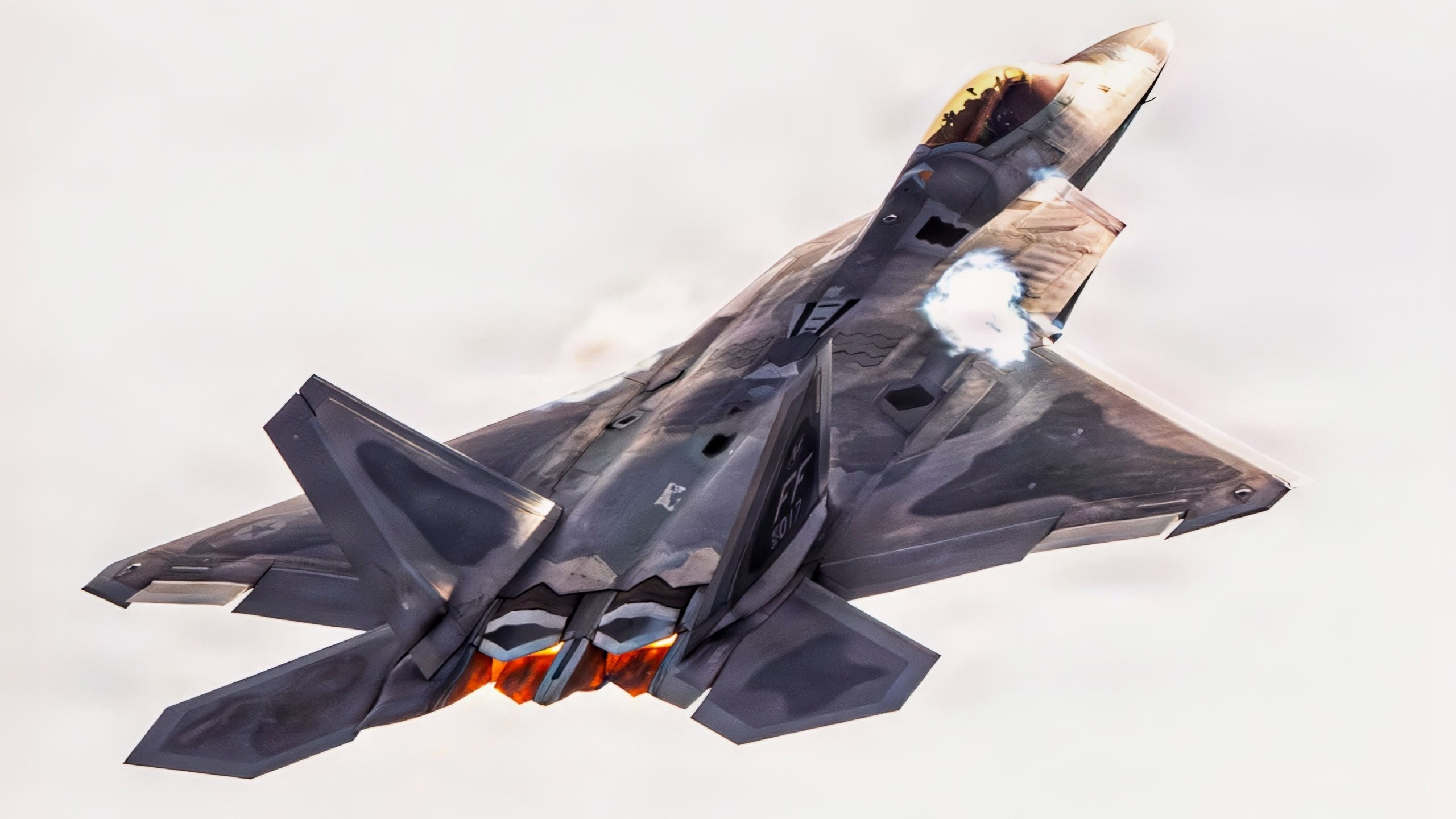
U.S. Air Force Capt. Nick “Laz” Le Tourneau, pilot and commander of the F-22 Raptor Aerial Demonstration Team, performs a practice demonstration for the 2026 Heritage Flight Training and Certification Course at Davis-Mothan Air Force Base, Arizona, March 1, 2026. The Heritage Flight Training and Certification Course is an annual event where military and civilian pilots train together to fly in formations, showcasing both modern and vintage military aircraft. These flights are performed at airshows across the country to honor the service and contributions of every U.S. Airmen, past and present, while educating the general public on the importance of the U.S. Air Force and its mission. (U.S. Air Force photo by Staff Sgt Mary Bowers)
Third, the Navy and the contractor must commit to a production schedule that aligns with the Chinese threat timeline. China expects operational sixth-generation aircraft by 2035. The Navy needs F/A-XX initial operational capability by the mid-2030s and full operational capability by the late 2030s.
Those timelines are achievable on the current EMD plan if the contract is awarded in August 2026 and production work begins immediately. They are not achievable if the program is allowed to drift through another year of administration-versus-Congress funding fights.
F/A-XX Can’t Become the F-22
The F-22 program is the cautionary precedent. Four hundred and seventy F/A-18 Super Hornets cannot fight a war against Chinese sixth-generation aviation in the late 2030s any more than 187 F-22s can fight an air dominance campaign against a Chinese fleet of more than 200 J-20s today.
The Navy needs the F/A-XX. The shipyards and the air wings need a clear signal that the program is moving forward. The contractors need a binding contract.
The August 2026 decision is not just a procurement milestone. It is the moment at which the Navy either commits to maintaining American maritime air superiority through the 2040s or allows institutional drift to do to the F/A-XX what it has already done to the F-22.
The Air Force has its sixth-generation fighter. China has two. The Navy needs one of its own — and it needs the work to start now.
About the Author: Harry J. Kazianis
Harry J. Kazianis (@Grecianformula) was the former Senior Director of National Security Affairs at the Center for the National Interest (CFTNI), a foreign policy think tank founded by Richard Nixon based in Washington, DC. Harry has over a decade of experience in think tanks and national security publishing. His ideas have been published in the NY Times, The Washington Post, The Wall Street Journal, CNN, and many other outlets worldwide. He has held positions at CSIS, the Heritage Foundation, the University of Nottingham, and several other institutions related to national security research and studies. He is the former Executive Editor of the National Interest and the Diplomat. He holds a Master’s degree focusing on international affairs from Harvard University. Kazianis is Editor-In-Chief of 19FortyFive.

