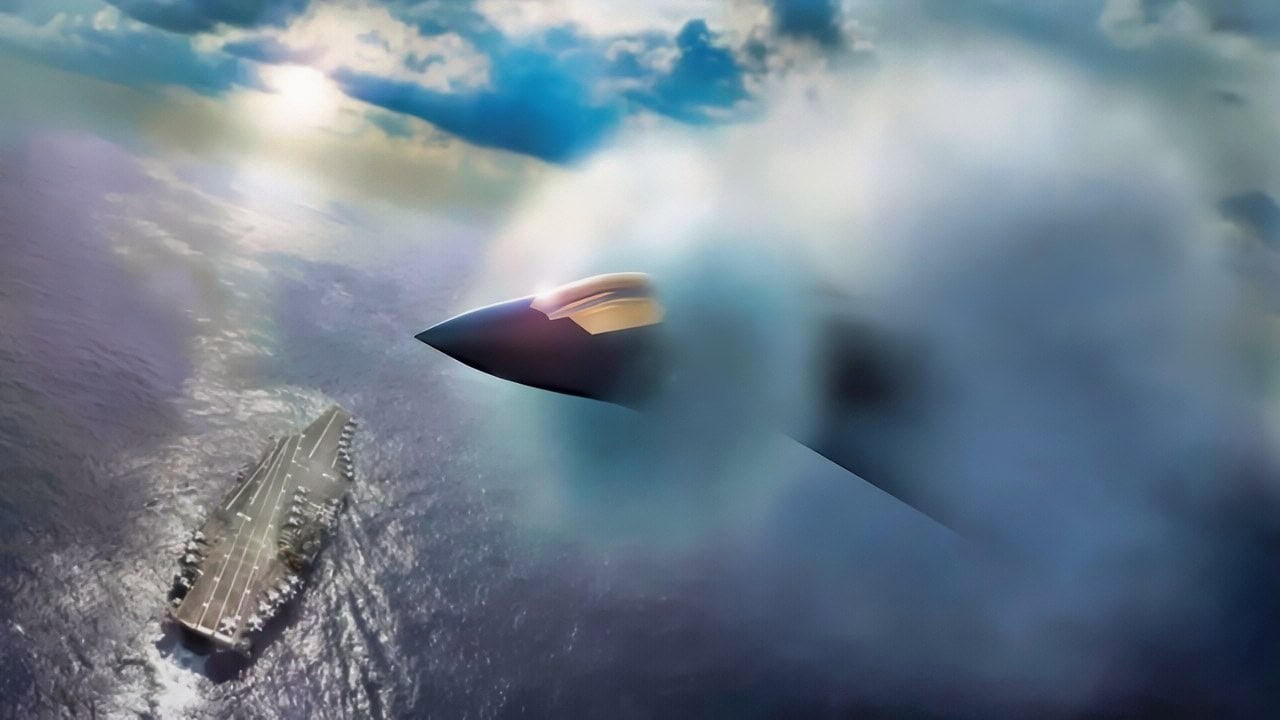
Synopsis: U.S. Navy leaders argue F/A-XX is becoming urgent because the era of operating non-stealth aircraft “with impunity” is shrinking as air defenses and partnered adversaries proliferate.
-The F-35C remains central, but a carrier air wing built around a multirole fighter alone leaves gaps in mission flexibility, survivability, and massed maritime strike.
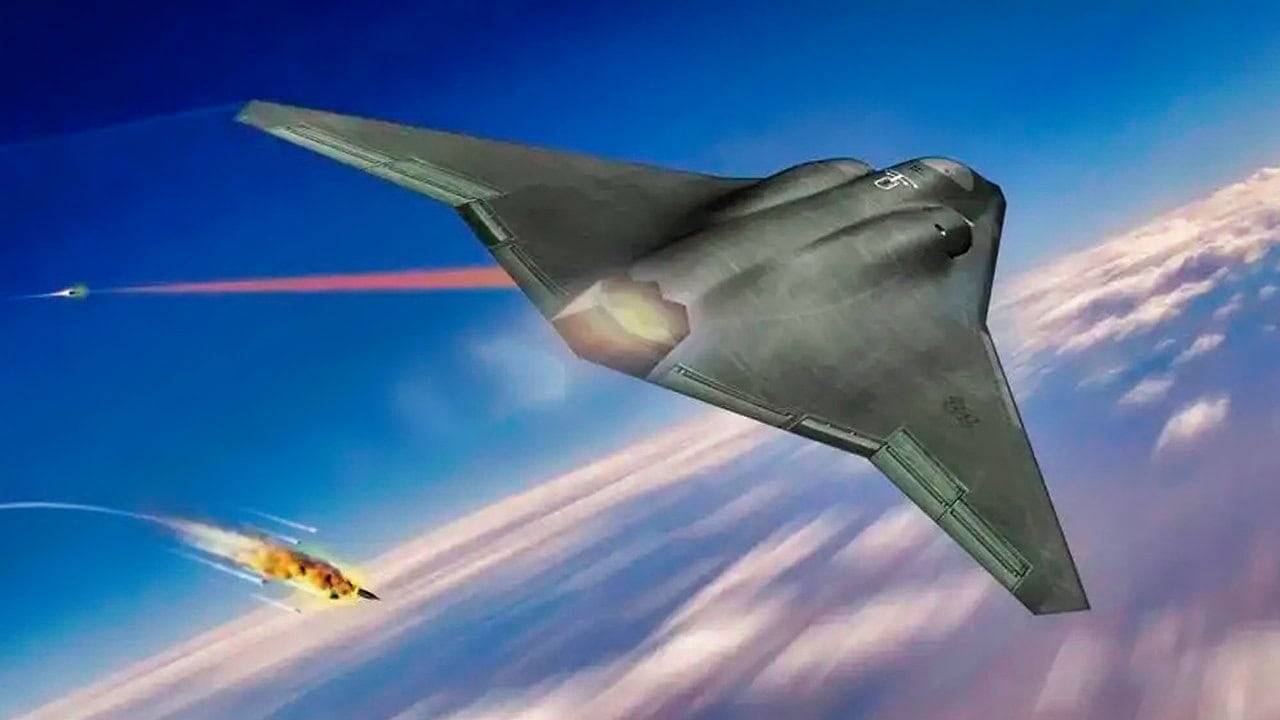
(ILLUSTRATION) — A Northrop Grumman illustration depicts a notional sixth-generation fighter in action.

J-XX From China. Image Credit: Social Media Screenshot.
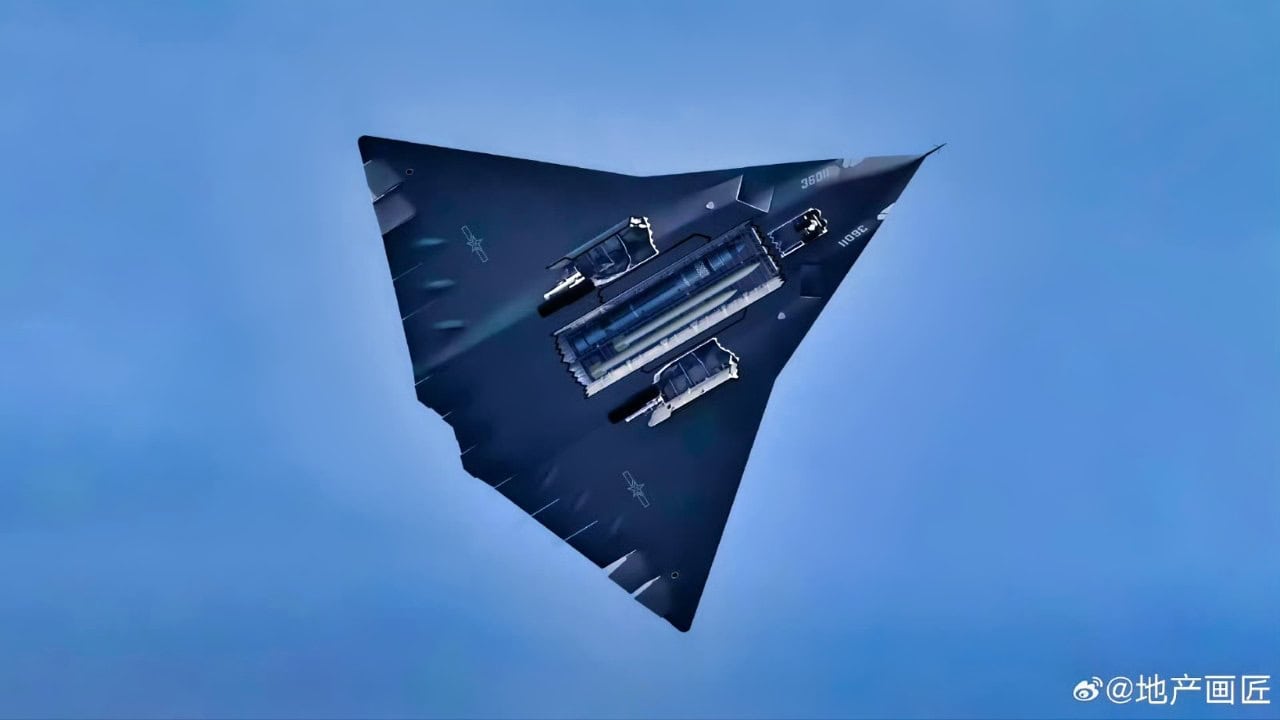
J-36 or JH-XX from China. Screenshot for Chinese Social Media.
-Meanwhile, China’s fighter growth—especially rising J-20 numbers and the carrier-capable J-35—tightens the timeline.
-With Super Hornets aging out despite service-life upgrades, F/A-XX is framed as the fast path to longer-range, higher-end options for Pacific operations.
Admiral Daryl Caudle Has a Message: Build F/A-XX “Immediately”
U.S. Chief of Naval Operations Admiral Daryl Caudle says the U.S. Navy must acquire the sixth-generation F/A-XX as soon as possible. Caudle’s views are backed by many at the Pentagon and in Congress who recognize the need for future maritime attack options. The F-35C is a formidable and upgradeable asset, but Navy air wings need options beyond a multirole fighter. Caudle says the Navy needs a replacement for the obsolescent F/A-18E/F Super Hornet, and it needs it extremely soon.
“This is an ever-evolving theme, and when you’ve got partnerships … well coupled with each other across China and Russia and Iran and North Korea, and terrorist groups that are getting that kit from all of those through back-channel ways, our ability to fly with impunity with our existing airframes is fleeting,” Caudle said, as quoted in TWZ. “So, if I don’t start building that [F/A-XX] immediately, you’re not going to get it for some time.”
Need to “Mass” Ocean air power
Mass is a key consideration—the U.S. Navy cannot afford to be at a significant fleet-size deficit compared to China in the event of a conflict in the Pacific.
China is now believed to operate as many as 300 J-20 fifth-generation fighters, and analysts reckon the People’s Liberation Army Air Force (PLAAF) could operate close to 1,000 J-20s within ten years. Such forces would be positioned to defend China’s coastal waters up to several hundred miles offshore.
The J-20 is a land-launched fighter. But it can certainly reach the waters around Taiwan and hold sway over many locations in the first island chain. Hundreds of J-20s could form a perimeter off the Chinese coast, positioning themselves to defend a sphere of PLA influence and security.
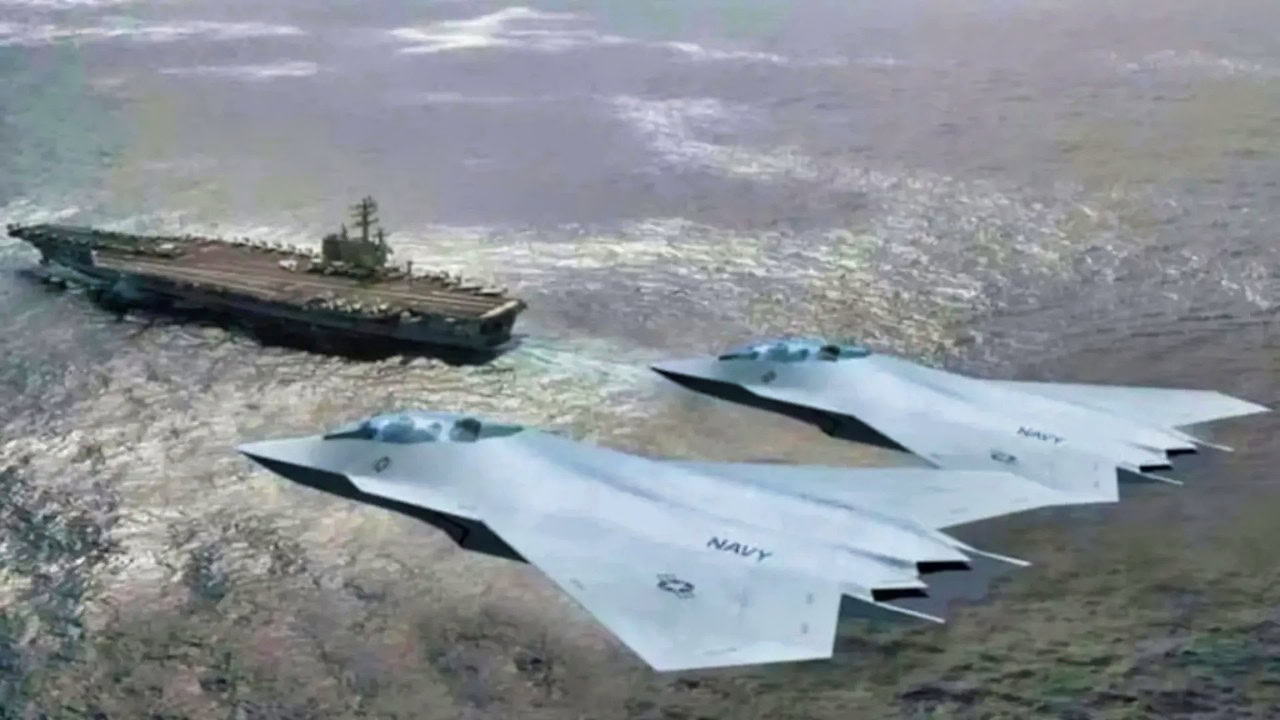
F/A-XX Fighter for US Navy. Navy graphic mockup.
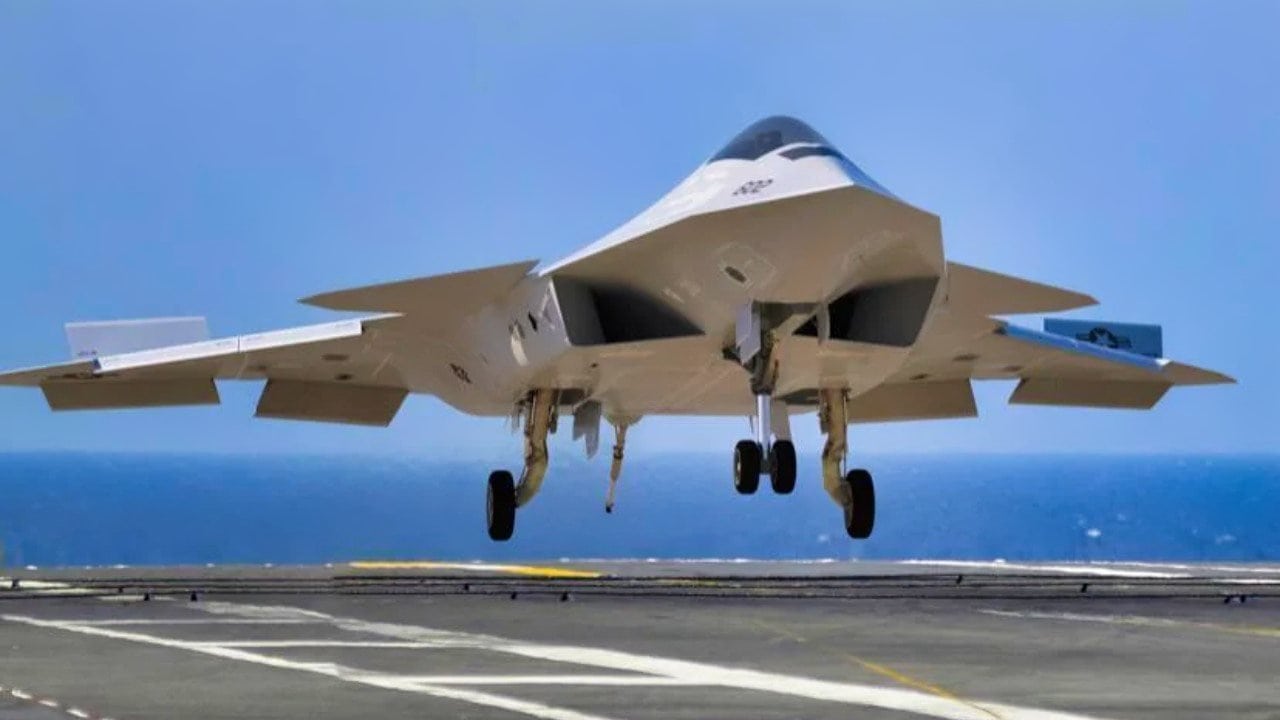
F/A-XX. Image Credit: Creative Commons.
Indeed there are many places in the world where the Pentagon would need to leverage maritime strike to achieve a given objective—the Navy often is the first service to respond to a crisis.
“I hate to say it, sounds cliche, but you know, when things heat up in Iran, guess who steamed over there? Right? It was the United States Navy and the Abraham [Lincoln Carrier] Strike Group,” Caudle said. “So you can imagine what that looks like 10 years from now, with a different Iran, with different capability, that can go against F-18 capabilities of today.”
End of the F/A-18
The Navy’s classic Hornet and Super Hornet aircraft have already flown thousands of miles beyond their expected service life. As the F/A-18 sunsets, there will be a fast-growing need to replace the kind of mass-air-campaign attack capability the Super Hornet supported. A special U.S. Navy Service Life Extension Plan reinforced the F/A-18 airframe, added new sensing and avionics, conformal fuel tanks, digital cockpit displays, and specially engineered carrier-landing software known as “magic carpet.”
The F/A-18s have also been equipped with infrared search & track targeting technology designed for high-fidelity imaging and the ability to operate in an environment affected by electronic warfare. Despite these many innovations and successful upgrades, the F/A-18 has exceeded its capacity and cannot fly for much longer.
China Threat
The Navy also needs to fast-track the F/A-XX because China is rapidly acquiring carrier-launched fifth-generation stealth aircraft. The Chinese threat thus extends far beyond the J-20, given the rapid emergence of the now-operational carrier-launched J-35.
Previously known as the J-31, the J-35 is already flying from PLA Navy carriers. A sizable fleet of J-35s is expected to arrive in the coming years. The J-35 resembles the F-35C and may rival its capabilities, depending on the performance of its computing, sensing, fire control, weapons, and agility.
F/A-XX Range Advantage
China is also developing sixth-generation stealth fighters. The PLA appears to be accelerating the development of the Shenyang J-50 and the triple-engine Shenyang J-36, a stealth fighter-bomber hybrid.
The Pentagon’s own emerging sixth-generation stealth fighters are being built with the ability to fly to much longer ranges than existing 5th-gen aircraft. This is of significant tactical importance in the huge expanse of the Pacific.
The Pentagon has indicated the F-47 will likely operate with a range of 2,000 miles. If the F/A-XX operated with a similar range, it would introduce new tactical and strategic possibilities, as that range is considerably longer than an F-35C’s overall combat range of 1,300 nautical miles. The F/A-XX could strike from greater distances, operate with more dwell time, and attack from carriers further offshore without needing a refueler.
About the Author: Kris Osborn
Kris Osborn is the Military Affairs Editor of 19FortyFive and President of Warrior Maven – Center for Military Modernization. Osborn previously served at the Pentagon as a Highly Qualified Expert with the Office of the Assistant Secretary of the Army—Acquisition, Logistics & Technology. Osborn has also worked as an anchor and on-air military specialist at national TV networks. He has appeared as a guest military expert on Fox News, MSNBC, The Military Channel, and The History Channel. He also has a Master’s Degree in Comparative Literature from Columbia University.