
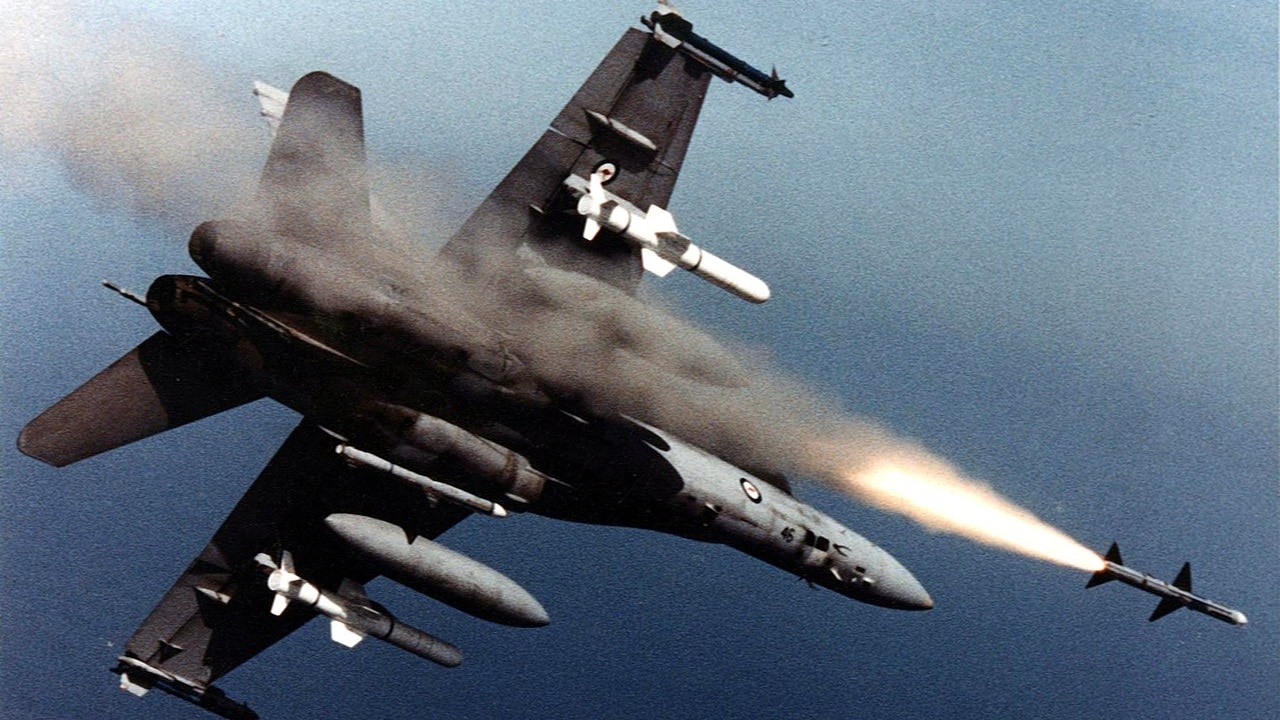
Key Points and Synopsis: In 2026, the F/A-18 Super Hornet remains the U.S. Navy’s reliable workhorse, prioritizing multirole flexibility and high sortie rates over cutting-edge stealth.
-While it is considered “obsolete” for independent Day One strikes against top-tier defenses like China or Russia, its Block III upgrades—including better range and avionics—keep it vital for permissive environments.
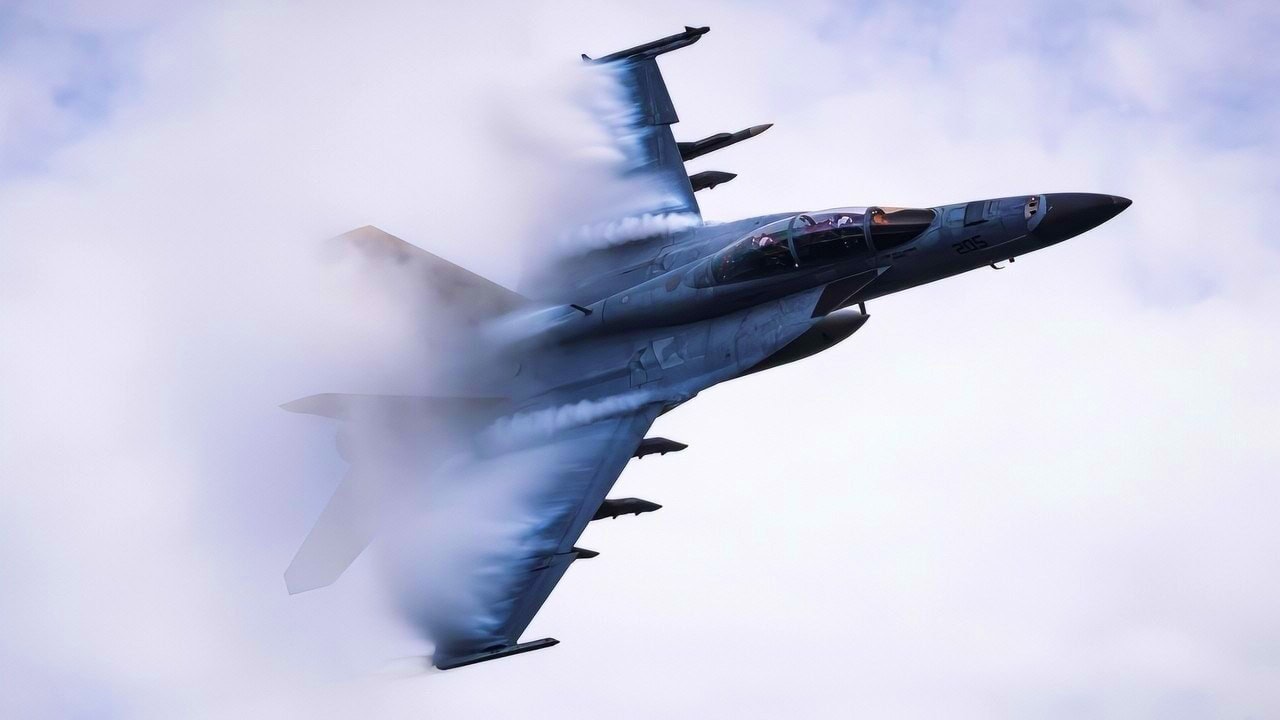
USS George Washington Aircraft Carrier Super Hornet. Image Credit: Creative Commons.
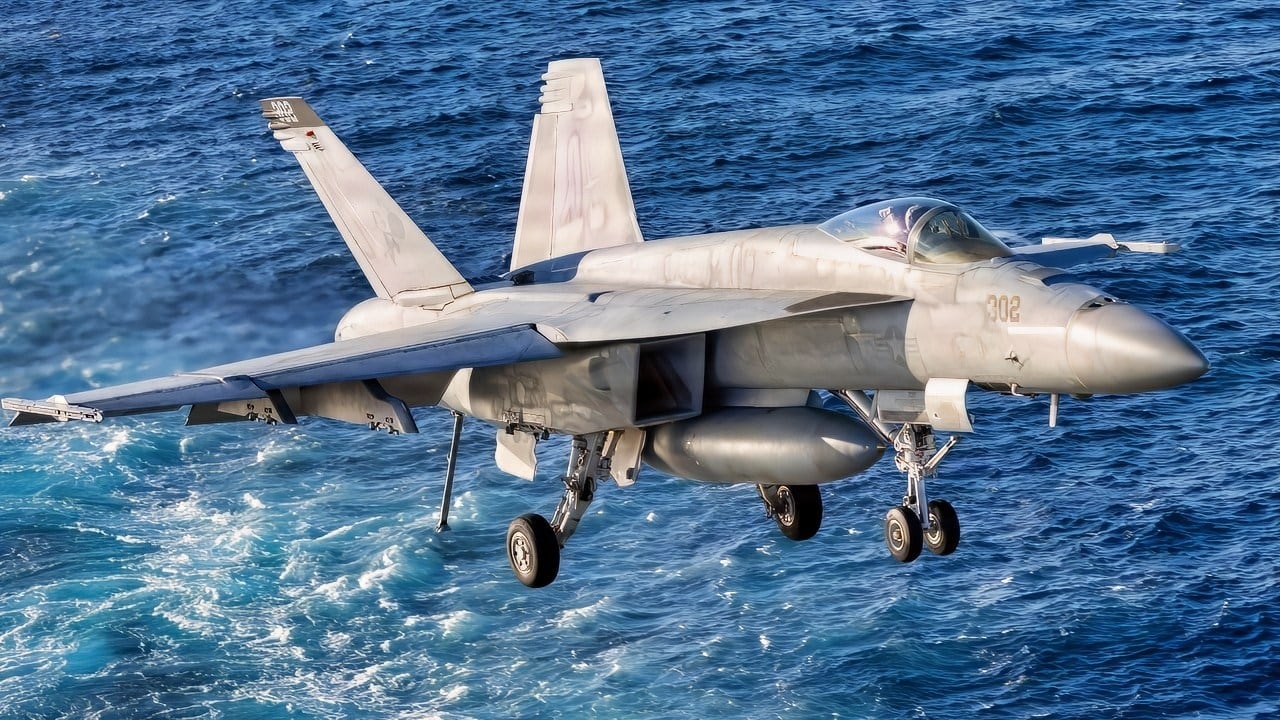
An F/A-18E Super Hornet aircraft approaches the flight deck of the world’s largest aircraft carrier, Ford-class aircraft carrier USS Gerald R. Ford (CVN 78), Nov. 17, 2025. U.S. military forces are deployed to the Caribbean in support of the U.S. Southern Command mission, Department of War-directed operations, and the president’s priorities to disrupt illicit drug trafficking and protect the homeland. (U.S. Navy photo)
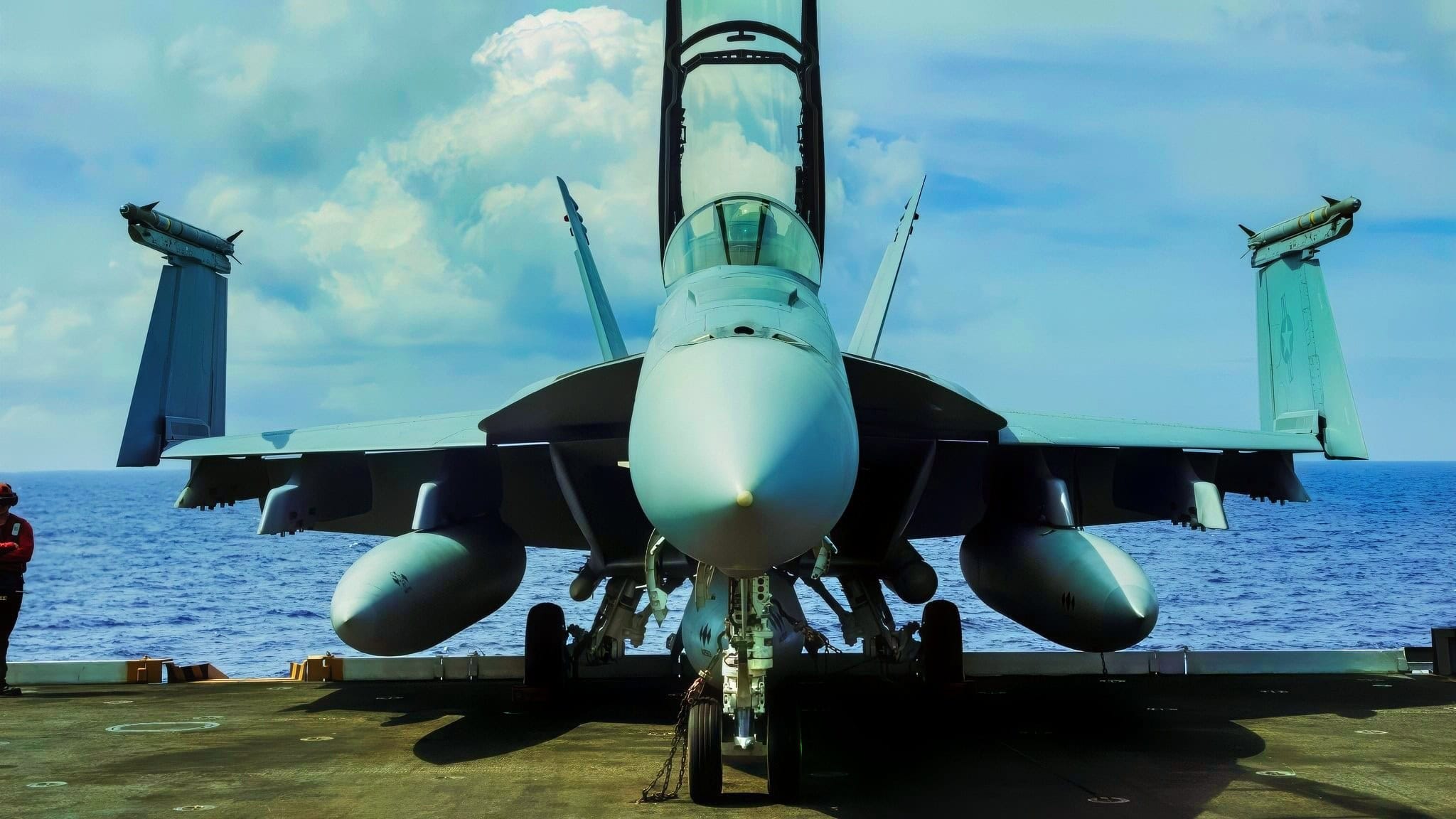
Capt. Tim Waits, commanding officer of Nimitz-class aircraft carrier USS George Washington (CVN 73), climbs into an F/A-18F Super Hornet, attached to Strike Fighter Squadron (VFA) 102, while underway in the South China Sea, Nov. 24, 2025. George Washington is the U.S. Navy’s premier forward-deployed aircraft carrier, a long-standing symbol of the United States’ commitment to maintaining a free and open Indo-Pacific region, while operating alongside allies and partners across the U.S. Navy’s largest numbered fleet. (U.S. Navy photo by Mass Communication Specialist 2nd Class Geoffrey L. Ottinger)
-As the F-35C handles high-threat missions, the Super Hornet continues to provide the essential volume and versatility required for daily carrier operations.
Why the F-35C Won’t Fully Replace the ‘Reliable’ F/A-18 Super Hornet Just Yet
The F/A-18 Super Hornet is occasionally dismissed as a stopgap measure, a legacy fighter in a stealth age. Yet the Super Hornet remains the Navy’s most numerous strike fighter, central to carrier air wing operations in the year 2026.
The question with the Super Hornet is not whether it is cutting edge—it’s not—but whether the platform is still relevant to air combat in modern conflicts. And the answer really depends on the mission and the threat environment.
Why the Super Hornet exists
Developed in the 1990s as a replacement to the F-14 Tomcat and the F/A-18C/D Hornet, the Super Hornet prioritizes multirole flexibility with a lower maintenance burden, offering a higher sortie generation rate.
The Navy, when faced with a fork, chose the Super Hornet over upgrading the F-14 because the former was cheaper, simpler, and more sustainable.
The Super Hornet entered service in the early 2000s and quickly became the Navy’s workhorse, perfectly timed with the expansion of the War on Terror.
Technical Specifications
The Super Hornet is larger than the legacy Hornet, with increased fuel capacity and two GEF414 turbofan engines. The Super Hornet is also outfitted with the APG-79 AESA radar and a wide range of air-to-air and air-to-ground munitions.
The platform is renowned for its reliability, payload, and integration. But the Super Hornet has drawbacks, too, namely its limited range and, of course, the fact that it’s non-stealth.
Employing the Super Hornet
The Super Hornet’s core missions are fleet defense, strike, and close air support. One of the platform’s primary benefits is high adaptability; it can switch roles quickly, operating on a dime as a missile carrier, a strike platform, or an escort.
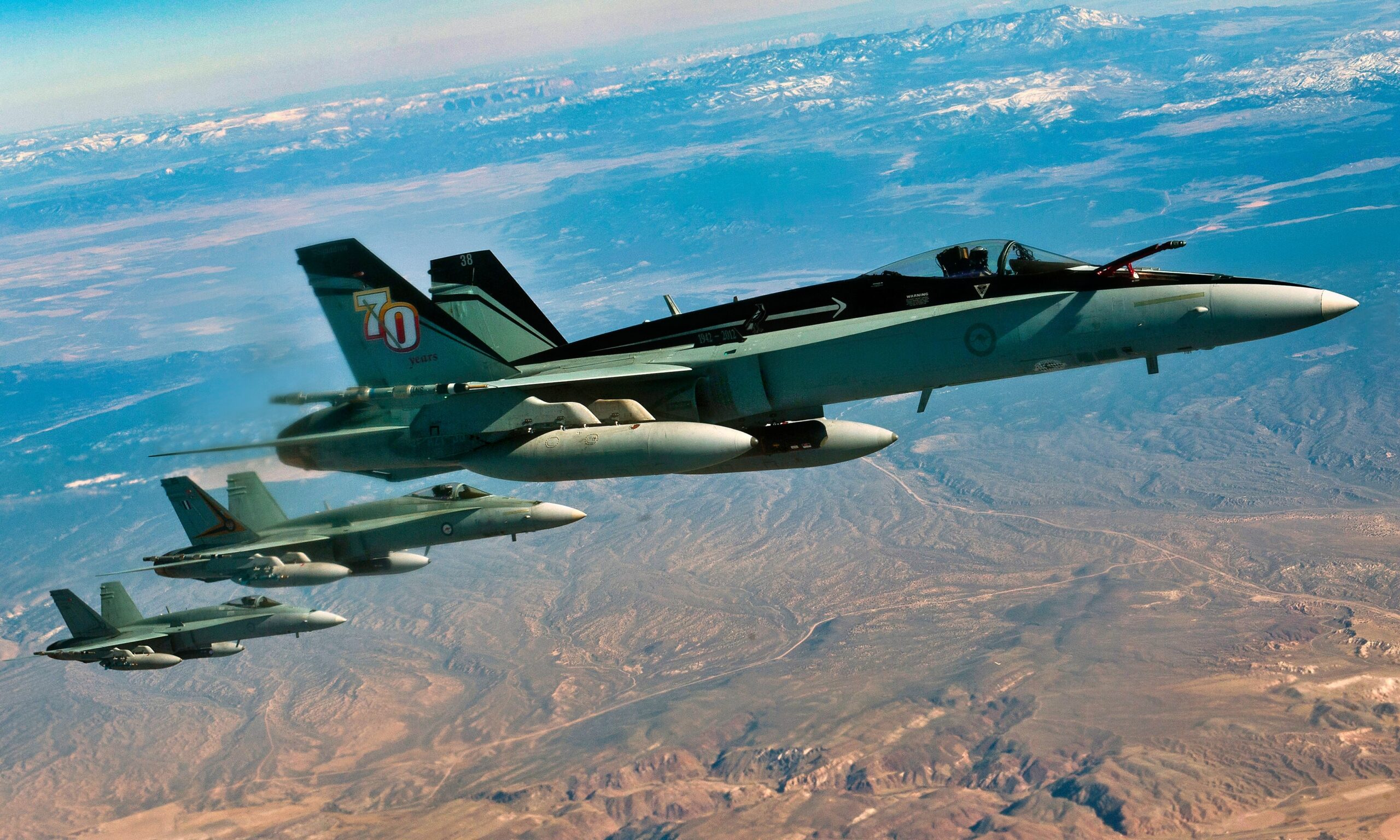
A three-ship of F/A-18 Hornets, Royal Australian Air Force, fly in a training mission during Red Flag 12-3 March 9, 2012, over the Nevada Test and Training Range. Members of the RAAF participate in the Red Flag exercise every other year. (U.S. Air Force photo by Senior Airman Brett Clashman)
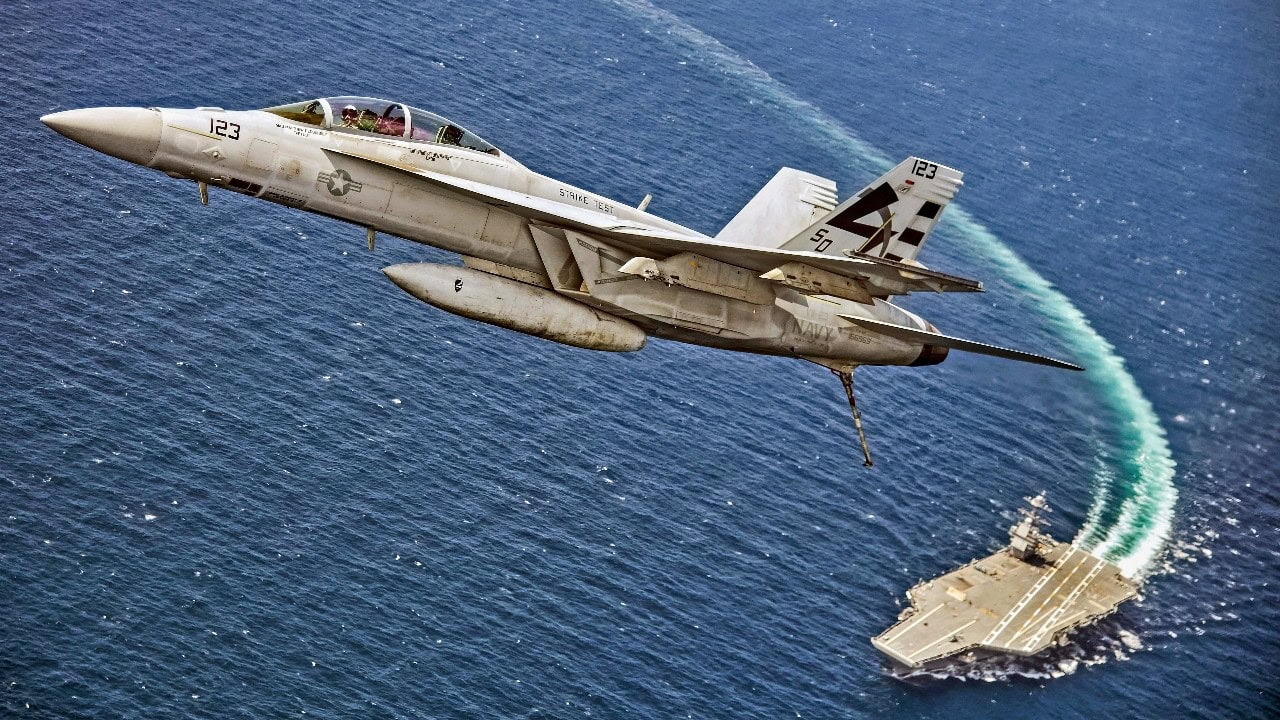
Super Hornet Navy Fighter. Image Credit: Creative Commons.
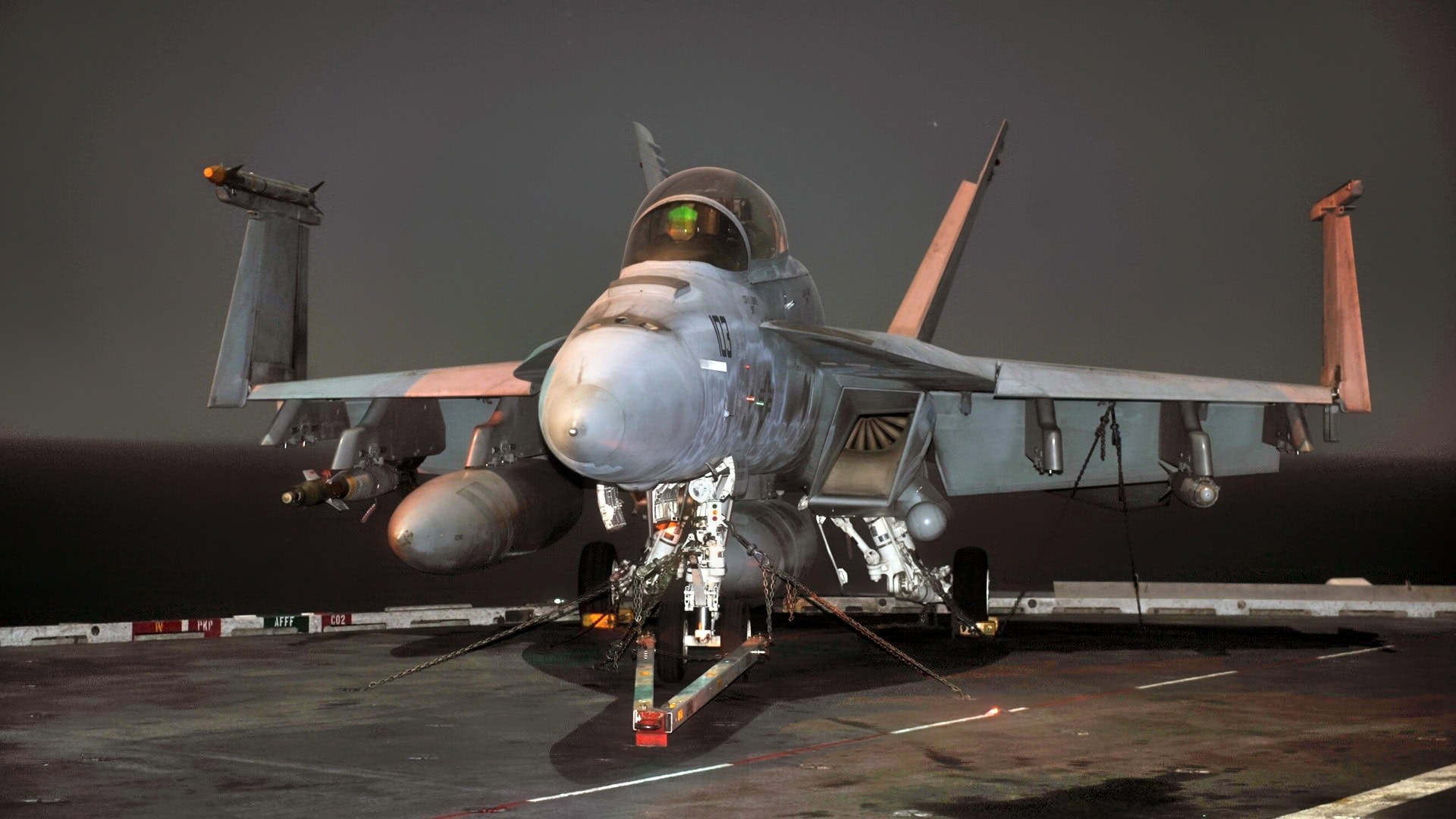
FA-18 Super Hornet. Image Credit: Creative Commons.
The non-stealth Super Hornet is typically used in permissive and semi-contested environments, where it relies upon tanking and networked ISR.
The Super Hornet works best as part of a system, not as a lone craft. And the Super Hornet is not used in fully contested air spaces.
Strategic Role
Carrier air wings require volume—preferably from reliable and predictable platforms. The Super Hornet provides volume and surge capacity. Specialized stealth aircraft alone cannot sustain the Navy’s daily sortie rate.
But the Super Hornet is available, a workhorse that handles routine missions and training loads, freeing stealth assets for higher-end tasks.
So in that respect, the Super Hornet is still relevant today.
More Bang for the Buck
Modernization efforts are underway, an ongoing stretch to milk the Super Hornet for all its value. Block III Super Hornets have been upgraded to include conformal fuel tanks, an improved cockpit, and a reduced radar cross-section.
The aim is to extend the aircraft’s relevance into the 2030s. But those upgrades are modest; the Super Hornet is not being transformed into a stealth fighter.
But improvements to the type’s range and situational awareness offer the Navy an incremental upgrade that should extend the Super Hornet’s relevance.
Is the Super Hornet Obsolete?
It depends on who you ask. Against top-tier IADS, the Super Hornet is vulnerable—especially without support.
So on the first day, against Russia or China, the Super Hornet is obsolete, yes. But in most real-world operations, such as the extraction of a South American leader, the Super Hornet remains effective.
So obsolescence is mission-specific.
Today, the Super Hornet would struggle as an independent penetrator—but excels as a networked strike asset operating within a broader team. In that regard, the danger is not obsolescence but overuse.
The Future of the Super Hornet
The Navy is bringing the F-35C online, which will gradually replace portions of the Super Hornet fleet. The NGAD may also affect the way the Navy operates.
The result, over time, will be a gradual reduction in Super Hornet use, though not an abrupt retirement; the Super Hornet will remain essential until its replacement is available at scale.
There is no timeline for that process, meaning the transition will be slow and managed.
The Super Hornet is not a cutting-edge platform. But it is not yet functionally obsolete.
It still delivers reliable combat power and operational flexibility.
In the Super Hornet, the Navy has a platform they know they can count on to perform tasks the F-35C is too precious for.
About the Author: Harrison Kass
Harrison Kass is an attorney and journalist covering national security, technology, and politics. Previously, he was a political staffer and candidate, and a US Air Force pilot selectee. He holds a JD from the University of Oregon and a master’s in global journalism and international relations from NYU.