
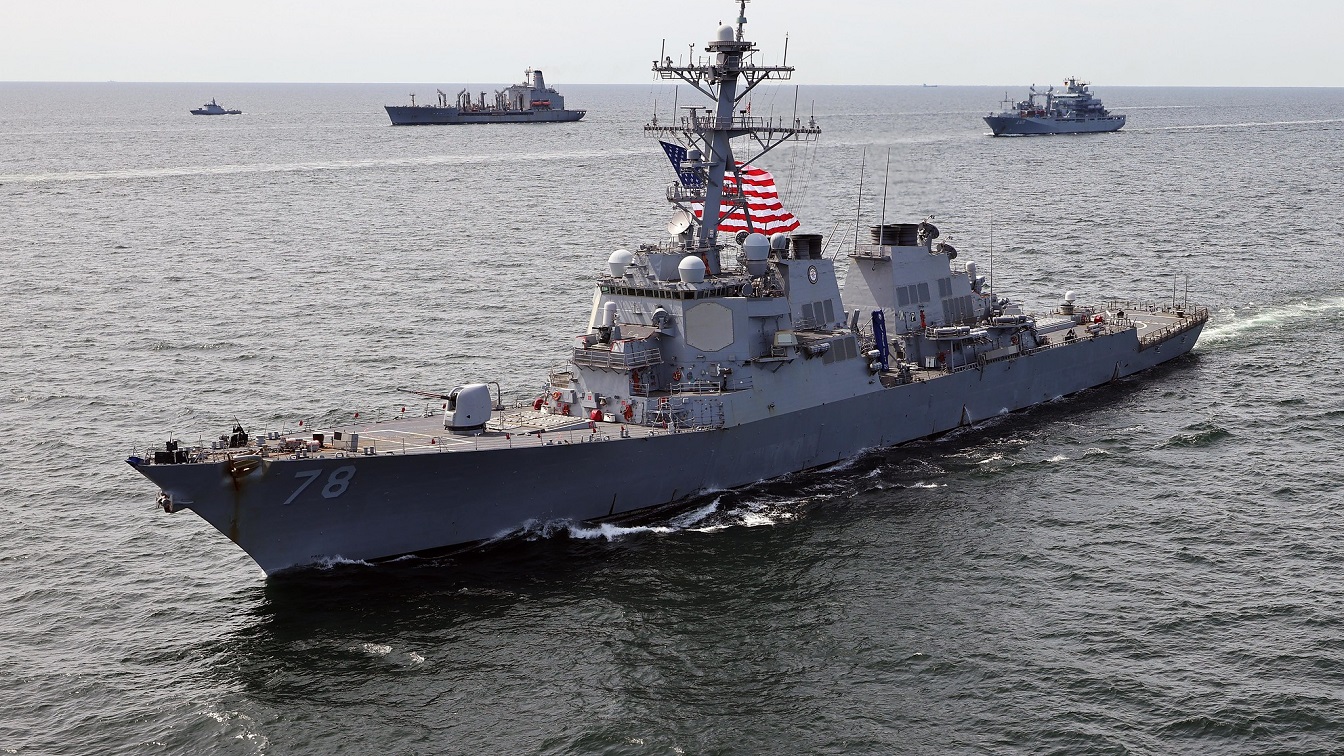
Summary and Key Points: Defense analyst Christian D. Orr evaluates the Arleigh Burke-class Flight III, the most significant upgrade in the 35-year history of the DDG-51 program.
-Centered on the Raytheon AN/SPY-6(V)1 Air and Missile Defense Radar (AMDR) and Aegis Baseline 10, these ships offer 30x the sensitivity of legacy variants.
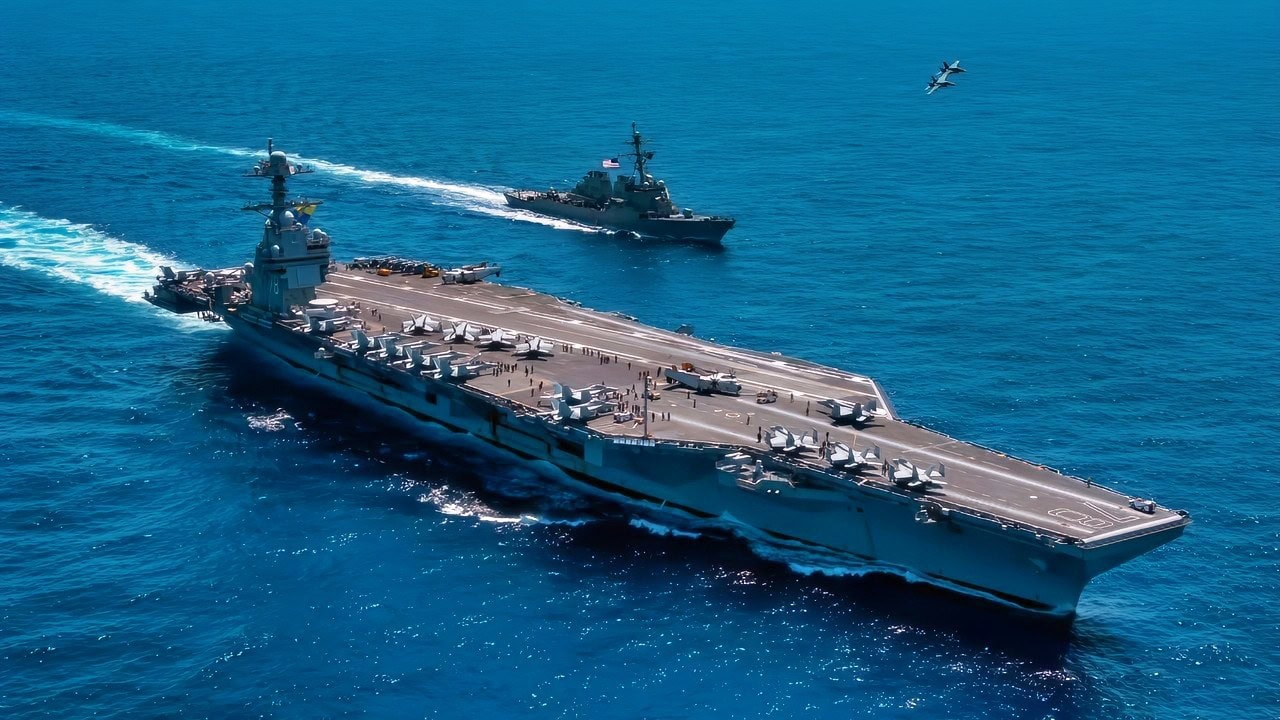
An F/A-18F Super Hornet, attached to the “Blacklions” of Strike Fighter Squadron (VFA) 213 and a F/A-18E Super Hornet, attached to the “Golden Warriors” of Strike Fighter Squadron (VFA) 87 fly over the world’s largest aircraft carrier, USS Gerald R. Ford (CVN 78), the Arleigh Burke-class guided-missile destroyer USS Mahan (DDG 72), April 11, 2025. The Gerald R. Ford Carrier Strike Group is underway in the Atlantic Ocean completing integrated naval warfighting training. Composite Training Unit Exercise. Image Credit: Creative Commons.
-This report analyzes the 2026 status of the USS Jack H. Lucas (DDG-125) and the delivery of the USS Ted Stevens (DDG-128) in December 2025.
-Orr explores the 4,160-volt power grid and 96 Mk 41 VLS cells, concluding that the Flight III remains the “backbone” of U.S. surface dominance.
The Flight III Shield: Why the Arleigh Burke-Class is the Navy’s 2026 Answer to Hypersonic Threats
World War II the legends of many U.S. Navy flag officers, from William F. “Bull” Halsey to Chester W. Nimitz and Raymond A. Spruance, to name but a few.
But even among those names, one stands out: Admiral Arleigh Albert Burke, who would eventually go on to become Chief of Naval Operations (CNO) from August 1955 to August 1961.
Even Commander “Demo Dick” Marcinko, founding CO of SEAL Team Six, heaped praise upon the Admiral—and as anybody knows who read Marcinko’s Rogue Warrior books, that salty old SEAL didn’t dole out praise lightly, especially to so-called “ship drivers.”
One of Burke’s noteworthy achievements was commanding Destroyer Squadron 23, AKA the “Little Beavers,” while it wreaked havoc on the Imperial Japanese Navy (IJN) between November 1943 and January 1944. The squadron was credited with destroying one IJN cruiser, nine destroyers, one submarine, several smaller ships, and approximately 30 aircraft.
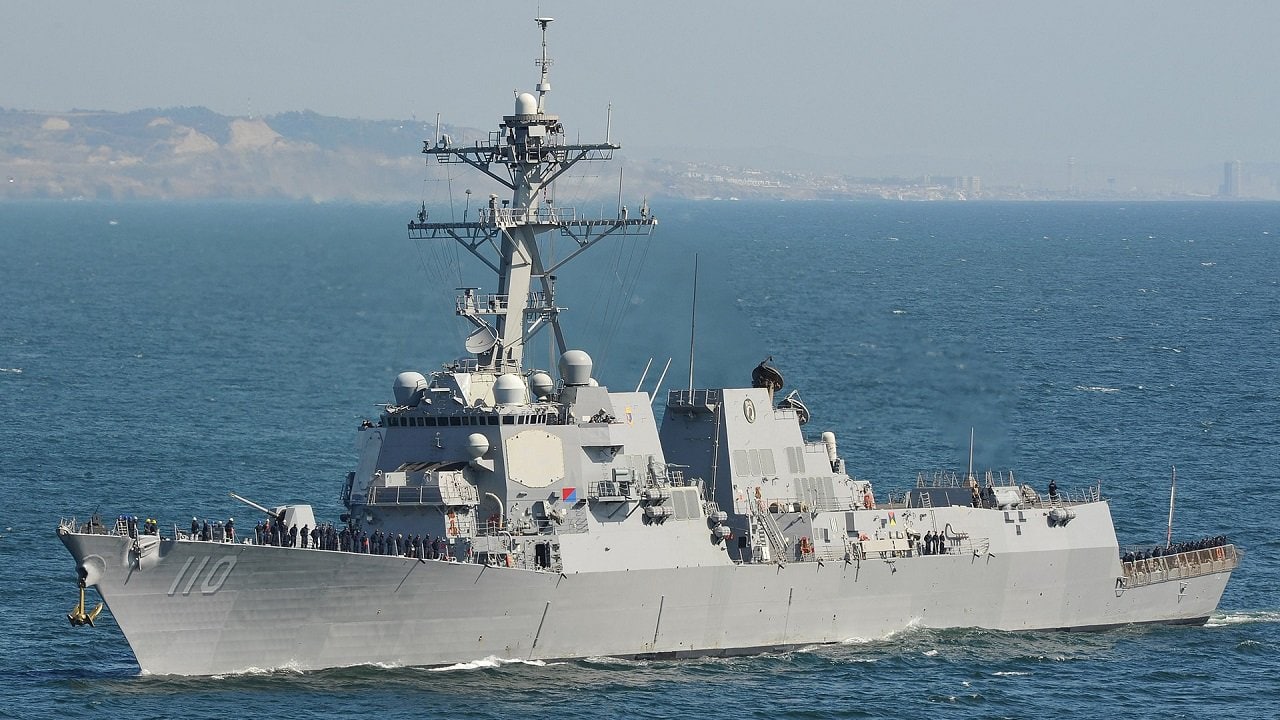
PACIFIC OCEAN (May 4, 2015) – The guided-missile destroyer USS William P. Lawrence (DDG 110) steams toward San Diego Harbor. (U.S. Navy photo by Mass Communication Specialist 3rd Class Nathan Burke/Released)
It was appropriate that the Navy would eventually choose to name a class of guided-missile destroyers (DDGs) in honor of Admiral Burke.
Doing their namesake proud, the Arleigh Burke-class destroyers were so good that they spawned two sequels—a second and third flight of warships in the class.
Today, we focus on the Flight III variant of the Burke-class DDGs and explain its importance to the Navy.
Arleigh Burke-Class Initial History and Specifications
Yes, you read that term correctly, “Flight.” This writer has yet to figure out why the term is used for a surface warfare vessel variant as opposed to a naval aircraft; my educated guess is a reference to the speed with which destroyers metaphorically “fly” across the ocean waves. (If any of our dear readers know the correct answer, please let us know in the comments.)
The USS Arleigh Burke (DDG-51) was the lead ship of the class. She was laid down on December 6, 1988, launched on September 16, 1989, and commissioned on the Fourth of July 1991.
Flight II came along in February 1998, starting with the USS Mahan (DDG-72). Finally, the Burke Flight IIIs came along, starting with the USS Jack H. Lucas (DDG-125) built by Ingalls Shipbuilding in Pascagoula, Mississippi.
That ship was laid down on November 8, 2019, launched on June 4, 2021, and commissioned on October 7, 2023.
Flight III Tech Specs and Vital Stats
Displacement: 9,496 long tons fully laden
Hull length: 509.5 feet
Beam Width: 66 feet
Draft: 31 feet
Propulsion: 4 × General Electric (GE Vernova) LM2500 aeroderivative gas turbines generating 100,000 shp
Max speed: 31 knots
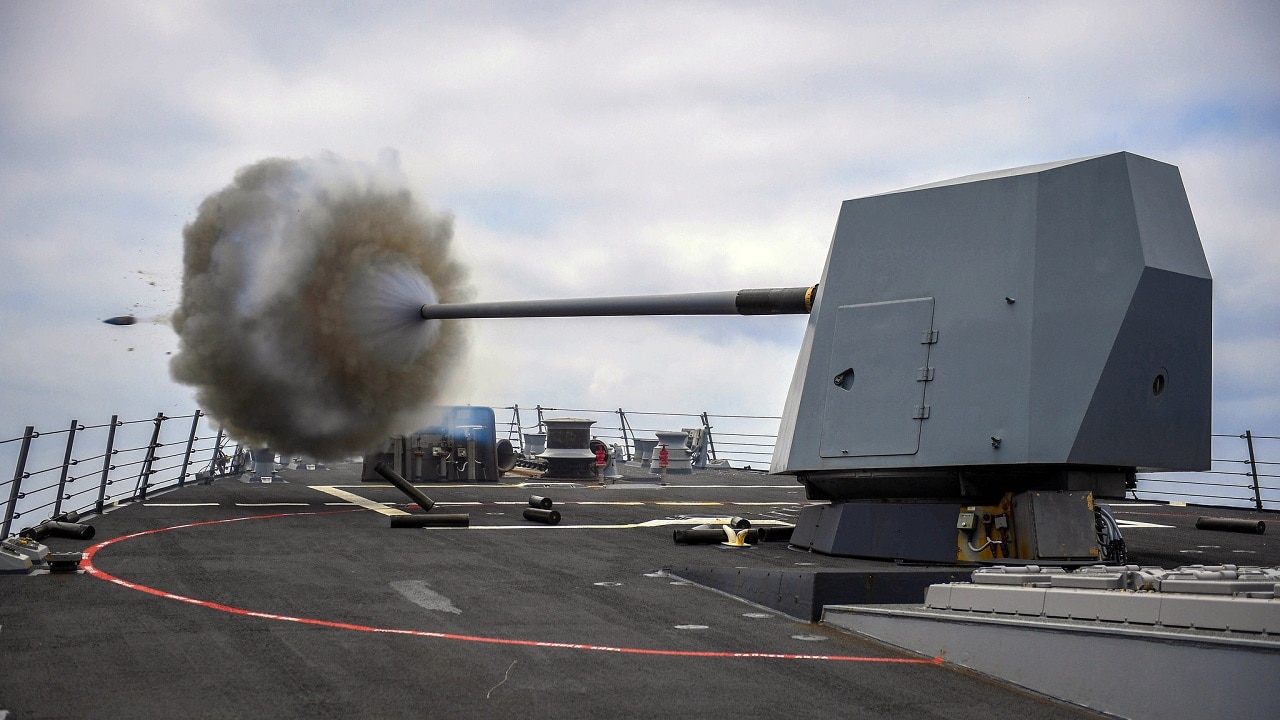
ATLANTIC OCEAN (June 30, 2018) The Arleigh Burke-class guided-missile destroyer USS Bainbridge (DDG 96) fires its Mark 45 five-inch gun during a live-fire exercise. Bainbridge, homeported at Naval Station Norfolk, is conducting naval operations in the U.S. 6th Fleet area of operations in support of U.S. national security interests in Europe and Africa. (U.S. Navy photo by Mass Communication Specialist 1st Class Theron J. Godbold/Released)180630-N-FP878-566
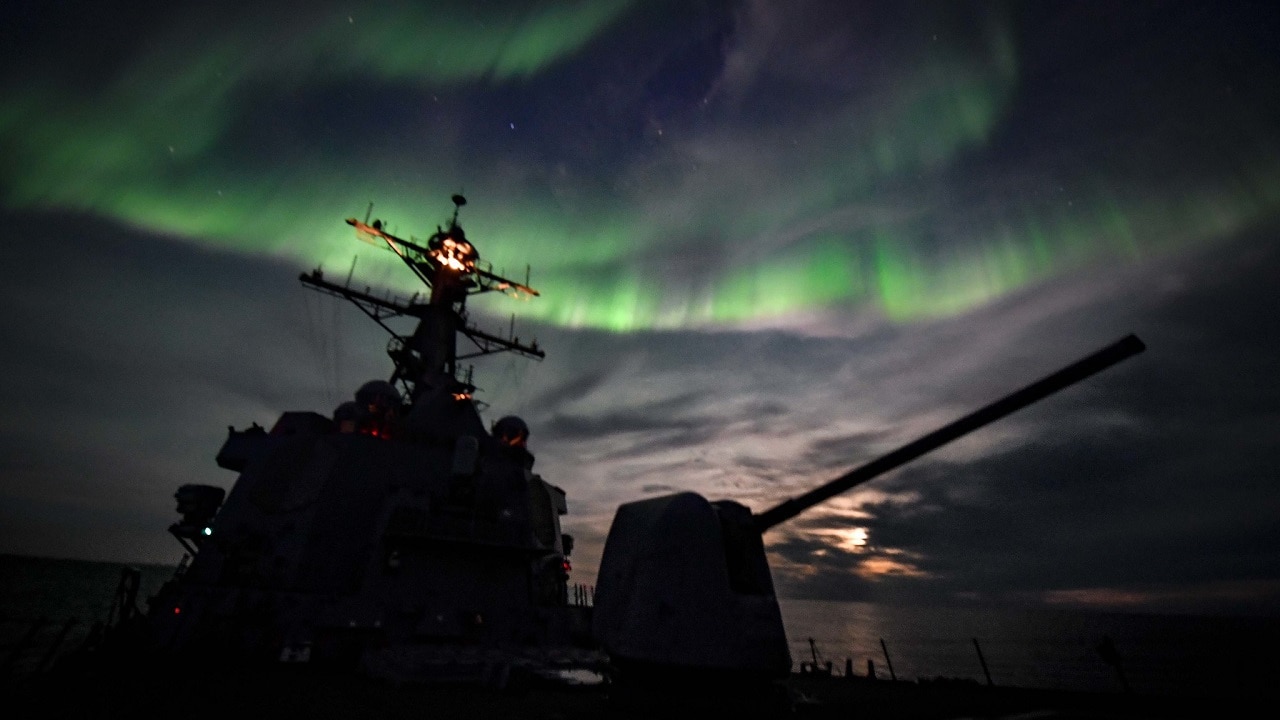
ARCTIC CIRCLE (Sept. 5, 2017) The Arleigh Burke-class guided-missile destroyer USS Oscar Austin (DDG 79) transits the Arctic Circle Sept. 5, 2017. Oscar Austin is on a routine deployment supporting U.S. national security interests in Europe, and increasing theater security cooperation and forward naval presence in the U.S. 6th Fleet area of operations.
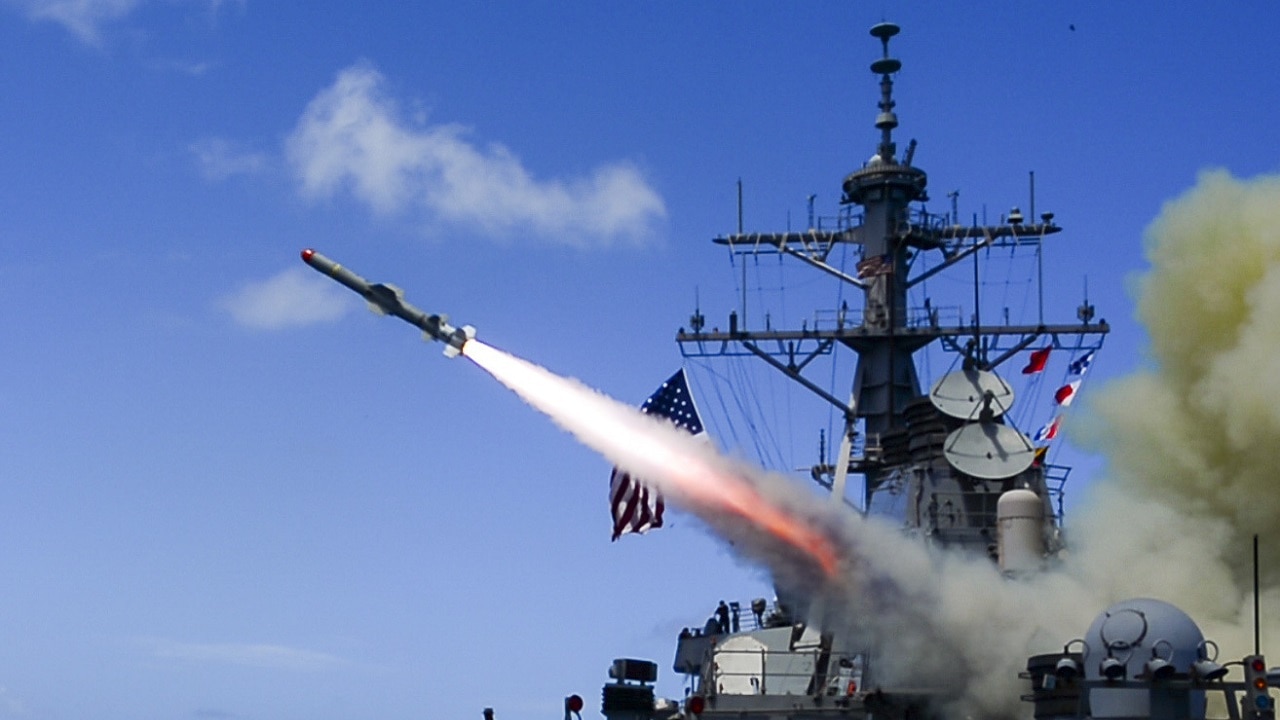
WATERS NEAR GUAM (Mar. 10, 2016) – Arleigh Burke-class guided missile destroyer USS Fitzgerald (DDG 62) conducts a live fire of a harpoon missile during Multi-Sail 2016. Multi Sail is a bilateral training exercise aimed at interoperability between the U.S. and Japanese forces. This exercise builds interoperability and benefits from realistic, shared training, enhancing our ability to work together to confront any contingency. (U.S. Navy photo by Mass Communication Specialist 3rd Class Eric Coffer/Released)
Crew Complement: 380 commissioned officers and enlisted seamen
Armament:
Guns: 1 × 5-inch (127 mm)/62 Mk 45 Mod 4 (lightweight gun); 1 × 20 mm (0.8 in) Phalanx CIWS (close-in weapon system); 2 × 25 mm (0.98 in) M242 Bushmaster Mk 38 machine gun system; 4 × .50 caliber (12.7 mm)Browning M2 “Ma Deuce” machine guns
Missiles:1 × 32-cell, 1 × 64-cell (96 total cells) Mk 41 vertical launching system (VLS), capable of hosting: RIM-66M surface-to-air missile (SAM); RIM-156 SAM; RIM-174A Standard Extended Range Active Missile (ERAM, AKA SM-6); RIM-161 (SM-3) anti-ballistic missile; RIM-162 ESSM (quad-packed); BGM-109 Tomahawk cruise missile; RUM-139 Vertical-Launch Anti-Submarine Rocket (ASROC)
Torpedoes: 2 × Mark 32 triple torpedo tubes, which can accommodate the Mk 46 lightweight torpedo, Mk 50 lightweight torpedo, or Mk 54 lightweight torpedo
Differences From the Earlier Burke Blocks
Army Recognition describes the Flight III DDGs’ upgrades:
-AN/SPY-6(V)1 Air and Missile Defense Radar, a scalable, modular radar that vastly outperforms the legacy SPY-1D(V) in range, target discrimination, and resistance to electronic attack
-Aegis Baseline 10 Combat System, an enhanced sensor suite that integrates air and missile defense to allow the ship to simultaneously track and engage a high number of targets, including ballistic missiles, advanced aircraft, and next-generation anti-ship cruise missiles
-Upgraded power generation and cooling systems to ensure operational endurance and reliability in high-intensity maritime operations
Operational History
Thus far, the Jack H. Lucas is the only operational Flight III warship.
Its operational history is still pretty barebones, but the ship is already making a positive impact.
She arrived at her homeport at Naval Base San Diego on October 25, 2023. Not wasting any time, one year later she participated in the 41st Surface Line Week (SLW) Pacific competition, and on the fourth and final day of the SLW competition, she was recognized as the overall winner.
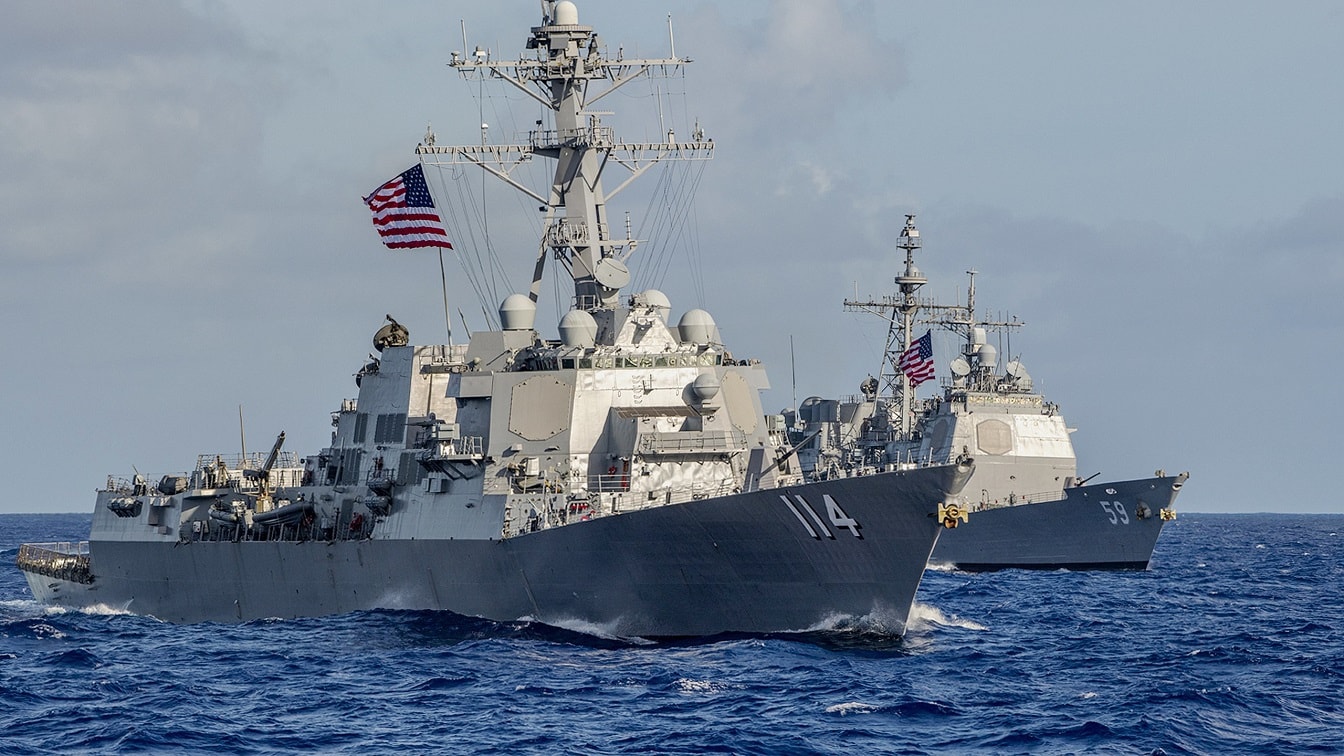
The Arleigh Burke-class guided-missile destroyer USS Ralph Johnson (DDG 114) and the Ticonderoga-class guided-missile cruiser USS Princeton (CG 59) steam in formation during dual carrier operations with the Nimitz and Theodore Roosevelt Carrier Strike Groups (CSG). Dual carrier operations unify the tactical power of two individual CSG, providing fleet commanders with an unmatched, unified credible combat force capable of operating indefinitely. The CSGs are on a scheduled deployments to the Indo-Pacific.
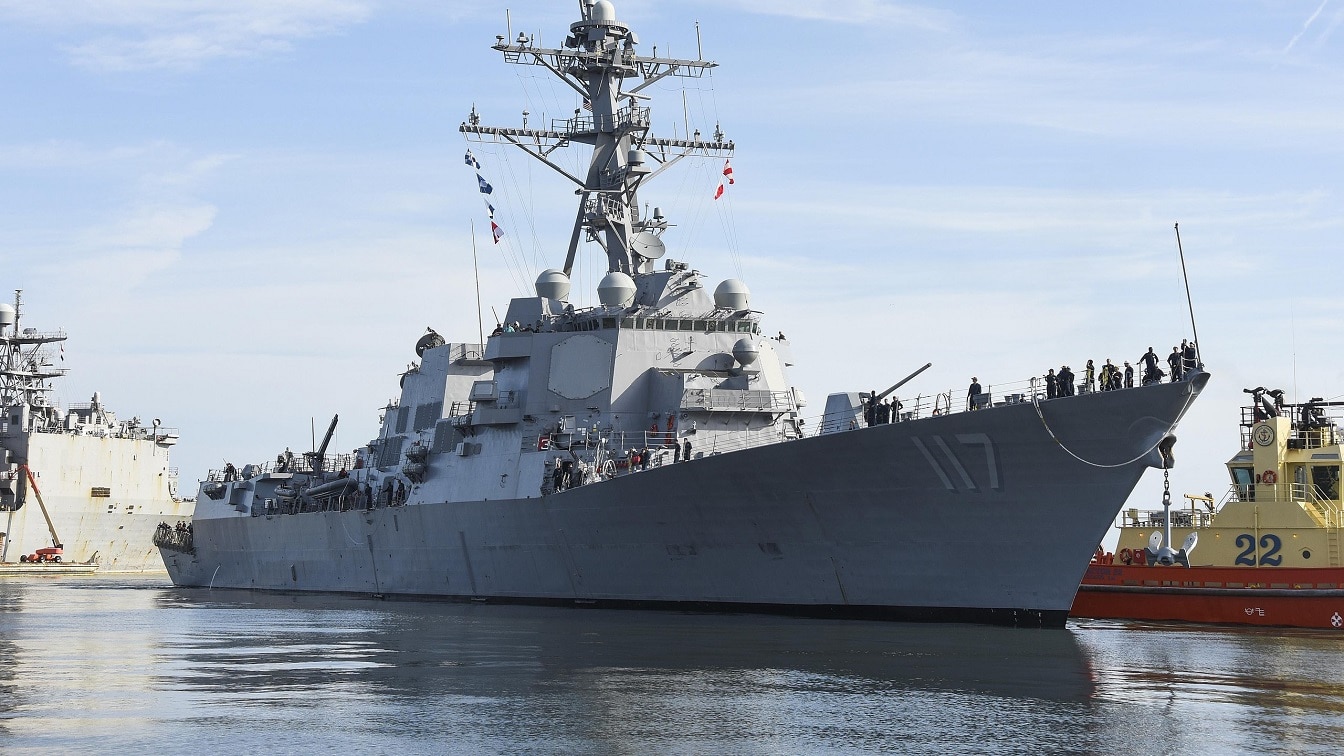
190731-N-ED185-1017 MAYPORT, Fla. (July 31, 2019) The Arliegh Burke-class guided-missile destroyer USS Paul Ignatius (DDG 117) prepares to moor at Naval Station Mayport. Paul Ignatius, the Navy’s newest Arleigh-Burke-class destroyer, was commissioned at Fort Lauderdale, Florida on July 27, 2019 and will call Naval Station Mayport its new home. (U.S. Navy photo by Mass Communication Specialist1st Class Brian G. Reynolds/Released)

The guided-missile destroyer USS Arleigh Burke (DDG 51) fires its MK 45 5-inch gun during a live-fire exercise. Arleigh Burke is deployed in the U.S. 5th Fleet area of responsibility supporting maritime security operations and theater security cooperation efforts. (U.S. Navy photo by Mass Communication Specialist 2nd Class Carlos M. Vazquez II/Released)
The Way Forward for the Block III Burkes
A total of 24 of these deadly high-tech warships have been ordered, with 15 units currently under construction or under contract.
Some of the ships will be built by General Dynamics’ Bath Iron Works, headquartered in Bath, Maine. The others will be built by Ingalls Shipbuilding. So far, four have been launched:
-The USS Patrick Gallagher (DDG-127), launched on July 27, 2024, expected to be commissioned in 2027
-The USS Ted Stevens (DDG-128), launched on August 15, 2023, expected to be commissioned sometime this year
-The USS Jeremiah Denton (DDG-129), launched on March 26, 2025, expected to be commissioned in 2027
-The USS Louis H. Wilson Jr. (DDG-126), launched on October 10, 2025, expected to be commissioned in 2028
About the Author: Christian D. Orr, Defense Expert
Christian D. Orr is a Senior Defense Editor. He is a former Air Force Security Forces officer, Federal law enforcement officer, and private military contractor (with assignments worked in Iraq, the United Arab Emirates, Kosovo, Japan, Germany, and the Pentagon). Chris holds a B.A. in International Relations from the University of Southern California (USC) and an M.A. in Intelligence Studies (concentration in Terrorism Studies) from American Military University (AMU). He is also the author of the newly published book “Five Decades of a Fabulous Firearm: Celebrating the 50th Anniversary of the Beretta 92 Pistol Series.”