

Summary and Key Points: Trump’s BBG(X) ‘Trump-class’ guided-missile battleship is pitched as a huge command-and-control platform to replace retiring cruisers.
-Renderings and Navy briefings describe an 840–880-foot ship over 35,000 tons with AN/SPY-6-class sensors, 128 Mk-41 VLS cells, 12 CPS hypersonic tubes, a 32-megajoule railgun, and 300–600 kW lasers plus conventional guns and close-in defenses.
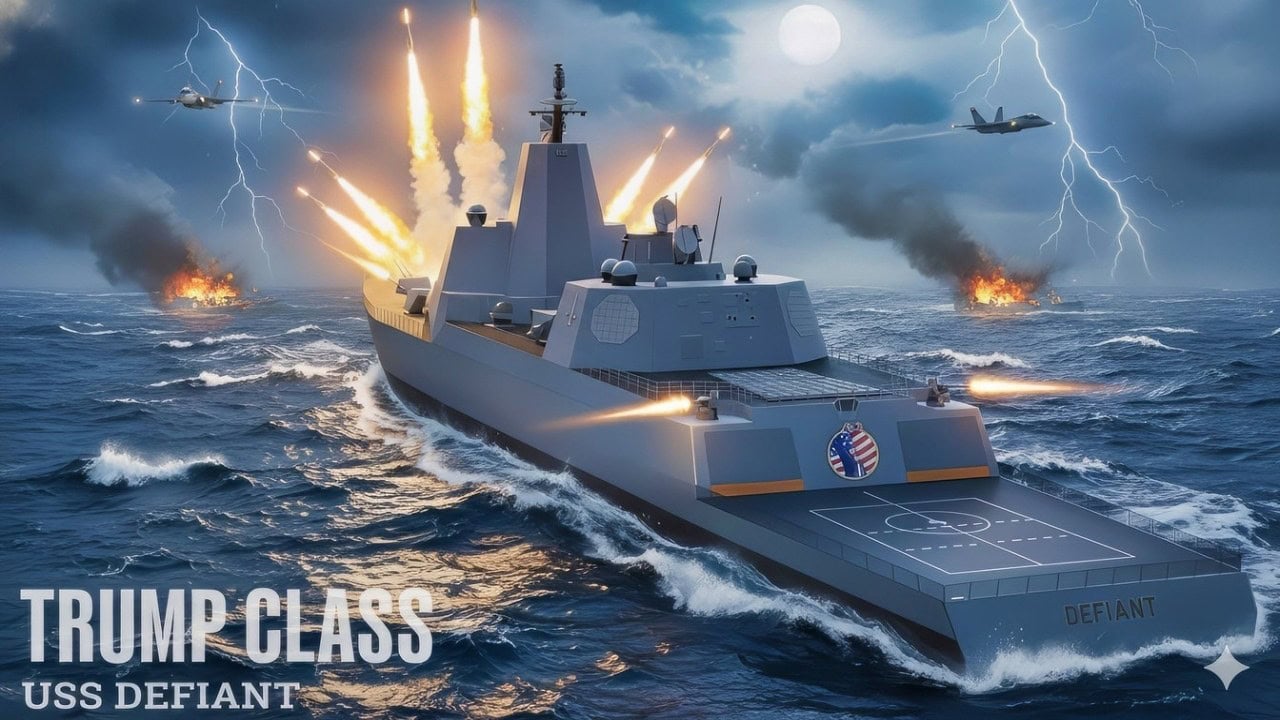
Trump-Class Battleship Image Mockup 16:9. Created Using Nano Banana.
-Supporters argue the hull’s scale enables massive electrical power, future upgrades, and a survivable flagship for strike groups.
-Critics counter that the ship’s value makes it a magnet for saturation attacks, while 10–22 billion dollar costs could squeeze submarines, destroyers, and unmanned programs.
The Golden Fleet Plan: Twenty-Five Trump-Class Ships and a New Surface Fleet
The Trump-class battleship (BBG(X)) is the first battleship that the U.S. Navy has proposed since WWII.
According to documentation from the Congressional Research Service and Navy announcements, these ships would dwarf today’s Ticonderoga-class cruisers and Arleigh Burke-class destroyers.
They would measure 840-880 feet in length and displace more than 35,000 tons, making them the largest surface combatants (other than aircraft carriers) planned for construction since World War II. For comparison, the Iowa-class battleships were roughly 887 feet long and displaced about 57,000 tons, while most modern destroyers displace under 10,000 tons.
What is the Trump-Class Battleship?
Based on the renderings we have of the ship, it seems like this BBG(X) has been in development for some time now, but has been accelerated thanks to Trump’s personal inclination toward battleships.
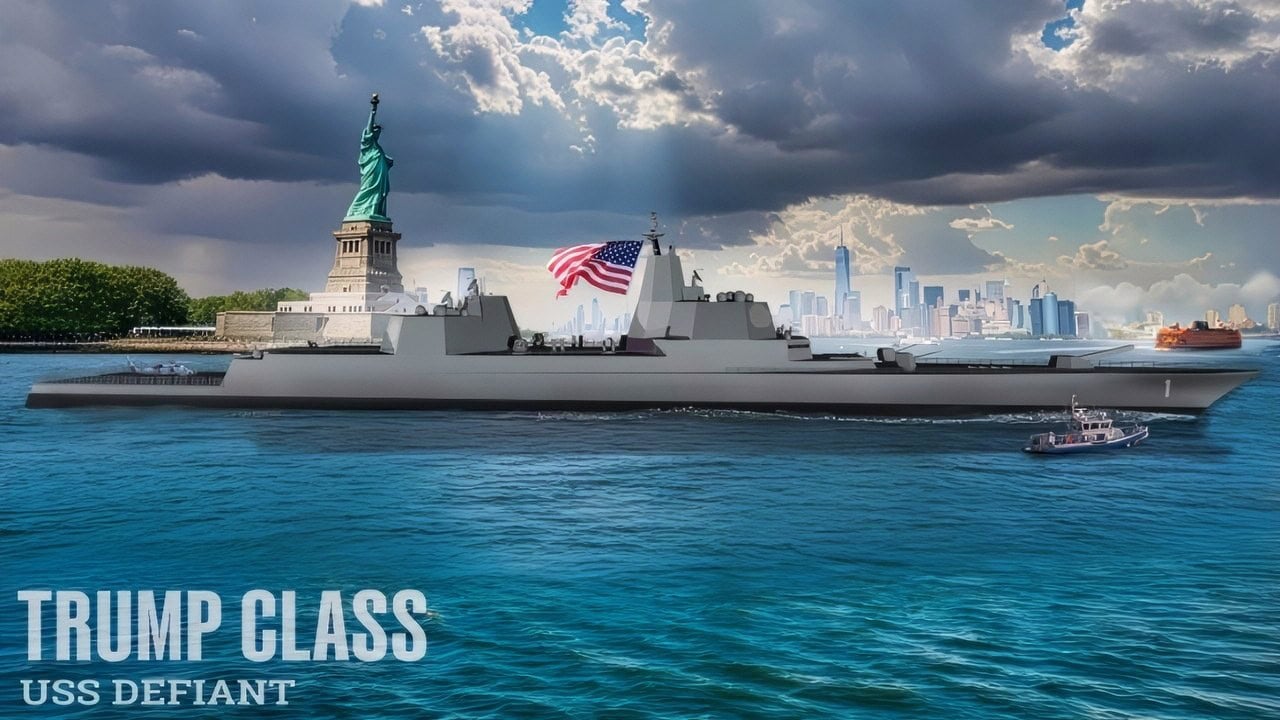
Trump-Class Battleship. Image Credit: Creative Commons/White House.
Two ships would be built initially, including the planned lead ship USS Defiant (BBG-1), with the Navy and administration envisioning a potential class size of twenty to twenty-five vessels (which is optimistic to say the least).
This ambition aligns with Trump’s “Golden Fleet” initiative, which aims to replace the Navy’s existing 381-ship force-structure model. Contract notices released on the same day as the public announcement indicated 72-month design periods, aligning long-term planning with the early-2030s construction window.
The rationale behind the BBG(X) project is the Navy’s growing need for large, survivable command-and-control platforms.
With the aging Ticonderoga-class cruisers being phased out, the Navy has warned that its command capacity, particularly for coordinating large strike groups, will decline unless new, spacious, sensor-rich ships are introduced. During a 2026 panel discussion, senior naval leadership stated that the Trump-class was specifically intended to restore and extend this capability.
Rear Admiral Derek Trinque went so far as to assert that while traditional battleships are obsolete, the Trump-class is a different kind of vessel entirely, one that answers modern strategic demands instead of resurrecting old doctrine.
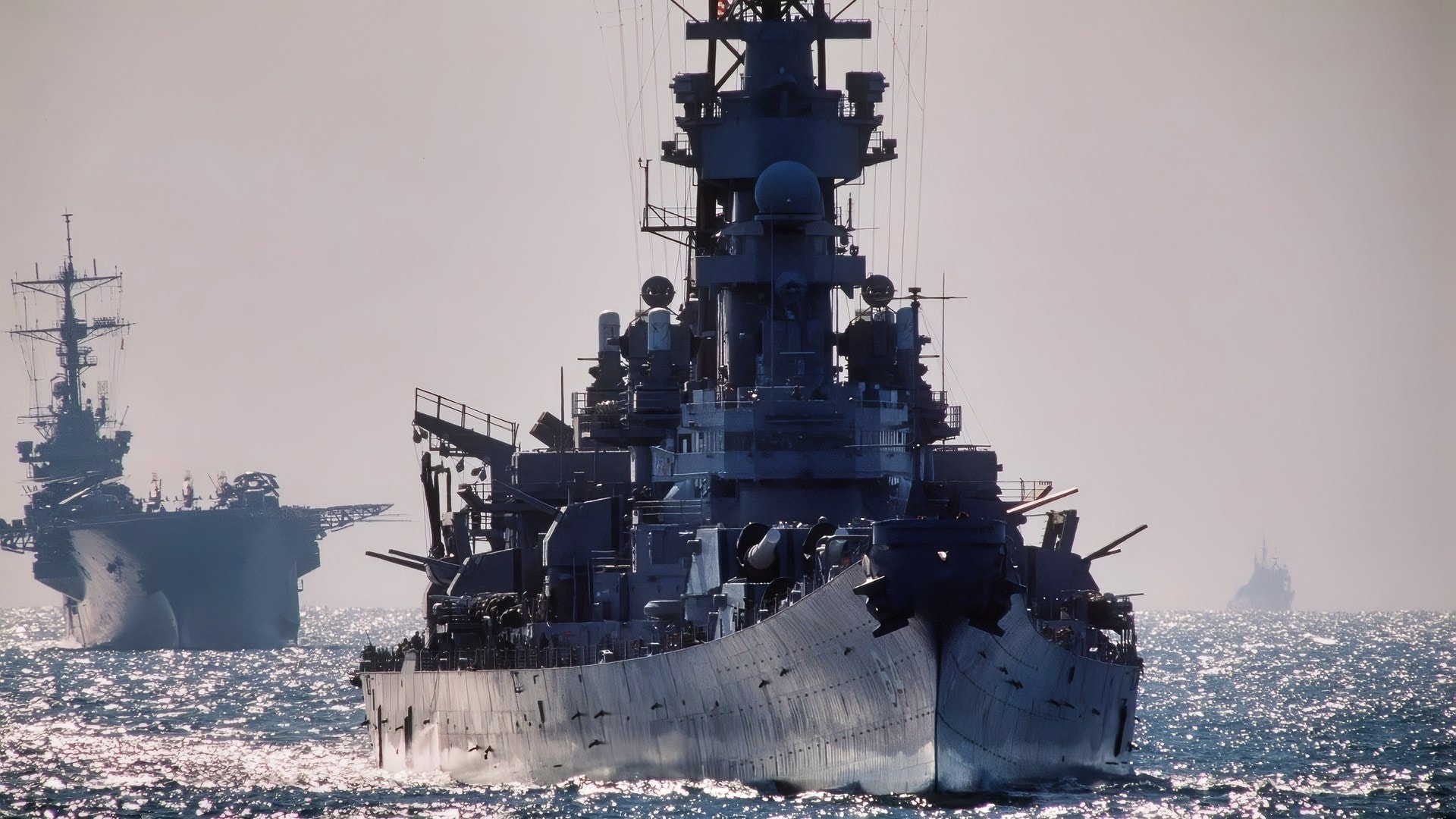
Iowa-Class Battleship Sailing with the Fleet. Image Credit: U.S. Navy.
In terms of armaments, the Trump-class is a radical departure from past battleship concepts. Navy presentations indicated that the ship would carry up to 128 Mk-41 vertical launch system cells, distributed across three major banks.
It would also house 12 Conventional Prompt Strike (CPS) hypersonic missile tubes, a significant advanced-strike capability. Other planned systems include one 32-megajoule electromagnetic railgun, which would represent an unprecedented operational deployment of the technology; two 300- to 600-kilowatt high-energy laser weapons for missile and drone defense; and a range of conventional artillery and close-in defense systems. These capabilities would make the BBG(X) one of the most heavily armed surface combatants ever conceived.
The Trump-Class Actually a Good Idea?
Some would argue that the Trump-class is a necessary response to the growing threat from China in the Pacific.
The ship’s size allows for extensive communications arrays, advanced radars such as the AN/SPY-6 family, and space for future upgrades, including larger power generators for even more powerful directed-energy weapons.
This combination of scale and flexibility has led supporters to describe the BBG(X) not as a resurrection of a bygone ship type but as the next step in the evolution of the surface fleet.
There is also a case to be made that a large vessel capable of generating significant electrical power is necessary to deploy next-generation weapons. Railguns and high-energy lasers have been limited not only by engineering complexity but also by the absence of platforms capable of supporting them.

Iowa-Class Battleship at Rest. Image Credit: Creative Commons.

Image taken by Harry J. Kazianis aboard the USS Iowa on August 15, 2025. Image is of a painting of the USS Iowa of the Iowa-Class. USS New Jersey is also a Iowa-Class battleship.
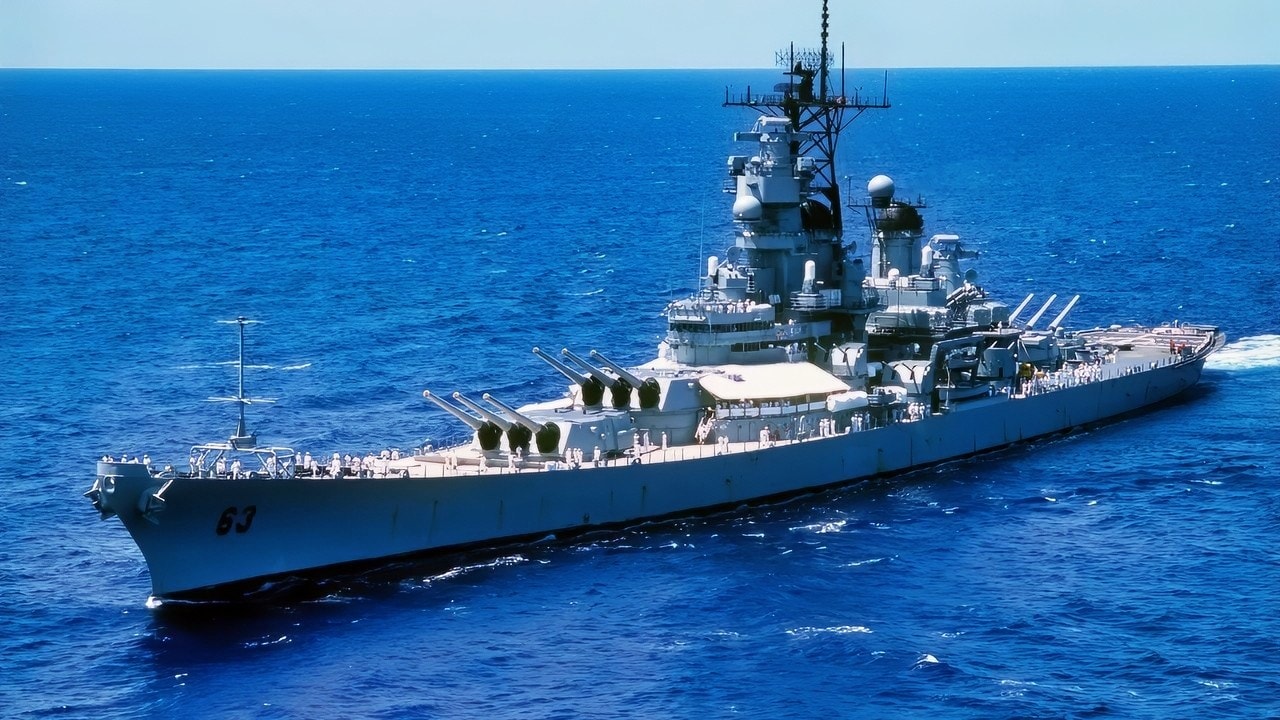
Iowa-Class Battleship Sailing. Image Credit: Creative Commons.
Advocates claim that the Trump-class could revitalize these stalled programs by finally providing a viable operational host. Additionally, some have added that the program could invigorate U.S. shipbuilding, foster innovation in propulsion and energy systems, and expand the capacity of shipyards that have struggled to keep pace with demand.
Strategic Necessity or an Easy Target for China?
The program’s ambitious nature, however, has attracted equally strong criticism. Perhaps the most widely cited concern is the ship’s enormous cost. Early estimates place the price of the lead vessel between ten and fifteen billion dollars, but a Congressional Budget Office analysis suggested a figure closer to twenty-one to twenty-two billion dollars if procurement begins around 2030.
Follow-on ships might cost around twelve to thirteen billion dollars each, and that’s in the best-case scenario. These projections exceed or match the cost of a Nimitz-class aircraft carrier, prompting critics to argue that the Trump-class risks consuming disproportionate resources within the Navy’s budget.
Another major concern is the vulnerability of large surface ships in the modern missile environment. Advances in hypersonic glide vehicles, long-range anti-ship ballistic missiles, and drone swarms raise questions about whether any large vessel, no matter how advanced its defenses, can survive saturation attacks by peer adversaries.
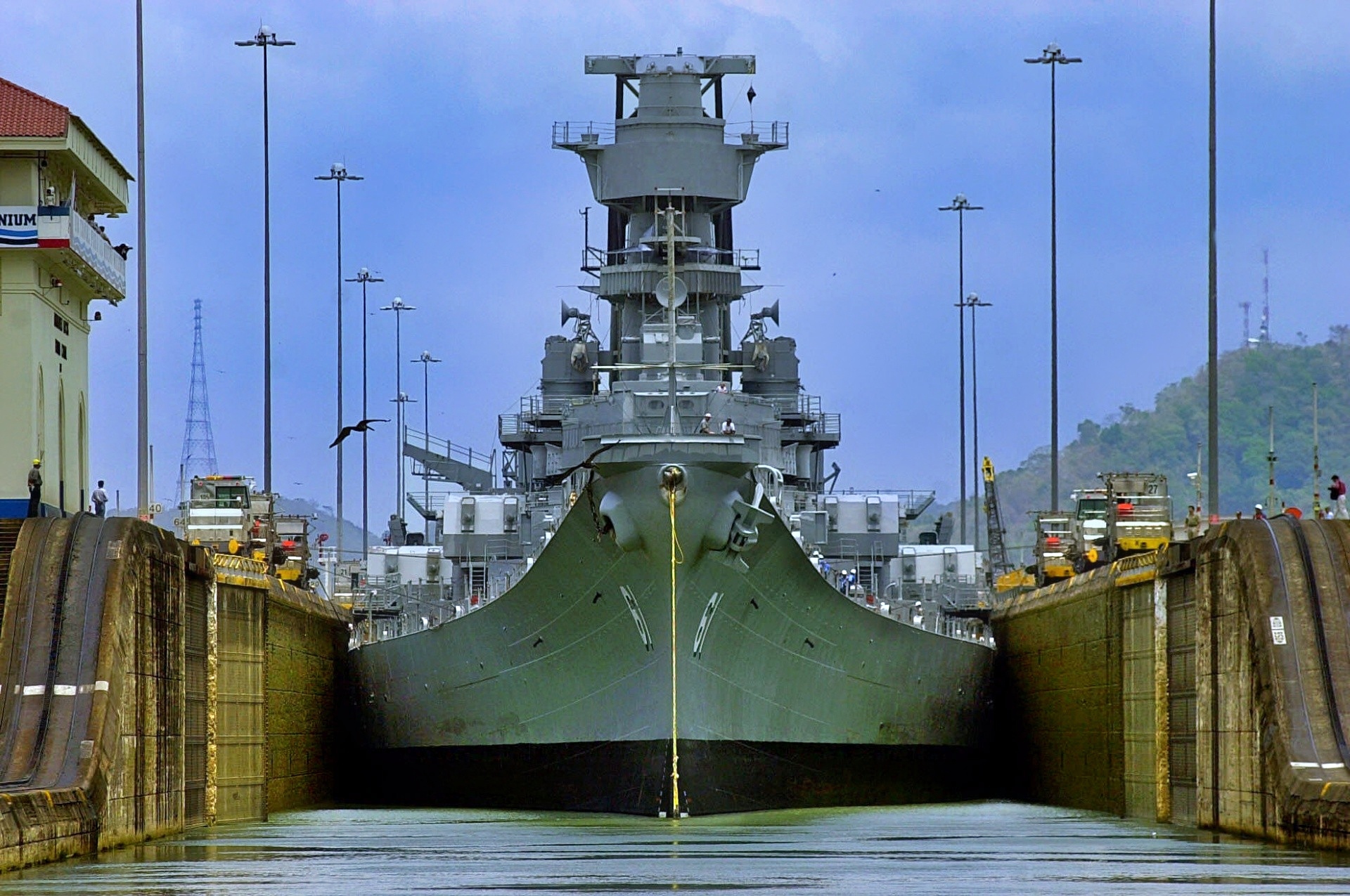
USS Iowa Battleship. Image Credit: Creative Commons.
Critics argue that the Navy should instead prioritize dispersal and redundancy through smaller ships, unmanned systems, and submarines. They claim that the BBG(X) runs counter to emerging doctrines emphasizing survivability through distribution rather than the concentration of power.
Additionally, opponents warn that the opportunity cost of building such expensive vessels could hamper the Navy’s overall modernization.
Funds dedicated to the Trump-class would necessarily come from other programs, including submarine procurement, destroyer construction, missile defense upgrades, and investments in unmanned platforms. Some analysts caution that the Navy risks allocating a large share of its resources to a single ship class whose strategic value has not yet been fully demonstrated.
About the Author: Isaac Seitz
Isaac Seitz, a Defense Columnist, graduated from Patrick Henry College’s Strategic Intelligence and National Security program. He has also studied Russian at Middlebury Language Schools and has worked as an intelligence Analyst in the private sector.