
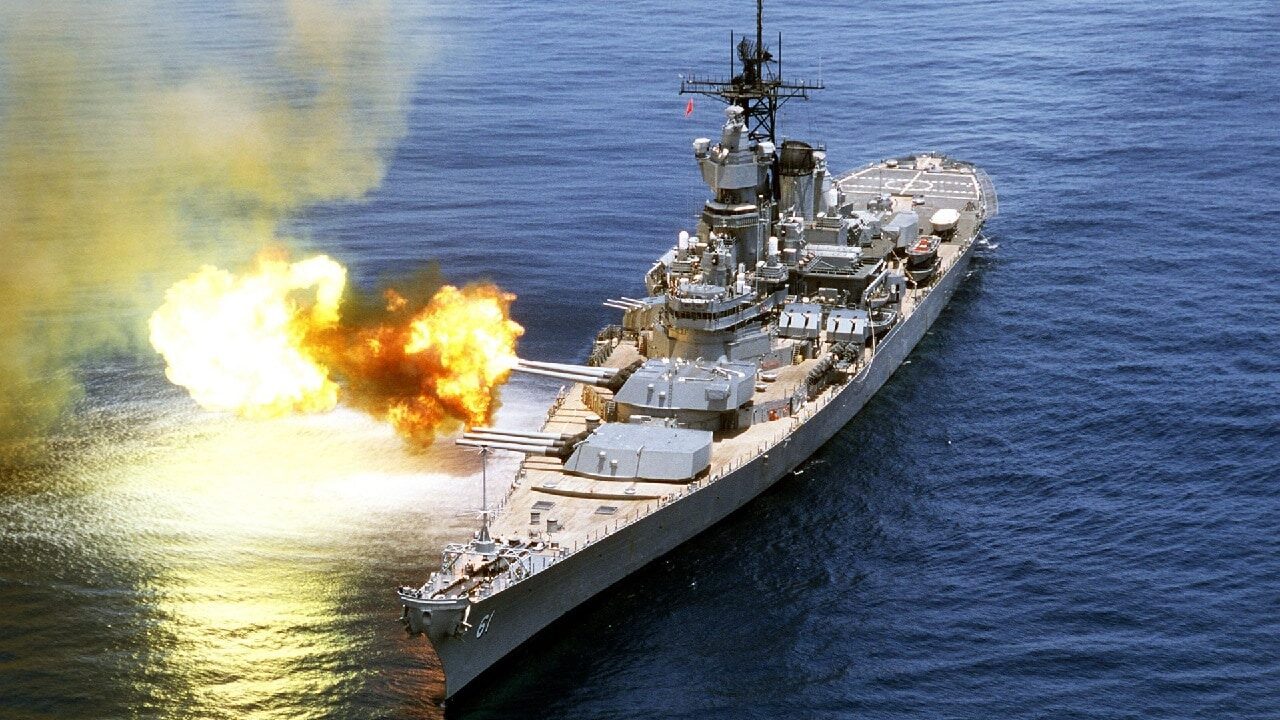
Iowa-Class vs HMS Vanguard: The WWII Battleship Shipbuilding Rivalry Settled in Steel
The United Kingdom and the United States had a friendly shipbuilding rivalry during World War II. Each considered their own navy superior and believed their engineers, designers, technicians, and builders were the best in the world.
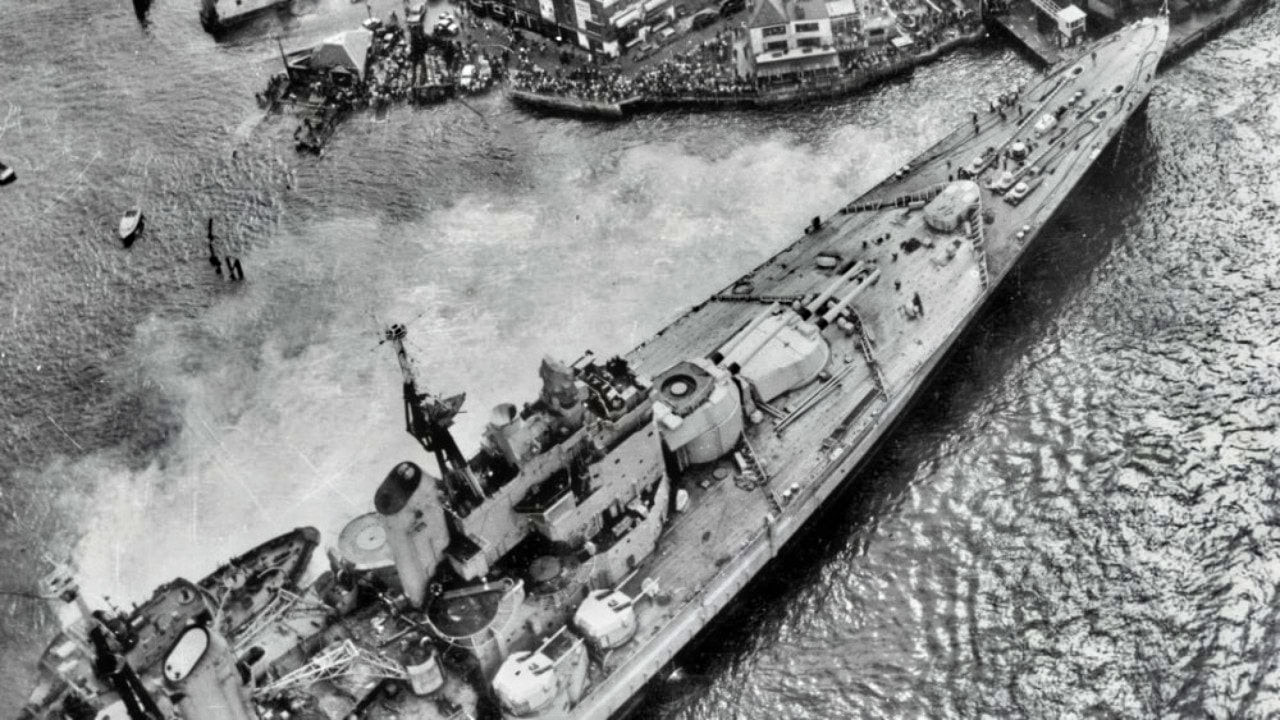
HMS Vanguard Battleship Royal Navy.
To put that old rivalry to the test, we can evaluate the U.S. Navy’s Iowa-class battleships and judge how they stacked up against HMS Vanguard, the pride of the Royal Navy. Which battleship class was better? The winner may surprise you.
An Exemplary Combat Record
The Iowa-class ships had a long combat history, serving during World War II, as well as Korea, Vietnam, the Cold War, and the First Gulf War.
Speed, Guns, and Armor Were Top-notch
The Iowa-class had enviable speed for such a huge capital ship. The gunfire it could deliver was immense, and its thick armor made it highly survivable.
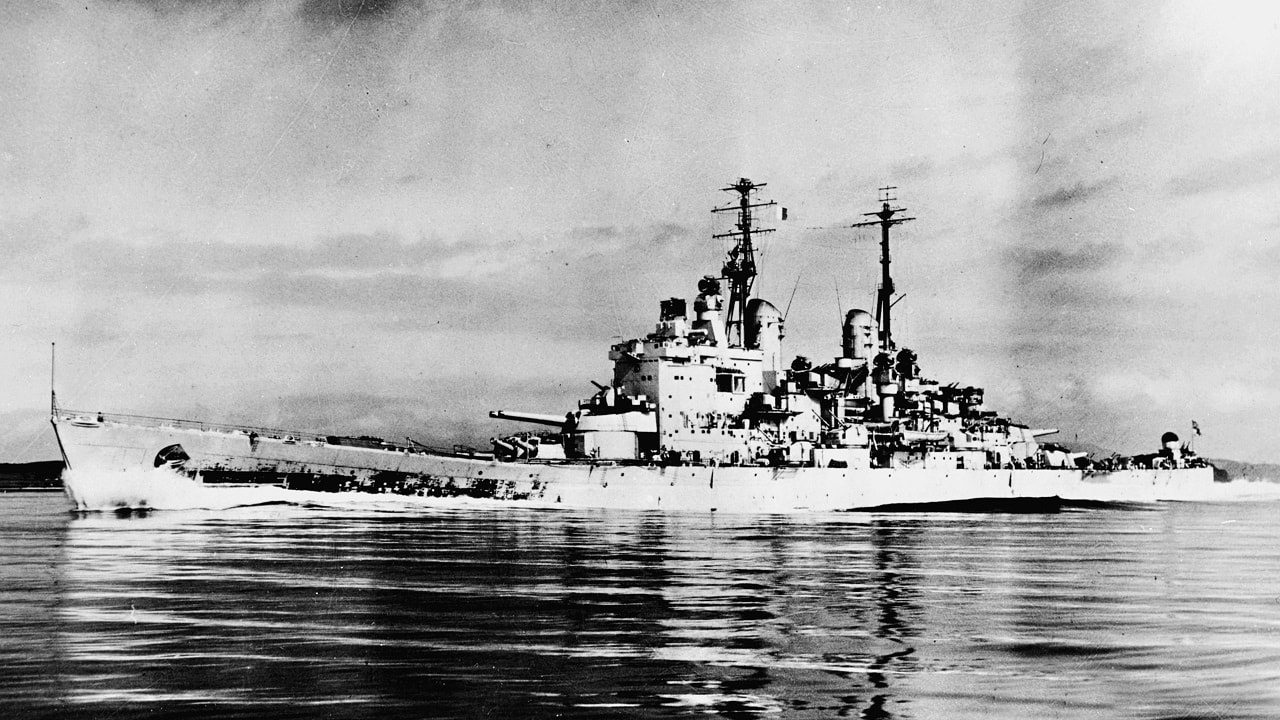
The Royal Navy battleship HMS Vanguard (23) steaming at high speed while running trials in 1946.
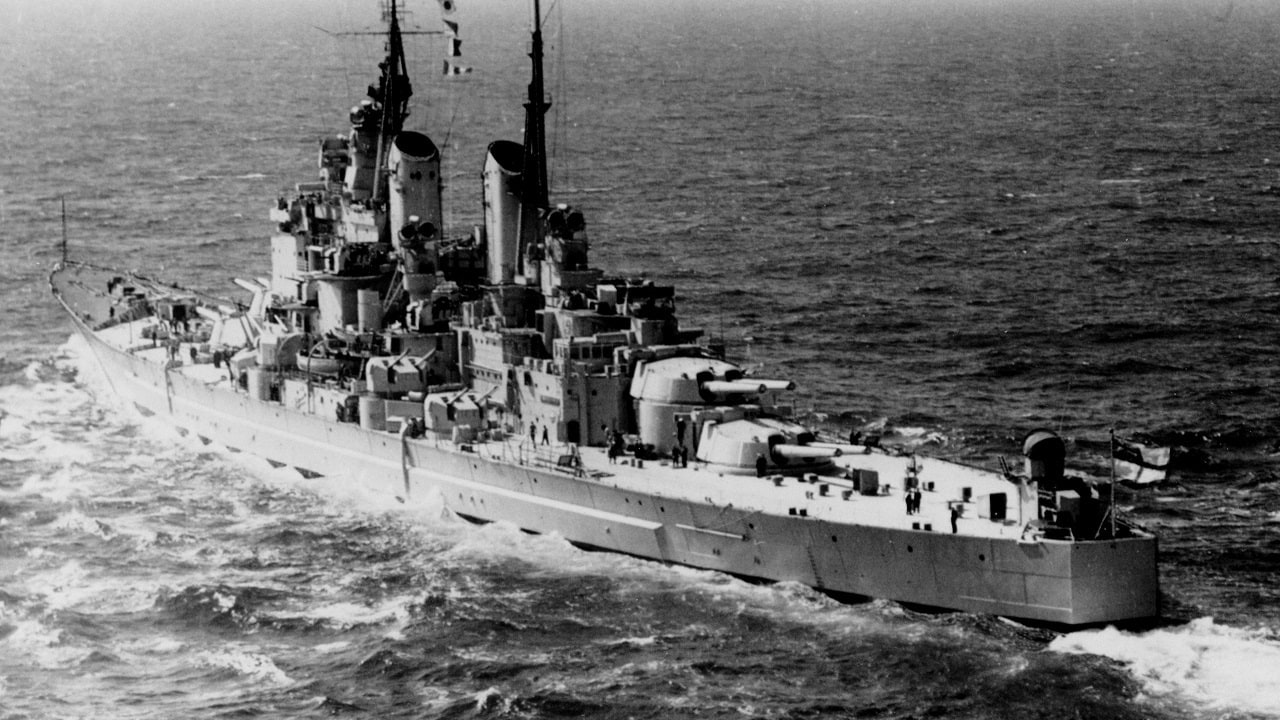
HMS Vanguard. Image Credit: Creative Commons.
The four vessels of the class ruled the waves. The Iowa (BB-61), New Jersey (BB-62), Missouri (BB-63), and Wisconsin (BB-64) were continuously updated throughout the years. Long retired, they are still popular tourist attractions as museum ships.
More Specs to Impress
The Iowas could reach a top speed of 33 knots which is remarkable for ships so large. They had nine accurate and powerful 16-inch guns that could hurl 2,700-pound shells 20 miles. The secondary guns could do you a trick too.
The Iowa-class eventually received radar systems that increased its survivability and enabled pinpoint gunfire.
Agile and Shifting Tactics
The ships were designed in the 1930s and constructed during World War Two to carry out a diverse mission set: Blast enemy ships, outrun submarines, escort aircraft carriers, crush enemy defensive positions on land, and decades-later, launch Tomahawk cruise missiles.
Speedy Powerplant
The 33-knot speed was the product of unique engines paired with eight Babcock & Wilcox boilers and four sets of General Electric geared steam turbines. This created 212,000 shaft horsepower, with four propellers turning rapidly when needed.
What About HMS Vanguard?
HMS Vanguard was a tough customer that was also envisioned as a powerful shipkiller in World War Two. She had eight 15-inch guns onboard. The anti-aircraft guns and heavy armor protected the vessel from marauding airplanes and torpedoes. HMS Vanguard missed the war, however—it was not built until 1946. The best missions Vanguard could muster were transporting the royal family and serving as a training ship.
Lessons Learned from the King George V-class
When Vanguard was laid down in 1941, it was clear this ship would substantially improve on the earlier King George V-class of dreadnoughts. That class endured its share of difficulties. HMS Prince of Wales was sunk in 1941 near the coast of Malaysia. Its anti-aircraft guns did not perform well against Japanese bombers, and that flaw doomed it to the bottom of the sea.
Fighting Enemy Airplanes
British engineers and designers had some new ideas on how to stop enemy bombers from replicating that success. Vanguard was outfitted with more accurate 40-mm antiaircraft (AA) guns, rather than Prince of Wales’ 20-mm guns. When the update project was complete, Vanguard had 73 AA mounts, a record for British battleships. Vanguard also had eight 15-inch 42-caliber Mark I guns in four twin turrets.
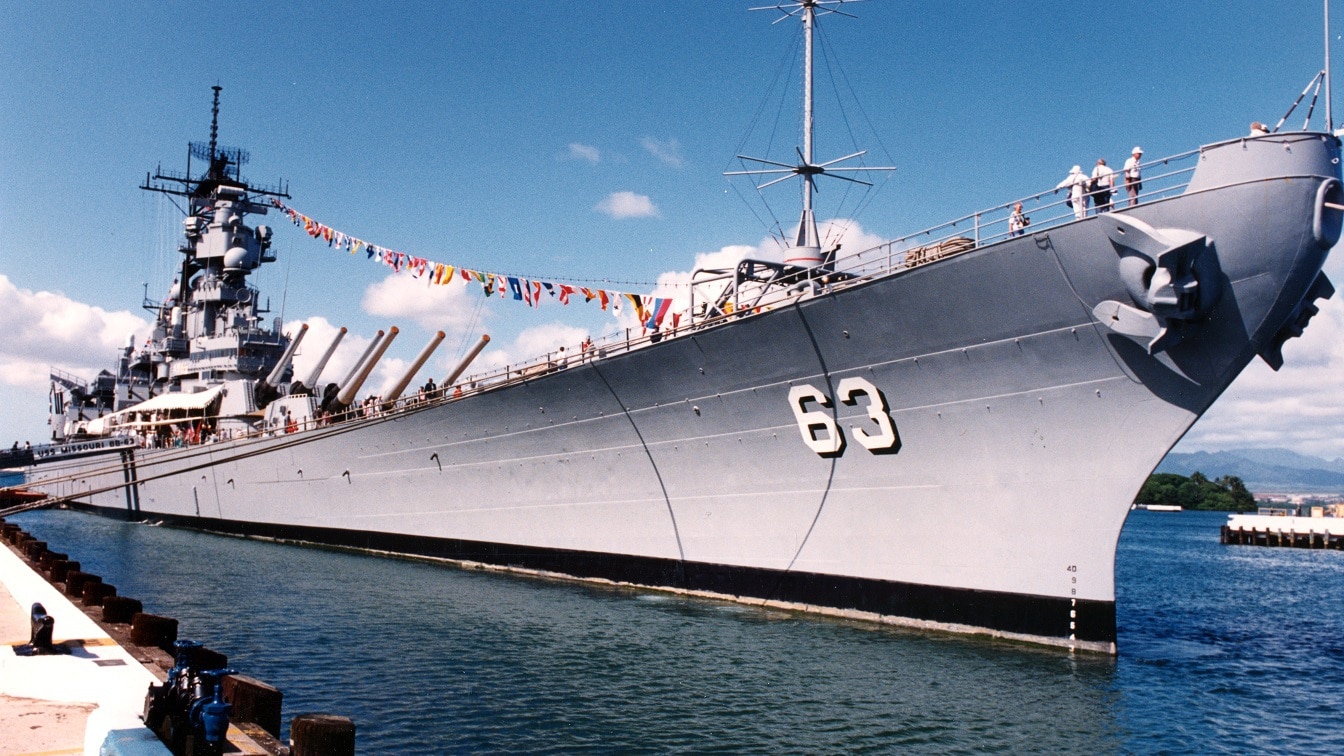
The battleship USS Missouri (BB-63) stands moored to a pier at Naval Station Pearl Harbor, Hawaii. Missouri is in Hawaii to take part in the observance of the 50th anniversary of the Japanese attack on Pearl Harbor.
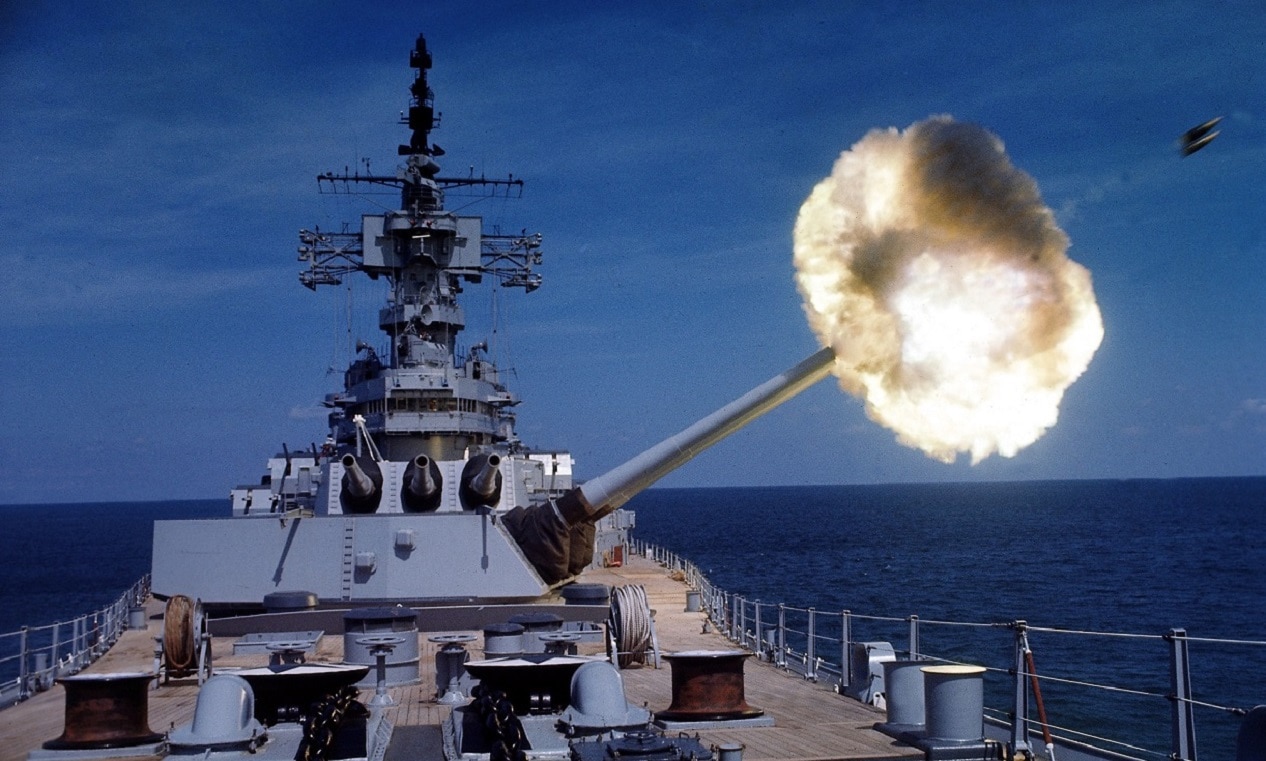
USS New Jersey Iowa-Class Battleship. Image Credit: US Navy.
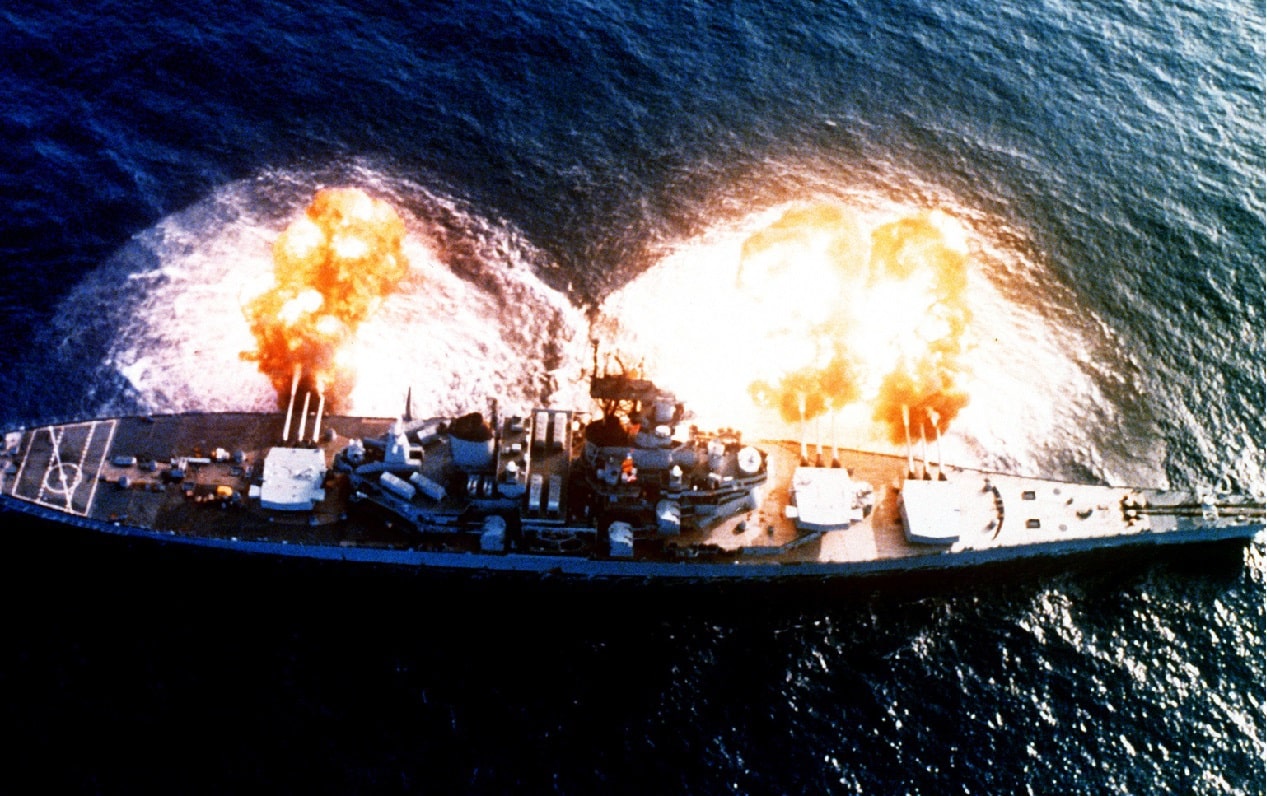
An overhead view of the battleship USS NEW JERSEY (BB-62) firing a full broadside to starboard during a main battery firing exercise.
Big and Fast
Vanguard was large at 814 feet in length—69 feet longer than previous battleships. She displaced 45,116 tons, had a top speed of 30 knots, and the engines pushed out 130,000 horsepower. The ship’s combat radius was 7,560 miles at 12 knots.
However, these new features took years to build, and Vanguard missed the war. She had the traits to dominate, but never got a chance to live up to her reputation.
Iowa-class and Vanguard: Head to Head Match-Up
The Iowa-class battleships had many advantages over HMS Vanguard. Most obviously, the Iowas had plentiful combat experience, while Vanguard was never battle-tested. Not only did the Iowa-classsee plenty of conflict, but it shined—and its design stood the test of time. From its powerful guns to the later-adapted Tomahawks, this armored beast was a stalwart during many wars.
There were more guns on the Iowas, and they carried more power and range. The secondary guns on HMS Vanguard were better and more accurate, but overall Vanguard was less lethal than the Iowa-class.
Was the Vanguard More Seaworthy?
Vanguard was likely the better handling and stable vessel. It could maneuver in rough seas and maintain its speed in storms, making it more seaworthy in poor conditions. This adapted it well for the North Atlantic.
Vanguard may have also had better armor, especially in the turrets and conning tower. The thicker belt armor and strength below the waterline gave it improved protection against torpedoes.
The Vanguard Lacked a Baptism By Fire
The Iowa-class has such a fearsome reputation that any small advantages Vanguard may have held are outweighed. We will never know how the British behemoth might have handled enemy fire, but its armaments were accurate and its armor was strong. Who knows? Maybe the British would have more ably faced down the Germans and Japanese had the Vanguard patrolled during World War Two.
In Three Words: Maybe a Draw?
About the Author: Brent M. Eastwood
Author of now over 3,000 articles on defense issues, Brent M. Eastwood, PhD is the author of Don’t Turn Your Back On the World: a Conservative Foreign Policy and Humans, Machines, and Data: Future Trends in Warfare plus two other books. Brent was the founder and CEO of a tech firm that predicted world events using artificial intelligence. He served as a legislative fellow for US Senator Tim Scott and advised the senator on defense and foreign policy issues. He has taught at American University, George Washington University, and George Mason University. Brent is a former US Army Infantry officer. He can be followed on X @BMEastwood.