
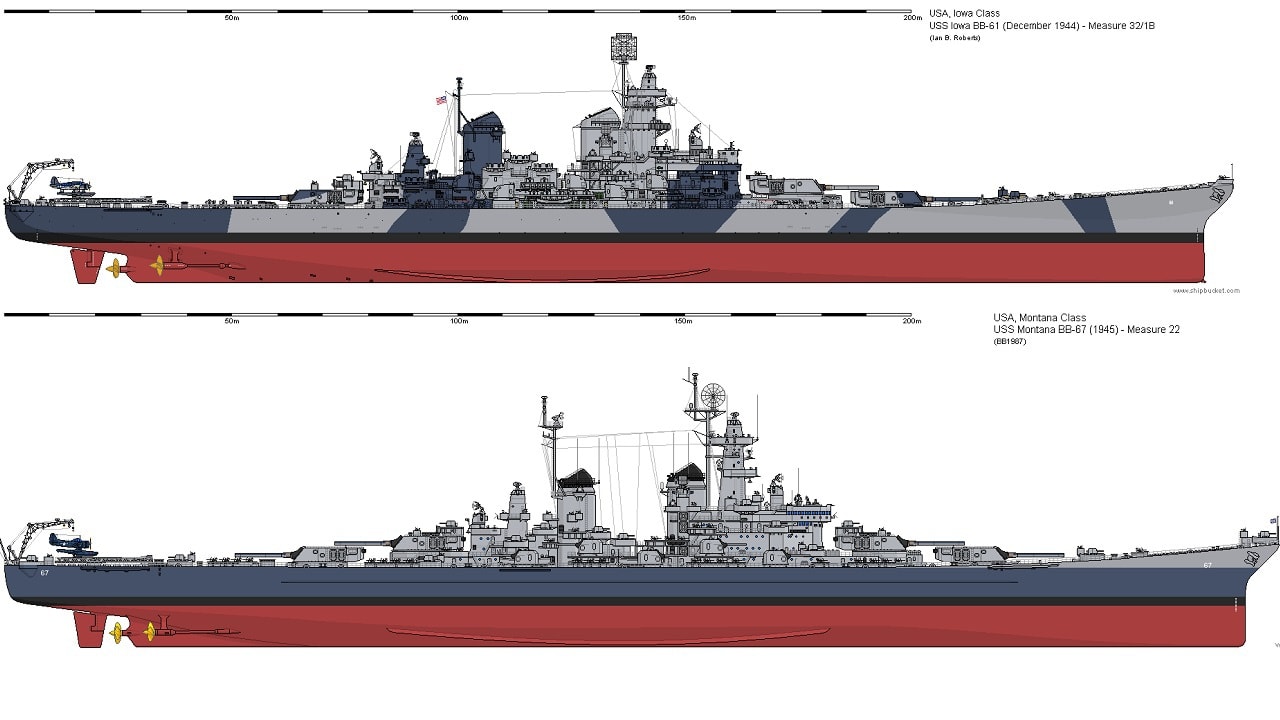
Missouri is nicknamed “The Show-Me State” (along the way inspiring the name of a sports bar & grill that’s a regional competitor with Hooters), and the Iowa-class battleship USS Missouri (BB-63), AKA “The Mighty Mo,” certainly lives up to the slogan. Among other things, on her quarterdeck, she hosted Imperial Japan’s surrender ceremony, which, on September 2, 1945, officially ended World War II, and now she wows tourists as a floating museum, appropriately docked in the same place where America’s entry into WWII commenced: Pearl Harbor, Hawaii.
But what sort of “show” did the Mighty Mo put on in real-world, life-or-death combat? That’s what 19FortyFive shall explore now.
Where She Began: WWII
Might as well start from the beginning, i.e., whereupon the warship was first “blooded” in combat, right?
Mighty Mo contributed the massive power of her nine 16-inch guns to the shore bombardment of Iwo Jima in support of the iconic invasion of that island. During the first night of that invasion, February 19, 1945, the ship got her first confirmed individual kill, the shootdown of a Japanese Nakajima Ki-49 Donryū (“Storm Dragon;” Allied reporting name “Helen”) bomber.
On March 14, her antiaircraft gunners would knock down four more Japanese airplanes. Starting that same month, she supported the invasion of Okinawa, firing 180 rounds against the southern coast of the island on March 24 alone. In the course of her operations off Okinawa (which lasted until May 5), her “ack-ack” gunners claimed five aircraft shot down and another probable kill, along with partial credit for another six aircraft destroyed. In exchange, BB-63 was struck by kamikazes on two separate occasions in April; however, the ship only suffered superficial damage, and two of her seamen were wounded.
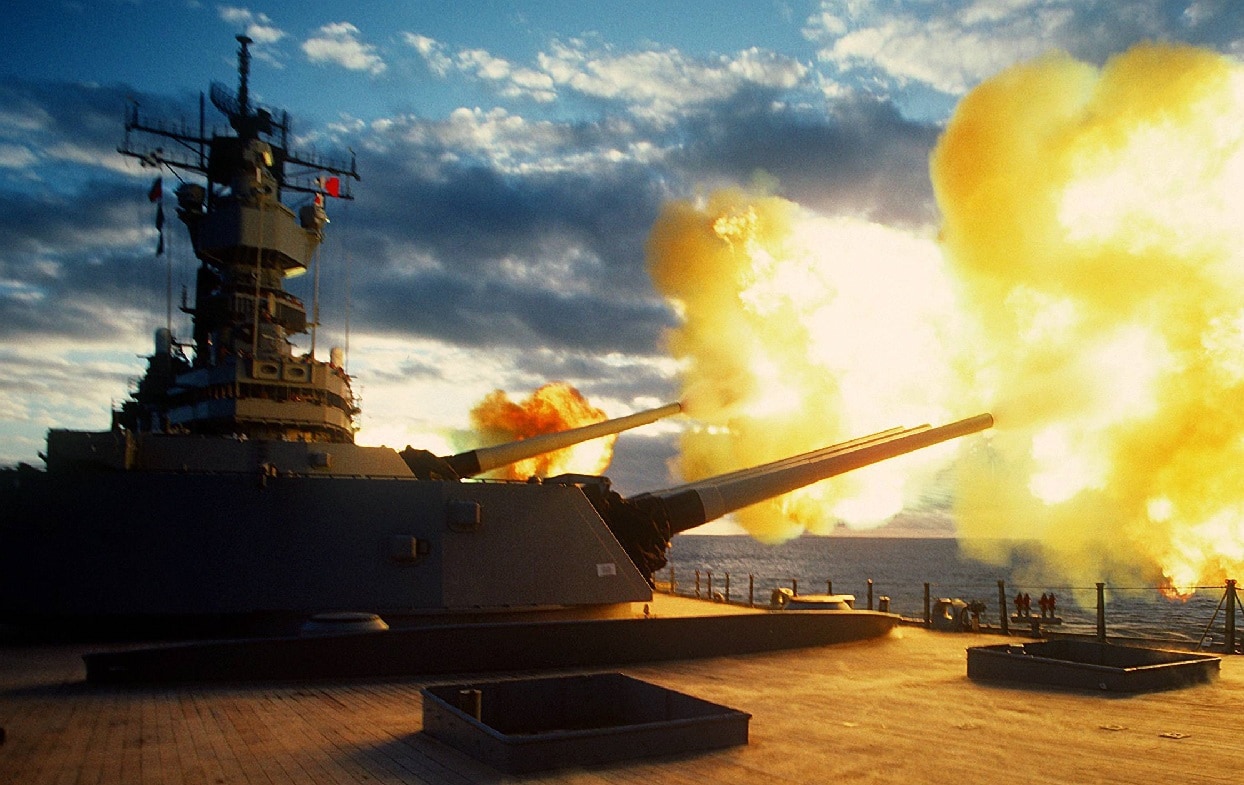
USS Missouri. Image: Creative Commons.
For the remainder of the war, Mighty Mo supported multiple shore bombardments and air strikes against the Japanese Home Islands.
Round 2: The Korean War
When communist North Korea invaded South Korea on June 25, 1950, BB-63 was the Navy’s only active battleship.
It didn’t take her long to answer the new call to duty in an East Asian conflict, departing Norfolk for the Pacific cauldron on August 19. From there, as noted by the Battleship Missouri Memorial info page:
-“Her first day at war on September 15, Missouri fired 52 16″ projectiles, damaging two railroad bridges near Samchok with the aid of her helicopter spotters. The following days would be spent in much the same capacity by conducting shore bombardments along the coast, this time at Pohang, before returning to Japan for supplies.”
-Inclement weather (as in hurricanes) prevented Mighty Mo from directly supporting the Inchon landings that would lead to the recapture of Seoul, but she did launch shore bombardments that targeted enemy combatants on the road from Suwon to Seoul.
-“On October 12, she bombed the Mitsubishi Iron Works, reportedly firing 96 rounds from her main battery in under an hour. On October 13, she bombarded Tanchon. On October 26, she supported the amphibious landing of Wonsan.”
-During the U.S. Marines’ epic stand at the Chosin Reservoir, the battleship provided much-needed “curtain fire.”
All in all, USS Missouri embarked upon two combat deployments during the Korean War, the first one lasting from September 1950 to March 1951, the second from September 1952 to March 1953. During the first tour, she fired 2,895 16-inch/50-caliber and 8,043 5-inch/38-caliber rounds; during the second, she expended 3,861 16-inchers and 4,379 5-inchers.
Last Hurrah: Operation Desert Storm
Fittingly enough, BB-63 wrapped up her illustrious U.S. Navy career by going out in a blaze of glory, joining up with her sister ship USS Wisconsin (BB-64) as the last two battleships in history ever to fire their guns in anger, doing so during the 1991 Persian Gulf War, AKA Operation Desert Storm.
During Desert Storm—the ultimately successful multinational coalition efforts to evict then-Iraqi dictator Saddam Hussein’s occupying troops from Kuwait—the dynamic duo of Mighty Mo and “Big Wisky” rained hellfire & brimstone upon Iraqi Army shore positions, which included command-and-control bunkers, artillery batteries, and a Silkworm missile launcher.
In addition to the sheer physical devastation inflicted by the terrifying tandem’s 16-inch shells, the shore bombardment also produced a vitally important PSYOP effect: it contributed to the ruse that the U.S. military would launch an amphibious assault to help retake Kuwait; the Iraqi troops totally fell for it, and then they were completely taken by surprise by Gen. H. Norman Schwarzkopf’s famous “left hook” maneuver.
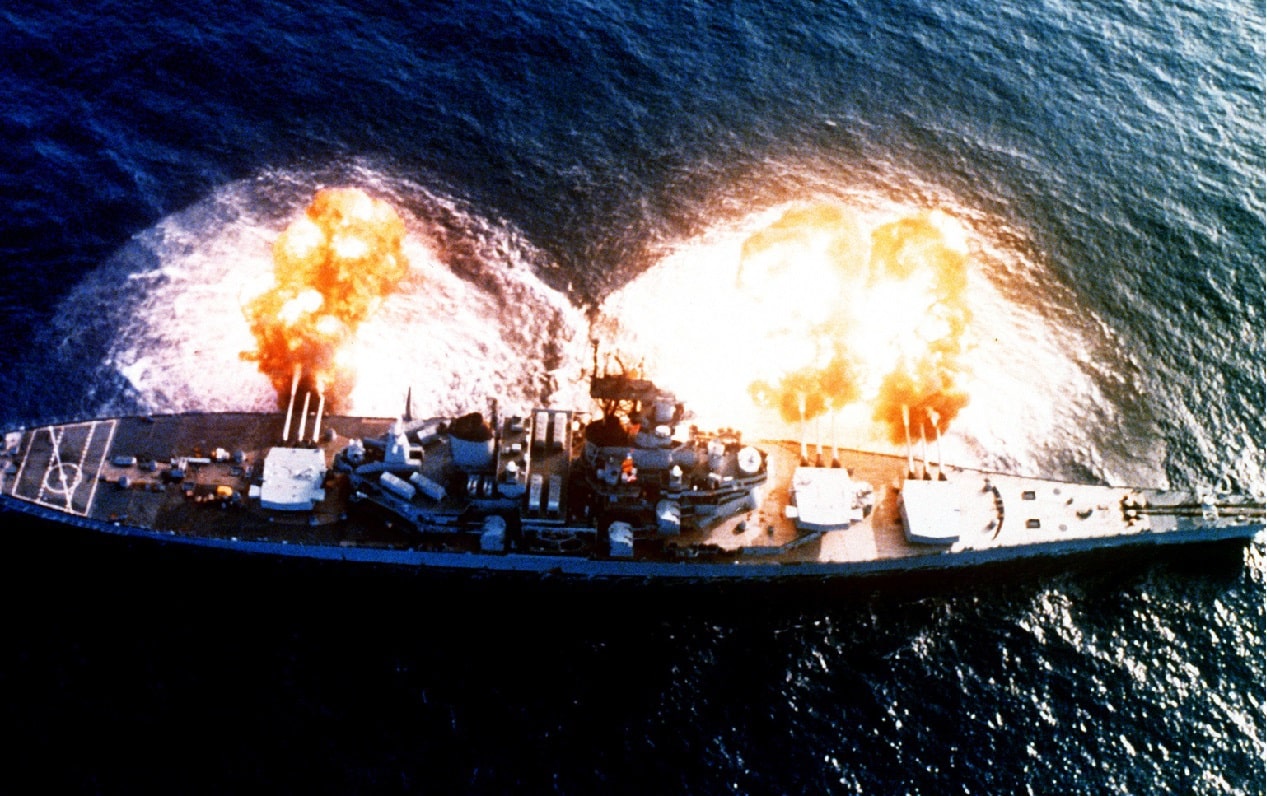
An overhead view of the battleship USS NEW JERSEY (BB-62) firing a full broadside to starboard during a main battery firing exercise.
During this final firepower fling, BB-63 unleashed 759 16-inch shells as well as 28 Tomahawk cruise missiles (the latter a true testament to the old battlewagon’s adaptability to new technologies).
As if that weren’t already a sufficiently impressive note on which to end her combat service, USS Missouri also contributed to the Gulf War victory in a less kinetic, not to mention somewhat amusing, manner: as noted by Blake Stillwell of Military.Com, “Iraqi troops surrendered to the Missouri’s Pioneer unmanned aerial vehicle (UAV) during the initial shelling on February 24, as it spotted targets for the mighty battleships…It was the first surrender to a drone on a battlefield.”
USS Missouri was finally decommissioned for the last time on March 31, 1992, and reopened as a floating museum in 1998. In 48 years (she was first commissioned on June 11, 1944), BB-63 earned 11 battle stars (three for WWII, five for Korea, and three for the Gulf War), and 17 other awards, including the Combat Action Ribbon and the Liberation of Kuwait Medal.
Fair winds and following seas, Mighty Mo!
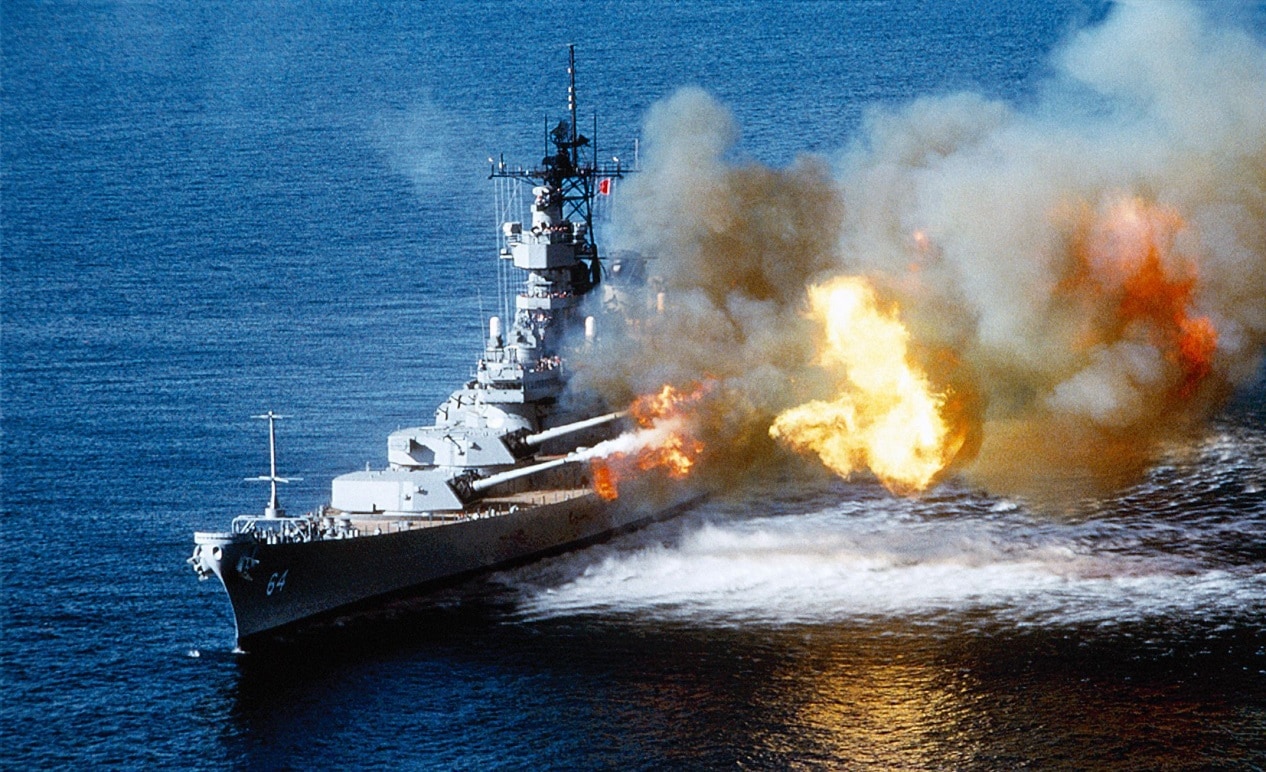
Iowa-class. Image Credit: Creative Commons.
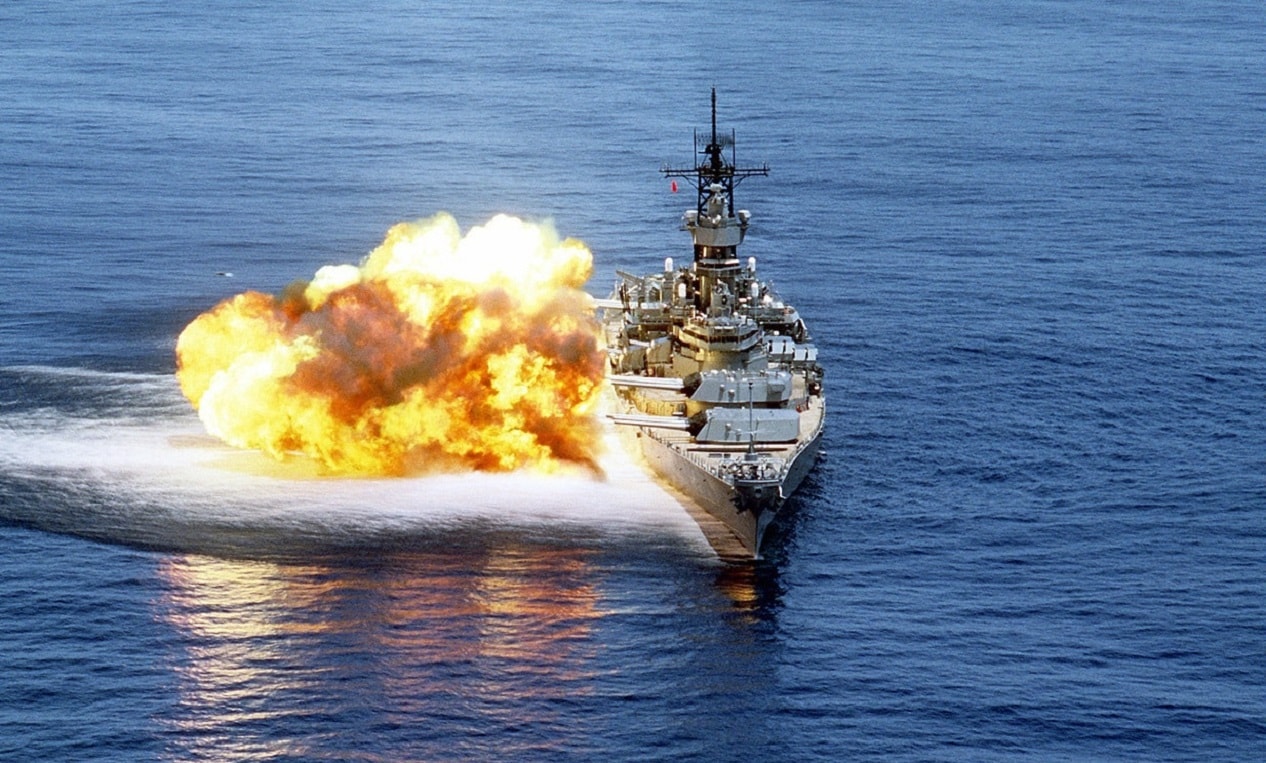
Iowa-class battleship. Image Credit: Creative Commons.
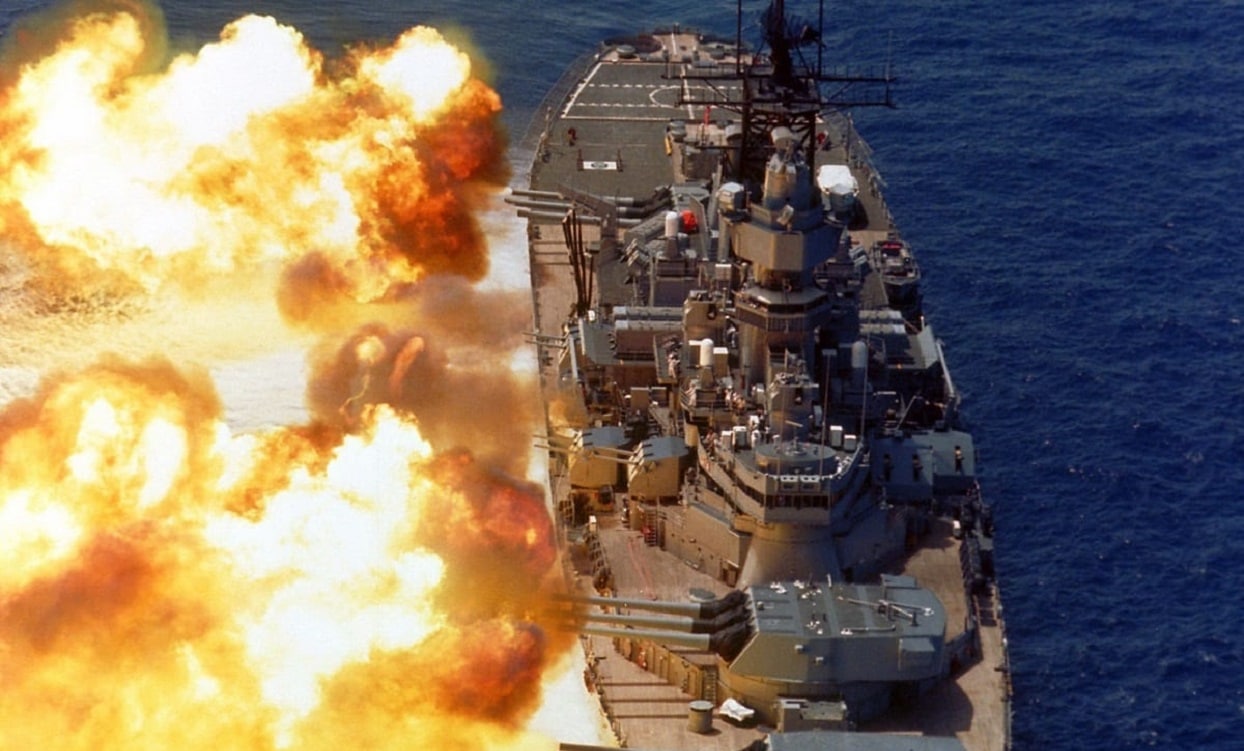
Iowa-Class Battleship.
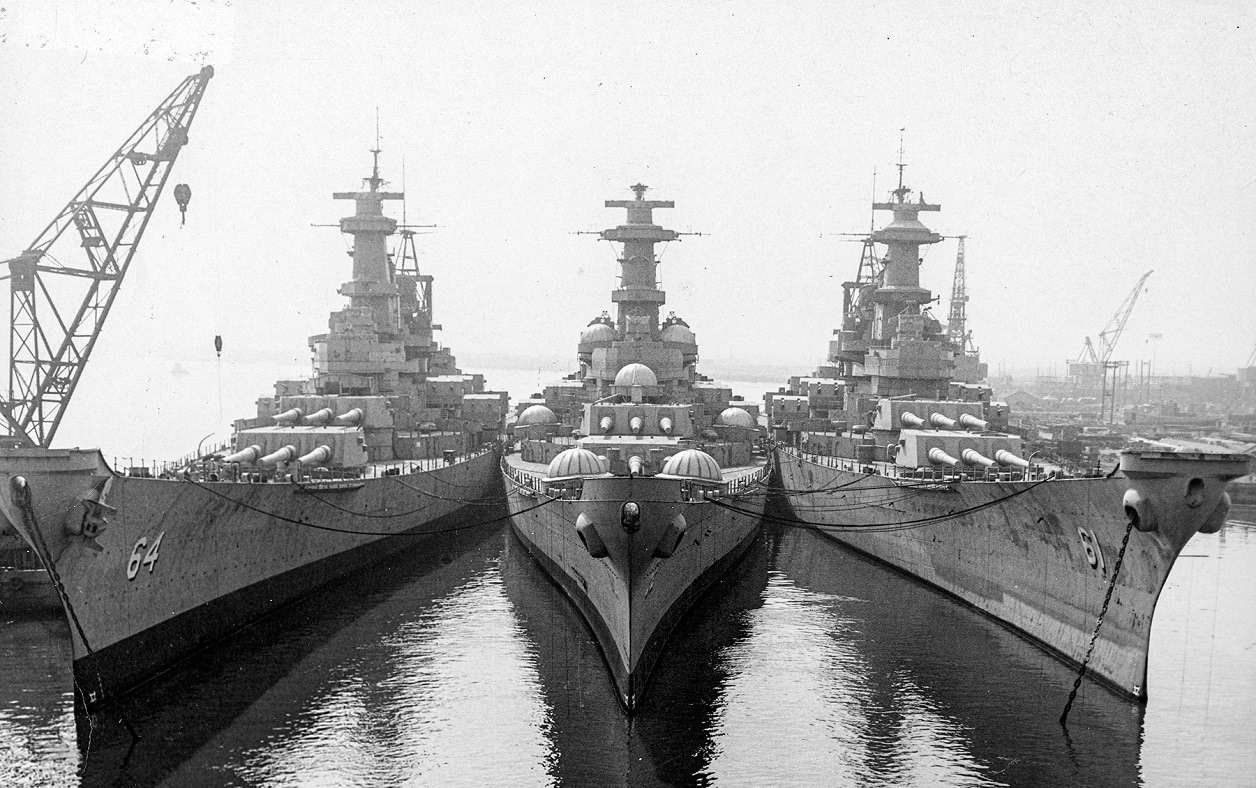
Image of Iowa-class Battleships. Image Credit: Creative Commons.
About the Author: Christian D. Orr, Defense Expert
Christian D. Orr is a Senior Defense Editor. He is a former Air Force Security Forces officer, Federal law enforcement officer, and private military contractor (with assignments worked in Iraq, the United Arab Emirates, Kosovo, Japan, Germany, and the Pentagon). Chris holds a B.A. in International Relations from the University of Southern California (USC) and an M.A. in Intelligence Studies (concentration in Terrorism Studies) from American Military University (AMU). He is also the author of the newly published book “Five Decades of a Fabulous Firearm: Celebrating the 50th Anniversary of the Beretta 92 Pistol Series.”