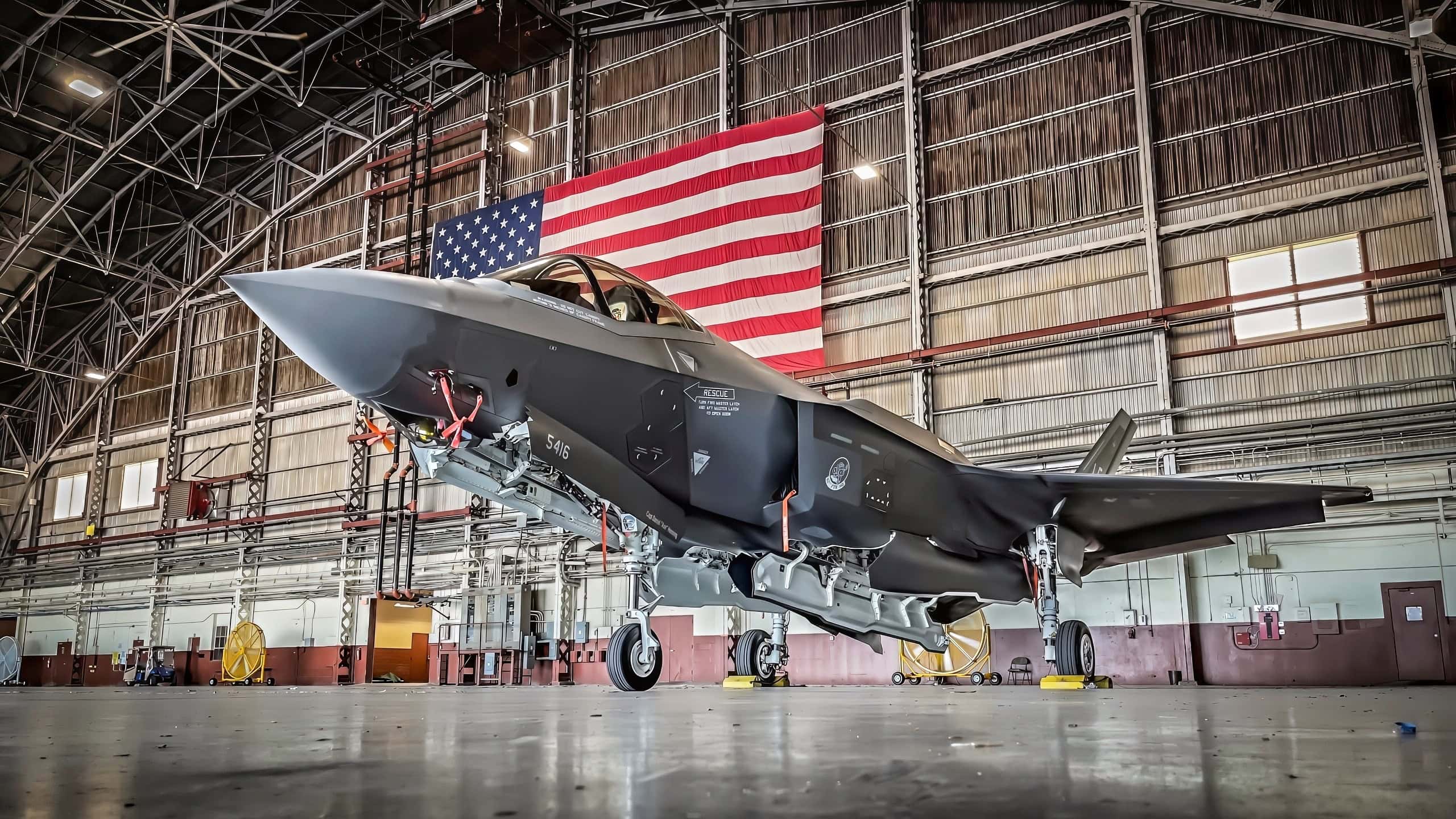
Canada committed in 2023 to buy 88 Lockheed Martin F-35A stealth fighters to replace its CF-18 fleet — today it has firmly committed to only 16, with long-lead component payments hedging another 14 aircraft. Prime Minister Mark Carney’s government has refused to set a deadline on its review of the program amid surging prices and deteriorating ties with Washington, while Sweden’s Saab is pitching a Gripen E alternative built around a secure Montreal data center, 12,000 Canadian jobs, and first delivery within five years. Ottawa has also taken observer status in the U.K.-Italy-Japan GCAP sixth-generation fighter program — a signal that Canada is reconsidering its dependence on U.S. military infrastructure altogether.
Canada’s Big F-35 Stall
Canada’s fighter jet review is still not over, but it is still paying for fighter jet parts to which it was originally committed. Under the initial plans, unveiled in 2023, Canada was to purchase 88 Lockheed Martin F-35A fighter jets to replace its aging CF-18s. Last year, Liberal Prime Minister Mark Carney said the jet purchase would be reviewed amidst a deterioration in ties with Washington, not to mention surging prices.
According to Army Recognition, Canada has already committed to 16 F-35s and has begun paying for long-lead components tied to another 14 aircraft. While these payments are not necessarily the equivalent of a final order for the other jets, they are certainly keeping up Canada’s position in Lockheed Martin’s highly coveted production queue. Ottawa knows that any missed deadlines could mean delivery slots reassigned to other buyers.
Ottawa’s position is delicate given that the government still claims the review is unresolved and refuses to set a deadline for any final decision. Despite that, it is still shelling out cash to keep the F-35 option open.
The issue is not simply whether the F-35 is a better aircraft, which it certainly seems to be. In the first competition, the F-35 scored much higher than Saab’s JAS 39 Gripen E on military attributes such as stealth, sensors, and interoperability with the United States and NATO allies.
Is the F-35 Independent Enough?
Still, Canadian officials have been forced to reconsider costs, industrial benefits, sovereignty, and the risk of relying too much on its southern neighbor. That is where Saab sees a lucrative opening.
CBC News reported that Saab has offered to establish a secure data center in Montreal as part of its JAS 39 Gripen pitch. The company says the facility would house mission-critical data, software, and technical information in Canada and be staffed by cleared Canadian personnel.
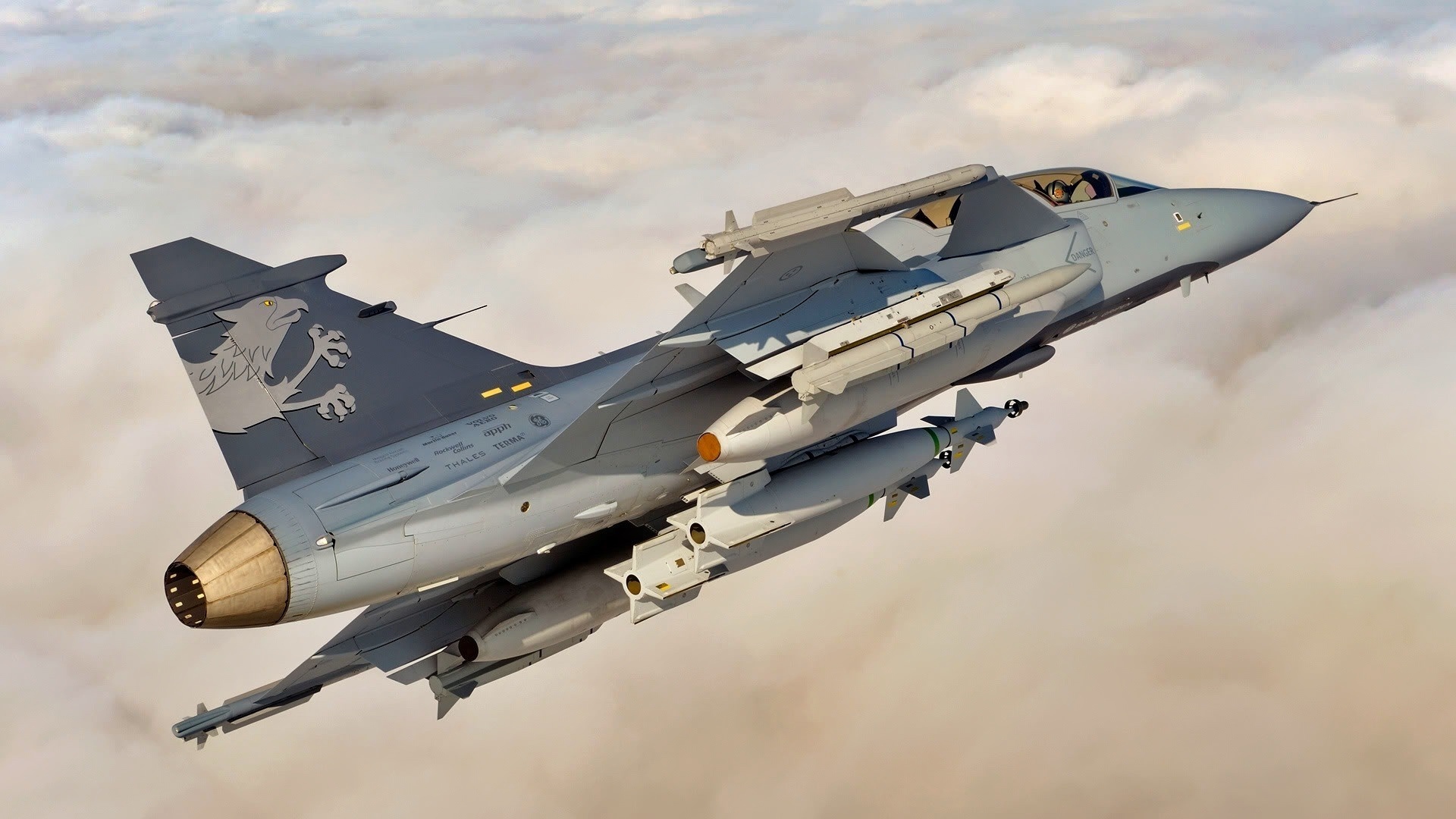
JAS 39. Image Credit: Creative Commons.
Saab is clearly trying to market its jet as having more sovereignty than the F-35, given that the latter’s logistics and data systems are intricately linked to Lockheed Martin and U.S.-based technology.
Lockheed Martin has hit back at claims that F-35 customers in Canada and beyond lack sufficient sovereign control. The company says it provides the infrastructure and data customers need to operate and sustain their aircraft in accordance with their own national requirements. Still, the concern has gained political force in Canada as tensions with Washington have grown.
The Gripen Pitch
Saab is also pitching industrial benefits. The Swedish company has proposed local production and sustainment work that it says could support more than 12,000 Canadian jobs. AeroTime reported that Saab CEO Micael Johansson has argued Canada could receive its first Gripen within five years, citing the country’s existing aerospace base as an advantage.
Lockheed Martin is countering with its own economic argument. The company has stated that over 110 Canadian firms already contribute to the F-35 supply chain, with C$3.2 million in Canadian-made parts per jet and C$15.5 billion in projected industrial value through 2058.
A Path For the F-35?
In April, the F-35 camp received a major boost when MAS, an L3Harris company, and Lockheed Martin announced plans to establish an F-35 sustainment depot in Mirabel, Quebec. The Defense Post alleges that the facility would aid domestic maintenance of its F-35 fleet, while CTV News explained that MAS hopes the depot could service F-35s from other nations going forward. The project is being presented as a way to answer Canadian sovereignty concerns without abandoning the F-35.
The mixed-fleet option is still a major possibility. Such plans would see Canada accept the initial 16 to 30 F-35s already funded or partially protected, while Gripens could be bought up to plug the gaps.

A CF-18 Hornet fighter jet soars through the clouds over Iraq before commencing the next mission during Operation IMPACT on January 23, 2015.
There would be costs to this approach. Two fleets mean two training pipelines, two maintenance systems, and more logistical complexity. Washington has also warned that moving away from the F-35 could complicate NORAD arrangements.
Canada is also looking beyond both of these aircraft. According to the Financial Times, Ottawa is set on observer status in the Global Combat Air Programe (GCAP), the U.K.-Italy-Japan sixth-generation fighter initiative. In other words, Canada may not only be mulling CF-18 replacements but also seriously reconsidering its dependence on U.S. military infrastructure.
Ottawa continues to pay enough to avoid losing F-35 production slots, to entertain Saab’s sovereignty-heavy pitch, to back domestic sustainment in Quebec, and to explore future non-U.S. fighter programs.
About the Author: Georgia Gilholy
Georgia Gilholy is a journalist based in the United Kingdom who has been published in Newsweek, The Times of Israel, and the Spectator. Gilholy writes about international politics, culture, and education. You can follow her on X: @llggeorgia.