
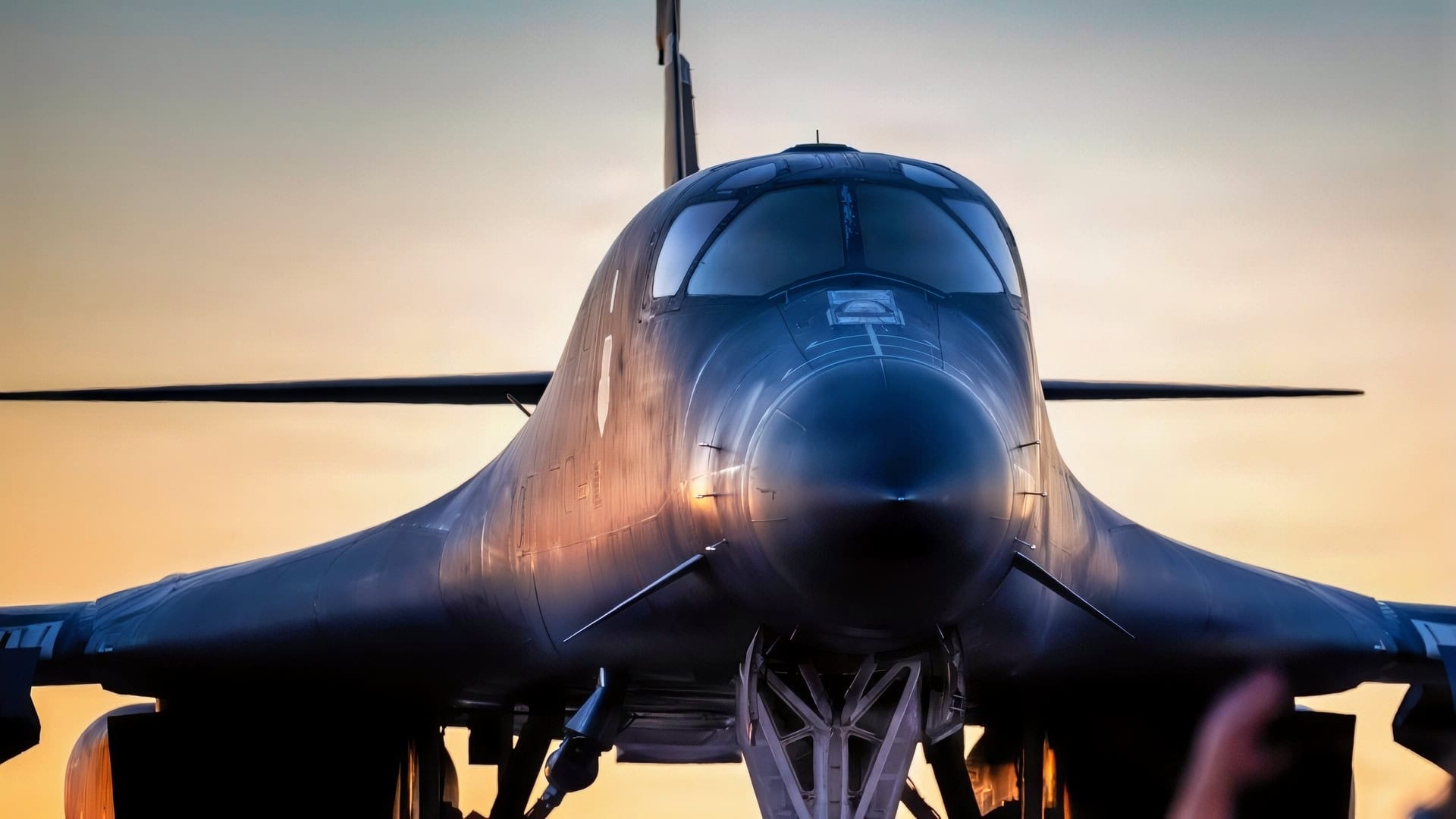
In a sign that the B-1B bomber may not be done just yet from the Air Force’s inventory, the service just added one to the roles of its bomber fleet.
The Air Force has brought back a B-1B Lancer, completing a yearslong process to transform a bomber at Tinker AFB in Oklahoma, which had been stored for parts in the Arizona desert, into the new flagship of the 7th Bomb Wing at Dyess Air Force Base, Texas.
B-1B, tail 86-0115, which was named “The Rage,” was sent to the “Boneyard” at Davis-Monthan Air Force Base, Ariz., in 2021. But it was brought back into service last month, moving from retirement to front-line service.
B-1B Lancer Reboot” Justice For Restoring “The Rage” Was A Team Effort
For Jason “JJ” Justice, life had completed a full-circle moment.
“I’ve been on this jet for 32 years,” Justice said, in a Tinker AFB press release. “To see it come back and still support the warfighter is a great feeling.”
Now retired from the Air Force, Justice helped put the aircraft into storage in 2021. Now, he helped bring it back to the Air Force’s inventory.
It was not an easy or quick resurrection. It took more than 200 servicemen and civilians working extended shifts over nearly 2 years to restore the “BONE” (for B-1) to flying condition.
The Crew Replaced 500 Components
The tireless work by the crews resulted in replacing more than 500 components, including completing “system overhauls and structural repairs.”
“Three rotating teams worked around the clock to prepare the aircraft for final delivery,” according to the 72nd Air Base Wing.
Pilots then flew the aircraft in a stripped, bare-metal configuration to conduct a function check on all operating systems before the big bomber was sent to the paint booth.
A New Paint Job, And A New Name
The Air Force gave it a new name: “Apocalypse II.” The moniker is in honor of the crew of a World War II B-24 Liberator aircraft nicknamed “Apocalypse” that was shot down over Burma on Dec. 1, 1942.
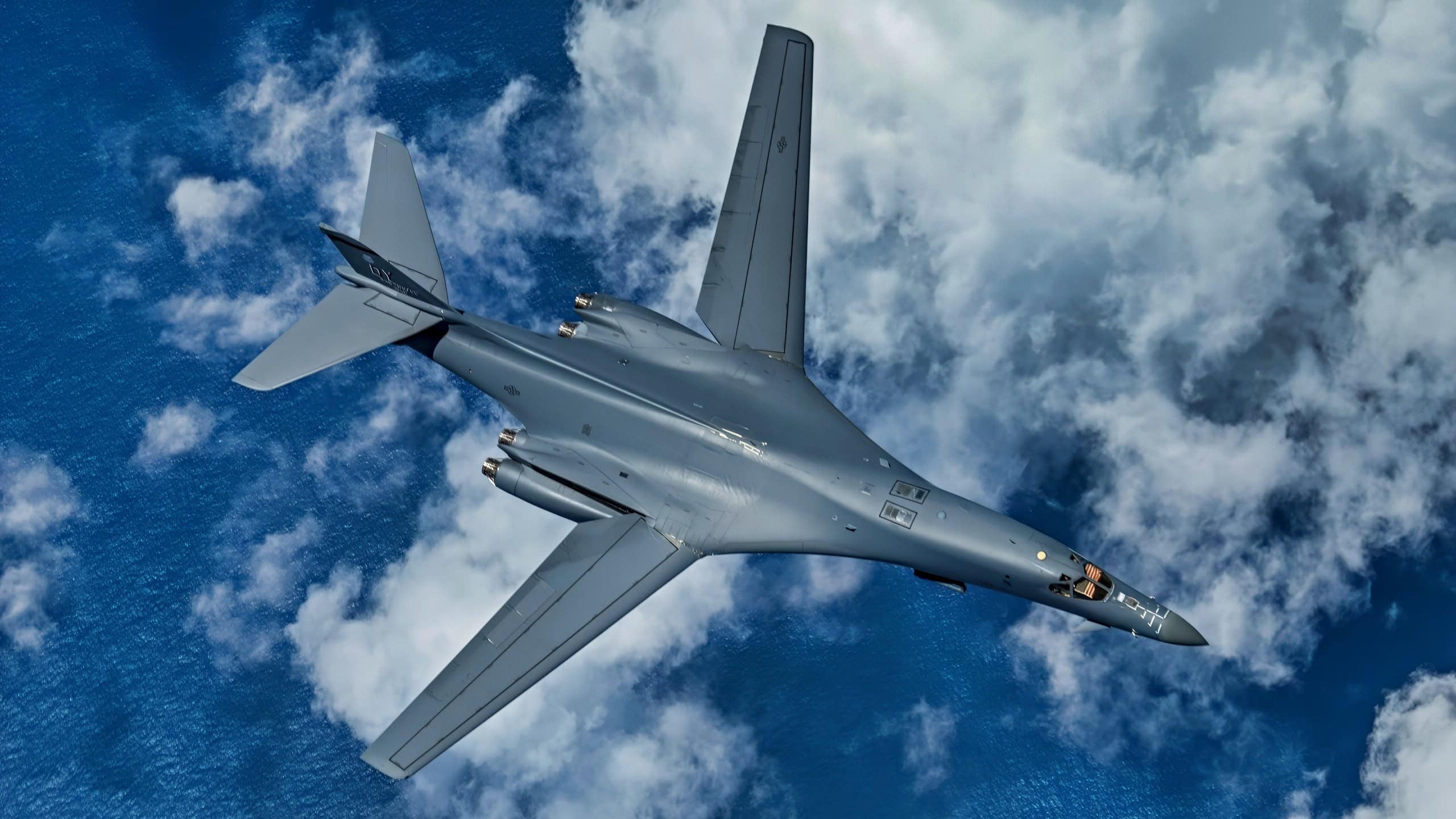
A 9th Expeditionary Bomb Squadron B-1B Lancer flies over the East China Sea May 6, 2020, during a training mission. The 9th EBS is deployed to Andersen Air Force Base, Guam, as part of a Bomber Task Force supporting Pacific Air Forces’ strategic deterrence missions and commitment to the security and stability of the Indo-Pacific region. (U.S. Air Force photo by Senior Airman River Bruce)
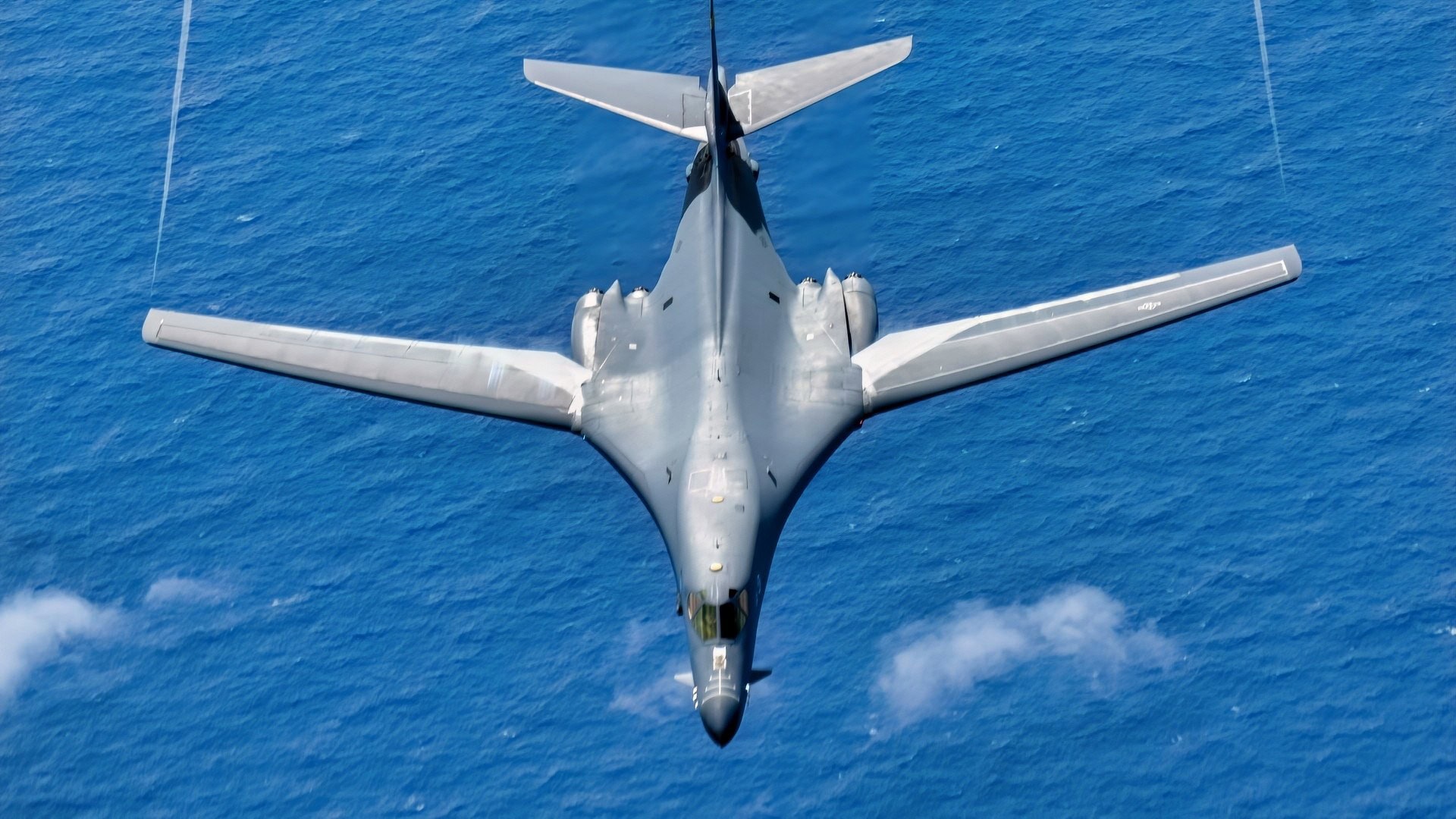
A U.S. Air Force B-1B Lancer assigned to the 34th Expeditionary Bomb Squadron, Ellsworth Air Force Base, S.D., descends after conducting aerial refueling with a KC-135 Stratotanker assigned to the 506th Expeditionary Air Refueling Squadron in support of Bomber Task Force 25-1 over the Pacific Ocean, Mar. 4, 2025. Bomber Task Force enhances readiness, to include joint and multilateral, to respond to any potential crisis or challenge in the Indo-Pacific. (U.S. Air Force photo by Airman 1st Class Alec Carlberg)
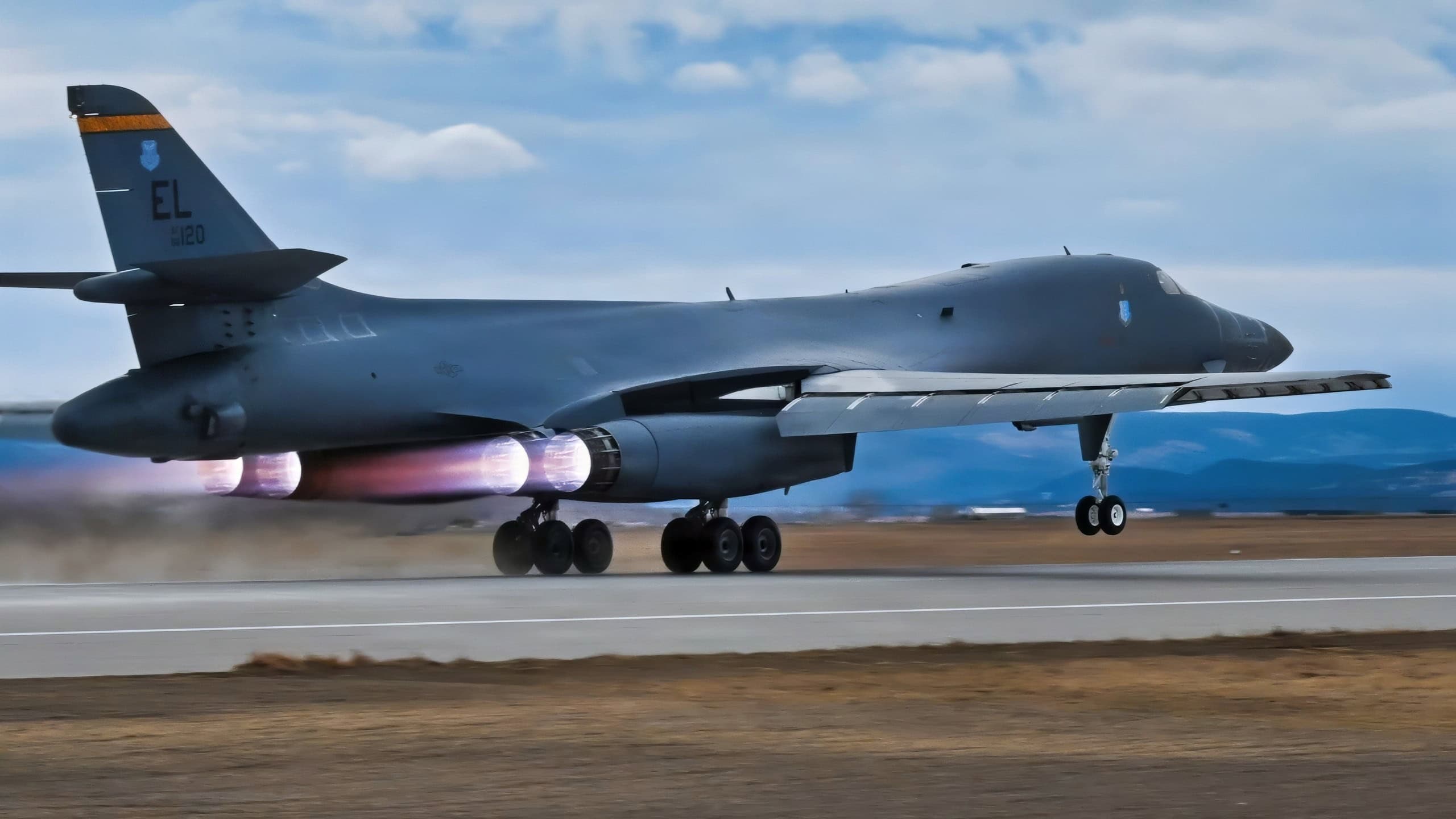
A U.S. Air Force B-1B Lancer assigned to the 34th Bomb Squadron takes off as part of a routine training exercise at Ellsworth Air Force Base, S.D., Feb. 24, 2026. Repeated training ensures mission and combat readiness, helping maintain peaceful world affairs. (U.S. Air Force photo by Airman 1st Class Austin Mooneyham)
The original “Apocalypse” B-24 was part of the 436th Bombardment Squadron, the predecessor to today’s 436th Training Squadron, which is based at Dyess. The remains of several crew members of the original Apocalypse, the fallen B-24, were identified through DNA analysis in recent years and buried.
B-1Bs Used In Air Campaign Over Iran
The USAF used three B-1B Lancer strategic bombers for long-range strike operations against Iranian targets, often flying non-stop from the U.S. mainland.
The B-1B, carrying the largest conventional payload, is used to strike command centers, ammunition depots, and proxy forces.
A US official confirmed to the Axios news site that the bombers struck “above-ground ballistic missile and command and control sites in Iran.”
While the US has also used the B-2 Spirit stealth bombers, the use of the B-1B Lancer is significant, as it confirms that, despite the mission’s very early timeframe, air superiority over Iran is now established.
The B-1B Lancer Is Old, But Remains A Formidable Weapon
The B-1B Lancer has evolved from a 1980s supersonic nuclear penetration bomber into a premier conventional, long-range precision strike platform. Today, the “BONE,” as it is affectionately called, is being used in ways it was never designed for.
It transitioned from high-altitude, high-speed design (B-1A) to low-level, stealth-optimized flight (B-1B), ultimately dropping nuclear roles in favor of conventional, high-payload, and hypersonic weapon testing capabilities.
Together with the B-52 and the B-2 Spirit stealth bomber, they still pack a mighty punch against America’s enemies.
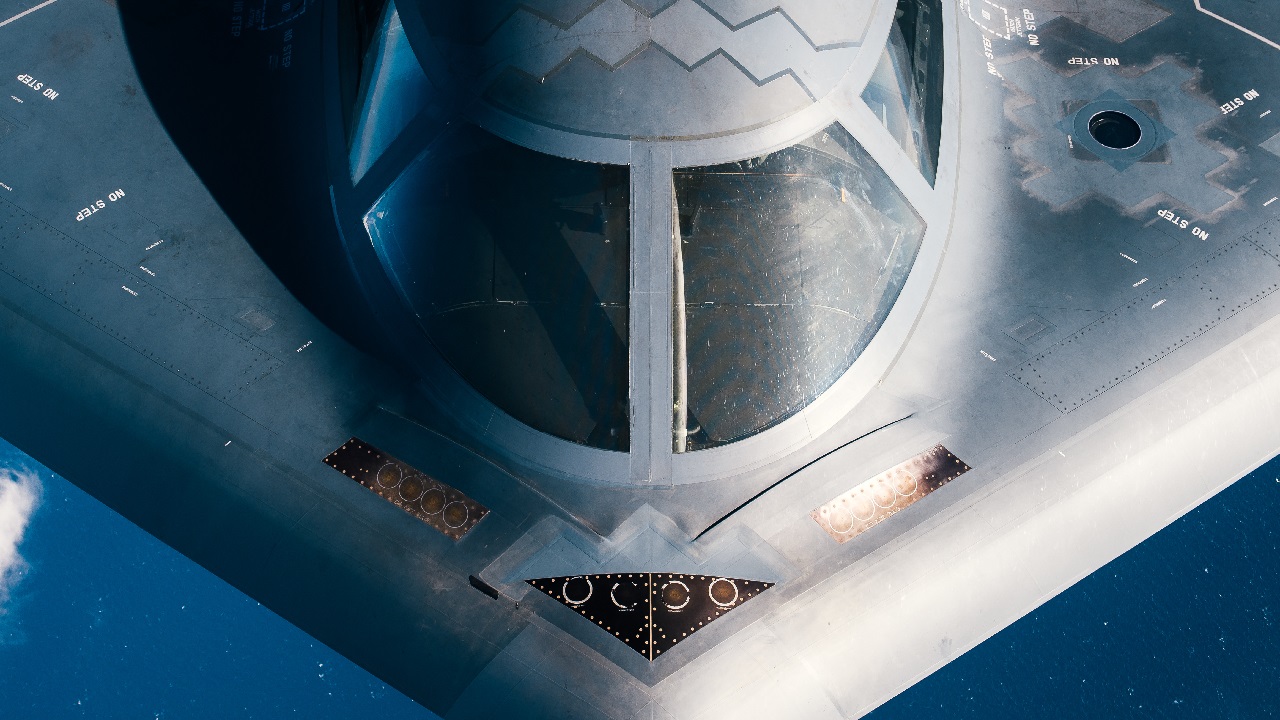
A U.S. Air Force 509th Bomb Wing B-2 Spirit refuels from a 351st Aerial Refueling Squadron KC-135 Stratotanker during the Bomber Task Force training exercise over England, Aug. 29, 2019. The B-2 aircraft will operate out of RAF Fairford, England, and will exercise there at U.S. Air Forces in Europe’s forward operating location for bombers. (U.S. Air Force photo by Staff Sgt. Jordan Castelan)
While the B-1B and the B-2 are slated for retirement, they both can still deliver an incredible amount of ordnance on targets.
The B-21 Raider Will Replace The B-1B and the B-2 Spirit
The B-21 Raider was officially unveiled in December 2022 and is now in low-rate initial production (LRIP) following its maiden flight last November. U.S. Air Force officials say the B-21 Raider is a “dual nuclear and conventionally capable, stealth, penetrating, long-range strike platform.” The B-21 will replace the aging B-1B Lancer and B-2 Spirit in the coming decade.
The B-21 Raider is named after the Doolittle Raiders of World War II, an Army land bomber squadron that took off from an aircraft carrier and bombed Japan during the darkest days of WWII.
However, until the B-21 Raiders are ready, the Air Force’s triad will continue, and although the Lancer isn’t a stealth bomber, it still packs an incredible punch. The US recently sent a small fleet of B-1Bs to Guam as a deterrent.
The “BONE” Packs An Incredible Punch
“The BONE” remains a critical asset in the U.S. Air Force’s bomber force, along with the B-52 Stratofortress and the B-2 Spirit, and can carry massive conventional payloads and conduct long-range strike missions. With an internal weapons payload of 70,000 pounds, it has the largest payload of any US plane ever.
While it lacks the stealth quality to make it an ideal penetrator of enemy (Russian, Chinese, North Korean, and Iranian) airspace, it may have lost its mission as a nuclear bomber. Still, it can carry 24 Joint Direct Attack Munitions (JDAMs). It has been a versatile airframe that has evolved.
With the capability to launch long-range stand-off weapons, it can target naval ships while patrolling large swaths of the Pacific Ocean. Due to its long range, it is fully capable of this, along with the B-52. For now, the stealthy missions will fall to the B-2.
The US will start seeing the B-21s by the end of 2026, but until then, our triad of tried-and-true bombers will have to suffice. The B-1B will remain a huge part of that. And the US just added another B-1B to the fleet. The “BONE” is not done flying just yet.
About the Author: Steve Balestrieri
Steve Balestrieri is a National Security Columnist. He served as a US Army Special Forces NCO and Warrant Officer. In addition to writing on defense, he covers the NFL for PatsFans.com and is a member of the Pro Football Writers of America (PFWA). His work was regularly featured in many military publications.