
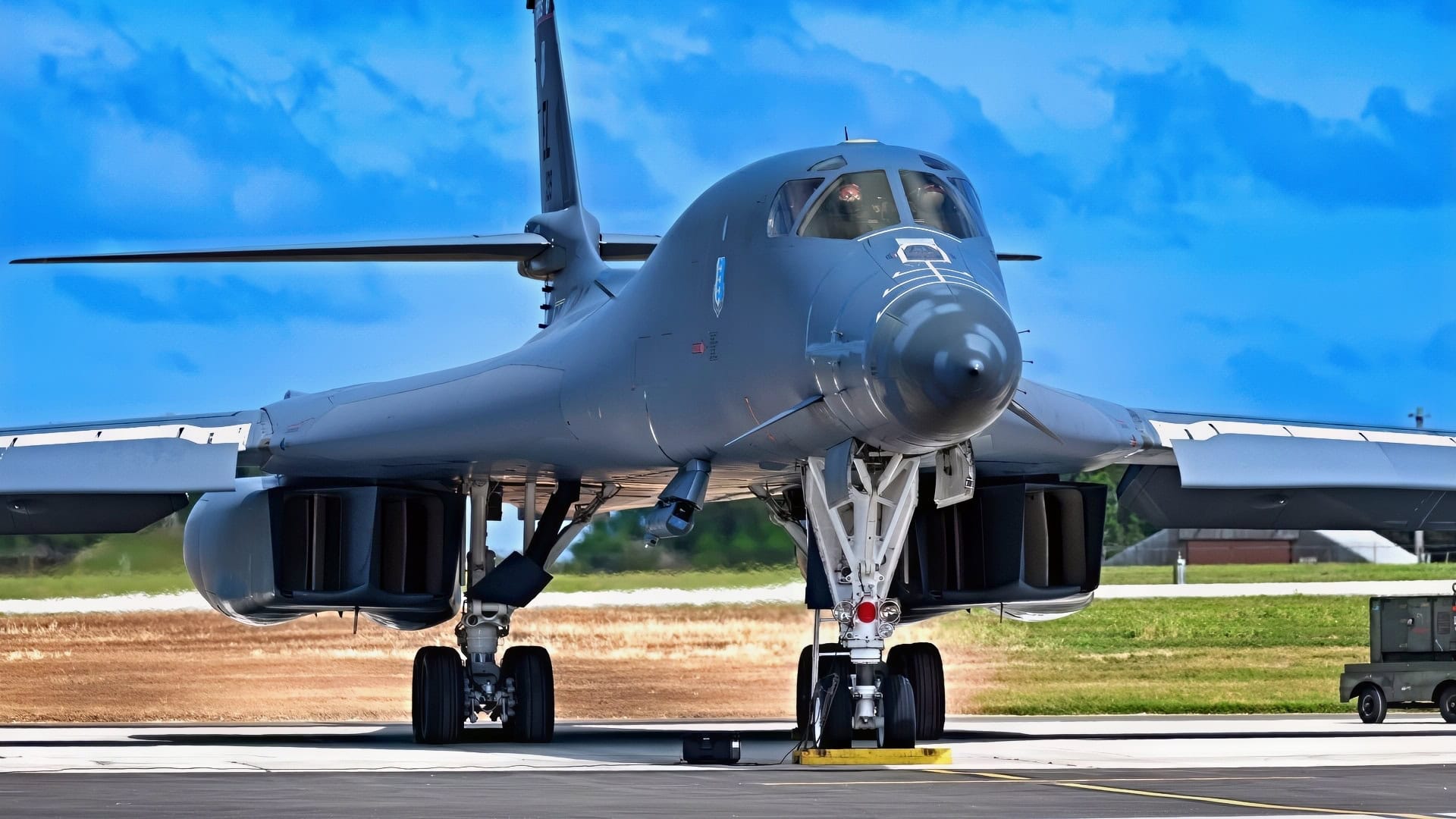
The U.S. Air Force’s B-1B Lancer has played a significant role in the ongoing conflict with Iran, operating as part of a long-range strike campaign that has struck Iranian missile infrastructure, command nodes, logistics sites, and other high-value targets all over the country. That’s a pretty radical concept, given the bomber’s age, how many experts thought she would have been retired by now, and the number of missions these warplanes have been used for.
The B-1B Bomber: Breaking All the Rules and Making History
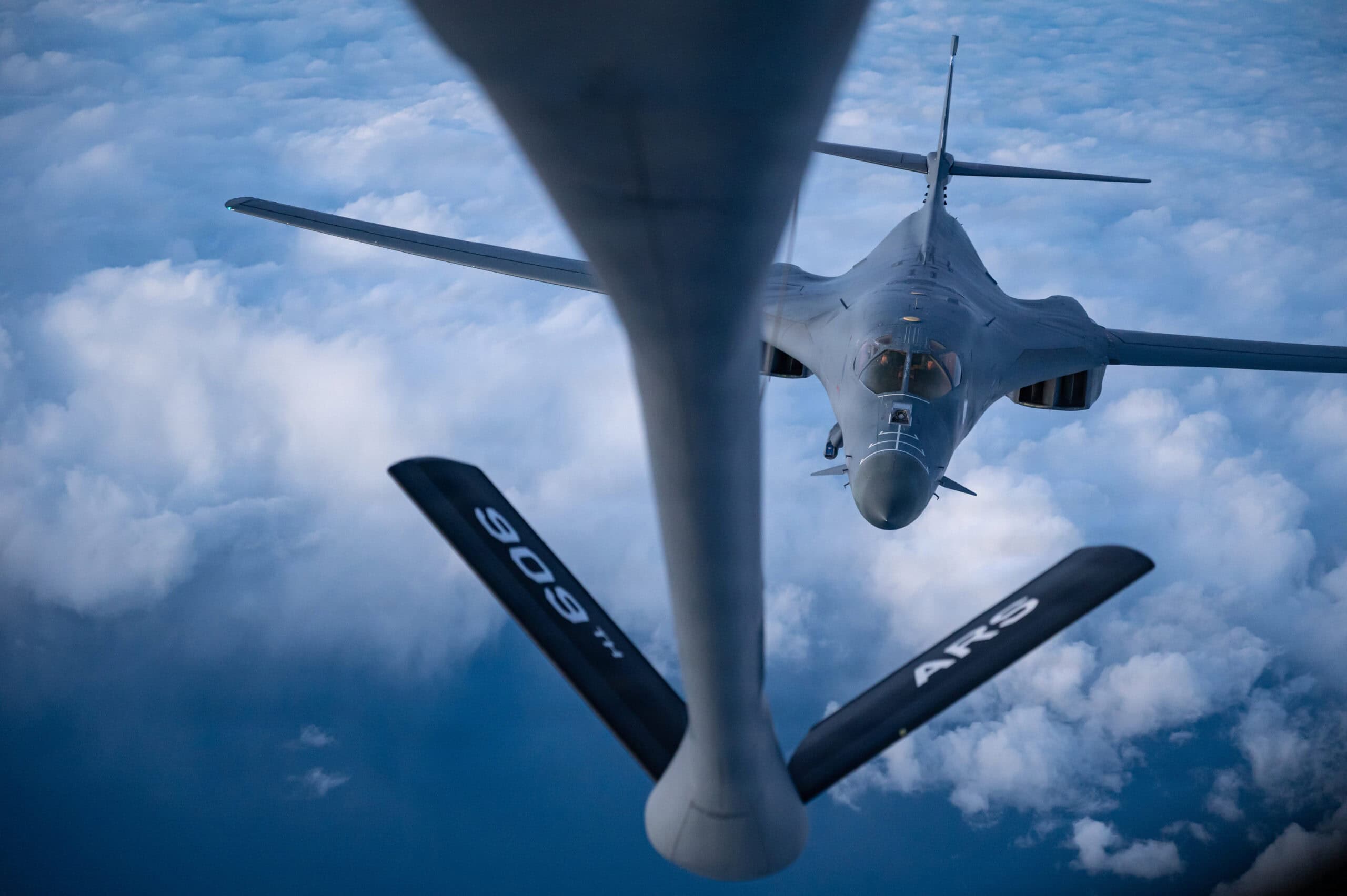
A U.S. Air Force B-1B Lancer assigned to the 9th Expeditionary Bomb Squadron, refuels from a KC-135 Stratotanker assigned to the 909th Air Refueling Squadron, Kadena Air Base, Japan, during a Bomber Task Force mission over the Pacific Ocean, Oct. 20, 2025. The KC-135 can transfer up to 200,000 pounds of fuel, increasing the B-1’s range to deliver a wide variety of munitions throughout the Indo-Pacific region. (U.S. Air Force photo by Master Sgt. Micaiah Anthony)
In March, B-1Bs deployed to RAF Fairford in the United Kingdom to support operations in the Middle East – a move that, at the time, revealed the planned expansion of U.S. bomber involvement in the conflict.
It also revealed that the U.S. was confident it could strike those targets, given that bombers like the Lancer are vulnerable in contested airspace.
U.S. Strategic bombers, including the B-1B, were used in coordinated strike operations that took out large numbers of Iranian targets in the early phases of the war. The aircraft’s performance in those missions proves that even older platforms can retain clear value under the right conditions.
But the same conditions that made the B-1B so effective in Iran do not exist in a potential future conflict with larger adversaries like China, and that distinction is what is driving the transition to a new generation of stealth bombers.
How the B-1B Was Used in the Iran War
After initial strikes degraded Iran’s air defense network, the aircraft was brought in to deliver large volumes of precision-guided munitions against a range of targets.
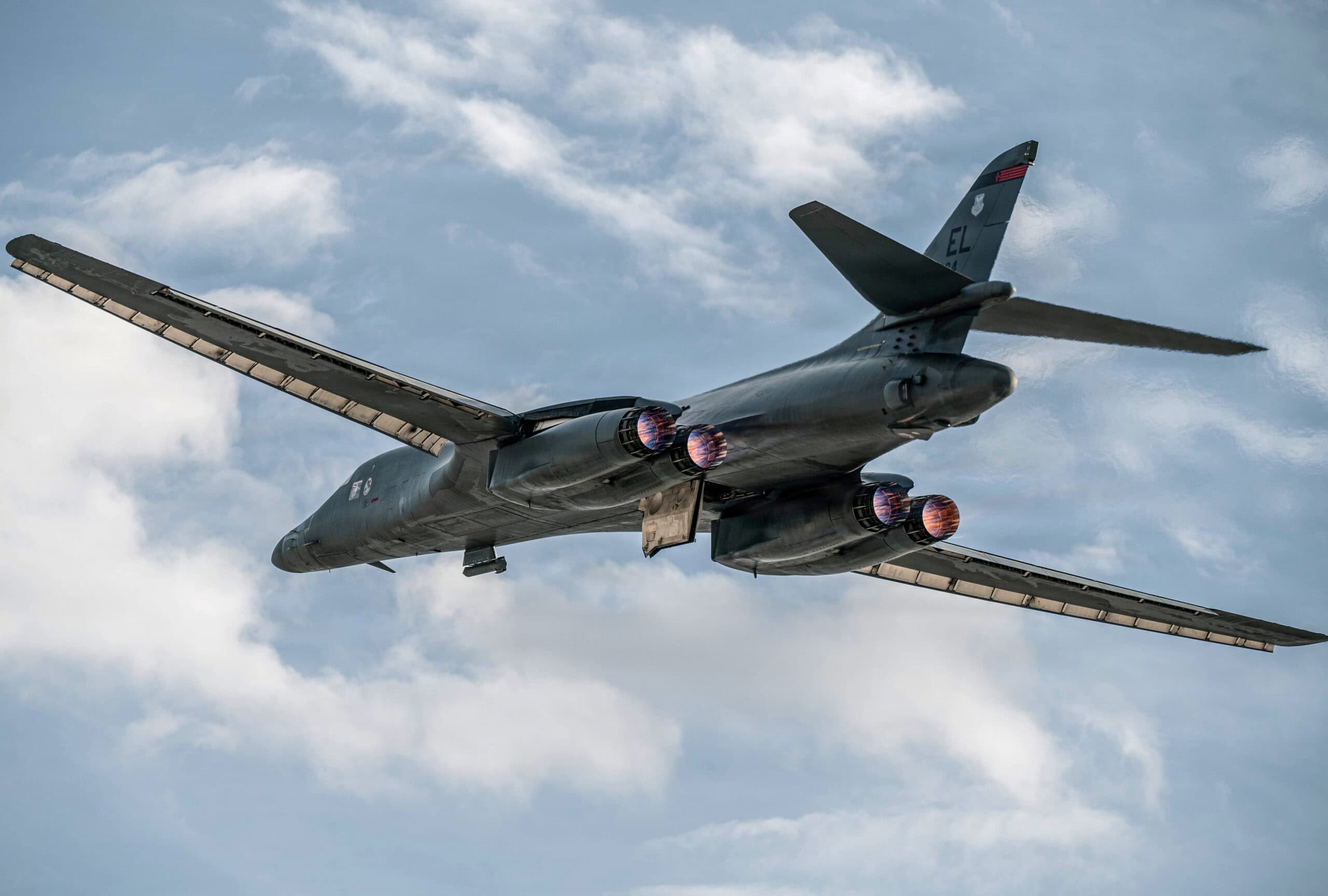
A U.S. Air Force B-1B Lancer assigned to the 28th Bomb Wing takes off in support of a U.S. Air Force Weapons School Integration mission at Nellis Air Force Base, Nevada, Nov. 18, 2025. The mission contributed to the Air Force’s efforts to maintain a ready and agile bomber force providing students with experience coordinating large-scale air operations across dispersed locations. (U.S. Air Force photo by Senior Airman Lauren Clevenger)
The March deployment to RAF Fairford positioned B-1Bs within range of Iran while maintaining some flexibility across both European and Middle Eastern theaters. It was from there that the aircraft conducted long-range strike missions supported by aerial refueling aircraft, allowing them to reach targets deep inside Iranian territory.
U.S. bomber operations during the opening phases of a war typically target missile infrastructure and command and control facilities, allowing bombers to pass without threat. In Iran, this was possible not just because the U.S. has some of the most advanced military hardware on the planet, but because Iran’s air force and missile defense network was aging and particularly easy to degrade.
Targeting logistical support sites and control facilities is the obvious first step because they are fixed and semi-fixed targets that can be taken out with high-volume strikes, which is where the B-1B is most effective.
The aircraft is capable of carrying both JDAM precision-guided bombs and long-range standoff weapons, such as the AGM-158 JASSM, enabling it to strike multiple targets in a single sortie.
That means one B-1B can deliver dozens of precision weapons in a single mission, reducing the number of sorties required to deliver results.
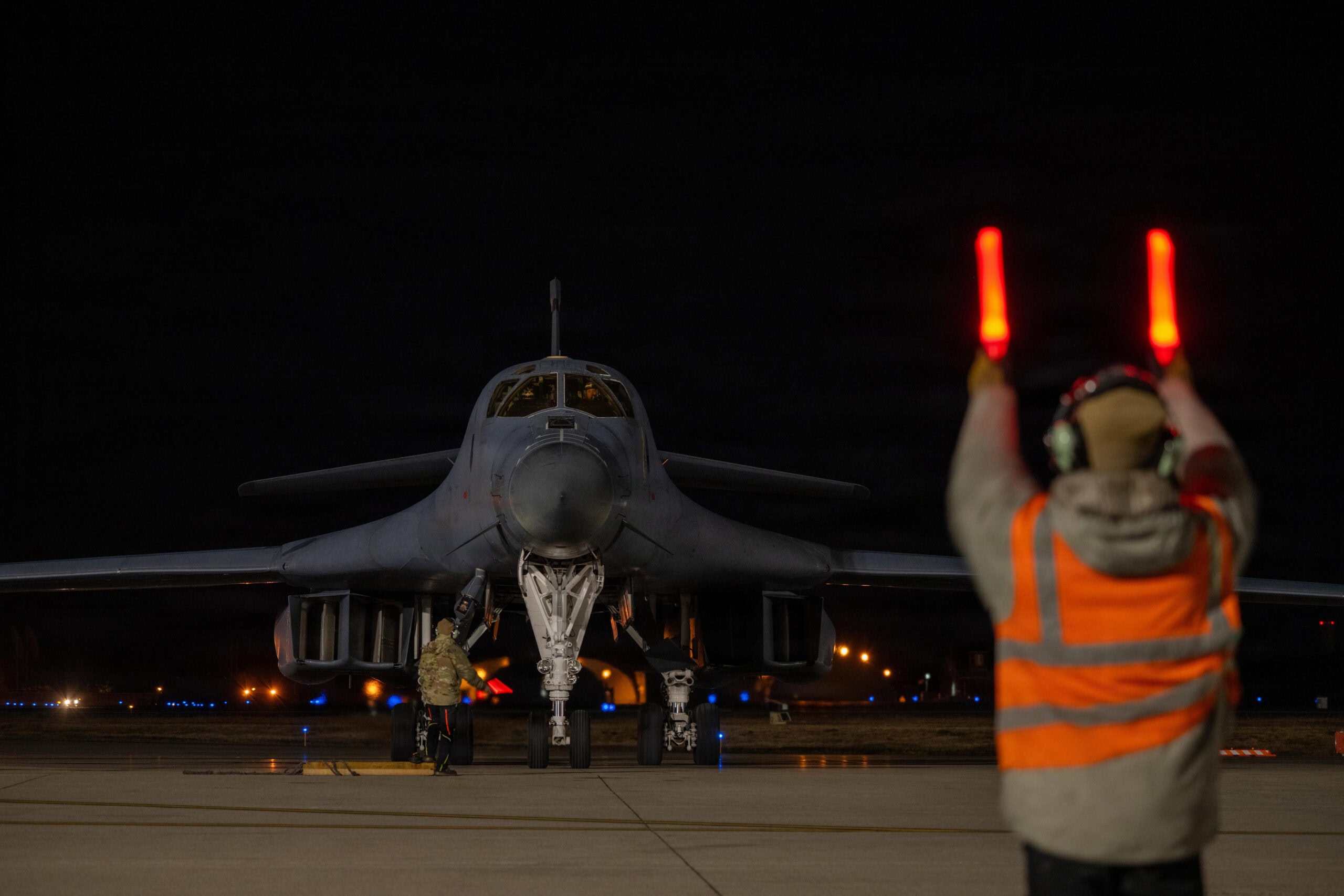
A U.S. Air Force B-1B Lancer assigned to the 9th Expeditionary Bomb Squadron taxis after a bomber task force mission at Misawa Air Base, Japan, Nov. 7, 2025. BTF deployments present opportunities for personnel to train with Allies and partners to demonstrate interoperability and build lasting friendships. (U.S. Air Force photo by Airman 1st Class Adrien Tran)
And, it was only because Iranian air defenses were so utterly degraded that these kinds of aircraft could operate with reduced risk. The B-1B exploited that environment and delivered results.
What the B-1B Can Do
Despite first entering service in the 1980s, the B-1B remains one of the most capable conventional strike aircraft in the U.S. inventory. Its payload is what makes it special – it is capable of carrying up to 75,000 pounds of ordnance, the largest of any U.S. bomber. That capacity allows it to conduct high-volume strike missions that would otherwise require multiple aircraft.
In terms of performance, the B-1B has a top speed of approximately Mach 1.2 and a range of more than 5,900 miles without refueling. With tanker support, as we have seen in Iran, it can operate globally.
The aircraft also carries a range of conventional weapons, allowing it to strike targets from hundreds of miles away.
That kind of flexibility is critical in environments where some level of air defense threat remains, but heavily contested areas are not the right environment for this kind of bomber.
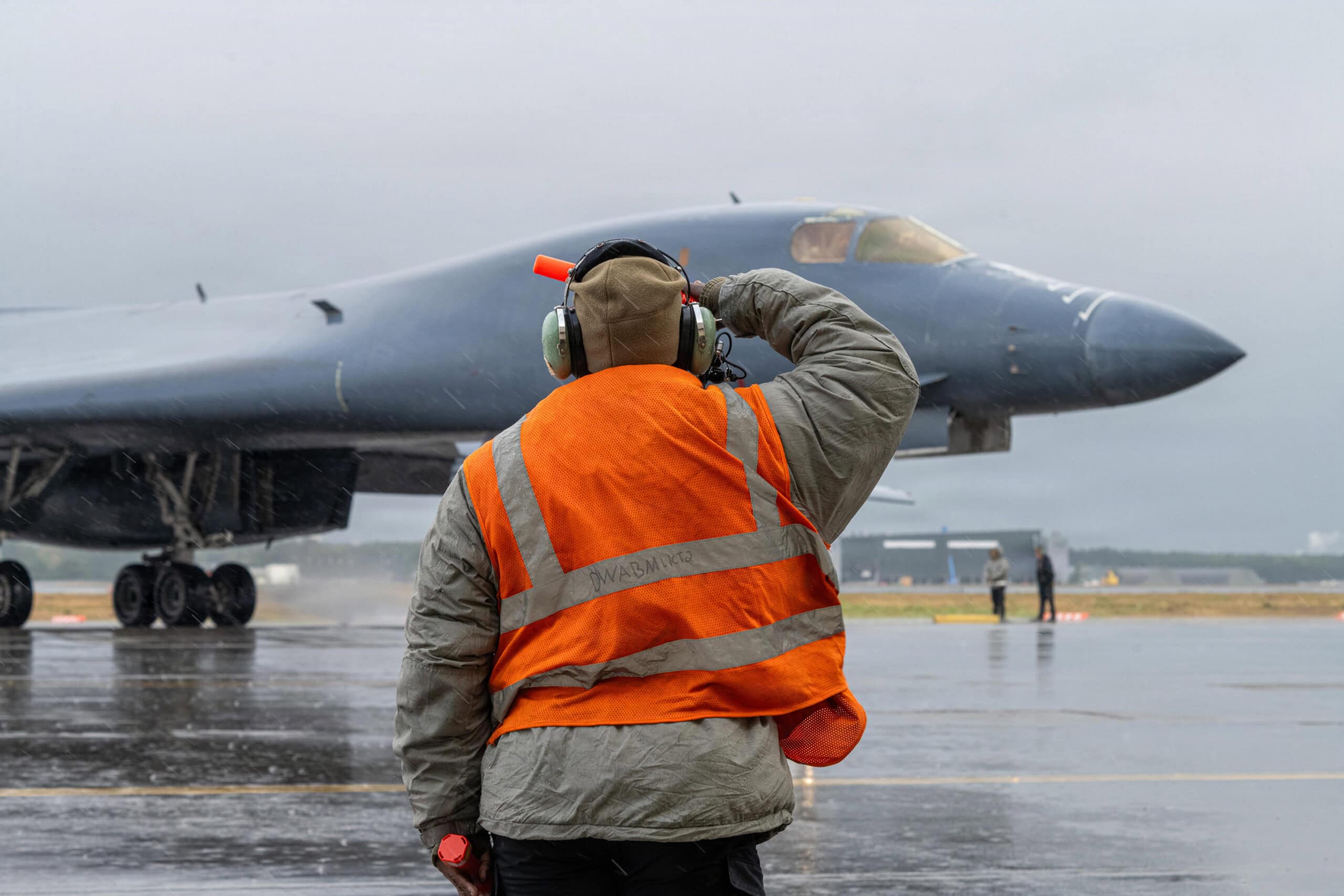
U.S. Air Force Airman 1st Class Jamiah Bradley, 9th Expeditionary Bomb Squadron crew chief, salutes a B-1B Lancer assigned to the 9th EBS while on a bomber task force deployment at Misawa Air Base, Japan, Oct. 28, 2025. The BTF deployment to Misawa demonstrates interoperability and bolsters Pacific Air Forces’ ability to support a free and open Indo-Pacific in coordination with the Government of Japan. (U.S. Air Force photo by Airman 1st Class Adrien Tran)
And while the B-1B is not part of the U.S. nuclear deterrent today, its origins were nuclear.
It was converted to a purely conventional role in the 1990s, allowing it to focus entirely on high-volume strike operations ever since.
Today, it operates alongside the B-52 Stratofortress and B-2 Spirit as part of the U.S. strategic bomber force, with each aircraft filling a different role. The B-21 delivers endurance and payload, the B-2 is stealthy, and the B-1B provides a combination of speed and volume.
Why It Worked In Iran
The B-1B was so effective in the Iran conflict because of the nature of Iran’s air defense network and the way the campaign was conducted.
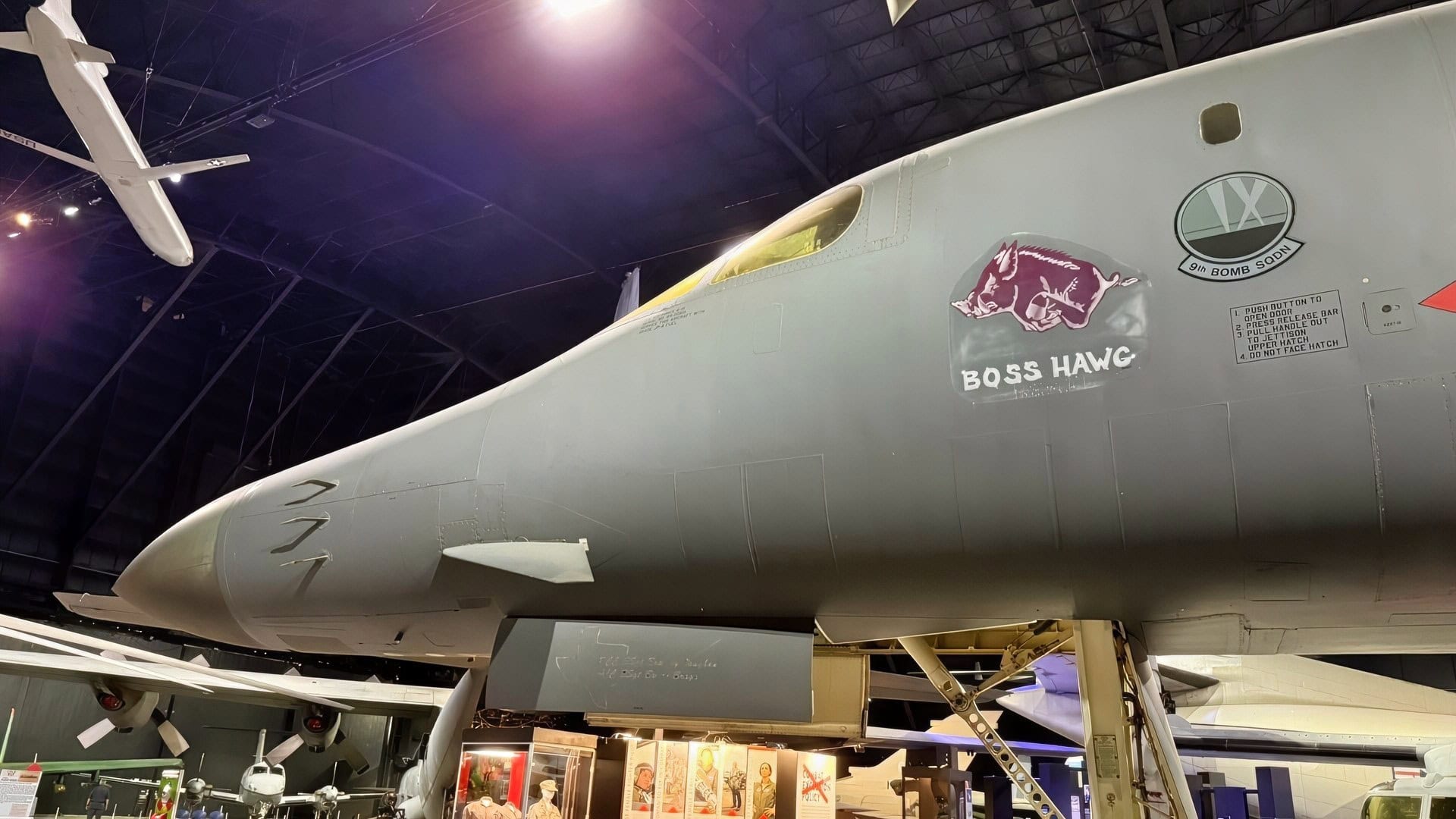
B-1B Lancer Bomber at the National Museum of the U.S. Air Force. 19FortyFive.com Photo.
Before U.S. forces took out much of Iran’s missile infrastructure, Iran operated a mix of legacy and modern systems, including Russian-supplied S-300 surface-to-air missiles. While the systems are certainly capable, they are not a fully integrated, layered air defense network like those operated by the United States and its peer adversaries.
As a result of those weaknesses, the U.S. approach to degrading Iranian capabilities was this: use initial strikes to suppress Iran’s air defense systems with stealth aircraft and electronic warfare, and once those systems were suppressed, send in non-stealth platforms like the B-1B in larger numbers.
In March, Defense Secretary Pete Hegseth confirmed that U.S. forces were in the process of shifting toward the large-scale use of conventional “dumb” gravity bombs. During an episode of 60 Minutes, Hegseth explained:
“The ability for us to be up over the top and hunting with more conventional munitions, gravity bombs, 500-pound, 1,000-pound, 2,000-pound bombs on military targets– that– we haven’t even really begun to start that effort of the campaign, which is gonna showcase even more how– how we will execute on those objectives.”
U.S. forces soon reached that stage – and the widespread use of gravity bombs and JDAMs was a good indicator that Iranian air defenses had been sufficiently degraded. Those weapons require aircraft to operate within range of enemy defenses, which is only feasible once those defenses have been significantly reduced. The B-1B, after all, is not a stealth aircraft; its radar signature makes it detectable by modern air defense systems. It has always been one of the aircraft’s design trade-offs. But what it lacks in stealth it makes up for in efficiency – because once this heavy bomber is operating in a permissive environment, it can deliver large numbers of precision weapons.
In China, It Will Be Different
The conditions that allowed the B-1B to operate effectively over Iran do not exist in a potential conflict with China.
China has built a layered integrated air defense system that combines long-range surface-to-air missiles, radar networks, and fighter aircraft into a coordinated defensive structure.
Systems like the HQ-9 provide long-range engagement capability and are designed to target high-value aircraft at significant distances. Those capabilities are designed to support China’s anti-access/area denial strategy aimed at preventing U.S. forces from operating freely near Chinese territory.
The density and integration of these defenses make them far more difficult to degrade quickly at any point in a conflict.
In an environment like that, the B-1B’s lack of stealth is a critical vulnerability. It will be easily detected and targeted by advanced air defense systems.
That’s where the B-21 Raider comes in. The upcoming successor to the B-2 Spirit is designed specifically to penetrate advanced air defense networks, operate over extraordinarily long distances, and reach inside environments where the B-1B cannot.
About the Author: Jack Buckby
Jack Buckby is a British researcher and analyst specializing in defense and national security, based in New York. His work focuses on military capability, procurement, and strategic competition, producing and editing analysis for policy and defense audiences. He brings extensive editorial experience, with a career output spanning over 1,000 articles at 19FortyFive and National Security Journal, and has previously authored books and papers on extremism and deradicalization.