
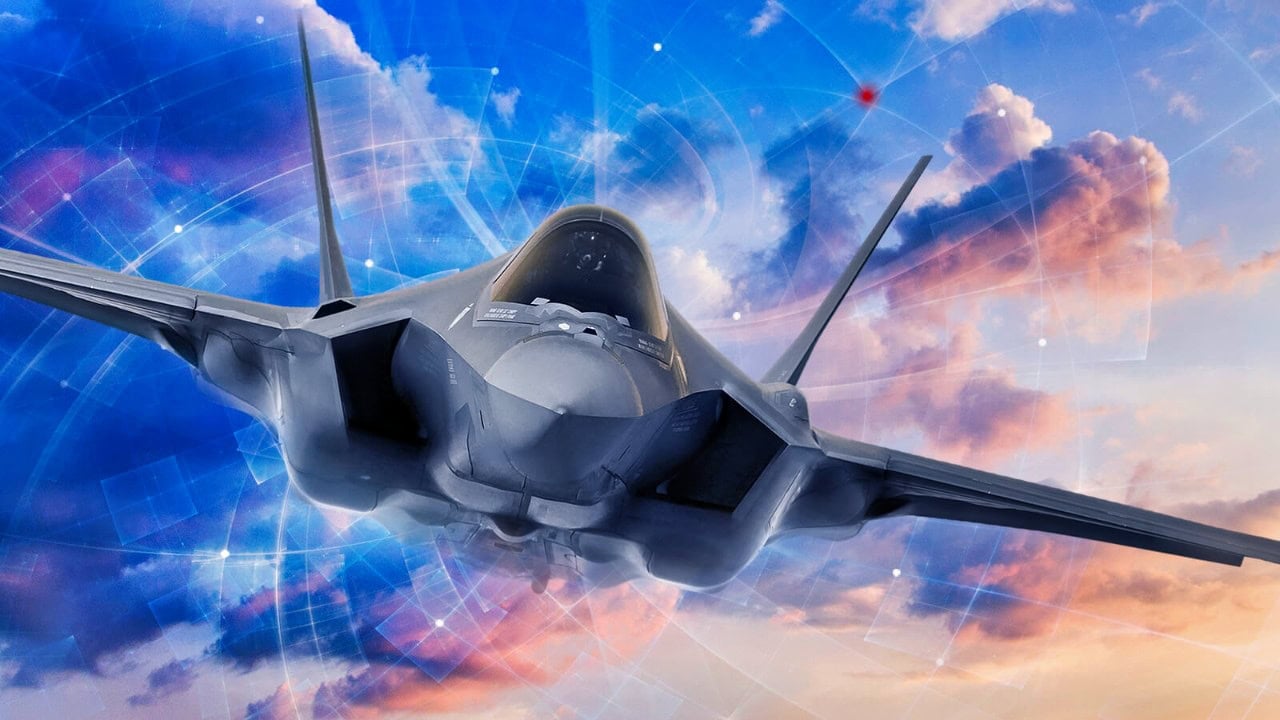
The F-35 Lightning II has been one of the most effective weapons in the war over Iran — no aircraft shot down, relentless strike operations, and electronic warfare that blinds the enemy. It also costs $2 trillion, can’t fly as far as the jet it’s supposed to replace.
The F-35 Debate Rages
The F-35 Lightning II is one of the best fighter jets in the world. It has shown its worth during Operation Epic Fury against Iran with a high operational tempo and sortie rate, electronic warfare that can blind the enemy, and deep-range surface strikes.
Israel’s F-35I Adir is even better with high-performance modifications that can punish the enemy without mercy.
But it hasn’t always been smooth sailing for the F-35. The first issue was the program’s high cost. Then there are problems with range and combat radius. The cockpit pressure system has acted up. Night vision cameras have not been perfect.
And the AESA radar needed a greater range and improved sight capability alongside the airplane.
The Sticker Shock Is Frightening
In 2024, the U.S. Government Accountability Office (GAO) examined the entire F-35 program and concluded that its life-cycle cost would exceed $2 trillion. The Department of Defense announced it was also pursuing a $16.5 billion modernization project.
“This effort is needed to provide the F-35 with additional power and prevent systems, such as the radar, from overheating. But as these efforts were taking off, we reported concerns that the military hadn’t fully defined the power and cooling requirements that the engine and related systems will need to support future capabilities. In addition, DOD had not assessed the costs or some of the technical risks associated with these new engine efforts. These are just two examples of modernization delays that have led to increased costs for the F-35,” GAO reported.
Costs for sustaining the program went from $1.1 trillion in 2018 to $1.58 trillion five years later (a 44% increase), GAO revealed. This is just unprecedented for an airplane program.
Range and Combat Radius Are Not the Best
Range has also been less than desired. The F-35 has a combat radius of around 670 nautical miles.
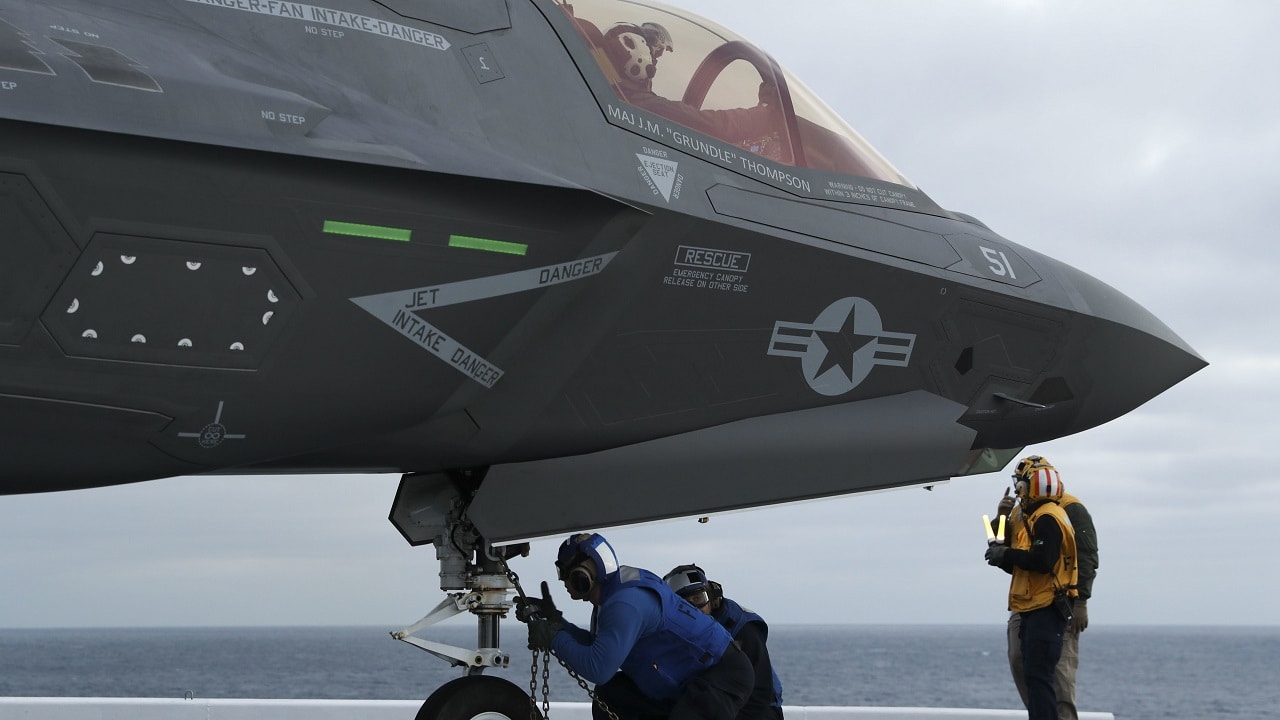
220119-N-CM110-2023 PACIFIC OCEAN (Jan. 19, 2022) — Sailors chain down an F-35B Lightning II attached to Marine Operational Test and Evaluation Squadron (VMX) 1 on the flight deck aboard amphibious assault ship USS Tripoli (LHA 7), Jan. 19. Tripoli is underway conducting routine operations in U.S. 3rd Fleet. (U.S. Navy photo by Mass Communication Specialist 3rd Class Maci Sternod)
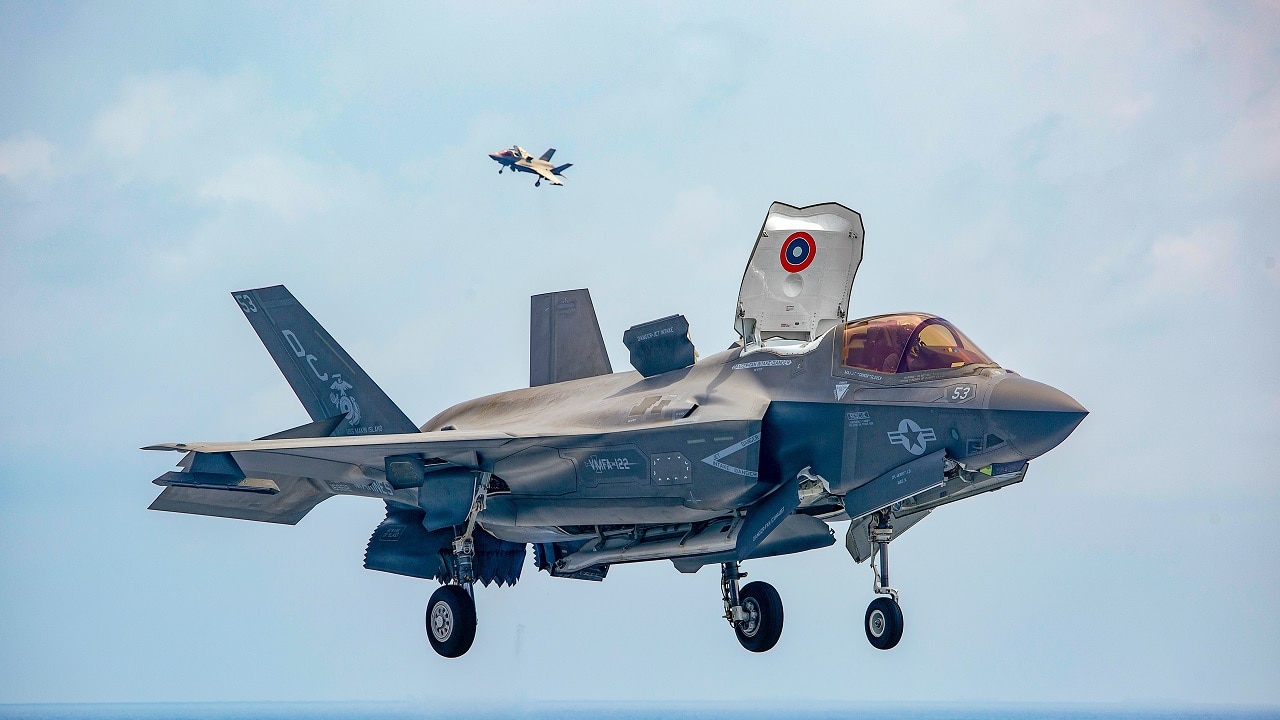
(April 8, 2021) U.S. Marine Corps F-35B Lightning IIs assigned to Marine Medium Tiltrotor Squadron 164 (Reinforced), 15th Marine Expeditionary Unit, land on the flight deck of the amphibious assault ship USS Makin Island (LHD 8). The Makin Island Amphibious Ready Group and embarked 15th MEU are operating in the U.S. 7th Fleet area of operations to enhance interoperability with allies and partners and serve as a ready response force to defend peace and stability in the Indo-Pacific region. (U.S. Marine Corps photo by Cpl. Patrick Crosley)
By comparison, the new F-47 NGAD is meant to have a range of over 1,000 nautical miles to help solve this problem. The F-35’s range is also shorter than the new F-15EX. For true combat effectiveness at all times, the F-35 would need a combat radius of 1,000 nautical miles, like the proposed F-47. This shortfall means it must often be refueled in the air.
These limitations are likely due to shortcomings in the F-35’s Pratt & Whitney F135 engine, which has been plagued by overheating, leading to costly maintenance periods to fix the “under-spec” powerplant. Overall, readiness has been negatively affected.
The engine has a “significant power and thermal management system requirement, and we evaluated numerous options of power and thermal management systems to get us to various levels of cooling and power that is required,” according to Air Force Lt. Gen. Michael Schmidt, then head of the F-35 Joint Program Office.
Cockpit Pressure Problems Were Painful
Pilots have also struggled at times with the cockpit pressure regulation system. This has caused ear and sinus pain for some aviators. This first started in 2014. The F-35 program did not believe this problem was widespread, but it was concerned that some pilots would experience problems during flights that could make it difficult to control the airplane.
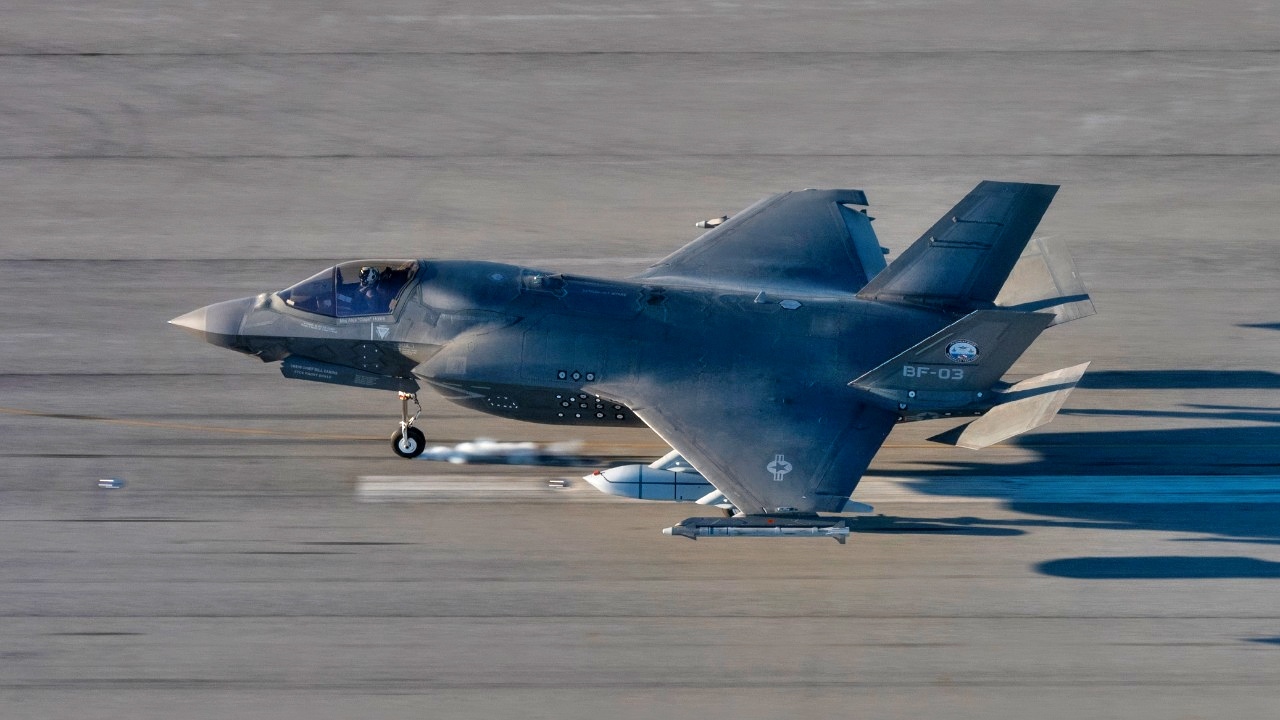
NAS PATUXENT RIVER, Md. — An F-35 Lightning II test pilot conducts the first flight test to certify the F-35B short takeoff and vertical landing variant of the fighter aircraft for carrying the AGM-158C Long-Range Anti-Ship Missile (LRASM). As part of ongoing weapon integration efforts, the Pax River F-35 Integrated Test Force (Pax ITF) team for the first time flew test flights Jan. 14 with two AGM-158 loaded on external stations. LRASM is a defined near-term solution for the Offensive Anti-Surface Warfare (OASuW) air-launch capability gap that will provide flexible, long-range, advanced, anti-surface capability against high-threat maritime targets. The Pax River ITF’s mission is to effectively plan, coordinate, and conduct safe, secure, and efficient flight test for F-35B and C variants, and provide necessary and timely data to support program verification / certification and fleet operational requirements.
“[The] pain has been described as excruciating, causing loss of in-flight situational awareness, with effects lasting for months,” according to Defense News. Pressure spikes in the cockpit regulation system have caused this.
“The F-35 Joint Program Office thought ‘sensors on the outer mold line of the aircraft are detecting rapidly changing static pressures’ that, in turn, drive very quick changes of the cockpit pressure regulator valve,” Defense News reported.
This has since been fixed, but it was considered a downside to flying the fighter jet for years.
Pilots Could Not Detect a Horizontal Line in Flight
One older problem with the F-35 arose in 2019 during night and low-illumination flights. The horizon line was becoming obstructed. This had to do with the feed from the night vision camera. Pilots using their helmet-mounted displays could not obtain a reliable horizon image, which, again, affected situational awareness and the safe operation of the F-35.
This issue was especially problematic for the F-35C during night carrier landings. This was considered a “Category One” issue for the Navy. The service branch fixed this by providing a new helmet, but the issue was deemed dangerous for aviators.
AESA Radar Needed Better Side Views
Another technical drawback of the F-35, according to the Navy, was the poor performance in the AN/APG-81 active electronically scanned array (AESA) radar. The AN/APG-81 was only giving aviators an image oriented toward the front of the airplane, not the sides. This “snow plow” mode was considered problematic.
The Navy wanted the radar to “see” better on the sides of the F-35. This would give pilots a better search area.
This will be fixed in the future Block Four upgrades. But not before the Navy worried about the airplane’s combat effectiveness, which had pressure problems, issues with the pilot-mounted displays, and limited range.
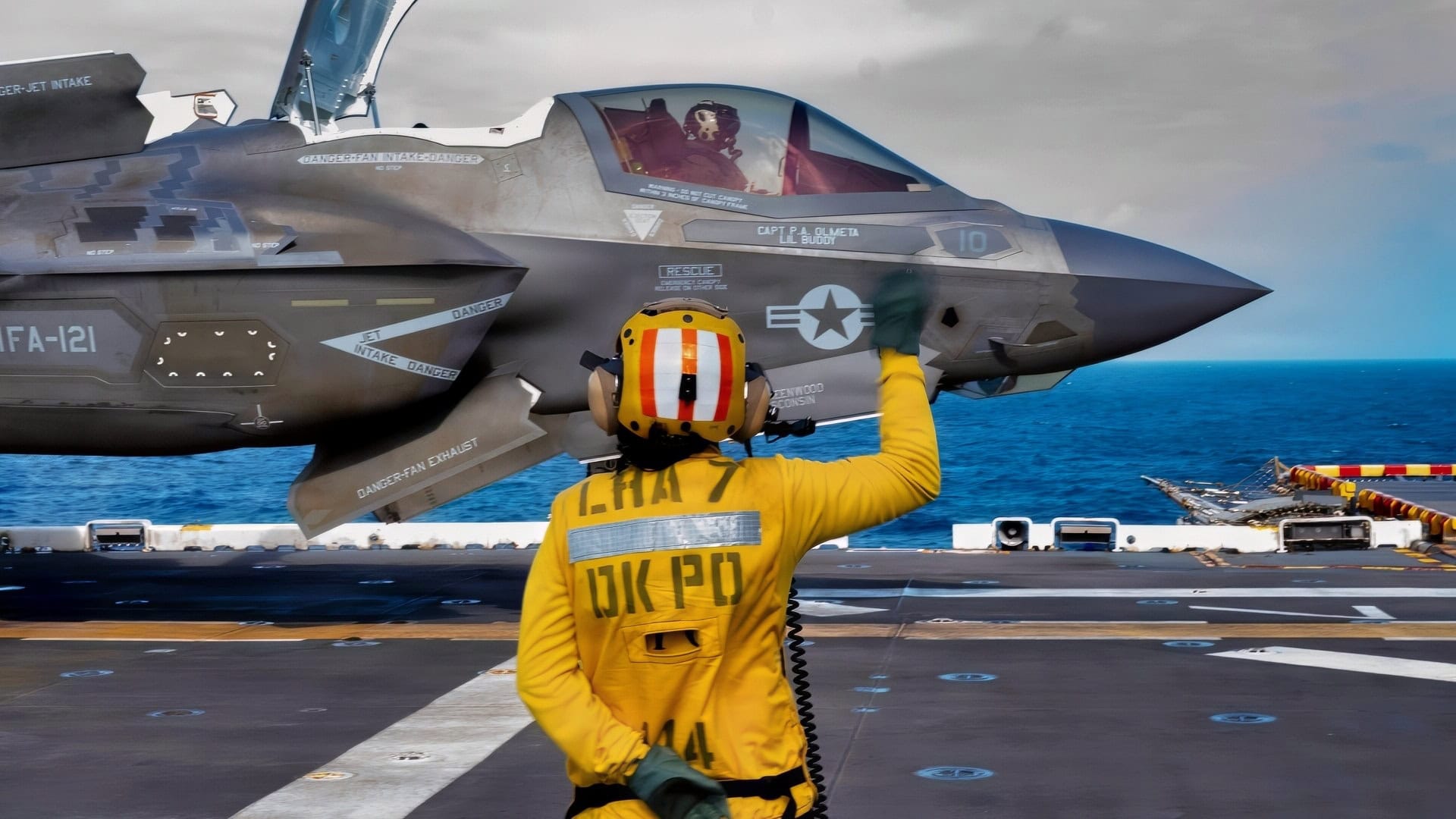
Aviation Boatswain’s Mate (Aircraft Handling) 3rd Class Anika Ramos directs the launch of an F-35B Lighting II, attached to Marine Fighter Attack Squadron 242 during flight operations on the flight deck of the America-class amphibious assault ship USS Tripoli (LHA 7) in the South China Sea, Dec. 11, 2025.
One thing that has helped the F-35 program is pilot feedback. The program office listened and made fixes.
However, the issues were troublesome, and the repairs added to the overall expense. The biggest problems are the $2 trillion life-cycle cost and inadequate range. This can’t be alleviated.
But look on the bright side. The F-35 has performed well in the war against Iran.
No airplanes have been shot down. They have eliminated many ground targets, and with improvements over the years, the Lightning II has become a highly effective aircraft.
Let’s give it a chance to serve in more conflicts alongside partner nations around the world and fight it out with potential adversaries when it’s time to answer the call.
About the Author: Dr. Brent M. Eastwood
Author of now over 3,500 articles on defense issues, Brent M. Eastwood, PhD, is the author of Don’t Turn Your Back On the World: A Conservative Foreign Policy and Humans, Machines, and Data: Future Trends in Warfare, plus two other books. Brent was the founder and CEO of a tech firm that predicted world events using artificial intelligence. He served as a legislative fellow for U.S. Senator Tim Scott and advised the senator on defense and foreign policy issues. He has taught at American University, George Washington University, and George Mason University. Brent is a former U.S. Army Infantry officer. He can be followed on X @BMEastwood.