
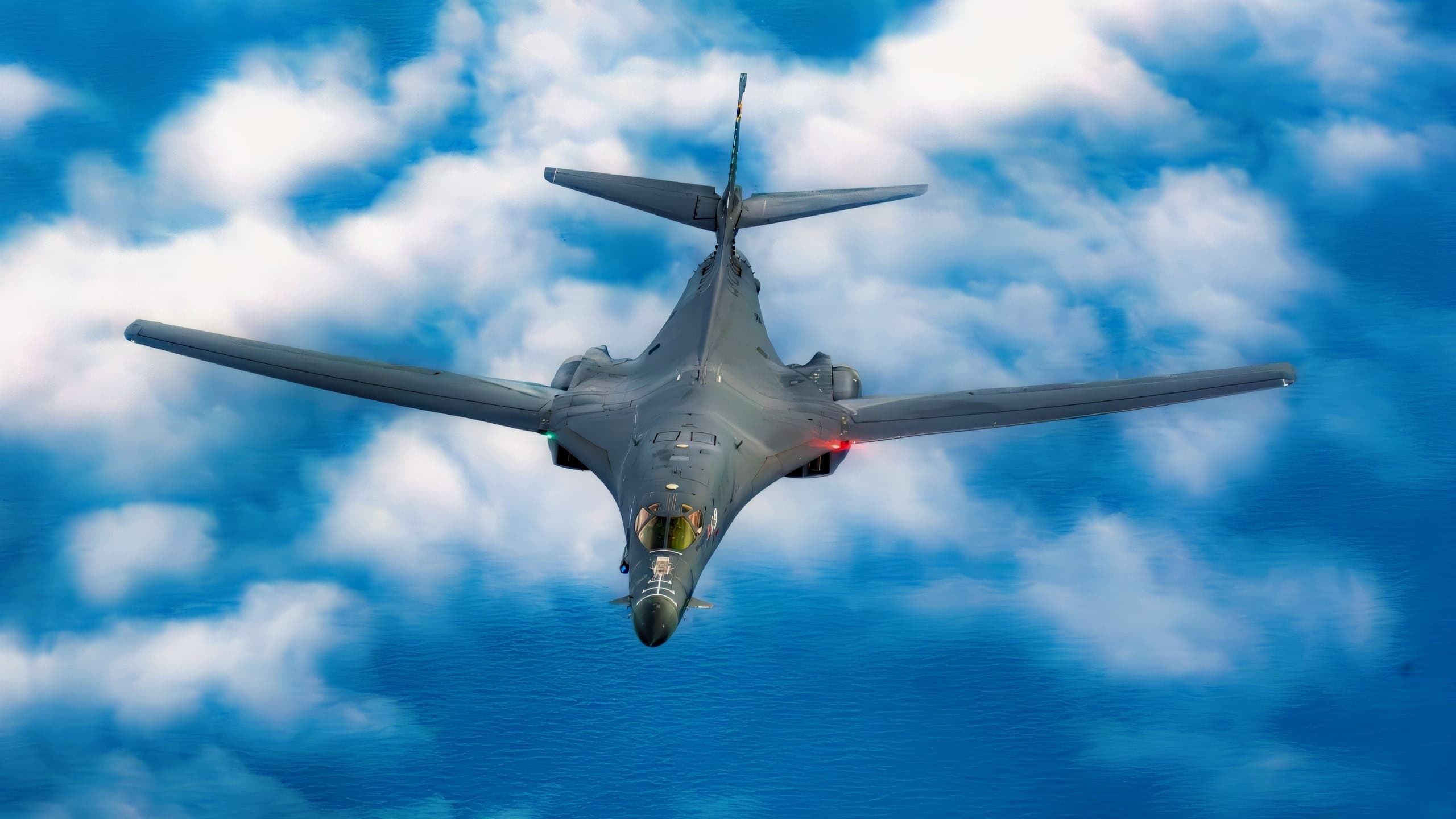
Strategic bombers have proven to be an invaluable component of the U.S. Air Force’s campaign during the now paused Operation Epic Fury. All three of the USAF’s long-range bombers have taken part in strike missions, often flying for thousands of miles to deliver their munitions. The B-1B Lancer has also had several missions against Iran in the last month. Despite this Cold War-era bomber being slated for retirement, the B-1B remains a crucial part of the fleet and fills an important niche within the Air Force.
This begs the question of whether the decision to retire the aircraft is premature.
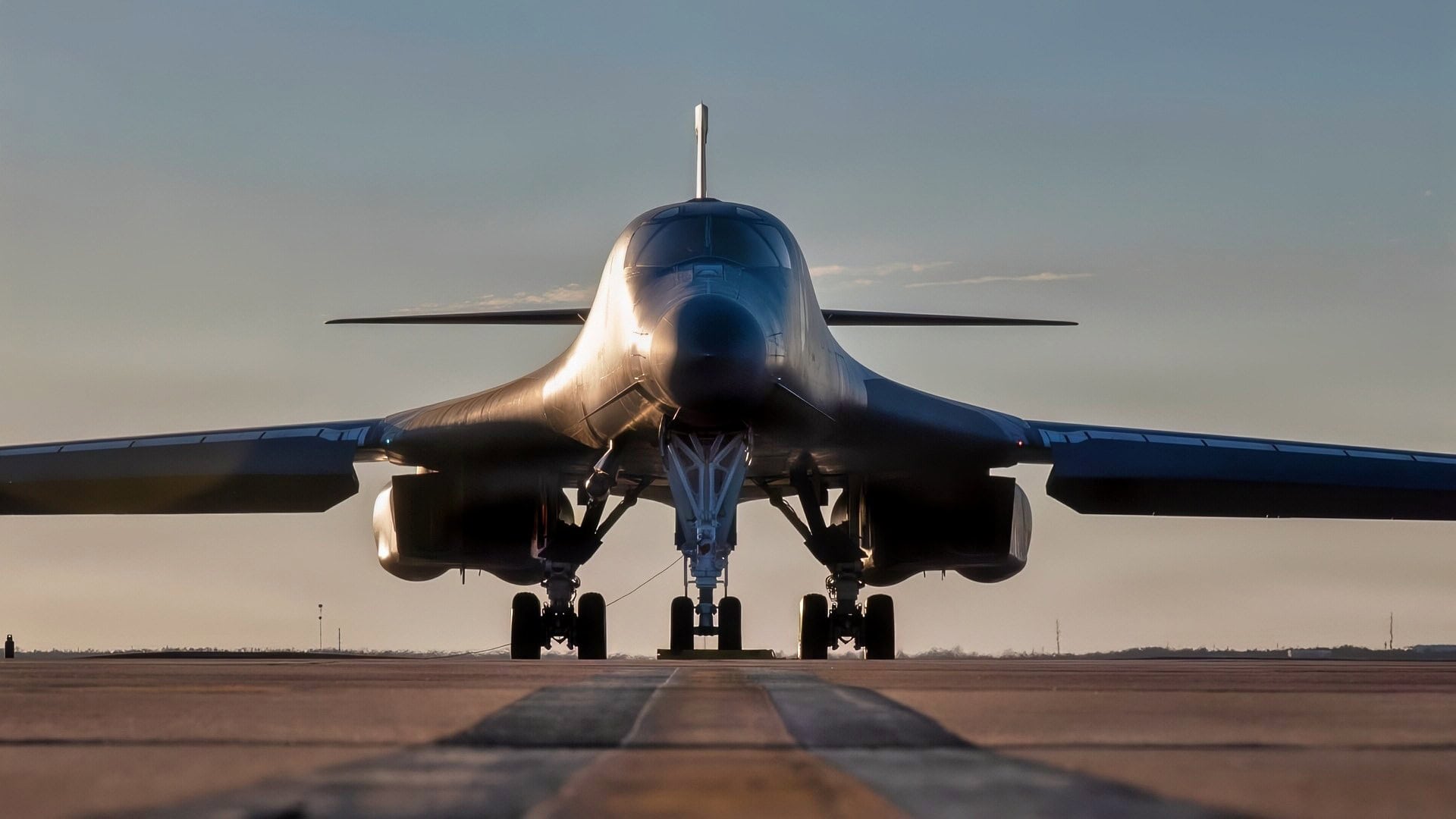
A U.S. Air Force B-1B Lancer aircraft assigned to the 7th Bomb Wing is parked on the flightline at Dyess Air Force Base, Texas, Dec. 25, 2025. U.S. military forces are deployed to the Caribbean in support of the U.S. Southern Command mission, Department of War-directed operations, and the president’s priorities to disrupt illicit drug trafficking and protect the homeland. (U.S. Air Force photo)
Has Operation Epic Fury proven that there is still an important need for the B-1B, or should the Air Force go ahead with its current retirement plans as more B-21 Raiders come online?
The B-1B Lancer Was Slated for Retirement — Then It Delivered More Conventional Firepower Over Iran Than Any Other Bomber in the Fleet and the Air Force Has a Problem
The B-1B was used most intensely during the first week of Operation Epic Fury after initial strikes had destroyed valuable air defense installations.
These strikes marked a dramatic escalation in the conflict, and the sequencing of forces employed offered a clear picture of current U.S. bomber doctrine.
Initial attacks relied heavily on stealth aircraft and standoff weapons to degrade Iranian integrated air defenses.
Only after those defenses were judged sufficiently disrupted were B-1Bs committed to the campaign.
The USAF is well aware of the aircraft’s strengths and weaknesses. The B-1B is not a stealth platform, but once air superiority has been obtained, it can unleash devastation that no other bomber can.
During these operations, B-1Bs conducted long-range strikes against ballistic missile facilities, command-and-control nodes, and missile production infrastructure.
Flying either directly from the United States or from forward bases such as RAF Fairford, the bombers carried large mixed payloads of standoff cruise missiles and precision bunker-busters.
The scale of destruction achieved in a limited number of sorties showcase front-and-center why the aircraft remains so valuable.
While stealth bombers are optimized for penetration and survivability, they cannot match the B-1B’s sheer volume of conventional ordnance.
In this campaign, stealth opened the door, but the B-1B delivered the weight of effort that followed.
The Strengths and Weaknesses of Old Bone
Since the first weeks of the conflict, missions unitizing the B-1B have decreased. While the B-52 has continued to launch standoff munitions and the B-2 Spirit has flown more stealth missions, reported usage of the B-1B has decreased.
Either the aircraft’s missions are no longer being reported, or the Air Force has opted to rely on B-52s for delivering standoff munitions. The most recent mention of the B-1B was on March 15th when CENTCOM published footage of the bomber participating in combat operations. As per usual with official accounts, no details were given as to when the footage was recorded.
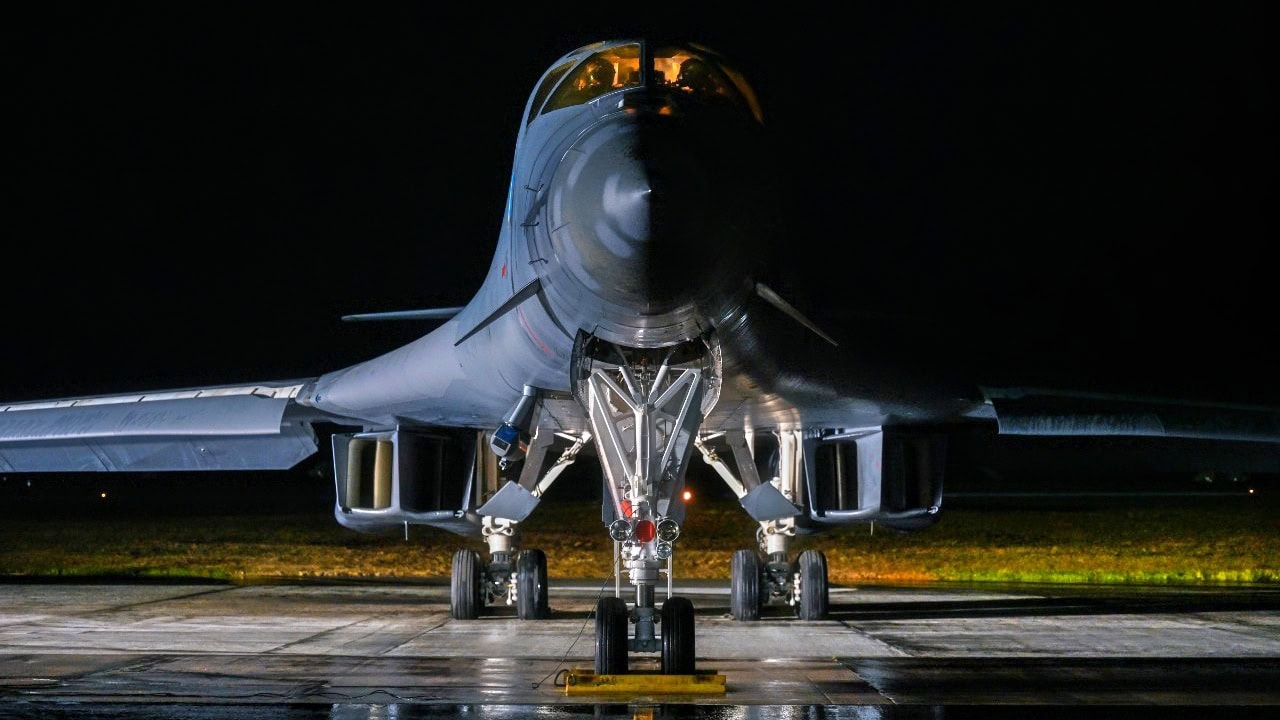
A U.S. Air Force B-1B Lancer assigned to the 34th Expeditionary Bomb Squadron, prepares to taxi onto the runway at Andersen Air Force Base, Guam, prior to a mission in support of Bomber Task Force 25-1, Feb. 27, 2025. Bomber missions demonstrate the credibility of U.S. Air Forces to address a complex and uncertain security environment. (U.S. Air Force photo by Airman 1st Class Alec Carlberg)
Despite claims of complete air superiority, the U.S. has lost multiple aircraft over the skies of Iran. This forces strategic aircraft to operate from standoff distances, relying on long-range JASSMs and other cruise missiles.
There is nothing wrong with this approach; in fact, it works quite well. The problem starts when the stockpiles of high-cost long-range missiles run dry. Then stealth bombers like the B-2 and B-21 start to show their superiority.
The B-1B retains the highest overall payload capacity, but against any enemy with semi-functional air defenses, it cannot fully unleash its destructive potential. As a stand-off missile carrier, however, Lancer is well-suited for long-range missile strikes.
Does the B-1B Lancer Bomber Need to Stay a Bit Longer?
Returning to the question posed earlier, does the combat operation prove that the B-1B needs to stay?
In my opinion, yes and no. In Operation Epic Fury, the Lancer has shown its value as a long-range missile carrier.
With its high payload capacity and long range, the bomber is perfectly capable of delivering highly lethal precision strikes.
Despite its history, the bomber remains a vital component of the Air Force’s deterrence strategy, even after its nuclear role was removed.
Its combat missions have proven that the B-1B is still perfectly relevant in modern combat, as Russia’s use of its own supersonic bombers was proof enough.
On the flip side, stealth bombers have proven indispensable for penetrating enemy air defenses.
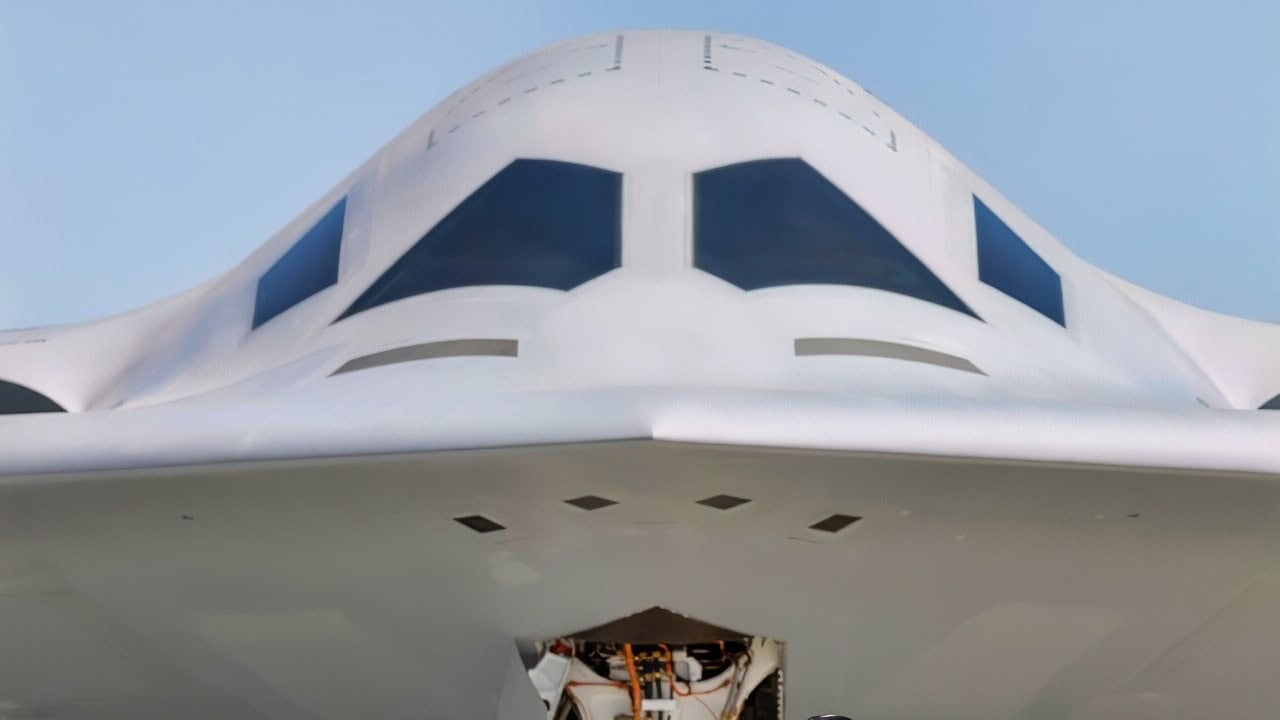
U.S. Air Force Airmen with the 912th Aircraft Maintenance Squadron prepare to recover the second B-21 Raider to arrive for test and evaluation at Edwards AFB, Calif., Sept. 11, 2025. The arrival of a second test aircraft provides maintainers with valuable hands-on experience with tools, data, and processes that will support future operational squadrons. (U.S Air Force photo by Kyle Brasier)
At the start of the war, when Iranian air defenses were at their best, the B-2 was able to penetrate into Iran’s airspace and deliver precision strikes on valuable targets and return to base unharmed.
This provides a lot of ammunition for the pro-retirement crowd, who argue that stealth platforms are ultimately more valuable as a long-term investment.
The B-1B will eventually need to be retired. Given the current rate of B-21 production, it makes more sense to retire the B-1B once a large number of new bombers have been produced. And that might give us a lot more time with the B-1B.
About the Author: Isaac Seitz
Isaac Seitz, a Defense Columnist, graduated from Patrick Henry College’s Strategic Intelligence and National Security program. He has also studied Russian at Middlebury Language Schools and has worked as an intelligence Analyst in the private sector.