

The U.S. Plans to Build 100 B-21 Raiders — The Air Force’s Own Commanders Say That’s Not Enough for Today’s Threat Environment
With Operation Epic Fury still in full swing, the U.S. Air Force is learning a number of harsh lessons about the difficulty of seizing air superiority against an adversary with even moderate air defenses. As a result, American aviation has been forced to operate from standoff distances and use highly expensive long-range munitions. The B-2, on the other hand, has been fulfilling strike missions since the beginning of the war.
This highlights the importance of the upcoming B-21 Raider, which promises to provide even greater stealth characteristics than previous aircraft. Currently, the U.S. intends to acquire 100 B-21 bombers to replace older B-1B and B-2 Aircraft.
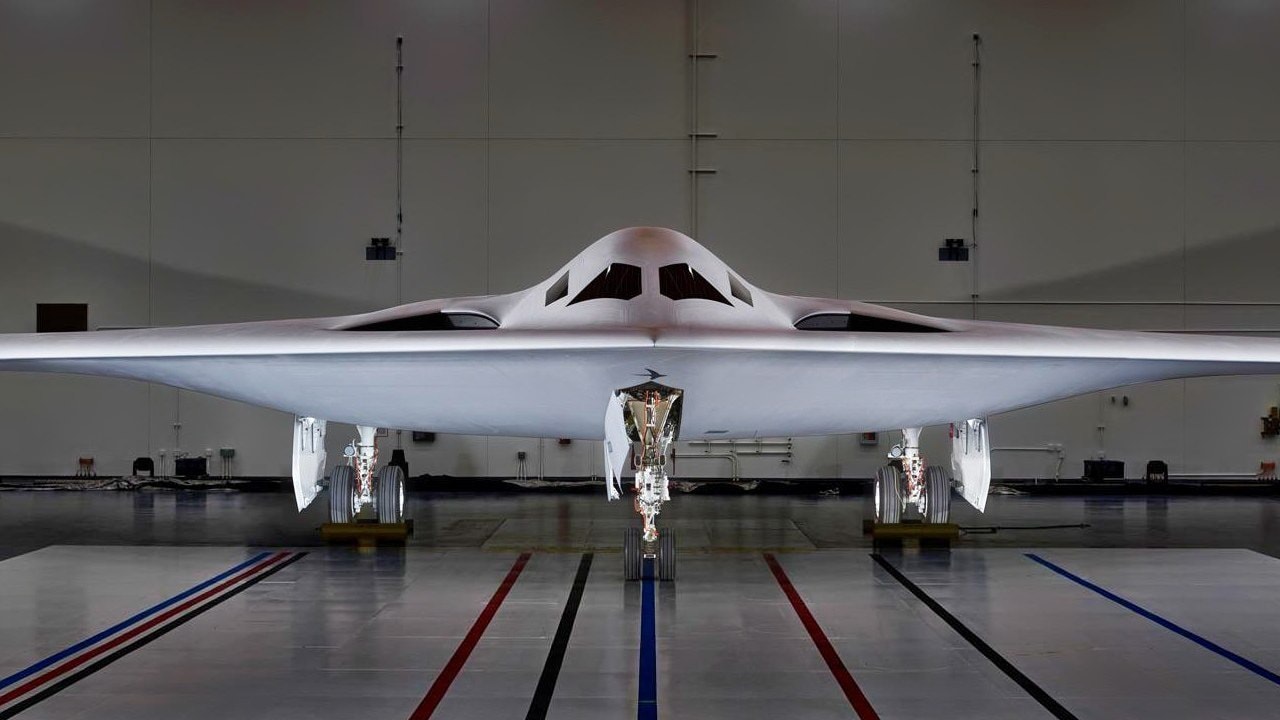
B-21 Raider Bomber U.S. Air Force.
Given the lessons being learned in Iran, is 100 bombers still enough, or should the U.S. consider acquiring more?
Iran and the Importance of Stealth Platforms
The vast majority of air strikes against Iranian territory have been conducted using standoff munitions dropped by B-52 and B-1B bombers from standoff distances.
However, as stocks of long-range JASSMs run low, the Air Force is forced to use shorter-ranged munitions launched from strike fighters like the F-15E and the F-35A.
Contrary to reports from some American and Israeli officials, air superiority has not exactly been established over Iran. At least not in a perfect sense.
Several aircraft have been destroyed or damaged over Iranian airspace, most notably an F-15E, which resulted in an intense search for its weapons officer and led to the destruction of several more air assets.
While its air defenses have been significantly degraded, Iran has proved to be capable of adapting and laying ambushes for American aircraft. Unless the U.S. also adapts, more air casualties can be expected as this conflict continues.

B-21 Raider Stealth Bomber. Image Credit: Industry Handout.
The B-2 Spirit, on the other hand, has conducted multiple missions over Iranian airspace and conducted precision strikes.
Its stealth characteristics make it much more difficult for IR-guided missiles to track, as was the case with the damaged F-35.
B-2s conducted numerous strikes against Iran during the first days of the war; however, reports on B-2 activity decreased sharply since March 6th.
This is likely due to the sensitive nature of B-2 strike missions or to decreased missions due to high flight costs and the risks associated with penetrating Iranian airspace.
Regardless, the B-2 is so far one of the few platforms that can constantly penetrate enemy airspace and leave unmolested.
The same can no longer be said about the F-35.
The B-21: The Final Say in Air Superiority
The B-21 was built with all the lessons learned from the B-2 project.
While its flying-wing configuration is reminiscent of the B-2, its stealth is believed to be more resilient across a wider range of frequencies than it is optimized primarily against Cold War–era radars.
The aircraft also incorporates an open-systems architecture that allows rapid upgrades to sensors, mission software, and weapons without requiring major redesigns.
This digital backbone makes the Raider as much a node in a broader family of systems as it is a standalone bomber, enabling it to fuse data from multiple sources and dynamically retask strikes while airborne.
In future conflicts, the B-21 is expected not only to deliver weapons but also to act as a battle manager, coordinating joint fires and passing targeting information across domains.
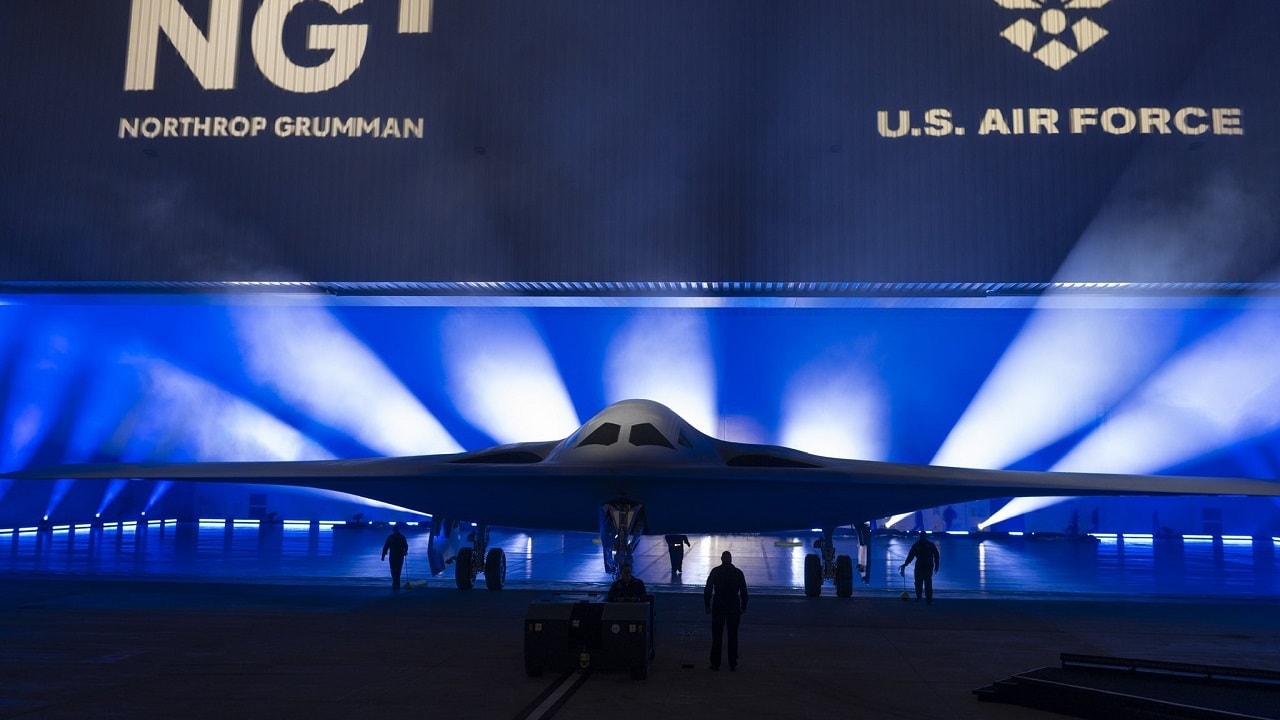
B-21 Raider. Image Credit: U.S. Air Force.
No bomber force ever operates at full strength. Aircraft are continuously rotated through maintenance, training, testing, and depot-level overhaul.
Others are assigned to reserve or attrition pools. Historically, only about half to two-thirds of a bomber fleet can be considered mission-ready at any given moment.
For a force capped at 100 B-21s, that translates into perhaps 50 to 60 aircraft ready for combat worldwide, and substantially fewer available in a single theater during a crisis. In a scenario of simultaneous pressure in Europe and the Indo-Pacific, that margin erodes rapidly.
Does the U.S. Need More B-21s?
This problem is compounded by the return of conventional wars of attrition. U.S. military planning during the Cold War assumed that nuclear war would be brief, whereas modern great-power competition suggests the opposite.
Current high-intensity conflicts have instead been characterized by long campaigns, sustained attrition, and the gradual exhaustion of forces rather than a rapid resolution. In that context, numbers matter as much as individual platform quality.
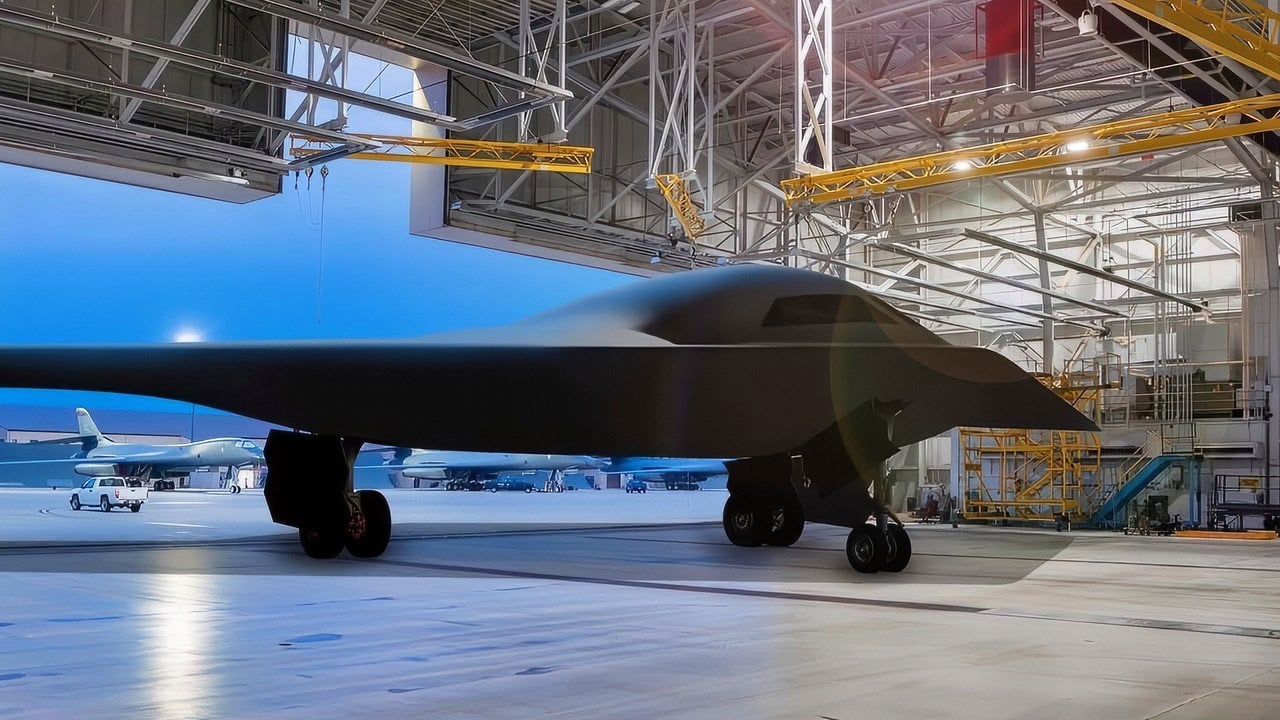
Artist rendering of a B-21 Raider in a hangar at Ellsworth Air Force Base, South Dakota, one of the future bases to host the new airframe. AFCEC is leading a $1 billion construction effort at Ellsworth to deliver sustainable infrastructure to meet warfighter demands for bomber airpower. (U.S. Air Force graphic)
A bomber that cannot be easily replaced imposes caution even before combat begins and limits the platform’s versatility. One of the explicit goals of the B-21 program was to avoid repeating the scarcity of the B-2 program. A force of 100 is a step in the right direction, but it does not fully eliminate the problem.
The military itself has acknowledged that 100 B-21’s may not be enough for today’s threat environment. U.S. Strategic Command and Air Force Global Strike Command have both stated that the 100-aircraft target reflects outdated threat assumptions and may no longer be sufficient for credible deterrence.
Figures around 145 B-21s have been publicly discussed as a more realistic baseline, particularly when combined with approximately 75 modernized B-52Js (although the B-52J program has come under scrutiny recently) to create a bomber force capable of sustained global presence and surge operations.
Importantly, some leaders have gone further, suggesting that even 145 may prove insufficient as the geopolitical landscape continues to change.
Industrial and economic considerations are usually arguments against large-scale ambitious projects; the B-21 is actually in a unique position.
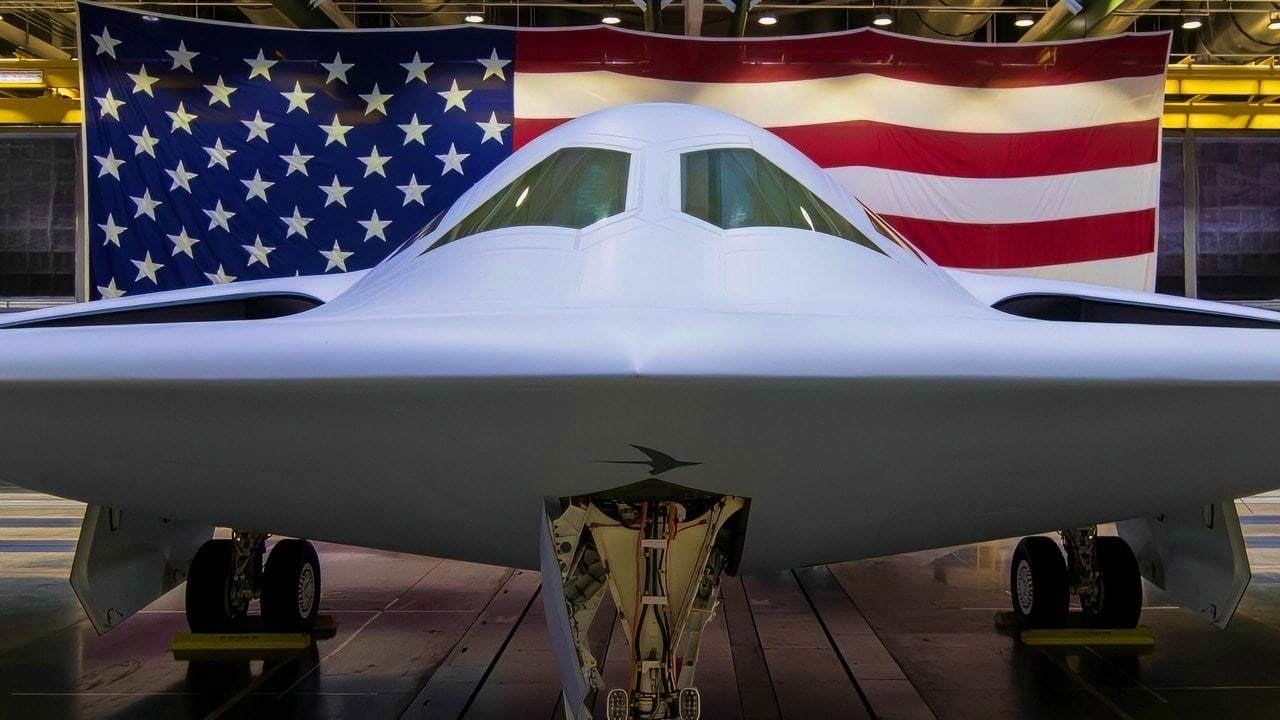
The B-21 Raider was unveiled to the public at a ceremony on December 2, 2022, in Palmdale, Calif. Designed to operate in tomorrow’s high-end threat environment, the B-21 will play a critical role in ensuring America’s enduring airpower capability. (U.S. Air Force photo)
Unlike the B-2, the B-21 program has remained on schedule and, unusually for a major defense acquisition effort, has come in below early cost projections.
The production infrastructure has already been expanded, and annual output can increase without significant financial sacrifice.
In other words, the barriers that made B-2 production unrealistic do not exist for the B-21.
Today, the decision to stop at 100 aircraft is a strategic rather than a technical necessity (admittedly, this does not diminish the high per-aircraft costs).
MORE – Saudi Arabia Might Already Have a Strait of Hormuz Fix Up and Working
About the Author: Isaac Seitz
Isaac Seitz, a Defense Columnist, graduated from Patrick Henry College’s Strategic Intelligence and National Security program. He has also studied Russian at Middlebury Language Schools and has worked as an intelligence Analyst in the private sector.