
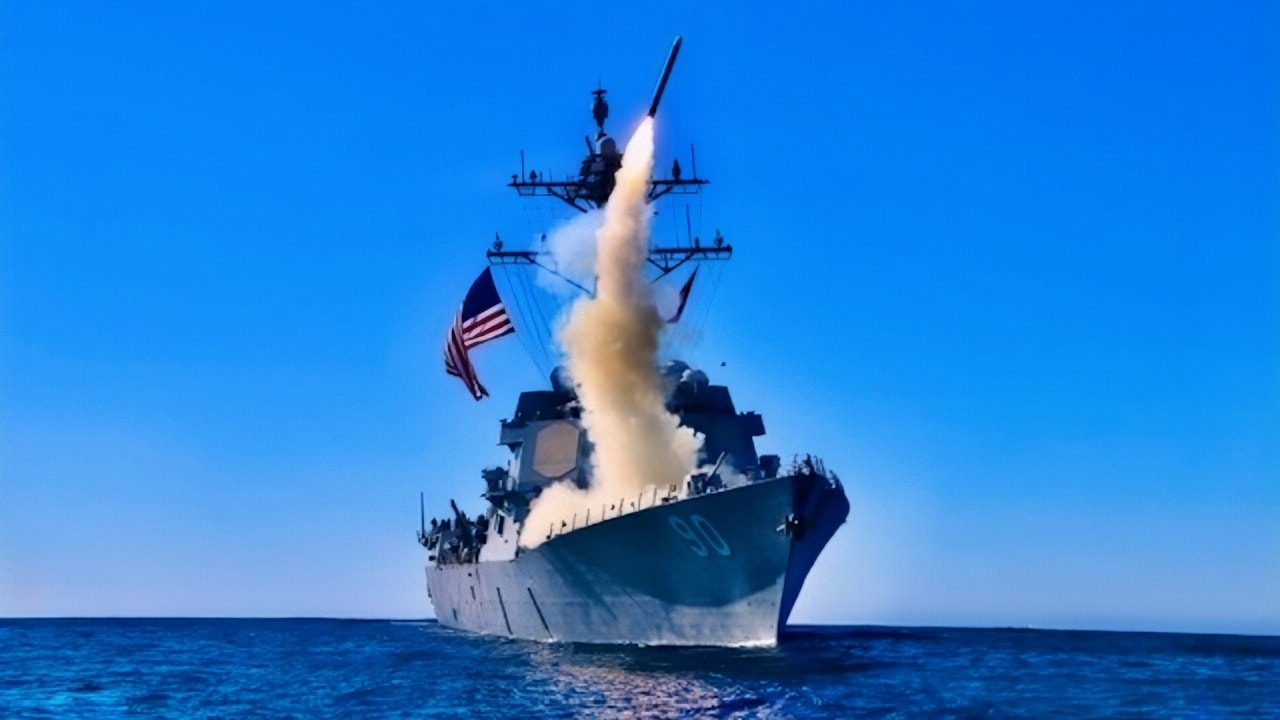
Iran Rejected the 45-Day Ceasefire — ‘We Only Accept an End to the War With Guarantees We Won’t Be Attacked Again’
On the most unlikely Easter Sunday social media post in history, President Donald Trump threatened to destroy bridges and power plants in Iran, should that country not reopen the Strait of Hormuz by the deadline of Tuesday night. This came near the end of the president’s previously announced 10-day deadline, although Trump gave Iran an extra day.
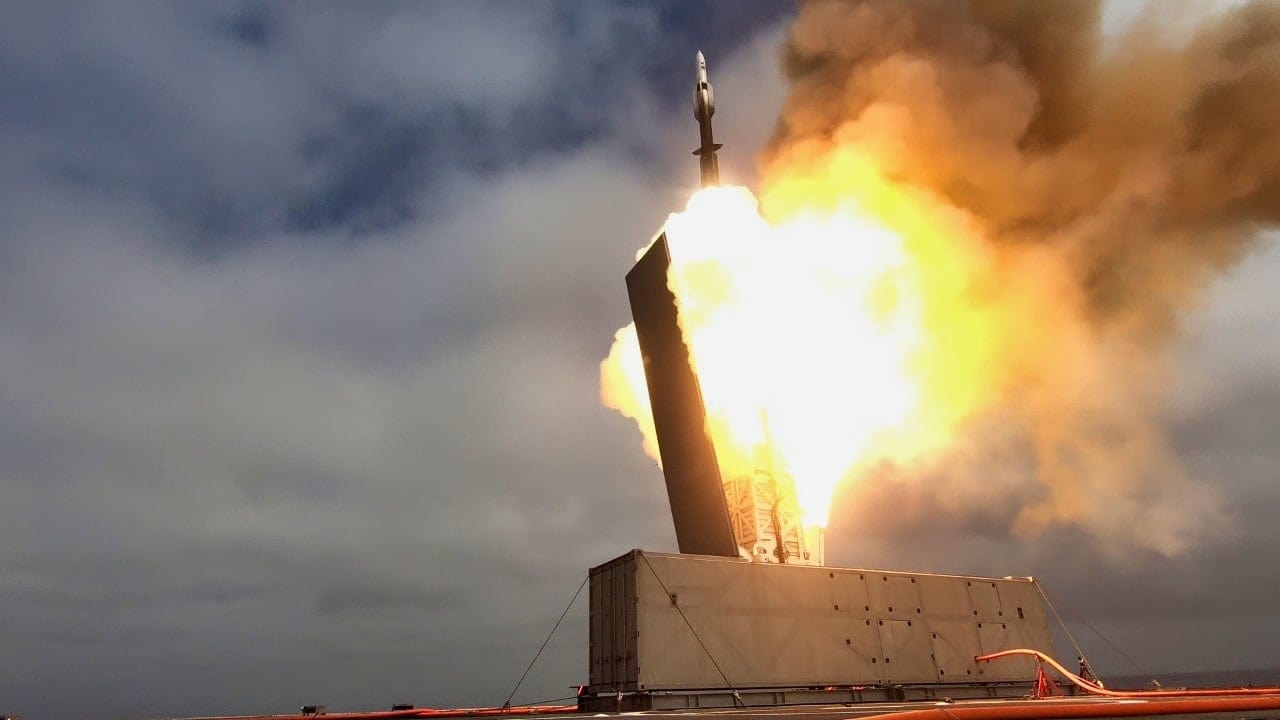
USS Savannah (LCS 28) conducts a live-fire demonstration in the Eastern Pacific Ocean utilizing a containerized launching system that fired an SM-6 missile from the ship at a designated target. The exercise demonstrated the modularity and lethality of Littoral Combat Ships and the ability to successfully integrate a containerized weapons system to engage a surface target. The exercise will inform continued testing, evaluation and integration of containerized weapons systems on afloat platforms.
The president, in a possible nod to his friend Mike Tyson, ended the post with “Praise be to Allah.”
After Trump, in an address last week, declared that he was prepared to end the war soon, even if it left the crucial checkpoint closed, the Sunday statement had Trump seeming to threaten to escalate the war further if Iran refused to capitulate in the short term.
There’s also a possibility that the sides could agree to a temporary cease-fire that doesn’t end the war altogether, although it appears one side has rejected that framework.
A 45-Day Pause?
Axios reported Sunday that the U.S. and Iran, along with regional mediators, are “discussing the terms for a potential 45-day ceasefire,” which could ultimately pave the way for the end of the war.
The sources for the Axios story, however, acknowledged that the chances of such a deal being reached in the next 48 hours are “slim.” Indeed, a few hours later, the Jerusalem Post reported that the Iranian side had rejected the idea of a temporary ceasefire, citing the Iranian state news agency IRNA. That report from Iran, meanwhile, stated that Iran was pushing for a full end to the fighting.
“The gaps are very significant,” a source familiar with the talks told the Jerusalem Post.
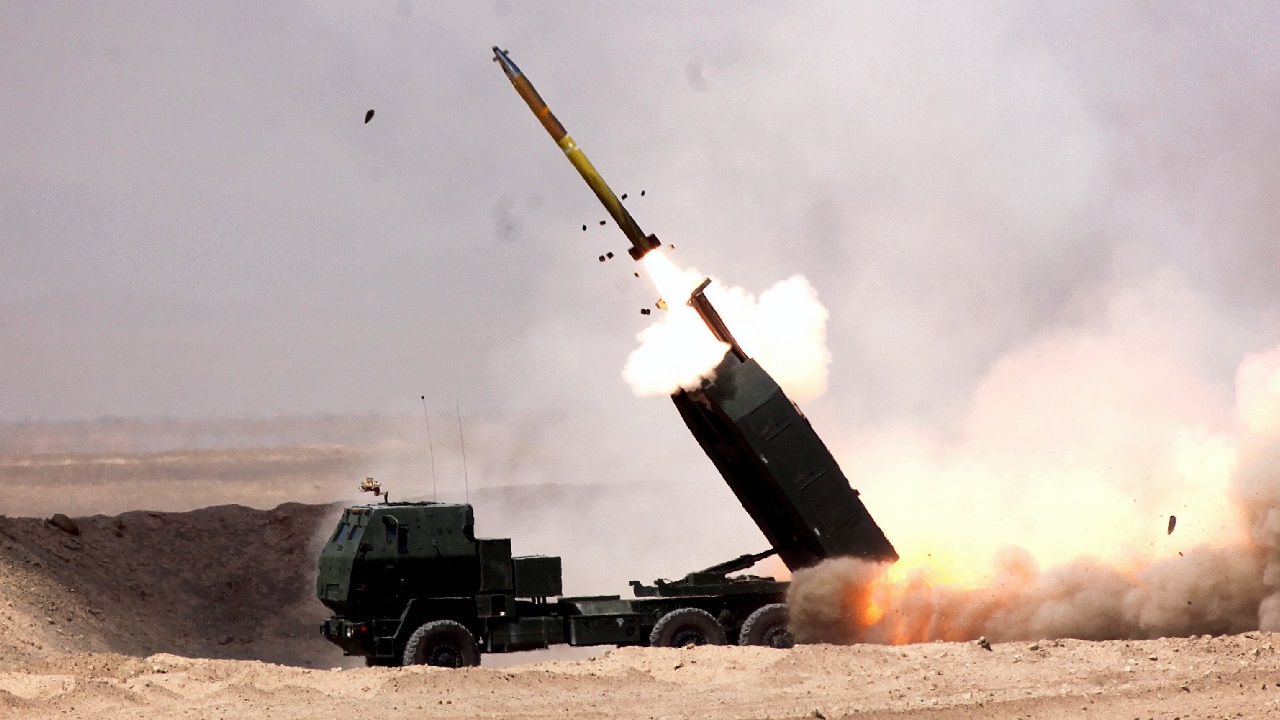
Marines with Romeo Battery, 5th Battalion, 11th Marine Regiment, Regimental Combat Team 7, fire rockets from a M142 High Mobility Artillery Rocket System (HIMARS) on Camp Leatherneck, Helmand province, Afghanistan, June 1, 2013. Marines with 5/11 are deployed to Afghanistan in support of Operation Enduring Freedom.
(U.S. Marine Corps photo by Sgt. Anthony L. Ortiz / Released)
The Axios story also quoted Trump directly: “There is a good chance, but if they don’t make a deal, I am blowing up everything over there,” in reference to Iran. Axios noted that an act of purposely destroying civilian infrastructure could be considered a war crime.
Who’s in the Talks
Who is part of the negotiations? According to the Axios report, the talks include Pakistani, Egyptian, and Turkish mediators, while text messages have been exchanged between Trump’s Middle East envoy Steve Witkoff and Iran’s Foreign Minister Abbas Araghchi.
The sides have been exchanging proposals, including a 45-day ceasefire.
On Monday, Reuters reported that both sides of the talks had “received” the proposal for an immediate ceasefire.
That report listed Pakistan’s Field Marshal Asim Munir as the key contact between the two sides.
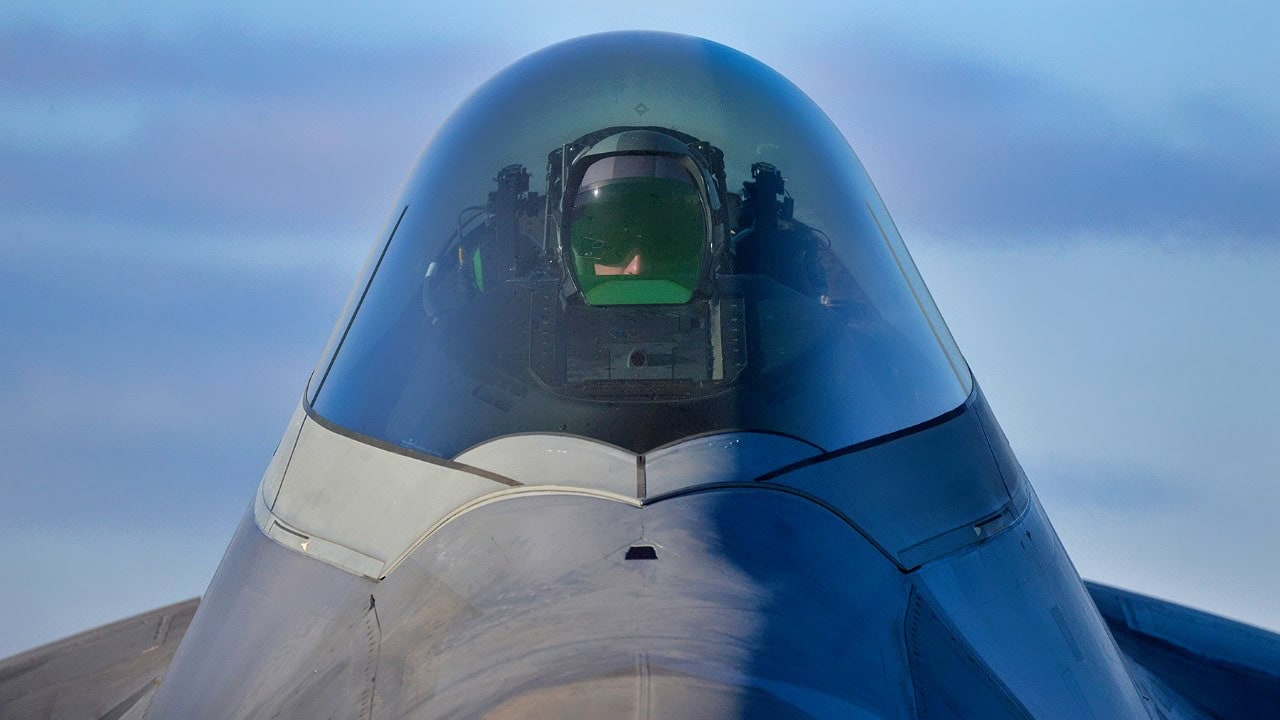
Maj. Philip “Stonewall” Johnson, 514th Flight Test Squadron F-22 test pilot, sits in the last F-22 Raptor to complete the F-22 Structural Repair Program Nov. 24, 2020, prior to performing a functional check flight with the aircraft at Hill Air Force Base, Utah. The 574th Aircraft Maintenance Squadron processed 135 F-22s through the program by performing structural modifications to increase total flying hour serviceability on each aircraft by 8,000 hours. (U.S. Air Force photo by Alex R. Lloyd)
The plan, per that report, would reopen the Strait of Hormuz.
“Under the proposal, a ceasefire would take effect immediately, reopening the Strait of Hormuz, with 15–20 days to finalise a broader settlement,” the Reuters report said. “The deal, tentatively dubbed the ‘Islamabad Accord,’ would include a regional framework for the strait, with final in-person talks in Islamabad.”
Tehran, per that report, is looking for guarantees that it will not be attacked again by Israel. In addition, Axios said, “a solution for Iran’s highly enriched Uranium” would have to be part of a final deal, although not necessarily the short-term ceasefire.
Early Monday afternoon, the Associated Press reported that Iran had rejected the ceasefire proposal.
“We only accept an end of the war with guarantees that we won’t be attacked again,” Mojtaba Ferdousi Pour, head of Iran’s diplomatic mission in Cairo, told the new agency. He added that Iran no longer trusts the Trump side, which had previously bombed Iran while negotiations were in progress.
However, a regional official told the AP that talks “had not collapsed.”
Saber-Rattling at the Easter Egg Roll
On Sunday, during an appearance at the White House Easter Egg Roll event, Trump rejected the idea of a 45-day cease-fire. It led to another unlikely visual, of Trump addressing matters of war while standing next to the Easter Bunny.
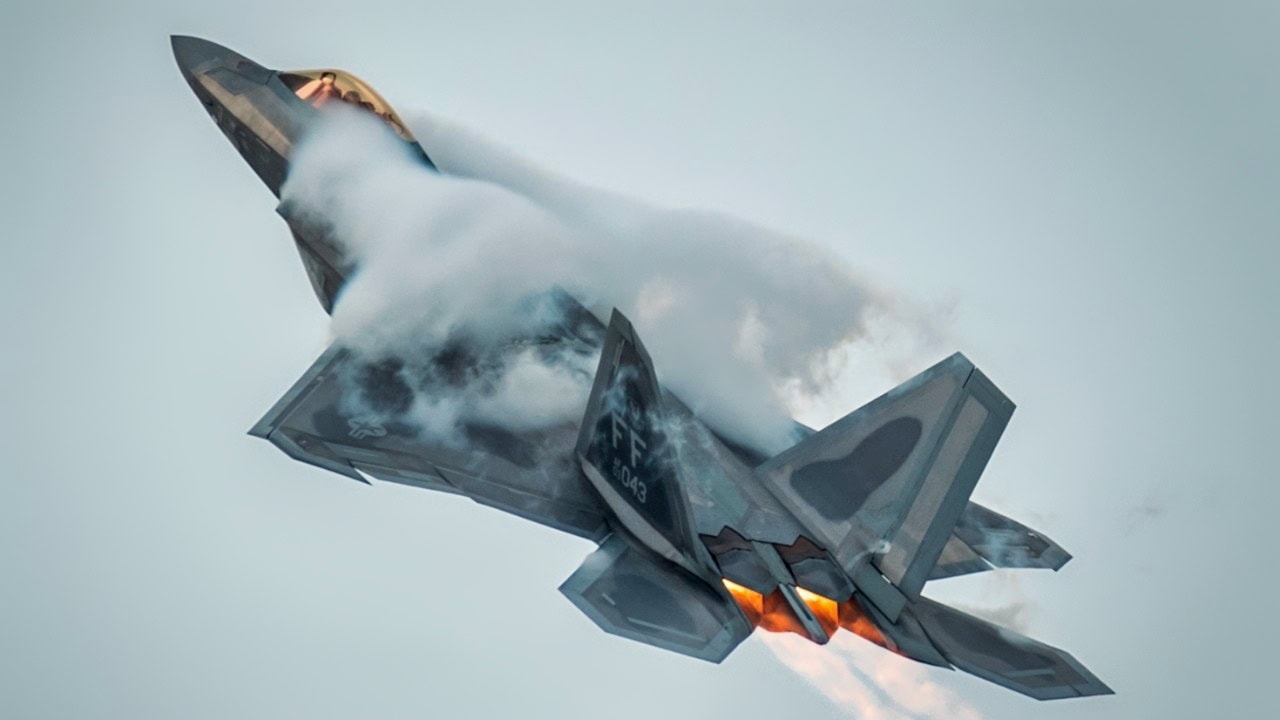
U.S. Air Force Capt. Samuel “RaZZ” Larson, F-22 Raptor Demonstration Team commander, performs an aerial maneuver in preparation for the ongoing airshow season at Joint Base Langley-Eustis, Virginia, July 9, 2024. Airshows play a crucial role in highlighting the importance of air power in modern warfare and help reinforce the deterrence capabilities of advanced fighter aircraft like the F-22 Raptor. (U.S. Air Force photo by Senior Airman Mikaela Smith)
Per CNBC, Trump called the proposal “significant” but “not good enough.”
“They made a proposal, and it’s a significant proposal. It’s a significant step,” the president told the press.
“It’s not good enough, but it’s a very significant step,” Trump said at the Sunday event. “They’re negotiating now, and they’ve made a very significant step. We’ll see what happens.”
The president added that “the only one that’s going to set a ceasefire is me.”
A Reuters report back on April 3, meanwhile, had cited U.S. intelligence reports that Iran was “unlikely to open the Strait of Hormuz any time soon.” This was because the country’s “grip on the world’s most vital oil artery provides the only real leverage it has over the United States.” That report came before the most recent reporting about a potential 45-day ceasefire deal.
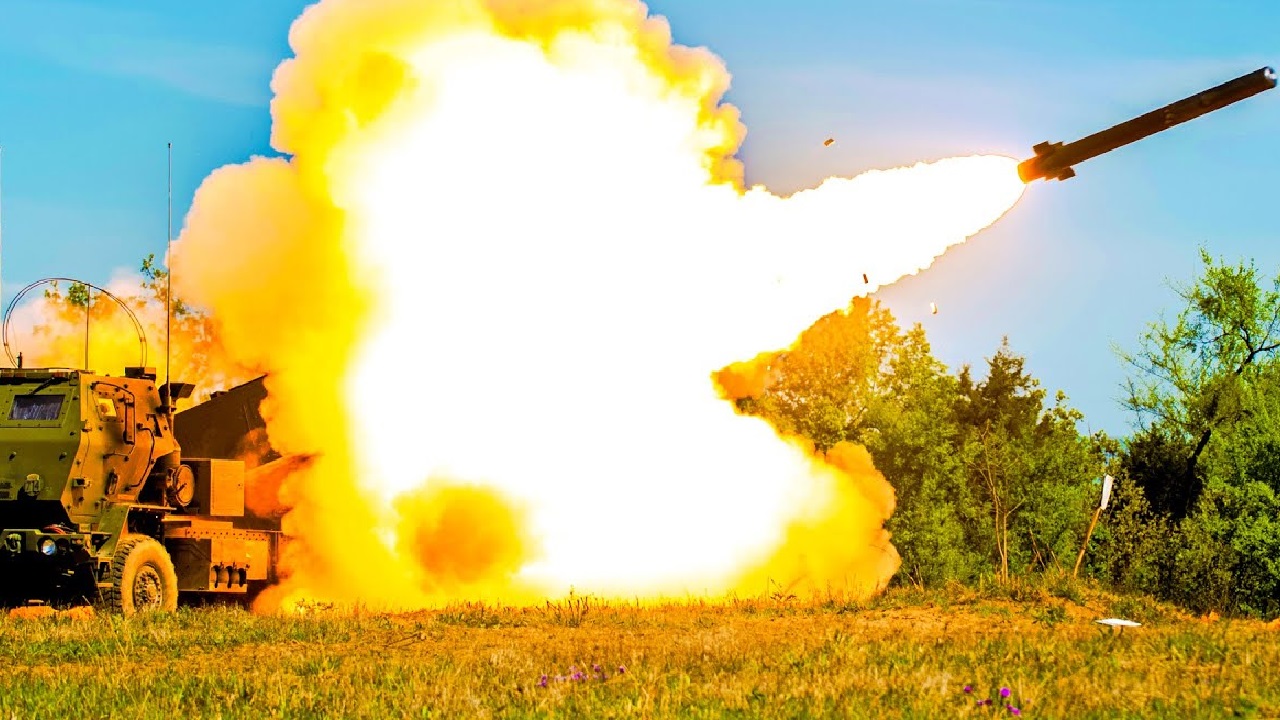
HIMARS Attack. Image Credit: Creative Commons.
“In the attempt to try to prevent Iran from developing a weapon of mass destruction, the U.S. handed Iran a weapon of mass disruption,” Ali Vaez, director of the Iran Project at the International Crisis Group, told Reuters in that story. Vaez added that Iran’s control of that crucial checkpoint, and the effect it has on the global economy, could prove “much more potent than even a nuclear weapon.”
What It Would Mean
Should a deal be reached, under the reported ceasefire framework, in the coming days, it would open the Strait of Hormuz and likely end uncertainty about energy prices and the disruptions to the global economy brought about by its closure, although possibly not instantly.
However, that short-term deal would not mean the end of the Iranian regime. Nor would it appear to contain any guarantees that Iran has given up on the idea of uranium enrichment or further pursuit of nuclear weapons, much less a solution for Iran’s current enriched uranium. This could also mean that the U.S. and Israel had attacked Iran twice, in two different years, without definitively destroying (or “obliterating,” in Trump’s famous words) Iran’s nuclear capabilities.
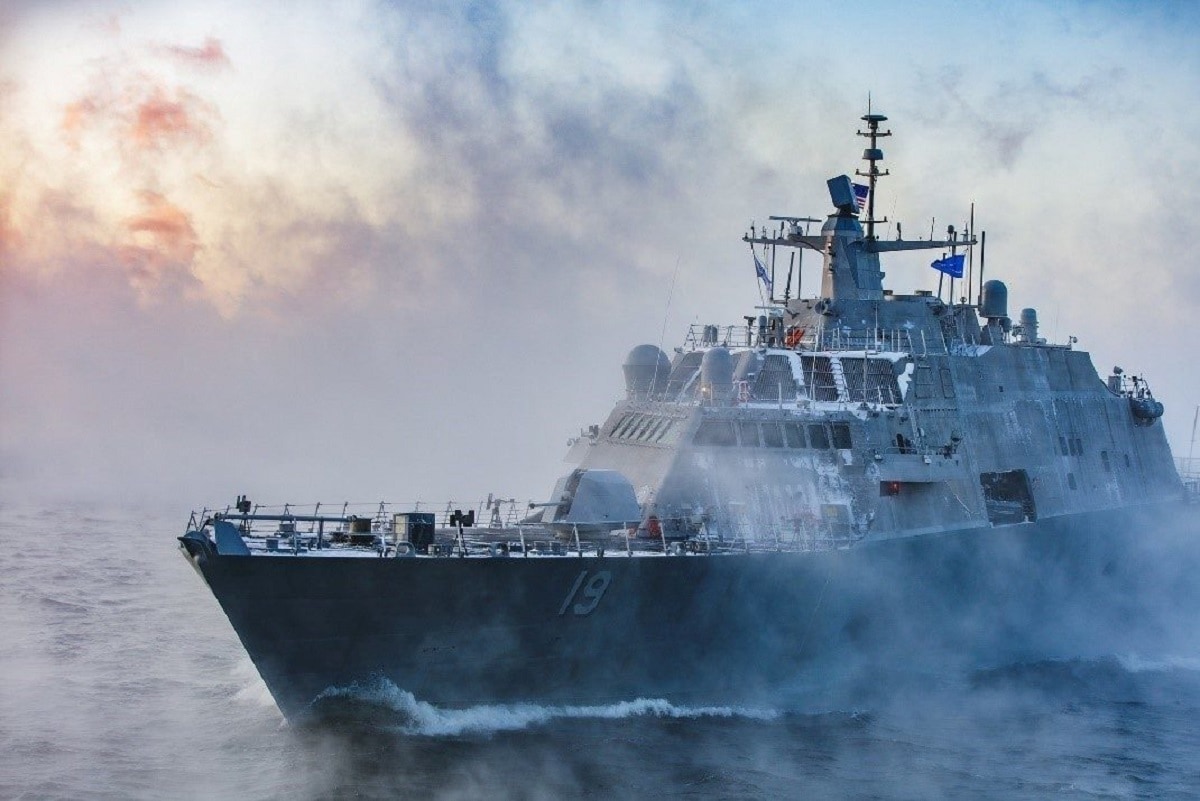
Littoral Combat Ship. Image Credit: Creative Commons.
It would also likely represent political difficulty for Trump, who launched a war that has been unpopular for its duration, while hurting him with his own base. And a ceasefire now, under Pakistan’s proposed terms, would leave Trump with something less than a total victory. It could also open the door for further conflict with Iran down the line.
And reopening the Strait of Hormuz would merely bring everyone back to the pre-war status quo.
About the Author: Stephen Silver
Stephen Silver is an award-winning journalist, essayist, and film critic, and contributor to the Philadelphia Inquirer, the Jewish Telegraphic Agency, Broad Street Review, and Splice Today. The co-founder of the Philadelphia Film Critics Circle, Stephen lives in suburban Philadelphia with his wife and two sons. For over a decade, Stephen has authored thousands of articles that focus on politics, national security, technology, and the economy. Follow him on X (formerly Twitter) at @StephenSilver, and subscribe to his Substack newsletter.