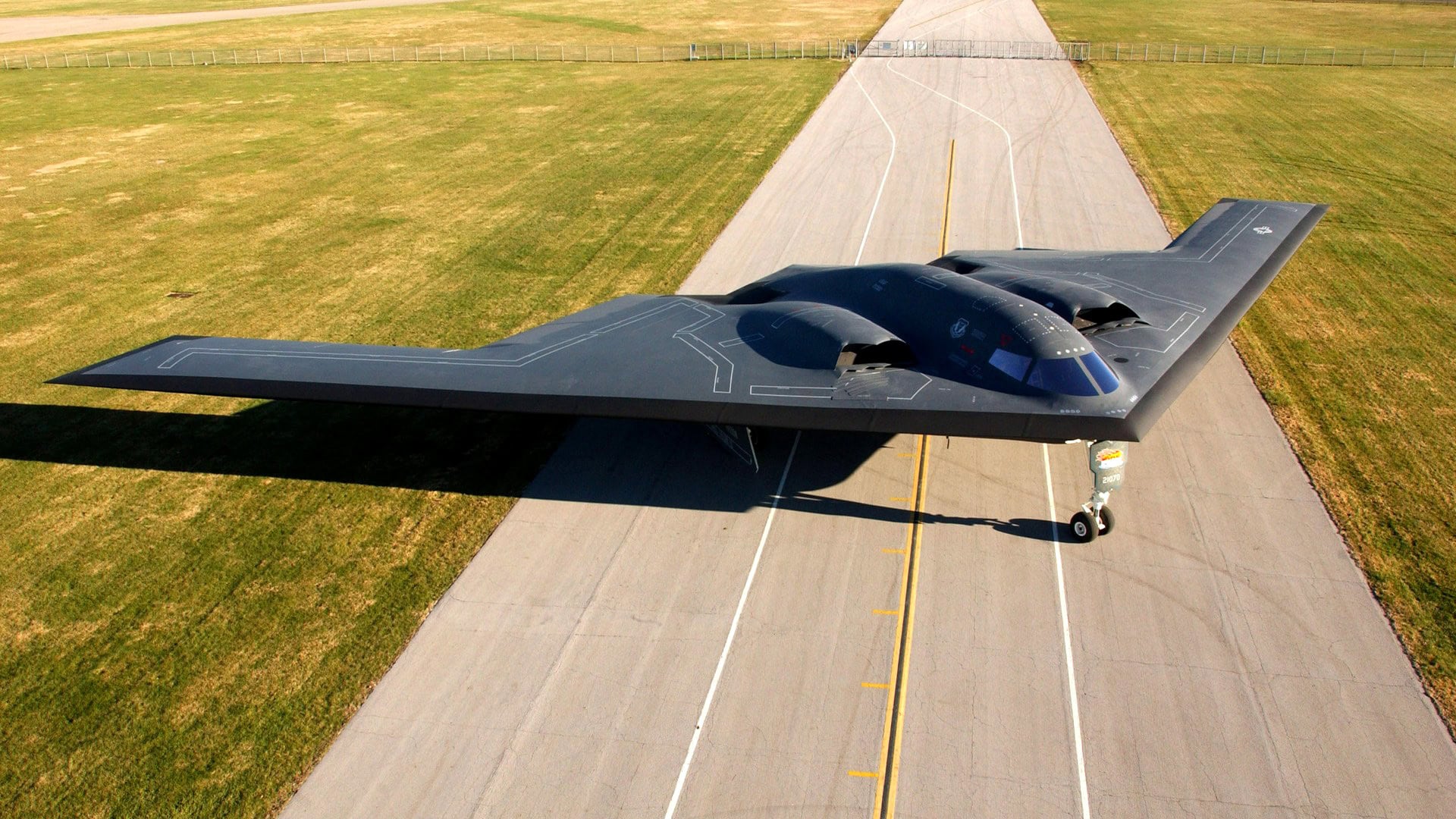
Summary and Key Points: Kris Osborn, a national security expert and former Pentagon official, evaluates the U.S. Air Force’s new maritime strike capability. Utilizing the Quicksink program—a Joint Capability Technology Demonstration (JCTD)—the B-2 Spirit can now deploy modified JDAMs equipped with Weapon Open Systems Architecture (WOSA) seekers to track moving naval targets.
-This report analyzes the synergy between the B-2 and the Navy’s F-35C and F/A-18 air wings, concluding that this low-cost, high-volume “surface-vessel defeat” capability provides a survivable alternative to expensive standoff missiles like the LRASM in contested maritime environments.
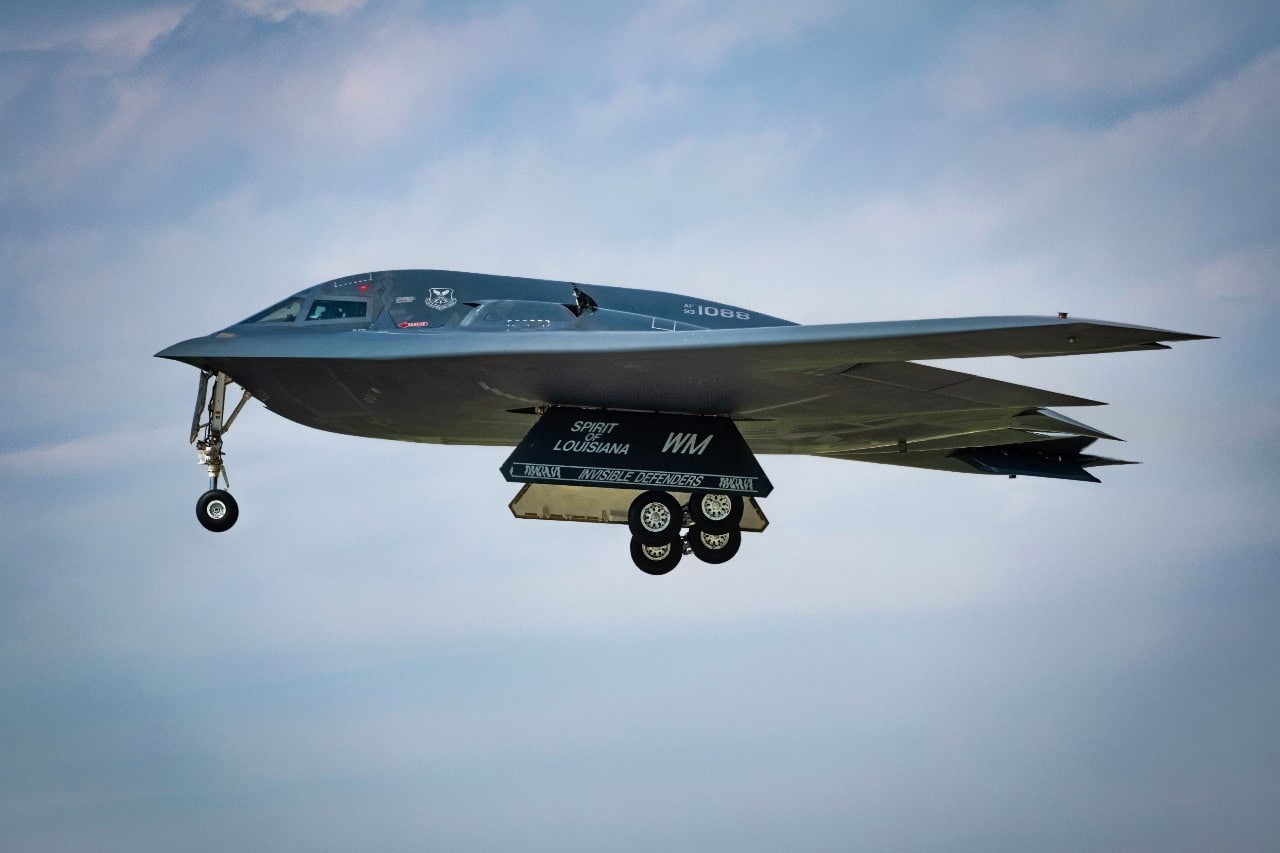
A B-2 Spirit stealth bomber departs from Whiteman Air Force Base, Missouri, April 16, 2025. The B-2 is capable of penetrating heavily defended air spaces and delivering conventional and nuclear munitions anywhere on the globe. (U.S. Air Force photo by Senior Airman Joshua Hastings)
The Quicksink Revolution: How the B-2 Stealth Bomber Became a High-Altitude Ship-Killer
The bat-like B-2 stealth bomber is known for its upgraded stealth, advanced weapons and high-altitude bombing capabilities against fixed ground targets. But technological advances in networking and weaponry now enable the bomber to attack and destroy moving targets at sea. The B-2s operational capacity are thus broadly expanded.
The new capability is enabled by bomber-fighter jet interoperability and newly configured, precision-guided, air dropped anti-ship weapons. It brings new tactical options for commanders seeking to destroy surface ships from the air.
Air Force – Navy Anti-Ship Attack
The concept is not only to enable the B-2 to conduct more operations, but also to generate multi-domain, multi-service networking and targeting collaboration. Specifically, a B-2 armed with anti-ship missiles would be well positioned to support Navy fighter jets taking off from carriers and amphibs.
This Air Force-Navy synergy is being practiced off the coast of California with F-35Cs and F/A-18s from the carrier air wing of the USS Theodore Roosevelt Carrier Strike Group.
The air wing trains with Air Force B-2s configured with anti-ship weapons.
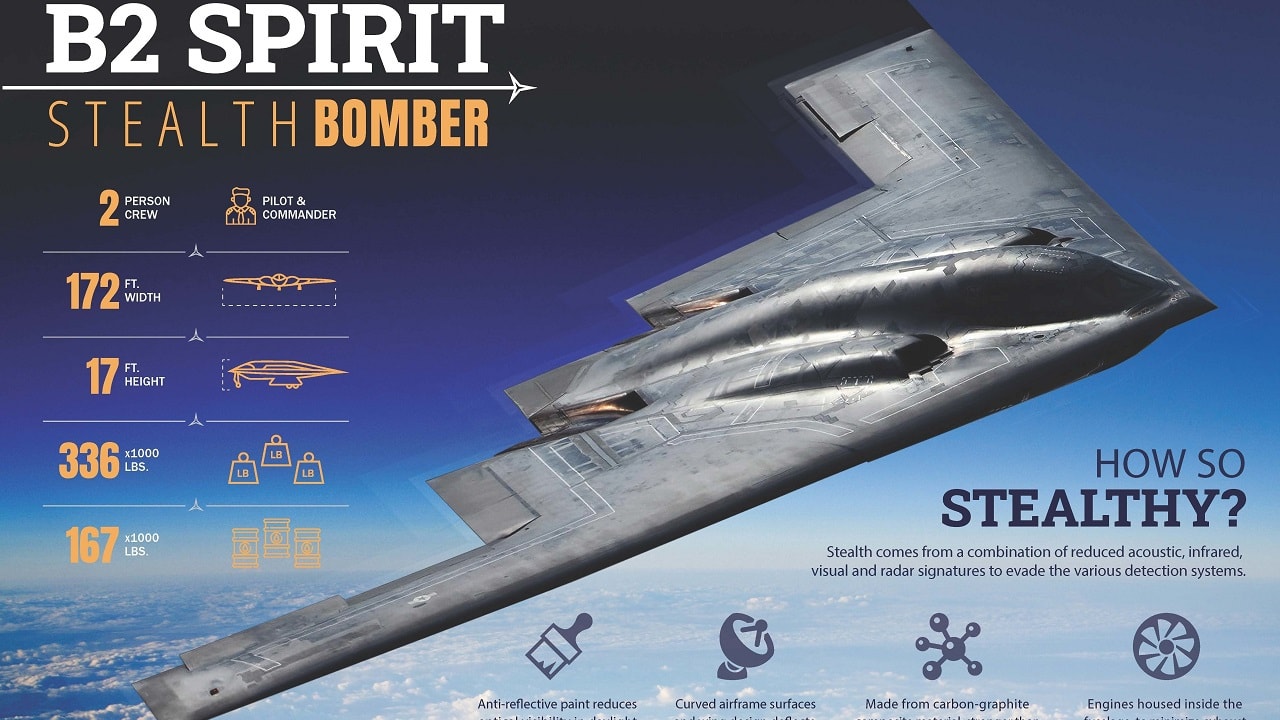
191209-N-HG846-2001 NORFOLK,Va. (Dec. 9, 2019) This poster is designed to communicate the aircraft specifications of the B2 Spirit Stealth Bomber. The B2 bomber was introduced on Jan. 1, 1997 by the Northrop Corporation.
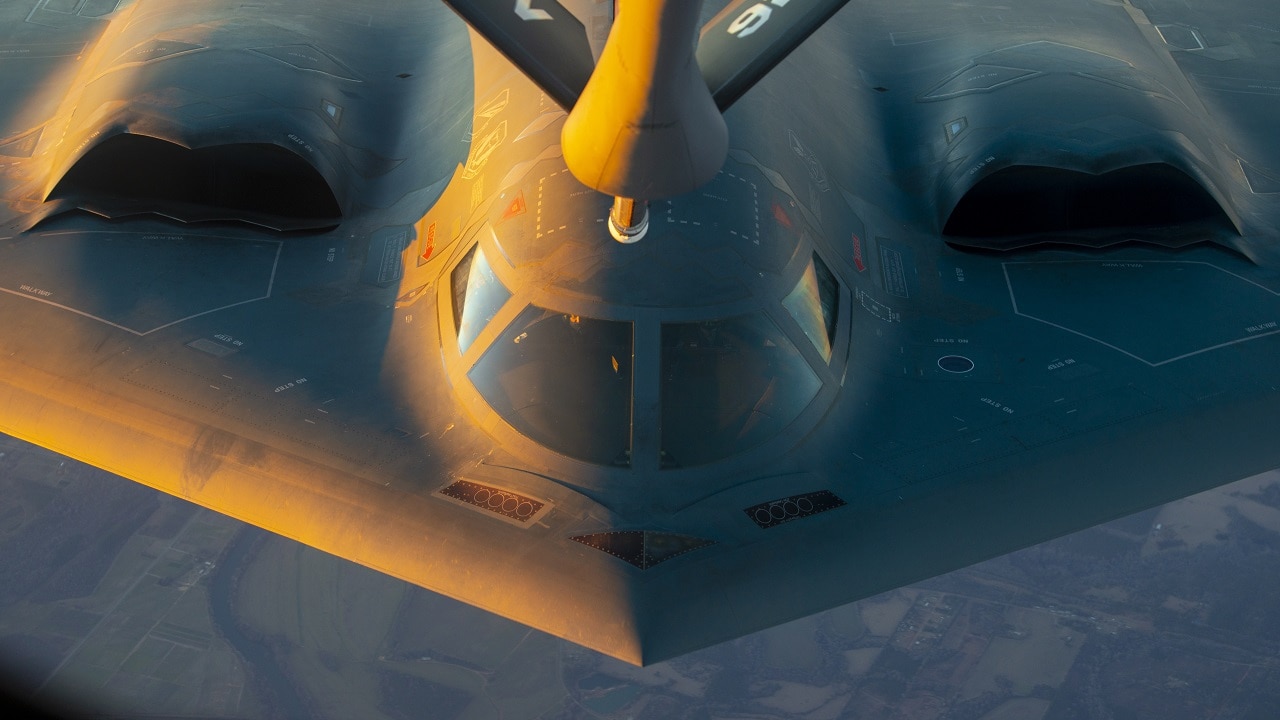
A B-2 Spirit assigned to Whiteman Air Force Base, Mo., prepares to receive fuel from a KC-135 Stratotanker, Feb 7, 2021. A B-2 Spirit performed alongside a B-1B Lancer and a B-52 Stratofortress for the Super Bowl LV flyover on Feb. 7, 2021. (U.S. Air Force photo by Airman 1st Class David D. McLoney)
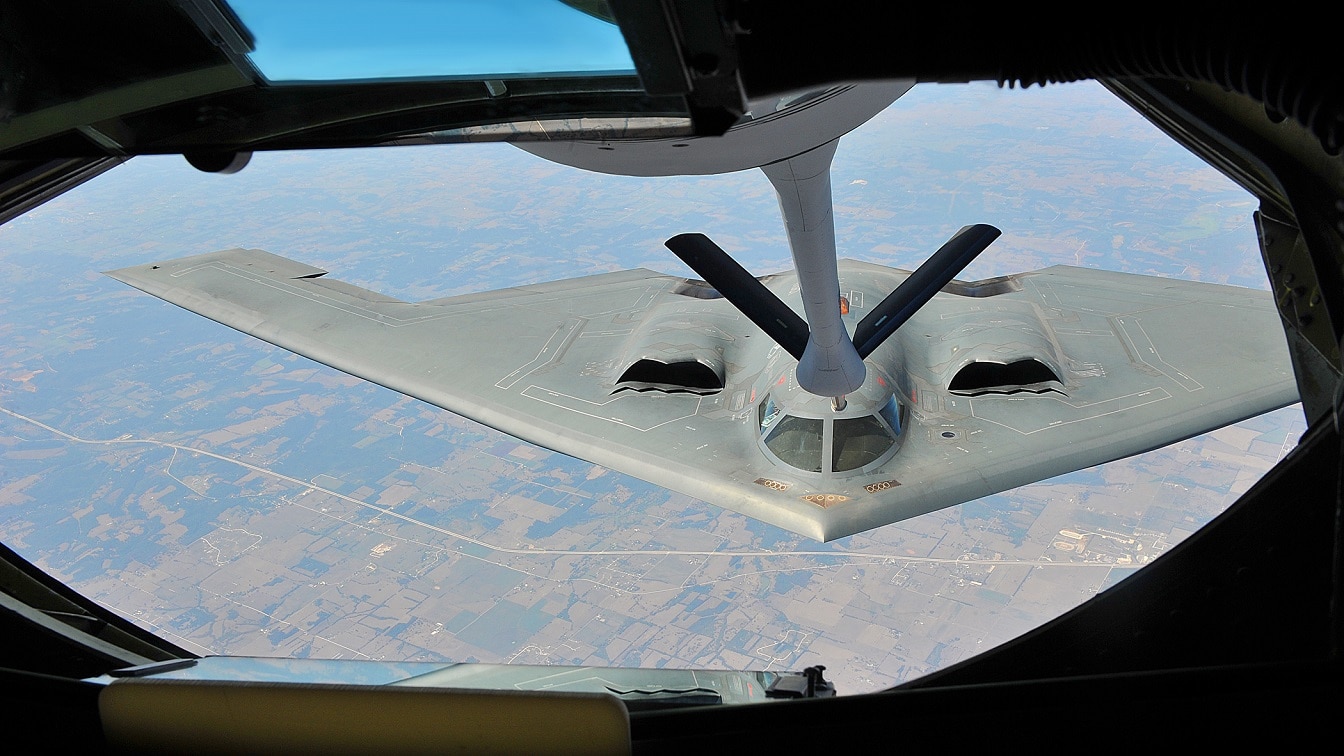
A KC-135 Stratotanker from the 22nd Air Refueling Wing refuels a B-2 Spirit from the 509th Bomb Wing, Aug. 29, 2012. A B-2 Spirit is designed to be very difficult to detect so it can better engage enemies during war efforts. (U.S. Air Force photo/ Airman 1st Class Maurice A. Hodges)
The Air Force arms its fleet of B-2 bombers to destroy enemy surface ships with modified Joint Direct Attack Munitions (JDAMs) configured with a seeker designed to track moving warships.
The U.S. Air Force Research Laboratory-led effort for this capability, which is called Quicksink, not only brings new dimensions of multi-domain attack to the famous B-2 but also enables reconfigures traditional precision-guided JDAMs.
Lower-Cost QUICKSINK
Unlike more exquisite and expensive air-fired anti-ship weapons such as the Long Range Anti-Ship Missile, JDAMs are lower in cost and capable of being dropped in larger numbers on an enemy at sea.
Quicksink-capable B-2 armed with JDAMs configured for maritime attack might have success destroying an enemy carrier or carrier strike group from high altitudes with a large volume of air-dropped precision firepower.
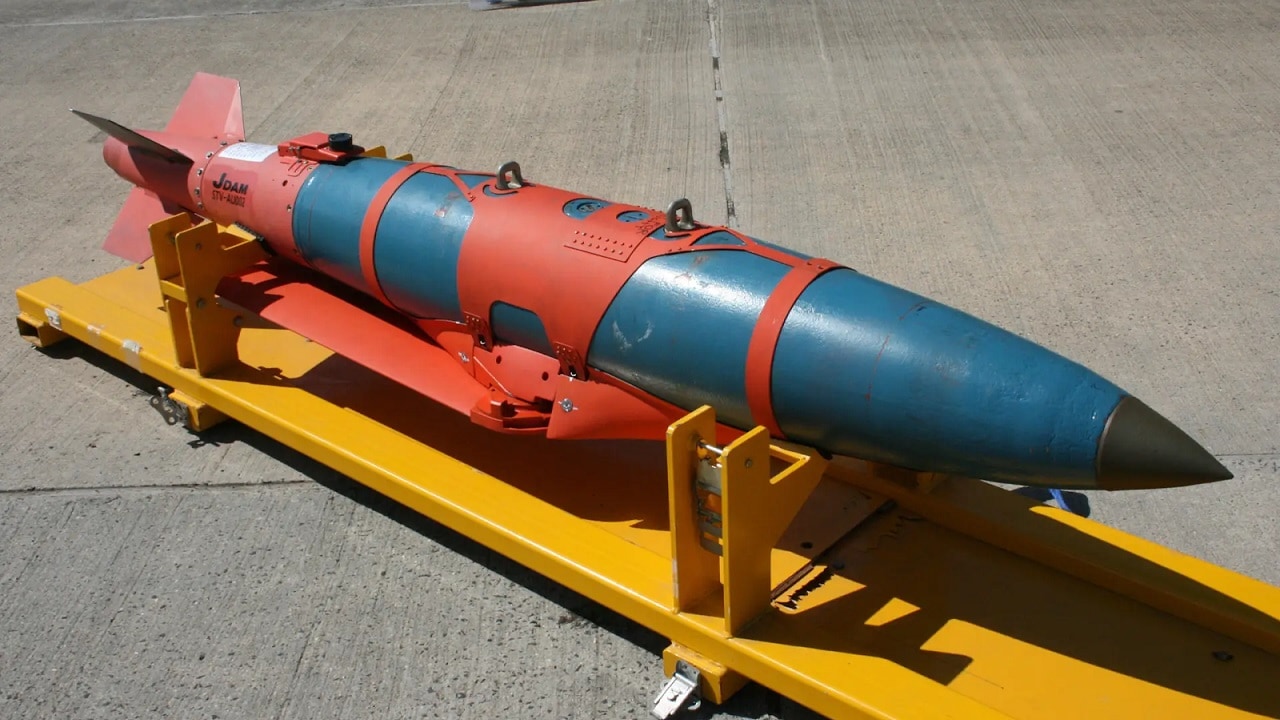
JDAM-ER via Australian Military.
A recent write-up on Quicksink from the Air Force Research Laboratory (ARFL) describes the effort as a Joint Capability Technology Demonstration (JCTD) … that creates air-delivered, low-cost, surface-vessel defeat capability for the warfighter.
“Key to the demonstration is the Air Force Research Laboratory development of a Weapon Open Systems Architecture (WOSA) seeker for precision targeting of maritime surface vessels at a low-cost. This JCTD uses an existing guidance kit integrated with the new seeker to rapidly demonstrate the capability at minimal costs,” the AFRL writes in an essay. “The WOSA seeker also allows the technology to be included on a variety of current and future weapons systems and enables them to engage static and moving maritime targets.”
Fighter Jet-Bomber Joint Attack
A high-altitude stealthy attack on an enemy surface formation seems effective and highly survivable. S
urface ships not only have far-reaching deck-mounted guns, but are also armed with anti-aircraft weapons, sensors and interceptor missiles of all ranges.
But with Quicksink, a B-2 could deliver mass and precision in a multi-domain bombing attack that is much less detectable and targetable than fighter jets or larger, less-stealthy bombers.
A B-2 armed with anti-ship missiles could also greatly strengthen a large-scale air attack on enemy ships by bringing more ordnance to support fighter jets.
With the proper networking technologies in place, ship-launched jets and B-2 bombers could exchange targeting information in real time to coordinate anti-ship strikes from the air.
About the Author: Kris Osborn
Kris Osborn is the President of Warrior Maven – Center for Military Modernization. Osborn previously served at the Pentagon as a highly qualified expert in the Office of the Assistant Secretary of the Army—Acquisition, Logistics & Technology. Osborn has also worked as an anchor and on-air military specialist at national TV networks. He has appeared as a guest military expert on Fox News, MSNBC, The Military Channel, and The History Channel. He also has a Masters Degree in Comparative Literature from Columbia University