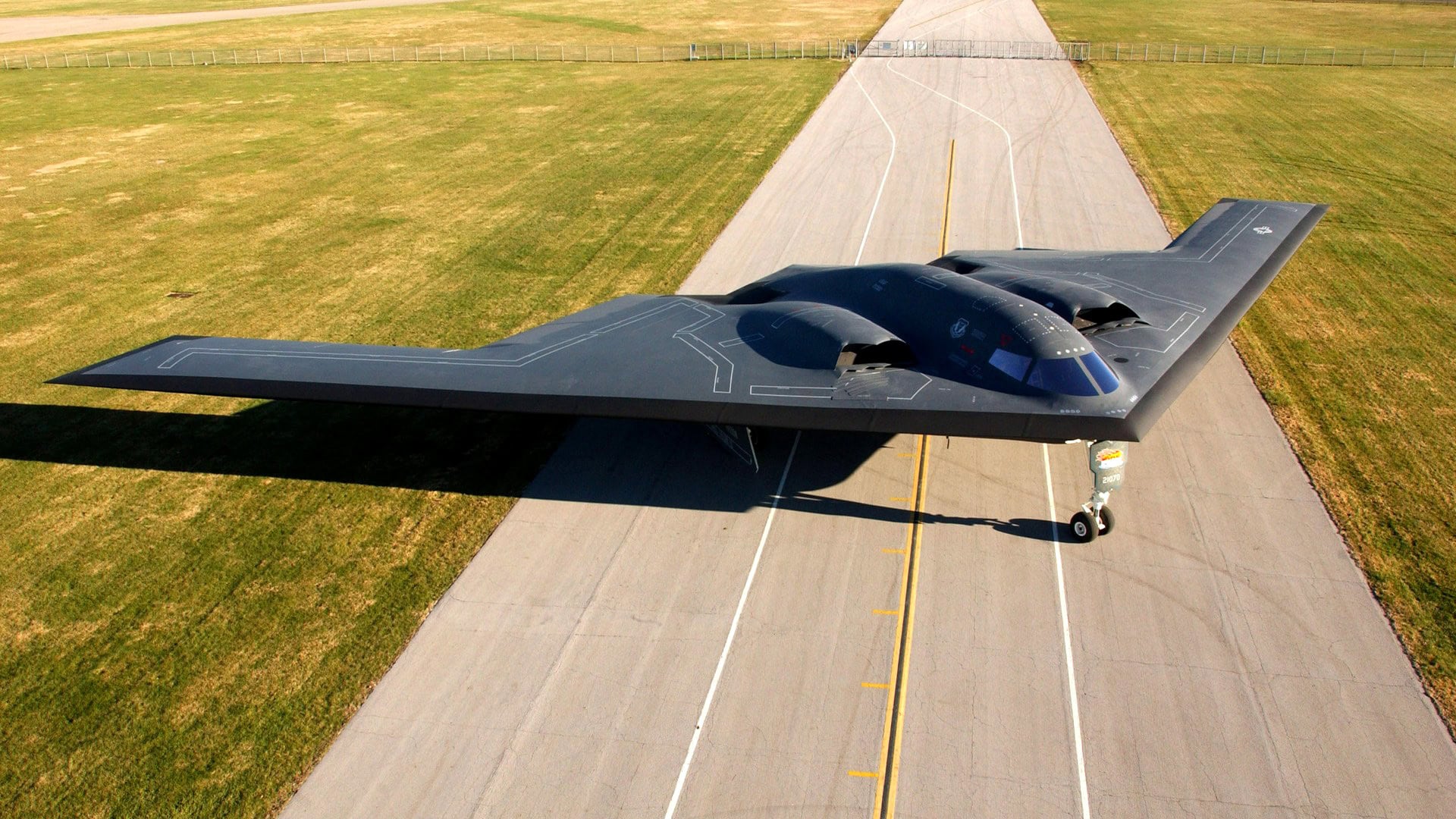
Summary and Key Points: Caleb Larson, a national security journalist, evaluates the U.S. Navy’s transition to long-range integrated maritime strike operations. Utilizing the AIM-174B “Gunslinger“—an air-launched variant of the SM-6 with a range exceeding 250 miles—the F/A-18E/F Super Hornet can now engage high-value targets from outside enemy engagement zones.
-This report analyzes the 2026 deployment of the MQ-25 Stingray unmanned tanker, which provides 15,000 lbs of fuel to extend the radius of carrier air wings.
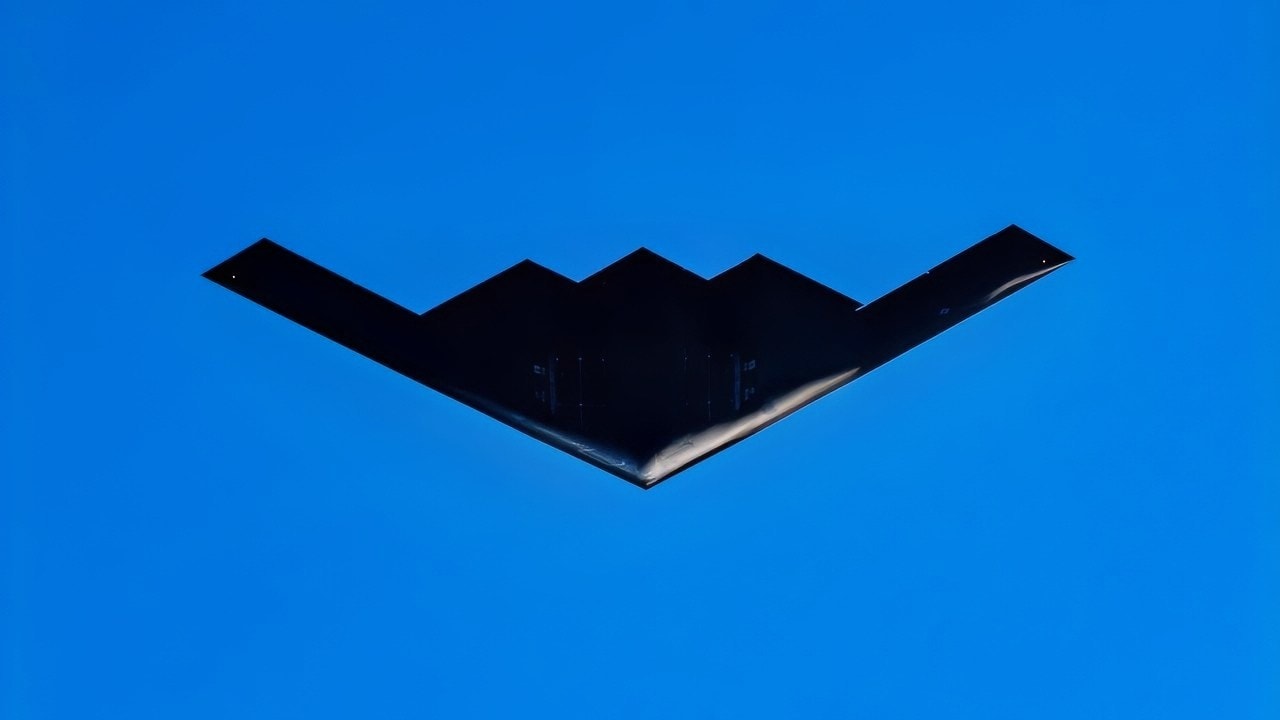
The B-2 Spirit flies over the Rose Parade at Pasadena Ca., Jan. 1, 2024. The Rose Parade is a parade of flower covered floats, marching band, and equestrian units that is produced by the Tournament of Roses. (U.S. Air Force photo by Airman 1st Class Bryce Moore)
-Larson explores the integration of Air Force B-2 Spirits using Quicksink munitions, a low-cost hedge against precision-strike stockpile depletion in a high-intensity Indo-Pacific conflict.
The Gunslinger Debut: Why the AIM-174B is the Key to Pacific Air Dominance
Being ready to fight and win a future war in the Indo-Pacific is the U.S. Navy’s top priority.
But, considering the limited range of the Navy’s fighter aircraft, integration with the Air Force is important to bolster Navy firepower. The Air Force’s support would take pressure off a limited stockpile of precision strike munitions that could quickly be used up during the opening stages of a conflict.
An Air Force B-2 bomber recently teamed up with Navy fighter aircraft off the California coast to test the concept of integrated Navy-Air Force maritime strike, with the B-2 providing a maritime strike component using specially modified ship-killing munitions, and the Navy fighters escorting with potent long-range air-to-air weapons. In the short term, the effort promises to bring more firepower to the Indo-Pacific, but there are some important headwinds as well.
Filling in the Gap
A crucial component of the Navy’s future long-range strike capability will be the engagement distances of fighters flying in tandem with Air Force bombers such as the B-2 Spirit. New long-range weapons should extend engagement ranges, helping fight back against long-range Chinese weaponry.
“On the weapons front, the biggest news of the past year was the unveiling of the AIM-174B Gunslinger long-range air-to-air missile,” Navy Vice Admiral Dan Cheever wrote in Proceedings this past summer. He added that “the air-launched version of the Standard Missile-6 (SM-6), this weapon gives the [F/A-18E/F] Super Hornet the ability to ‘out-stick’ adversary fighters and operate inside the weapons engagement zone.”
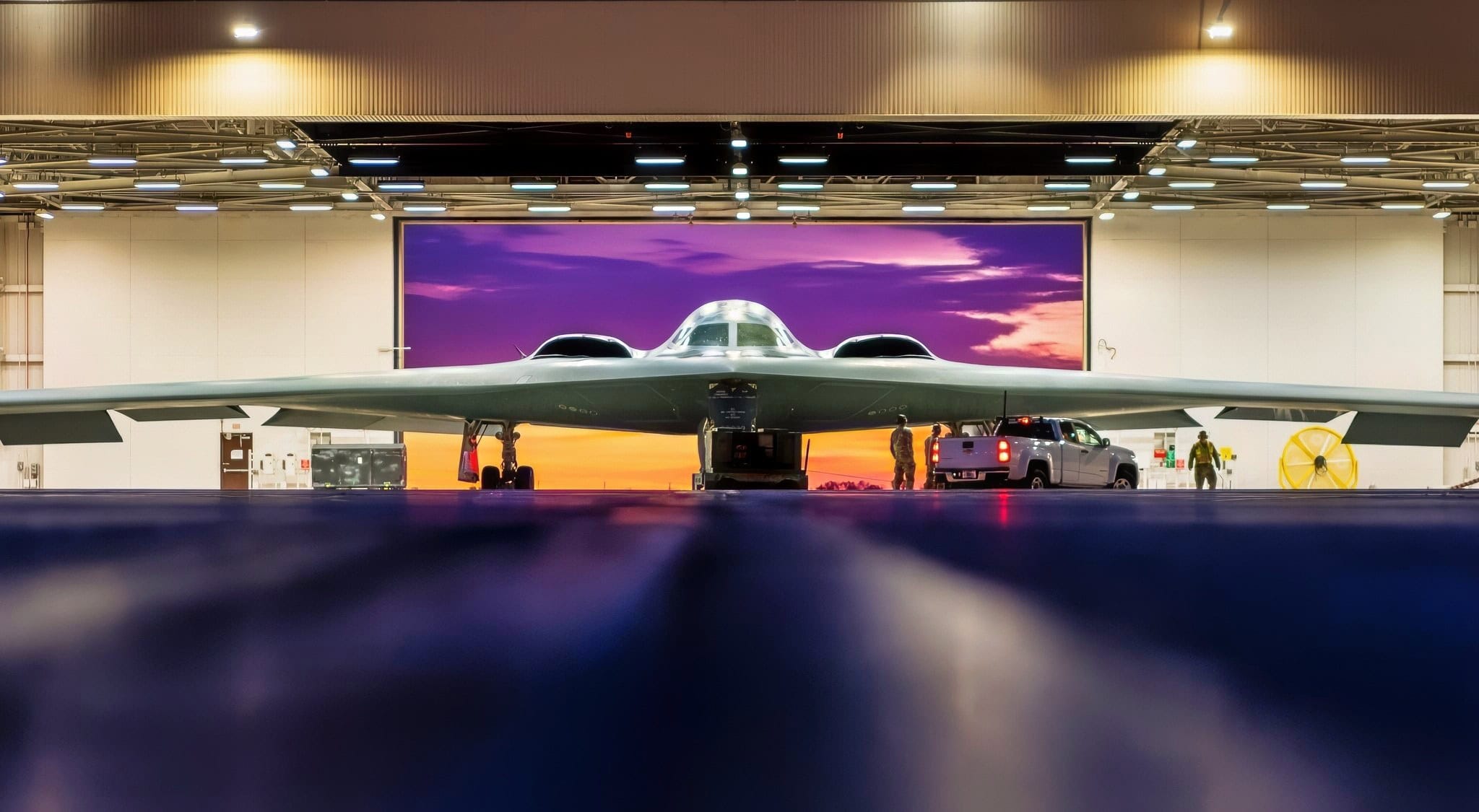
U.S. Airmen assigned to the 393rd Bomber Generation Squadron prepare a B-2 Spirit aircraft for flight during Exercise Global Thunder 26 at Whiteman Air Force Base, Missouri, Oct. 24, 2025. Global Thunder is an annual command and control exercise designed to train U.S. Strategic Command forces and assess joint operational readiness. (U.S. Air Force photo by Staff Sgt. Joshua Hastings)
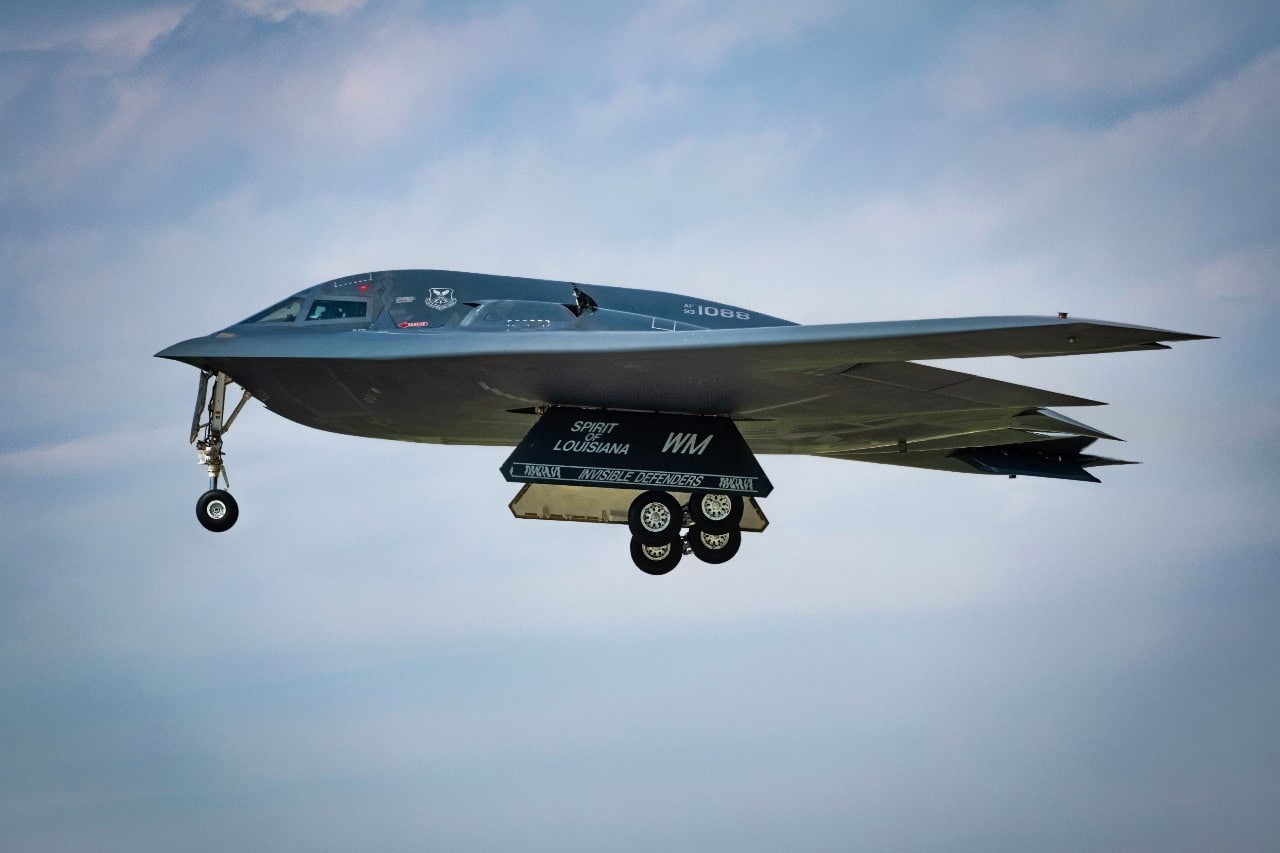
A B-2 Spirit stealth bomber departs from Whiteman Air Force Base, Missouri, April 16, 2025. The B-2 is capable of penetrating heavily defended air spaces and delivering conventional and nuclear munitions anywhere on the globe. (U.S. Air Force photo by Senior Airman Joshua Hastings)
The rollout of the Gunslinger, with a range thought to exceed 150 miles, fills an important gap in the Navy’s weapon engagement zone. Following the retirement of the AIM-54 Phoenix in 2004, the Navy lacked a dedicated, very-long-range air-to-air missile. A derivative of the RIM-174 Standard ERAM air-defense missile, the Gunslinger is basically an airdropped version of the SM-6.
A Question of Range
Engagement by increasingly long-range air-to-air weapons is certainly a boon to the Navy, but perhaps an equally important piece of the puzzle is the range of the Navy’s fighters, which is dictated in part by how much fuel the aircraft carry.
For some aircraft, external fuel tanks are one way to increase fuel stores.
This is typically a more viable option for non-stealthy, fourth-generation aircraft. But the low-drag, low-observable drop tanks recently showcased on the F-22 Raptor offer a fuel solution for stealth aircraft as well.
For the fourth-generation Super Hornet fleet, the Navy, despite testing, put the kibosh on the conformal fuel tanks mounted along the aircraft’s spine in 2021 because of unspecified technical challenges, delays, and cost overruns.
Had that initiative been successful, Super Hornets could have seen a bump in range and freed up stations used for drop tank fuel stores.
While the Navy could revisit that initiative—Naval Air Systems Command (NAVAIR) issued a request for information to increase tactical aircraft range—work on the Navy’s upcoming low-observable, unmanned tanker aircraft, the MQ-25 Stingray, is more promising.
“The most important new capability coming this year is the MQ-25 Stingray unmanned tanker aircraft,” Vice Admiral Cheever wrote. “With the ability to give F/A-18s and F-35s up to 15,000 pounds of fuel at a range of 500 nautical miles from the carrier, the Stingray will conduct initial flight testing this year. This aircraft will relieve the Super Hornets from mission- and recovery-tanking roles and eventually will take on other missions as well.”
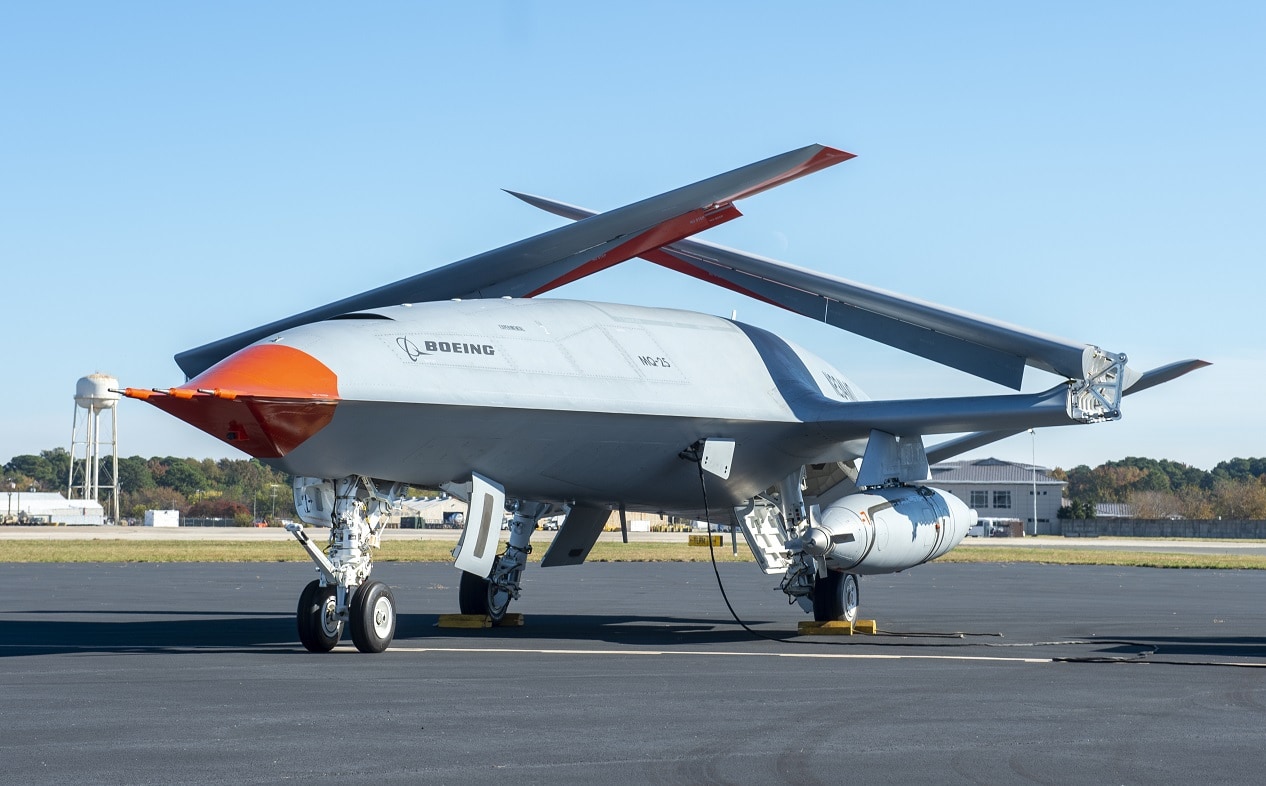
The U.S. Navy and Boeing conducted ground testing of the MQ-25 Stingray at Chambers Field onboard Naval Station Norfolk, Virginia. The MQ-25 Stingray is an unmanned aerial refueling aircraft. (U.S. Navy photo by Mass Communication Specialist 2nd Class Sam Jenkins)
Quicksink
The Air Force’s contribution to the Navy’s anti-shipping mission involves the use of Quicksink strike munitions—low-cost air-dropped bombs outfitted with a new seeker that can engage stationary or moving ships. These are compatible with the B-2 Spirit bomber.
The development of Quicksink is a hedge against the risk of expending precision-strike munitions during a conflict.
The Look Forward
Equipping Air Force bombers with ship-killing weaponry adds strike options for the U.S. military, but the B-2 fleet faces a numbers bottleneck: With only 19 operational B-2s, the Air Force’s stealth bomber fleet would come under intense strain to respond to simultaneous crises.
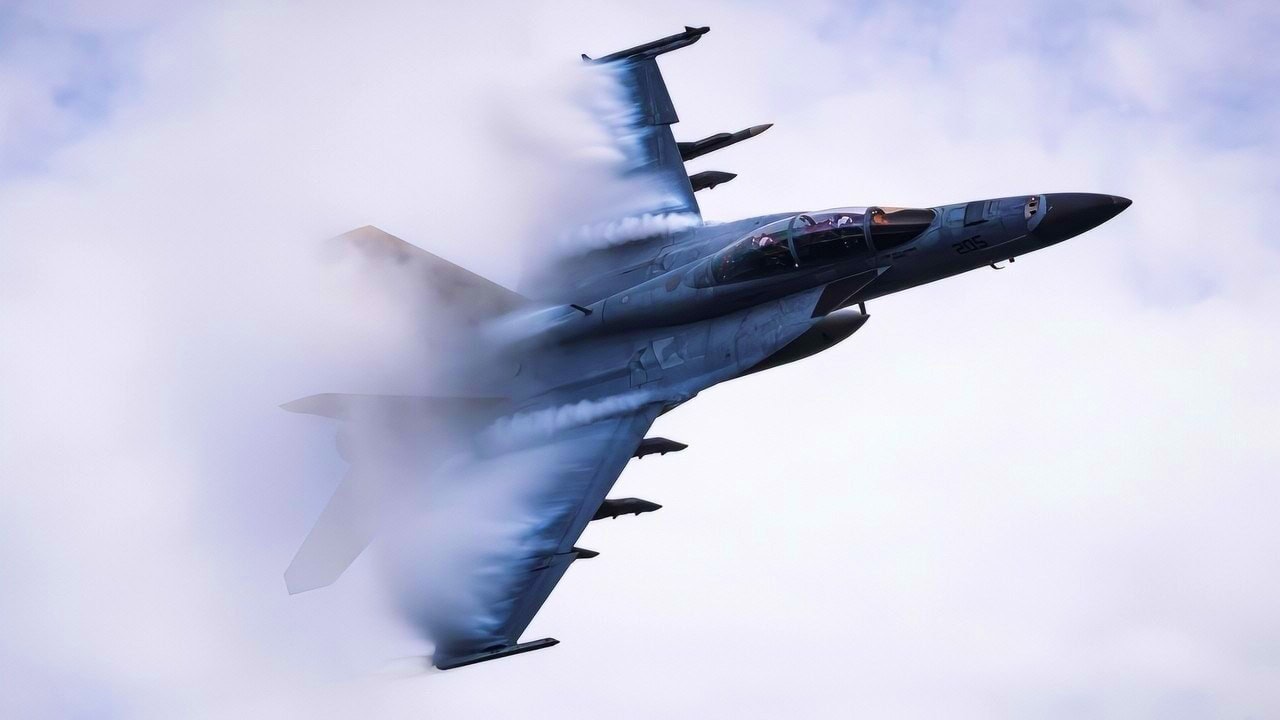
USS George Washington Aircraft Carrier Super Hornet. Image Credit: Creative Commons.
Though the upcoming B-21 Raider bomber would presumably take over the maritime strike role from the B-2s, it will likely be several years before the B-21 Raider fleet enters service.
About the Author: Caleb Larson
Caleb Larson is an American multiformat journalist based in Berlin, Germany. His work covers the intersection of conflict and society, focusing on American foreign policy and European security. He has reported from Germany, Russia, and the United States. Most recently, he covered the war in Ukraine, reporting extensively on the war’s shifting battle lines from Donbas and writing on the war’s civilian and humanitarian toll. Previously, he worked as a Defense Reporter for POLITICO Europe. You can follow his latest work on X.