
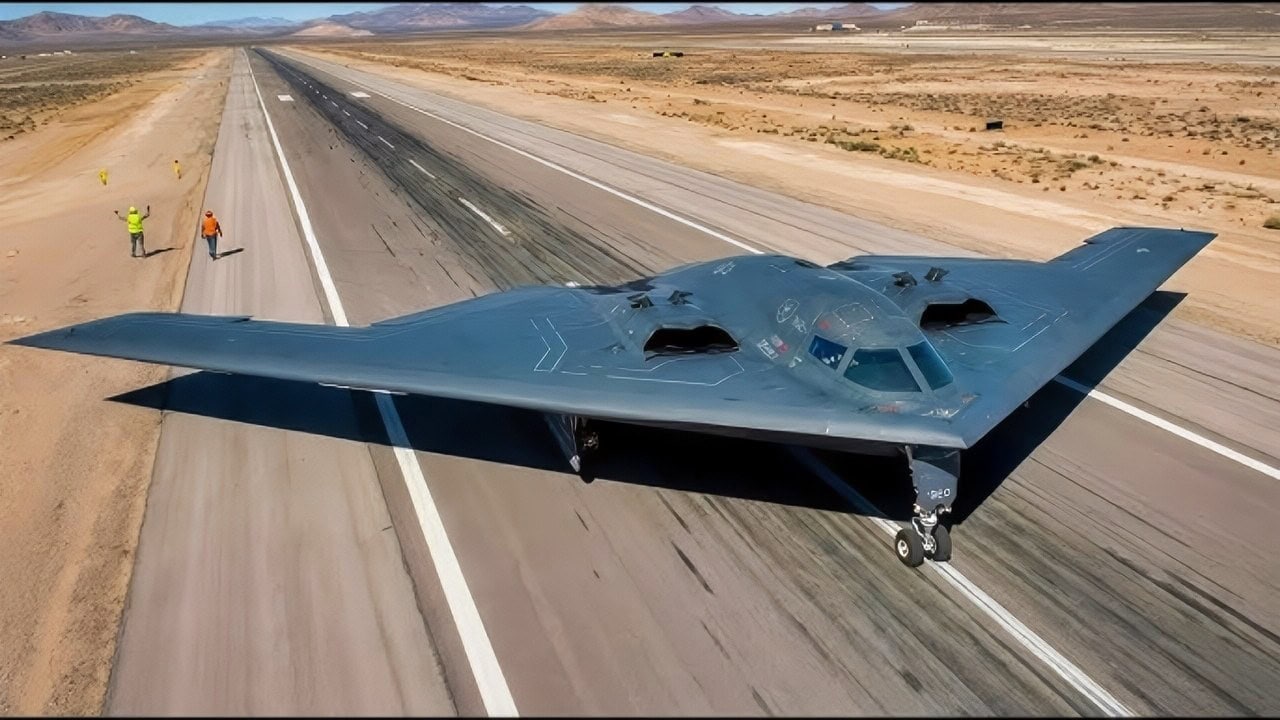
Summary and Key Points: Steve Balestrieri, a former US Army Special Forces officer and national security columnist, analyzes the February 2026 integration of the B-2 Spirit with Aircraft Carrier Air Wing (CVW) 11.
-This exercise, featuring the Theodore Roosevelt Carrier Strike Group, showcased the operational debut of the AIM-174B “Gunslinger”—the air-launched variant of the SM-6.
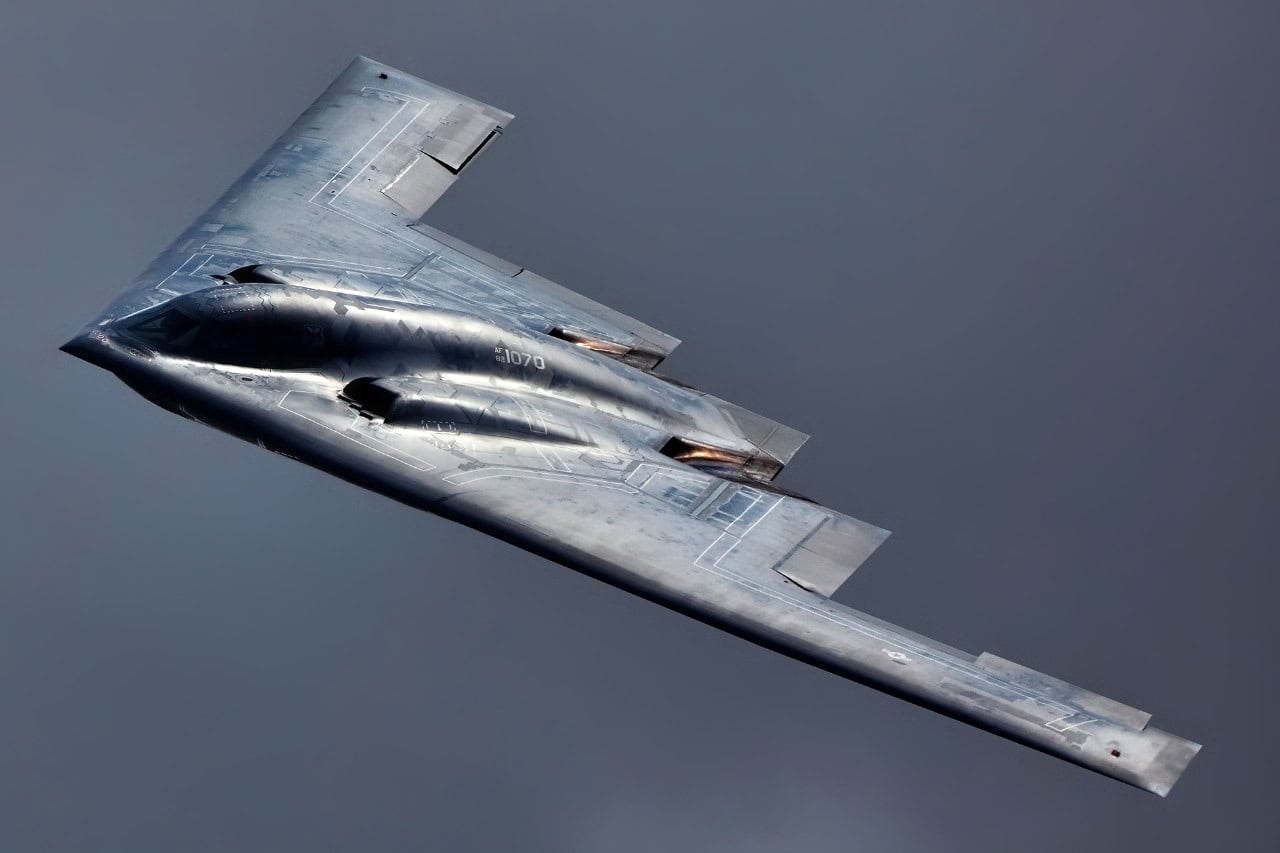
B-2 Bomber. Image Credit: Creative Commons.
-This 19FortyFive report evaluates how Whiteman AFB’s 509th Bomb Wing is utilizing QUICKSINK technology alongside F-35C and F/A-18E Super Hornets to create a networked maritime strike capability designed to penetrate advanced integrated air defense systems and neutralize high-value C4ISTAR assets.
Stealth and Standoff: Inside the B-2 Spirit and Aircraft Carrier Air Wing 11’s Massive Maritime Strike Drill
On February 24, the United States announced that at least one U.S. Air Force B-2 Spirit from the 509th Bomb Wing joined Navy Carrier Air Wing’s eleven fighters for a long-range maritime strike exercise off California.
The drill highlights how stealth bombers and carrier aviation are integrating to counter anti-access threats and reinforce U.S. power projection in a contested Indo-Pacific environment.
The fighters were from Carrier Air Wing (CVW) 11 from the Theodore Roosevelt Carrier Strike Group and trained alongside a B-2 Spirit stealth bomber from the 509th Bomb Wing, flying from Whiteman Air Base, Mo., on an unspecified date.
With rising great power competition between China and the United States, the US showcased the B-2’s stealthy profile alongside F-35C and F/A-18E Super Hornet aircraft equipped with the new long-range AIM-174B “Gunslinger missiles.
Meet The AIM174B “Gunslinger” Missile:
The AIM-174B “Gunslinger” is a US Navy very long-range, air-to-air missile (AAM) that entered service in 2024, designed for the F/A-18E/F Super Hornet.
Derived from the RIM-174B (SM-6) surface-to-air missile, this weapon, nicknamed “Gunslinger,” boasts a range potentially exceeding 300 miles (over 460 km) to engage high-value assets (C4ISTAR).
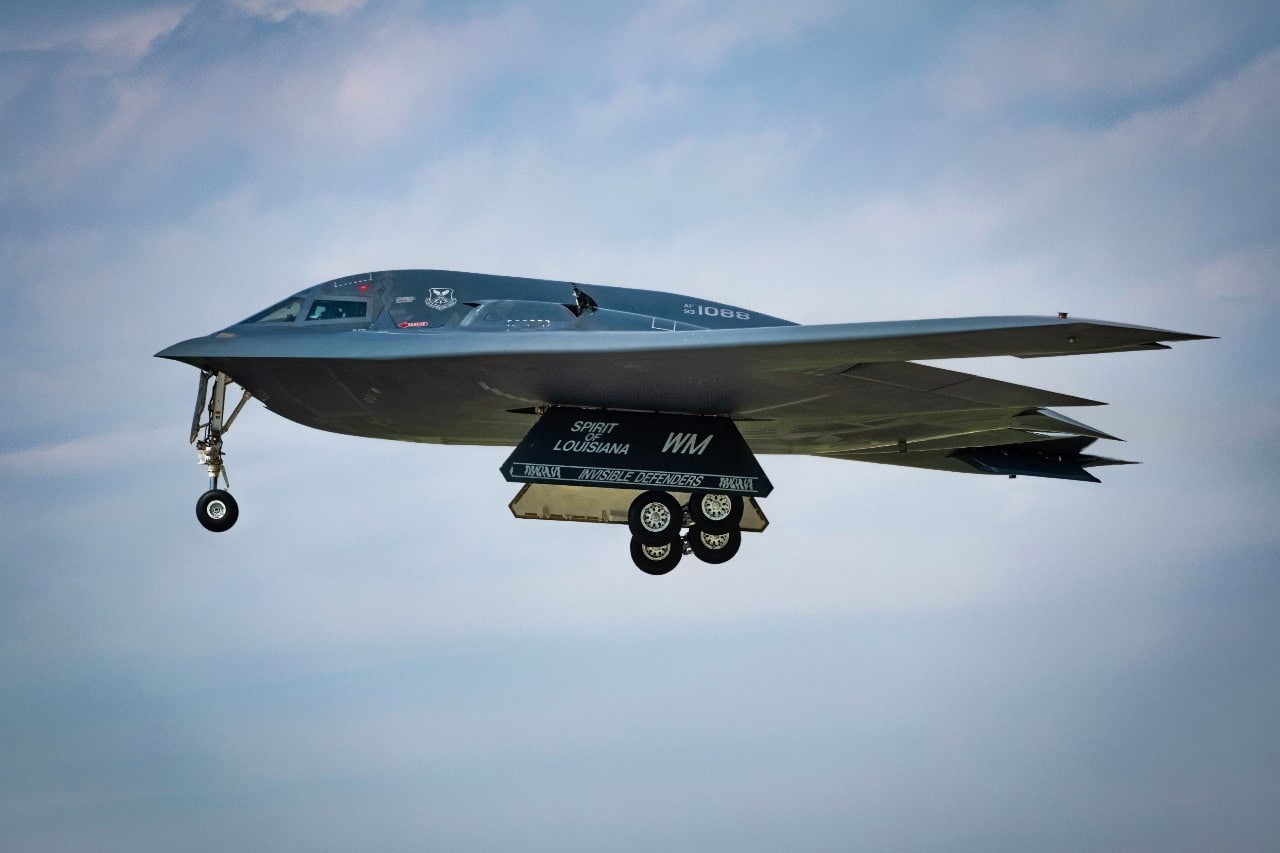
A B-2 Spirit stealth bomber departs from Whiteman Air Force Base, Missouri, April 16, 2025. The B-2 is capable of penetrating heavily defended air spaces and delivering conventional and nuclear munitions anywhere on the globe. (U.S. Air Force photo by Senior Airman Joshua Hastings)
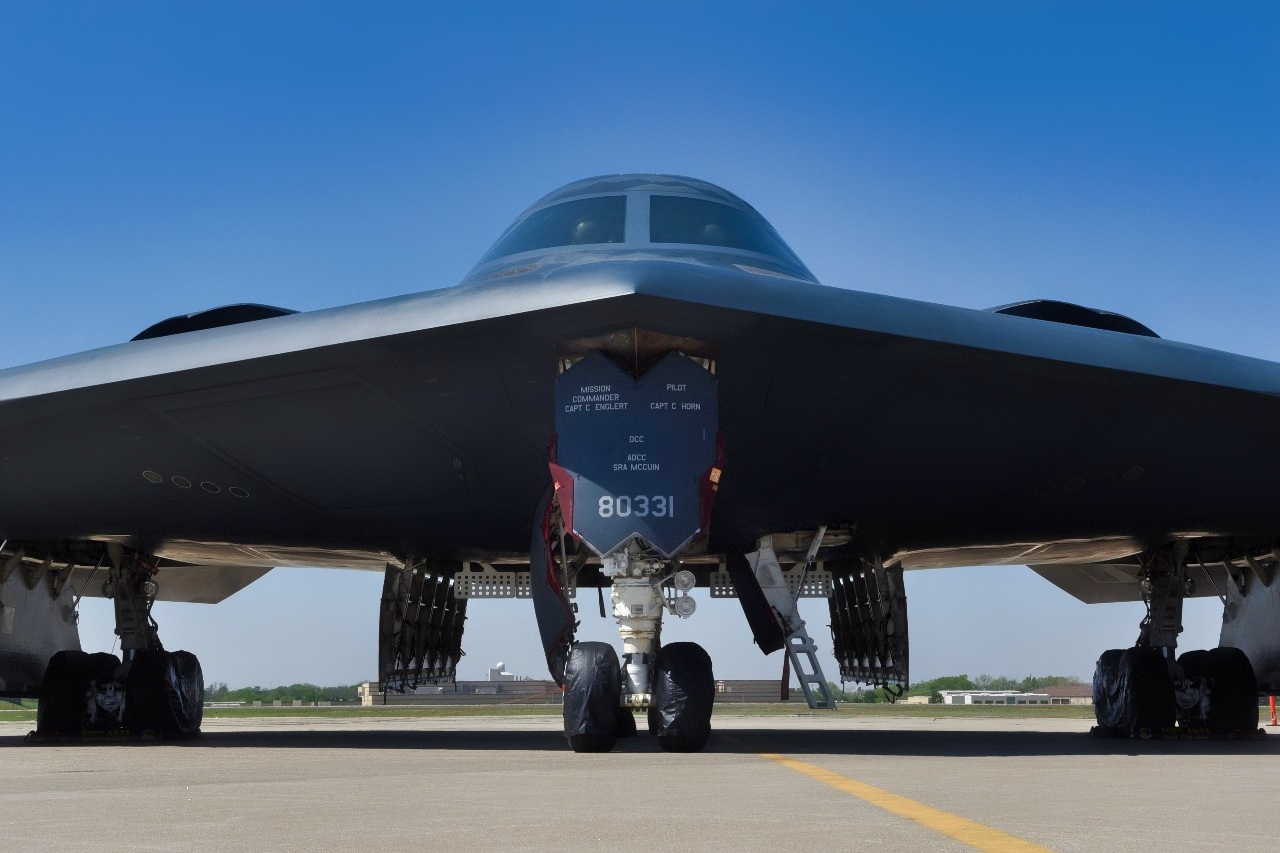
B-2A, serial #88-0331, ‘Spirit of South Carolina’ of the 509th Bomb Wing, Air Force Global Strike Command, on the parking ramp at Tinker Air Force Base, Oklahoma, during a visit April 11, 2017. The B-2A ‘stealth bomber’ visited the base to allow hundreds of personnel who work in direct support of the aircraft program through continuous software upgrades to see it in person and better understand the aircrafts’ role in the nation’s defense. (U.S. Air Force photo/Greg L. Davis)
The “Gunslinger” is estimated to have speeds around Mach 3.5. It uses a seeker derived from the AIM-120 AMRAAM, incorporating inertial guidance and active/semi-active radar homing.
Equipped with a large, 140-lb high-explosive blast-fragmentation warhead, significantly larger than that of the AMRAAM.
Primarily for long-range air-to-air combat against bombers and advanced aircraft, with secondary capabilities against ships, ground targets, and ballistic/hypersonic missiles.
Vice Adm. Daniel Cheever, Commander, Naval Air Forces and Naval Air Forces Pacific Fleet, stated in an article that “On the weapons front, the biggest news of the past year was the unveiling of the AIM-174B Gunslinger long-range air-to-air missile. The air-launched version of the Standard Missile-6 (SM-6), this weapon gives the Super Hornet the ability to ‘out-stick’ adversary fighters and operate inside the weapons engagement zone.”
Gunslinger is the longest-range air-to-air missile to enter American service since the Cold War-era AIM-54 Phoenix. The missile has been fielded on forward-deployed naval fighters in Japan.
The Navy Is Looking Ahead To Near-Peer Competition In The Pacific:
Cheever added that, “By 2075, based on the current trajectory, China will have its own complement of aircraft carriers, possibly rivaling the U.S. Navy in number. The PLA Navy is rapidly gaining operational experience with its carriers, submarines, and high-end surface combatants, while the PLA Rocket Forces and Air Force are fielding new anti-ship missiles.
“The threats 50 years from now will be greater from the seabed to space, so the whole U.S. joint force will face a more complicated/complex problem. Our job is to meet that challenge, stay ahead of it, and defend this great nation.”
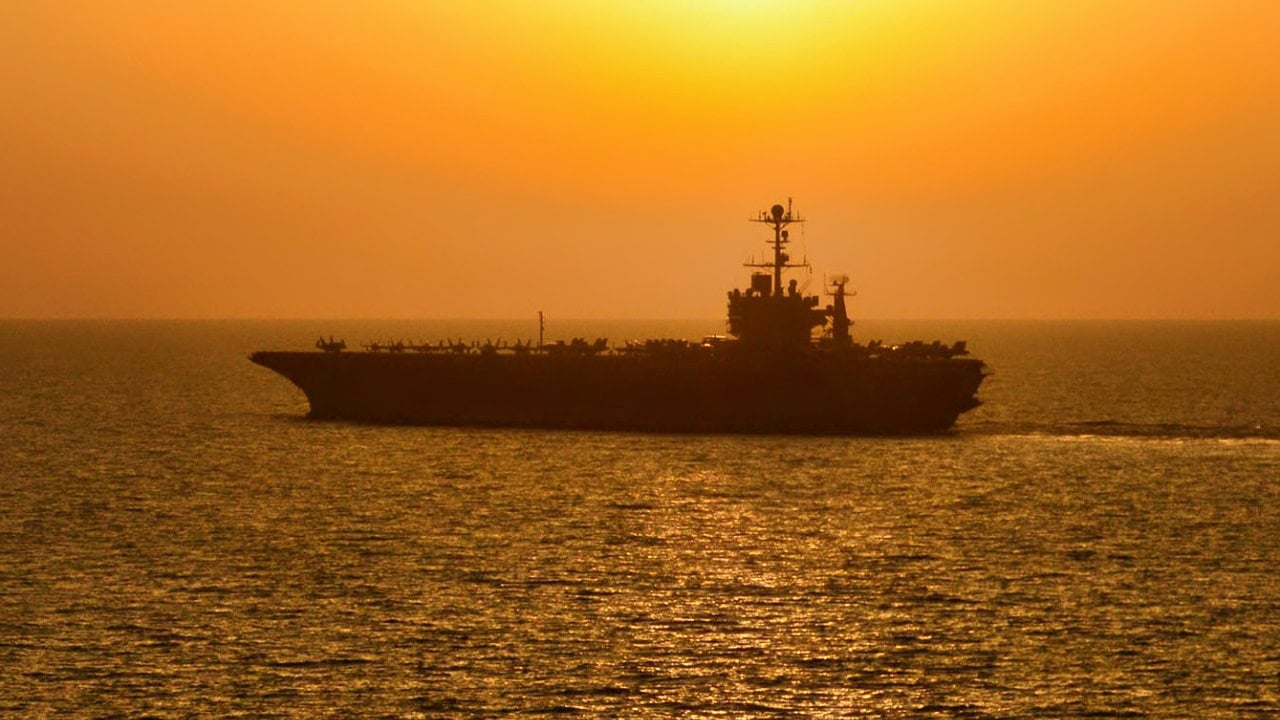
(Oct. 19, 2013) The aircraft carrier USS Harry S. Truman (CVN 75) is underway during sunset. Harry S. Truman, flagship for the Harry S. Truman Carrier Strike Group, is deployed to the U.S. 5th Fleet area of responsibility conducting maritime security operations, supporting theater security cooperation efforts and supporting Operation Enduring Freedom. (U.S. Navy photo by Mass Communication Specialist 2nd Class Mike DiMestico/Released)
That’s why this current sortie showcased a networked “kill web” capable of engaging targets hundreds of miles at sea. The event, disclosed through Whiteman Air Force Base’s official “X” account (formerly Twitter), underscored the enduring importance of joint air-maritime integration for U.S. power projection and deterrence.
The B-2’s Anti-Ship Role Is Increasing:
The Air Force’s B-2 Spirit is taking on a bigger role in its anti-ship strategy, primarily in the testing and expeditionary deployment of Quicksink. Back in September, a B-2 Spirit from Whiteman AFB teamed up with Norwegian F-35s for an @AFResearchLab QUICKSINK exercise, where precision-guided munitions struck a maritime target in the North Atlantic.
Currently, the B-2 Spirit is the only operational strategic stealth bomber in the world capable of penetrating advanced integrated air defense systems to deliver both conventional and nuclear ordnance.
With its flying-wing configuration, stealth, radar-evading materials, and internal weapons bays, the B-2 can approach maritime or land targets with minimal radar cross-section, acting as a survivable deep-strike node in the joint kill chain.
With aerial refueling capability, the B-2 has unlimited range and can take out maritime, land-based, and command-and-control high-value targets.
The joint interoperability between the Air Force and Navy highlights the US’s increased ability to coordinate air and naval forces against adversaries.
About the Author: Steve Balestrieri
Steve Balestrieri is a National Security Columnist. He served as a US Army Special Forces NCO and Warrant Officer. In addition to writing on defense, he covers the NFL for PatsFans.com and is a member of the Pro Football Writers of America (PFWA). His work was regularly featured in many military publications.