
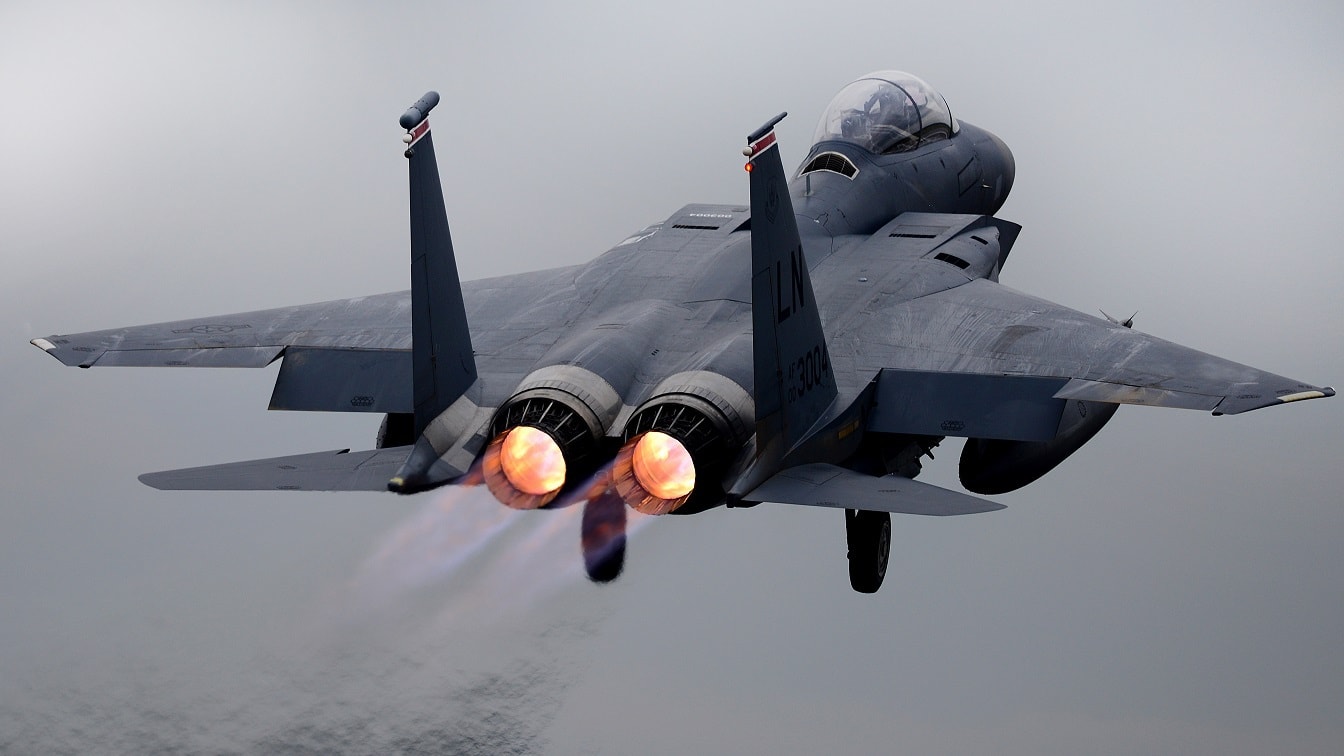
Summary and Key Points: Isaac Seitz, a strategic intelligence analyst and defense columnist, evaluates the tragic friendly fire incident involving three USAF F-15E Strike Eagles over Kuwait.
-Occurring at 7:03 a.m. local time on March 2, 2026, the shootdown by Kuwaiti Air Defense took place near Ali Al Salem Air Base during an active mission against Iranian drones.
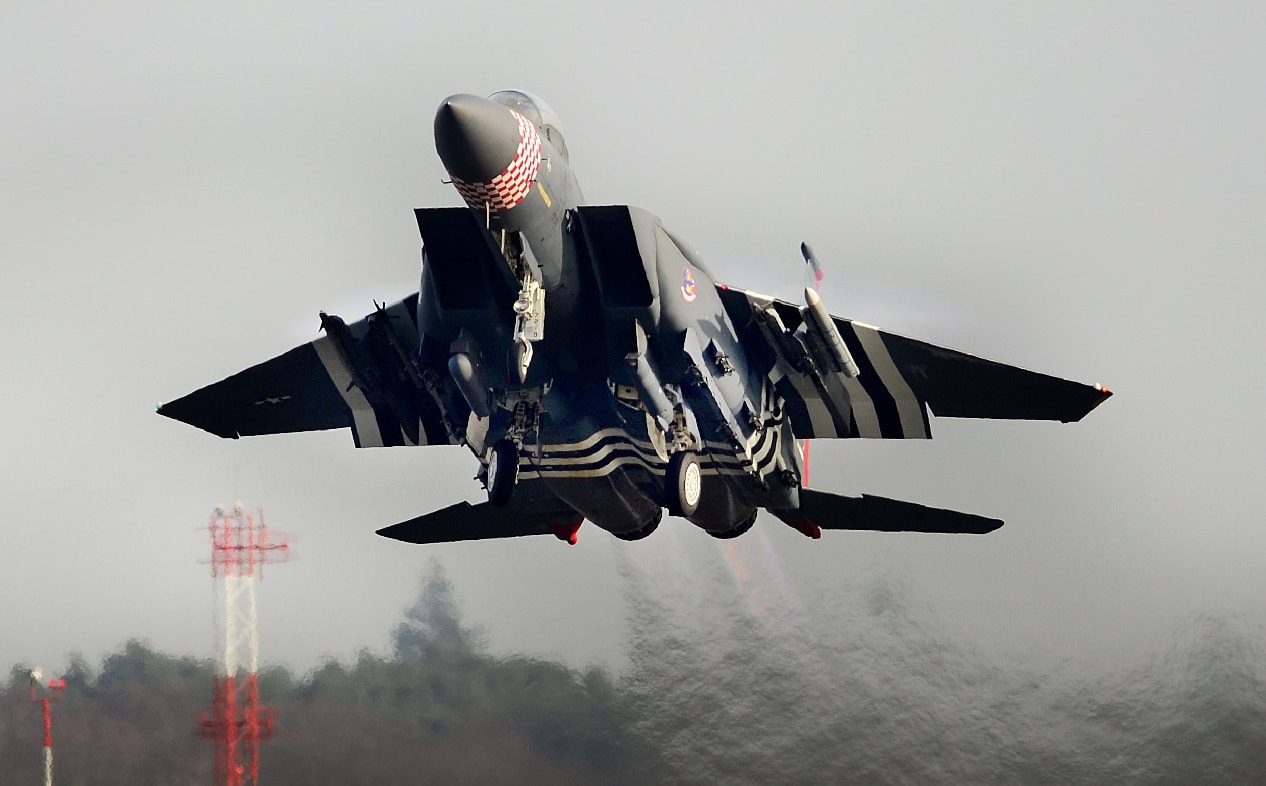
An F-15E Strike Eagle painted in the heritage colors of it’s P-47 Thunderbolt predecessor takes off from Royal Air Force Lakenheath, England Feb 6. The 48th Fighter Wing officially unveiled the aircraft publicly during a ceremony on Jan 31. (U.S. Air Force photo/Tech. Sgt. Matthew Plew)
-This 19FortyFive report analyzes the technical performance of the Pratt & Whitney F100-powered Strike Eagle, exploring how potential IFF communication failures led to the misidentification of these Mach 2.5 fighters despite their advanced AN/APG-70 radar and Sniper targeting pods.
104-0 Record Intact? Why the F-15E’s Friendly Fire Loss Doesn’t Count as a Combat Defeat
According to reports, three F-15E Strike Eagles were shot down by friendly Kuwaiti air defenses while taking part in combat missions against Iranian missiles and drones. Thankfully, no crewmen were significantly injured, according to American officials.
The incident raises many questions about the cohesion and cooperation between the USAF and its allies.
Three F-15E Strike Eagle Fighters Shot Down
Reports of at least one downed F-15 began circulating on March first, when videos of an F-15 spiraling to its death were first displayed on social media. U.S. CENTCOM later released a statement saying that three USAF F-15Es had been shot down due to “apparent” friendly fire incidents. Kuwaiti officials have also acknowledged the incident, apparently claiming responsibility.
Currently, the U.S. Air Force is conducting an investigation into the incident to figure out just how this could have happened. More skeptical commentators speculate that the aircraft may have actually been downed by Iranian air defense or aircraft, but as of now, there is no evidence to support such claims.
All aircraft were reportedly downed on March 2nd at 7:03 a.m. local time (which is March 1st at 11:03 a.m. Eastern Standard Time). According to reports by CNN, the aircraft that was downed in the viral video was shot down 6.2 miles away from Ali Al Salem airbase, which is operated by the Kuwaiti Air Force and is also frequently used to host other allied air forces. Friendly fire incidents are not unusual in large-scale conflicts, especially when multiple allied militaries are involved.
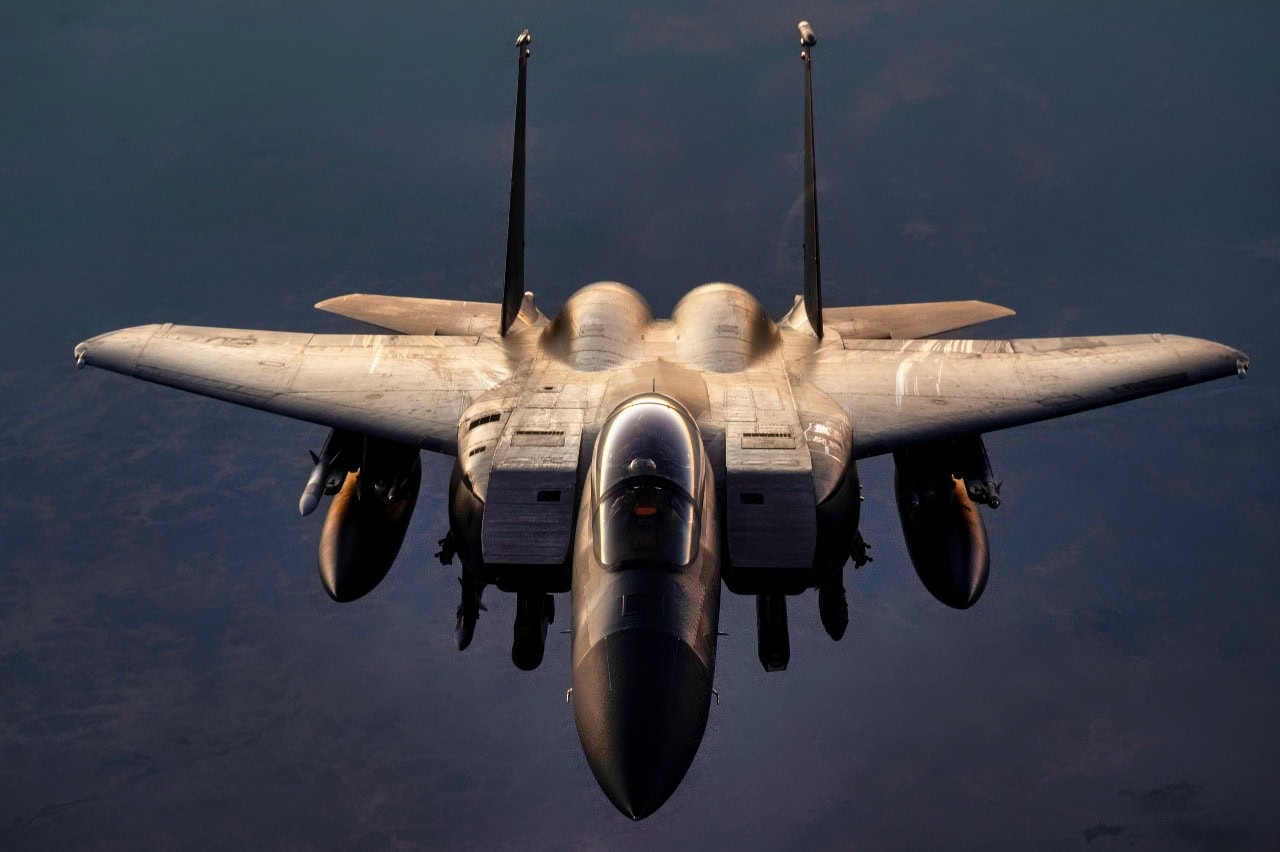
A U.S. Air Force F-15E Strike Eagle flies over the U.S. Central Command area of responsibility, Jan. 7, 2025. The F-15E’s superior maneuverability and acceleration are achieved through its high engine thrust-to-weight ratio and low-wing loading. (U.S. Air Force photo by Staff Sgt. William Rio Rosado)
Both Russia and Ukraine have reported instances of friendly fire throughout four years of war, but it is unusual to lose three aircraft in one day to friendly fire.
This can be excused by pinning the blame on inexperienced Kuwaiti operators, but with three back-to-back incidents, it is possible that a communication issue occurred, which led Kuwait AD systems to misidentify the F-15s. More details about the incident are likely to be released in the coming days.
Design and Development of the F-15E
The F-15E Strike Eagle grew out of the U.S. Air Force’s Dual-Role Fighter program in the early 1980s. The service needed an aircraft capable of long-range interdiction missions without relying on escorts or electronic-warfare aircraft. McDonnell Douglas proposed a heavily modified version of the F-15 airframe, which had already proven itself as a dominant air-superiority fighter.
The F-15E made its first flight on December 11, 1986, entered service in 1988, and achieved full operational capability in 1989. It was produced from 1985 to 2017, with 435 aircraft built across all variants.
The design philosophy was simple but ambitious: take the unmatched speed, power, and agility of the F-15 and turn it into a two-seat, all-weather strike aircraft capable of penetrating deep into enemy territory at night or in poor weather.
This required major structural reinforcement, new avionics, and a second crew member to manage the complex sensor and weapons systems.
Strike Eagle: Airframe, Engines, and Performance
The F-15E retains the twin-engine layout of the original F-15, powered by Pratt & Whitney F100 engines that allow speeds above Mach 2.5. The airframe is strengthened to handle higher takeoff weights and the stress of low-level, high-speed flight.
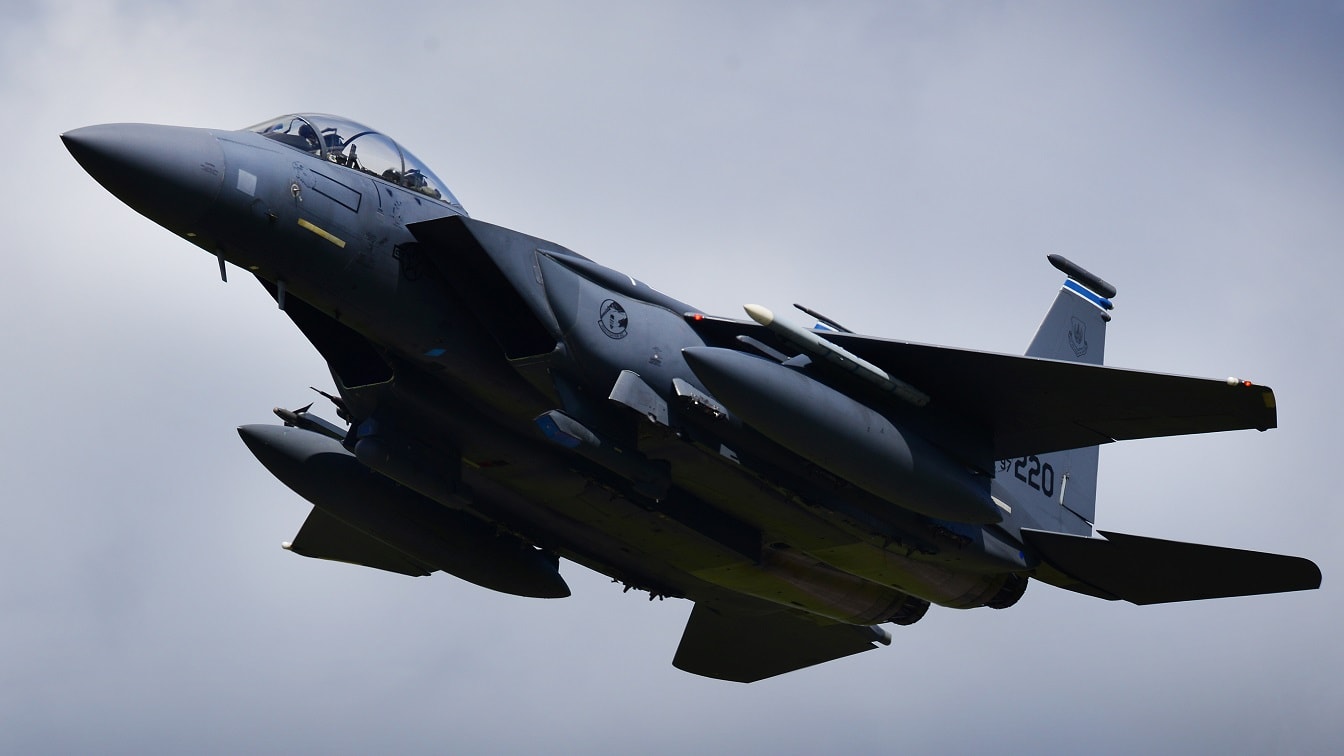
An F-15E Strike Eagle assigned to the 492nd Fighter Squadron flies over Royal Air Force Lakenheath, England, May 10. The 492nd trains regularly to ensure RAF Lakenheath brings unique air combat capabilities to the fight. (U.S. Air Force photo/ Tech. Sgt. Matthew Plew)
The large wing area and powerful engines give the aircraft exceptional climb performance and maneuverability, even when heavily loaded with bombs and fuel. The F-15E can also be equipped with conformal fuel tanks. These tanks hug the sides of the fuselage, adding significant fuel capacity without the drag penalty of external tanks. They also include hardpoints for additional weapons, increasing the aircraft’s already impressive payload.
The F-15E uses a two-crew cockpit: a pilot in the front seat and a weapons systems officer (WSO) in the rear seat.
The pilot focuses on flying the aircraft and managing air-to-air threats, while the WSO handles navigation, radar modes, targeting pods, and weapons employment. This division of labor is essential during complex strike missions, especially at night or in bad weather. The cockpit is equipped with advanced displays, night-vision compatibility, and digital flight controls. Over the years, the Strike Eagle has received multiple avionics upgrades, including new mission computers and improved data links.
Sensors and Avionics
The Strike Eagle’s AN/APG-70 radar and sensor suite is central to its mission. Its radar can perform terrain-following flight, ground mapping, and long-range target detection. Early F-15Es used the LANTIRN system, which enabled low-altitude night flight and precision laser targeting. Modern aircraft use more advanced targeting pods such as the Sniper or LITENING, which provide high-resolution imagery and improved tracking.
These systems allow the F-15E to identify, track, and strike targets with precision, even in poor visibility. They also enable the aircraft to operate independently, without relying on external guidance or support.
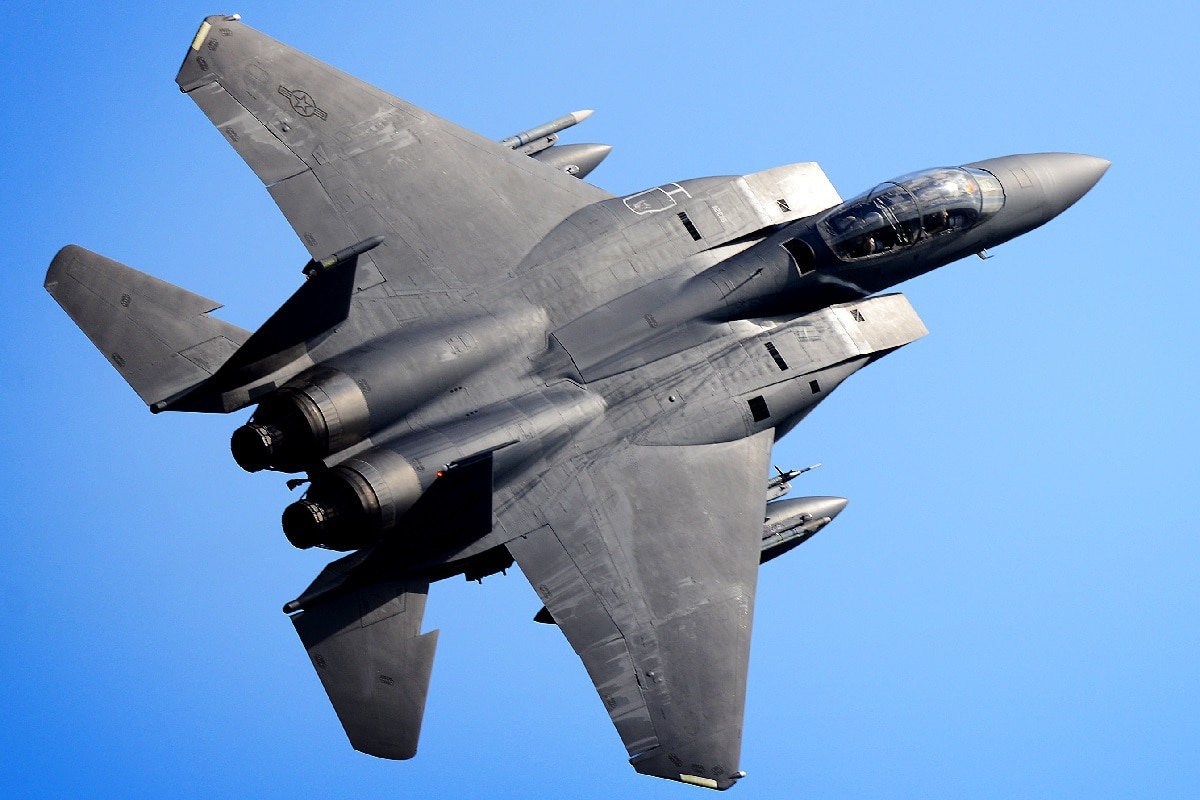
A Boeing (McDonnell Douglas) F-15E “Strike Eagle” assigned to the 492nd Fighter Squadron performs a high-speed pass over RAF Lakenheath, England, April 10, 2019. The 492nd conducts routine training daily to ensure RAF Lakenheath brings unique air combat capabilities to the fight when called upon by U.S. Air Forces in Europe-Air Forces Africa.
Mission Roles and Flexibility
The F-15E was designed primarily for deep-strike and interdiction missions. It can fly long distances, penetrate defended airspace, and destroy high-value targets, including command centers, air defenses, and infrastructure.
Its ability to carry both air-to-air and air-to-ground weapons allows it to self-escort, a rare capability among modern fighters.
The aircraft is also highly effective in close air support and battlefield air interdiction. Precision weapons such as JDAMs, laser-guided bombs, and small-diameter bombs allow it to support ground forces with accuracy and minimal collateral damage.
Despite being optimized for strike missions, the F-15E retains the dogfighting ability of the original F-15 and can defend itself or engage enemy fighters when necessary.
About the Author: Isaac Seitz
Isaac Seitz, a Defense Columnist, graduated from Patrick Henry College’s Strategic Intelligence and National Security program. He has also studied Russian at Middlebury Language Schools and has worked as an intelligence Analyst in the private sector.