
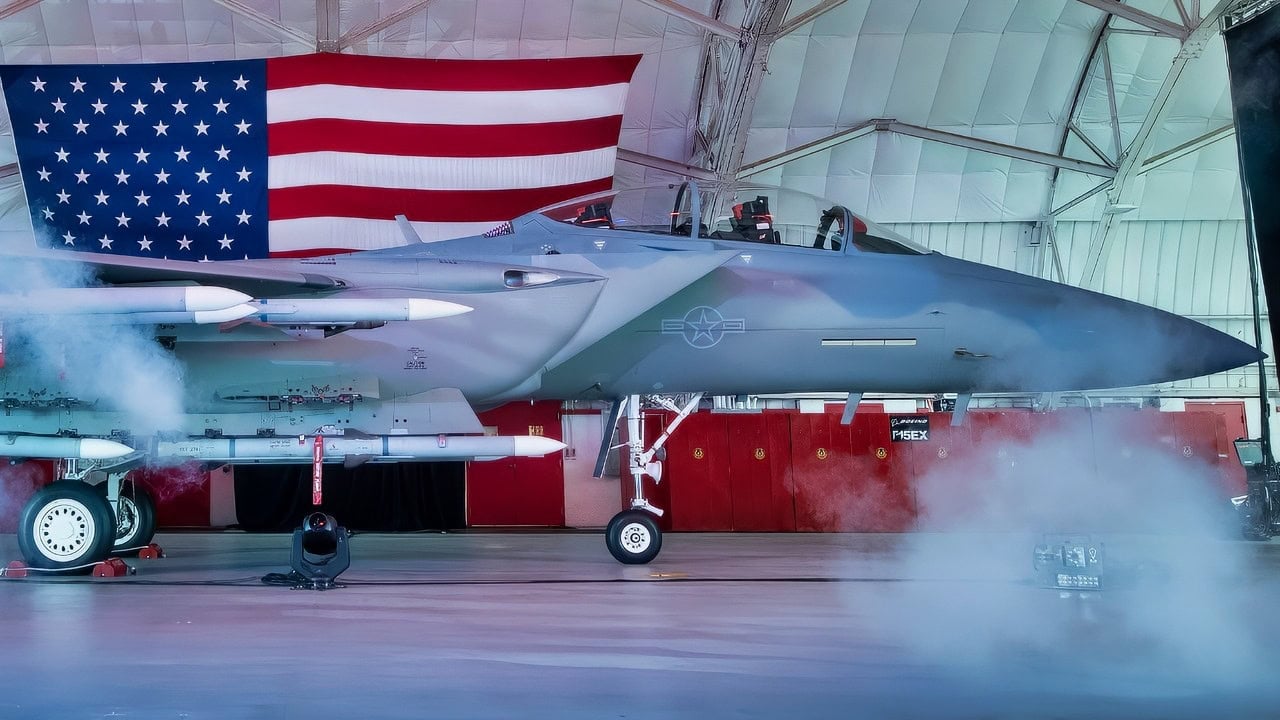
Summary and Key Points: Christian D. Orr, a senior defense editor and former Air Force Security Forces officer, evaluates the current production status of the Boeing F-15EX Eagle II.
-Despite a 104:0 air-to-air record, the series faces a 14-month delivery delay at Kadena Air Base due to a late-2025 labor strike at Boeing’s St. Louis facility.
-This 19FortyFive report analyzes the Eagle II’s 29,500-lb payload capacity across 23 weapons stations, comparing its “bomb truck” utility to the Lockheed Martin F-35 and F-22 Raptor, while exploring the integration of AGM-65 Mavericks and GBU-27 Paveway III munitions in the modern “Kill Web.”
The F-15EX Eagle II Fighter Delay Will Hit the Indo-Pacific Hard for the U.S. Air Force
Believe it or not, the F-15 Eagle fighter jet series is more than fifty years old. But the Eagle jet refuses to go gentle into that good night.
Part of the reason for the F-15 series’ longevity is its air-to-air combat track record. It is stilll undefeated, even after so many years, with an unmatched and mind-numbing 104:0 kill ratio.
An even more immediate reason for the Eagle’s endurance is multirole versatility. The F-15 has the ability to deliver air-to-ground ordnance with devastating precision and in volume. Its lethality is best exemplified by its two-seater “bomb truck” variants, starting with the “Mud Hen”—the McDonnell Douglas F-15E Strike Eagle—and running through its 4.5-generation sequel, the Boeing F-15EX Eagle II. Yes, the F-22 Raptor and F-35 Lightning can also carry bombs, but neither of these Skunk Works warbirds has the carrying capacity of an Eagle II.
However, as excellent as the F-15EX is, it’s facing some trouble.
The Scoop on the F-15EX Eagle II
The disturbing development comes to us courtesy of Stars and Stripes reporter Brian McElhiney:
“The Air Force has delayed delivery of the 18th Wing’s first F-15EX Eagle II fighters to Kadena Air Base on Okinawa, according to the wing. The wing expects an updated timeline for the aircraft’s arrival this spring, according to an unsigned email from Kadena on Tuesday. The delay is due to a strike at Boeing’s St. Louis plant that occurred from Aug. 4 to Nov. 17, Ann Stefanek, spokeswoman for the secretary of the Air Force, wrote in an email Tuesday. ‘The Air Force will continue to support the Kadena mission with rotational forces until the F-15EXs arrive.’ she wrote.”
In July 2024, the U.S. Air Force announced plans to permanently station 36 of the newer-version Eagles at Kadena to replace an aging fleet of 48 F-15C/D single-seat fighters. It was part of a broader effort to deploy more advanced combat aircraft across Japan as a bulwark against China and North Korea.
McElhiney adds that “The first F-15EX was expected to arrive between March and June, Brig. Gen. Nicholas Evans, wing commander at the time, told reporters last March. Production of the fighters halted during the strike at Boeing’s St. Louis facility, according to a Dec. 15 news release from the Air Force Life Cycle Management Center. The strike caused ‘significant disruptions to the delivery schedule, impacting the modernization of the U.S. Air Force’s fighter fleet,’ the release said.”
(Side Note: It’s still not known whether the Boeing strike will also affect construction of the F-47, since that prospective plane is still early in the development phase.)
Not All Bad News for Eagle II Deployment
Fortunately, despite the strike, deliveries of the F-15EX to the Air National Guard base belonging to the 142nd Wing in Portland, Oregon, resumed in December. The first operational specimens of the warbird were unveiled at that base in June.
Eagle II vs. Raptor and Lightning II Part I: Comparing Carrying Capacity
The Eagle II has a payload capacity of 29,500 lbs. vs. 18,000 lbs. for the Lightning II. The F-35’s stealth capabilities limit its payload because of the need to keep weapons internally stored.
The differential is even more pronounced when comparing the F-15 EX to the Raptor, which carries a mere 2,000-lb bomb loadout, which is 250 lbs. less than that of the single-engine, prop-driven, decidedly subsonic Douglas SBD Dauntless dive bomber of World War II.
Those 29,500 lbs. of ordnance are spread out across 23 weapons stations. Or, as Boeing’s official information page proudly proclaims: “Delivering best-in-class payload, range and speed, the F-15EX will serve as a backbone for any tactical fighter fleet – today and into the future…Building upon a legacy of air dominance, the F-15EX provides digital fly-by-wire flight controls, an all-glass digital cockpit, the latest mission systems and software capabilities, the ability to carry hypersonic weapons, and can leverage existing and future technologies to meet warfighter needs and defeat future threats – head on.”
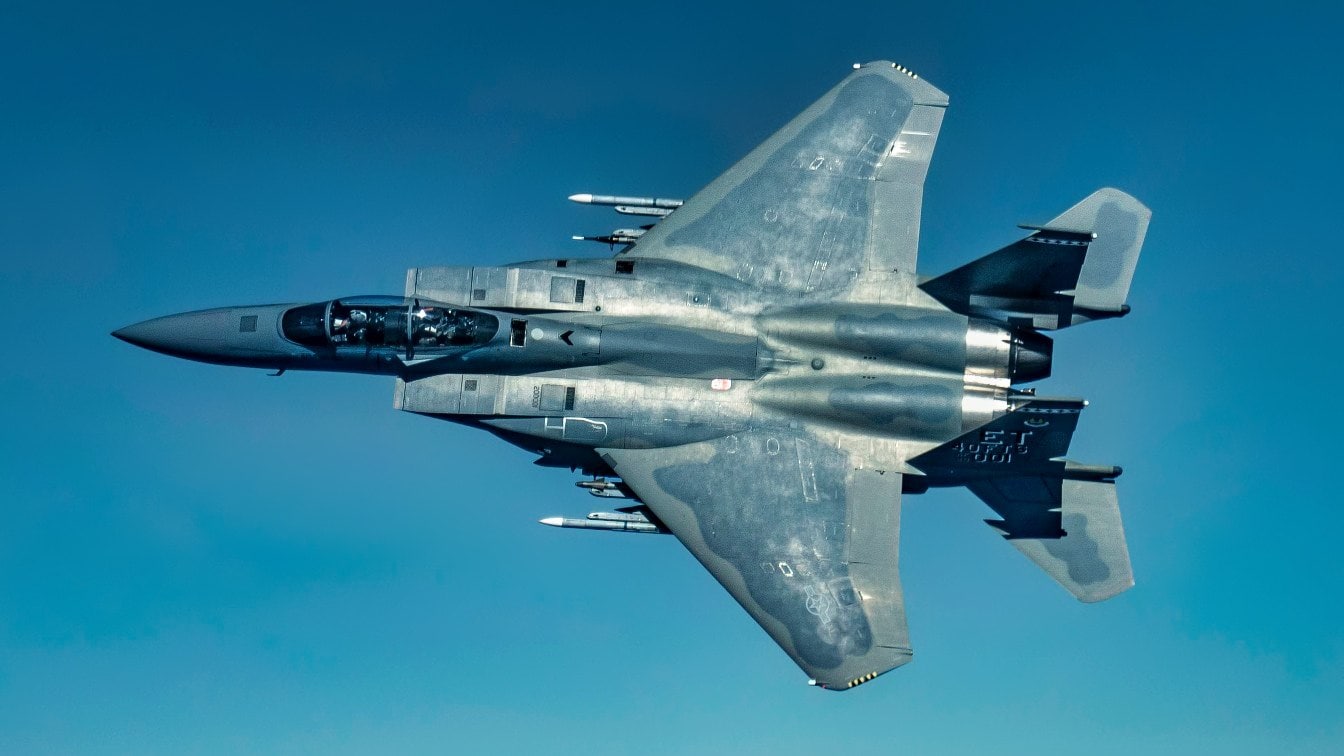
U.S. Air Force Lt. Col. Richard Turner, 40th Flight Test Squadron commander flies 40 FLTS Senior Enlisted Leader, MSgt Tristan McIntire during a test sortie in the F-15EX Eagle II over the Gulf of Mexico on Jun. 14, 2022. Assigned to the 96th Test Wing at Eglin Air Force Base, Fla., the F-15EX Eagle II is the Air Force’s newest 4th generation fighter being tested at the 40 FLTS. (U.S. Air Force photo by Tech. Sgt. John McRell)
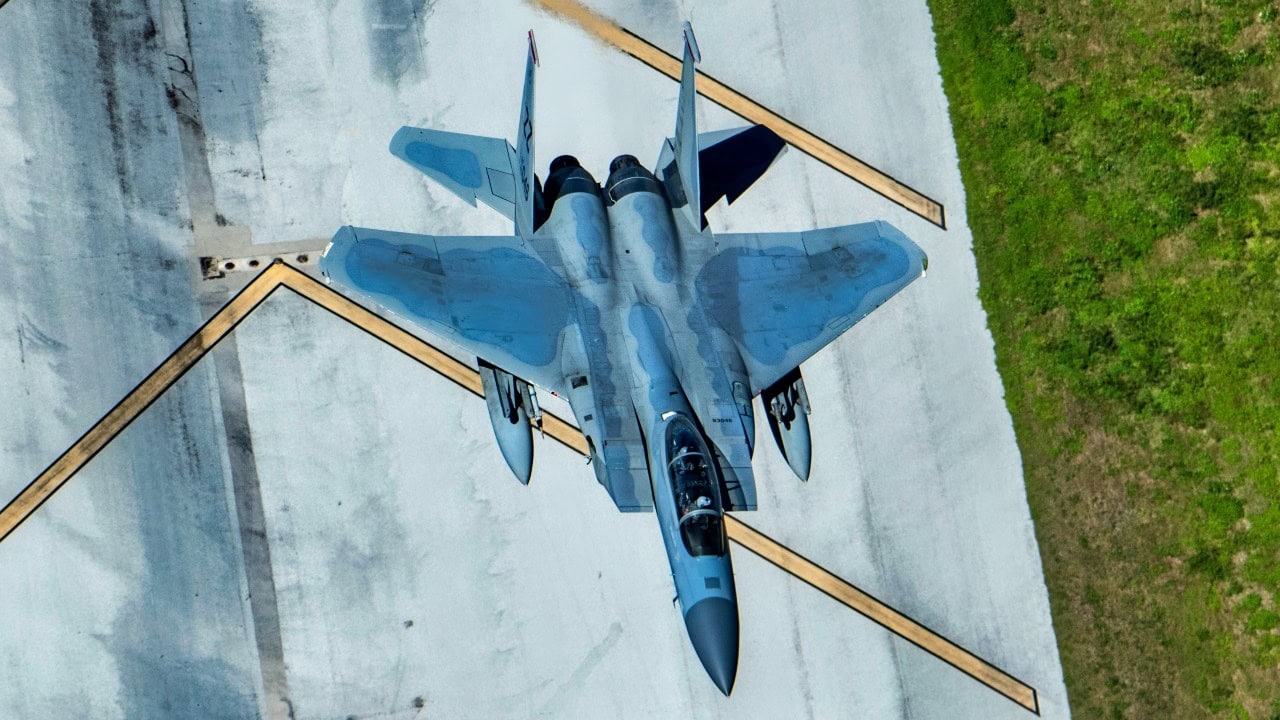
A U.S. Air Force F-15 Eagle II flies during a large show-of-force formation over Andersen Air Force Base, Guam, Mar. 6, 2019. CN19 is a long-standing exercise designed to enhance multilateral air operations amongst partner nations and includes humanitarian assistance and disaster relief airlift operations as well as large-force employment. Approximately 2,000 U.S. Airmen, Marines, and Sailors participated alongside approximately 800 RAAF and JASDF members during the exercise. (U.S. Air Force Photo by Senior Airman Xavier Navarro)
Some of the specifics air-to-ground weapons carried by the F-15EX include:
-AGM-65 Maverick: “AGM” stands for “Air-to-Ground Missile,” and the Maverick is an impressive representative of the category. It wields warheads between 125-300 pounds and reportedly can reach out to 12 miles with a max speed of 620 knots.
-GBU-27 Paveway III: One of the most impressive bombs the F-15EX can carry is the Raytheon Paveway III. Initially used by the F-117A Nighthawk, this bomb was nicknamed the “Hammer” by pilots during the 1991 Persian Gulf War—a nod to its considerable destructive power and blast radius. This bunker-busting bomb has a 1-ton mass and an effective range of 12 miles.
Eagle II vs. Raptor and Lightning II Part Deux: Comparing Production Numbers
The World Directory of Modern Military Aircraft provides hard and fast aircraft fleet numbers.
-F-15EX: 8 airframes currently operational, with 96 more on order

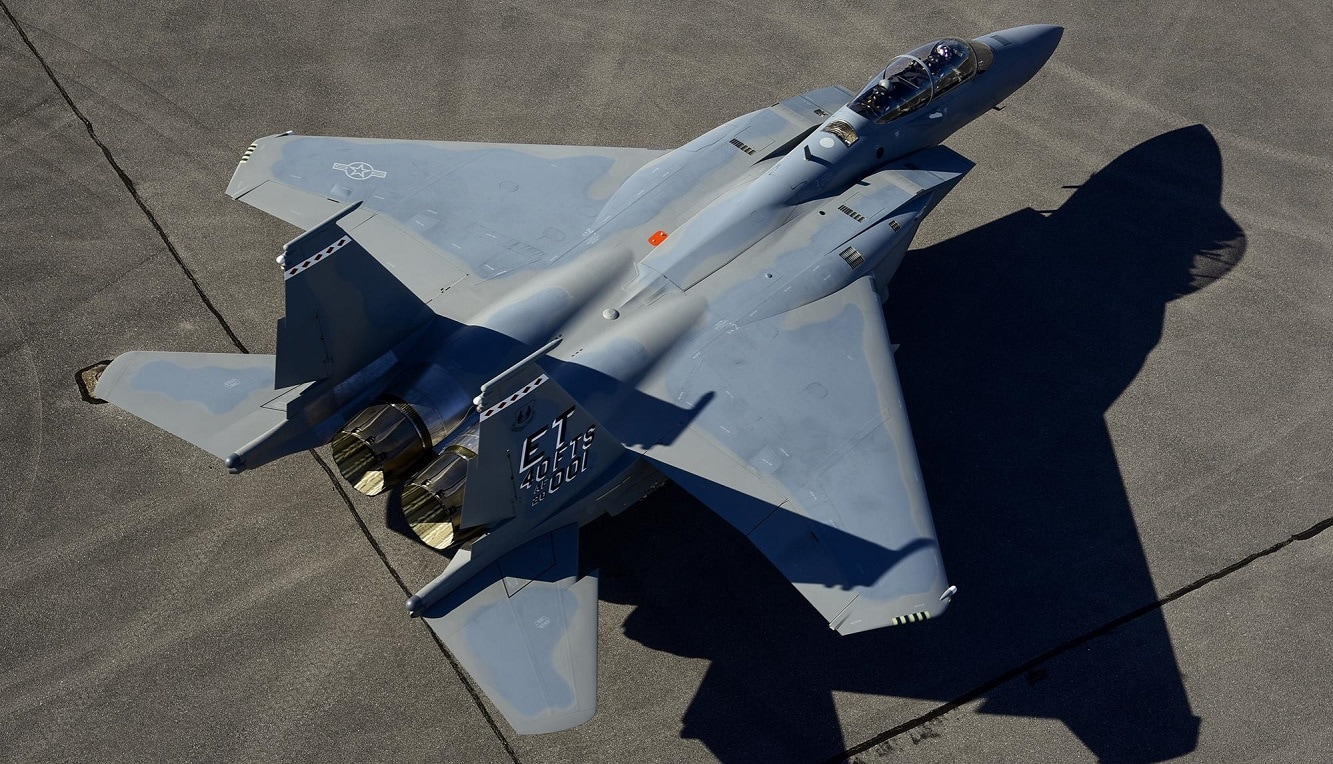
An F-15EX fighter jet taxis to its parking spot at Wright-Patterson Air Force Base, Ohio, Nov. 8, 2021. The jet visited Wright-Patt to give the Air Force Life Cycle Management Center’s F-15EX program office the opportunity to see the aircraft up close. (U.S. Air Force photo by Jaima Fogg)
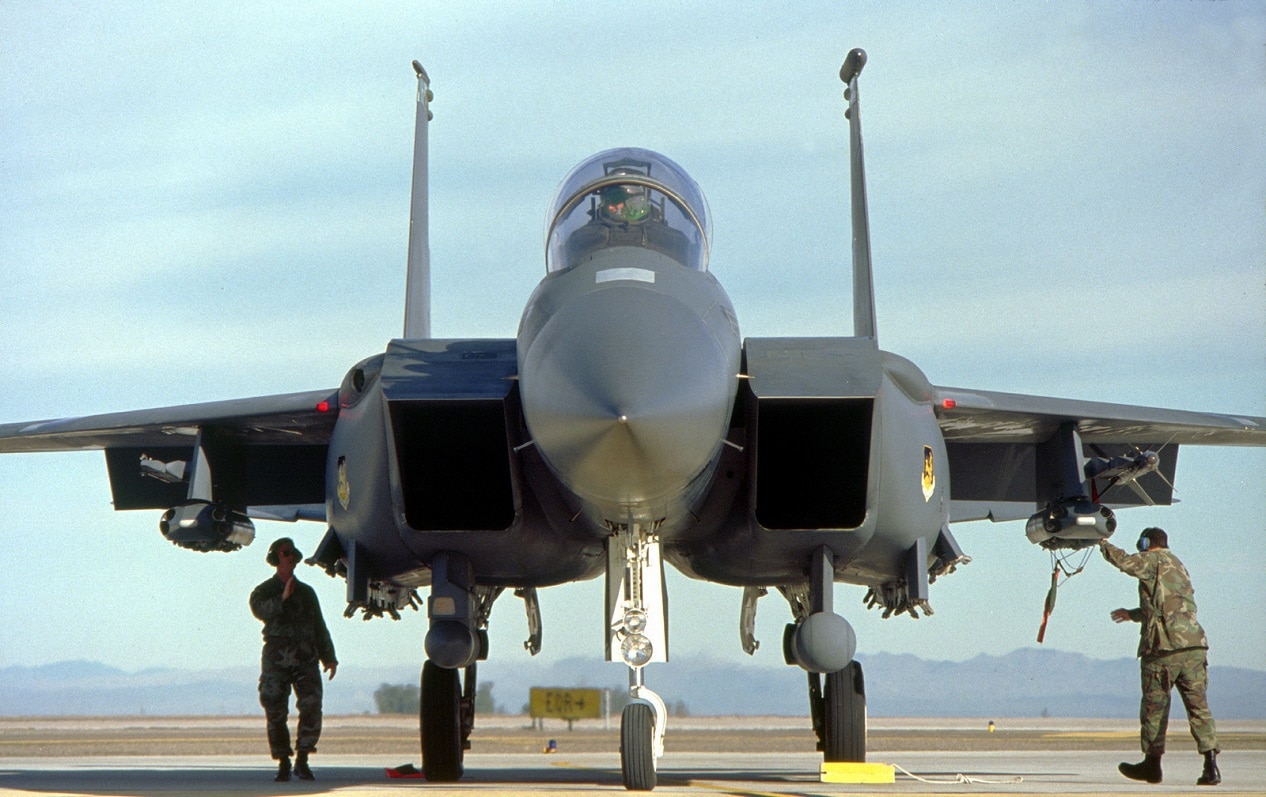
Staff Sgt. Dave Smith and Senior Airman John Pusieski from the 58th Operational Support Squadron, 58th Fighter Wing, peform last-minute checks and arm practice bombs on an F-15E Eagle aircraft from the 461st Fighter Squadron.
-F-15C: 137 airframes of this venerable variant still soldier on, and there are no more on order
-F-35A: 302 airframes currently operational, a whopping 1,545 more on order
-F-22A: 183 airframes currently operational, with no more on order.
F-35 production should continue to proceed smoothly, since Lockheed Martin is luckily not dealing with a labor strike, thus granting them at least temporary bragging rights over their Boeing rival.
About the Author: Christian D. Orr, Defense Expert
Christian D. Orr is a Senior Defense Editor. He is a former Air Force Security Forces officer, Federal law enforcement officer, and private military contractor (with assignments worked in Iraq, the United Arab Emirates, Kosovo, Japan, Germany, and the Pentagon). Chris holds a B.A. in International Relations from the University of Southern California (USC) and an M.A. in Intelligence Studies (concentration in Terrorism Studies) from American Military University (AMU). He is also the author of the newly published book “Five Decades of a Fabulous Firearm: Celebrating the 50th Anniversary of the Beretta 92 Pistol Series.”