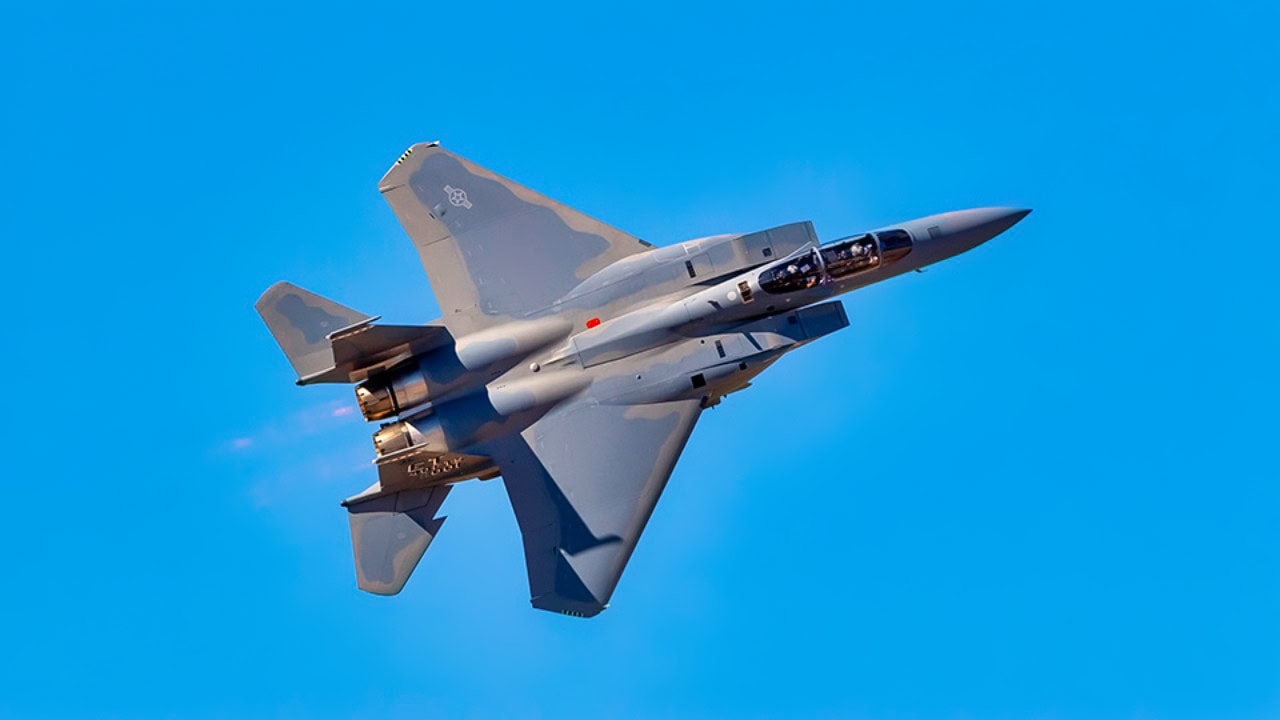
Summary and Key Points: The F-15EX Eagle II has officially deployed to Kadena Air Base in Okinawa, Japan, marking a significant technological leap for the Pacific theater.
-Capable of supersonic speeds of $Mach~2.5$ and processing 87 billion functions per second, the Eagle II is designed to “mass” airpower alongside the F-35. During the Resolute Force exercise, this 4.5-generation fighter demonstrated its role as a critical force multiplier against China’s growing J-20 and J-35 stealth fleets.
-With its ability to carry 12 missiles and fire hypersonic weapons, the F-15EX provides the long-range lethality required to dominate the airspace in China’s backyard.
Why the F-15EX Eagle II is Joining F-35s in China’s Backyard
Firing Hypersonic weapons, flying at supersonic speeds of Mach 2.5, jamming enemy fighter communications, flying semi-autonomously, and performing 87 billion computer functions per second are all attributes reported to be achievable by the emerging US Air Force F-15EX Eagle II plane.
These are all key reasons why the F-15EX conducted war-preparation drills in Japan alongside F-35s as part of a massive Pacific exercise called Resolute Force back in 2025.
The exercise took place at Kadena Air Base, Okinawa, Japan, in July 2025, marking the F-15EX’s first foreign deployment. Not only does the F-15EX employ advanced, 5th-generation-like technologies, but it can also serve as a critical force multiplier in support of stealthy 5th-generation aircraft.
The phrase “mass matters” is as cliché as it is relevant to today’s threat equation in the Pacific, as any large-scale engagement with China is likely to require large air-combat formations.
The arrival of long-range sensors, precision weaponry, and AI-enabled multi-domain networking has not removed the combat significance of simply “massing” force.
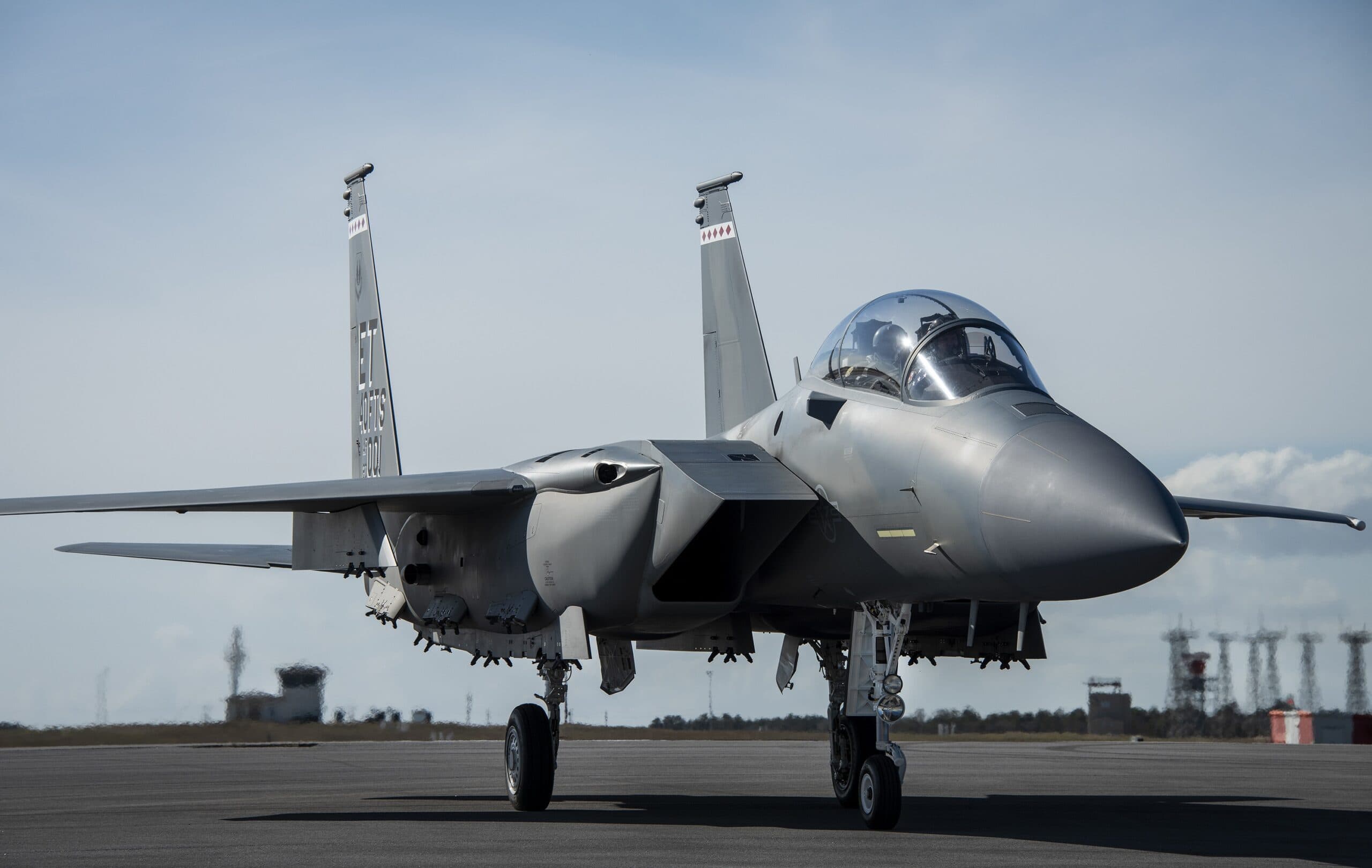
F-15EX Eagle II. Image Credit: Creative Commons.
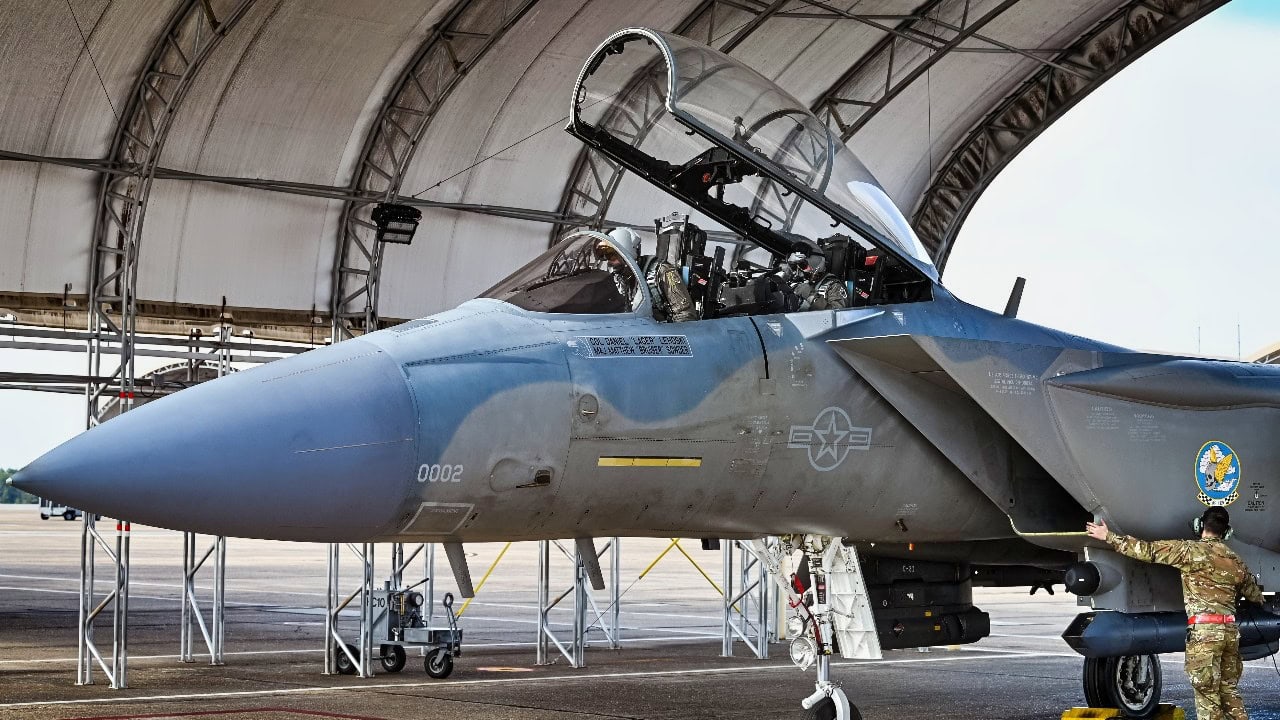
U.S. Air Force Maj. Aaron Eshkenazi, F-15EX Test Director for the 84th Test and Evaluation Squadron, performs preflight procedures for the F-15EX with Lt. Gen. Michael Koscheski, deputy commander of Air Combat Command, at Eglin Air Force Base, Florida, January 29, 2025. During his visit, Koscheski gained valuable insights from the 84th TES and 85th TES to help inform future decisions regarding the platform. The future F-15 fleet will complement 5th generation aircraft, bringing substantial additional capacity for over-sized long-range fires, sensors, and electronic warfare capabilities to defend critical locations in highly contested areas. (U.S. Air Force photo by 1st Lt. Rebecca Abordo)
“Mass” Matters: F-15EX Eagle II and F-35
This is particularly true in the event of a possible engagement with China, as the People’s Liberation Army Air Force is believed to operate hundreds of J-20 stealth aircraft and is fast building carrier-launched J-35 stealth aircraft.
Should stealthy 5th-generation aircraft such as F-22s and F-35s help establish air-superiority and create a protected “corridor” through which 4.5-Gen F-15EX attack aircraft can travel, an allied US-Japanese force would be well positioned to “mass” airpower.
While the US may have any number of forward-operating F-35s, Japan is quickly building a massive F-35 force due to its multi-billion-dollar deal to acquire them years ago.
Therefore, with proper interfaces and networking technologies, US F-15EX Eagle II aircraft could add great air combat value to an allied force in the Pacific.
Hence, it makes sense that the advanced “EX” variant would replace legacy F-15Cs in Japan.
Senior Air Force weapons developers cite the F-15EX’s long-range weapons capability as particularly important, as the aircraft could support forward-operating 5th-gen stealth aircraft with stand-off attack fires.
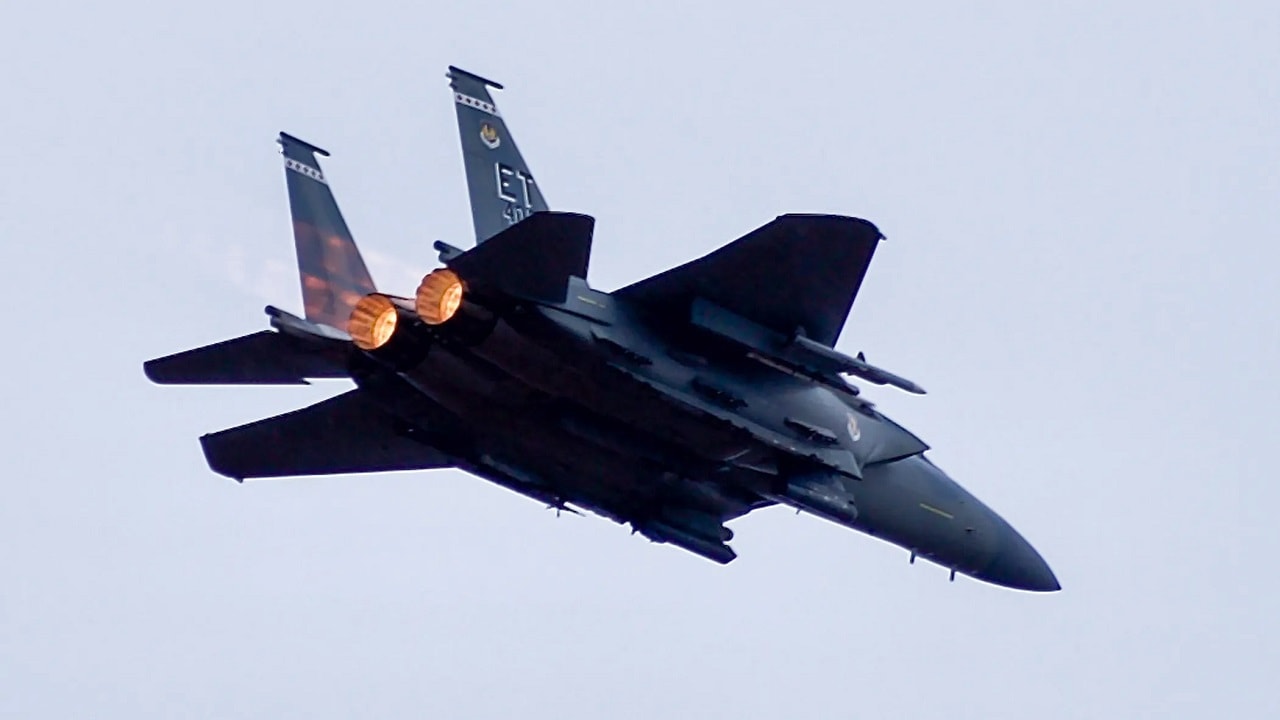
F-15EX Eagle II. Image Credit: Creative Commons.
F-15EX Innovations
Described by the Air Force as a two-seat fighter with US-only capabilities, the F-15EX is intended as a next-generation variant of the combat-tested, 1980s-era F-15 fighter.
While still a 4th-Generation aircraft, developers argue that the plane’s new technologies and upgradeability make it a viable, lethal, high-threat, high-environment-capability attack platform. Boeing developers say the outer mold line of the new F-15EX Eagle II variant is similar to that of the legacy aircraft, with some upgrades strengthening the wing and fuselage.
Boeing engineers also note that their builders used proprietary manufacturing techniques to improve the jet’s handling. They also changed the flight controls from hydromechanical to fly-by-wire. The F-15EX’s digital flight control system is designed to enable more carefree handling.
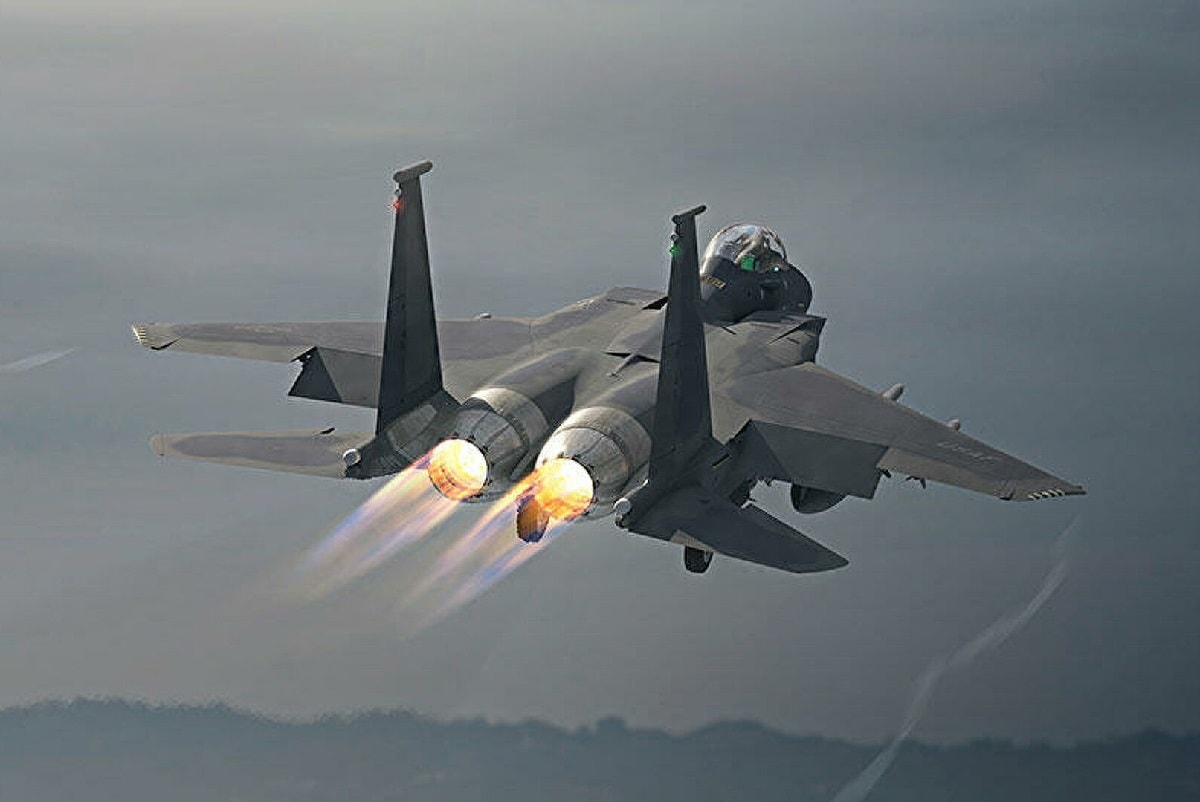
Boeing F-15EX Eagle II. Artist Image from Boeing.
87-Billion Functions per Second
Fly-by-wire flight controls naturally increase the degree of onboard computer processing and autonomy-enabling technologies, and the aircraft is reported to include massive avionics upgrades, including an integrated 10in X 19in digital touch-screen display.
Much of this is made possible through the integration of a new onboard computer system, reported by Boeing experts to be capable of performing 87 billion functions per second.
This emerging computer technology is also being leveraged to support a Mission Data Files system, a threat library that incorporates threat-specific data.
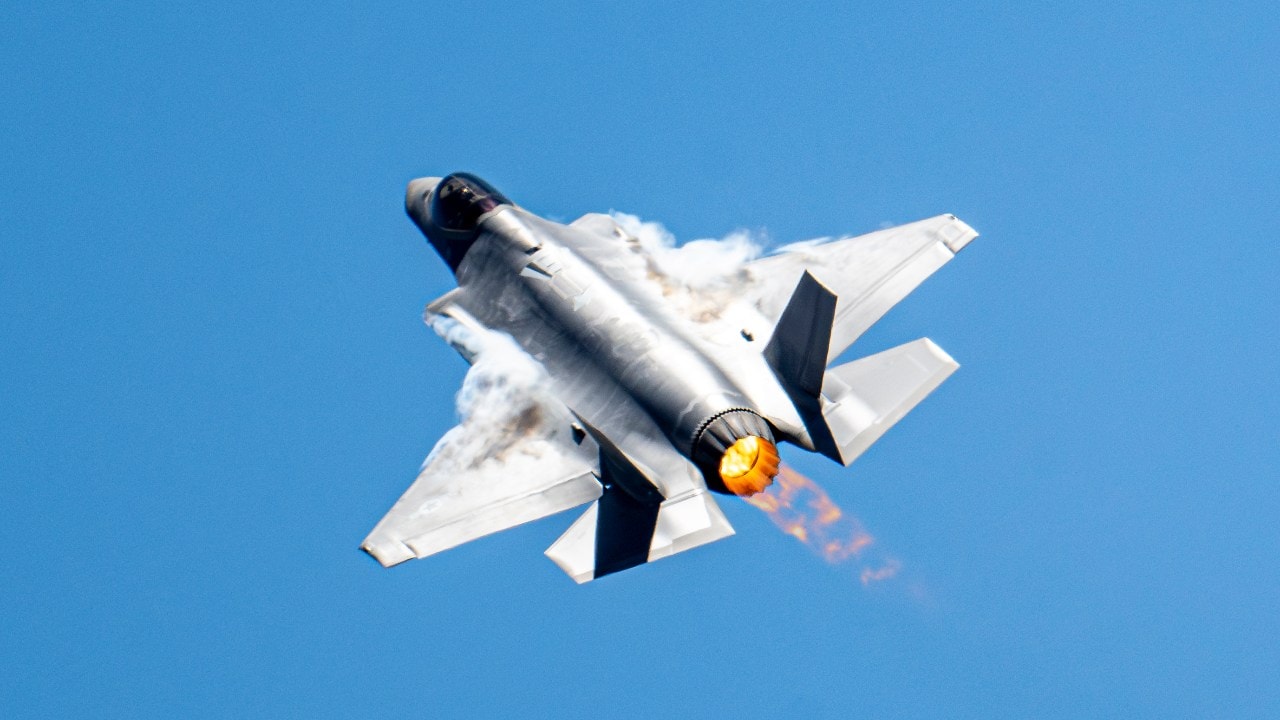
U.S. Air Force Maj. Melanie “Mach” Kluesner, pilot of the F-35A Demonstration Team, performs aerial maneuvers at the Wings and Eagles Airshow at Kingsley Field, Oregon, on July 19, 2025. The demonstration team travels across the country to showcase the power and precision of the world’s most advanced 5th-generation fighter jet. (U.S. Air Force photo by Senior Airman Nicholas Rupiper)
The system, described by Boeing experts as particularly relevant to electronic warfare, can draw on incoming sensor information, query a database of known threats, and identify specific enemy targets, such as a Russian fighter jet.
Other attributes or performance enhancements built into the F-15EX Eagle II include more thrust and an increased weapons-carrying capability, which places two new weapons stations further out on the wings.
The F-15EX Eagle II can now carry 12 missiles, as well as elements of its standard arsenal, including the AIM-120D, AIM-9X, and typical JDAMs.
About the Author: Defense Expert Kris Osborn
Kris Osborn is the President of Warrior Maven – Center for Military Modernization. Osborn previously served at the Pentagon as a highly qualified expert in the Office of the Assistant Secretary of the Army—Acquisition, Logistics & Technology. Osborn has also worked as an anchor and on-air military specialist at national TV networks. He has appeared as a guest military expert on Fox News, MSNBC, The Military Channel, and The History Channel. He also has a Masters Degree in Comparative Literature from Columbia University.