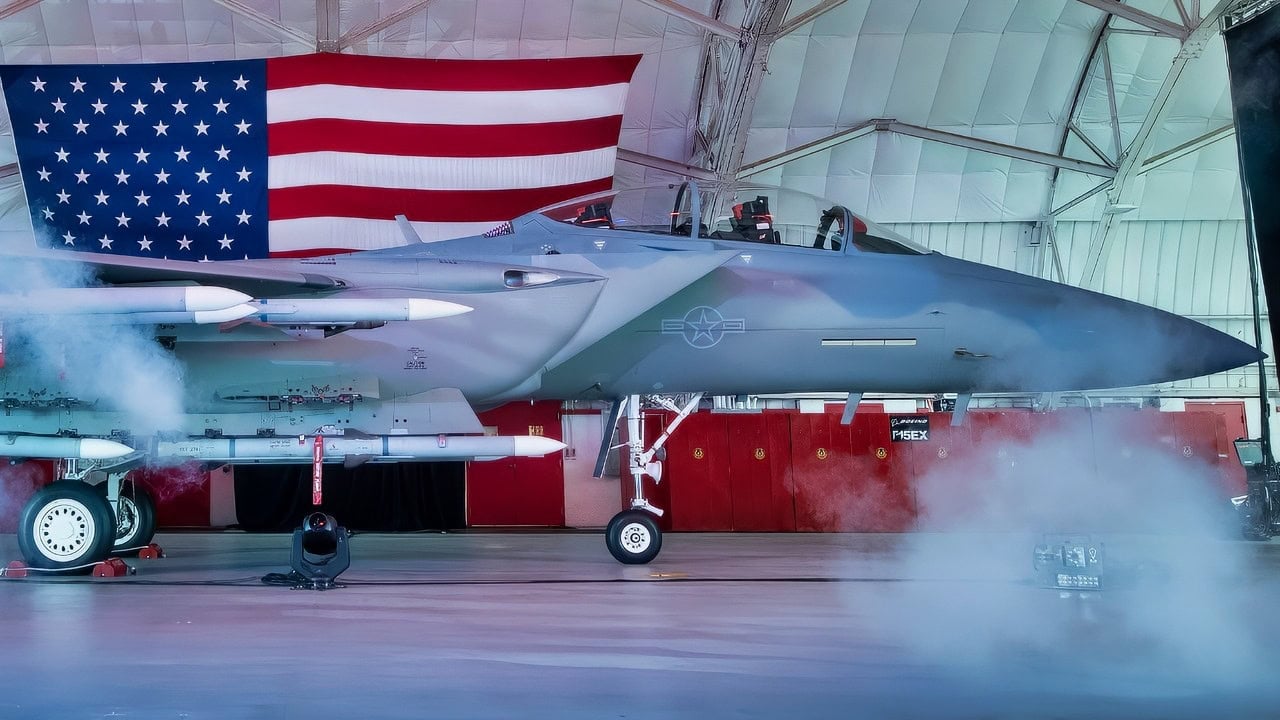
Summary and Key Points: Despite the global rush for 5th-generation stealth fighters, nations like the U.S. and South Korea are heavily investing in the “4.5-generation” F-15EX Eagle II to provide critical combat mass.
-South Korea is upgrading its F-15K “Slam Eagle” fleet to align with the F-15EX, which boasts a massive weapons payload, Mach 2.5 speed, and the ability to fire hypersonic missiles.
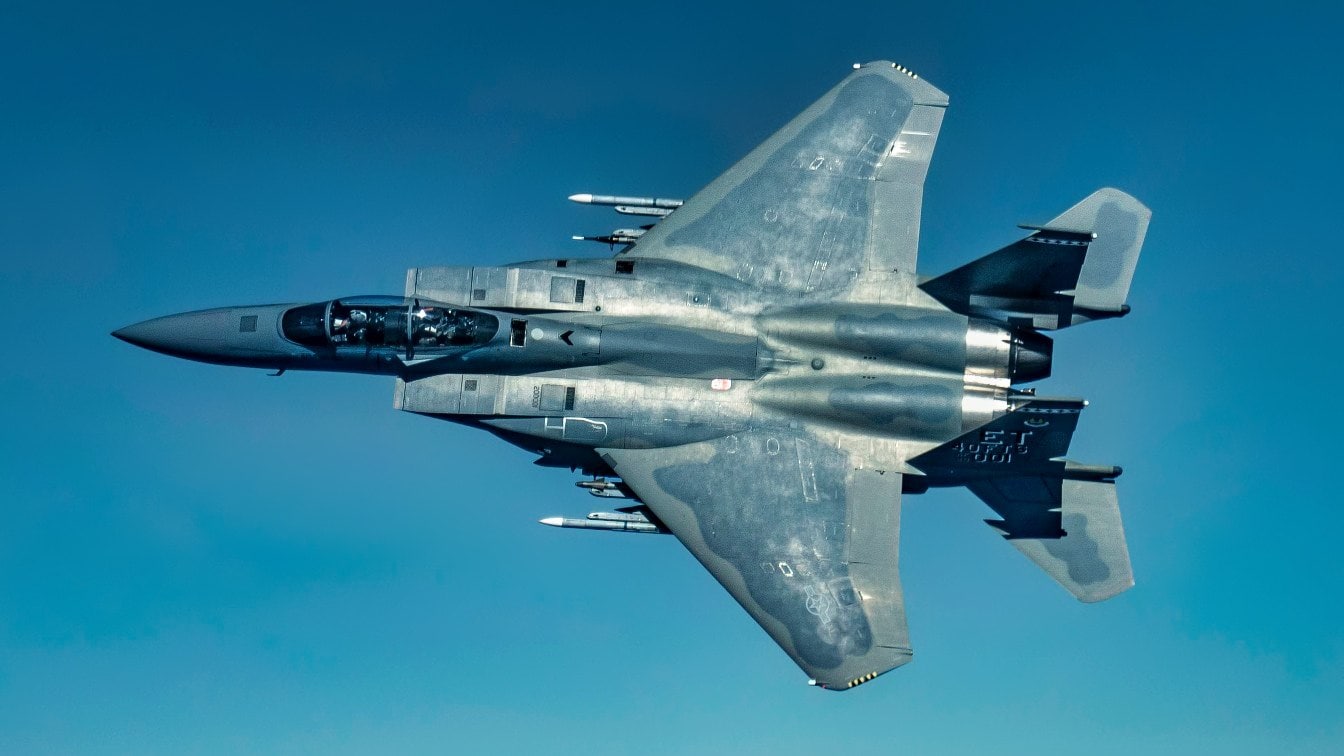
U.S. Air Force Lt. Col. Richard Turner, 40th Flight Test Squadron commander flies 40 FLTS Senior Enlisted Leader, MSgt Tristan McIntire during a test sortie in the F-15EX Eagle II over the Gulf of Mexico on Jun. 14, 2022. Assigned to the 96th Test Wing at Eglin Air Force Base, Fla., the F-15EX Eagle II is the Air Force’s newest 4th generation fighter being tested at the 40 FLTS. (U.S. Air Force photo by Tech. Sgt. John McRell)
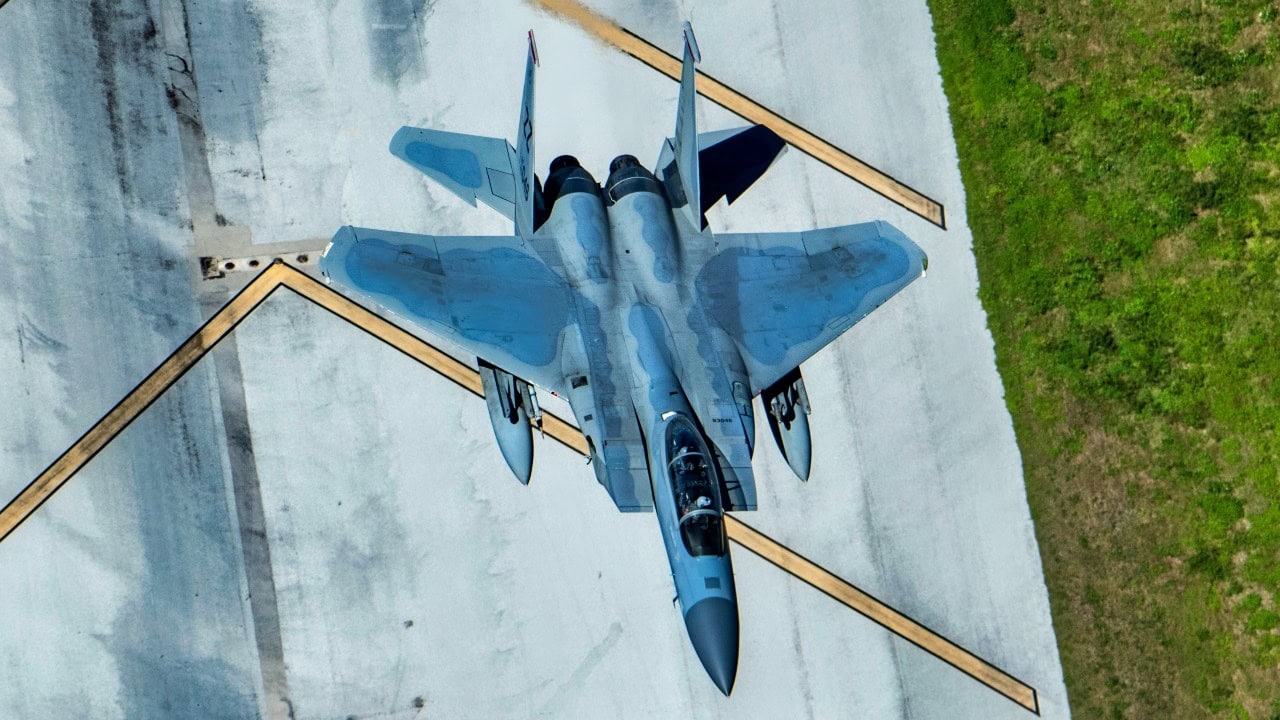
A U.S. Air Force F-15 Eagle II flies during a large show-of-force formation over Andersen Air Force Base, Guam, Mar. 6, 2019. CN19 is a long-standing exercise designed to enhance multilateral air operations amongst partner nations and includes humanitarian assistance and disaster relief airlift operations as well as large-force employment. Approximately 2,000 U.S. Airmen, Marines, and Sailors participated alongside approximately 800 RAAF and JASDF members during the exercise. (U.S. Air Force Photo by Senior Airman Xavier Navarro)
-While critics question its survivability against advanced Russian S-400s or Chinese J-20s due to a lack of stealth, proponents argue its next-gen AESA radar and super-fast computing (87 billion operations per second) allow it to destroy threats from stand-off ranges without entering the “engagement zone.”
Mach 2.5 & Hypersonics: The F-15EX Eagle II Is No Ordinary 4th-Gen Jet
As the world’s attention fixates on the high volume of fast-arriving 5th- and 6th-generation stealth fighters in places such as the US, China, and Russia, there is a less visible effort to ensure the value of upgraded 4th-generation aircraft is not fully dismissed or forgotten.
This is perhaps best evidenced through the growing arrival of the 4.5-gen F-15EX aircraft, a massively modernized and upgraded F-15 aircraft intended to help bring advanced mass air attack in support of 5th-generation stealth jets.
The Republic of Korea is one of the most recent countries to lend support to the continued combat value of non-stealthy F-15EX aircraft, as it is now upgrading its F-15K “Slam Eagle” fleet to align with the kinds of technologies woven into the F-15EX.
South Korea is already an F-35 country, so some might question the wisdom of adding upgraded 4th-gen aircraft such as the F-15EX, with various lethality and survivability upgrades.
Hypersonic F-15EX
As for its many attributes, the F-15EX may reportedly fire hypersonic weapons, reach Mach 2.5, and operate with one of the fastest processors ever used in a combat aircraft. Therefore, the extent to which the F-15EX could rival or challenge the Chinese J-20 or Russian Su-57 may not be fully known; it does appear possible that the new “4th-gen-plus” aircraft might be well positioned to destroy Russian and Chinese 4th-generation fighters, many of which are in service.
While considered a massively upgraded 4th-gen aircraft balancing itself on an interesting boundary between 4th- and 5th-gen aircraft, the F-15EX is, of course, less stealthy than full 5th-gen platforms such as the F-22 and F-35.
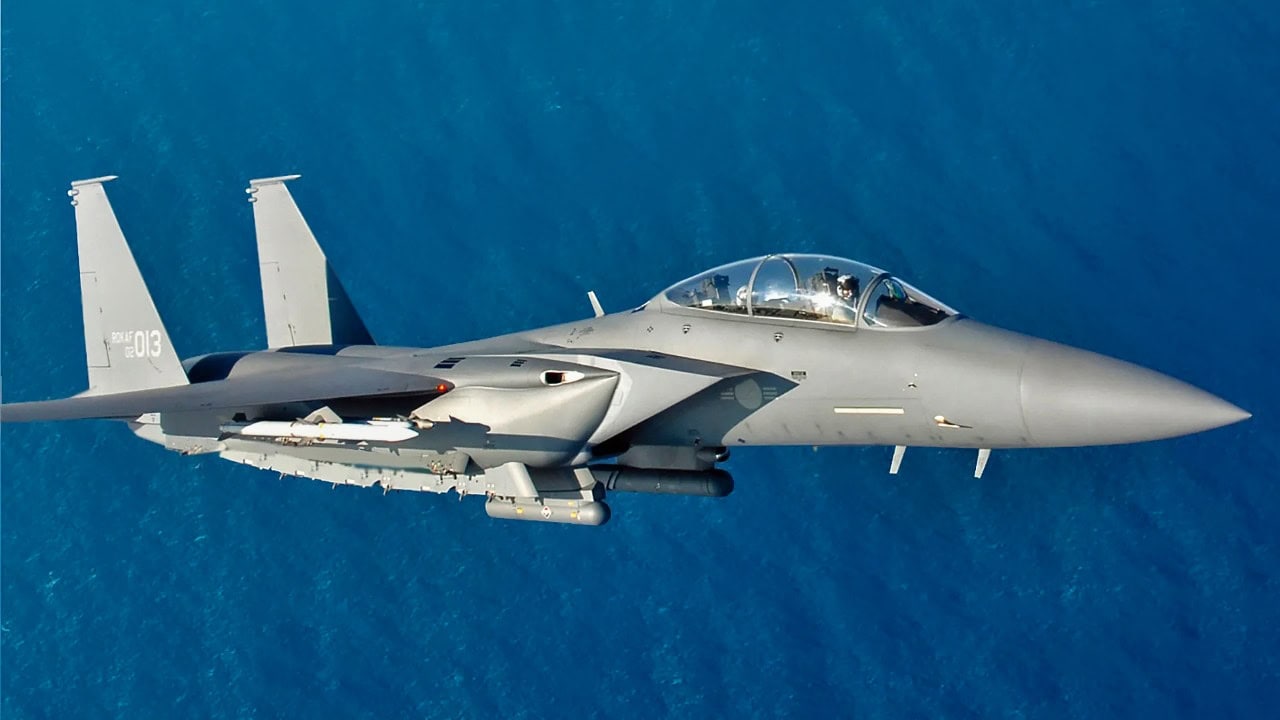
F-15K Slam Eagle. Image Credit: ROK Air Force.
However, a number of not-yet-seen innovations are built into the F-15EX to make it an impactful asset should it be needed for major power warfare.
There are many elements to this, based in large measure on the broad recognition that the 1980s-era aircraft is, essentially, an entirely different jet than it was decades ago.
Elements of the basic airframe structure are similar; however, the F-15EX is now engineered with a new generation of technologies intended to reshape its tactical significance in high-end warfare. Many of the innovations woven into the F-15EX also build on previous upgrade efforts by Boeing to extend the aircraft into the 2040s and beyond.
AESA F-15
The technological enhancements built into the F-15EX arguably make it much more effective than any existing 4th-generation aircraft, as it is engineered with a new suite of electronic warfare capabilities, an AESA (Active Electronically Scanned Array) radar, high-speed computer processing, and even the ability to fire new-generation weapons.
The thinking, as explained by developers, is to engineer a highly capable aircraft capable of taking on key high-risk missions that may not require a 5th- or 6th-generation plane.
Some have questioned the wisdom of building a non-stealthy F-15EX, given that major adversaries are likely to soon operate with threatening levels of 5th-generation stealth aircraft. It may not be entirely clear how many J-20s the Chinese will have in the future, and Russia is now building only a relatively small number of Su-57s so far.
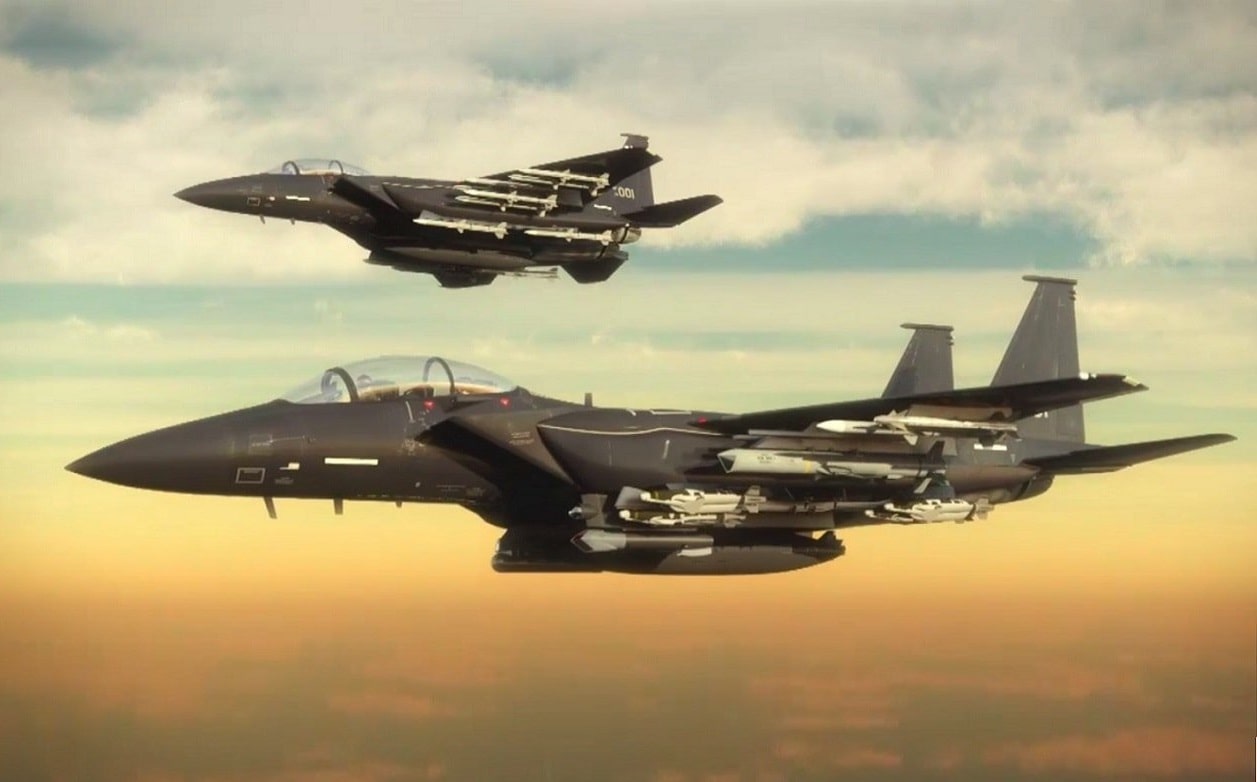
F-15EX Eagle II. Image Credit: Boeing.
The 5th-generation air threat posed by both Russia and China is quite significant and may require the US and its allies to “mass” larger formations of networked F-35s and new 6th-generation aircraft.
In recent years, Boeing developers have said that the F-15EX’sF-15EX’s Advanced Display Corps Processor performs 87 billion computing operations per second. This and other F-15EX attributes, however, may not compensate for a clear lack of stealth.
Non-Stealthy F-15
The lack of stealth suggests that the F-15EX could indeed be quite vulnerable to now highly advanced Russian and Chinese air defenses. The Russian press claims that the S-400 and S-500 air defense systems can detect and destroy stealth aircraft.
This may or may not actually be true, as establishing an “engagement” track on 5th-generation stealth fighters is much harder than simply “detecting” that something is in the area.
However, Russian air defenses, and possibly Chinese HQ-9s, are believed to operate across a wider range of frequencies, detect aircraft at higher altitudes, and use digital networking and processing to connect otherwise disparate threat-detection nodes.
If an F-15EX had the long-range sensors, varied guidance systems, advanced computing, threat library identification data, and vastly improved weapons reach, could it destroy enemy air defenses or 5th-Gen platforms without having to engage itself in proximity?
Should an F-15EX operate with the sensing, AI-enabled computing, threat identification, and radar technology and long-range weapons guidance systems in any way comparable to existing 5th-Gen aircraft, then there certainly may be an argument for deploying the F-15EX in a major power warfare scenario amid an attack campaign aimed at establishing air superiority against an advanced rival.
After all, part of the rationale for F-35 superiority is based upon the notion that it is designed to find and kill multiple enemy aircraft and air defenses before it is even seen. Could this be possible for a non-stealthy F-15EX Eagle II? Perhaps. Yet arguably not at the same time, as stealth is considered by many to be an indispensable attribute when it comes to countering advanced air defenses.
F-15EX Eagle II Moves Forward
This may be the thinking among advocates; however, many 5th-Gen advocates are likely to insist that only a true, stealthy 5th-Gen aircraft could succeed in such advanced, ultrahigh-threat great-power war scenarios. Some have gone so far as to suggest that an advanced 4th-Gen aircraft linger in a liminal zone, meaning it may be far too advanced for counterinsurgency yet not capable of engaging the most high-end great-power threats.
About the Author: Kris Osborn
Kris Osborn is the President of Warrior Maven – Center for Military Modernization. Osborn previously served at the Pentagon as a highly qualified expert in the Office of the Assistant Secretary of the Army—Acquisition, Logistics & Technology. Osborn has also worked as an anchor and on-air military specialist at national TV networks. He has appeared as a guest military expert on Fox News, MSNBC, The Military Channel, and The History Channel. He also has a Masters Degree in Comparative Literature from Columbia University.