
Summary and Key Points: Analysts are debating whether the U.S. should export its upcoming sixth-generation fighters, the Air Force’s F-47 and Navy’s F/A-XX, or keep them exclusive like the F-22.
-While an allied fleet similar to the F-35 could offer decisive advantages through shared data links and massed formations, the risk of proliferation is high.
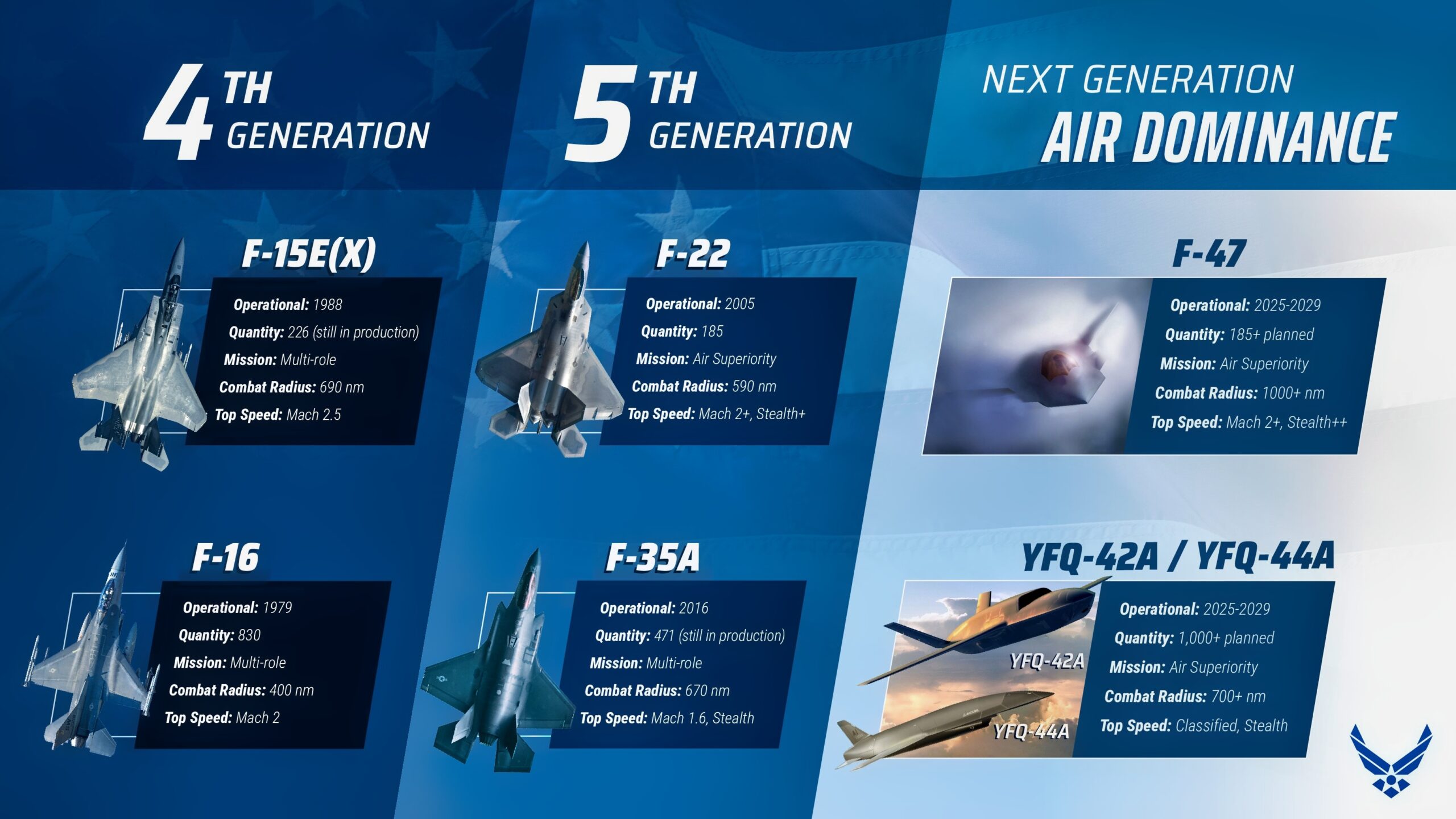
F-47 Infographic. Image Credit: U.S. Air Force
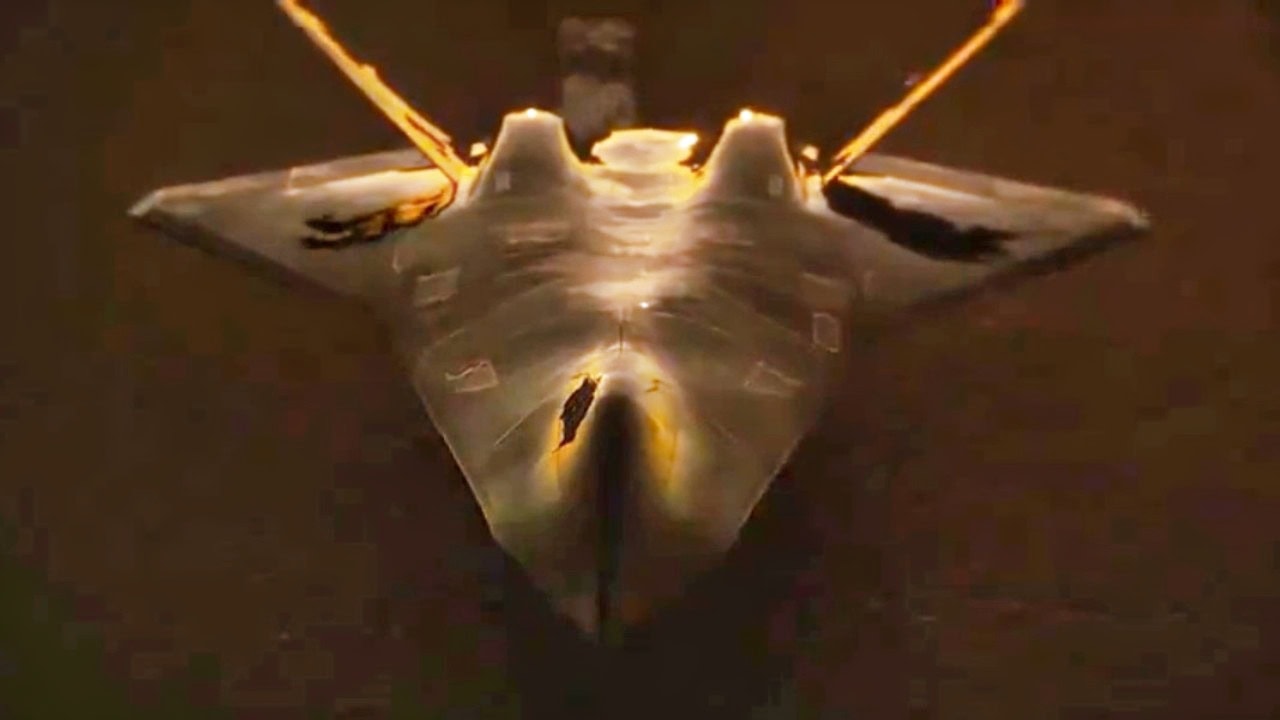
F-47 Fighter from Boeing. Image Credit: U.S. Air Force Screenshot.
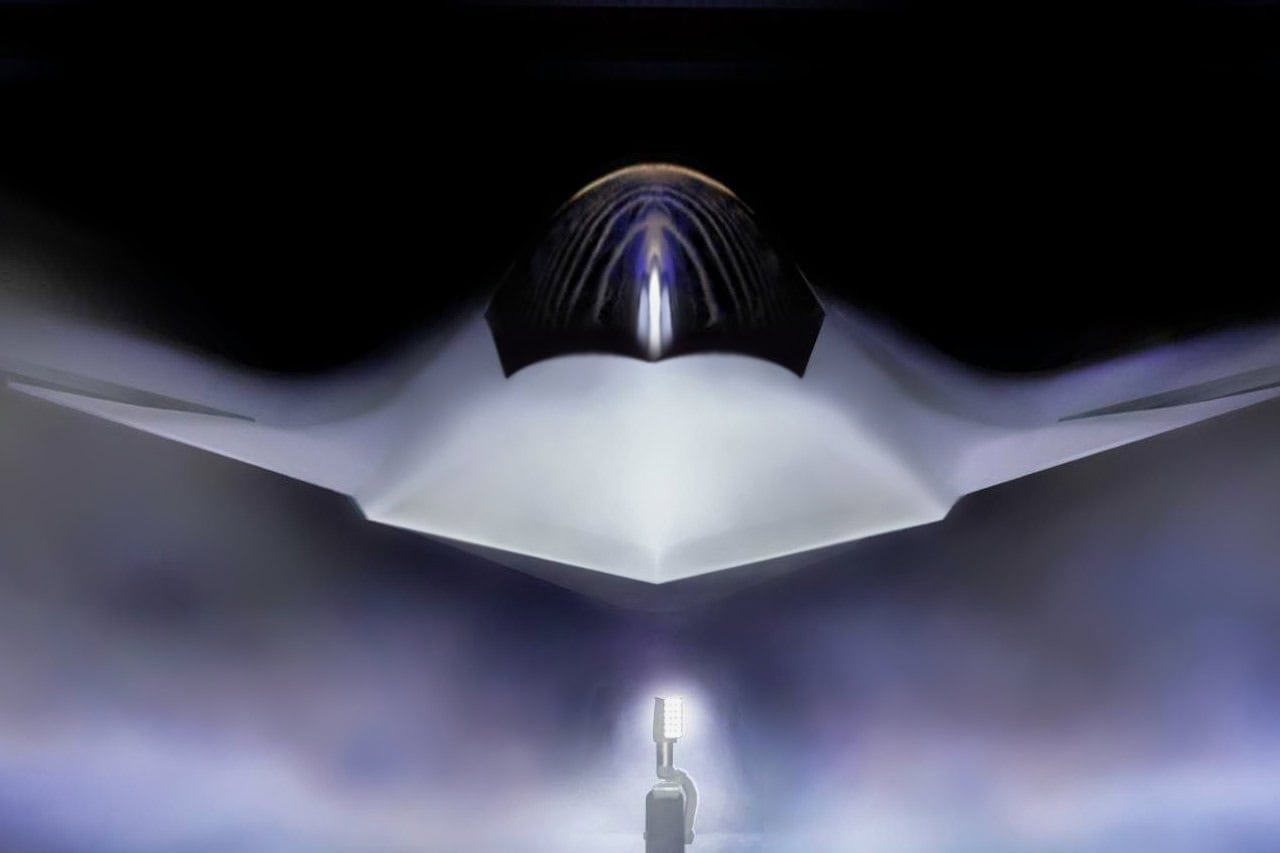
Shown is a graphical artist rendering of the Next Generation Air Dominance (NGAD) Platform. The rendering highlights the Air Force’s sixth generation fighter, the F-47. The NGAD Platform will bring lethal, next-generation technologies to ensure air superiority for the Joint Force in any conflict. (U.S. Air Force graphic)
-These new jets are designed as “AI-enabled command nodes” capable of controlling drone swarms and conducting multi-domain warfare.
-Experts warn that selling such paradigm-changing technology introduces long-term security risks if geopolitical alliances shift, potentially forcing the U.S. to safeguard its most advanced secrets.
Secret Like the F-22 or Global Like the F-35? The Battle Over Selling the F-47 NGAD
In considering the future of the upcoming F-47 and F/A-XX fighter jets, analysts wonder whether the platforms will be for U.S. use only, such as the Air Force’s F-22, or whether they will be sold to allies like the F-35. There are advantages and concerns associated with each choice. It is worth analyzing the complex strategic variables.
Very few specifics are known about the new technologies being built into sixth-generation fighters. But according to comments from U.S. military leaders, the new platforms will combine paradigm-changing stealth and speed with the ability to control a family of drones and operate as an AI-enabled flying command-and-control node.
While the F-47, a part of the U.S. Air Force’s Next Generation Air Dominance (NGAD) program, is believed to be the stealthiest fighter yet produced, it will also provide aerial command and control, performing critical sensing, data analysis, and transmission across a multi-domain force.
Not only will the F-47 and the Navy’s future F/A-XX control drones from the sky to conduct forward surveillance, test enemy air defenses, and deliver strikes when directed by a human, but they are also expected to introduce unprecedented levels of sensing, computing, and AI-enabled data analysis.
Weapon developers expect as many as 600 fifth-generation F-35s to be in service across the European continent. With a common data link and ability to mass and disperse across wide formations, a similar multinational force of allied sixth-generation stealth aircraft could prove decisive in any major conflict. Technological superiority alone may not be sufficient to ensure combat overmatch, so large numbers of sixth-generation aircraft would likely be needed for the U.S. and its NATO allies to prevail.
Alongside speed, agility and lethality, the upcoming fighters should showcase breakthroughs in AI and multi-domain networking.
More secure, integrated, and seamless networking technology opens up new operational possibilities; a multi-national group of F/A-XX jets could operate across a vast theater to share data, control drones, transmit targeting and intelligence information, and optimize the speed, method, and effectiveness of attacks.
Case of the F-35
The F-35 makes a strong case for a multinational allied force.
The F-35 is specifically engineered with a common, multinational data link called the Multifunction Advanced Data Link, which enables all F-35s from all member nations to securely and quickly share data across expansive air combat formations.
This networking capability could, in theory, be applied to a multinational force of allied F-47s and F/A-XXs, enabling them to network and coordinate attacks.
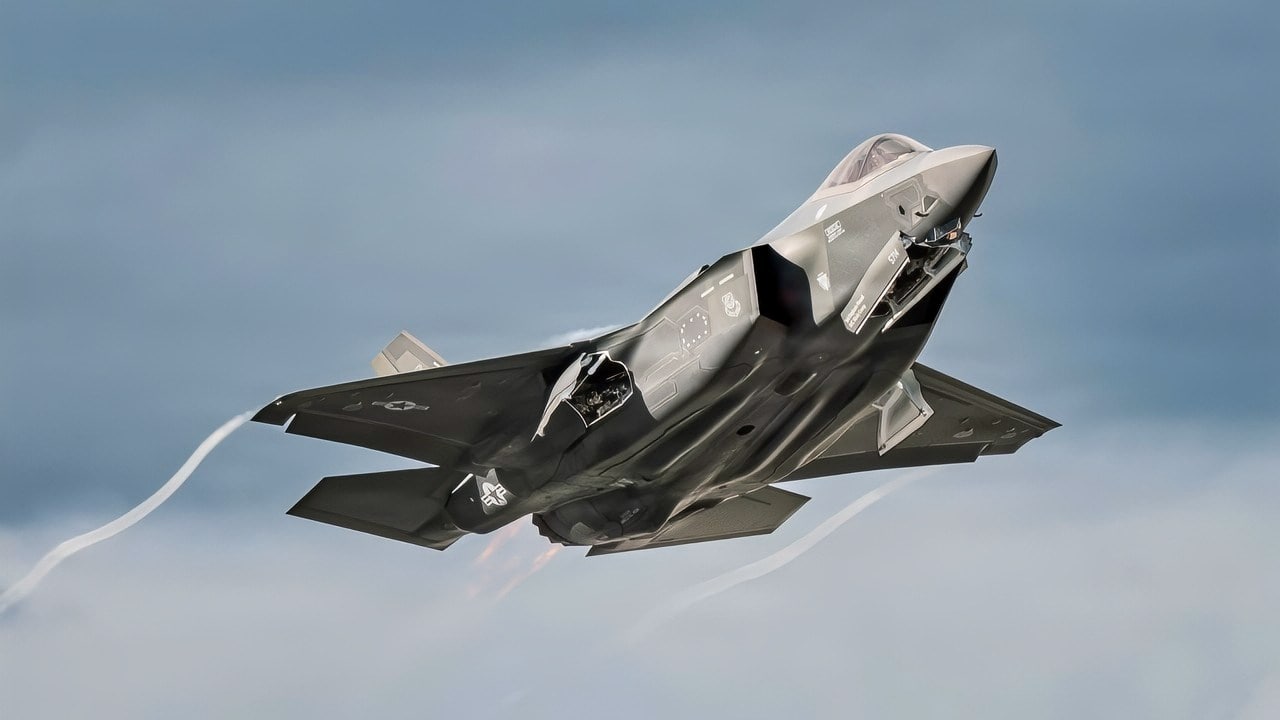
A U.S. Air Force F-35 Lightning II assigned to the 6th Weapons Squadron takes off in support of a U.S. Air Force Weapons School Integration (WSINT) mission at Nellis Air Force Base, Nevada, Nov. 18, 2025. WSINT incorporates multiple aircraft, domains and mission sets to challenge participants with dynamic problem-solving. (U.S. Air Force photo by Senior Airman Lauren Clevenger)
F-22-like Unique superiority
The argument against selling NGAD is also clear and straightforward: the need to safeguard some of the most advanced and unique technologies the world has ever seen.
There is always the possibility that today’s allies may not be allies in 20 or 30 years, so selling a platform with such capabilities introduces a measure of long-term risk. The geopolitical landscape could change in unpredictable ways, which could place the U.S. at risk.
To safeguard against this contingency, allies are often sold scaled-back “export variants” of top-level U.S. military platforms to protect American superiority. Yet even export variants of a platform such as the NGAD would likely be extremely dangerous if used against the United States.
It may be that its technologies are simply too advanced, unique, and paradigm-changing in the realms of stealth, sensing, networking, and computing to share in any capacity.
About the Author: Kris Osborn
Kris Osborn is the President of Warrior Maven – Center for Military Modernization. Osborn previously served at the Pentagon as a highly qualified expert in the Office of the Assistant Secretary of the Army—Acquisition, Logistics & Technology. Osborn has also worked as an anchor and on-air military specialist at national TV networks. He has appeared as a guest military expert on Fox News, MSNBC, The Military Channel, and The History Channel. He also has a Masters Degree in Comparative Literature from Columbia University