
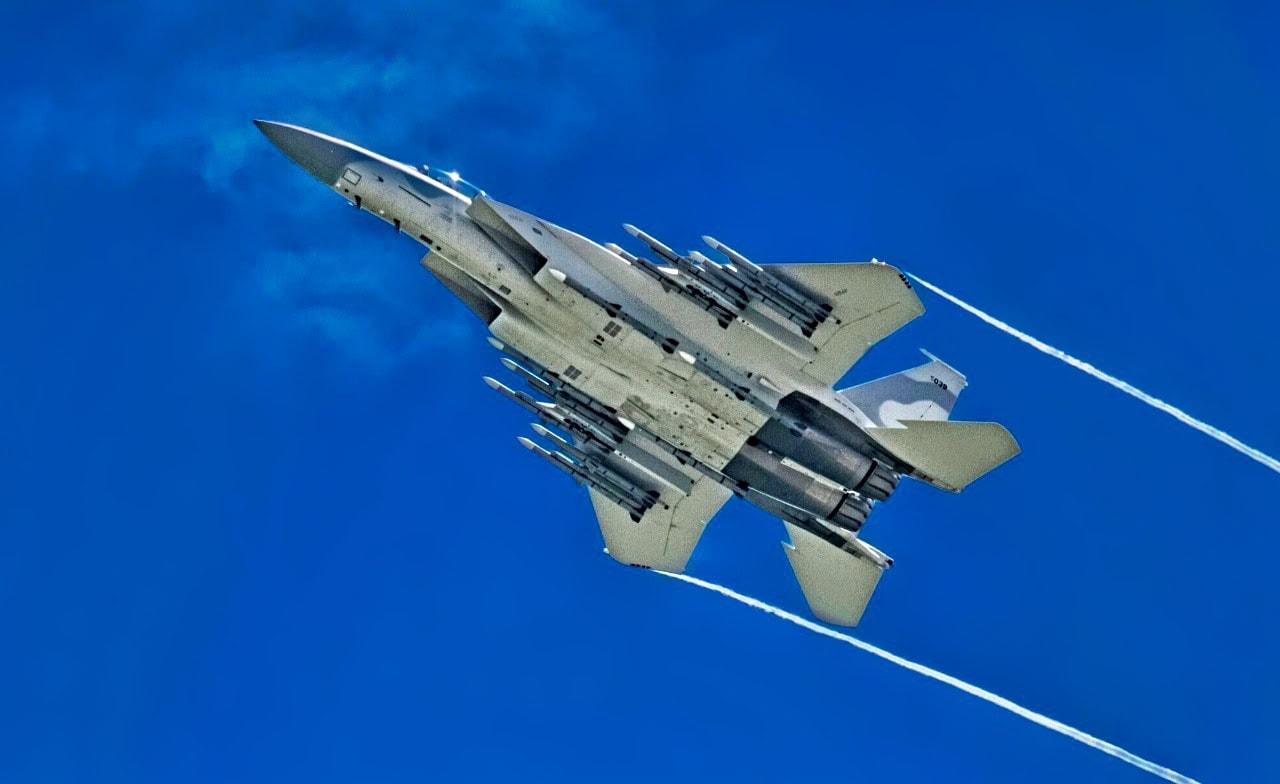
Key Points and Summary – The F-15EX II is the U.S. Air Force’s answer to aging F-15C/Ds and the limits of an all-F-35 fleet.
-Based on an evolved F-15 design, it offers a low-risk, fast fielding path with familiar infrastructure, modern avionics, and an open-architecture mission system.
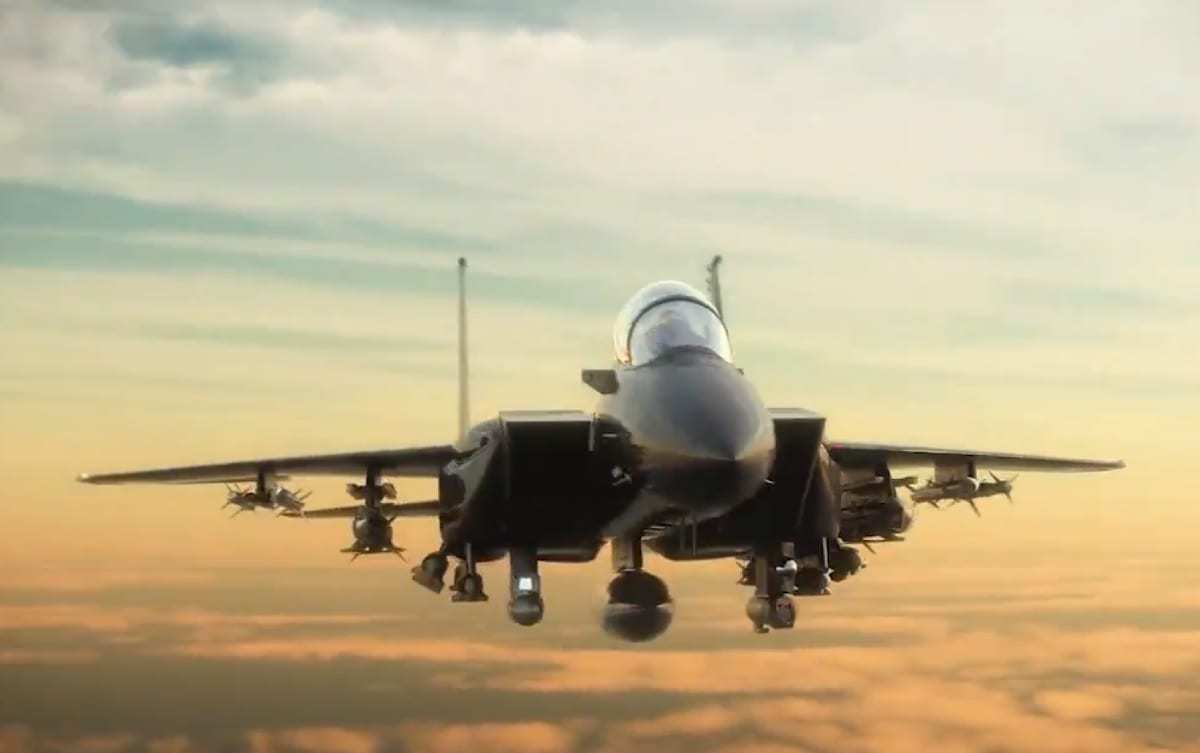
F-15EX Screenshot from Boeing Video
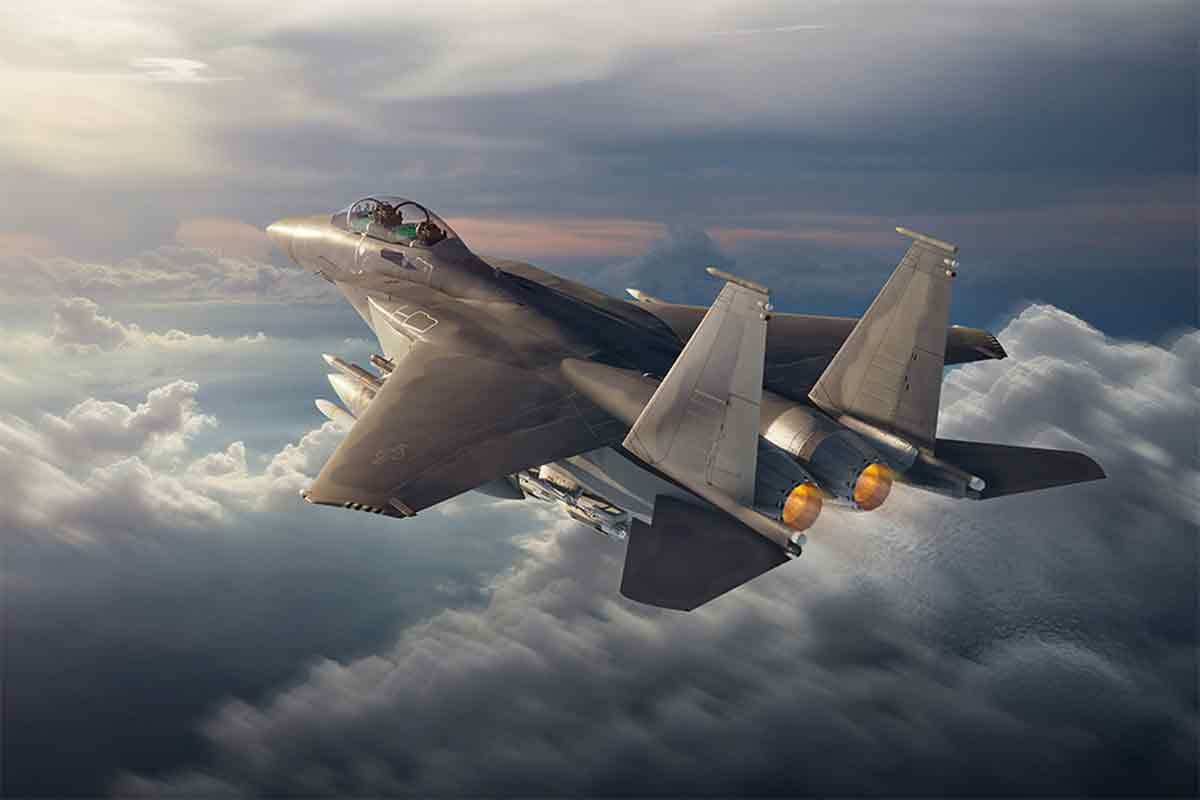
F-15EX Eagle II (Image: Boeing)
-With 12 hardpoints and nearly 30,000 pounds of payload, it can haul up to 28 air-to-air missiles or heavy standoff and future hypersonic weapons.
-A new AESA radar, EPAWSS electronic warfare suite, and 20,000-hour airframe make it ideal for homeland defense, missile-truck roles, and high-sortie campaigns alongside stealth aircraft in a mixed U.S. fleet.
No, the F-15 Isn’t Dead: How the New F-15EX Eagle II Became a 21st-Century Workhorse
PORTLAND, OREGON – Most days, we residents of Portland, Oregon, hear, if not see, Boeing’s latest fourth-generation-plus fighter aircraft: the F-15EX II.
Stationed with the 142nd Air National Guard unit at Portland International Airport, the EX is the newest and most advanced version of the F-15 family.
The aircraft is a variation on a fifty-year-old airframe—but it’s not a nostalgia project; it’s the USAF’s answer to capacity gaps and the need for a relatively affordable complement to the F-35.
Why More F-15 Fighters? Enter the F-15EX Eagle II
The Air Force’s fleet of F-15C/D models is all roughly forty years old and approaching their structural fatigue limits.
They are shortly destined for the boneyard. But replacing them all with the F-35A would take too long and be too expensive.
Instead, the Air Force is investing in an up-tempo, low-risk replacement, a modified version of the F-15.
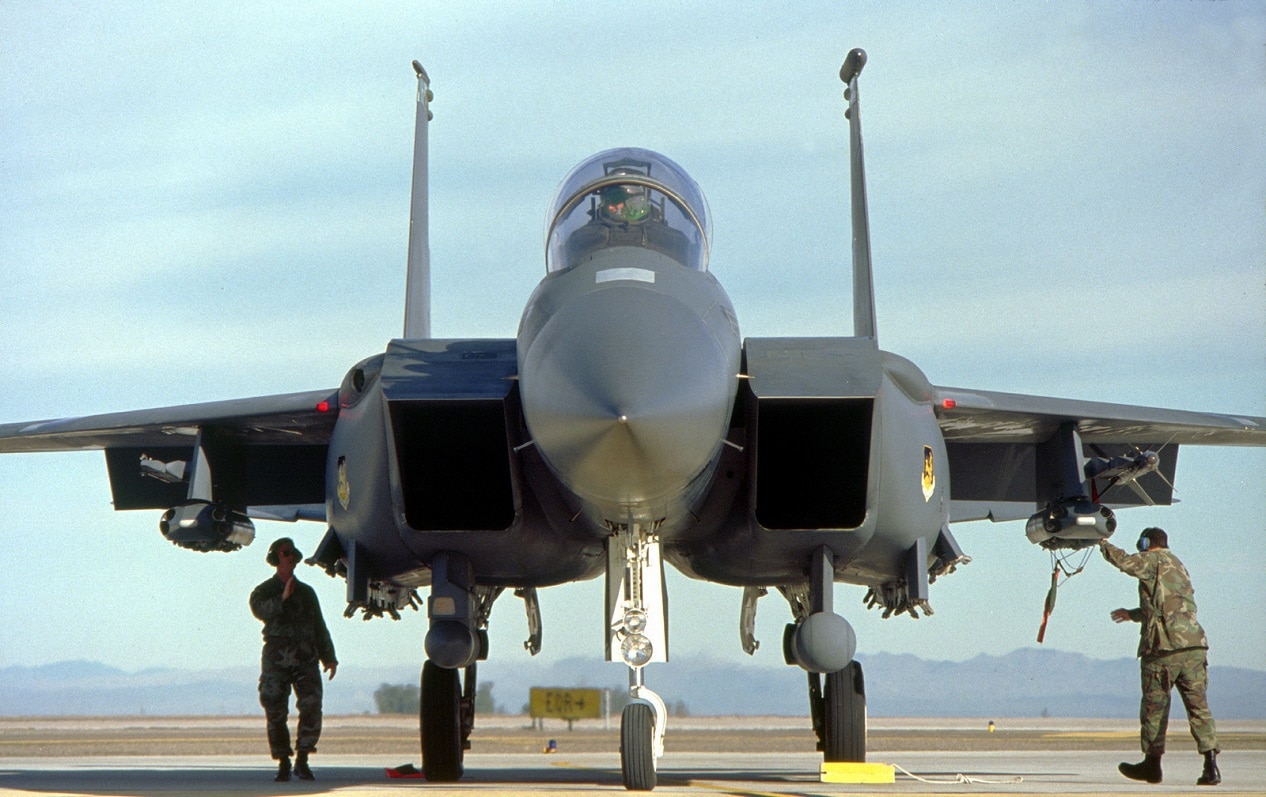
Staff Sgt. Dave Smith and Senior Airman John Pusieski from the 58th Operational Support Squadron, 58th Fighter Wing, peform last-minute checks and arm practice bombs on an F-15E Eagle aircraft from the 461st Fighter Squadron.
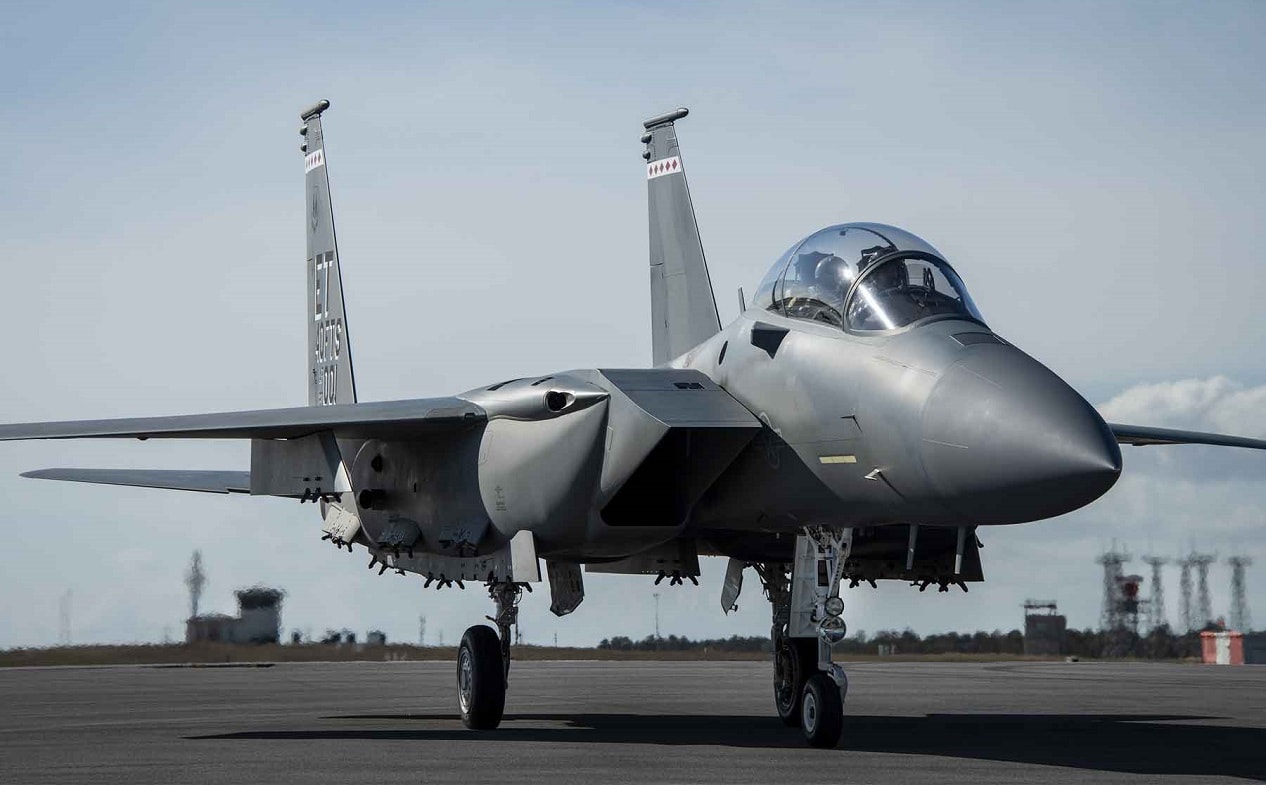
F-15EX. Image Credit: Boeing.
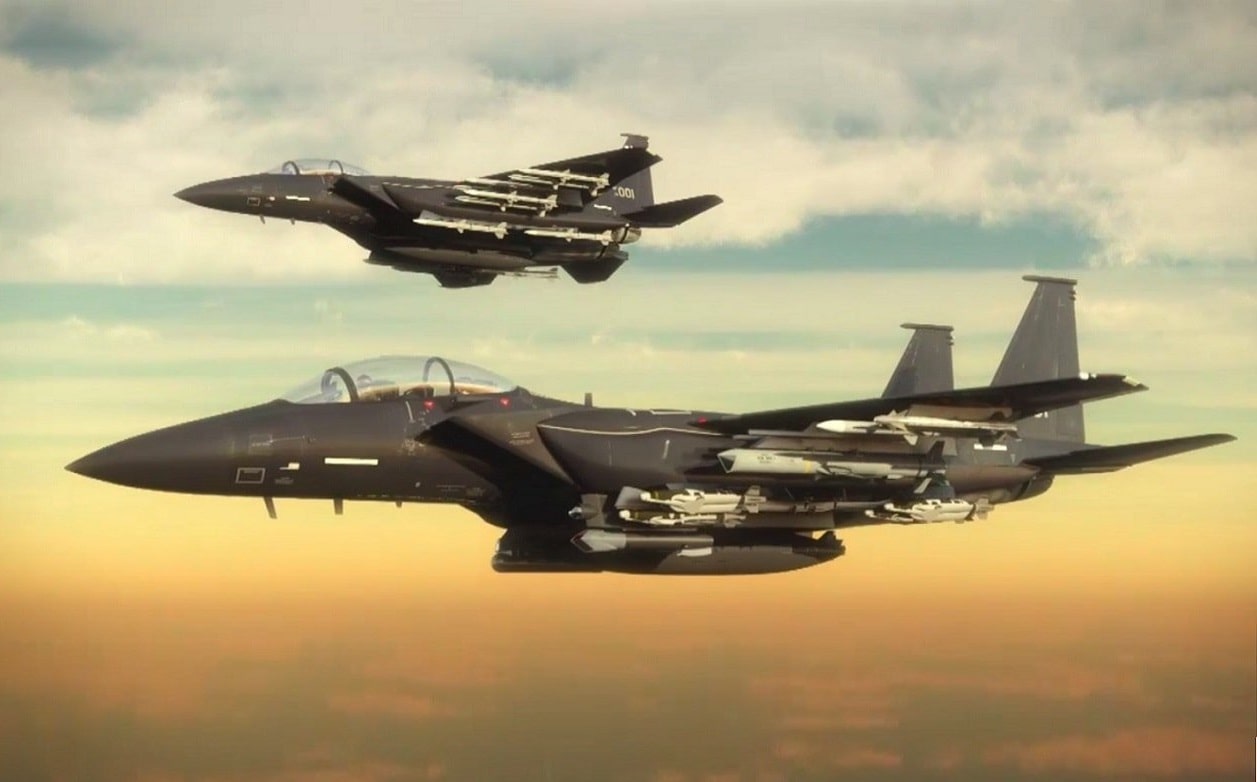
F-15EX Eagle II. Image Credit: Boeing.
Derived from a foreign-military-sales platform (F-15SA/QA), the new EX requires minimal pilot retraining and no new infrastructure, meaning the transition is low friction.
And the F-15EX is a capable platform.
Notably, the airfare can carry more, and heavier, weapons (even hypersonic weapons) than any fighter in the entire US inventory.
All while keeping costs relatively low; the per-aircraft cost is comparable to an F-35A—but the operating costs are much lower due to such a mature airframe and systems.
The ability to field large numbers of the F-15EX allows the US to keep pace with China, which fields large fleets of aircraft, drones, and missiles—meaning the Air Force may need quantity, not just quality.
The F-15EX is not just a carbon copy of the original F-15; the platform has been thoroughly modernized with an open-mission-systems architecture, enabling plug-and-play upgrades and rapid software updates. The EX’s onboard computing power vastly exceeds legacy F-15s.
The radar system has also been upgraded to the AN/APG-82 AESA, one of the most potent fighter radars in the world, with long-range tracking, maritime targeting, and electronic protection.
The EPAWSS (Eagle Passive/Active Warning Survivability System) has also been added to the EX, offering next-generation electronic warfare capabilities that dramatically improve survivability in contested airspace. The twelve hardpoints included with the EX set a new record for loadout: 28 air-to-air missiles, or massive amounts of standoff munitions, and, in the future, hypersonic weapons.
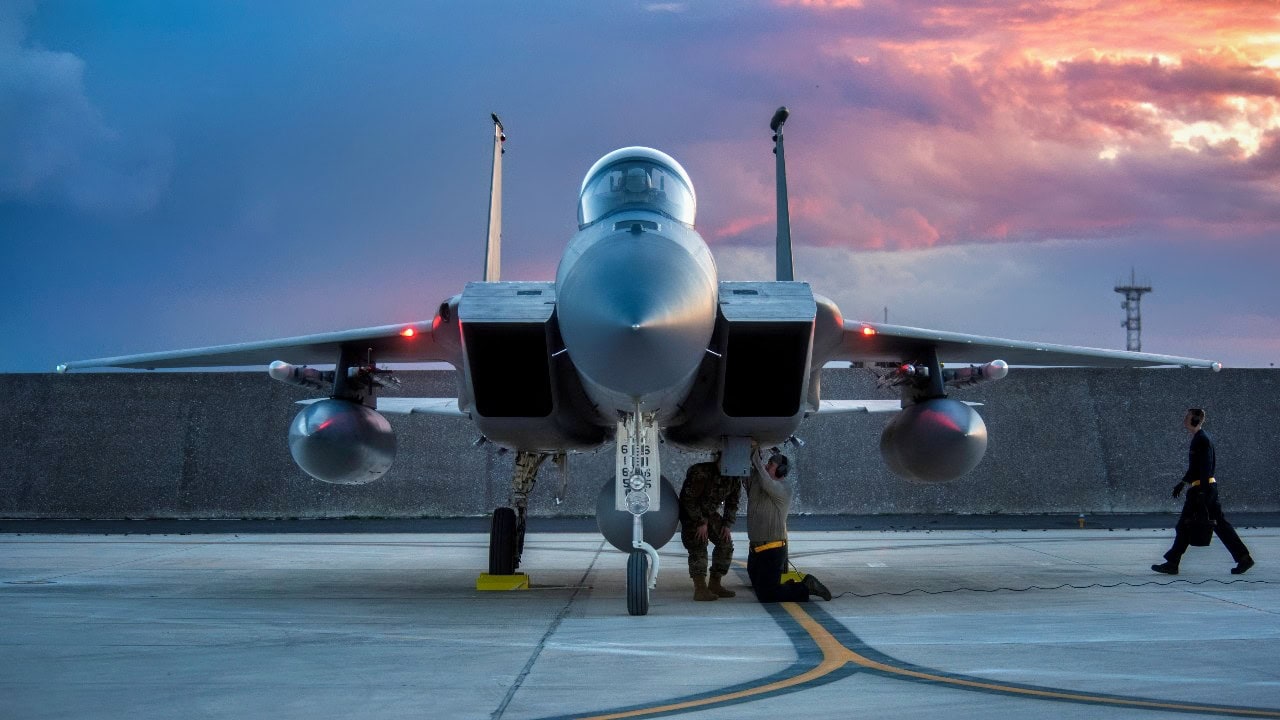
Airmen from the 48th Fighter Wing perform post flight checks on an F-15C Eagle at Amendola Air Base, Italy, Nov. 16, 2018. F-15C Eagles and an F-15D Eagle will be participating in the NATO Tactical Leadership Programme 18-4. TLP has prepared hundreds of NATO and allied forces’ flight leaders to be mission commanders. (U.S. Air Force photo/ Senior Airman Malcolm Mayfield)

A formation of F-15C/D Eagles assigned to the 44th and 67th Fighter Squadrons, a KC-135 Stratotanker assigned to the 909th Air Refueling Squadron, an E-3 Sentry assigned to the 961st Airborne Air Control Squadron, and an HH-60 Pavehawk assigned to the 33rd Rescue Squadron taxi during a routine wing readiness exercise at Kadena Air Base, Japan, March 2, 2022. The large formation movement was part of a routine exercise scenario that tested the 18th Wing’s ability to generate airpower in support of the defense of Japan and other partner nations, ensuring the stability and security of a free and open Indo-Pacific. (U.S. Air Force photo by Senior Airman Stephen Pulter)
The cockpit has also been redesigned, with large-area displays, new mission computers, and improved human-machine interface—doing away with the dial- and gauge-saturated environment of the old F-15 cockpit. Fly-by-wire controls and modern flight systems improve the flight experience, while the airframe has been strengthened to handle stronger winds, higher G-limits, and a 20,000-hour service life (double that of the F-15C).
Two F-110-GE-129 or GE-132 engines give the EX 29,000 pounds of thrust each and a Mach 2.5 top speed. The range is 1,200 miles, and the service ceiling is 60,000 feet. The nearly 30,000-pound payload is the largest of any fighter in US service.
Operational Applications
As the Portland-based 142nd demonstrates, the F-15EX is well-tailored for patrolling vast US airspace and is cheaper than fifth-generation fighters to fly for routine patrol missions, so expect the EX to be used for territorial defense.
Because the F-15EX is not designed to penetrate defended air spaces, like a stealth fighter, the EX will be ideal for operating outside of dense air defenses, launching long-range weapons cued by stealth platforms within the air defense network.
And in lower-threat zones, like many of the global theaters the US has operated in over the 21st century, the F-15EX would be a dominant air superiority platform, often tasked with facing off against third- and fourth-generation fighters.
Why This Fighter Matters
Strategically, the F-15EX allows the Air Force to build a mixed fleet of complementary aircraft, which recognizes the contemporary fleet does not need to be entirely stealth, despite the modern trend in that direction.
The EX will serve to counter China’s quantitative strength in fielding large numbers of J-10, J-11, and J-16 fighters. The EX will be able to deliver capacity, high sortie rate, and heavy missile volume.
The EX will be helpful in the European theater, too; its patrolling capabilitieswill be well applied in the Baltic. And allied air forces operating fourth-generation aircraft may well upgrade to the F-15EX.
In short, the F-15EX proves that an older design, continually upgraded, can remain highly relevant, a workhorse geared for the 21st century.
About the Author: Harrison Kass
Harrison Kass is an attorney and journalist covering national security, technology, and politics. Previously, he was a political staffer, candidate, and a US Air Force pilot select. He holds a JD from the University of Oregon and a master’s in global journalism and international relations from NYU.