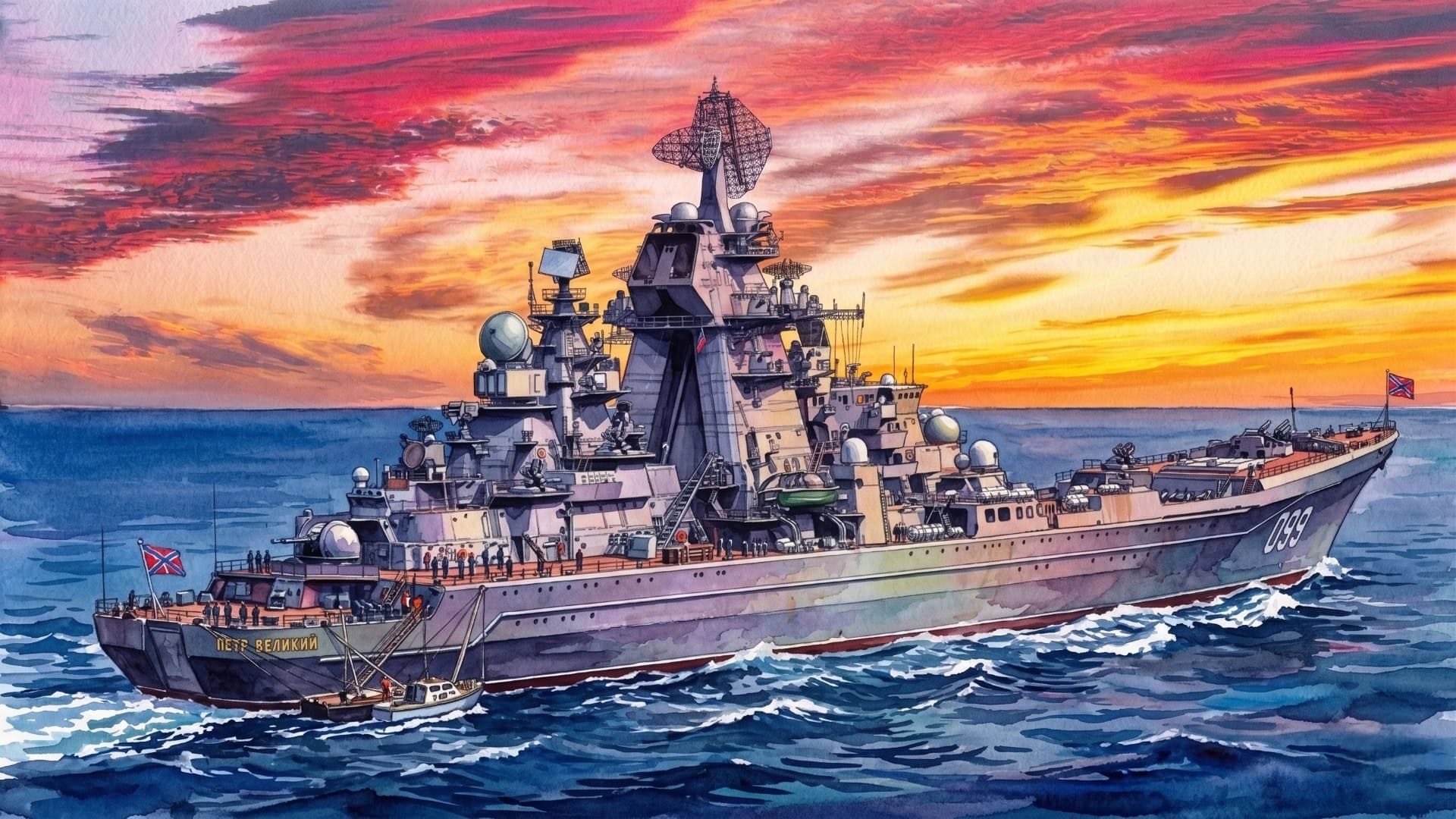
The Russian Navy has upgunned, modernized, and revamped its massive yet somewhat antiquated Cold War-era battlecruisers by adding advanced interceptor missiles, close-in ship defenses, upgraded ship-integrated longer-range air defenses, and even hypersonic weapons.
Arming a battlecruiser with hypersonic missiles would be a substantial step toward upgrading the offensive firepower of the 1980s-era Russian battle cruiser Admiral Nakhimov, a Kirov-class warship.
The Kirov-Class, Reborn with Hypersonic and More
So how powerful would this ‘new’ Kirov-class be?
Depending upon the scope of the upgrades, and particularly the extent to which they increasingly incorporate high-speed computer processing, long-range sensor networking, and new “fire control.”
Should these systems be brought into the modern era, then an upgraded, heavily armed ship would indeed present a massive threat to U.S. and NATO forces.
The Admiral Nakimov is being upgraded with ship-tailored Fort M missiles, an upgrade to Russia’s S-300 type anti-aircraft defenses, land-attack missiles, AK 192 guns, close-in defenses, and new anti-submarine weapons.
The large Russian battlecruiser is also armed with a host of additional weapons, according to a Forbes report, which says the Admiral Nakimow’s “carrier killer” missiles include 20 large Granite supersonic missiles.
The ship is also armed with 40 9K33 Osa short-range missiles and up to 96 S-300 long-range missiles.
Also of significant importance, the ship is equipped with a Kashtan close-in weapons system, featuring Gatling guns and eight 9M322 short-range missiles.
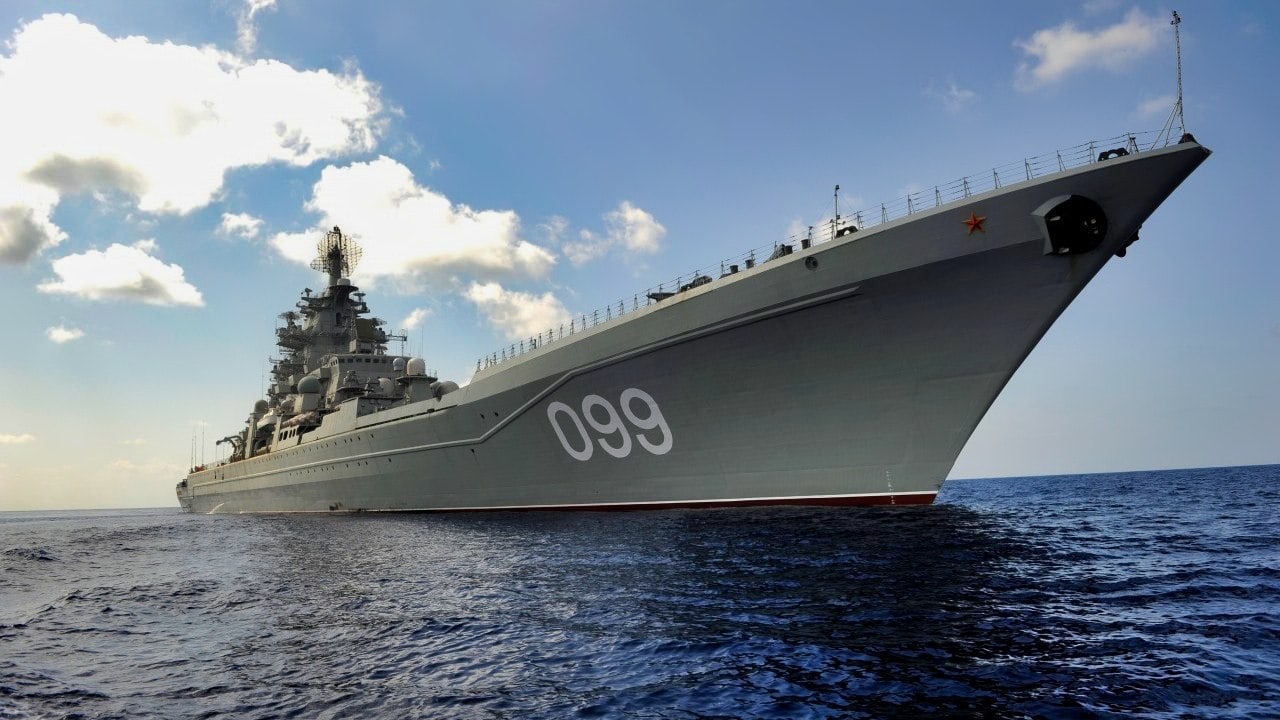
Kirov-Class Battlecruiser Russian Navy
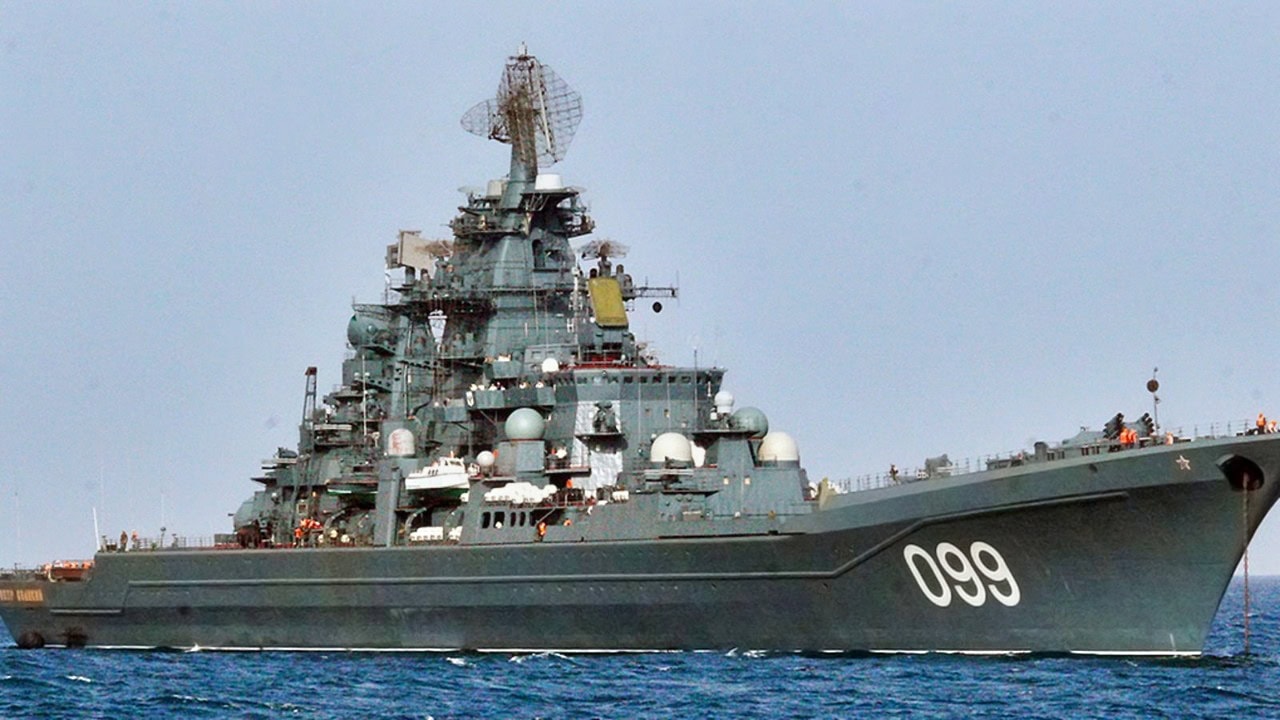
Kirov-Class Battlecruiser Russian Navy. Image Credit: Creative Commons.
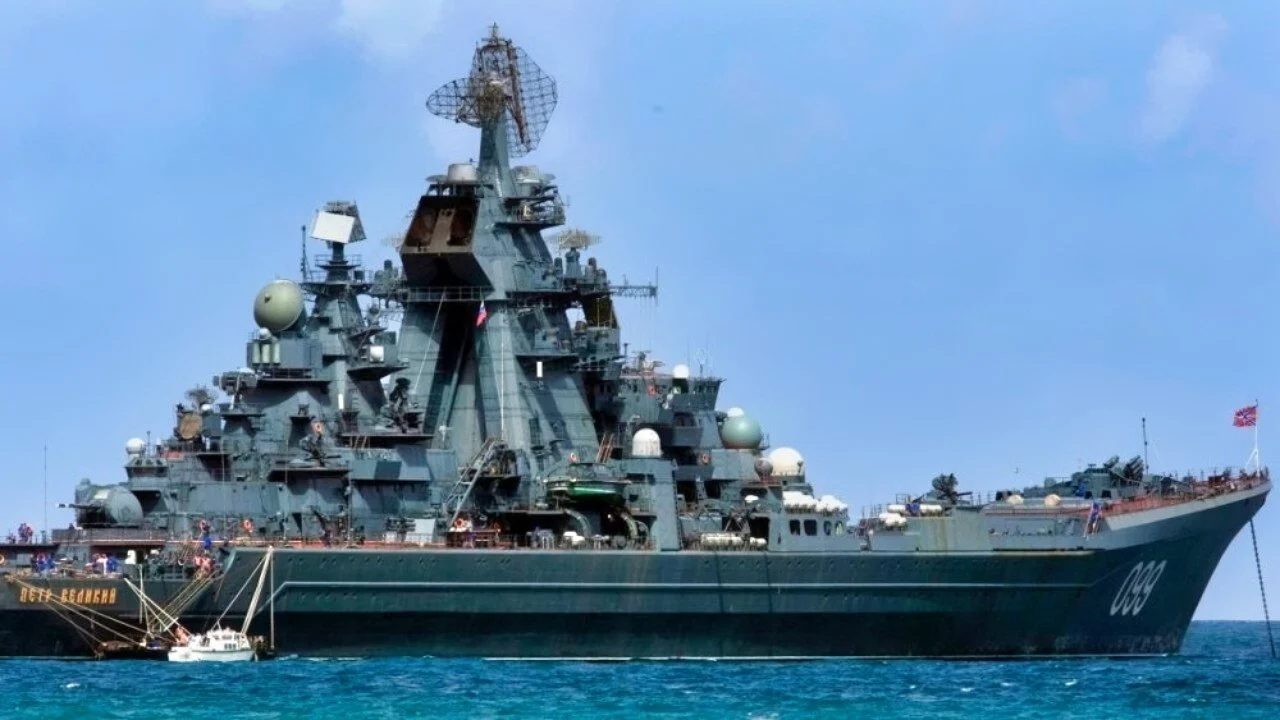
Kirov-Class Battlecruiser. Creative Commons Image.
Russian vs. U.S. Navy Ship Weapons
All of this raises interesting questions about how these kinds of armaments might compare against heavily armed U.S. Navy destroyers.
Can these interceptor missiles, both short and long range, rival the SM-3 and SM-6 medium and closer in weapons, forming the U.S. Navy’s layered defense system?
Could the Russian battlecruisers upgrade long-range missiles to rival the U.S. Tomahawks?
Is the Russian CIWS comparable to the U.S. Navy’s upgraded weapon, which fires a Phalanx area-weapon to take out incoming small boats, drones, explosives, or other kinds of close-in threats?
As part of an integrated system of defenses, many Navy ships are also armed with deck-launched interceptor missiles for medium to short-range attacks, such as SeaRAM and Rolling Airframe Missiles.
Finally, both a U.S. Navy destroyer and an upgraded Russian battlecruiser would operate with drones and helicopters capable of conducting reconnaissance, hunting submarines, and even leading forward attacks at sea.
While a Navy destroyer would be smaller than a large, modernized Russian battlecruiser, its high-tech weaponry may give it a distinct advantage in any kind of open or “blue-water” maritime warfare engagement.
This would likely depend upon the performance and relative technological capacity of the upgraded weapons.
The U.S. has been massively upgrading Tomahawks, SM-6 missiles, CIWS and SeaRAMs with extended range, an ability to hit moving targets at sea and new generation of guidance systems, so it would be critical to have an understanding of the state of relative sophistication of these Russian weapons and, perhaps to an even larger degree, how well are they networked with other ships, drones or even submarines coming to the surface for wifi connectivity.
Should Russia truly be arming its upgraded 1980s battle cruiser, the Admiral Nakimow, with up to 60 hypersonic missiles, then many NATO countries and the U.S. could face a massive and potentially unparalleled threat.
Kirov-Class: Hypersonic Armed Russian ‘Battleship’?
The Forbes article referenced above from several years ago says the ship will be armed with the 3M22 Zircon hypersonic missiles, weapons smaller and much faster than the ship’s legacy P-700 Granite missiles.
This means the report describes that three Zircon hypersonic missiles could be carried for each Granite, arming the ship with a total of 60 missiles.
About the Author: Kris Osborn, Warrior Maven President
Kris Osborn is the Military Technology Editor of 19FortyFive. Osborn is also President of Warrior Maven – Center for Military Modernization. Osborn previously served at the Pentagon as a highly qualified expert in the Office of the Assistant Secretary of the Army—Acquisition, Logistics & Technology. Osborn has also worked as an anchor and on-air military specialist at national TV networks. He has appeared as a guest military expert on Fox News, MSNBC, The Military Channel, and The History Channel. He also has a Master’s Degree in Comparative Literature from Columbia University