
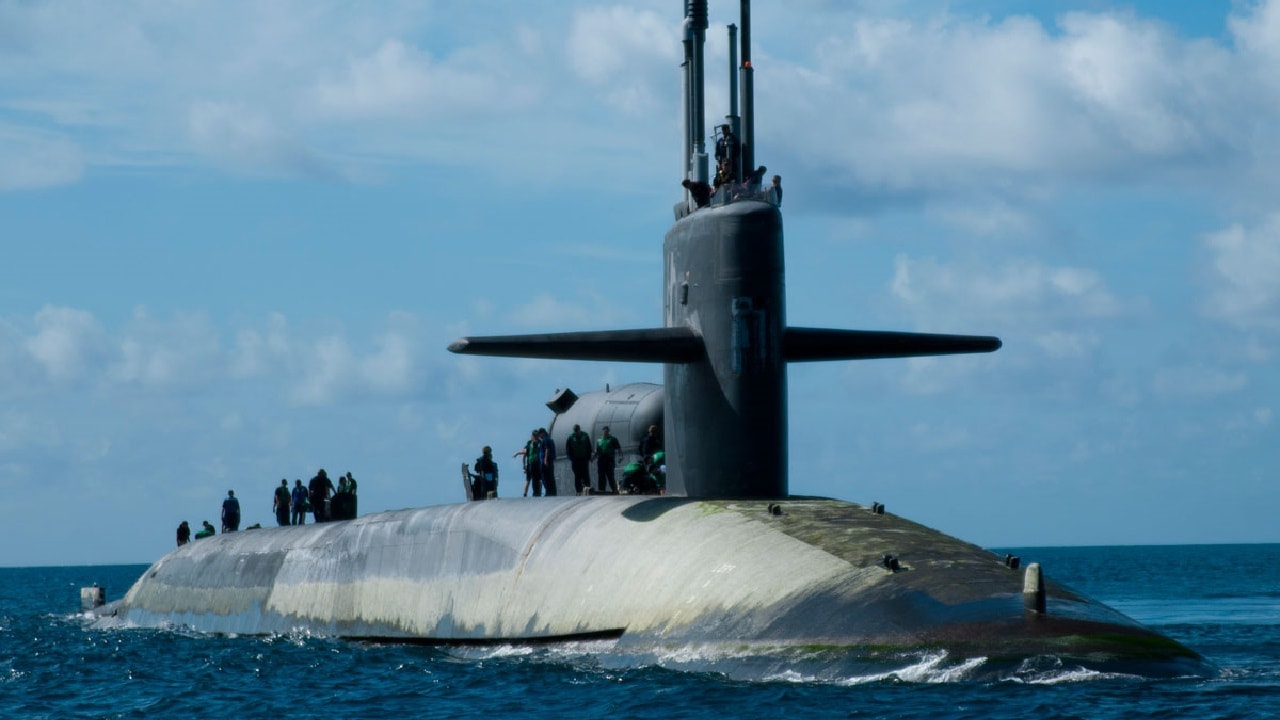
The U.S. Navy is about to lose one of the most powerful conventional strike capabilities it has ever fielded. Between 2026 and 2028, all four Ohio-class guided-missile submarines (SSGNs) will be retired, removing 616 Tomahawk cruise missile launch cells from the fleet with no direct cell-for-cell replacement.
And even as they prepare for their retirement, these submarines are still very much in use. Ohio-class SSGNs have supported operations across the Middle East, Europe, and the Indo-Pacific, including many long-duration deployments.
This is a heavily used platform that is only being retired because it has reached the limits of what its hull and reactor can sustain after more than four decades of service – not because it is no longer useful.
But to understand why the Navy is now dependent on these aging submarines, and why their retirement creates a problem that cannot be easily solved, you have to go back to why they were built in the first place – and how they have been adapted since.
SSBNs vs. SSGNs: The Ohio-Class Submarines
The Ohio-class submarine was originally built around one mission: nuclear deterrence. The platform was originally what’s known as a Ship Submersible Ballistic Nuclear (SSBN) – a submarine designed to carry submarine-launched ballistic missiles, part of the U.S. nuclear triad.
Today, 14 Ohio-class submarines remain in this role, each carrying Trident II D5 ballistic missiles and forming the most survivable leg of the nuclear triad thanks to their stealth and ability to remain virtually undetectable while hidden.
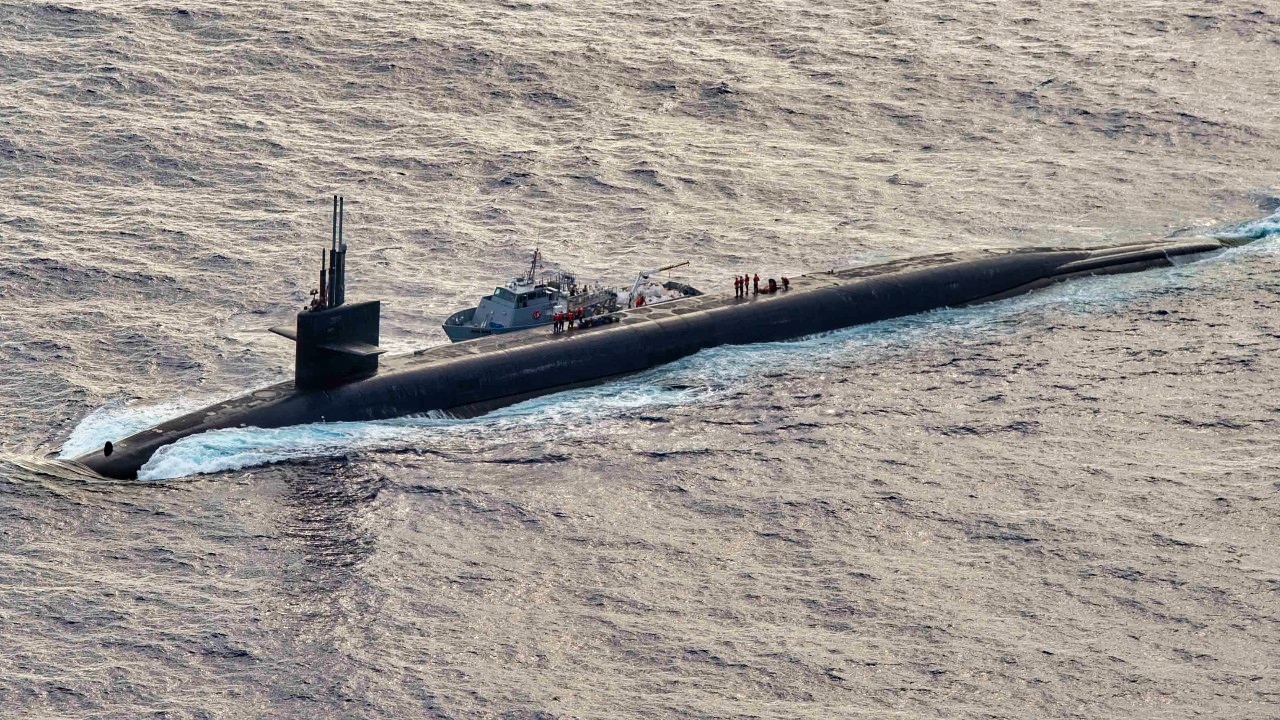
The Ohio-class ballistic missile submarine USS Kentucky (SSBN 737) sails alongside a submarine support vessel during a routine armed air escort (AAE) exercise, April 24, 2025. AAEs are designed to improve interoperability between our services, increasing lethalitythrough multi-domain integration.. Commander, Submarine Group (SUBGRU) 9, exercises administrative control authority for assigned submarine commands and units in the Pacific Northwest providing oversight for shipboard training, personnel, supply and material readiness of submarines and their crews. SUBGRU-9 is also responsible for nuclear submarines undergoing conversion or overhaul at Puget Sound Naval Shipyard in Bremerton, Washington. (U.S. Navy photo by Mass Communication Specialist 1st Class Ryan Riley)
Each submarine was originally built with 24 missile tubes, which were later reduced under arms control agreements, and operates on continuous patrol to guarantee a second-strike capability.
That means that even if the United States were hit in a nuclear attack, these submarines would remain hidden at sea and able to launch a retaliatory strike, ensuring that no adversary could eliminate the U.S. nuclear deterrent in a single blow.
The SSGN, however, is something different. Rather than carrying nuclear weapons, four converted Ohio-class SSGNs carry conventional cruise missiles. Each submarine can deploy up to 154 Tomahawk Land Attack Missiles (TLAMs), making them the highest-capacity strike platforms in the U.S. Navy.
When four Ohio-class submarines were converted, their nuclear payloads were replaced with conventional ones.
Of the original 24 missile tubes, 22 were repurposed to carry Tomahawks, while the remaining 2 were converted into lockout chambers for special operations forces.
Each SSGN can also carry around 66 special operations personnel, along with SEAL delivery systems and support equipment.
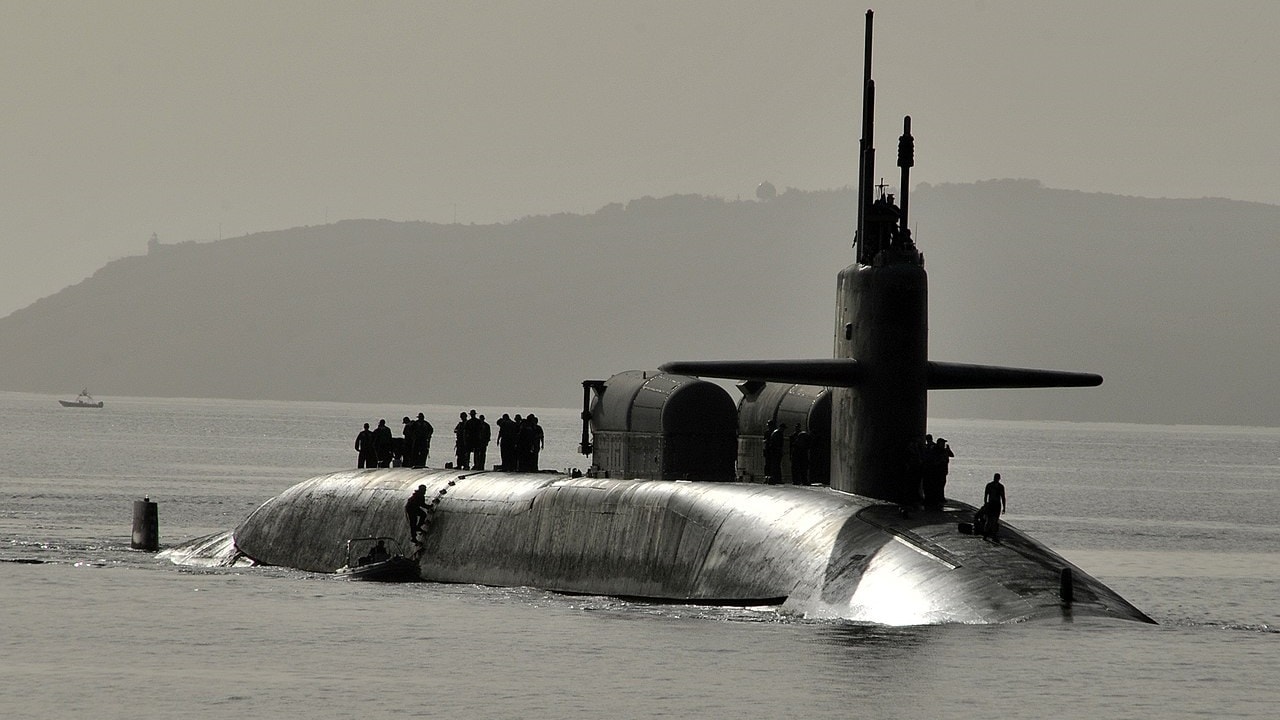
SOUDA BAY, Greece (May 21, 2013) The Ohio-class guided-missile submarine USS Florida (SSGN 728), gold crew, arrives in Souda harbor. Florida is homeported in Kings Bay, Ga., and is deployed conducting maritime security operations and theater security cooperation efforts in the U.S. 6th Fleet area of responsibility. (U.S. Navy photo by Paul Farley/Released) 130521-N-MO201-047
The result is a platform that combines three functions in one hull, including high-volume precision strike, a persistent forward presence, and covert insertion of special operations forces. It is a truly unique capability.
The Decision to Convert the Ohio-Class
The conversion of four Ohio-class submarines was the result of post-Cold War planning. By the early 1990s, the United States had more ballistic missile submarines than it needed.
The collapse of the Soviet Union, combined with arms reduction agreements such as START, reduced the required SSBN force from 18 boats to 14. Rather than leaving four boats without any purpose, the U.S. Navy pursued their conversion.
In September 2002, the Navy awarded a contract to Electric Boat to begin transforming four Ohio-class SSBNs – USS Ohio, USS Michigan, USS Florida, and USS Georgia – into guided-missile submarines. The work was completed between 2002 and 2008 at shipyards including Electric Boat and Puget Sound Naval Shipyard.
More than just giving those four submarines a purpose, the conversion saved money. Converting existing, proven platforms was significantly cheaper than building new vessels.
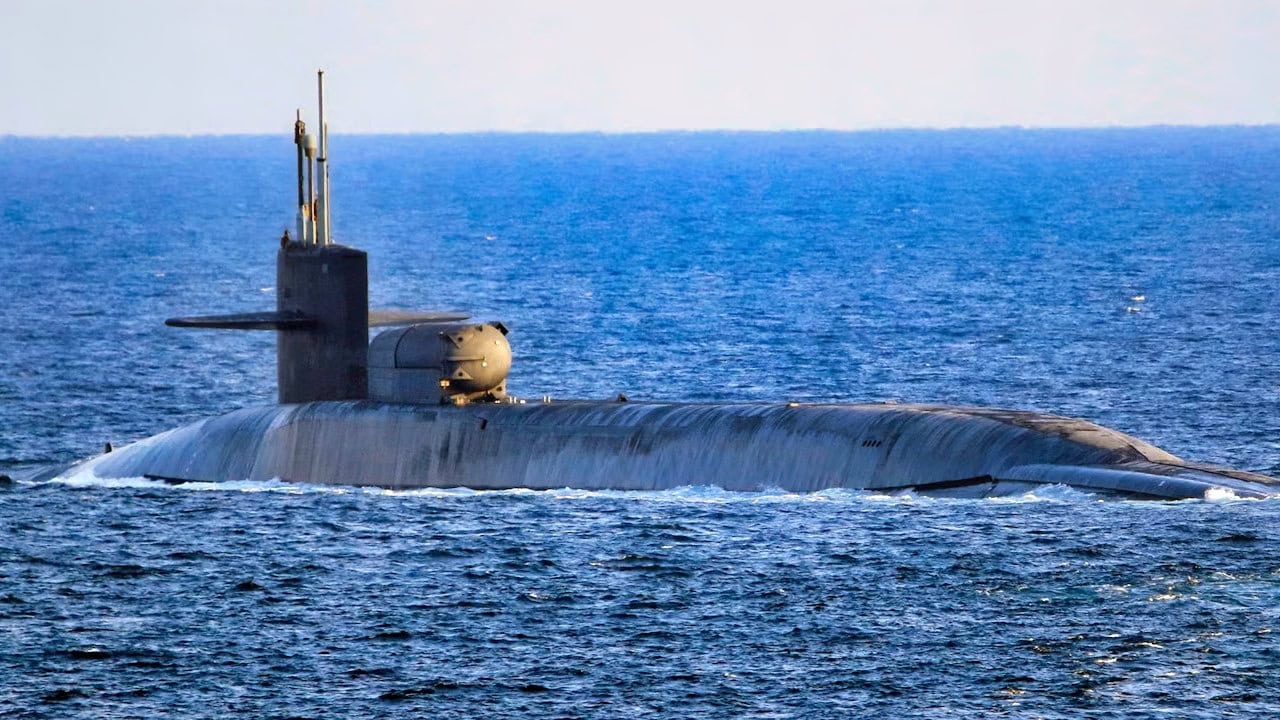
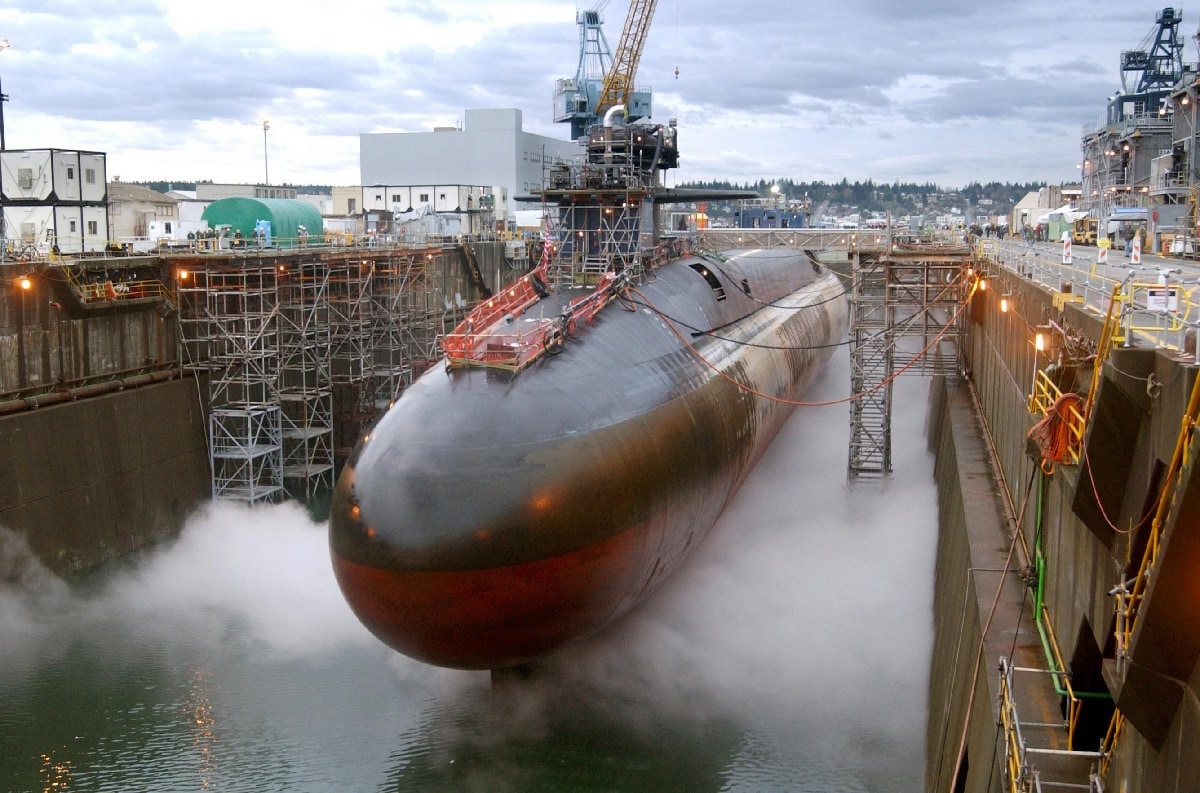
Ohio-Class SSGN Submarine U.S. Navy.
The Navy’s own figures from 2008 put the cost of converting all four boats at roughly $4 billion to $4.5 billion in total, or about $1 billion per submarine – a fraction of what it would cost to design and build a new class of conventionally armed cruise missile submarines from scratch. The reuse of existing hulls, reactors, missile compartments, and other key parts of their structure dramatically reduced both development timelines and procurement costs. By comparison, building a new large submarine class with similar payload capacity would likely have run into the tens of billions in R&D and unit costs.
Operational demand made their development urgent as well. The 1990s and early 2000s saw U.S. military operations lean into precision strike.
Conflicts in Iraq and the Balkans demonstrated the growing importance of cruise missiles as a primary tool for hitting infrastructure and air defenses without large-scale ground operations, and the SSGN conversion helped U.S. forces maintain that capacity.
Instead of nuclear deterrence platforms sitting on patrol, the Navy now had submarines that could launch more than 150 precision-guided weapons from a stealth platform positioned close to an adversary’s coastline. At the time, this was a major change in how the Navy could open a war.
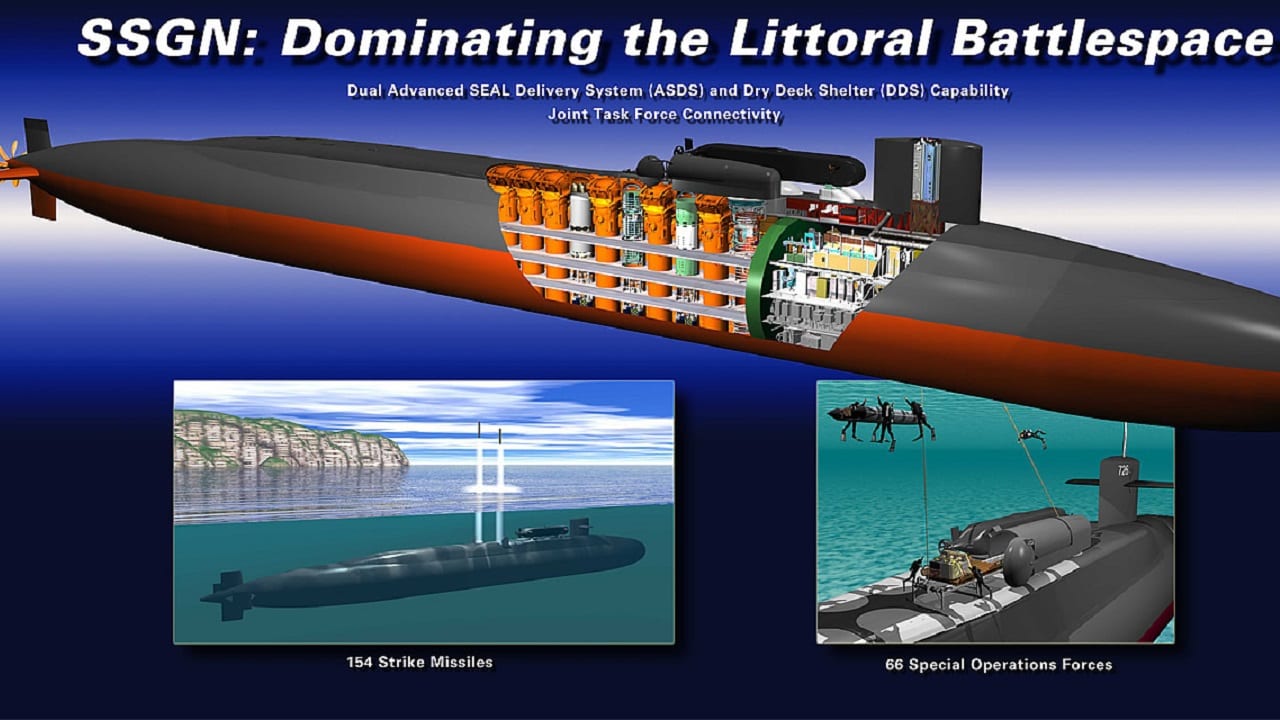
Ohio-class SSGN. Image Credit: US Military.
How the Navy Uses Them, and Why They Matter
The converted Ohio-class SSGNs have played a major role in U.S. military operations since they were completed, including strikes during the Iraq War and the 2011 Libya intervention, where submarine-launched Tomahawks were used in the opening phases of the conflict to degrade air defenses and command infrastructure.
They have also continued to deploy globally since.
The USS Florida, for example, recently completed a 727-day deployment covering multiple theaters, including the Middle East and Indo-Pacific, traveling roughly 60,000 nautical miles while remaining mission-capable throughout. That is incredible endurance for an underwater platform, and proves why these submarines are such important assets.
An SSGN can remain submerged and undetected over long periods, and can be positioned for strike operations for just as long. When required, they can deliver a large volume of precision weapons quickly.
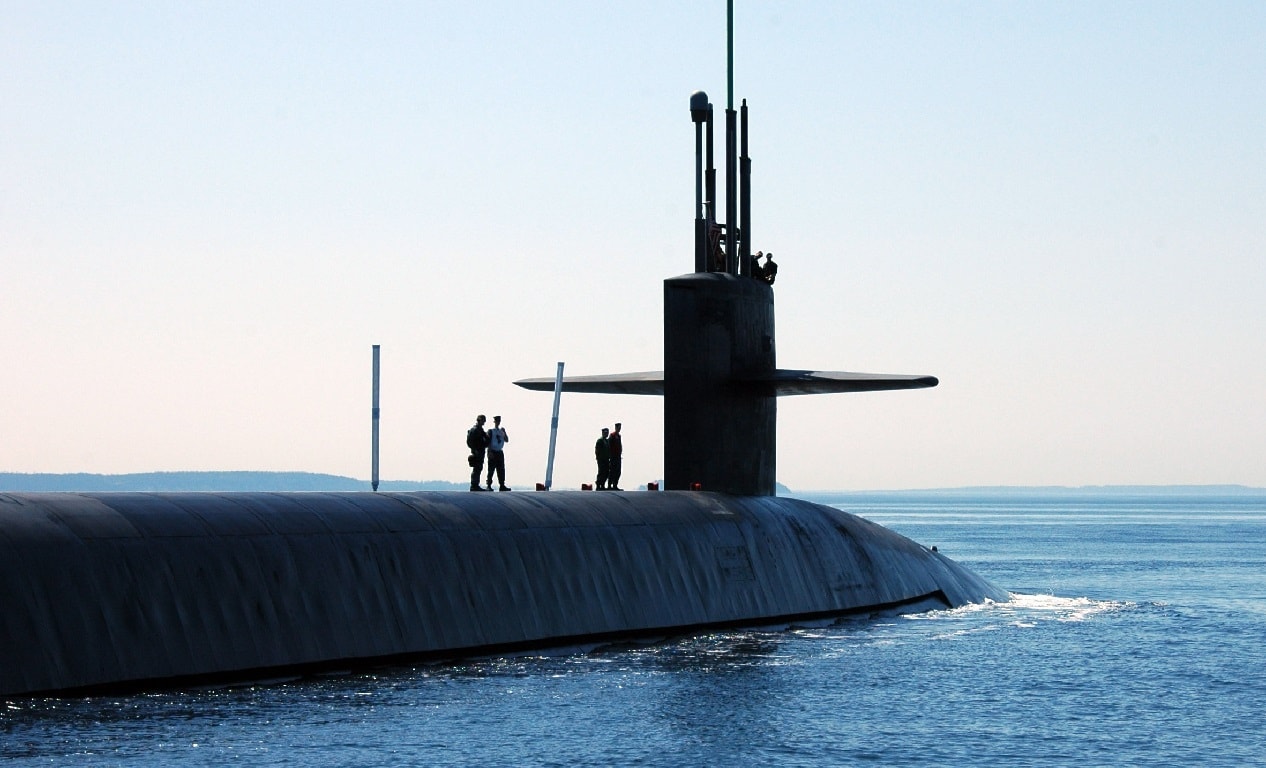
STRAIT OF JUAN DE FUCA, Wash. (Aug. 12, 2012) The Ohio-class ballistic missile submarine USS Nebraska (SSBN 739) prepares to conduct a personnel transfer as it returns to its homeport of Naval Base Kitsap-Bangor, Wash. (U.S. Navy photo by Lt. Ed Early/Released)
No surface ship offers the same combination of survivability and payload. Even the most heavily armed surface combatants distributed their launch capacity across air defense, strike, and anti-ship assets, rather than concentrating on a single role, making the Ohio-class arguably the best strike platform the U.S. has.
They are also critical for special operations because of their ability to deploy SEAL teams covertly, supported by onboard infrastructure such as dry-deck shelters, enabling them to operate as forward staging bases for missions that require stealth and persistence.
The U.S. Navy Is About to Lose Them
Despite their value, all four Ohio-class SSGNs are scheduled to retire between 2026 and 2028. These submarines were built in the 1980s, and while the U.S. Air Force operates aircraft that are far older, nuclear-powered submarines cannot last as long.
Their hulls are approaching the limits of their structural lifespan, and their reactors cannot be extended indefinitely.
That wouldn’t be a problem if the U.S. Navy had a like-for-like replacement, but it doesn’t. Each SSGN can carry 154 Tomahawks, and the loss of four boats removes 616 missile launch cells from the fleet.
The closest replacement is the Virginia-class Block V submarine, which includes the Virginia Payload Module.
That increases its Tomahawk capacity to around 40 missiles, which is still less than one-third of the SSGN’s payload. To match the launch capacity of the lost SSGNs, the U.S. Navy would need more than 20 Virginia-class submarines – and that’s not realistic.
Submarine production rates remain limited, and the Navy is already prioritizing the Columbia-class SSBN to replace its nuclear deterrent force.
There is no direct replacement for the ships planned. There are, however, some long-term concepts, including a future “Large Payload Submarine,” which might not arrive until at least 2044.
MORE – ‘Slap a Cage on It’: The Cheap Way To Save U.S. Army Tanks from Drone Swarm Attack
MORE – The Army’s New M1E3 Tank Is a Drone Warrior
About the Author: Jack Buckby
Jack Buckby is a British researcher and analyst specializing in defense and national security, based in New York. His work focuses on military capability, procurement, and strategic competition, producing and editing analysis for policy and defense audiences. He brings extensive editorial experience, with a career output spanning over 1,000 articles at 19FortyFive and National Security Journal, and has previously authored books and papers on extremism and deradicalization.