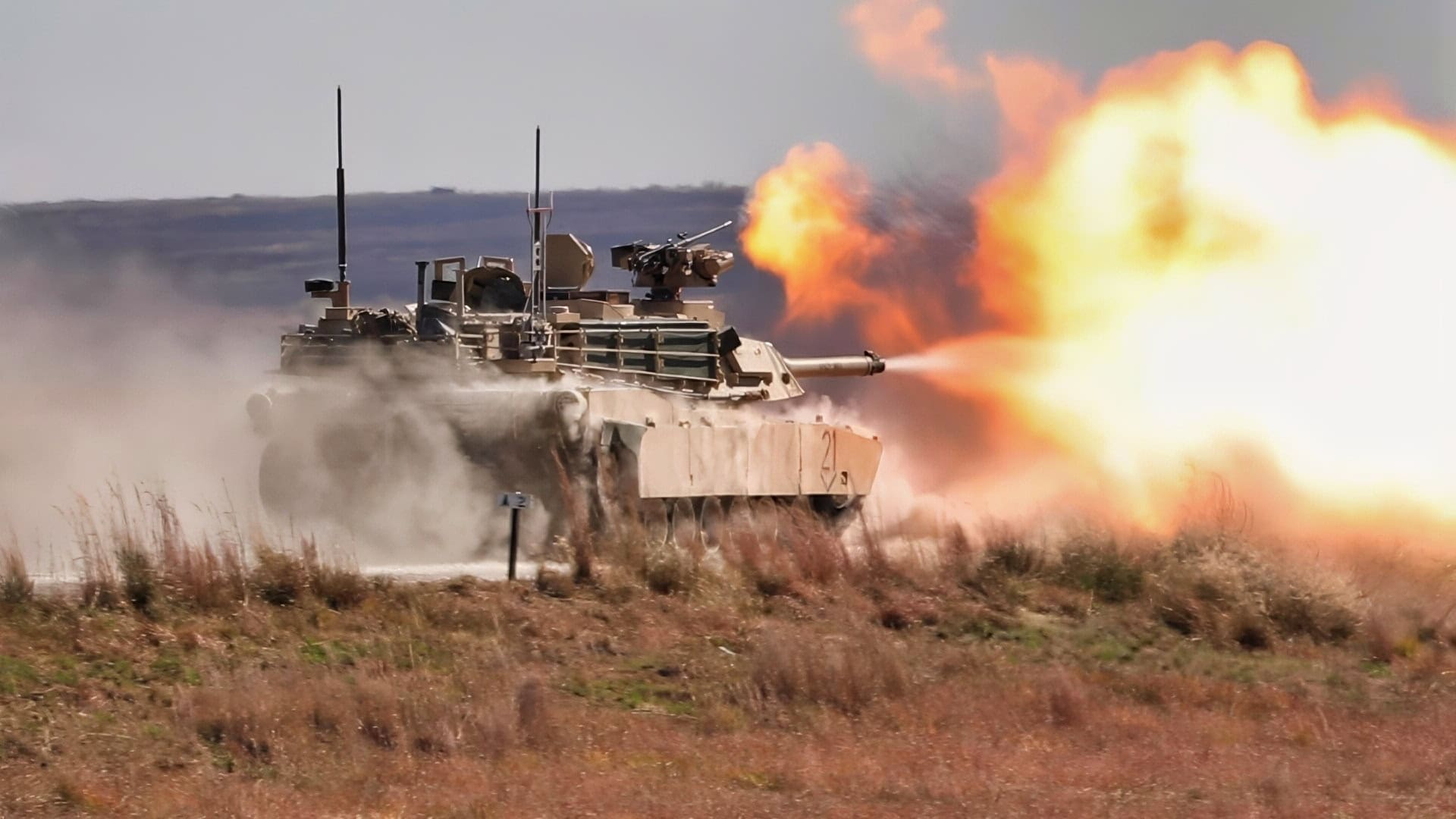
Key Points and Summary: The war in Ukraine has generated a drone-counter-drone arms race that is now reshaping how militaries worldwide prepare for armored combat.
Bottomline: A U.S. Army G2 intelligence assessment estimated that Switchblade kamikaze drones, Javelin anti-tank missiles, and NLAW shoulder-fired weapons have together destroyed roughly half of Russia’s active-duty tank force — a scale of armored losses unprecedented in modern conventional warfare.
Drone Swarms vs. Tanks: Who Wins?
The drone war in Ukraine has generated breakthrough innovations in the realm of drone warfare, as both sides continue to attack with explosive suicide drones, drones with grenade attacks, drones with fiber optic cable that can’t be jammed, and self-guided loiter drones able to “find” and then descend upon a target.
Observers have described drone-war innovations and tactics as revolutionary in modern warfare, and many breakthrough discoveries are being rapidly replicated by militaries around the world.
The ubiquitous and lethal nature of the drone threat has naturally generated a commensurate effort to innovate new drone defenses able to offer previously unavailable levels of protection.
Drone defenses used in Ukraine span a wide range of technologies, including drone-on-drone kinetic defenses engineered to intercept and “explode” incoming drone attacks, EW weapons built to jam the RF signal of an approaching drone and throw it off course, laser weapons, and passive protections such as counter-drone cage armor bars.
Cage Armor
Cage armor can prove quite effective against incoming explosive drones by simple proximity; the metal bars cause the drone to collide with the tank in the air before the explosive detonates.
This means some fragments continue to hit the armor, but the initial large “energetics” or “explosion” occurs “away” from the tank’s armor.
This massively increases survivability and helps tanks survive increasingly deadly drone attacks capable of loitering and precisely targeting moving tanks.
Cage armor is also used against RPGs and is most effective against point-detonate rounds.
To be fully protective, it seems cage armor would need to almost form a 360-degree protective envelope.
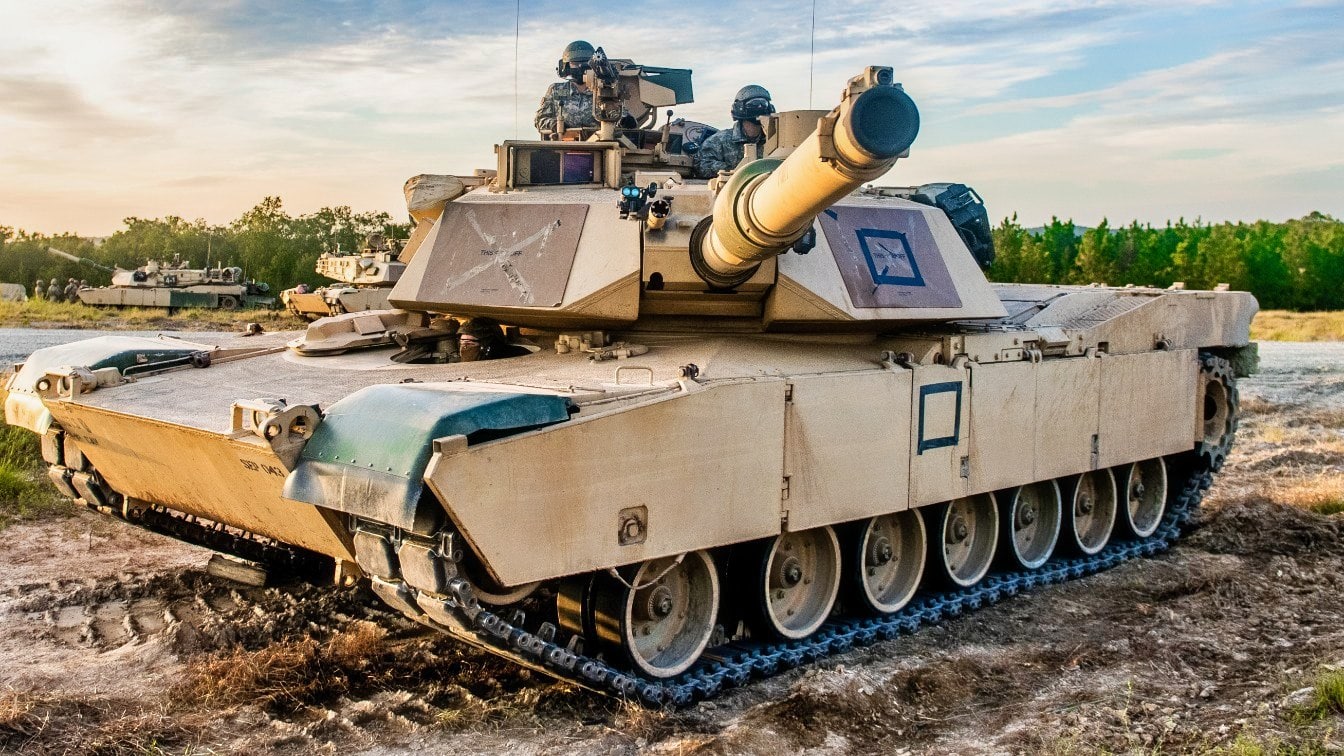
FORT BENNING, Ga. – Students in Armor Basic Officer Leader Course Class 20-005 conduct a platoon situational training exercise, Sept. 22, 2020, at Good Hope Maneuver Training Area on Harmony Church. Students train as both an attacking force and a defending force using the U.S. Army’s M1 Abrams Main Battle Tank. (U.S. Army photo by Patrick A. Albright, Maneuver Center of Excellence and Fort Benning Public Affairs)
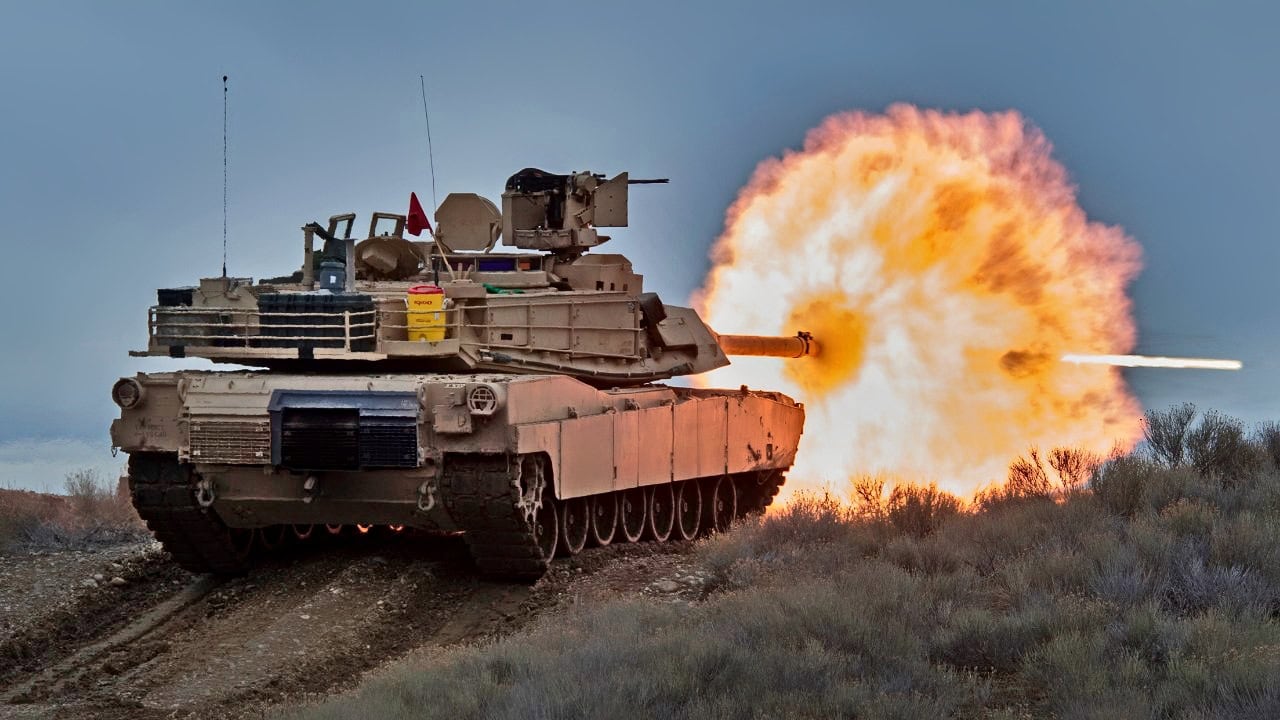
M1A2 Abrams Tanks from A Company, 2-116th Cavalry Brigade Combat Team (CBCT), Idaho Army National Guard run through field exercises on Orchard Combat Training Center (OCTC).
It also seems possible that these kinds of armor bars could stop, slow, or at least minimize the explosive impact of anti-armor weapons.
Overall, tanks have been decimated in Ukraine, as Switchblade kamikaze drones have been destroying Russian T-90 tanks, and simple dismounted, shoulder-fired anti-armor weapons such as Javelin and NLAW missiles have decimated tanks as well.
As far back as a year or more during the war in Ukraine, a U.S. Army G2 intelligence report found that as many as one-half of Russia’s active duty tank force has been destroyed in the Ukraine war.
Tanks Destroyed
Tanks have also been vulnerable to top-down attacks, given that the armor is less well protected than the sides of the chassis.
This has enabled fighters armed with anti-armor weapons to attack from buildings or elevated terrain, shooting down tanks below.
New counter-drone weapons continue to emerge, including vehicle-mounted laser weapons and vehicle-fired proximity rounds that fly to a spot and “detonate” across an area, dispersing fragmentation to counter swarm attacks.
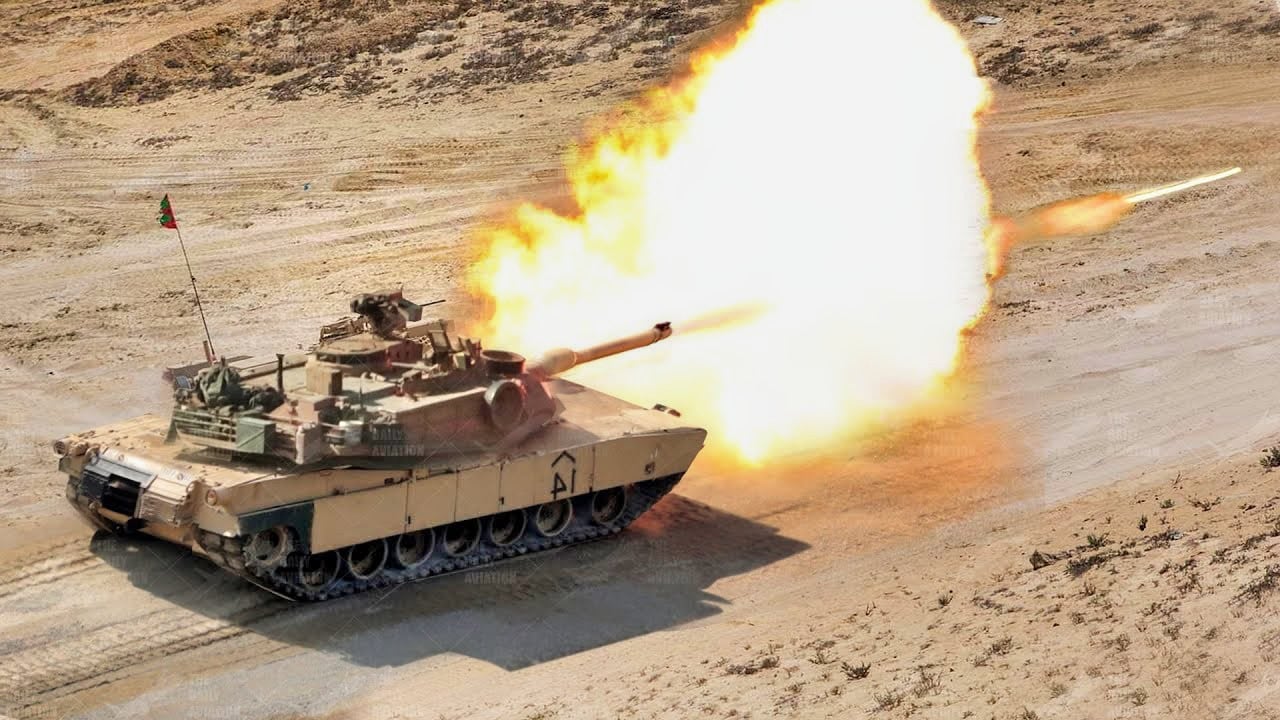
M1 Abrams Firing. Image Credit: Creative Commons.
One promising weapon is referred to as the Coyote interceptor, a small, dual-function drone which can operate as a sensor EO/IR drone itself or also function as an explosive to launch offensive attacks or intercept and ‘explode” drones in the air. Coyote can be programmed with a proximity fuse such that it can detonate across a specific “area” to counter drone swarms.
Countering Swarms
Drone swarms are among the greatest risks, as they are intended to overwhelm points of attack through pure vectoring, meaning incoming explosives blanket a target area from so many angles that well-targeted, precision drone defenses simply cannot track and destroy them all.
This is where EW countermeasures and proximity fuses can prove tactically relevant, and high-power microwaves can “blast” an area with “heat” designed to disable a drone’s propulsion mechanisms and sensing systems.
There are also RF defensive methods designed to intercept and detect the RF protocol of an attacking drone, look it up in an existing database, and make an instant determination of the drone’s type.
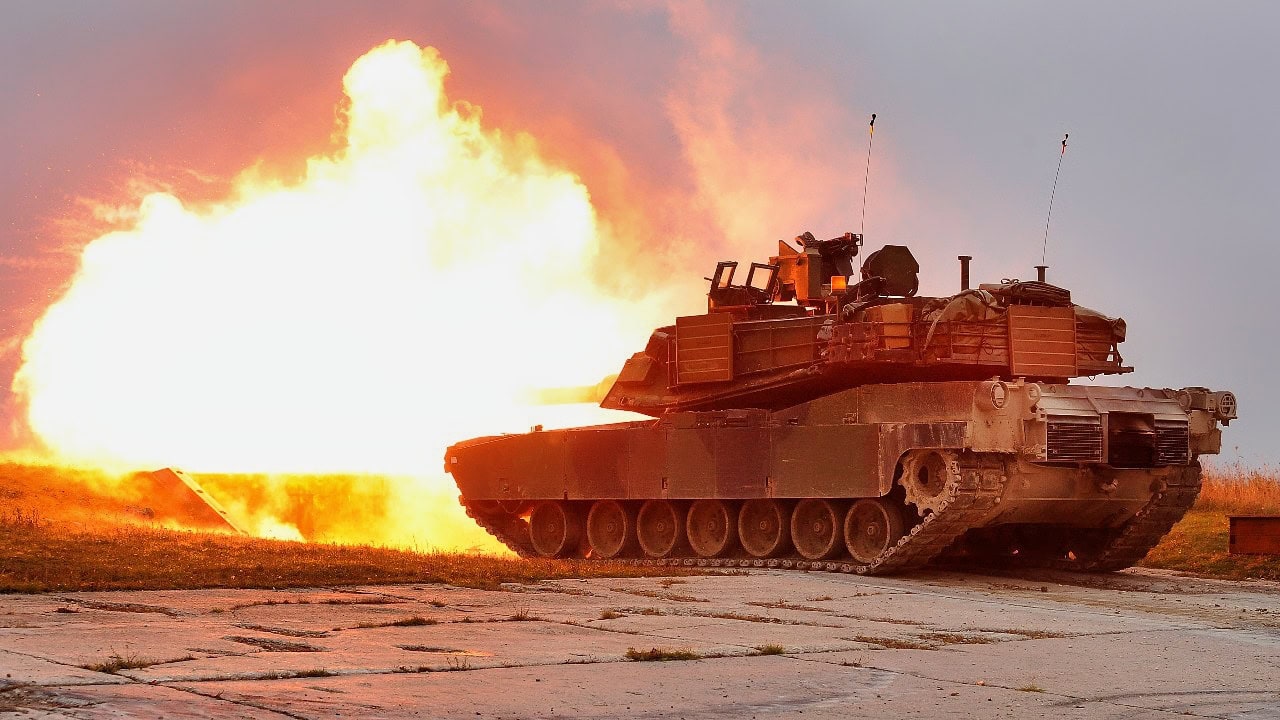
U.S. Soldiers, assigned to the 1st Battalion, 64th Armor Regiment, 1st Armored Brigade Combat Team, 3rd Infantry Division, conduct gunnery with M1A2 Abrams tanks during exercise Combined Resolve V at 7th Army Joint Multinational Training Command in Grafenwoehr, Germany, Oct. 8, 2015. Combined Resolve is designed to exercise the U.S. Army’s regionally aligned force to the U.S. European Command area of responsibility with multinational training at all echelons. Approximately 4,600 participants from 13 NATO and European partner nations will participate. The exercise involves around 2,000 U.S. troops and 2,600 NATO and Partner for Peace nations. Combined Resolve is a preplanned exercise that does not fall under Operation Atlantic Resolve. This exercise will train participants to function together in a joint, multinational and integrated environment and train U.S. rotational forces to be more flexible, agile and to better operate alongside our NATO Allies. (U.S. Army photo by Visual Information Specialist Gertrud Zach/released)
In these cases, the defensive system can “jam” the attacking drone, “land” it, or even “take over” its flight path.
This technique is one of many growing AI-enabled drone defense systems that gather and analyze incoming sensor data, perform analytics in milliseconds to verify target data, and “pair” an optimal countermeasure, or “effector,” with a specific threat.
About the Author: Kris Osborn
Kris Osborn is the Military Technology Editor of 19FortyFive. Osborn is also President of Warrior Maven – Center for Military Modernization. Osborn previously served at the Pentagon as a highly qualified expert in the Office of the Assistant Secretary of the Army—Acquisition, Logistics & Technology. Osborn has also worked as an anchor and on-air military specialist at national TV networks. He has appeared as a guest military expert on Fox News, MSNBC, The Military Channel, and The History Channel. He also has a Masters Degree in Comparative Literature from Columbia University.