
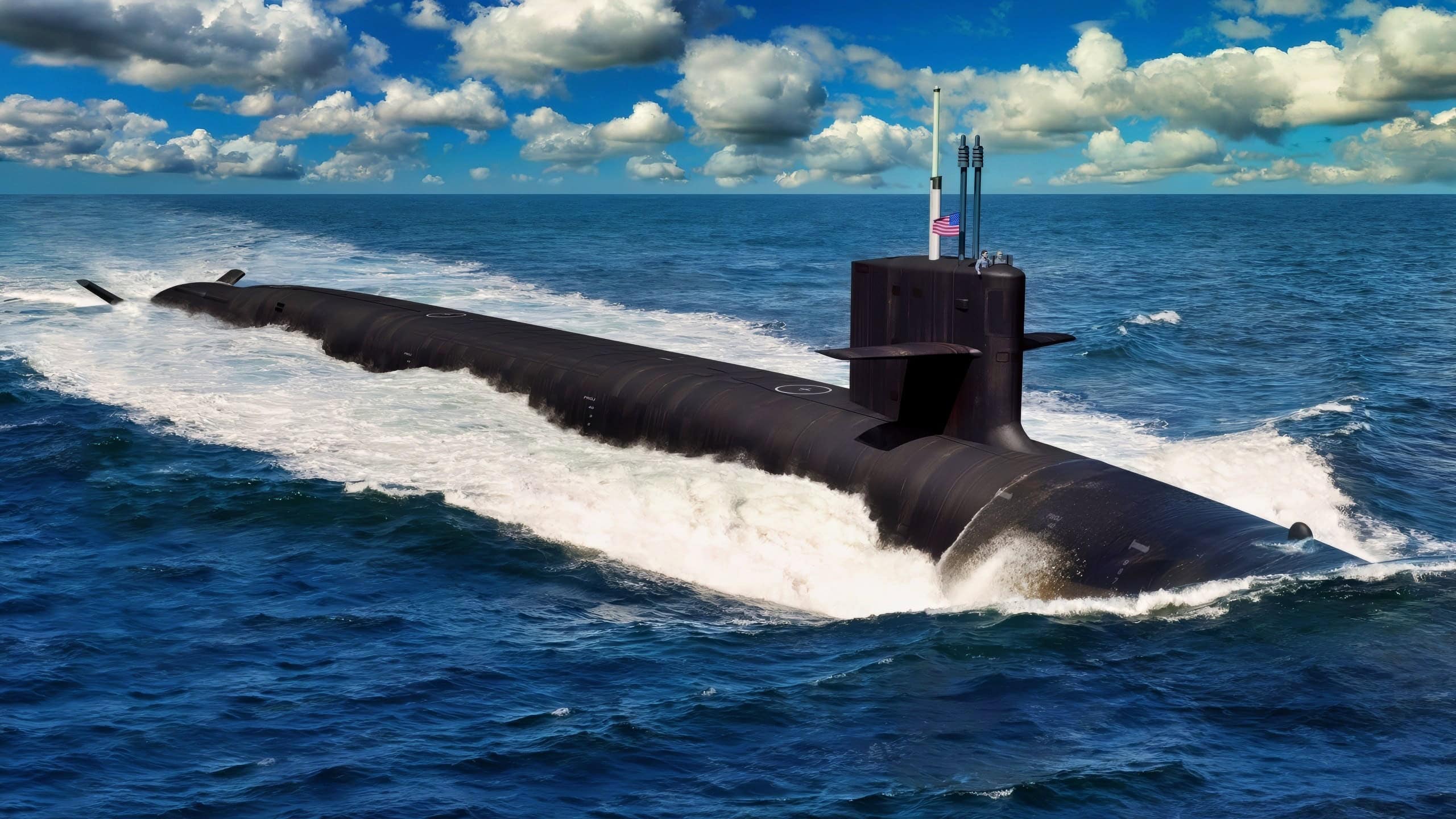
The U.S. Navy’s Columbia-Class Is the Future of America’s Nuclear Weapons Strategy…and It Has Some Issues to Iron Out Fast
In the literal sense, a submarine being underwater is a good thing.
After all, that’s the whole raison d’être of an Unterseeboot: to stealthily and silently lurk beneath the waves. before striking mercilessly at an enemy’s seaborne and land-based assets alike (wielding torpedoes against the former and cruise missiles for the latter).
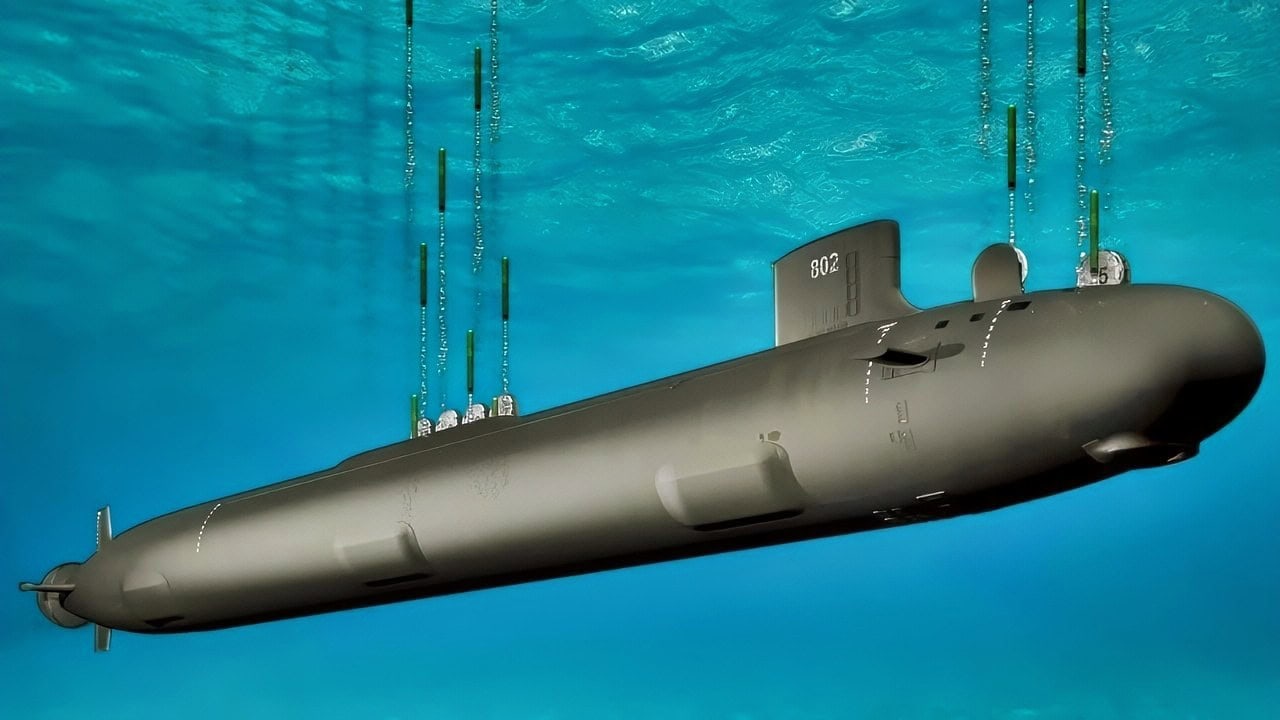
Columbia-Class SSBN USN. Image Credit: Creative Commons.
Except when in home port, far away from hostilities, the surface of the sea is where a sub is most vulnerable.
But in the metaphorical, bureaucratic context, being “underwater” is a highly undesirable a place for a submarine program to be.
And in that context, the U.S. Navy’s upcoming Columbia-class nuclear-powered ballistic submarine (SSBN) program is seemingly above water one day, and back underwater the next.
It’s enough to make this former Navy contractor downright seasick trying to keep track of it all.
Glass Half-Empty: The Latest Bad News About the Columbias
The bad news is that the lead ship of the Columbia-class submarine is about a year behind schedule, with projected delivery in 2028.
As a stopgap measure, the Navy has a maintenance plan to extend the life of the time-honored Ohio-class SSBNs so they can last until the Columbia boats are finally fully built and operational.
“Improvise, Adapt, Overcome,” as the one motivational military catchphrase goes.
The problem?
Well, as you can probably guess from this writer’s use of the phrase “time-honored,” the Ohios are getting long in the tooth, with the first ship of the class having been laid down back on April 10, 1976, while the newest of the bunch, the USS Louisiana (SSBN-743), was commissioned on September 6, 1997.
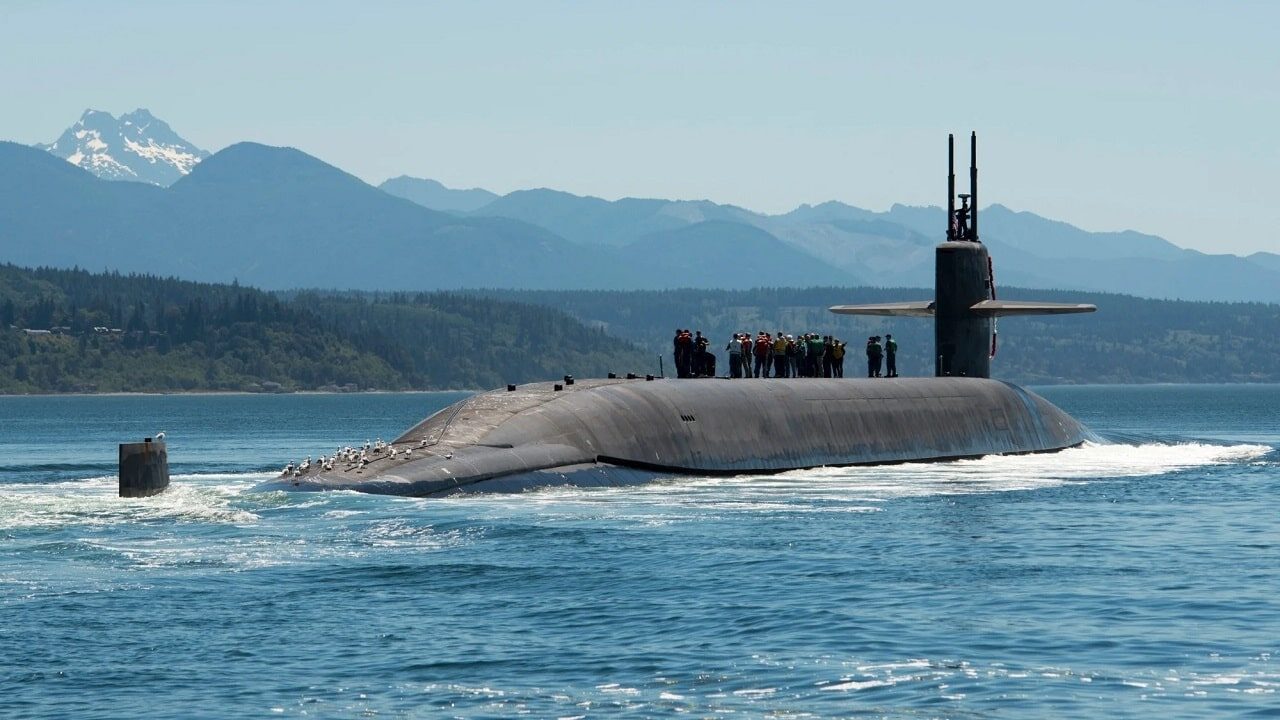
Ohio-Class. Image Credit: U.S. Navy.
All the while, Russia and China continue to modernize their own submarine fleets at a breakneck pace.
Glass Half-Full: The Latest Good News About the Columbias
Despite the gloomy news, Program Executive Officer, Strategic Submarines, Rear Admiral Todd Weeks remains upbeat.
Weeks stated last month that “With Columbia, we’ve been on a steady ramp-up to full-rate construction,” which is expected by 2031. Rear Admiral Weeks added that the lead vessel, the USS District of Columbia (SSBN-826), was “about 65, 66 percent complete.”
Full Speed Ahead? The Way Forward for the Columbia-Class
Despite the delays, at least one prominent member of the Senate Armed Services Committee—namely Sen. Tommy Tuberville (R-AL)—is open to the idea of expanding the Columbia program.
In a recent hearing featuring Admiral Richard Correll, the head of U.S. Strategic Command (STRATCOM), Sen. Tuberville opined that “Submarines are the tip of the spear for our nuclear capabilities. The problem is we can’t seem to build them fast enough. What flexibility and capability does STRATCOM gain if we were able to field 16 Columbia-class submarines versus 12?”
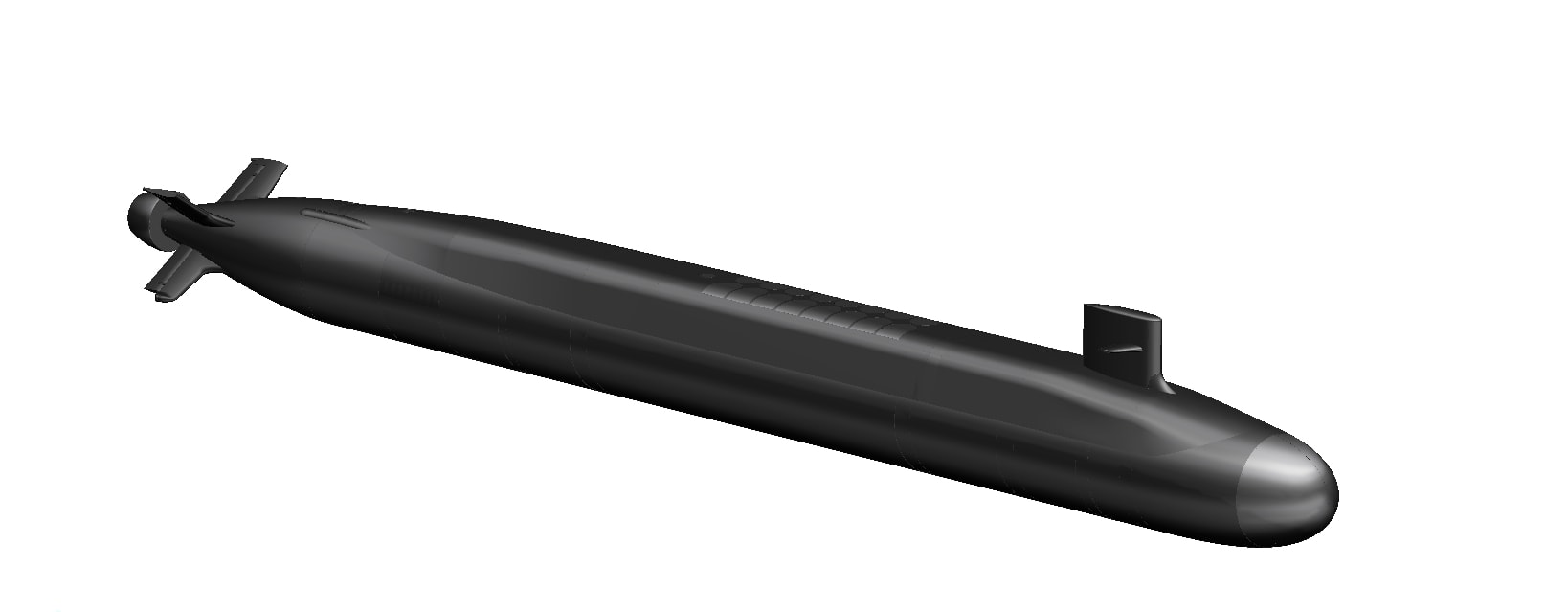
Early rendering of what Columbia-class could look like
Meanwhile, earlier this month the Navy awarded General Dynamics’ Electric Boat (GDEB) a $15.38 billion modification for work related to industrial-base development support, covering additional Columbia-class submarine design, lead yard support, and sustainment.
READ MORE – Russia Only Has 30 Su-57 Stealth Fighters. America Has 1,300 F-35 Fighters
READ MORE – Iran Came Close to Hitting a Navy Super Hornet
About the Author: Christian D. Orr
Christian D. Orr is a Senior Defense Editor. He is a former Air Force Security Forces officer, Federal law enforcement officer, and private military contractor (with assignments worked in Iraq, the United Arab Emirates, Kosovo, Japan, Germany, and the Pentagon). Chris holds a B.A. in International Relations from the University of Southern California (USC) and an M.A. in Intelligence Studies (concentration in Terrorism Studies) from American Military University (AMU). He is also the author of the newly published book “Five Decades of a Fabulous Firearm: Celebrating the 50th Anniversary of the Beretta 92 Pistol Series.”