
The People’s Republic of China’s Chengdu Aircraft Industry Group J-36 sixth-generation stealth fighter — a three-engine fighter-bomber hybrid with a blended-wing-body configuration first photographed in flight in December 2024 — and the smaller Shenyang J-50 sixth-generation prototype are now in active flight testing. Both Chinese platforms feature tailless, flat rear configurations that match publicly released U.S. sixth-generation aircraft renderings. The United States Navy’s F/A-XX sixth-generation carrier-based fighter program faces potential delays or cancellation amid operational budget demands for Operation Epic Fury. Without the F/A-XX, future U.S. Navy carrier air wings would rely solely on F-35C Lightning II and F/A-18 Super Hornet aircraft against Chinese sixth-generation threats.
F/A-XX Troubles for the Navy?
As unlikely as it may be and as difficult as it may seem to imagine, the Pentagon is likely evaluating what its maritime power-projection force would look like without an F/A-XX.
Is it realistic that the highly anticipated jet might not exist?
Or perhaps seriously delayed due to global operational demands and pressing budget obligations?
Is the war in Iran eroding acquisition budgets? Navy leaders have been quite vocal that indeed the service needs the F/A-XX immediately. It appears they are quite correct.
The F/A-XX Must Fly
Any decision to greatly delay, postpone, or “re-evaluate” F/A-XX plans would seem extremely ill-advised for many clear reasons.
The most significant reason for urgently fast-tracking the F/A-XX can be summed up in one word: China. The People’s Liberation Army has been making headlines in recent months with the arrival of several 6th-generation stealth platforms seen in “glimpses” on social media.
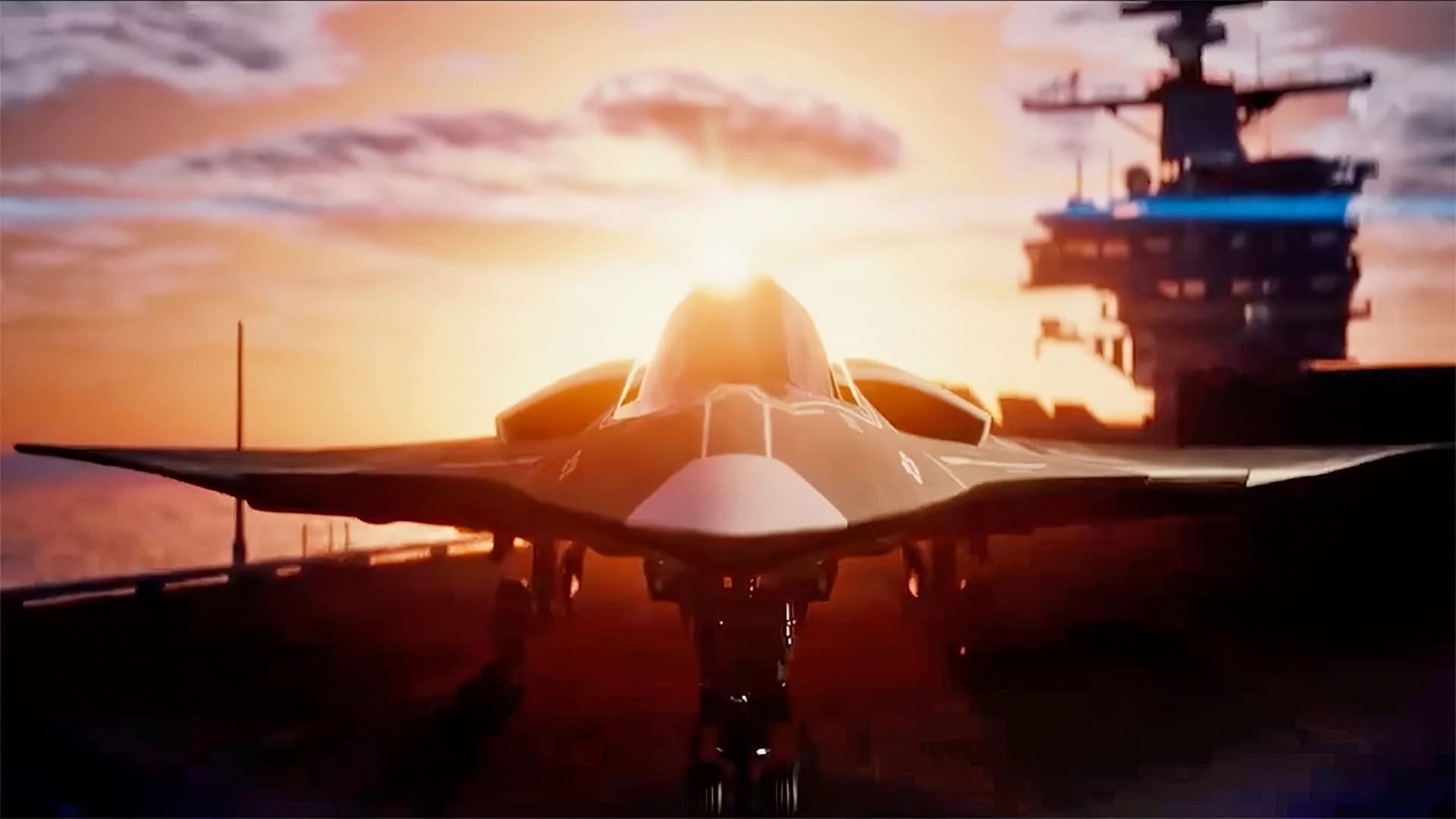
FA-XX Fighter Video Screenshot. Image Credit: NG Video Screencap.

FA-XX Fighter Screenshot from X
Very little actual “detail” about the J-36 and J-50 is known, yet available images of both would suggest that, at very least, the two aircraft appear quite stealthy.
J-36 & J-50
The largest departure from conventional expectations can likely be seen in the J-36, a larger, “3-engine” stealthy fighter-bomber hybrid aircraft with a blended-wing-body horizontal configuration.
This kind of shape would favor stealth, large payload, and possibly high-altitude, high-speed bombing missions.
Three engines would likely generate more “speed” and agility than what a pure “bomber” might be capable of, yet the larger fuselage and horizontal shape would indicate bomber-like stealth.
While three engines would likely generate a larger heat signature, tougher to hide from infrared sensors, the design could add speed and agility typically not associated with bombers.
At the same time, the J-36 also has fighter-jet-like attributes, such as an angular, aerodynamic front end and a jet-like fuselage blended with fighter-jet-like wings.
China’s J-50 also appears extremely stealthy and is much smaller and likely faster than the J-36; it appears to be a pure stealth fighter jet, yet with a 6th-generation tailless, flat-back end.
Much like available images of the U.S. 6th-generation platforms, both PLA AF planes have no vertical fins or tails, designs that clearly lower radar signature by eliminating sharp, protruding, vertically angled tails. It would appear that engineers have uncovered ways to enable fighter-jet-like agility, vectoring, and angled maneuvering without fins or vertical structures.
6th-Generation Stealth
Available renderings of U.S. 6th-generation aircraft show a similar horizontal structure, meaning fighter jets with a fully horizontal, bomber-like blended wing-body kind of configuration, yet with fighter-jet speed.
The existence of these rival Chinese platforms arguably adds urgency to U.S. Navy and Pentagon efforts to accelerate F/A-XX development with sufficient funding and developmental focus. Surely the U.S. Navy’s F-35C is engineered as an “upgradeable” platform able to stay relevant and competitive into the 2070s, and the F/A-18 has shown itself to be a perpetually sustainable and upgradeable 4th-generation platform able to fly years beyond its service life.
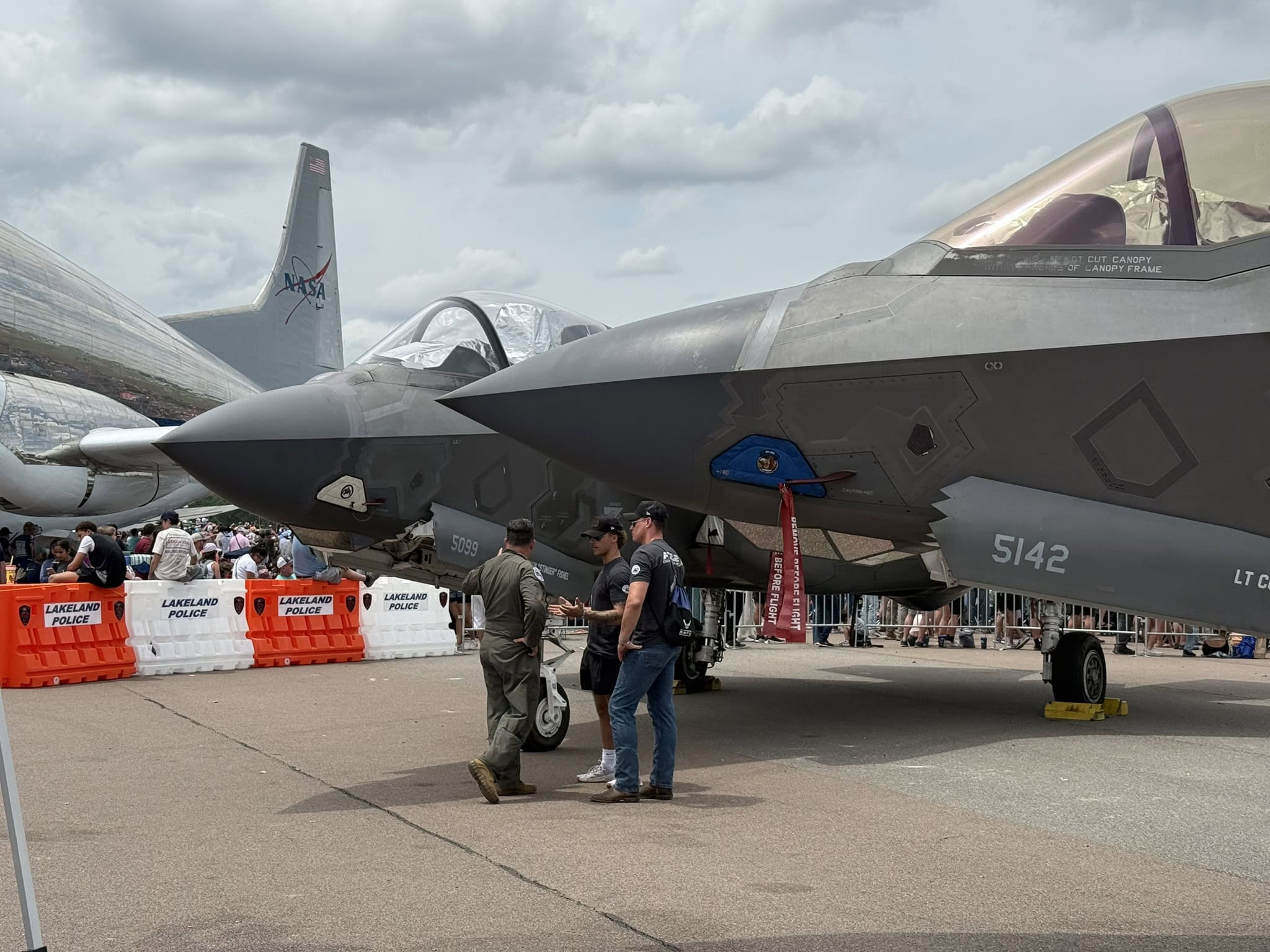
F-35C. Image Credit: 19FortyFive.com taken on 4/19/2026.
In the case of the F-35C, software upgrades continue to massively expand its weapons envelope, as the aircraft will soon fly with the advanced Stormbreaker bomb. Incremental software drops promise continued upgradeability, including the ability to integrate new generations of weapons as they emerge.
Furthermore, advances in AI-enabled computing, sensing, and radar, including range and fidelity, will, in future years, enable the F-35 to massively improve without redesigning or rebuilding hardware. At the same time, it is likely that breakthroughs in computing, stealth, sensing, and weapons integration can best be leveraged in a 6th-generation aircraft.
Given the unprecedented scope of new attributes likely associated with the F/A-XX and the apparent seriousness of the Chinese threat, a U.S. Navy future Carrier Air Wing powered solely by F-35Cs and F/A-18s would likely be woefully ill-equipped to face an extremely serious, fast-changing threat environment.
About the Author: Kris Osborn
Kris Osborn is the Military Technology Editor of 19FortyFive. Osborn is also President of Warrior Maven – Center for Military Modernization. Osborn previously served at the Pentagon as a highly qualified expert in the Office of the Assistant Secretary of the Army—Acquisition, Logistics & Technology. Osborn has also worked as an anchor and on-air military specialist at national TV networks. He has appeared as a guest military expert on Fox News, MSNBC, The Military Channel, and The History Channel. He also has a Master’s Degree in Comparative Literature from Columbia University.