
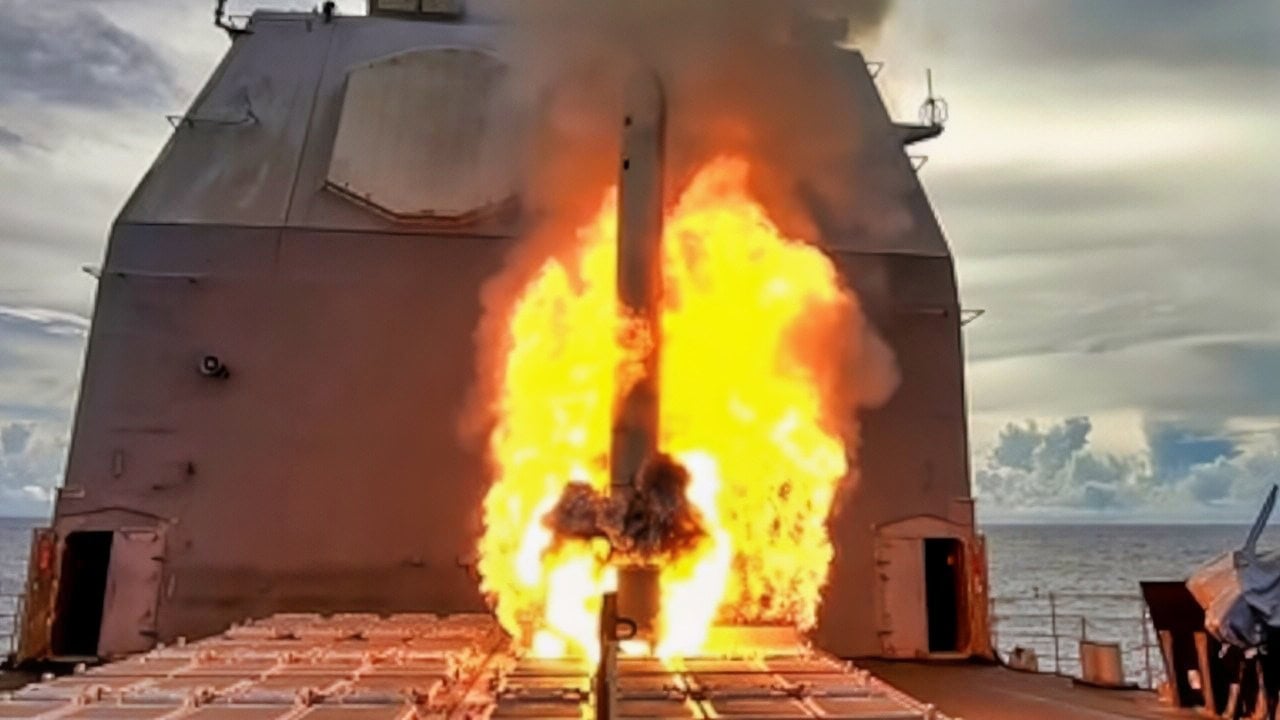
Operation Epic Fury against Iran has showcased America’s unmatched power-projection capabilities and the extraordinary overmatch the U.S. military wields against global adversaries. Much as the Persian Gulf War and the 1999 Kosovo conflict demonstrated similar disproportionate American advantages, Epic Fury promises a similar impact on the calculations of adversaries. Indeed, few recent conventional military operations have demonstrated such decisive operational superiority in a comparatively short period.
But while Epic Fury has been a reminder of the U.S. military’s overwhelming capability, it has also delivered a stark, real-time stress test of the U.S. defense industrial base under high-intensity combat conditions.
It revealed that while the U.S. military can inflict massive damage, the strain of producing defense materiel in extremis, particularly high-end munitions, could erode that advantage. Surge capacity is no longer a theoretical planning factor; it is an operational imperative for future conflict. Without it, even an overwhelming initial force can become mission-limiting within days, let alone weeks.
Without fundamentally addressing these gaps, the impression of American strength largely conveyed by Epic Fury will be overtaken by deterrence and warfighting limitations in the future.
In the opening air and maritime campaign against Iran, U.S. forces fired hundreds of cruise missiles in the first four weeks and expended more than 5,000 munitions across 35 types in the first 96 hours. These are burn rates that dwarf peacetime production capacity and expose the gap between operational demand and industrial supply. Consumption of precision-guided munitions exceeded annual production by orders of magnitude.
The expenditure rate of Tomahawk cruise missiles was the clearest red flag for defense planners. Peacetime procurement of Tomahawks averages 90 per year, but the operation consumed over 850 in roughly four weeks, more than nine times the typical annual buy. Air-to-ground missiles and other similar munitions had similar burn rates. Multi-year production equivalents were expended in the opening phase.
A significant portion of the operations’ estimated $900 million-a-day cost is attributed to munitions replenishment. The U.S. defense industrial base is not ready to meet this demand. Structural production constraints will inhibit the Department of War’s ability to replenish these stocks due to sole-source sub-tier bottlenecks shared across numerous munition types and limited rapid scaling despite prime-contractor acceleration. Several lessons have become clear.
First, depending on stockpiled munitions and other systems and inputs is insufficient. Even if initial inventories of long-range strike munitions are sufficient for the opening salvo of a conflict, depletion rates can constrain follow-on operations and leave other, non-theater combatant commands (such as Indo-Pacific Command in today’s conflict) dangerously under-resourced to deter threats.
Epic Fury proved resilience demands both depth and a production base sized for Day-1 surge. The U.S. Navy’s $3 billion budget request for Tomahawk replenishment is a start, but defense industrial base planning horizons and current budgets remain mismatched to modern conflict’s “days-to-weeks” consumption.
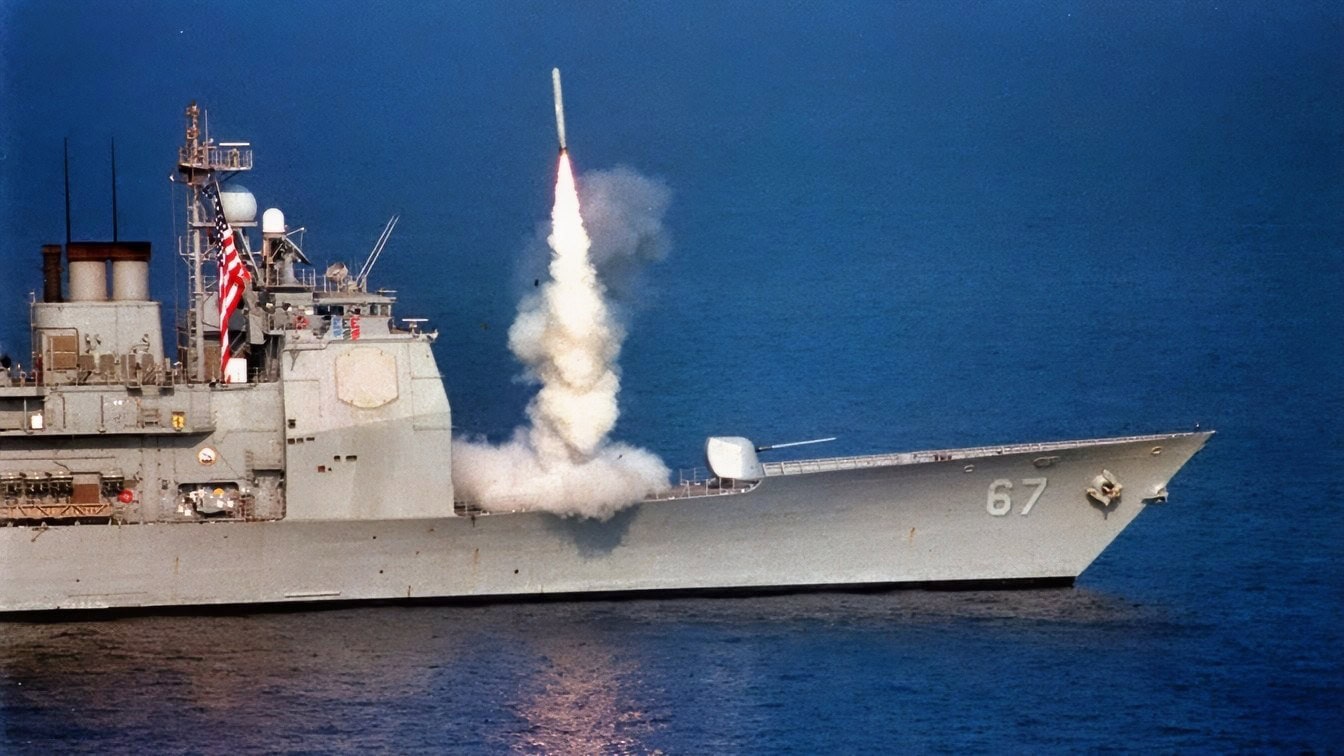
A Tomahawk cruise missile launches from the forward vertical launch system of the USS Shiloh (CG 67) to attack selected air defense targets south of the 33rd parallel in Iraq on Sept. 3, 1996, as part of Operation Desert Strike. The attacks are designed to reduce risks to the pilots who will enforce the expanded no-fly zone. President Clinton announced an expanded no-fly zone in response to an Iraqi attack against a Kurdish faction. The larger no-fly zone in Southern Iraq will make it easier for U.S. and coalition partners to contain Saddam Hussein’s aggression. The U.S. Navy Ticonderoga Class cruiser launched the missiles as it operated in the Persian Gulf.
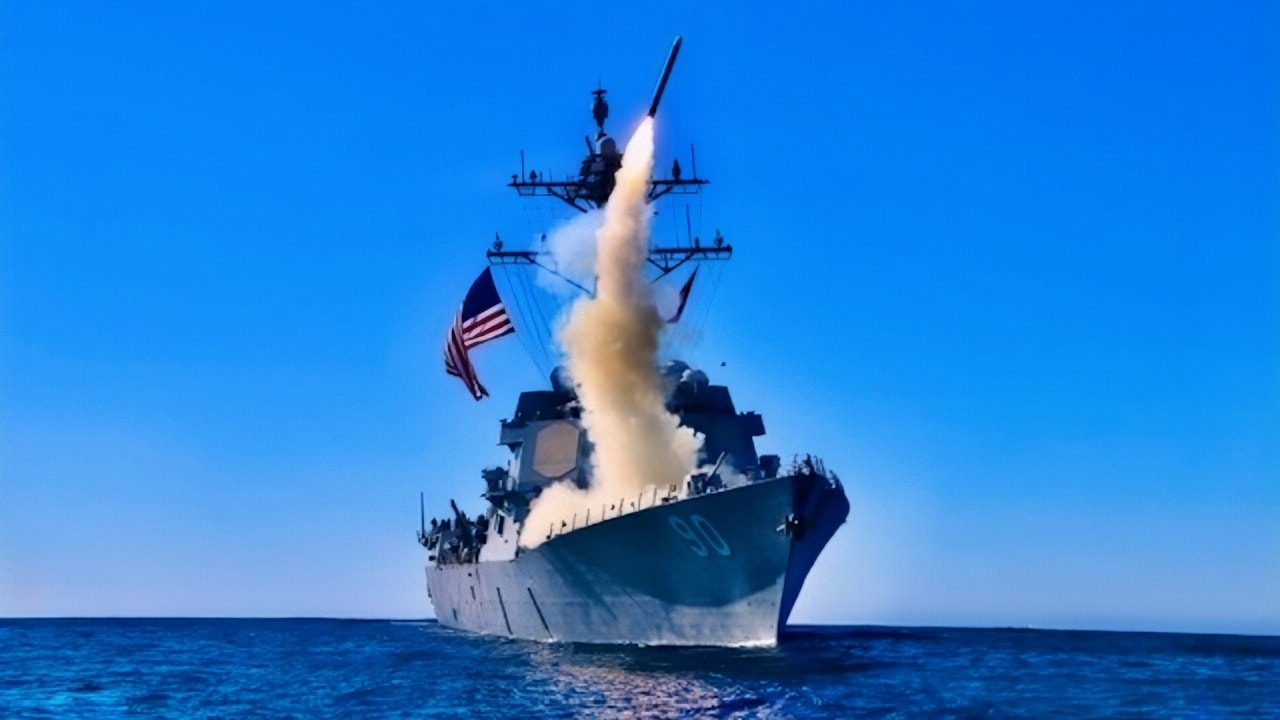
(Dec. 01, 2020) – The guided-missile destroyer USS Chafee (DDG 90) launches a Block V Tomahawk, the weapon’s newest variant, during a missile exercise. This event marked the first time a Block V Tomahawk missile was operationally tested, marking the Navy’s transition to a more advanced capability for the fleet. Block V includes an upgrade that will enhance navigation performance and provide robust and reliable communications. Chafee is currently assigned to Carrier Strike Group ONE and is homeported in Pearl Harbor. (U.S. Navy photo by Ens. Sean Ianno/Released)
Second, multi-year procurement and policy agility deliver results. Early White House-industry engagement and long-term planning enabled industry to commit to more than 1,000 Tomahawks a year and to quadruple Precision Strike Missile production output. Without these efforts, planning for future defense needs would be severely constrained.
Third, hybrid commercial-military models can enhance resilience. Rapid fielding of one-way attack drones and commercial-off-the-shelf integration demonstrated that it is possible to supplement exquisite munitions with lower-cost alternatives. Bringing down system costs is essential to increasing production capacity. Much of the U.S. industrial infrastructure from decades past simply no longer exists. Current facilities must be prepared to do more with less. Supplementing with lower-cost systems can help bridge that gap.
Fourth, supply-chain visibility is a national security priority. The operation revealed latent U.S. manufacturing capacity outside traditional defense primes, but locating and qualifying sub-tier suppliers can delay full capacity surge.
This mirrors lessons from the Ukraine War, which are now validated in a U.S.-led high-intensity campaign. Mapping the “invisible base” must become a pre-crisis priority. An all-of-the-above approach that streamlines qualification processes for small and medium-sized suppliers can alleviate program delays and expedite production lines.
Finally and most critically, defense industrial base resilience is a strategic advantage that the U.S. must never forfeit. In Epic Fury, operational success was underpinned by the fact that while U.S. forces degraded Iranian ballistic missile production and launch infrastructure, simultaneous pressure on the regime’s own ability to replenish these systems created an asymmetric advantage.
This validates that sustained U.S. replenishment capability directly supports our strategic interests. More often than not, the military that can build, replace, repair, and field more capabilities will emerge victorious.
Despite its overall success, Operation Epic Fury validates years of warnings from defense analysts and war games that chronic under-investment in industrial surge capacity imposes self-imposed limits on U.S. combat power, even in a regionally focused conflict against a less capable Middle Power adversary.
While Congress and the White House should collaborate to enact manufacturing visibility legislation and further expand Defense Production Act authorities and industrial policy tools, such as equity stakes in critical suppliers, a mindset shift among policymakers is equally important.
It is time to be explicit about “days-to-weeks” surge requirements and to integrate those assumptions into budgets and future programming, while accelerating the pre-qualification of commercial manufacturers for the defense surge likely in future conflict.
Restructuring the defense industrial base for a protracted high-intensity conflict is an imperative for future American dominance. A peace-through-strength strategy rests on industrial strength as much as on warfighting excellence. Epic Fury has proven that America’s military can deliver unrelenting force, but our defense industrial base must now deliver the sustained resilience that keeps that force unmatched, replenished, and ready for whatever comes next.
About the Author: Alexander B. Gray
Alexander B. Gray, a Nonresident Senior Fellow at The Atlantic Council, served as Deputy Assistant to the President and Chief of Staff of the White House National Security Council, 2019-21, and as Special Assistant to the President for the Defense Industrial Base at the White House National Economic Council, 2017-18. This op-ed is adapted from remarks delivered at the Defense Industrial Base Conference (DIBCON) in Milwaukee, Wisconsin, on April 7, 2026.