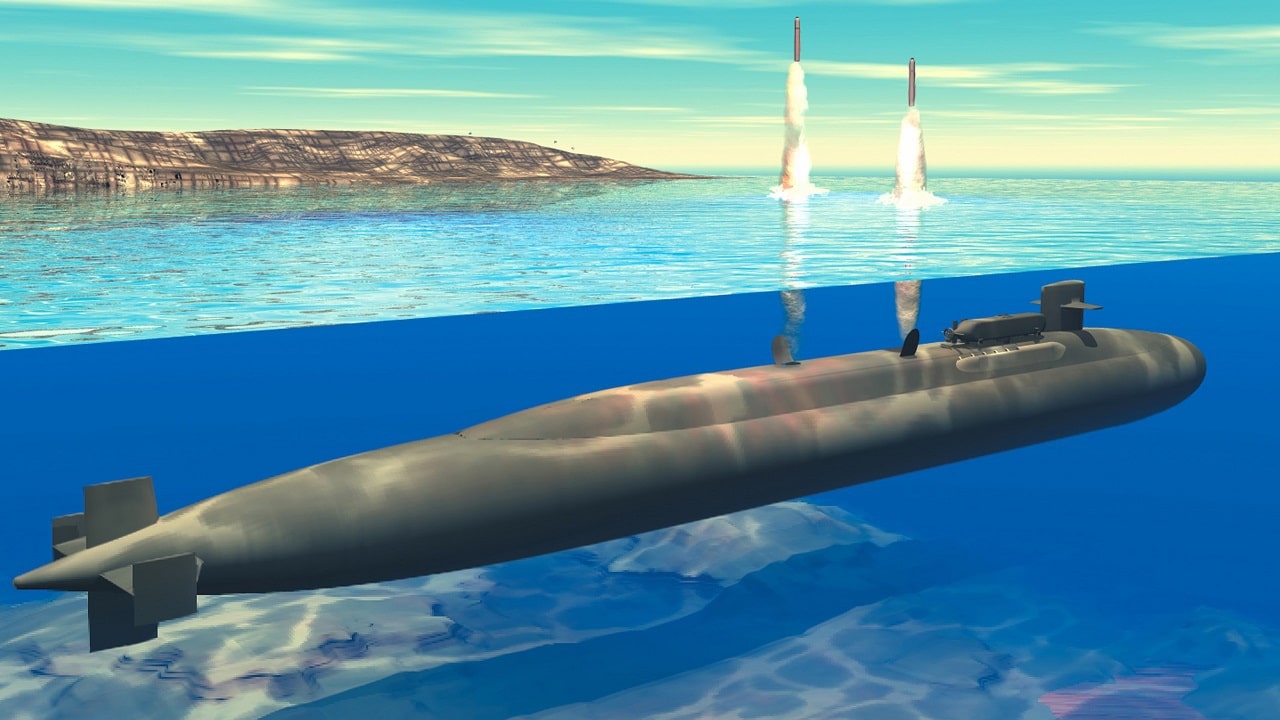
The United States has expended an enormous amount of munitions as part of the now paused campaign against Iran. One of the most expended types of weapons? Tomahawk cruise missiles. Thanks to reporting by the Center for Strategic and International Studies, a think tank, we know that 850 Tomahawks have been fired — a significant portion of available Tomahawks in the region.
The missiles are typically launched from United States Navy vessels. And though the long-range weapons are highly regarded for their precision and range, they are expensive and slow to manufacture.
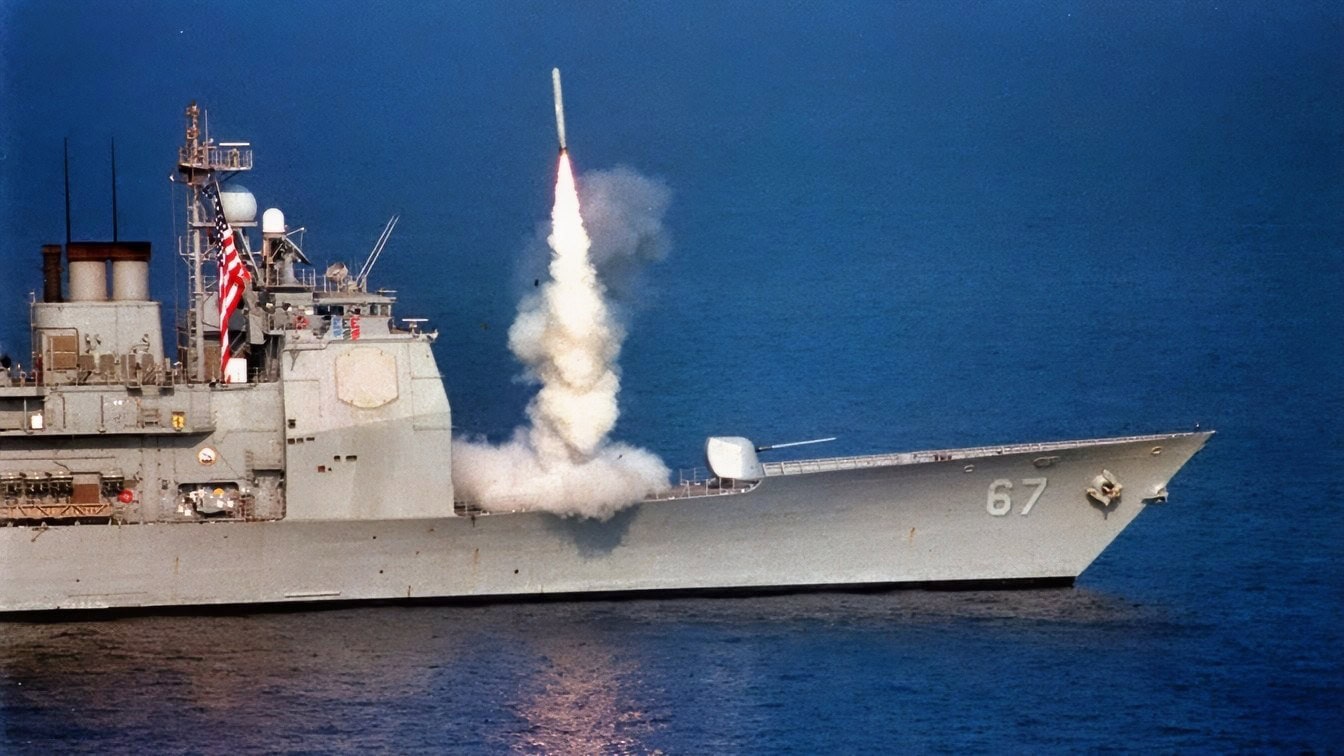
A Tomahawk cruise missile launches from the forward vertical launch system of the USS Shiloh (CG 67) to attack selected air defense targets south of the 33rd parallel in Iraq on Sept. 3, 1996, as part of Operation Desert Strike. The attacks are designed to reduce risks to the pilots who will enforce the expanded no-fly zone. President Clinton announced an expanded no-fly zone in response to an Iraqi attack against a Kurdish faction. The larger no-fly zone in Southern Iraq will make it easier for U.S. and coalition partners to contain Saddam Hussein’s aggression. The U.S. Navy Ticonderoga Class cruiser launched the missiles as it operated in the Persian Gulf.
Long supply chains of specialized components and stringent testing regimes prevent the Tomahawk production line from simply increasing output.
Tomahawk Cruise Missiles
Tomahawk missiles are a far cry from traditional kinds of missiles.
Unlike a variety of casual hobby rockets or missiles in service in militaries around the world, the Tomahawk cruise missile is more akin to an aircraft with a degree of autonomy.
It is precisely this semiautonomy, enabled by the Tomahawk’s complex subsystems and overall complexity, that makes the cruise missile so capable — and painstaking to manufacture.
The Technology Inside
Tomahawk missiles are powered by an internal turbofan engine, with guidance to target provided by GPS, a terrain-matching system, and inertial navigation. Other Tomahawk subsystems are highly precise and specialized, with very high manufacturing tolerances.
Given the Tomahawk missile’s strategic nature, it must perform with as close to perfection as possible, and to ensure the missile performs as intended, and to ensure the missile does not degrade while in storage, and resist the intense stresses of operational use, each of the Tomahawk’s components and subsystems is subjected to intense validation and testing.
While the production of Tomahawk missiles can certainly be expanded, they are a far cry from a mass production munition.
Qualifying the missile’s systems to ensure quality and reliability cannot be performed overnight.
Linking the Supply Chain
Many of the Tomahawk’s sensors and other electronics are enabled by microchips sourced from a relatively small number of suppliers.
Should chip supply falter — say, if China blocks the export of chips out of Taiwan — a serious Tomahawk bottleneck may arise.
Though there is the possibility of some part substitution, as Russia has done with parts of its missile arsenal, that risks lowering reliability, as substitute parts need to be tested and qualified to achieve satisfactory results.
The number of Tomahawks built today is reflective of peacetime expenditure rates, a significant portion of which are used in training, not in combat.
The 850 expenditure rate is significantly higher than the number of Tomahawks that are produced in a single year.
Production Numbers Increasing?
Though journalists and commentators have long bemoaned the state of the American defense industrial base, with particularly pointed criticisms leveled at both the pace of production and acquisition numbers, defense primes on the manufacturing side of the discussion have lamented the lack of signaling from the Pentagon in the form of munition orders.
Conversely, the officials within the Department of Defense — and indeed within the defense departments of foreign countries have repeatedly expressed exasperation with defense primes’ aversion to ramping up production without contractual commitments.
But that appears to be changing.
Just recently, the U.S. Department of Defense put ink to paper for a deal with RTX, the manufacturer of the Tomahawk, for a substantial order of Tomahawks and other vital munitions.
That deal will see production numbers boosted in “production capacity and speed deliveries of Land Attack and Maritime Strike variants of Tomahawk, AMRAAM® missiles, Standard Missile-3 Block IB interceptors (SM-3 IB), Standard Missile-3 Block IIA interceptors (SM-3 IIA), and Standard Missile-6® (SM-6),” according to an RTX press release.
“As global demand for these precision munitions continues to grow, these up-to-seven-year agreements establish frameworks to build on the company’s previous investments to expand production,” the firm wrote.
“Under the frameworks announced today, RTX will increase annual production of Tomahawks to more than 1,000, AMRAAMs to at least 1,900, and SM-6 to more than 500. RTX will also increase production of SM-3 IIA and accelerate SM-3 IB production. Many of these munitions will grow 2 to 4 times their existing production rates.”
Balancing Production and Expenditure
Though the agreement struck with RTX is certainly good news for the defense industrial base and the Department of Defense, the production of those munitions will not occur overnight.
In the meantime, Operation Epic Fury is now paused, and though the munitions used in strikes appear to have shifted at the end of the campaign to the relatively inexpensive but also highly precise JDAM family of weaponry, Tomahawk use in other theaters in the near future cannot be ruled out.
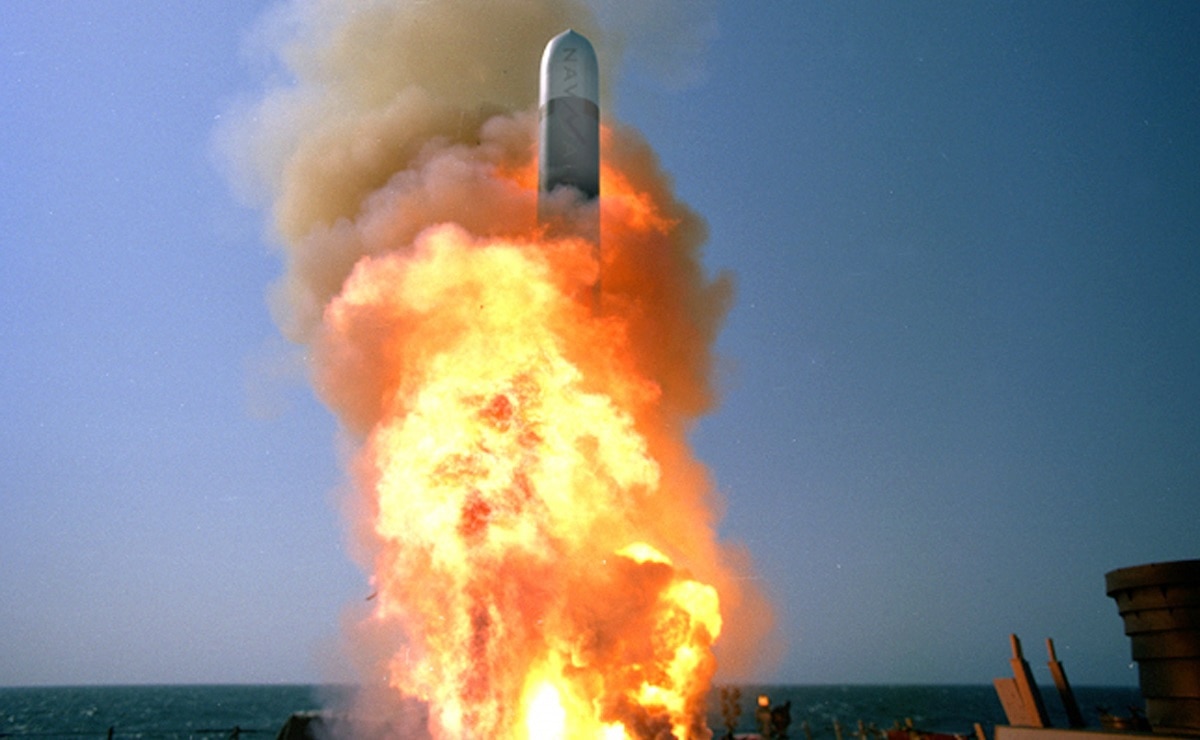
At sea aboard USS Stethem (DDG 63) Ð A Tactical Tomahawk Cruise Missile launches from the guided missile destroyer USS Stethem (DDG 63) during a live-warhead test. The missile traveled 760 nautical miles to successfully impact itÕs intended target on San Clemente Island, part of the Naval Air Systems Command (NAVAIR) test range in Southern California. The Tactical Tomahawk is the next generation of Tomahawk cruise missile, adds the capability to reprogram the missile while in-flight to strike any of 15 preprogrammed alternate targets, or redirect the missile to any Global Positioning System (GPS) target coordinates. It also will be able to loiter over a target area for some hours, and with its on-board TV camera, will allow the war fighting commanders to assess battle damage of the target, and, if necessary redirect the missile to any other target. Launched from the Navy’s forward-deployed ships and submarines, Tactical Tomahawk will provide a greater flexibility to the on-scene commander. Tactical Tomahawk is scheduled to join the fleet in 2004. U.S. Navy photo. (RELEASED)
Increased Tomahawk production is a good and necessary start — but it is an initial step.
A broadening of Tomahawk reserves is also a necessary step.
Recent reporting indicates the Department of Defense would like to significantly expand its Tomahawk stockpile, according to the Department’s fiscal year 2027 budget request, by 1,200 percent.
About the Author: Caleb Larson
Caleb Larson is an American multiformat journalist based in Berlin, Germany. His work covers the intersection of conflict and society, focusing on American foreign policy and European security. He has reported from Germany, Russia, and the United States. Most recently, he covered the war in Ukraine, reporting extensively on the shifting battle lines in Donbas and writing about the war’s civilian and humanitarian toll. Previously, he worked as a Defense Reporter for POLITICO Europe. You can follow his latest work on X.