
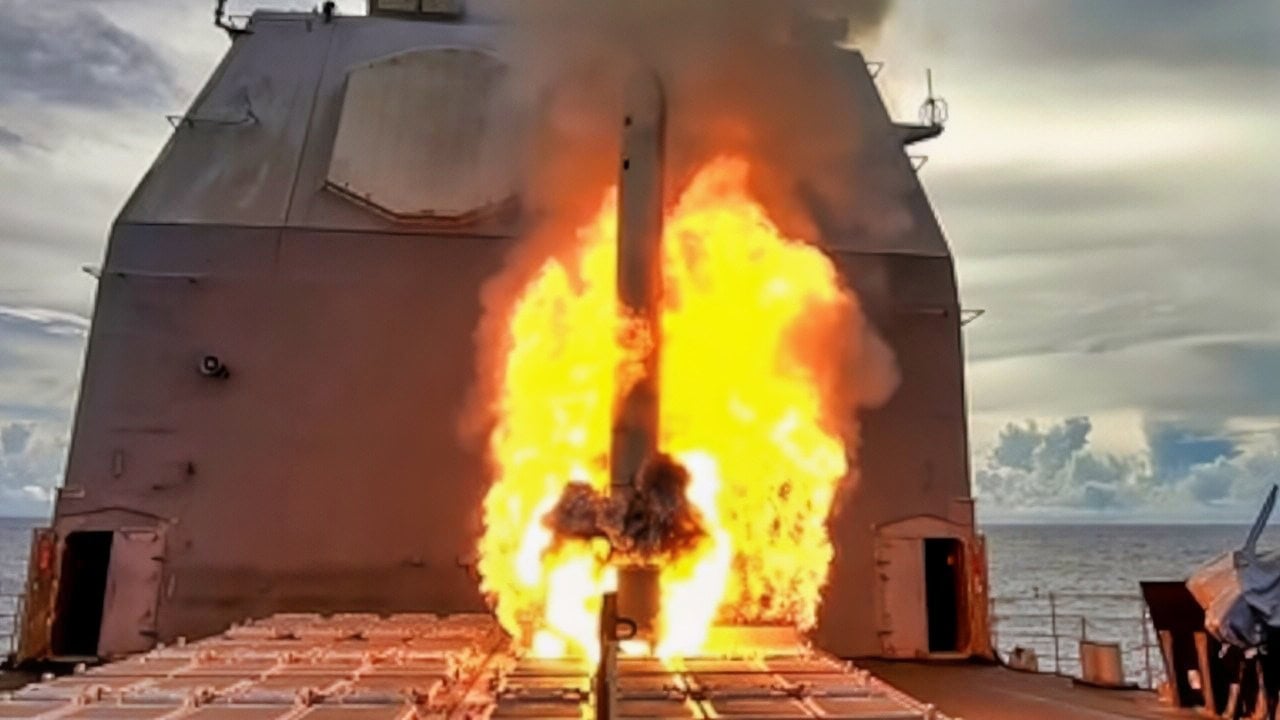
Summary and Key Points: Dr. Brent M. Eastwood raises a sobering alarm about America’s military readiness. As the United States rapidly burns through its stockpile of high-end Tomahawk cruise missiles in Iran, the math for fighting a simultaneous war in the Indo-Pacific is growing increasingly grim.
-Compounded by severe maintenance backlogs and exhausting deployments crippling the Navy’s aircraft carrier fleet, Beijing is quietly taking notes on the very real limits of America’s military supply chain.
Iran Today, China Tomorrow: The Tomahawk Missile Math Is Getting Ugly
Before Operation Epic Fury against Iran, the United States had a lower number of Tomahawk land-attack cruise missiles than normal. The projectiles had been used heavily against Iran-backed Houthi terrorists in Yemen last year. Plus, the U.S. Navy has encountered difficulty with at least one of its supercarriers, which has operated for far longer than is typical. Meanwhile, due to the curtailment of higher-end munitions like guided ballistic missiles, the supply of JDAM precision-guided bombs is growing smaller.
Trouble Maintaining Global Battle Strength
This raises the question: if there were a war against China in the Indo-Pacific, would there be enough munitions to prosecute the conflict to full effect? The U.S. military has usually pursued a “two-front” strategy that would enable the Pentagon to fight wars in two locations simultaneously, but this may not be possible today.
The Tomahawk Cruise Missile Situation Is Getting Serious
First, let’s take a look at the Tomahawk situation. These cruise missiles are presidential-level assets that can be launched from submarines and surface warships at a moment’s notice. They are often used to substitute for boots on the ground. First entering active duty in the early 1980s, they have enjoyed an excellent combat record with a multitude of precision and long-range strikes over the decades.
Tomahawks Have Been Part of Other Missions
Tomahawks have been used in Iran before, particularly during Operation Midnight Hammer, which punished Tehran’s nuclear infrastructure last year. They are also expensive and difficult to produce, with hundreds of precision parts that must be crafted by numerous defense subcontractors. This has required the United States to endure a situation in which it has limited stocks of the cruise missiles.
Making 1,000 Tomahawks a Year
However, there is a bright spot. RTX Corporation said it will be beefing up the number of Tomahawks by promising to produce 1,000 a year. The United States military needs these as quickly as possible, and there are still supply chain and workforce concerns that may delay their manufacturing rate.
The Tomahawk Math Problem
U.S. Navy destroyers can launch hundreds of Tomahawks, as can American submarines. Numerous Tomahawk strikes have lit up targets in Iran during Operation Epic Fury. For example, just one Ohio-class guided missile submarine deploys with 154 Tomahawks. Let’s say 10 were launched each day of the war. That means the boats could be running low by now at this phase of the war. The Navy may have already expended 300 to 400 of the missiles within the first 72 hours. Every Tomahawk launched at targets in Iran is one that cannot be pointed at China.
U.S. Navy Aircraft Carrier Struggles
Second, at least one U.S. Navy aircraft carrier has endured a horror show of a deployment to the Central Command area of responsibility. The USS Gerald R. Ford was already on a long mission after being sent to support counternarcotic operations in the Caribbean. Then the Navy decided to re-route it to the Middle East to help with Operation Epic Fury. The deployment has stretched the crew to their wits’ end as the duration of the mission has taken over 300 days, which is longer than a normal cruise.
Trouble With Plumbing
Also, the Ford has endured trouble with its toilets, which has frustrated sailors and made life difficult. This has required personnel to focus on the sewage system instead of addressing pressing needs with normal maintenance to repair regular wear and tear on the ship.
A Laundry Room Fire Was the Last Straw
Then a more serious situation arose. A laundry room fire sparked on the ship this month and raged for over 30 hours. The fire was worse than what was originally reported, and a massive amount of replacement mattresses had to be borrowed from another carrier. 600 shipmates had been forced to sleep on tables as their quarters were unlivable. The Ford docked at Souda Bay, Crete, to fix these problems, and it will return to the United States instead of joining the fight against Iran. The supercarrier could be out of action for six to 12 months.
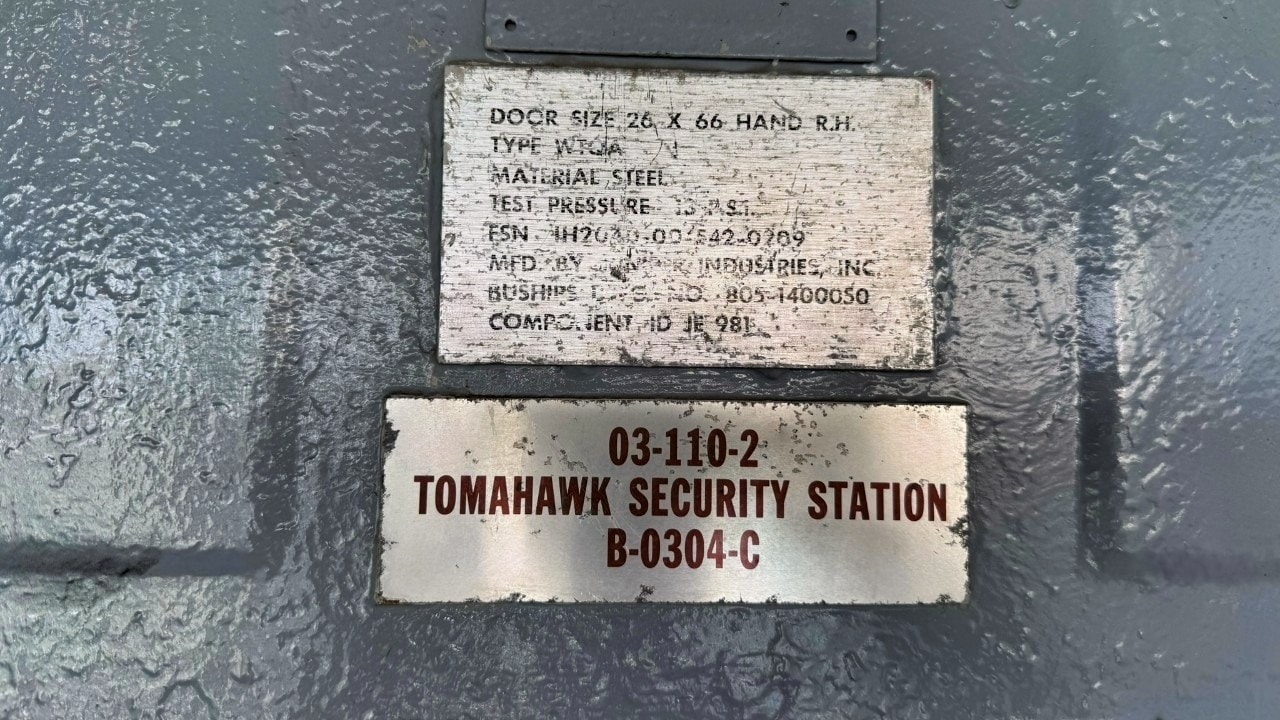
Battleship USS Iowa Tomahawk Missile Container. Taken by Harry J. Kazianis for 19FortyFive.com abord USS Iowa.
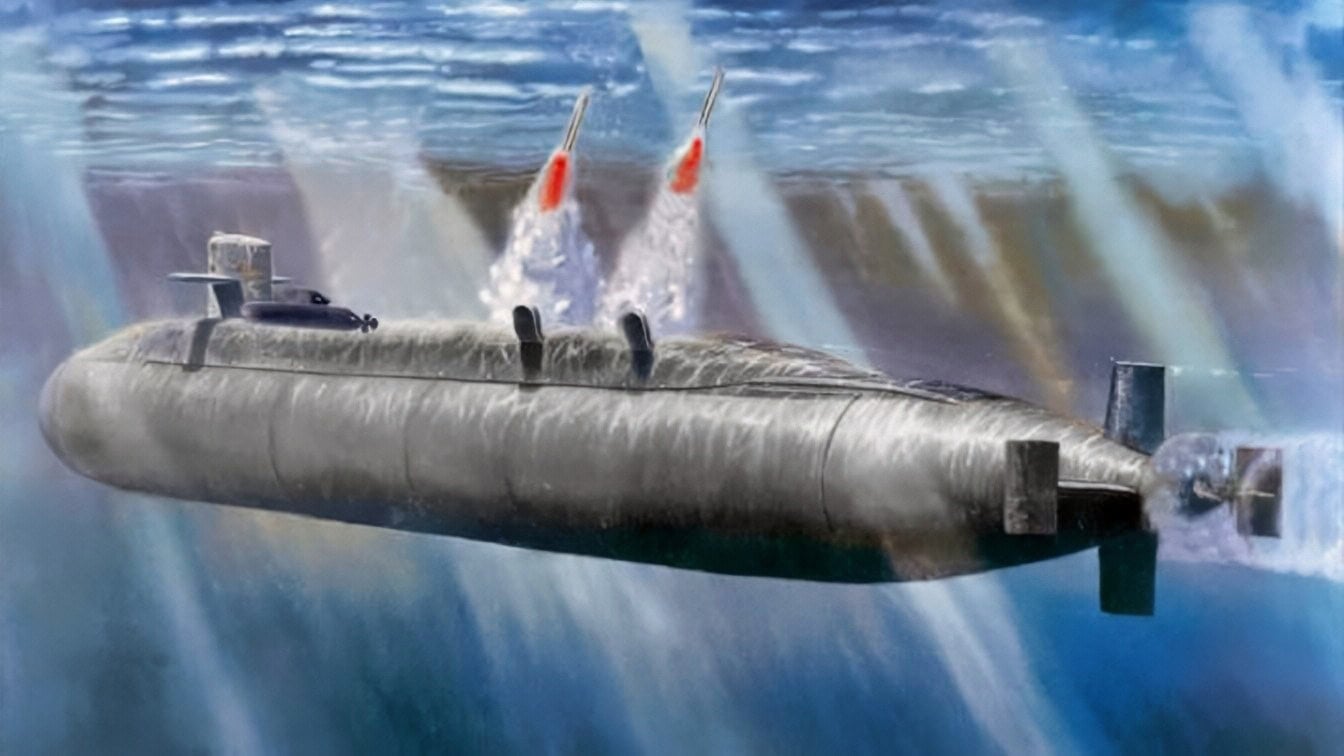
Puget Sound Naval Shipyard, Wash. (Aug. 14, 2003) — Illustration of USS Ohio (SSGN 726) which is undergoing a conversion from a Ballistic Missile Submarine (SSBN) to a Guided Missile Submarine (SSGN) designation. Ohio has been out of service since Oct. 29, 2002 for conversion to SSGN at Puget Sound Naval Shipyard. Four Ohio-class strategic missile submarines, USS Ohio (SSBN 726), USS Michigan (SSBN 727) USS Florida (SSBN 728), and USS Georgia (SSBN 729) have been selected for transformation into a new platform, designated SSGN. The SSGNs will have the capability to support and launch up to 154 Tomahawk missiles, a significant increase in capacity compared to other platforms. The 22 missile tubes also will provide the capability to carry other payloads, such as unmanned underwater vehicles (UUVs), unmanned aerial vehicles (UAVs) and Special Forces equipment. This new platform will also have the capability to carry and support more than 66 Navy SEALs (Sea, Air and Land) and insert them clandestinely into potential conflict areas. U.S. Navy illustration. (RELEASED)
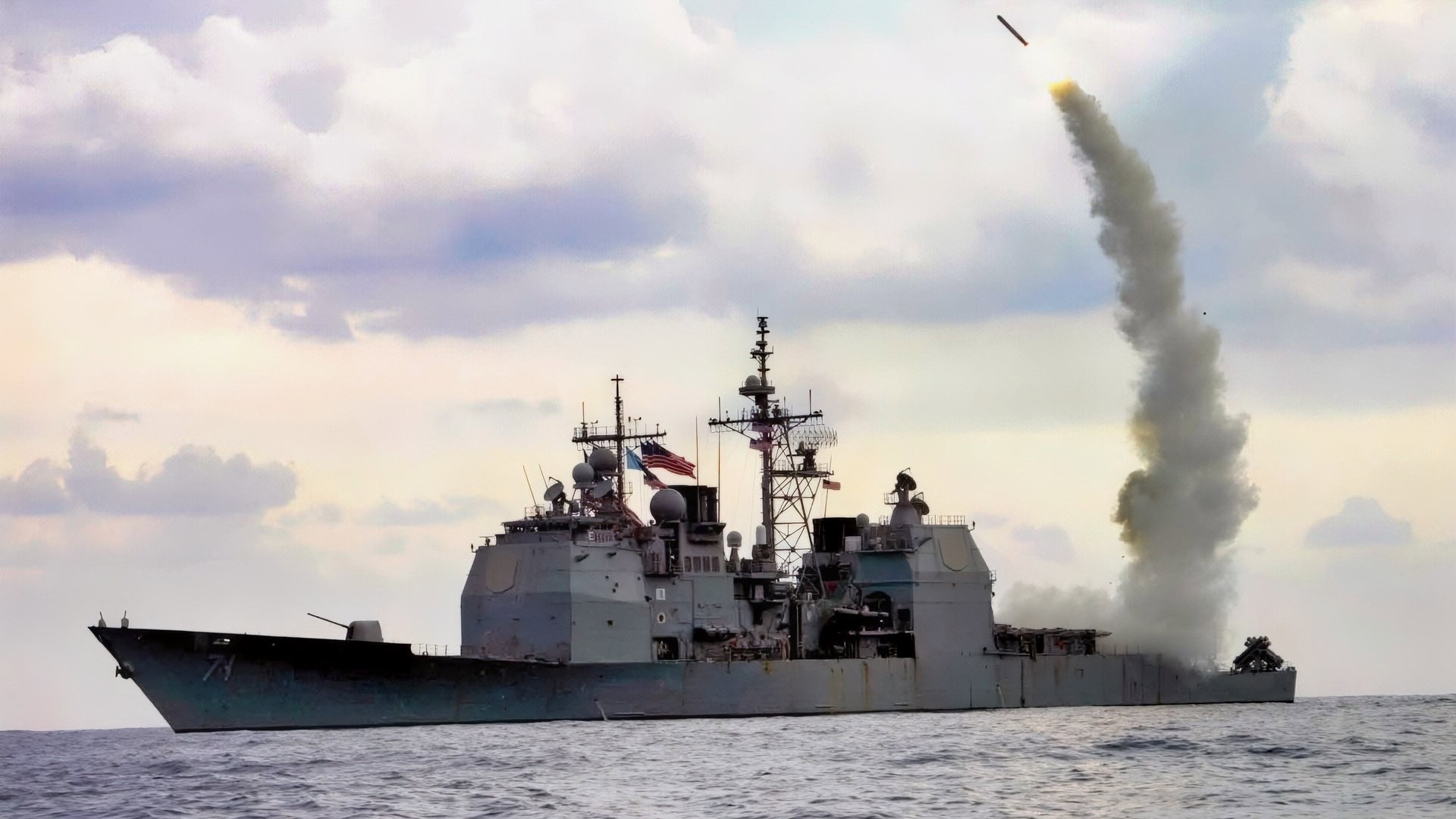
ABOARD USS CAPE ST. GEORGE (CG 71) AT SEA — A Tomahawk cruise missile launches from USS Cape St. George, operating in the eastern Mediterranean Sea in support of Operation Iraqi Freedom. (Photo by IS1 Kenneth Moll, USS Cape St. George) (Released by Sixth Fleet Public Affairs)
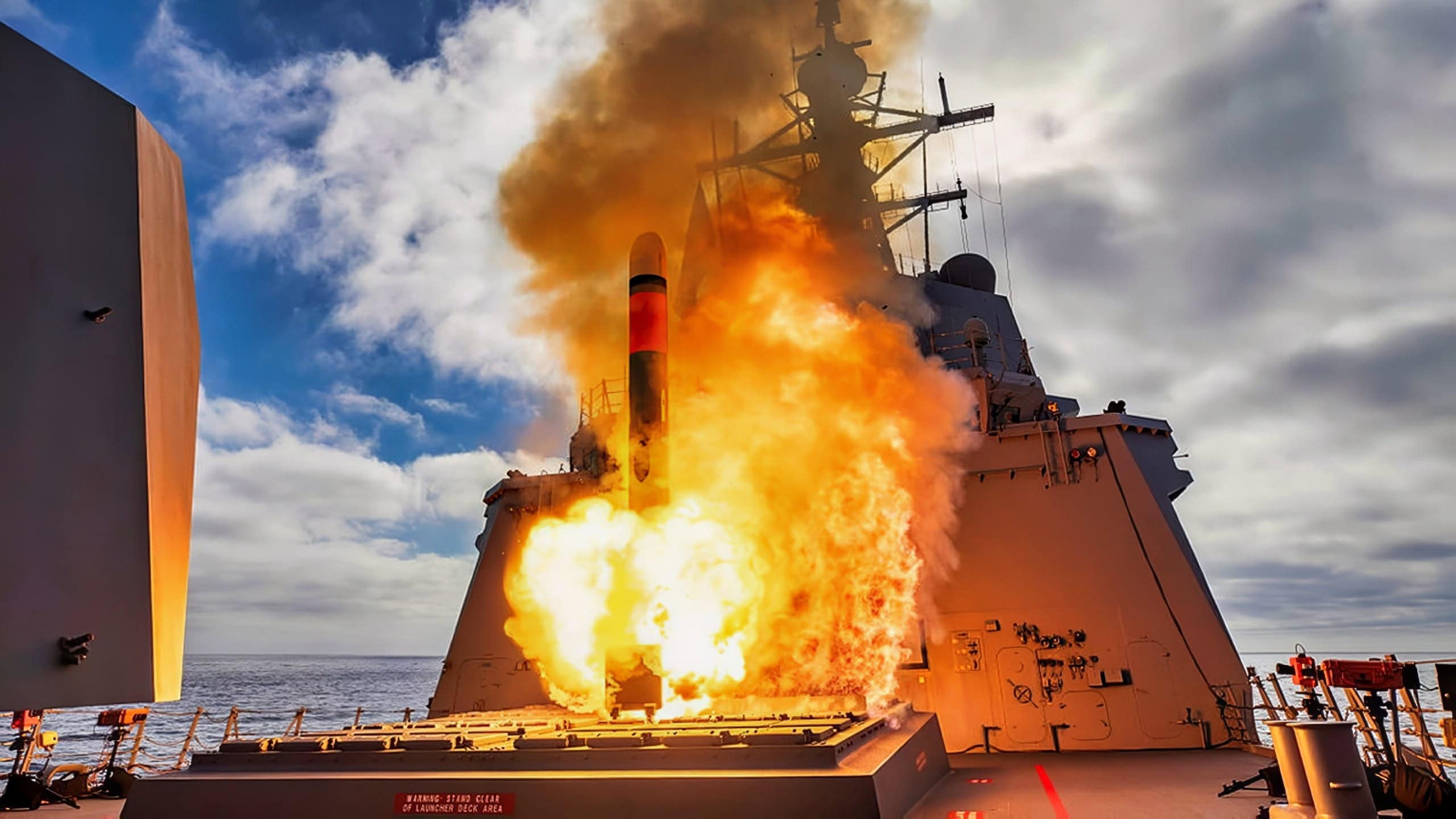
Tomahawk Missile Firing. Image Credit: Government of Australia.
Long Maintenance Periods Required for Other Carriers
Meanwhile, the USS John C. Stennis is in port for Refueling and Complex Overhaul (RCOH) at Newport News Shipbuilding. This job has been going on for five years and has been delayed for 14 months by workforce issues and the COVID-19 pandemic. The USS Harry S. Truman is slated to undergo an RCOH next. The Navy would like to have more carriers deployed to both the Middle East and East Asia to deal with the two-front dilemma, but maintenance needs are trimming that effort.
The JDAM Supply Is Holding Up
The good news is that the United States has a huge supply of JDAMs, or lower-end munitions that are still precision-guided. But the supply is not infinite, even though there may be as many as 500,000 JDAM kits to convert “dumb bombs” into “smart bombs.” The Pentagon said earlier that it would focus on these munitions because Air Force and Navy aviation have achieved air superiority over Iran, and bombers and fighters can use JDAMs in full force. The United States has also utilized GBU-31 2,000-pound JDAM bunker busters against underground sites.
Battle Planners Are Keeping Their Eyes Wide Open
All of this means that battle planners in the Indo-Pacific Command must conduct some force planning that takes these developments into consideration. The biggest problems are the dwindling numbers of Tomahawks and the availability of aircraft carriers.
It appears the JDAM supply is a more manageable situation, although the Air Force needs an additional 2,000-pound bunker busters because of Iran’s network of underground ballistic missile production and launch sites.
China Has a Vote in This, Too
Thus, there is a need for arithmetic that constantly analyzes supplies, and you can bet China is watching closely. The Chinese are examining what the first week of warfare against Iran looks like for the Americans.
It seems that the United States likes to rely on its Tomahawks early (days 1-4) until enemy air defenses have been suppressed with stealth bombers and radar-evasive strike airplanes. Then the Americans switch to lower-level munitions like JDAMs at day 5 of a conflict. China has also noticed that the vaunted USS Gerald R. Ford has been having difficulties, and the RCOHs can be delayed on other carriers.
This development will be studied closely by all stakeholders. The “magazine depth” problem is a real concern for the United States in a potential two-front war. Can the U.S. defense industrial base keep up during wartime?
We will be watching and conducting our own analysis of munitions shortages and carrier difficulties to see what the future of warfare holds when looking at the entire threat situation. Fighting two conflicts at the same time may not be possible for the Americans.
About the Author: Brent M. Eastwood
Author of now over 3,000 articles on defense issues, Brent M. Eastwood, PhD is the author of Don’t Turn Your Back On the World: a Conservative Foreign Policy and Humans, Machines, and Data: Future Trends in Warfare plus two other books. Brent was the founder and CEO of a tech firm that predicted world events using artificial intelligence. He served as a legislative fellow for US Senator Tim Scott and advised the senator on defense and foreign policy issues. He has taught at American University, George Washington University, and George Mason University. Brent is a former US Army Infantry officer. He can be followed on X @BMEastwood.