
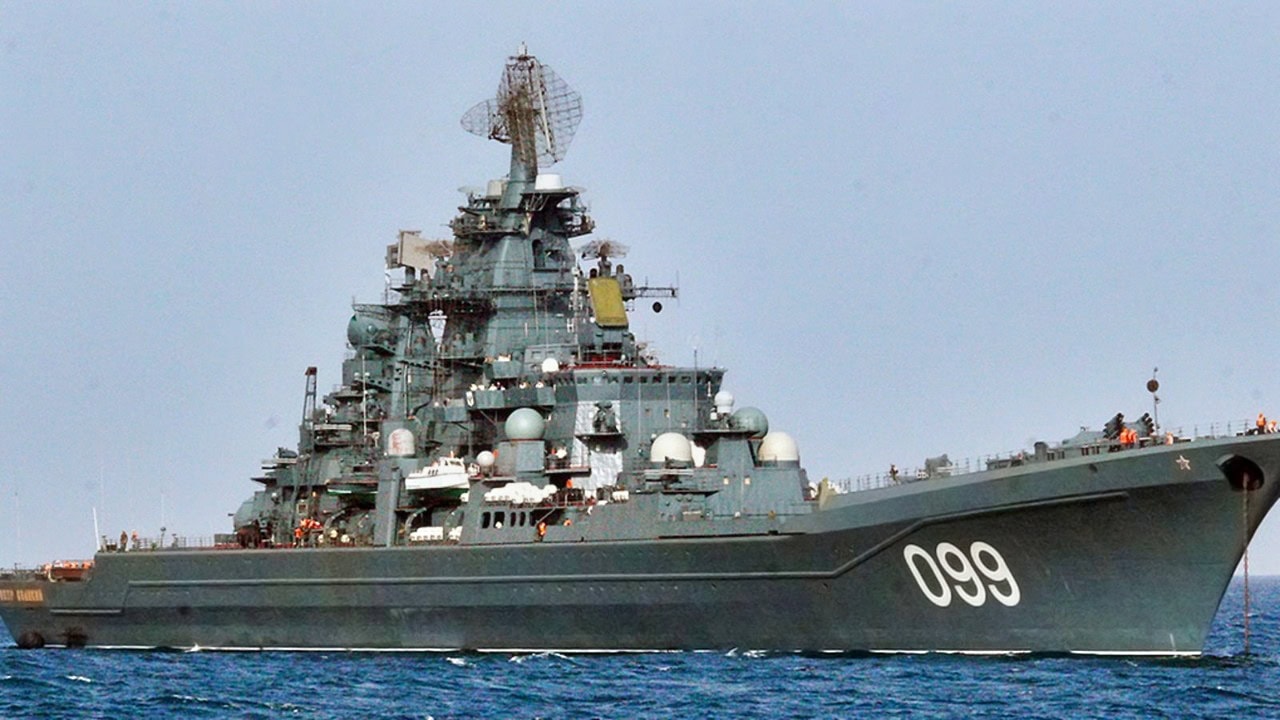
The battlecruiser is back. Well, okay, maybe not the same battlecruisers that became obsolescent after World War II but still make old-school naval history buffs like Yours Truly wax nostalgic. Rather, we are talking about the Russian Navy’s Kirov-class warships. NATO considers these to be “battlecruisers,” but they are more correctly thought of as a class of nuclear-powered guided-missile heavy cruisers.
As intriguing as the return of the Kirovs sounds, the question is, why are they back at all?
Semantic Sidebar: Defining a Battlecruiser
A convenient definition of “battlecruiser” comes to us from the Everything Explained Today website: “The battlecruiser (also written as battle cruiser or battle-cruiser) was a type of capital ship of the first half of the 20th century.
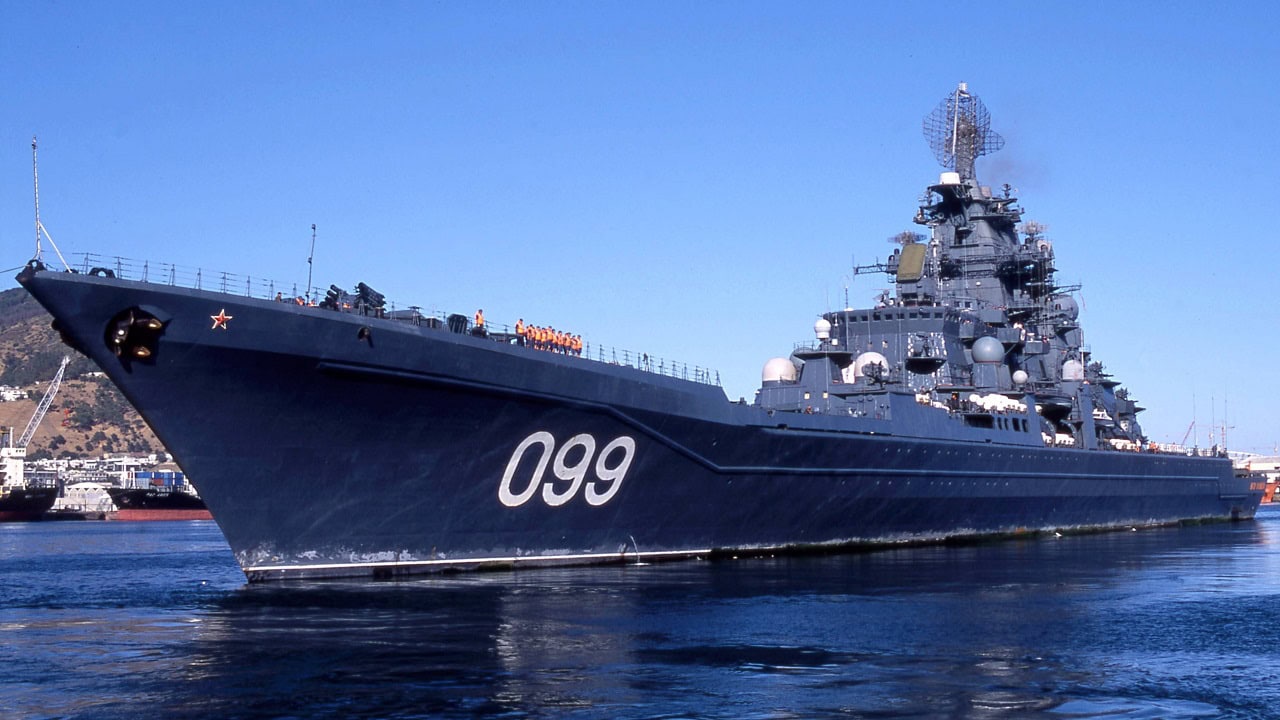
Russian Navy Kirov-Class Battlecruiser. Image Credit: Creative Commons.
These were similar in displacement, armament and cost to battleships, but differed in form and balance of attributes. Battlecruisers typically had thinner armor (to a varying degree) and a somewhat lighter main gun battery than contemporary battleships, installed on a longer hull with much higher engine power in order to attain greater speeds.”
By that rationale, the Kirov-class warships, which were originally known in Soviet parlance as “Project 1144 Orlan,” do not meet the definition.
However, as noted by the Naval Encyclopedia, “According to NATO classification, the project soon received the term ‘battlecruiser’ due to its huge size, armor and powerful armament, but it still remained a ‘large missile cruiser’ in the Soviet inventory.”
Project 1144 produced the largest and most powerful surface combatants with nuclear power plants in the world—the only capital vessels larger are aircraft carriers—and when they were introduced during the Cold War, they were also the most heavily armed.
However, these ships’ status was supplanted when the U.S. Navy recommissioned the World War II-vintage Iowa-class battleships.
Kirov-Class Battlecruiser Additional Early History and Specifications
Under the leadership of Chief Designer B.I. Kupensky, Project 1144 “Orlan”—a series of Soviet (later Russian) multi-purpose steam/nuclear guided-missile cruisers for oceanic operations and fleet coordination—was built at the Baltic Shipyard between 1973 and 1996.
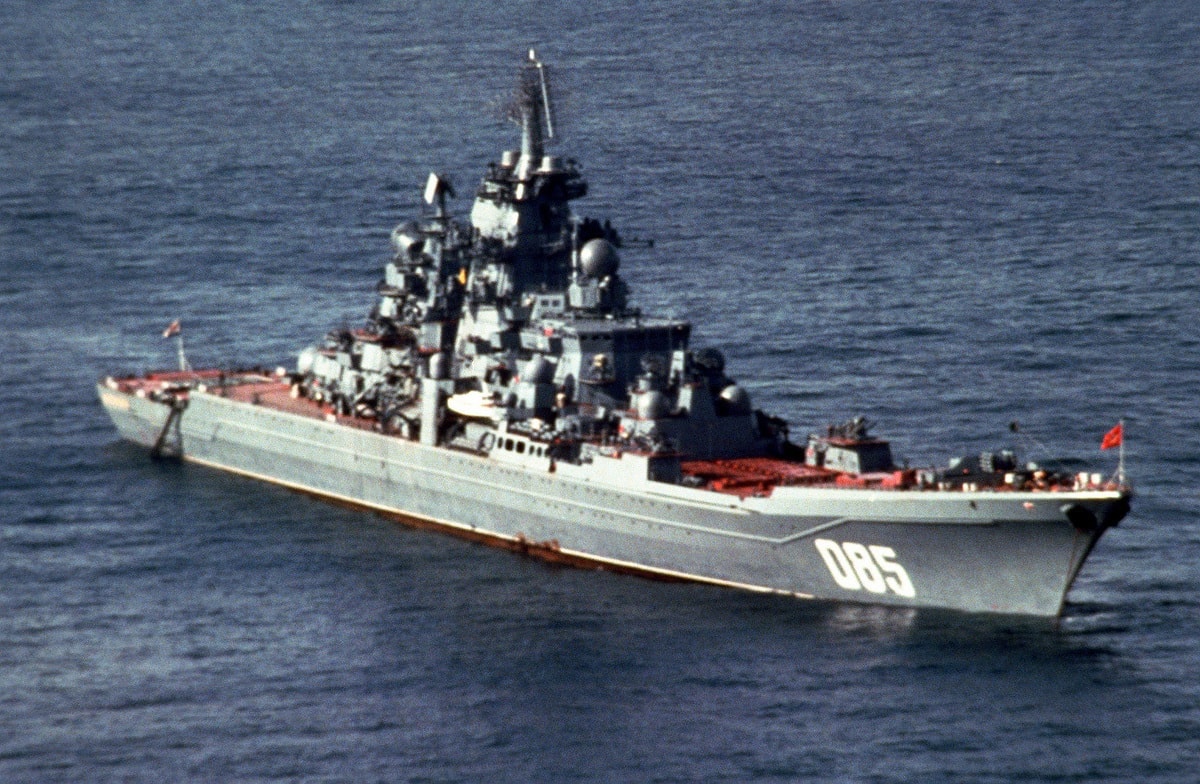
A starboard bow view of the Soviet Kirov class nuclear-powered guided missile cruiser KALININ.
The lead ship of the class was the Kirov – named for Bolshevik revolutionary and Joseph Stalin toady Sergei Mironovich Kirov. It was laid down on March 27, 1974, launched on December 26, 1977, and commissioned on December 30, 1980. The Kirov was followed by the Admiral Lazarev, Admiral Nakhimov, and Pyotr Velikiy (Peter the Great).
The Kirov and her sister ships have fully laden hull displacement of 28,000 tons, and a hull length of 252 meters. Armament consists of two AK-100 100-mm/L60 DP guns and eight AK-630 hex Gatling 30-mm/L60 PD guns; twenty P-700 Granit (SS-N-19 Shipwreck) antiship missiles; and 96 SA-N-6 Grumble (S-300PMU) surface-to-air missiles.
By comparison, the true battlecruiser HMS Hood—the pride of Great Britain’s Royal Navy during World War II—had a hull length of 262.3 m, a displacement of 47,430 tons, and packed a main armament of eight 15-inch guns and a secondary armament of fourteen 4-inch guns. Obviously, the Hood and her ilk didn’t have the benefit of modern missiles, but they had bigger and more guns.
Operational History of Kirov-Class
The Kirovs had been conceived to counter U.S. Navy submarines with their large payload of SS-N-14 Silex anti-submarine missiles.
They were later intended to operate alongside prospective nuclear-powered aircraft carriers for global power projection—a mission that never came to fruition.
Meanwhile, in a classic example of the Law of Unintended Consequences, the commissioning of the Kirovs spurred the U.S. Navy to recommission the Iowa-class battlewagons—true, old-school battleships with the 16-inch guns to prove it.
The Kirov-class delivered an inauspicious operational record. For example, the Kirov’s nuclear reactor exploded in 1990, which led to the ship’s decommissioning.
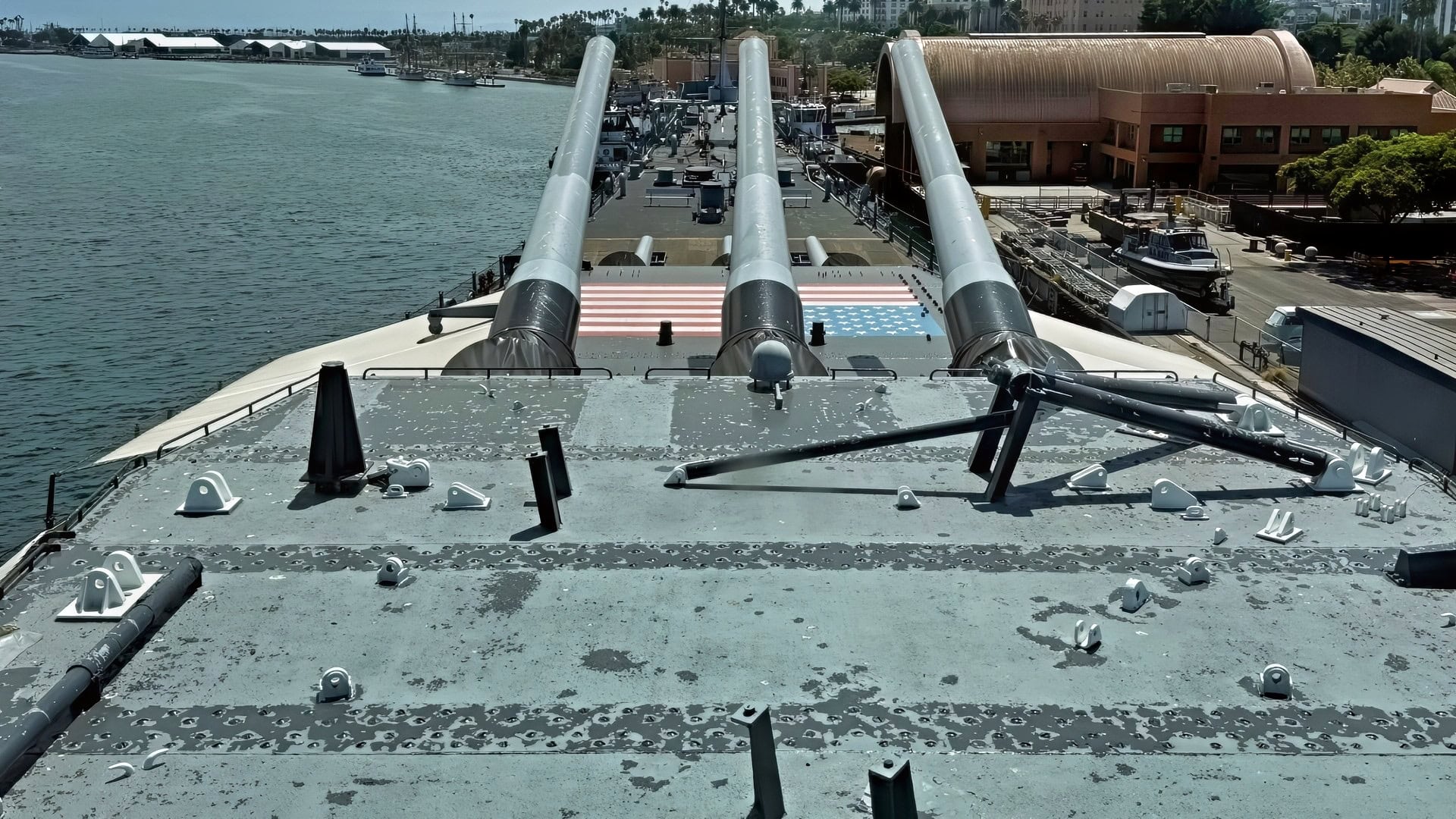
16-Inch Iowa-Class Guns USS Iowa. 19FortyFive.com Image.
Yet the Russian Navy has seen fit to give the two remaining Kirovs a new lease on life. The Pyotr Velikiy has remained in service, and the service has spent as an estimated $5 billion to modernize the Admiral Nakhimov—a project that includes Zircon hypersonic missiles alongside S-400 air-defense systems. Her modernized vertical launch systems (VLS) will be unrivaled in terms of number—a whopping 176 cells.
But, Why?
Does bringing back the two remaining Kirovs really make sense after the advent of anti-ship ballistic missiles and naval drones?
Indeed, the Kirovs’ reintroduction may boil down to national pride. As H.I. Sutton of Naval News elaborated in February, “The program now has all the hallmarks of a vanity project, being as much about the perception of might as practical military value. The ship’s significance in this respect may grow as the current pride of the Russian Navy, their sole aircraft carrier the Admiral Kuznetsov, becomes ever more expensive to maintain and may be decommissioned.”
Sutton adds that, “It’s also only a single ship, and it looks increasingly likely that the other two major warships, her sister ship Peter the Great and the carrier Admiral Kuznetsov, will be retired. Possibly it’s intended only for show, for waving the flag abroad and in naval parades.”
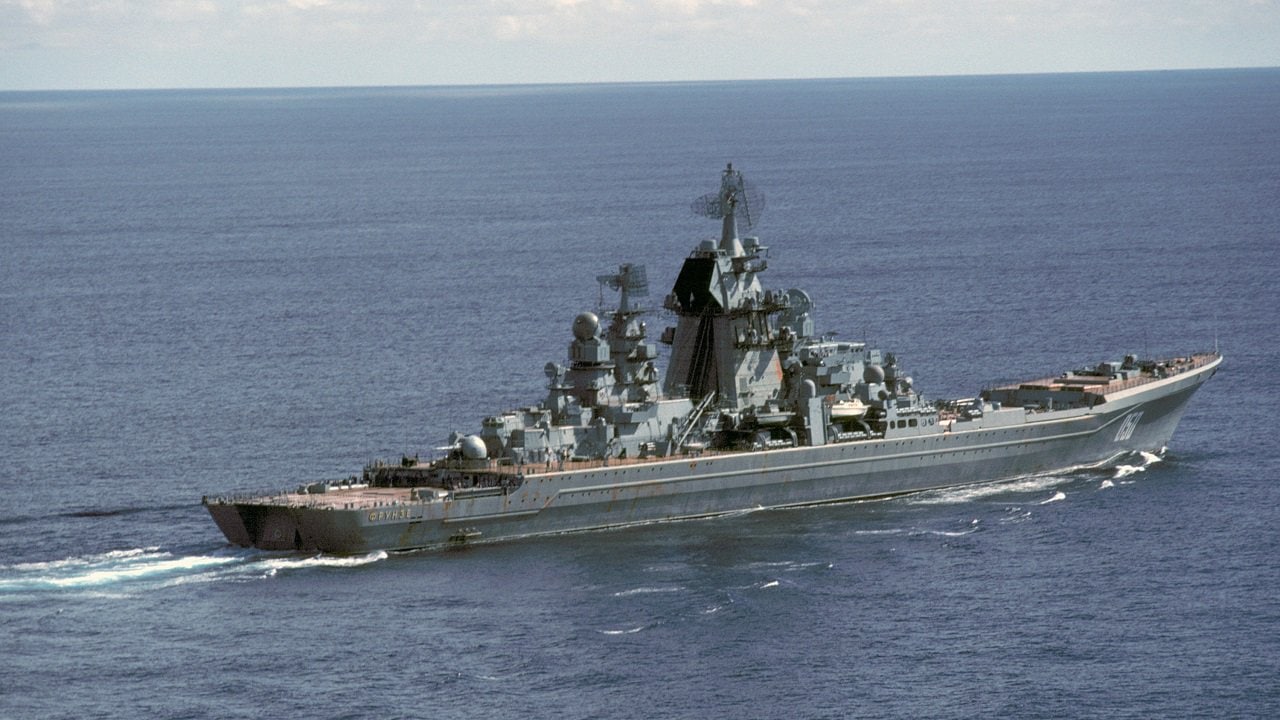
Aerial starboard quarter view of the Soviet Kirov-class guided missile destroyer FRUNZE underway back in 1985.
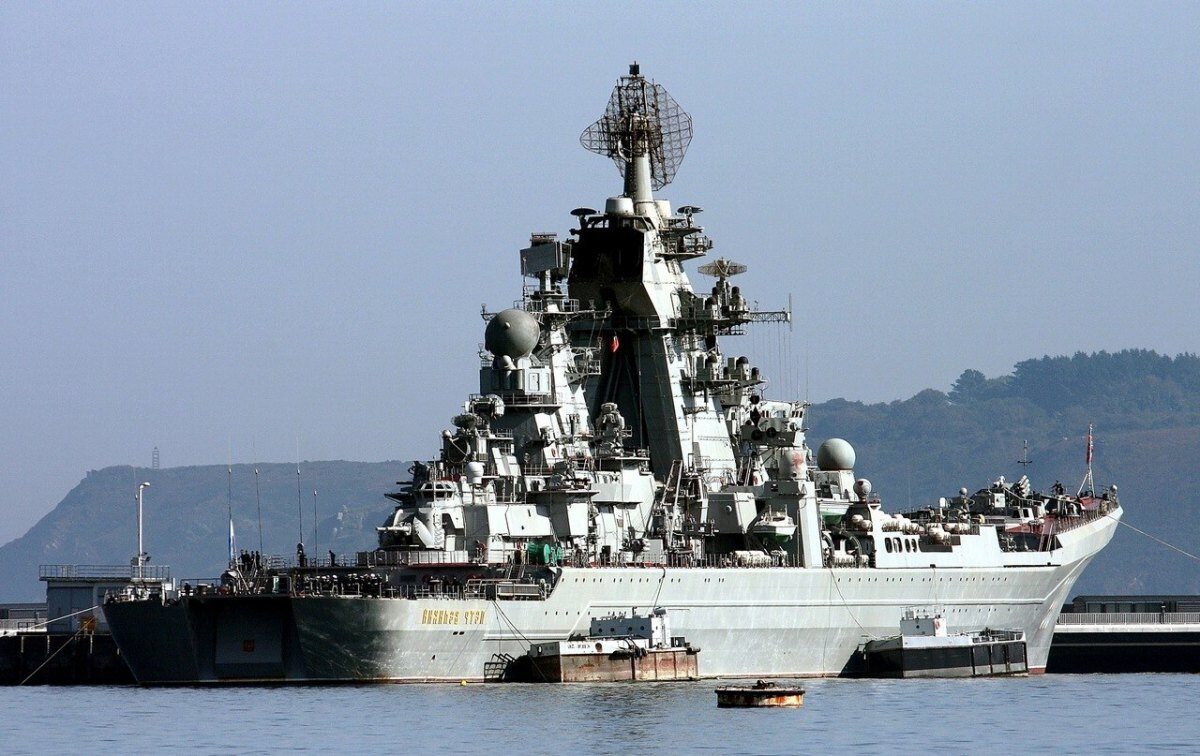
Kirov-Class. Image Credit: Creative Commons.
The Nakhimov’s restoration was planned before Russian President Vladimir Putin’s 2022 invasion of Ukraine. In April of that year, the Russian Navy was utterly humiliated when its Black Sea Fleet flagship, the guided missile cruiser Moskva, was sunk by two Ukrainian Navy R-360 Neptun missiles.
In the aftermath of that incident, the Nakhimov may have been prioritized to rebuild some of Russia’s shattered naval ego.
The Trump-Class Battleship Is Coming
There’s probably an additional sense of urgency due to U.S. President Donald Trump’s announcement of the Trump-class (BBG-X) battleship.
It would be another blow to Putin’s pride to be one-upped by Donald Trump for the title of Most Powerful Guns on the Surface of the Sea.
“Pride goeth before the fall,” as the proverb goes—especially when pride preempts pragmatism.
About the Author: Christian D. Orr, Defense Expert
Christian D. Orr is a Senior Defense Editor. He is a former Air Force Security Forces officer, Federal law enforcement officer, and private military contractor (with assignments worked in Iraq, the United Arab Emirates, Kosovo, Japan, Germany, and the Pentagon). Chris holds a B.A. in International Relations from the University of Southern California (USC) and an M.A. in Intelligence Studies (with a concentration in Terrorism Studies) from American Military University (AMU). He is also the author of the book “Five Decades of a Fabulous Firearm: Celebrating the 50th Anniversary of the Beretta 92 Pistol Series,” the second edition of which was recently published.