
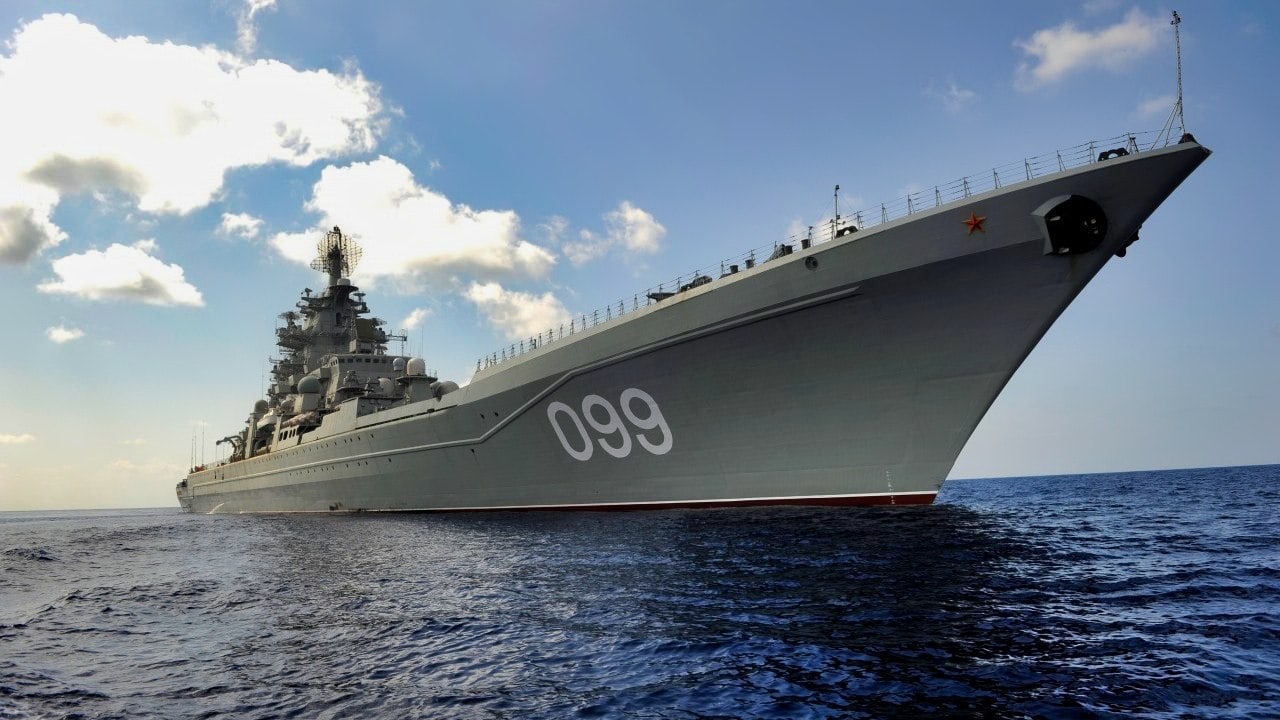
The Kirov-Class Was Built to Hunt U.S. Carrier Strike Groups Using P-700 Granit Supersonic Anti-Ship Missiles
When Russia’s nuclear-powered Kirov-class battlecruiser Admiral Nakhimov finally put to sea for trials in 2025, it marked the end of one of the longest and most expensive warship refits in modern naval history.
The vessel, a member of the Soviet-era Kirov-class, had not operated under its own power since the late 1990s, spending more than two decades laid up in port as plans to modernize it were repeatedly delayed.
Its return to sea trials was presented domestically as a sign that Moscow was revitalizing its naval capabilities, but the reality is more complicated than that.
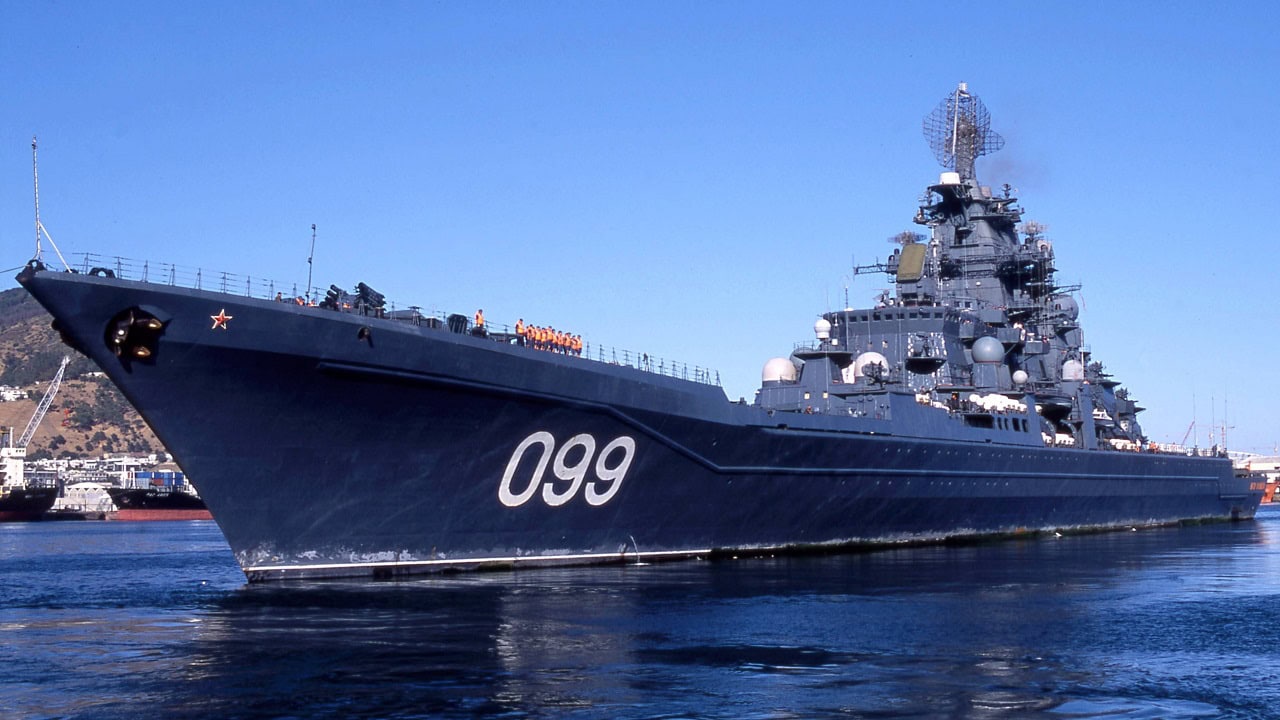
Russian Navy Kirov-Class Battlecruiser. Image Credit: Creative Commons.
The Kirov-class was originally designed to hunt and destroy U.S. aircraft carrier strike groups at the height of the Cold War.
Today, after decades of inactivity and spiraling costs – not to mention the radically different naval threat environment – it’s uncertain whether a ship like this even makes strategic sense for Russia.
A Comeback Decades in the Making
Originally commissioned in 1988, the Admiral Nakhimov was withdrawn from active service less than a decade later and formally laid up for overhaul in 1999 at the Sevmash shipyard.
For years, little meaningful progress was made, as funding shortages, technical challenges, and shifting priorities within Russia’s defense industry repeatedly stalled the program. Work only began in earnest in the early 2010s, and even then, timelines slipped continuously.
By the time the ship entered sea trials in 2025, it had effectively spent more than 25 years inactive. The vessel’s reactors were only recently restarted, allowing it to move under its own power for the first time since the 1990s – and that modernization effort may have so far cost as much as $5 billion – a figure that reflects both the inefficiencies of Russia’s shipbuilding sector as well as the complexity of upgrading a nuclear-powered warship.
At roughly 28,000 tons, the Kirov-class is still one of the largest surface combatants ever built outside of aircraft carriers. But the sheer size and cost of the platform raise the obvious question of whether it even makes sense to invest so heavily in a Cold War warship.
Instead, Russia could, in theory, build something new. But that isn’t an option, and the logic behind the decision lies in the role the Kirov-class was originally designed to perform.
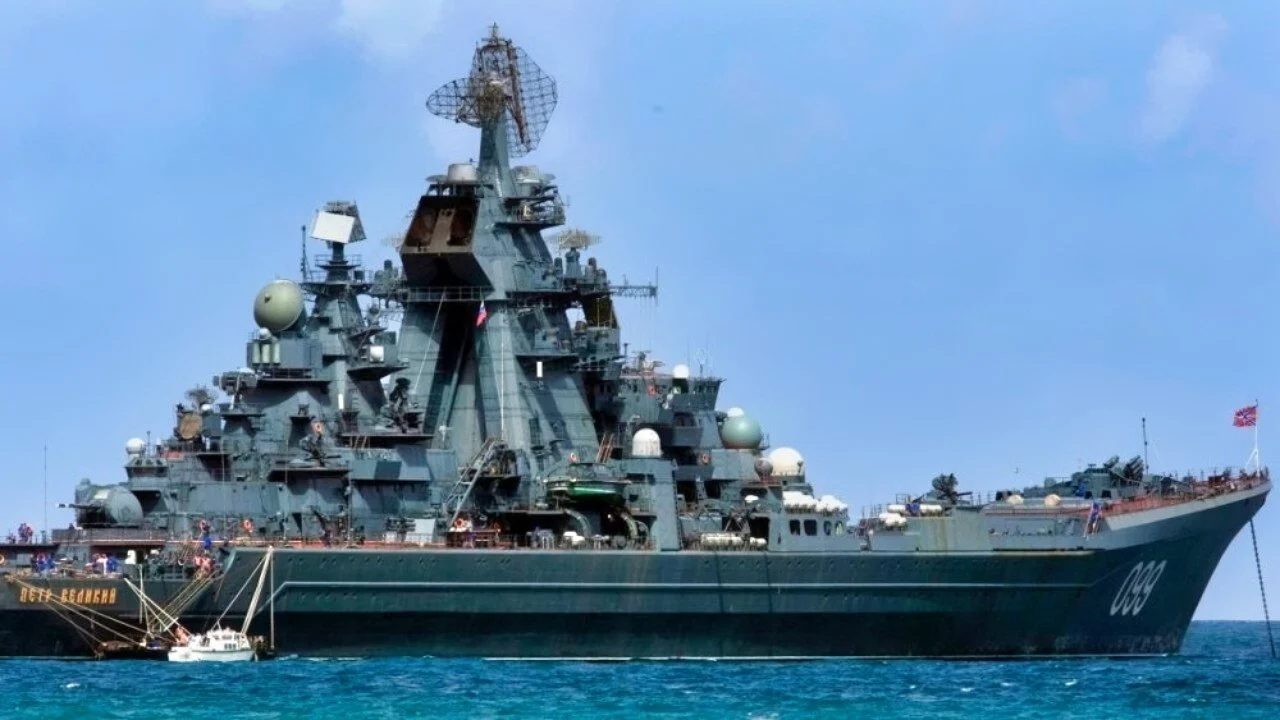
Kirov-Class Battlecruiser. Creative Commons Image.
Built to Hunt Carrier Strike Groups
The Kirov-class, known in Soviet service as Project 1144 Orlan, was conceived at a time when the U.S. Navy’s aircraft carrier strike groups represented the dominant force in global naval warfare. The Soviet Union did not attempt to match the United States carrier-for-carrier.
Instead, it developed a layered anti-carrier strategy built around long-range bombers in the air, submarines, and heavily armed surface ships in the seas. The Kirov-class reflected that doctrine.
Unlike conventional cruisers, the Kirov-class was built around the idea of overwhelming a carrier group using missile fire. Its primary armament was the P-700 Granit anti-ship missile, a supersonic weapon designed to penetrate carrier defenses through coordinated attacks.
The missiles could be launched in groups, sharing targeting data and adjusting their flight profiles to maximize the chance that at least some reach their intended targets. So, rather than competing with American forces, the Soviets focused on neutralizing American capabilities.
The ship’s nuclear propulsion system also gave it effectively unlimited range, allowing it to operate alongside submarines and shadow U.S. carrier groups across the Atlantic or Pacific. In theory, a Kirov-class battlecruiser was intended to operate as part of a coordinated strike package, receiving targeting data from satellites or other assets before launching massive missile attacks.
The overhaul that brought Admiral Nakhimov back to sea trials is a full-spectrum modernization that effectively replaces much of the ship’s original combat system. During its refit at Sevmash – work that accelerated after 2013 – the vessel’s Cold War-era launch systems were removed and replaced with modern vertical launch systems (VLS), allowing it to carry a more flexible missile load.
Russian defense reporting and naval analysis indicate that the upgraded ship will be able to fire a mixture of Kalibr land-attack cruise missiles and P-800 Oniks supersonic anti-ship missiles.
Additional reporting suggests that it might also be able to carry the newer 3M22 Zircon hypersonic missile. Those upgrades, then, represent a shift from using purpose-built launchers to modular VLS architecture that dramatically expands the ship’s strike capability, meaning it will be able to engage both land and naval targets from varying ranges – something the original Kirov-class was not designed to do.
A Promise Never Really Fulfilled
The Kirov-class never really fulfilled its intended role before modernization efforts began.
While the ships did deploy during the late Cold War and were used to shadow NATO naval forces, they were never tested in the kind of high-intensity carrier engagements for which they were built. The collapse of the Soviet Union in 1991 also fundamentally changed the class’s trajectory.
Of the four Kirov-class ships built, only one – Pyotr Velikiy – remained operational for any sustained period after the 1990s.
The others were all either decommissioned or laid up for overhaul. Admiral Lazarev, for example, was eventually scrapped after years of inactivity.
Even Pyotr Velikiy, which served as the flagship of Russia’s Northern Fleet, was used primarily for presence missions and signaling rather than warfighting. Its deployments typically focused on demonstrating Russian naval reach rather than preparing for any large-scale conflict with carrier strike groups. It proved that the Kirov-class was built for a form of naval warfare that never happened – and the ship’s operational history reflects the constraints of post-Soviet Russia – it is a Navy with limited resources and an aging fleet.
Russian Navy Kirov-Class Battlecruiser. Image Credit: Creative Commons.
That should explain why Admiral Nakhimov spent decades inactive: Russia lacked both the resources and the strategic need to sustain a platform like this.
Locked In Port With An Uncertain Future
The decision to modernize Nakhimov was made when Russia’s Ministry of Defense approved a plan to return at least one Kirov-class battlecruiser to service as part of a naval renewal program. Work at the Sevmash shipyard began in earnest around 2013 with the goal of replacing the ship’s aging Soviet-era systems and extending its service life by decades. At the time, Russian officials suggested the ship could return to the fleet by around 2018. That timeline slipped repeatedly because of funding interruptions and the technical complexity of the project.
More than a decade later, the ship is only now undergoing sea trials, with delivery to the Russian Navy expected no earlier than 2026. By that point, the program will have taken over ten years of active work and more than two decades since the ship last operated.
That investment has not been matched across the rest of the class. Reports in 2025 indicated that Russia is considering retiring or scrapping Pyotr Velikiy, the only other Kirov-class ship that remained in service, in part to redirect funding toward newer platforms such as submarines and smaller missile ships. If that decision is confirmed, Admiral Nakhimov would enter service as a single, high-value asset with no direct replacement or supporting class.
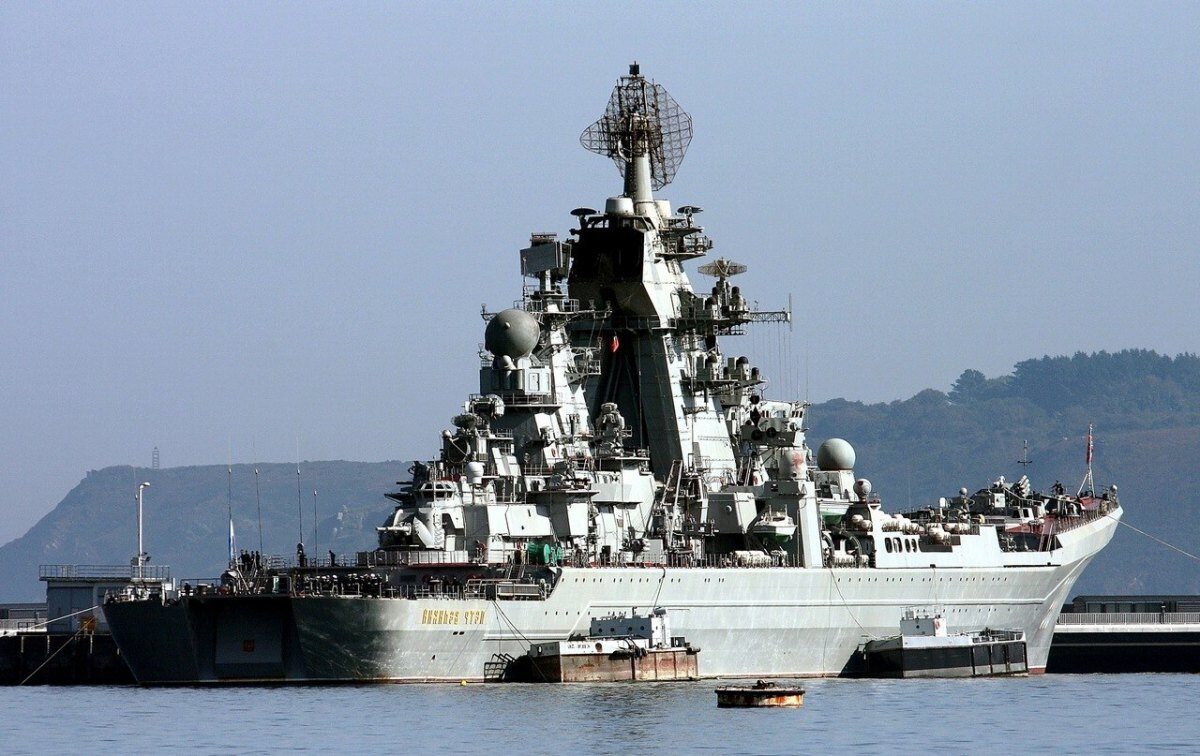
Kirov-Class. Image Credit: Creative Commons.
And that presents a problem for Russia, because a single battlecruiser cannot provide a persistent presence or operational redundancy. Nuclear-powered ships require extensive maintenance cycles, meaning Nakhimov would spend significant periods unavailable even under ideal conditions – and any serious damage or extended repair period would remove the capability entirely.
If Nakhimov returns to service, it will be one of the most heavily armed surface warships afloat – but it will also be a solitary and high-cost relic of a doctrine that Russia can no longer sustain.
About the Author: Jack Buckby
Jack Buckby is a British researcher and analyst specializing in defense and national security, based in New York. His work focuses on military capability, procurement, and strategic competition, producing and editing analysis for policy and defense audiences. He brings extensive editorial experience, with a career output spanning over 1,000 articles at 19FortyFive and National Security Journal, and has previously authored books and papers on extremism and deradicalization.