
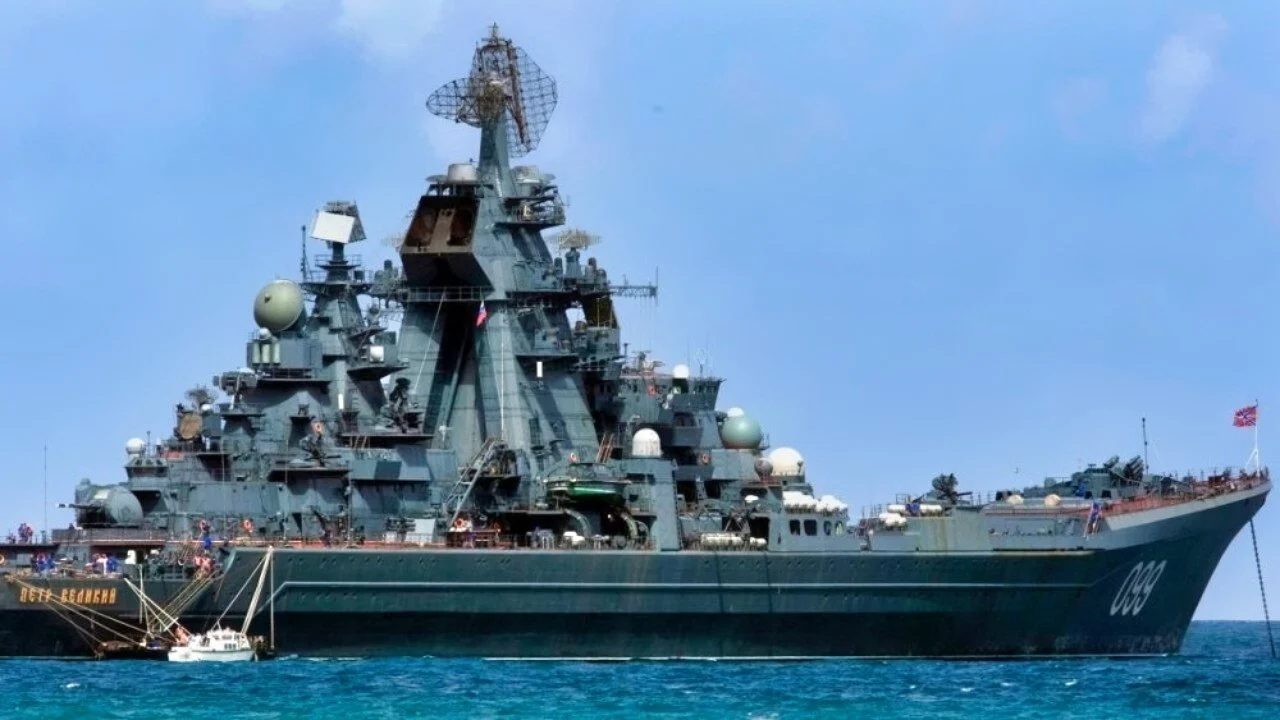
Russia Rebuilt Admiral Nakhimov: This Kirov-Class Battlecrusier Might Be a Waste of Rubles
In August 2025, after nearly three decades out of service, Russia’s nuclear-powered Kirov-Class battlecruiser Admiral Nakhimov left the Sevmash shipyard and moved into the White Sea under its own power, beginning long-delayed sea trials ahead of a planned return to service in 2026.
The story was widely reported by Russian media as a major revival of the country’s naval power, marking the resurrection of a Cold War concept that Russia has never replaced. The Kirov-class battlecruisers, which were once built to hunt down U.S. carrier groups, are now being repositioned and reused as missile-carrying flagships for a navy that lacks the industrial capacity to build new vessels.
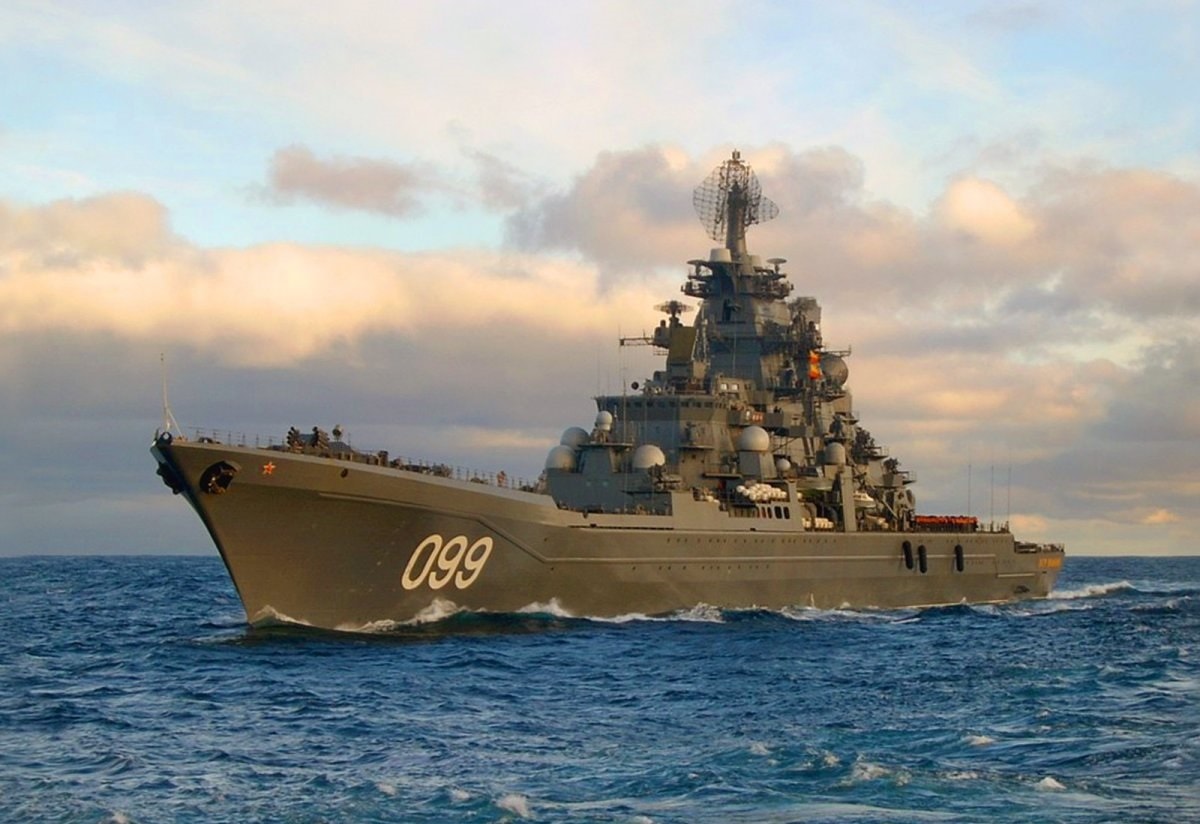
Admiral Nakhimov.
On paper, the modernized Nakhimov may be one of the most heavily armed surface combatants on the planet, but in reality, it is the product of constraints that are putting extreme pressure on the Russian navy and Moscow.
What the Kirov-Class Was Built To Do
The Kirov-class is the product of very specific 1970s Soviet requirements: specifically, countering U.S. carrier strike groups without actually matching them ship-for-ship. Instead of building large numbers of smaller vessels, Soviet planners focused on concentrating firepower into a small number of nuclear-powered heavy missile cruisers.
Each ship carried a dense load of weapons designed for saturation attacks, including 20 P-700 Granit anti-ship missiles and long-range weapons intended to overwhelm carrier defenses.
Their air defenses were also layered, with S-300 naval systems providing long-range coverage and multiple close-in systems to handle terminal threats.
Propulsion was a specific feature for these ships, too, combining nuclear and steam propulsion. That combination gave the ships unlimited range at cruising speeds and enabled sustained high-speed operations without refueling. But only four ships were ever built between the 1970s and 1980s. Today, only two of them are operational – the Pyotr Velikiy and the newly upgraded Admiral Nakhimov, now also back at sea.
These ships were intended to deliver overwhelming missile firepower without requiring a full carrier fleet – an appealing concept even today. But what never materialized from the project was the Soviet naval ecosystem that was intended to support it.
Admiral Nakhmiv: Zumwalt-Style Weapons On A Soviet Hull
The heavily-reported modernization of the Admiral Nakhimov was effectively a rebuild layered onto a Cold War hull that last operated in 1997. It was by no means a regular refit.
Work began in the early 2010s and has been repeatedly delayed, with sea trials only starting in 2025 and a full operational return expected sometime this year. A major part of that upgrade has been the inclusion of vertical launch cells, with reports indicating that the ship now carries between 174 and 176 VLS tubes, significantly more than even modern U.S. destroyers or cruisers, and a full weapons loadout that could cost as much as $500 million.
The new launch cells are designed to fire a mix of modern Russian weapons, including Kalibr land-attack cruise missiles, Oniks supersonic anti-ship missiles, and Zircon hypersonic missiles – making the upgraded design incredibly versatile.
In addition, the ship’s air defense is said to have been upgraded to systems comparable to the S-400, replacing older S-300 systems and dramatically expanding its defensive coverage.
The S-400, specifically, significantly extends the engagement range to roughly 400 km, compared to around 200 km for most S-300 variants. The system also includes more advanced radar and tracking systems, capable of detecting targets up to 600 km away and engaging dozens of them simultaneously.
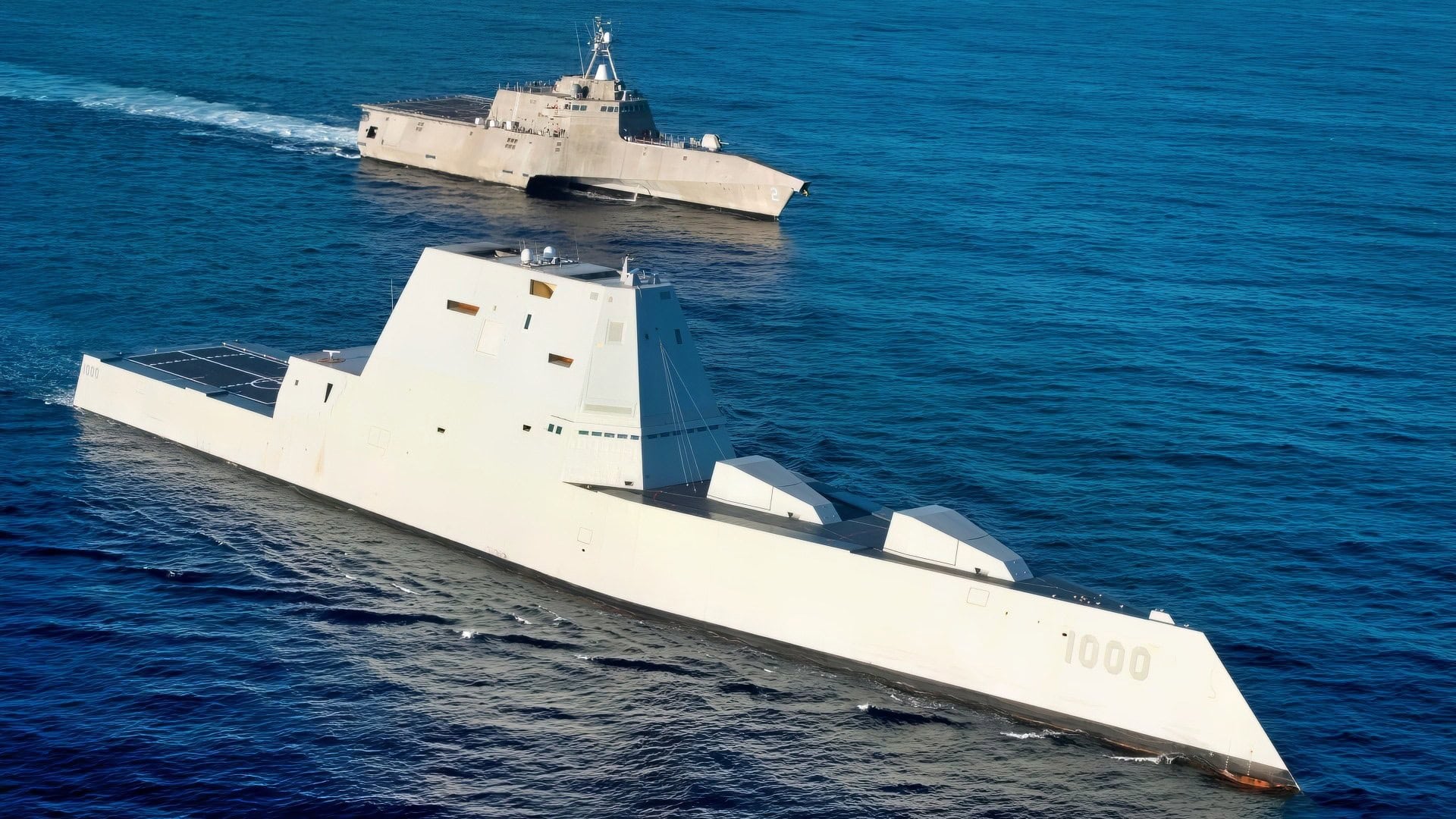
Dec. 8, 2016) The guided-missile destroyer USS Zumwalt (DDG 1000), left, the Navy’s most technologically advanced surface ship, is underway in formation with the littoral combat ship USS Independence (LCS 2) on the final leg of its three-month journey to its new homeport in San Diego. Upon arrival, Zumwalt will begin installation of its combat systems, testing and evaluation, and operation integration with the fleet. (U.S. Navy photo by Petty Officer 1st Class Ace Rheaume/Released)
For a ship like the Nakhimov, that means a much larger defensive perimeter and improved ability to protect itself and nearby vessels against modern threats, including stealth aircraft and high-speed missiles that older S-300 systems struggled to counter.
The result of the modernization efforts is a ship with a missile capacity that rivals or exceeds many modern Western surface combatants, despite its age. It could easily be compared to the American Zumwalt in terms of firepower, but it lacks key features that make that new vessel more versatile: it wasn’t designed to be stealthy or automated, and it has a reduced crew size.
Why Russia Can’t Give It Up
While the Kirov-class carries some prestige, that is by no means the reason Russia can’t give it up. The reason it’s still around and still being upgraded is that Moscow simply cannot afford to lose such a valuable vessel, and cannot rapidly build replacement vessels at scale. Russia’s industrial limits have been well documented for years; it has been unable to produce large surface combatants at scale since the collapse of the Soviet Union. Even relatively smaller ships like modern frigates – the Project 22350 Admiral Gorshkov-class, for example – have faced long delays.
The other reason Russia can’t give it up relates to its missiles. The modernized Nakhimov effectively functions as a floating arsenal, with more than 170 launch cells that allow it to deliver long-range strikes against land and sea targets while also maintaining a layered air defense.
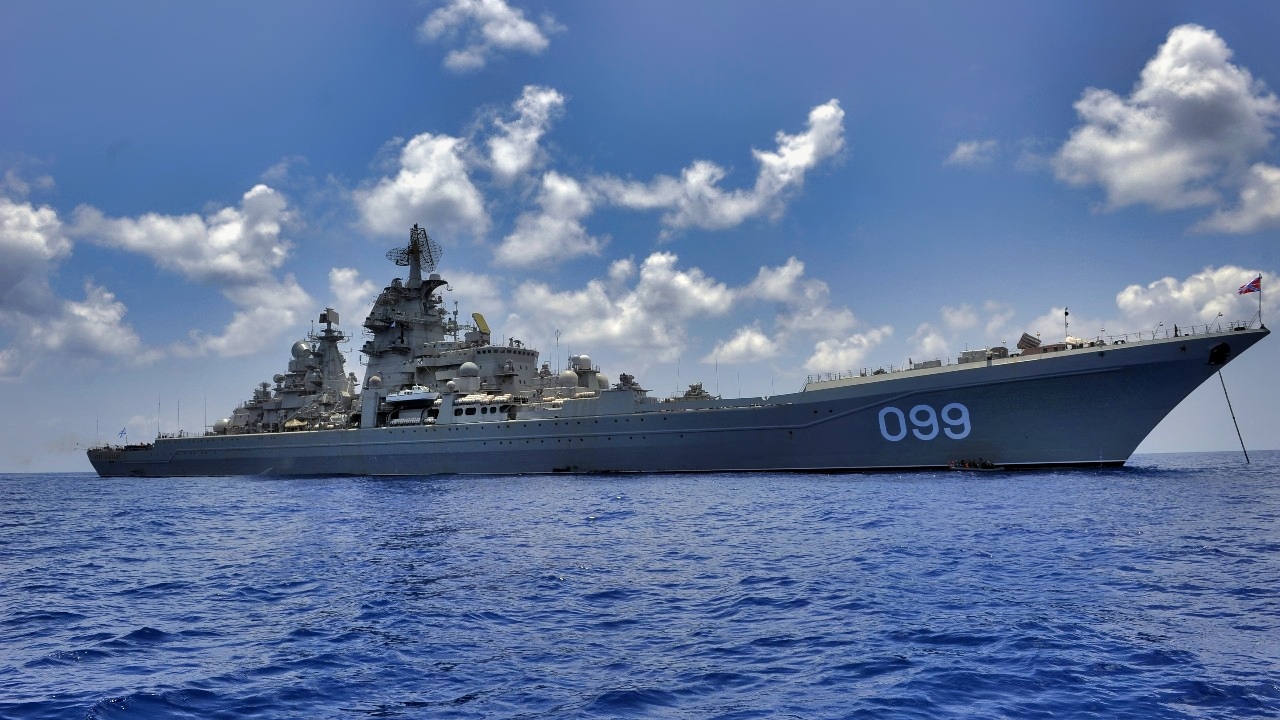
Kirov-Class Russian Navy. Image Credit: Creative Commons.
In that sense, it serves a role comparable to American guided-missile submarines, concentrating firepower into a single platform. What else does Russia have that can match this?
And then there’s the strategic signalling element: the ship’s return is part of Russia’s ambitions to restore its blue-water naval capability and project power beyond regional waters. The ship will ultimately replace the Pyotr Velikiy.
The Kirov-Class Might Be the Unusable Battlecrusier
For all its firepower, the Admiral Nakhimov faces a problem: it is so valuable that using it is risky. The ship’s modernization alone is estimated to have cost several billion dollars, with some reports placing the figure at around $5 billion, before factoring in a full missile load that could run into the hundreds of millions. Losing a platform like that, or damaging it in combat, would not just be a setback but a major strategic and political problem that Russia would struggle to absorb. The ship cannot be replaced.
Look at what’s happening with Ukraine: much of Russia’s Black Sea Fleet has already been forced to operate from a distance using relatively low-cost naval drones and anti-ship missiles, proving just how vulnerable even large surface combatants can be when they’re exposed.
A ship the size of Nakhimov – displacing roughly 28,000 tons and carrying one of the largest missile arsenals in history- would be an even more attractive target.
That vulnerability is also compounded by another constraint: the fleet it was designed to operate within doesn’t yet fully exist. Russia continues to signal its ambitions for a blue-water navy, but its surface fleet remains limited in both scale and infrastructure.
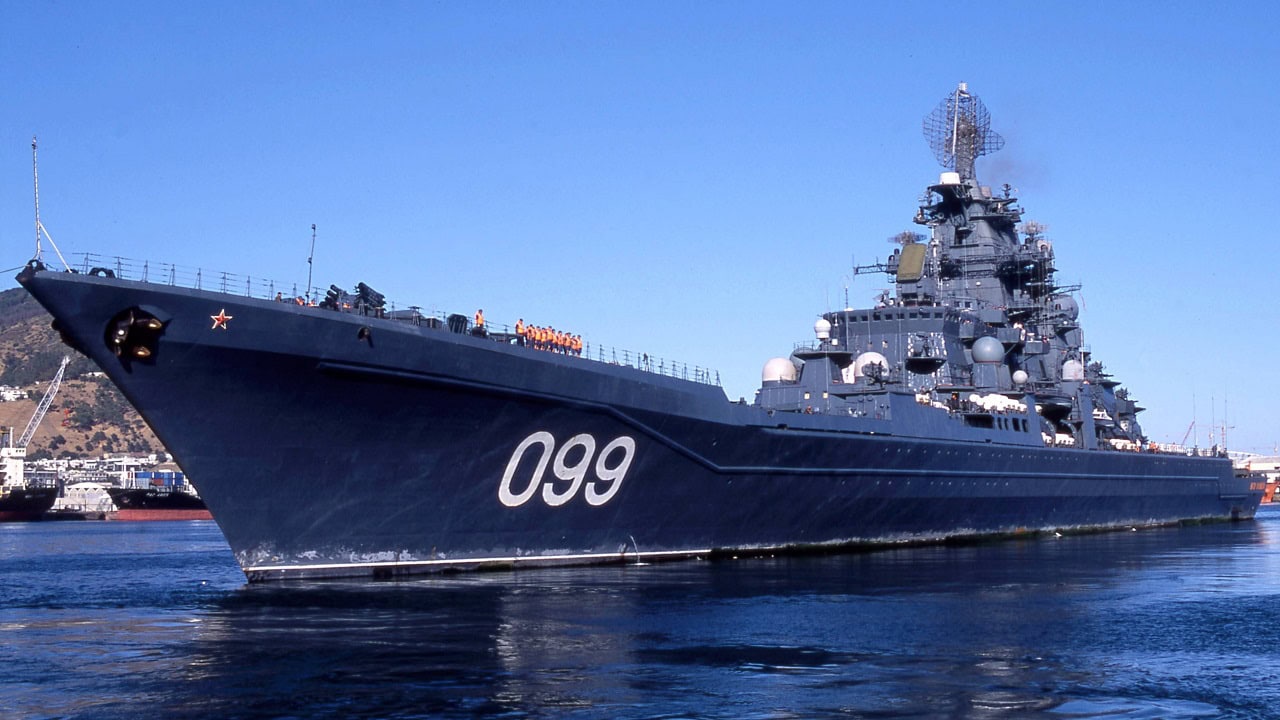
Russian Navy Kirov-Class Battlecruiser. Image Credit: Creative Commons.
Russia’s only aircraft carrier, Admiral Kuznetsov, has been out of service for years due to repeated accidents and delays, depriving the fleet of reliable air cover. At the same time, new large surface combatants have been delayed due to production bottlenecks stemming from industrial problems and supply-chain disruptions.
Russia might have built one of the most heavily armed surface combatants in the world, but using it would be risky.
MORE – Russia Has No Aircraft Carrier Future
About the Author: Jack Buckby
Jack Buckby is a British researcher and analyst specialising in defence and national security, based in New York. His work focuses on military capability, procurement, and strategic competition, producing and editing analysis for policy and defence audiences. He brings extensive editorial experience, with a career output spanning over 1,000 articles at 19FortyFive and National Security Journal, and has previously authored books and papers on extremism and deradicalisation.