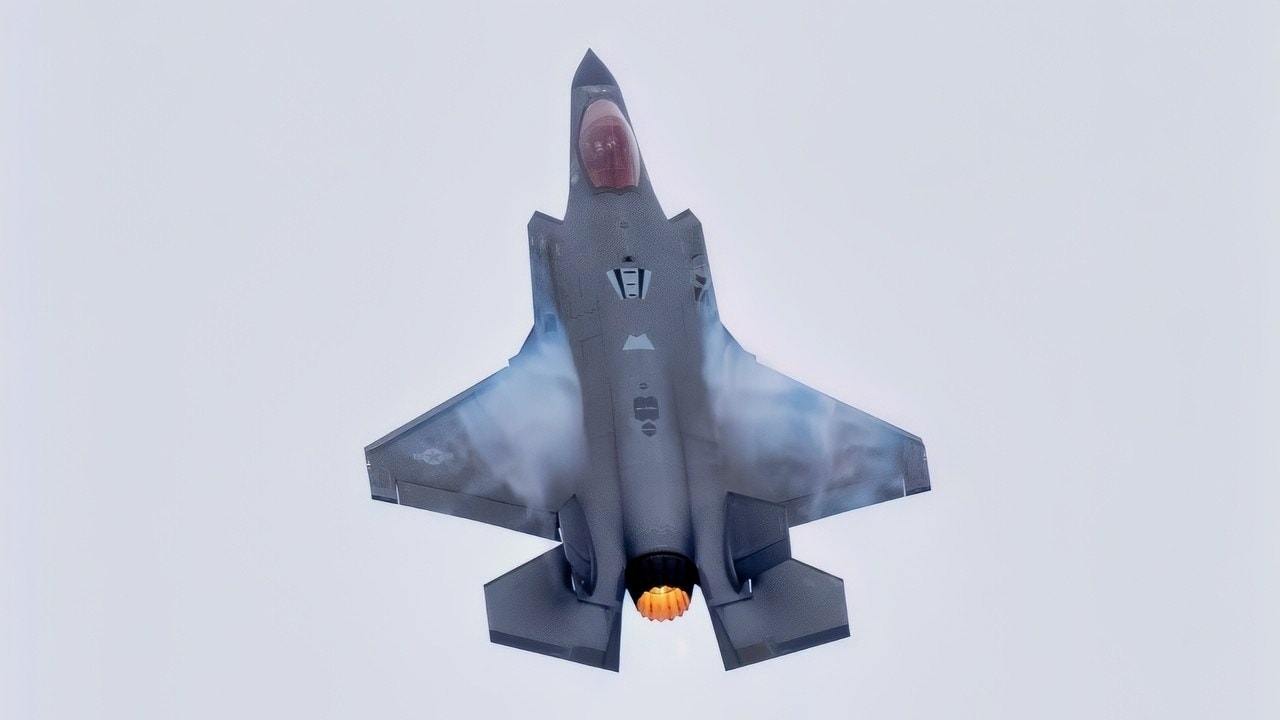
Summary and Key Points: Caleb Larson, a Berlin-based security journalist, evaluates the S-500 Prometey, Russia’s premier anti-ballistic missile (ABM) system.
-Designed to succeed the S-400, the S-500 utilizes 77N6-N and 77N6-N1 interceptors capable of reaching altitudes of 200 kilometers.
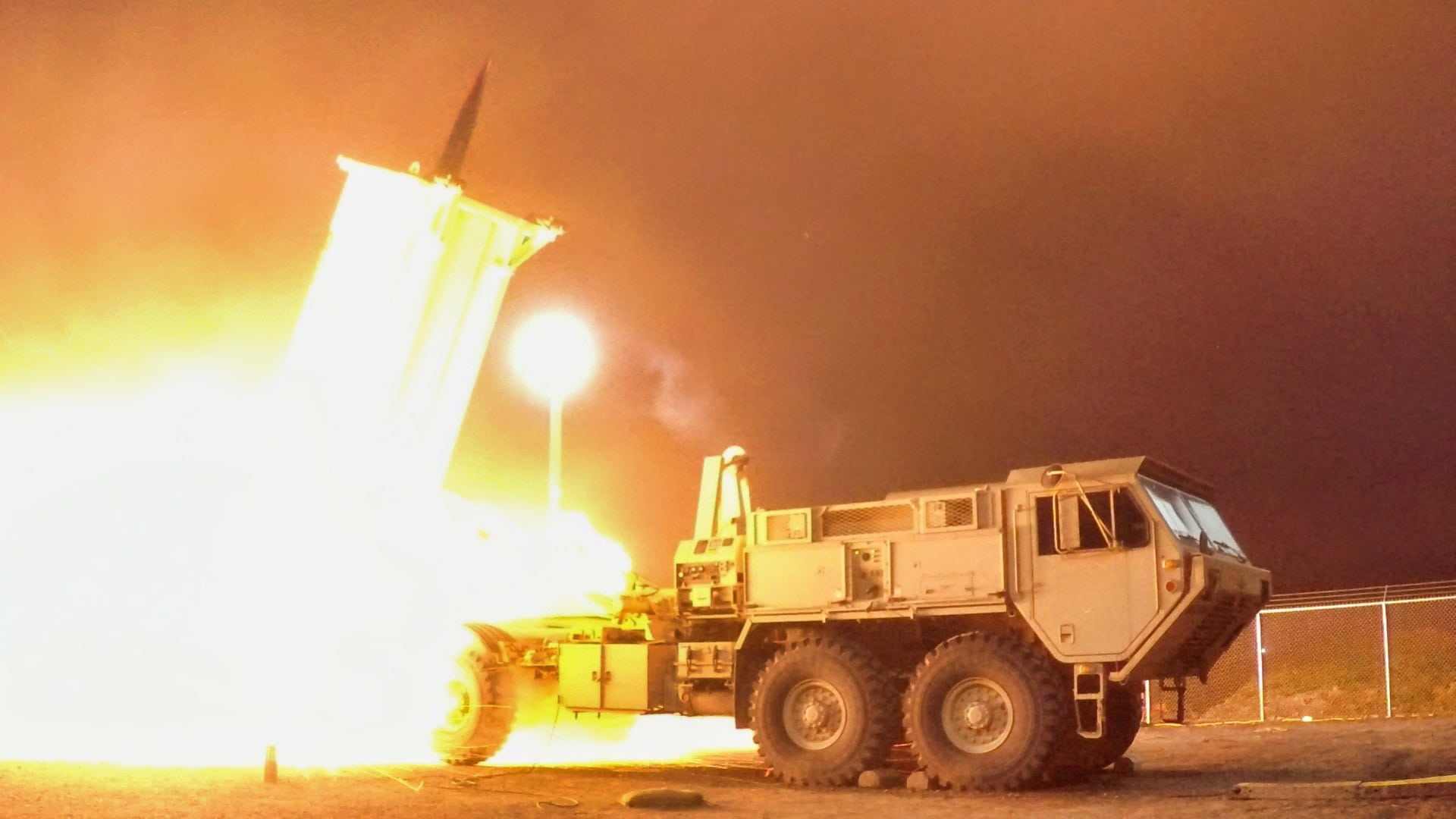
THAAD. Image Credit: Department of Defense.
-This report analyzes the system’s integration with Russia’s early-warning network and its theoretical ability to neutralize low-Earth orbit satellites and hypersonic weapons.
-Larson concludes that while the platform offers a “near-space” capability akin to the U.S. SM-3, technical hurdles and serial production delays—now pushed to 2025—have relegated the system to a low-volume, high-priority asset.
The “Prometey” Promise: Analyzing Russia’s S-500 and its Theoretical Mach 20 Interception Speeds
Russia’s S-500 is the country’s newest long-range air and missile defense system, and is intended to provide capabilities not offered by the earlier S-300 and current S-400 air defenses. The S-500 is intended to engage ballistic missiles, hypersonic weapons, and some near-space targets, affording it an anti-ballistic missile and anti-satellite capability.
The Origin Story
Russia’s initial work on the platform began in the early 2000s. Keen to modernize its strategic air defense network and provide coverage against emerging threats like highly maneuverable ballistic missiles and hypersonic glide vehicles.
The program was to be the successor to the S-400, with a greater emphasis on strategic missile defense rather than tactical defense.
But the S-500’s development proved torturously slow, and significant technical hurdles proved difficult to surmount, including inadequate radar performance, insufficient interceptor speeds, and broader integration with Russia’s missile defense network.
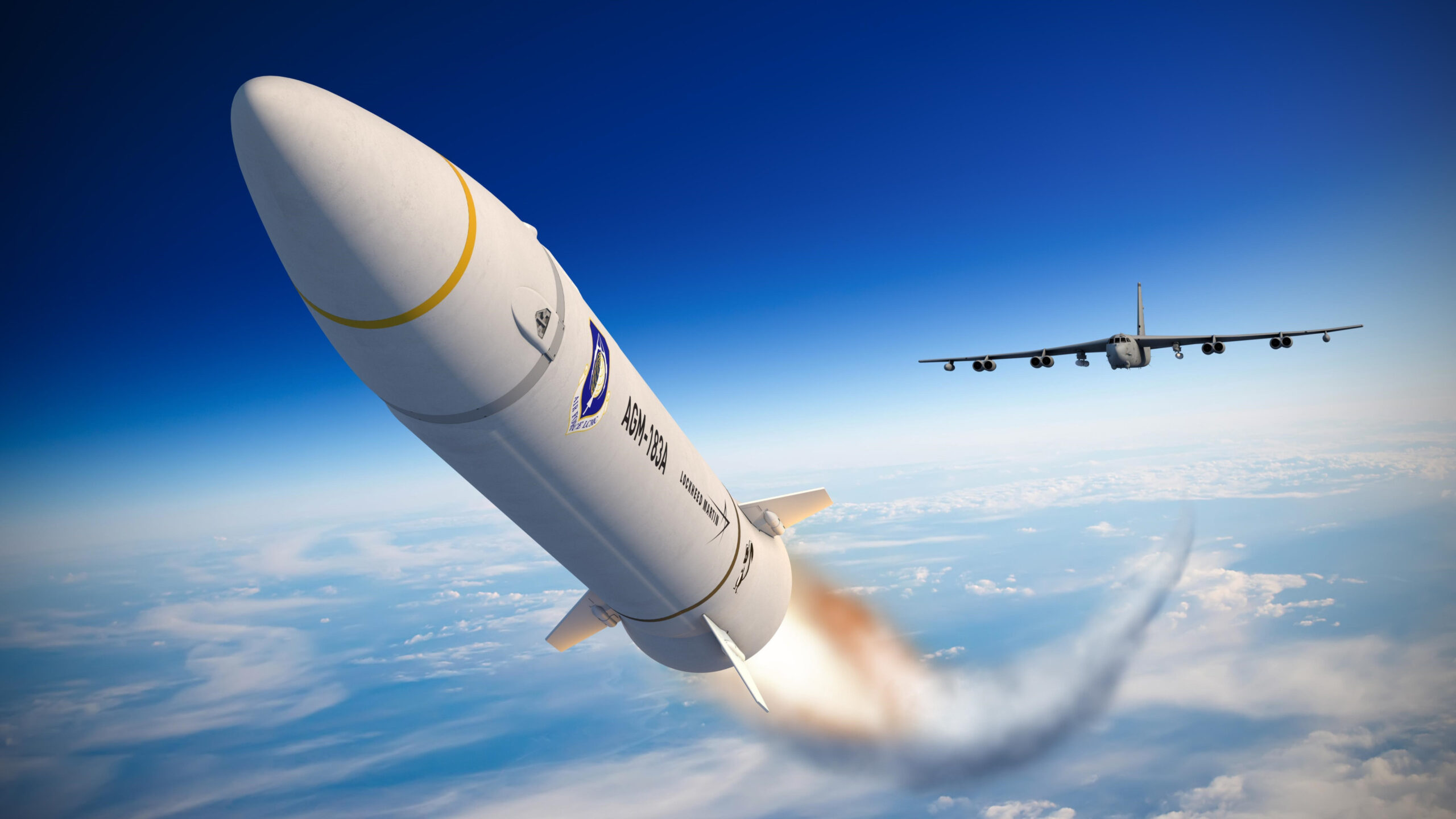
Hypersonic Missiles fired from B-52. Image Credit: Creative Commons.
Its development timeline was repeatedly pushed back, though the system was originally slated for entry into service in the early 2010s. But the S-500 entered limited service only in the early 2020s, with the announcement of the first operational S-500 unit deployed in 2021.
Since then, production numbers have been unimpressive.
Planned Conceptual Role
The platform is intended primarily to defend high-value strategic areas, such as cities and command infrastructure, from advanced threats and to provide coverage in parallel with other air defense systems. Russia’s Pantsir system provides short-range air defense against drones and low-altitude threats, such as helicopters.
In contrast, the S-350 and S-400 provide coverage at medium- and long-range against aircraft and cruise missiles.
The S-500 would engage the most difficult kinds of targets, including intermediate-range ballistic missiles, hypersonic weapons, and low-orbit satellites. This layered defense system is, on a conceptual level, not unlike the United States Patriot-THAAD teaming.
Interceptor Options and Performance: Mach 20 Claims
Like the S-400 that preceded it, the S-500 leverages several types of interceptors optimized for various targets, though the S-500’s interceptors are new designs rather than advanced iterations of the S-400’s missile suite. Russian and Western reporting have shed some light on two S-500 interceptors in particular: the 77N6-N, intended to intercept ballistic missiles, and the 77N6-N1, another variant optimized for kinetic interception.
Some sources claim that these S-500 interceptors can reach speeds of up to Mach 15 to 20, or 15 to 20 times the speed of sound, respectively, with engagement ranges supposedly in the 500 to 600 kilometer range at altitudes of 180 to 200 kilometers.
But these figures are difficult to verify and are likely best-case performance scenarios under ideal conditions.
Command, Radar, and Sensors
The S-500 is more than its transporter-erector-launcher, and leverages a long-range air search radar, a target acquisition radar, and a dedicated ballistic missile engagement radar. Tother, they allow the S-500 to track dozens of targets simultaneously and guide interceptor missiles toward several targets simultaneously.
But crucially, the S-500 is also meant to liaise with Russia’s early warning network, which links ground radars to missile defense units that provide coverage for particularly important regions, such as Moscow.
Russian sources have maintained that the S-500 would be effective against satellites in low-Earth orbit, giving it an anti-satellite capability somewhat akin to the United States’ SM-3’s. But it is unclear whether the S-500 offers a reliable anti-satellite intercept capability.
Future Prospects
The wider rollout of the S-500 has been hampered by both Russia’s ongoing invasion of Ukraine, which has diverted significant amounts of money and resources to continuing that war effort, which is primarily a land campaign, as well as technical hurdles and a seeming unwillingness to divert production to the S-500 and away from the S-400 air defense system.
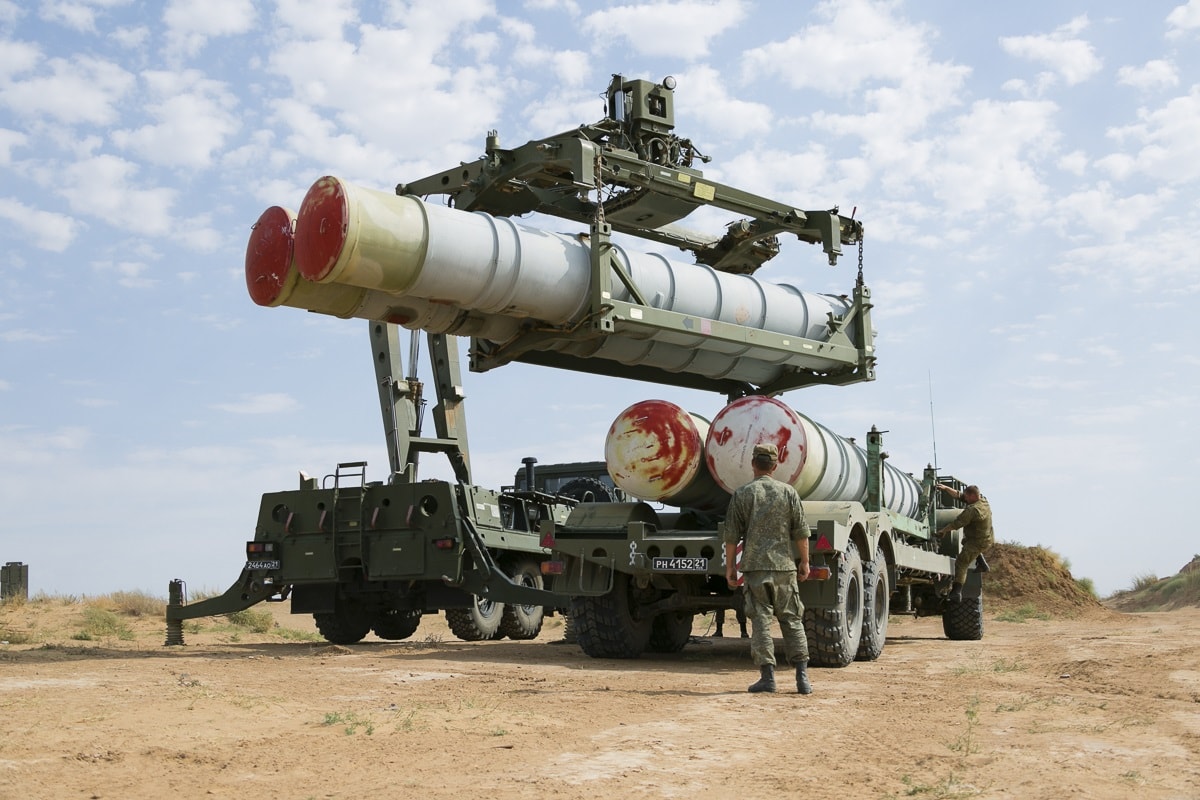
Russia’s S-400 Air Defense System. Image: Russian Military.
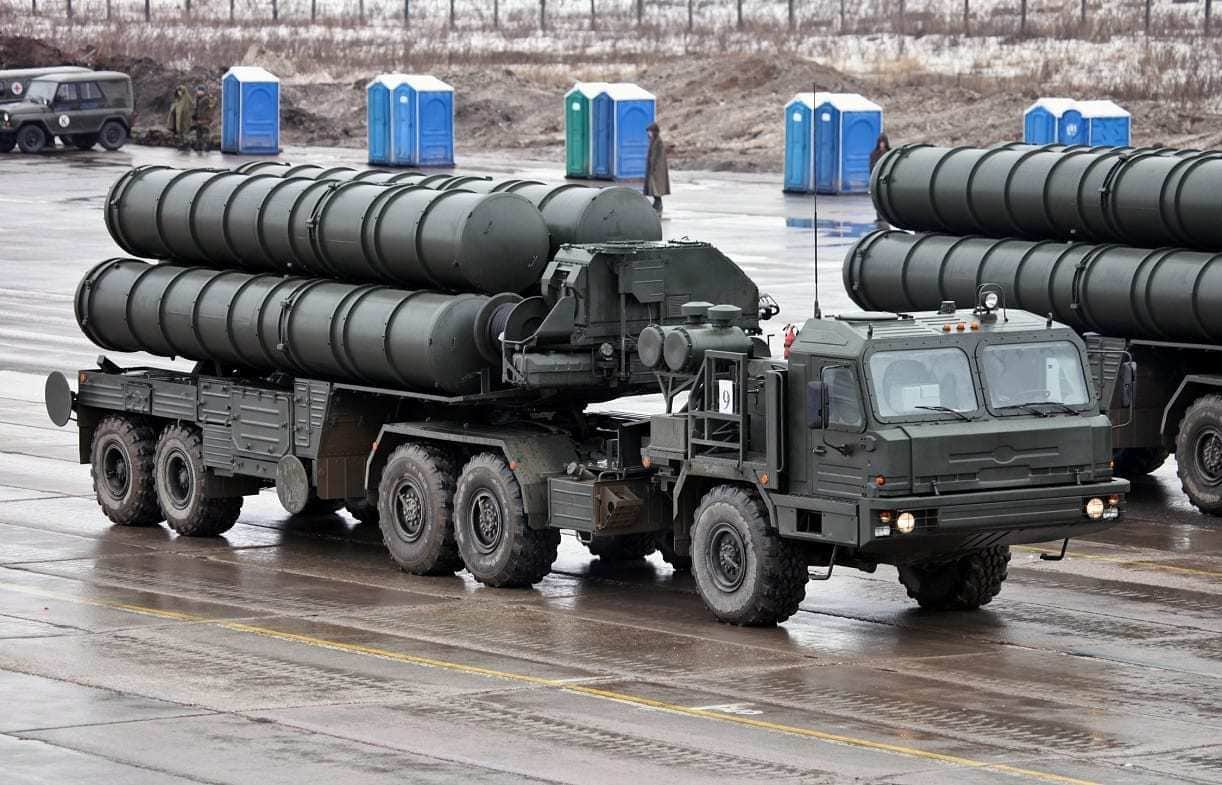
S-400. Image Credit: Creative Commons.
Production is, therefore, seemingly very limited.
“The S-500 has faced significant delays. Russia had declared its design development completed in 2011, but has pushed its serial production from 2014, to 2017, to 2021, and most recently to 2025,” the Center for Strategic and International Studies, a Washington, D.C.-based think tank, writes. “Russia may be purposely delaying S-500 induction to keep production lines available for the S-400 and continue exports.”
“Russia will very likely develop an export variant of the S-500. China is a likely S-500 customer, and despite Turkey’s controversial S-400 acquisition, Istanbul has also signaled interest in procuring the new system,” CSIS adds. “In May 2019, Turkish President Recep Erdogan announced that Turkey would jointly produce the S-500 with Russia.”
The S-500’s effectiveness is a matter of some uncertain speculation.
Few S-500 battalions appear to be operational, and much of the S-500’s touted capabilities, such as countering low-orbit satellites and hypersonic weapons, have been relatively untested or independently verified. In that regard, the platform is not so much an anticipated replacement for the S-400 as a top-tier asset within Russia’s broader air and missile defense network.
About the Author: Caleb Larson
Caleb Larson is an American multiformat journalist based in Berlin, Germany. His work covers the intersection of conflict and society, focusing on American foreign policy and European security. He has reported from Germany, Russia, and the United States. Most recently, he covered the war in Ukraine, reporting extensively on the war’s shifting battle lines from Donbas and writing on the war’s civilian and humanitarian toll. Previously, he worked as a Defense Reporter for POLITICO Europe. You can follow his latest work on X.