
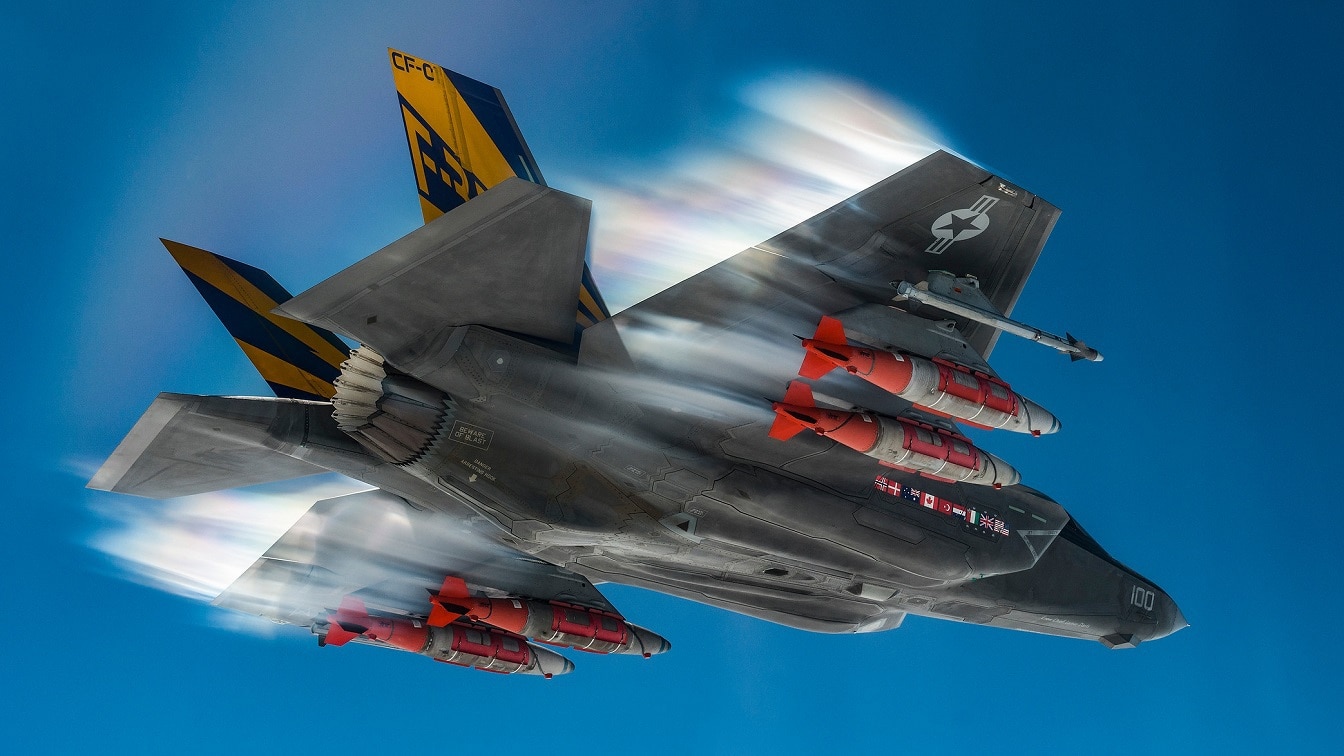
Summary and Key Points: Jack Buckby, a New York-based defense analyst, evaluates the S-500 Prometey’s struggles against modern precision threats.
-Despite Almaz-Antey’s claims that the system can track F-35s, hypersonic missiles, and low-orbit satellites at ranges of 600 kilometers, 2024 and 2025 combat data suggest a massive capability gap.
-This report analyzes the recent loss of the 98L6 Yenisey phased-array radar to Ukrainian drone strikes and the system’s failure to prevent catastrophic damage to the Kerch Bridge.
-Buckby concludes that while the S-500’s architecture is ambitious, its ability to counter the U.S. Air Force’s stealth remains unproven.
S-500: Russia’s Newest Air Defense System Is Meant to Counter Stealth – But Can It?
Russia has spent decades building one of the world’s most extensive integrated air-defense networks, and the newest element of that architecture is the S-500 Prometey, a system Moscow says can detect and destroy even the most advanced Western aircraft.
Developed as the successor to the S-400 Triumf, the S-500 is marketed as a next-generation interceptor capable of engaging stealth aircraft such as the U.S. Air Force’s F-22 Raptor and F-35 Lightning II. Russian officials and defense media have repeatedly described the system as capable of targeting low-observable aircraft designed to evade conventional radar.
But despite those big claims, the system has only seen limited deployment and relatively little verified use in combat. As the war in Ukraine continues and reports appear about Russian air defenses struggling to defend against Western-supplied precision weapons, it’s reasonable to ponder whether the S-500 can perform as well as Moscow claims.
The Prometey may represent the most ambitious air-defense system Russia has ever fielded, but its effectiveness in real-world combat – especially after fifth-generation stealth fighters – remains theoretical for the most part.
Designed to Counter Stealth and Hypersonic Weapons
The S-500, also known as the “Triumfator-M,” was developed by the Russian defense manufacturer Almaz-Antey, which also built systems like the S-300 and S-400. Unlike those earlier platforms, however, the S-500 is designed to operate not only as a traditional surface-to-air missile system but as part of Russia’s overall aerospace defense architecture. It is capable, in theory, of engaging a wide range of aerial and even space-based targets.
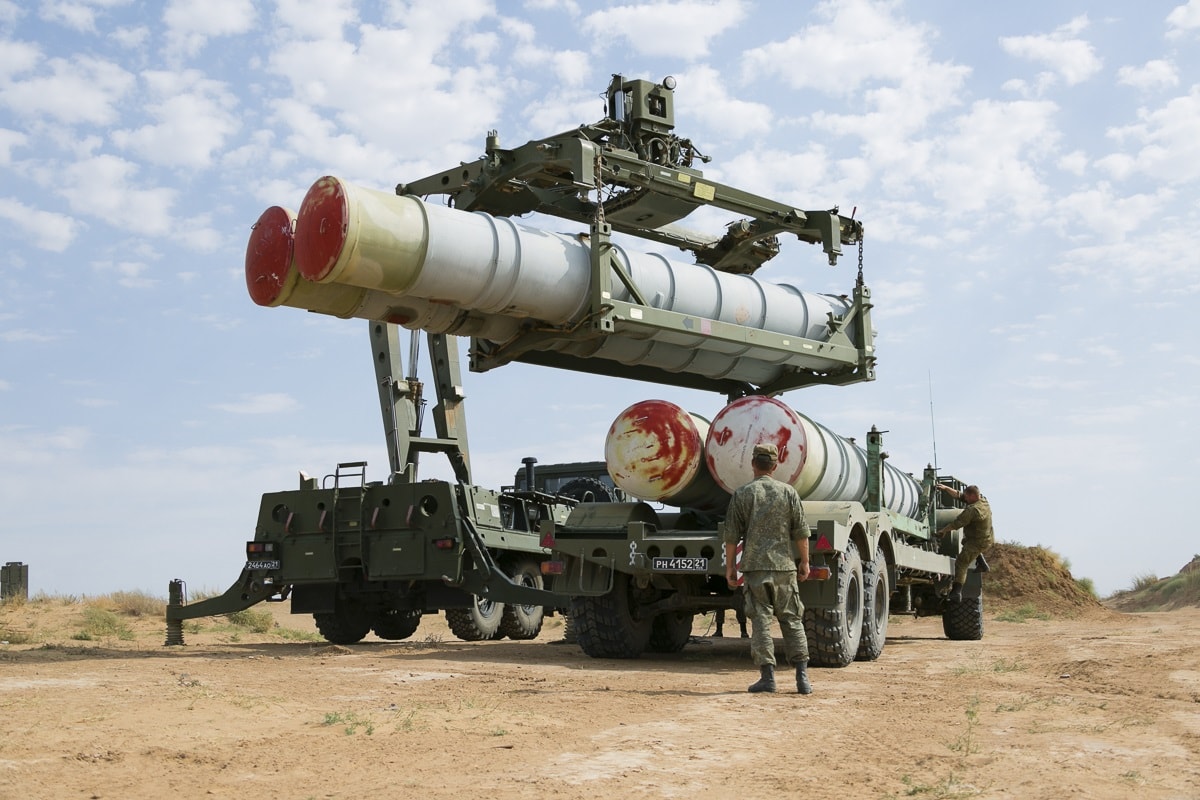
Russia’s S-400 Air Defense System. Image: Russian Military.
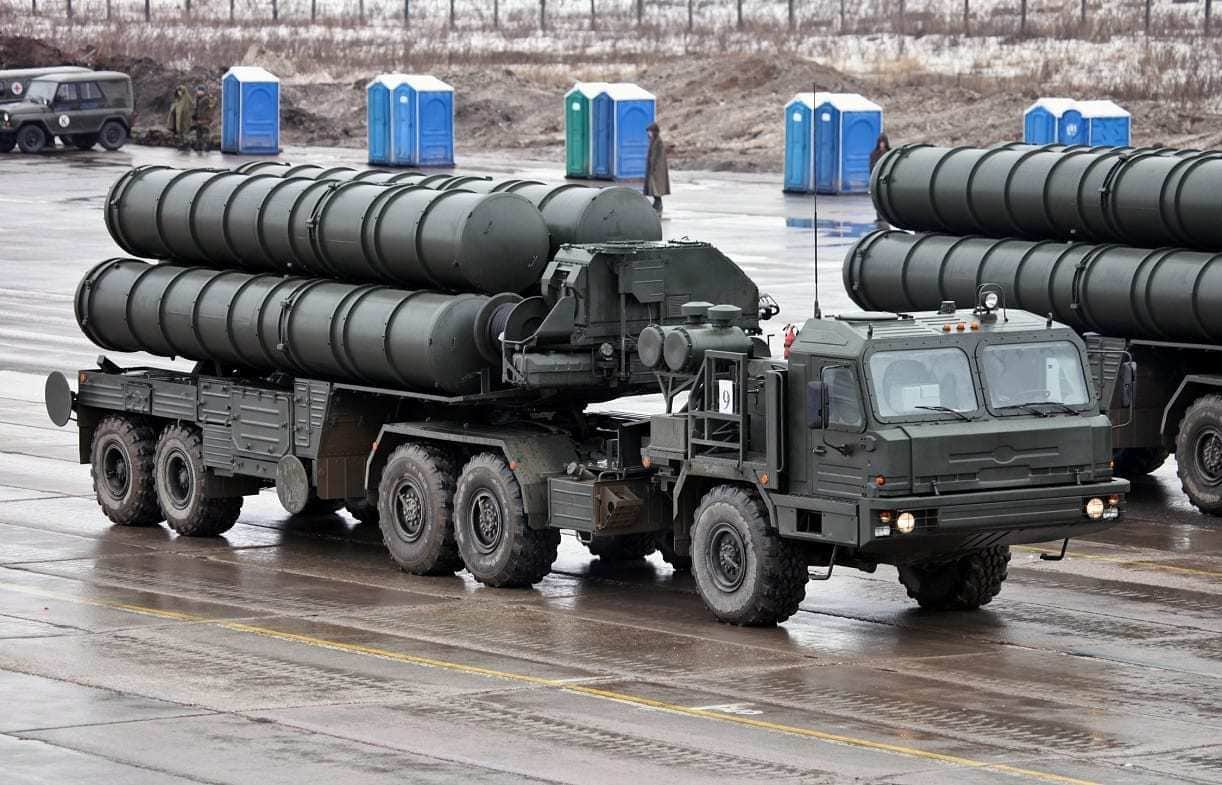
S-400. Image Credit: Creative Commons.
According to Russian officials, the system can track and engage stealth aircraft, hypersonic weapons, ballistic missiles, and low-orbit satellites. Those capabilities make it vastly more capable and flexible than earlier Russian air defense systems – and if true, they would allow the S-500 to challenge the advantages provided by modern stealth aircraft. The system would be able to stop stealth aircraft from penetrating defended airspace without being detected.
For a long time, Russian air defense doctrine has relied on layered systems to provide overlapping coverage across vast areas of airspace and territory, and with that in mind, the S-500 was designed to work alongside older systems like the S-400 and S-300 batteries.
Range and Missile Capabilities
The S-500 appears to be designed for extremely long-range engagements. The system’s radar network is reportedly capable of detecting targets at distances of up to 600 kilometers, or around 370 miles.
The S-500 can also reportedly engage targets at extremely high altitudes, potentially reaching near-space, with Russian sources claiming the system can intercept ballistic missiles and hypersonic weapons, as well as aircraft flying at very high altitudes.
An important component of the new system is the “Yenisey” radar, which acts as a detection platform within the S-500 network. The radar reportedly uses an advanced phased-array design that can detect both aerodynamic and ballistic targets.
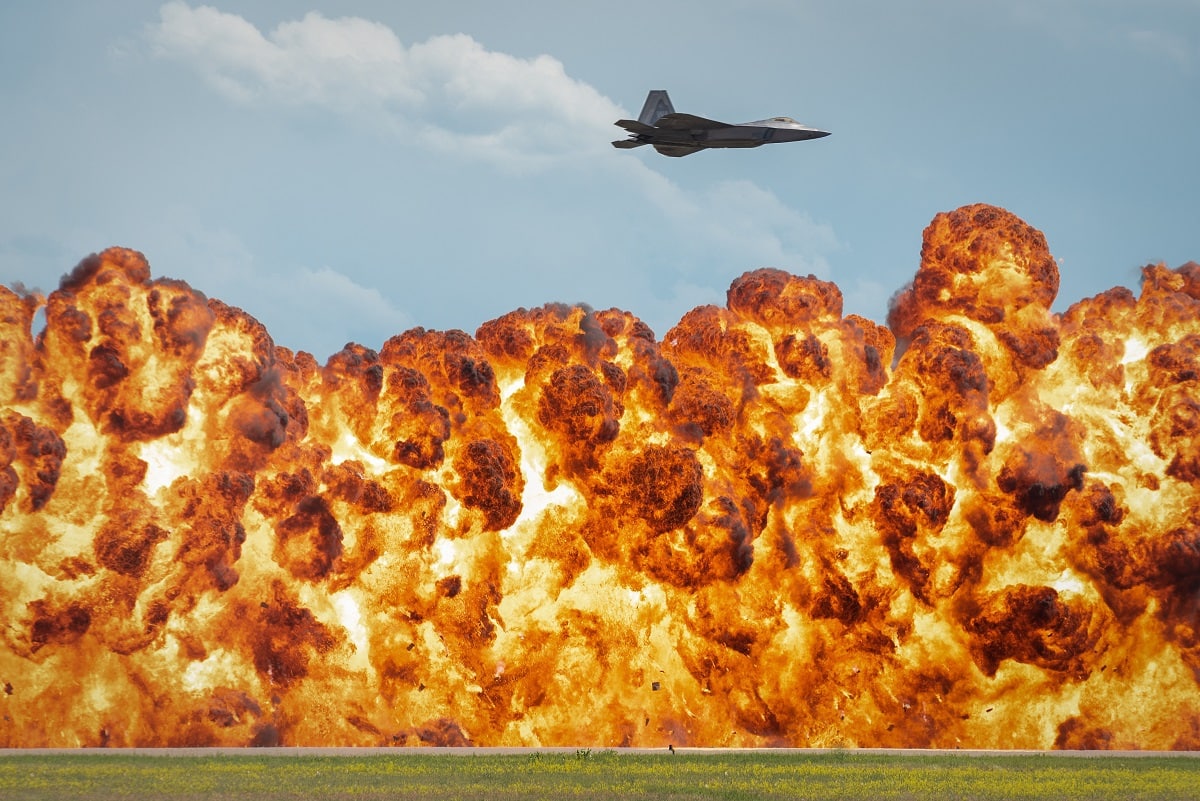
A 1,000-foot wall of fire explodes below the F-22 Raptor during a high-speed pass maneuver at the “Mission Over Malmstrom” open house event in Great Falls, Mont., July 14, 2019. The pyrotechnics are used to simulate live ordnance and the air-to-ground capabilities of the Raptor. The two-day event featured performances by aerial demonstration teams, flyovers and static displays. (U.S. Air Force photo by 2nd Lt. Samuel Eckholm)
Russia needs interceptors for the system and has built those too, including variants designed specifically for anti-ballistic missile and anti-satellite functions.
A Long Development Path
The S-500 has been under development for more than a decade. Early reports suggested the system could enter production around 2014, but development delays repeatedly pushed back the timeline by several years. Not coincidentally, those delays began to emerge as tensions with Ukraine increased and Crimea was annexed – and have only continued as Russia has continued to pursue military action in the country.
Production eventually began in 2019, and the first operational units entered service with the Russian Aerospace Forces in 2021.
While the system complements the S-400, it will ultimately replace some of Russia’s aging S-300 air-defense systems, which date back to the Soviet era.
Ukraine and Questions About the S-500
While Russia has promoted the S-500 as a major technological breakthrough, its operational record remains uncertain. Reports on the Ukraine conflict have suggested that the system has been deployed to Crimea to help defend critical infrastructure like the Kerch Bridge against Ukrainian missile strikes. However, those reports also note that the system ultimately failed to intercept ballistic missiles, resulting in 2024 strikes that caused extreme damage to the bridge.
Open-source intelligence also indicates that a Ukrainian drone strike destroyed a 98L6 “Yenisey” radar connected to the S-500 system in Crimea, potentially damaging part of the advanced air-defense network.
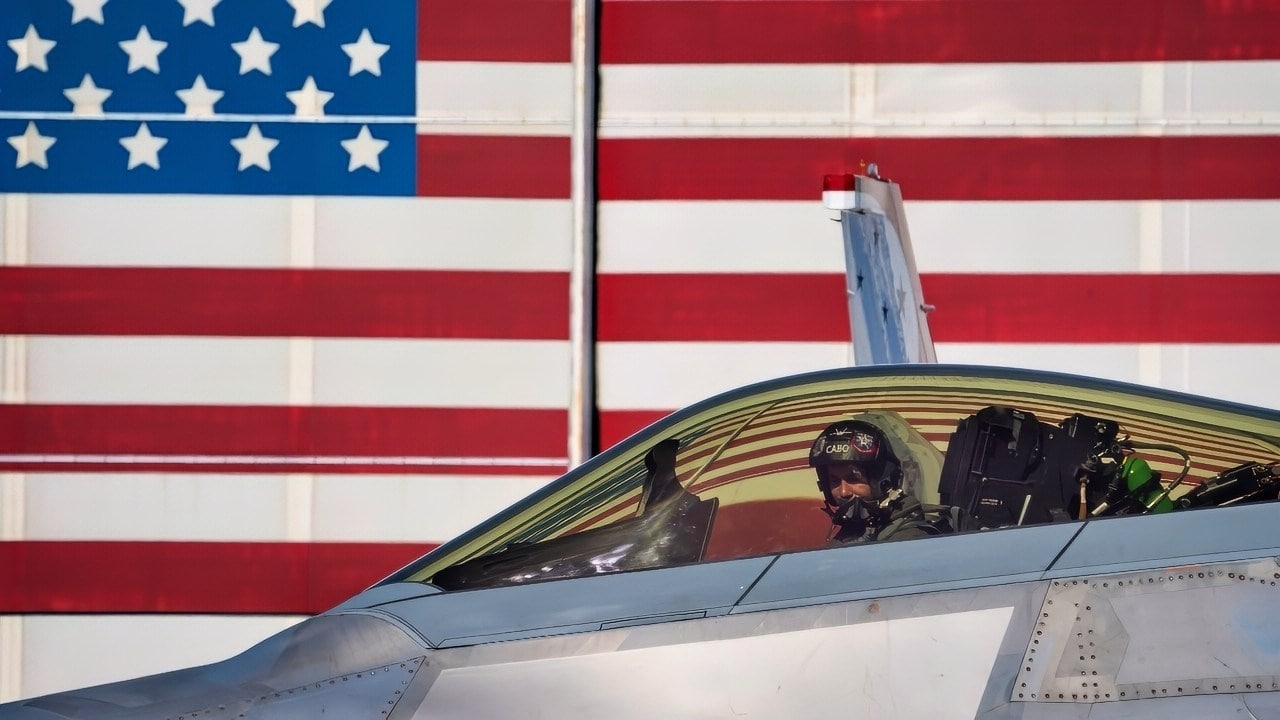
U.S. Air Force Maj. Josh Gunderson, F-22 Demo Team commander, taxis by the Wallops Island Flight Facility NASA hanger June 17, 2021, at Wallops Island, Va. The primary function of the F-22A Raptor is an air dominance and multi-role stealth fighter, and can carry a combination of air-to-air missiles and air-to-ground bombs. (U.S. Air Force photo by Staff Sgt. Don Hudson)
If accurate – and it appears to be – then it would be one of the first battlefield losses involving equipment tied to Russia’s newest long-range air-defense system. None of the reports, however, fully settles the debate over how effective the S-500 is. Air-defense systems depend on a complex network of interceptors and sensors that work together, and even the most advanced systems can fail under specific conditions.
The events in Ukraine, however, illustrate a broader point: Russia’s claims that the S-500 can reliably defeat stealth fighters like the F-22 and F-35 remain largely based on theoretical performance rather than real-world combat testing.
About the Author: Jack Buckby
Jack Buckby is a British researcher and analyst specialising in defence and national security, based in New York. His work focuses on military capability, procurement, and strategic competition, producing and editing analysis for policy and defence audiences. He brings extensive editorial experience, with a career output spanning over 1,000 articles at 19FortyFive and National Security Journal, and has previously authored books and papers on extremism and deradicalisation.