
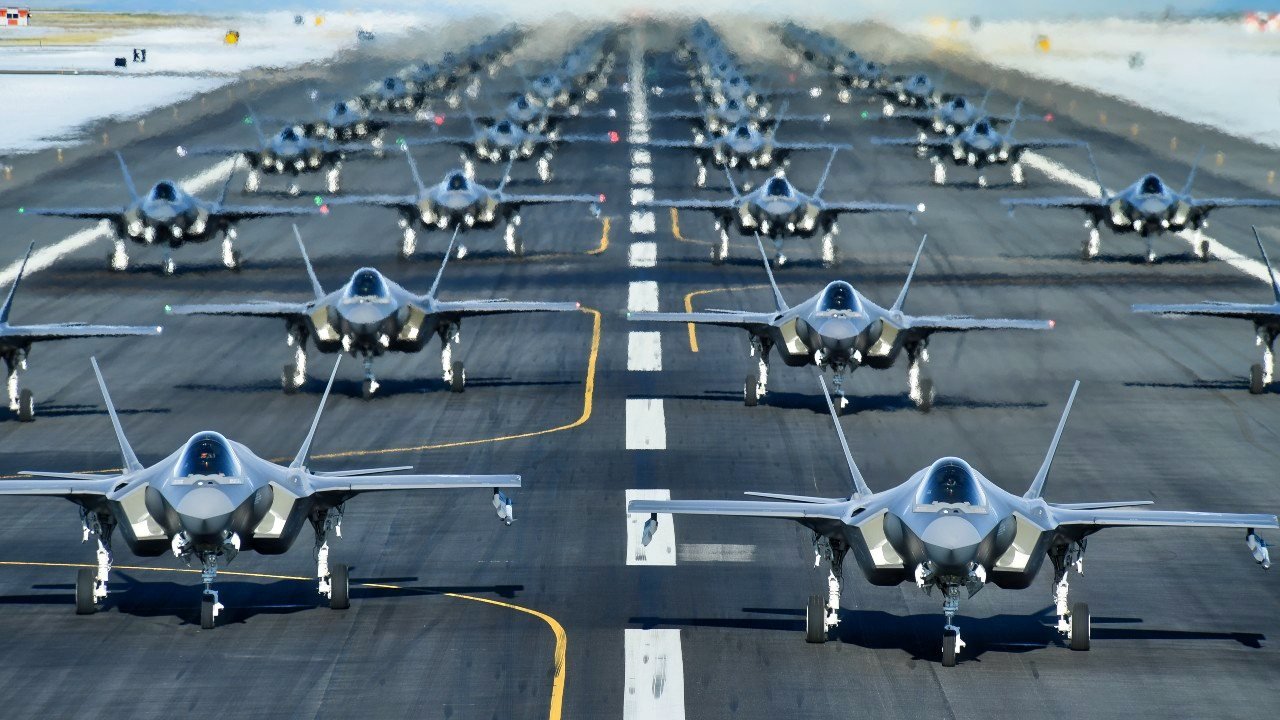
Summary and Key Points: Dr. Brent M. Eastwood, a former infantry officer and defense analyst, evaluates the F-35 Lightning II’s transition from Red Flag 2017 simulations to the 2026 Iran War.
-While the Israeli Air Force recently claimed the first stealth air-to-air kill against an Iranian Yak-130, Eastwood analyzes the persistent “swarming” threat posed by J-20 and Su-57 fighters.
-This report explores the impact of Gerald “Runner” Brown Jr.’s alleged leak of F-35 secrets to China, concluding that the F-35’s limited AMRAAM internal payload and low turn rate necessitate integrated support from AWACS and electronic warfare to survive a “saturated” battlespace.
Red Flag 2017 Lessons: Why F-16 “Swarm” Tactics Remain the F-35’s Greatest Vulnerability
Before Operation Epic Fury against Iran, there were no examples of American F-35s conducting dogfights in real warfare, although there have been brand new reports about an Israeli F-35I destroying an Iranian airplane in the air. To be sure, the Lightning II conducted many ground strike missions during the Global War on Terror, but fighter-on-fighter aerial combat just didn’t happen due to the Americans’ air superiority over Iraq and Afghanistan.
Engaging in Simulated Combat
The “flying computer” had to rehearse for the days when it would face adversarial aircraft, and that meant flying in Air Force exercises and simulations that tested its mettle in drills against “Red Team” fighters. What did the service branch learn from these rehearsals? The idea was to improve tactics, techniques, and procedures that would help Lightning II pilots dominate the skies when needed.
Ground Strike or Dogfighting – Which Is Best?
One aspect of the F-35 skill set was already well-practiced. This warbird is great at surface strike. These missions helped keep soldiers and Marines alive during Operation Iraqi Freedom and Operation Enduring Freedom. But the Joint Strike Fighter did not get to battle enemy air forces in the air.
With the rise of China and Russia and the development of their own fifth-generation fighters, such as the J-20 Mighty Dragon and the Su-57 Felon, F-35 pilots had to be ready for a potential dogfight with aircraft that could match the Lightning II in stealth, speed, and maneuverability.
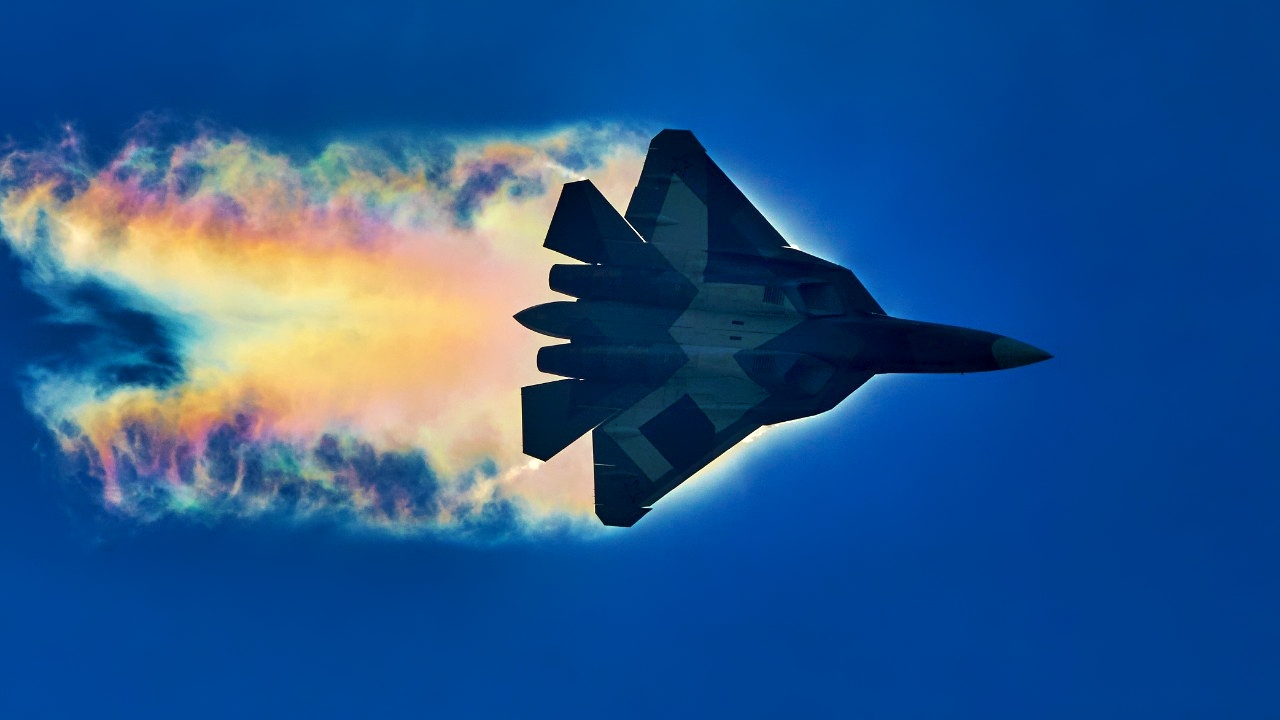
Russia’s Su-57 Felon Fighter

Su-57 Felon Fighter from Russian Air Force.
Red Flag 2017 Is a Great Proving Ground
Let’s take a look at one set of drills called Red Flag 2017. There were times when the observer/controllers of the exercise wondered about the viability and survivability of the F-35 when taking on F-16 Fighting Falcons.
The simulations happened at Nellis Air Force Base. This was going to push pilots harder than they had been pressured before. Ground crews would also be operating at high tempo. Battle planners had to communicate well with the friendly team and see what the F-35 could do in combat.
F-16 Pilots Get a Vote in the Battles
The F-16 aggressors were up against a stalwart. The stealthiness of the F-35 would be an obvious advantage, and even though the F-16 was a proven airframe with high speed, agility, and climbing rate, victory for Fighting Falcon pilots was not assured. How would the F-16 respond? Aggressor pilots could adopt close-in tactics to give their weapons, such as the Sidewinder, a chance. Or try a shot with AMRAAMs.
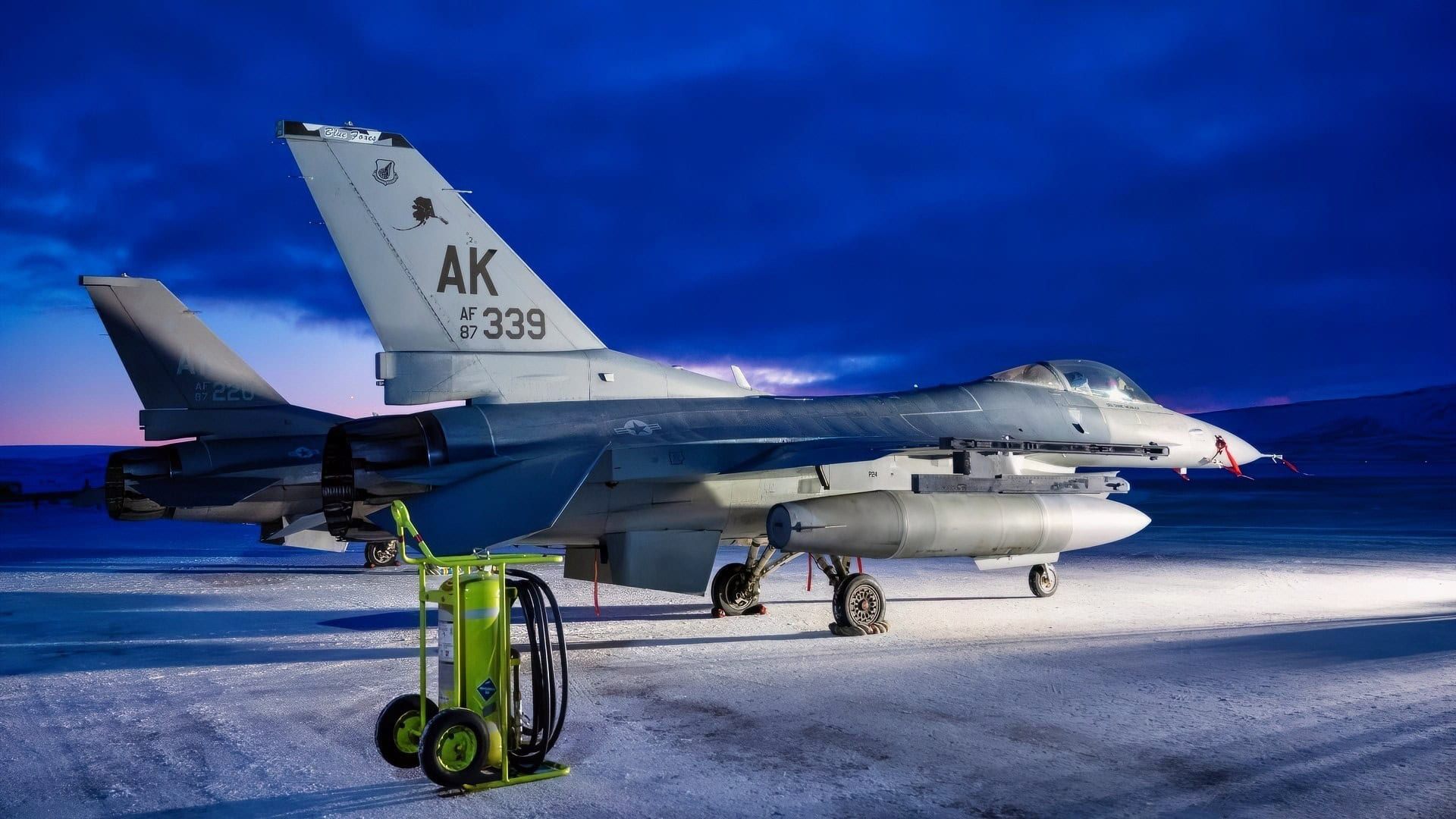
F-16 Fighting Falcon aircraft assigned to the 18th Fighter Interceptor Squadron from Eielson Air Force Base, Alaska, are placed on the flightline during Operation NOBLE DEFENDER at Pittufik Space Base, Greenland, Jan. 29, 2025. Operation NOBLE DEFENDER is an air defense operation under the direction of the North American Aerospace Defense Command designed to demonstrate the command’s ability to defend the approaches of North America from current and future threats while integrating across domains with partners and allies. NORAD routinely conducts sustained, dispersed operations in defense of North America through one or all three NORAD regions, include Alaska, Canada and the continental U.S. (U.S. Air Force photo by Tech. Sgt. Christopher Ruano)
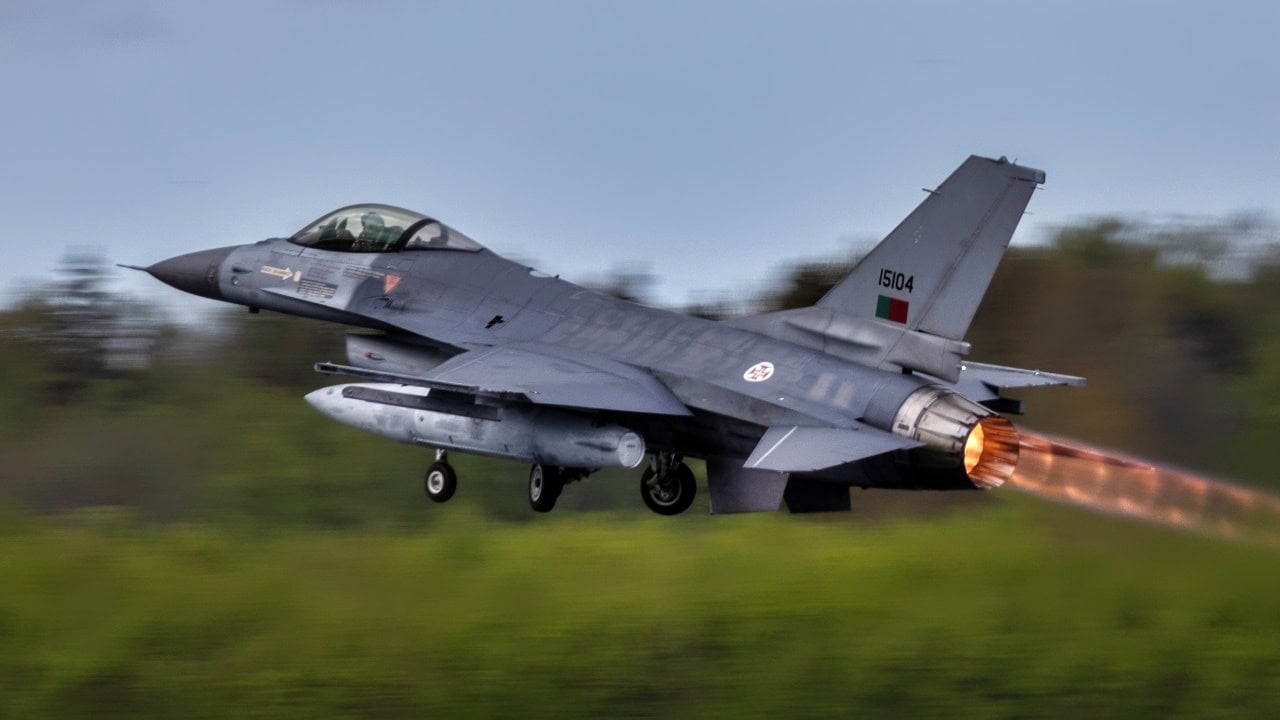
A Portuguese Air Force F-16 Fighting Falcon takes off during a Baltic Air Policing Rotation in Estonia.
Baltic Air Policing is a peacetime mission in which NATO Allies deploy fighter jets to cover the airspace of Estonia, Latvia and Lithuania. Image Credit: NATO.
This would probably boil down to the expertise of the battling pilots. Who had better prior training? Who had more experience in older missions? Which tactics were more battle-tested?
Overwhelming F-35s With a ‘Swarm’
One way the F-16s could operate would be to use “swarm” maneuvers and encourage the F-35s to use up all of their AMRAAMs first and then converge on the Lightning IIs until they called “no joy.” This was seen as risky, as the F-35 could “look first” and “shoot first.” The Joint Strike Fighter was designed to be both an air superiority and a multi-role aircraft, with that irresistible blend of stealth and maneuverability. The F-16, as a fourth-generation or even fourth-generation “+” fighter, could not just blend in. It would have to create a situation in which the aviators would have an advantage over the F-35.
The Exercise Started Off Great
The F-35 proved highly successful against the F-16 at Red Flag 2017. There was a 20:1 kill ratio. But before declaring victory and going home, all pilots needed to conduct an after-action review and debriefing. The F-16 did show glimmers of hope with that swarming technique.
The F-35 was strong in beyond-visual-range (BVR) engagements. The stealthiness was a huge advantage during these moments, and the AMRAAMs scored kills, but close-in was a different story when the F-16s overwhelmed one F-35 pilot.
Where is the Pilot, Air Frame, or Tactical Weakness?
That was the purpose of Red Flag, though. No pilot wanted to give up an aerial victory, but mistakes were an opportunity to learn. Even the best aviators could make errors at Red Flag, and the observer/controllers were looking for any weaknesses they could spot in the simulated combat.
At first, the overseers were encouraged by the F-35’s success. Twenty-to-one is not that shabby, but losing even one aerial battle was one too many.
F-35’s Built-in Advantages
Of course, the F-35 was already very survivable going into the Red Flag 2017. It had the low radar cross-section that everybody knew about. This gave it the kind of detection window that pilots loved for the first-shot and first-kill advantage.
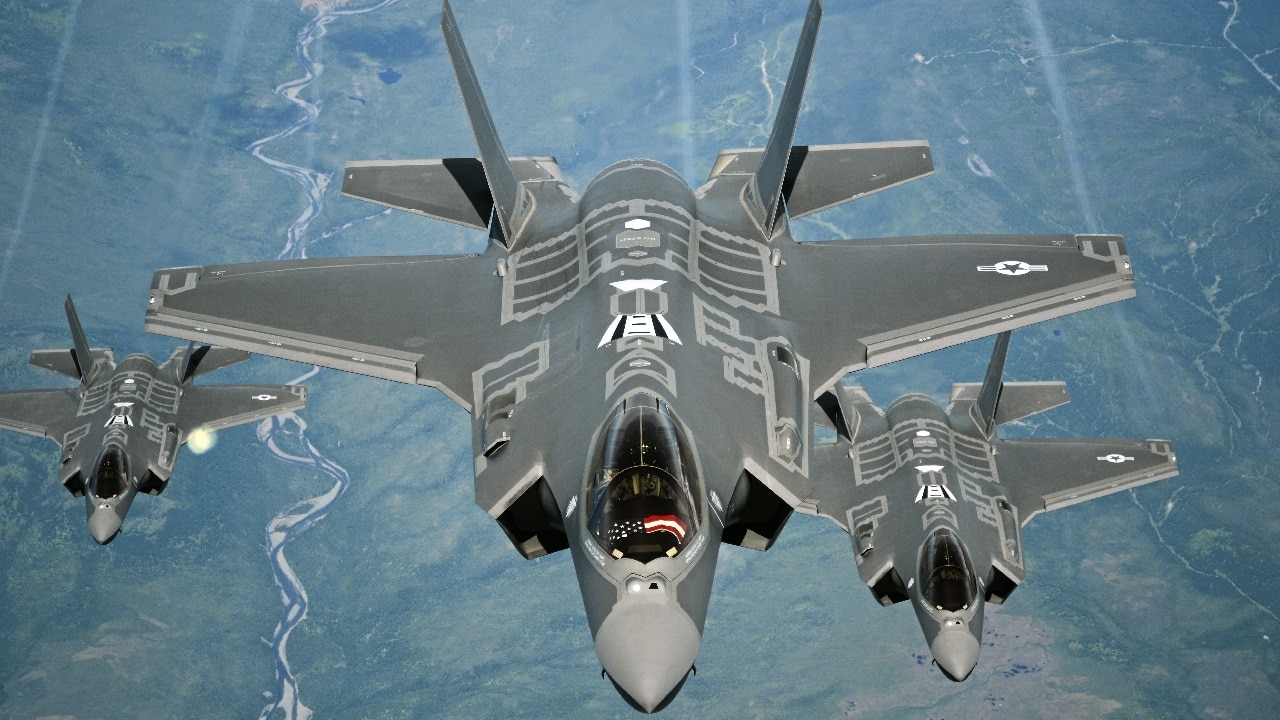
F-35 Lightning II aircraft receive fuel from a KC-10 Extender from Travis Air Force Base, Calif., July 13, 2015, during a flight from England to the U.S. The fighters were returning to Luke AFB, Ariz., after participating in the world’s largest air show, the Royal International Air Tattoo. (U.S. Air Force photo/Staff Sgt. Madelyn Brown)
F-35s could also share targeting data during interoperable missions. This meant that information collected on the F-16 activities could be integrated in real time with Lightning II tactics.
But the Lightning II Had a Weak Spot
This frustrated the F-16 pilots. They were hit without even seeing the F-35. Not to be discouraged, they did not give up and still gave the F-35 a run for its money in certain confrontations.
As my colleague Harrison Kass wrote, “the F-35 seemed to have a vulnerability. Aggressor F-16s reportedly used numerical superiority, multi-axis attacks, and saturation geometry. Basically, the F-16s swarmed the F-35. This forced the F-35 to expend missiles, compress the engagement distance, and create merges—resulting in an overwhelming defensive scenario.”
Are There Limitations with the Weapons Payload?
One issue that emerged was the F-35’s limited weapons payload. There are four AMRAAMs on board, and when they run dry, look out for problems. Plus, the Lightning II has a low thrust-to-weight ratio. There is one Pratt & Whitney F135 engine, and the F-35 can push out 43,000 pounds of thrust. But the airplane is still limited in its vertical climb and high-G maneuvers.
There is also constrained thrust vectoring and tiny control surfaces. Trying to change course rapidly can be challenging for pilots. The F-16 may have a better turn rate.
The internal carriage requirements of the F-35 can reduce payload, Kass wrote. And this could be a disadvantage in the number of missiles the Lightning II can deploy.
F-16 Drivers Move In for a Kill
The F-16 aviators understood these disadvantages. This became a lesson in physics and aerodynamics for the F-35 aviators as observer/ controllers ruled on the Fighting Falcon “kills.”
“The F-16 pilots, understanding this asymmetry and relying on their advanced dogfighting skill set, forced the merge—at which point pilot proficiency and geometry mattered more than stealth, networking, or sensor fusion,” Kass observed.
F-35s Have Friends In the Air
One advantage of the F-35 is that it does not operate alone in a strike package. It first has its own electronic warfare capabilities to jam and spoof enemy radar. There are tankers to extend its range and airborne early warning AWACS aircraft. Other jamming can be conducted in the air by dedicated platforms. Plus, there are the ground controllers taking all the information in to increase the F-35’s survivability. This can overcome the Lightning II’s aerodynamic weaknesses.
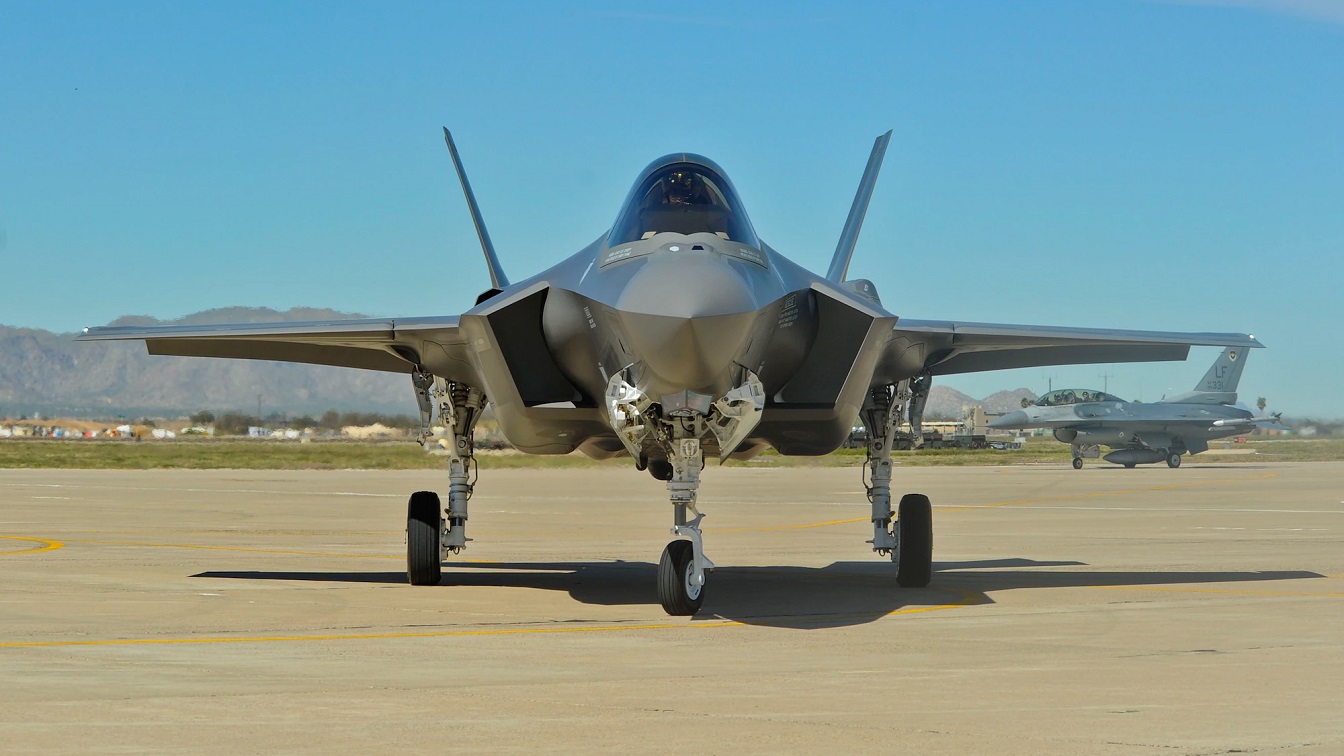
F-35 Stealth Fighter. Image Credit: U.S. Military.
Iranian Ground Strike Mission
Limited magazine depth is still a warning for future F-35 missions. So far, the F-35 is enjoying air dominance over Iran. The Iranian air force was never part of the game. Air defenses for the bad guys have been suppressed, and now the Lightning II is conducting ground-strike missions with JDAMs, BU-53/B StormBreakers, and SPEAR 3 missiles. This will make Iran pay the price.
Accused Former Pilot May Have Leaked F-35 Secrets to the Chinese
However, Russia and China are to be worried about. A large flight of enemy fighters could use that swarm technique, too. This might have been shared by a former U.S. Air Force pilot who was arrested for illegally giving flight data and training to China. Gerald Eddie Brown, Jr., also known by the call sign “Runner,” allegedly violated the Arms Export Control Act.
“Gerald Brown, a former F-35 Lightning II instructor pilot with decades of experience flying U.S. military aircraft, allegedly betrayed his country by training Chinese pilots to fight against those he swore to protect,” said Assistant Director Roman Rozhavsky of the FBI’s Counterintelligence and Espionage Division.
How Much do the Chinese Know Now?
Did Brown know about F-35 vulnerabilities during Red Flag 2017, and did he give up this information? That is something that the Air Force must consider as it determines best practices when going up against China. The adversaries may now know more about the F-35 than is readily available in open-source intelligence analysis on the Internet.
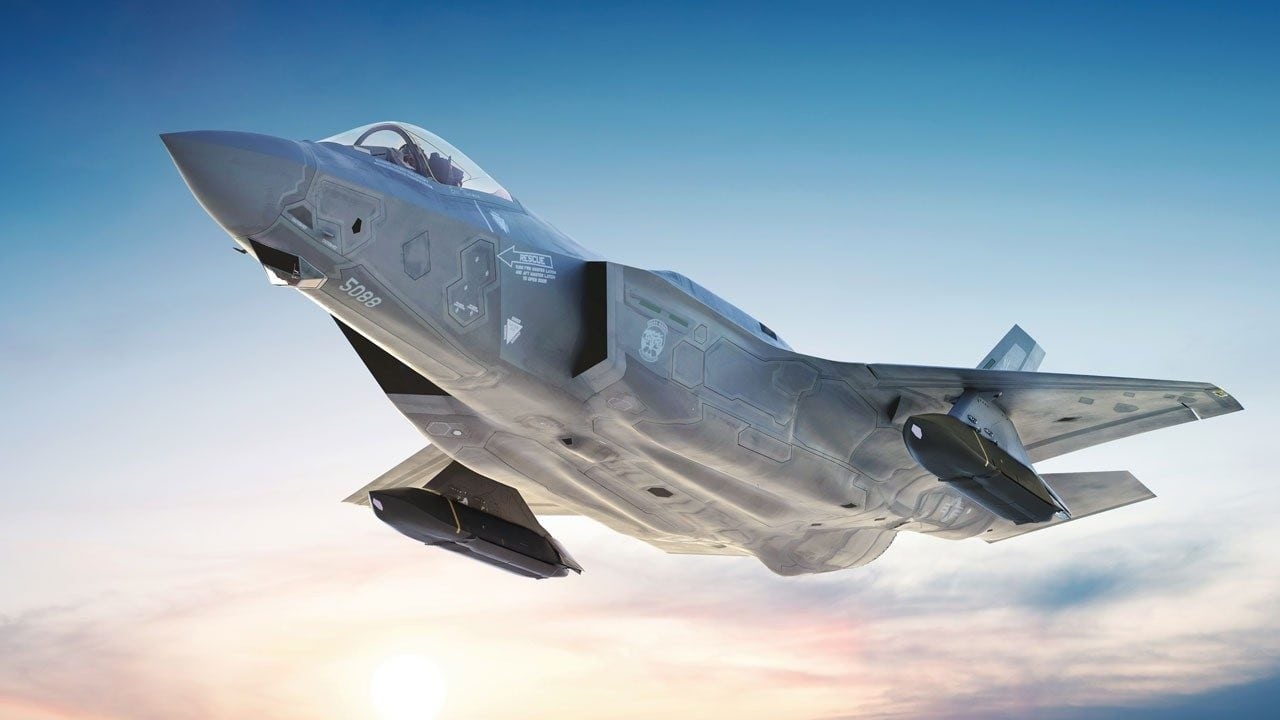
F-35. Image Credit: Lockheed Martin.
The F-35 remains a dominant aircraft, despite showing some weaknesses at Red Flag. Those swarming techniques and a small payload of weapons are disadvantages in aerial combat. China and Russia may have learned some new tactics if they ever face the F-35. And that former pilot could have given up the keys to the kingdom to China. Let’s hope the F-35 can continue to evolve and identify performance inconsistencies across real and simulated missions. The Air Force needs dogfighters desperately, and while we know the F-35 is great at surface strike, it still must dominate enemy jets in close aerial combat.
About the Author: Brent M. Eastwood
Author of now over 3,000 articles on defense issues, Brent M. Eastwood, PhD, is the author of Don’t Turn Your Back On the World: A Conservative Foreign Policy and Humans, Machines, and Data: Future Trends in Warfare, plus two other books. Brent was the founder and CEO of a tech firm that predicted world events using artificial intelligence. He served as a legislative fellow for US Senator Tim Scott, advising the senator on defense and foreign policy issues. He has taught at American University, George Washington University, and George Mason University. Brent is a former US Army Infantry officer. He can be followed on X @BMEastwood.