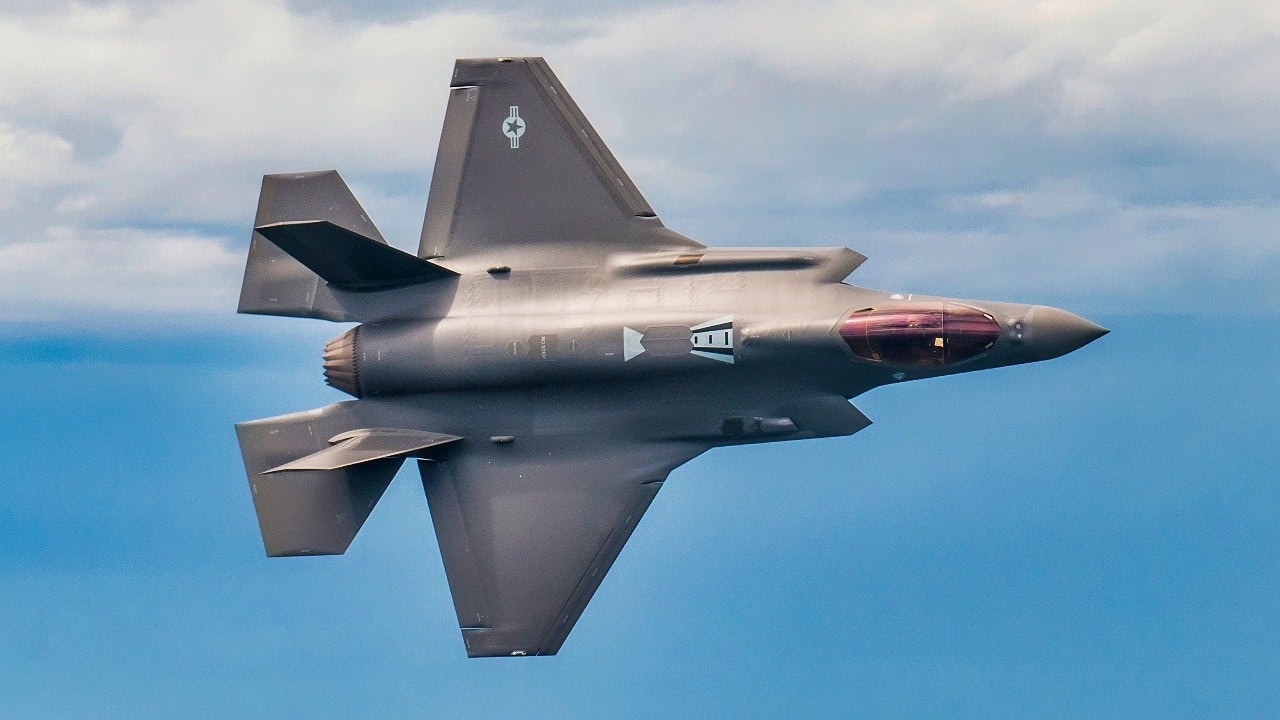
Summary and Key Points: As relations between Ottawa and Washington reach a historic low, Prime Minister Mark Carney’s government has initiated a strategic review of the 2023 agreement to purchase 88 F-35 Lightning II fighters.
-While Ottawa explores European alternatives like the Saab JAS 39 Gripen to reduce reliance on U.S. supply chains, the “Domestic Industry Trap” and geographic reality make a full divorce nearly impossible.
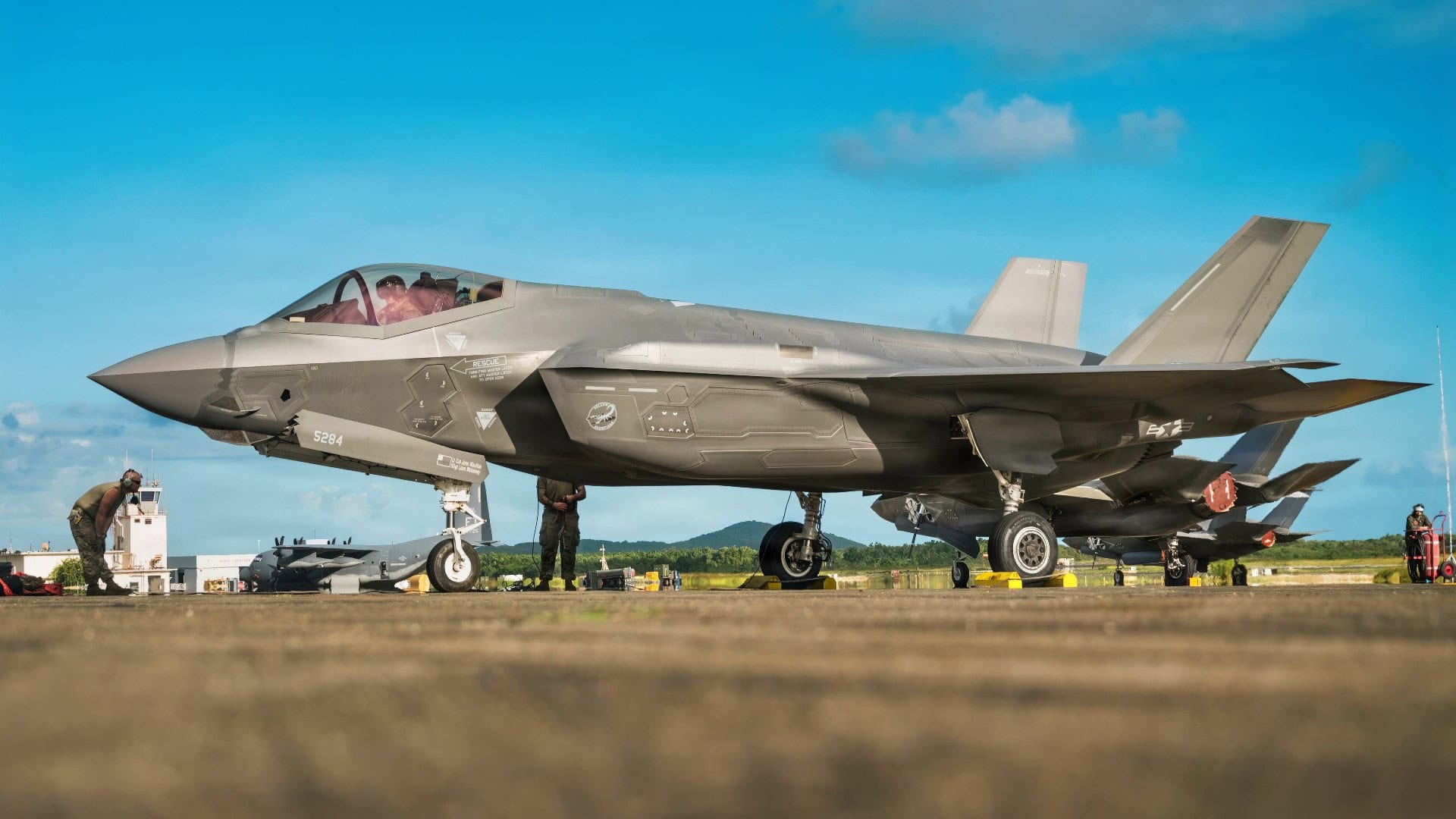
U.S. Air Force crew chiefs perform post flight maintenance on an F-35A Lightning II after its first arrival in Ceiba, Puerto Rico, Dec. 20, 2025. U.S. military forces are deployed to the Caribbean in support of the U.S. Southern Command mission, Department of War-directed operations, and the president’s priorities to disrupt illicit drug trafficking and protect the homeland. (U.S. Air Force photo)
-Despite the review, Canada continues to fund “long-lead” F-35 components—a practical signal that the full order is likely inevitable. Ultimately, the F-35’s role as a flying sensor node is essential for defending the Arctic and maintaining NORAD interoperability.
Canada’s F-35 Crisis Is Not Based In Reality
With US-Canadian relations on the decline since the start of the Trump administration’s second non-consecutive term. As US-Canadian relations have collapsed over the last nearly two years since Trump’s return to power, several outstanding issues remain unresolved, including the 2023 deal Ottawa signed with Washington, D.C., to purchase 88 F-35 Lightning II fifth-generation multirole stealth warplanes.
Ottawa’s Only Real Leverage
Since Trump’s election, though, Canada has looked to this purchase of expensive US military gear as a leverage point in its ongoing trade war with the United States.
There are also concerns about sovereignty in Canada, notably as the controversial referendum on Alberta’s independence is set to go forward. As that referendum moves forward, the Trump administration has repeatedly referred to making Canada the 51st state of the US.
Ottawa has very little leverage over the United States. All the Canadian leadership can do is tut-tut about possibly integrating their economy into China’s trading network in the long term. The real immediate leverage they have is this F-35 deal. So, the government of Mark Carney has initiated a review of the 2023 purchase agreement with the United States.
Ottawa has already committed to at least the first batch of aircraft. Canadian leaders have magnanimously suggested that they would accept some of the F-35s but then look to other European vendors (such as Sweden’s Saab, maker of the iconic JAS 39 Gripen).
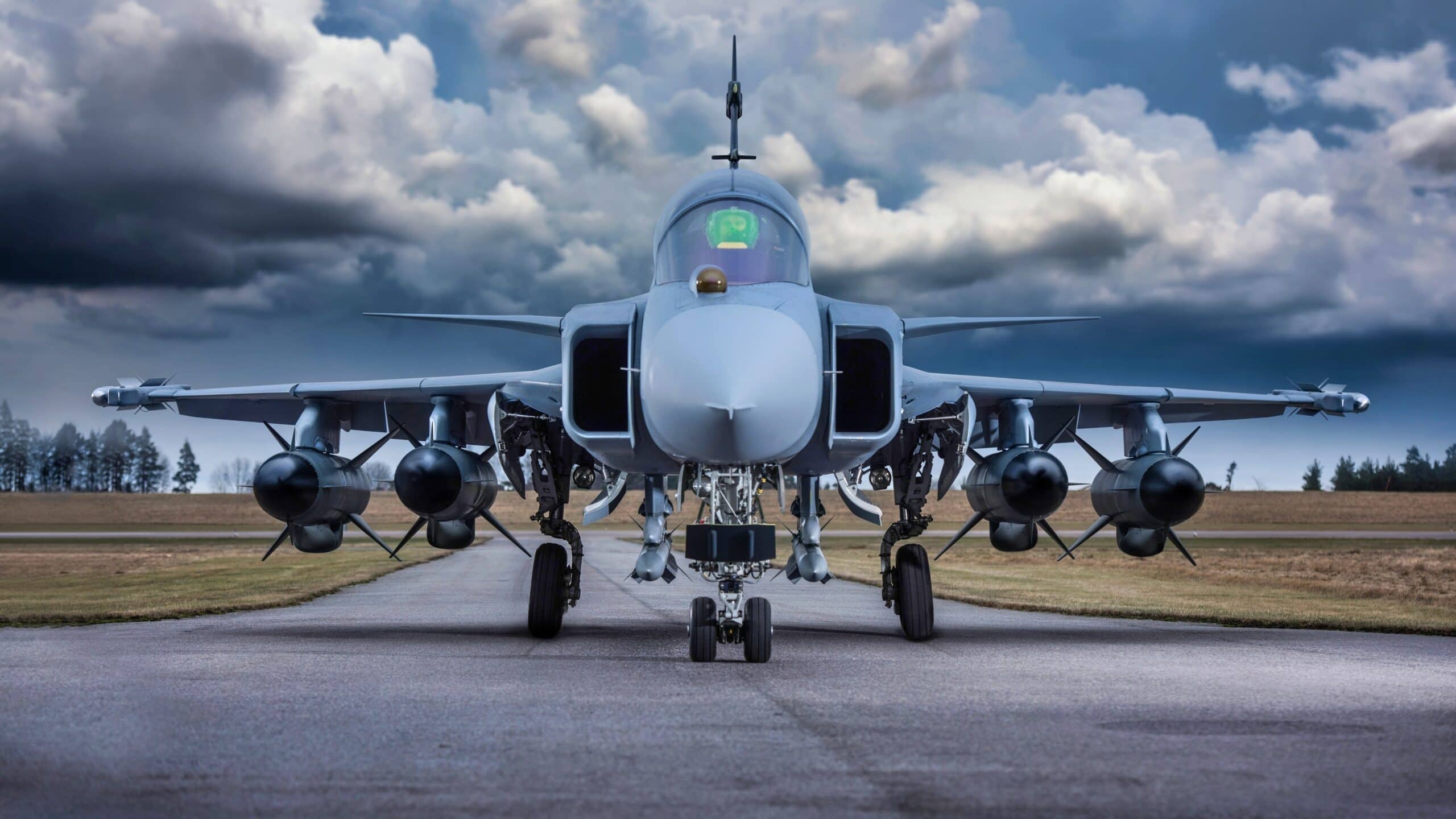
JAS 39 Gripen. Image Credit: Creative Commons.
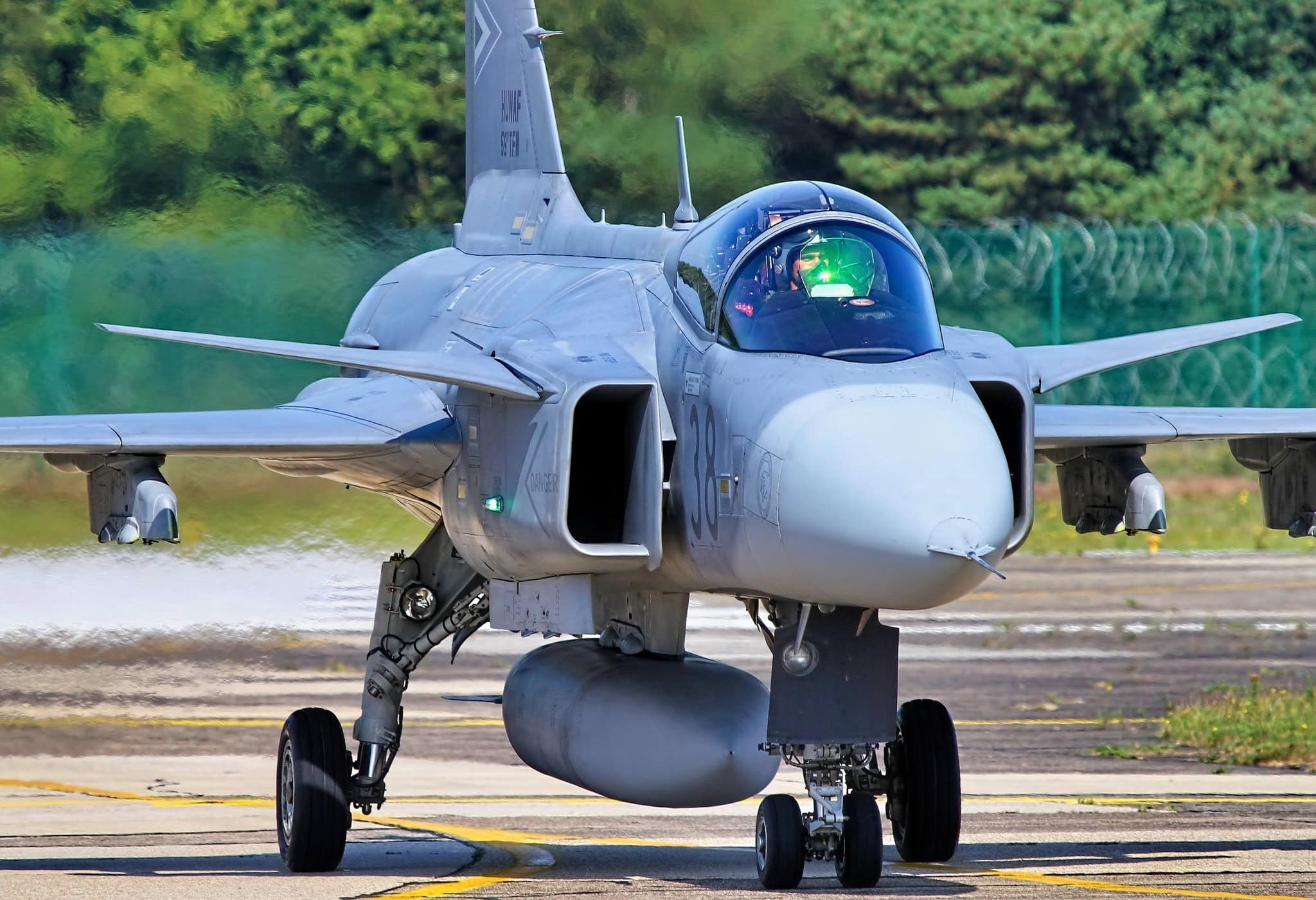
JAS 39 Gripen on Runway. Image Credit: Creative Commons.
Ottawa’s review of the purchase agreement highlights Canada’s concerns about an overreliance on American defense supply chains, the risk of future political pressure from Washington, and a desire for greater domestic industry.
Here’s the problem facing Canada, though. By dint of geography and the differences in the size of the Canadian and American populations, as well as the overall economies (both of which decisively favor American preferences), Canada will never be free of political pressure from Washington.
The NATO Supply Chain Trap and F-35
Nor will they be divorced from the US defense industrial base.
That’s partly because of the geographic and economic linkages with America. But that’s also because Canada is part of the North Atlantic Treaty Organization (NATO). Sure, there are European defense firms (like Saab) that offer alternatives to US products, like the F-35.
But fundamentally, the entirety of NATO’s defense industrial base, as well as its various supply chains, relies disproportionately on the United States. Canada’s yearnings to divorce itself from this reality are, frankly, delusional.
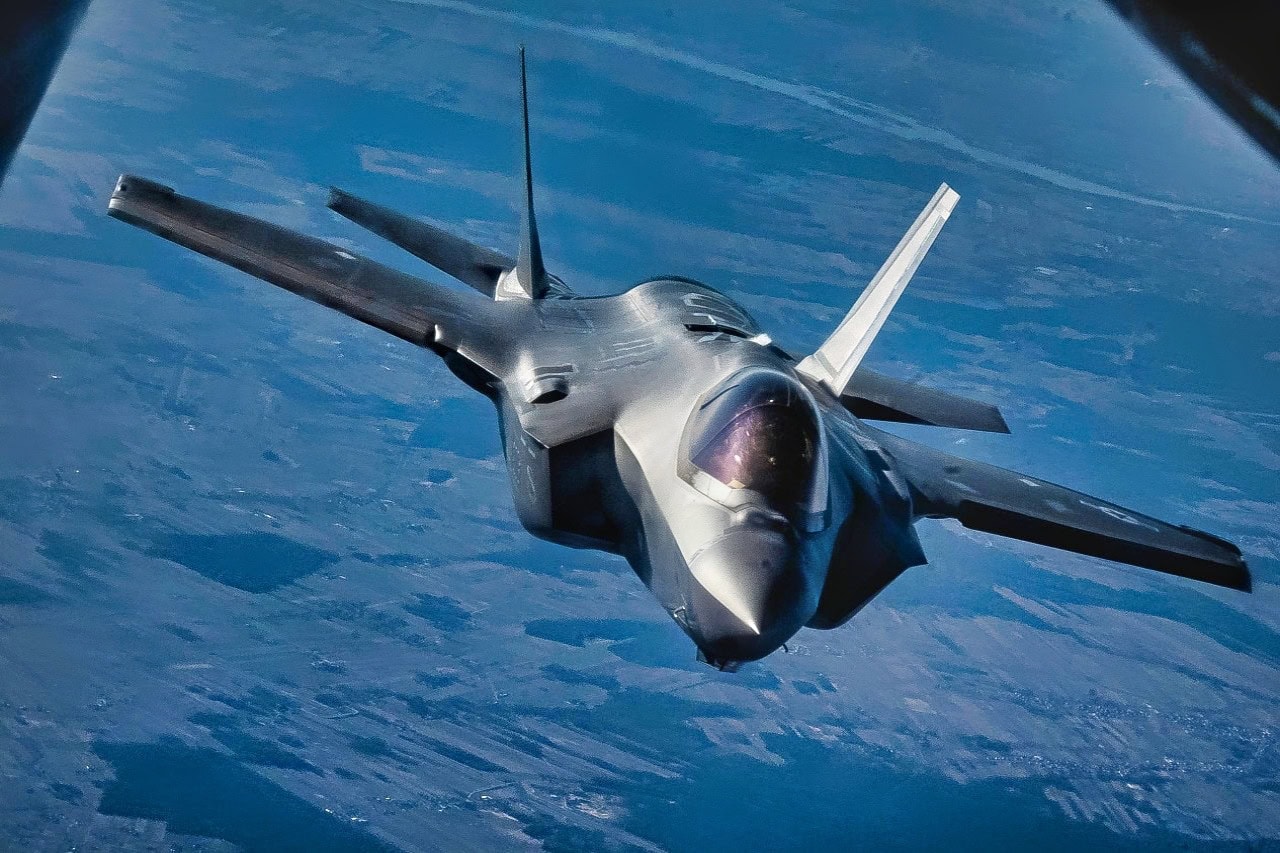
The 388th Fighter Wing’s F-35 Lightning II fifth-generation fighter cruises in Eastern European airspace, Feb. 28, 2022, in support of NATO’s collective defense. U.S. Air Forces in Europe – Air Forces Africa’s ability to support and integrate with NATO’s air policing missions continually hardens the alliance’s solidarity, collective resolve, and ability to adapt to a dynamic warfighting environment. (U.S. Air Force photo by Airman 1st Class Edgar Grimaldo)
Then there’s the matter of Canada wanting to spur greater participation from its domestic industry. This is a great idea for any nation wanting to be taken seriously as a sovereign state on the world stage. It’d be a wonderful boon for the average Canadian, too. Sadly, Canada’s tax and regulatory policies make such ambitions nearly impossible.
The Domestic Industry Trap
Plus, there’s the added issue of timing. Creating a defense industrial base divorced from the rest of the world from scratch is at least a decadal project (that’s if they can reform their regulatory and tax policies to make the business environment more amenable).
Canada doesn’t have that kind of time. What’s more, since the breakdown in relations between the United States and Canada and the imposition of onerous tariffs by the Trump administration, many Canadian businesses have buckled under the pressure.
In many instances, Canadians are selling their businesses and moving south to the United States. Those that aren’t selling their businesses are looking to diversify their operations, not by expanding in Canada. But by either moving their operations entirely to the US or going outside of North America entirely.
Canada cannot simply achieve any of these goals. Therefore, the sudden refusal to honor their previous commitment to purchase the F-35 from the United States is only serving to further antagonize US leadership, necessitating another round of punishing sanctions against Ottawa.
Oh, and don’t forget: as the Trump administration takes aim at Ottawa’s beloved NATO alliance, scuttling the previously agreed contract with the US over the F-35 purchase will only give Trump’s anti-NATO fire even more fuel.
F-35 and JAS 39 Gripen: Mixed Fleets, Maximum Headaches
Considering that Canada is a key partner in both NATO and NORAD, delaying the purchase and integration of F-35s into the Canadian Air Force could cause significant issues with Canada’s overall interoperability with the rest of NATO—meaning that Canada, not Trump’s America, would be stymying the unity of NATO with their ridiculous antics.
The F-35 is part of a larger technological ecosystem that the United States has developed. Introducing another fighter aircraft, such as a Saab product, while it can be incorporated into that ecosystem, will drastically reduce the capabilities of the Canadian fighter force (which is already in desperate need of perfection).
There’s the added issue that Canada’s purchase of a rival European warplane to operate alongside a mixed fleet would spike maintenance costs and complicate training, all while straining already stretched logistics.
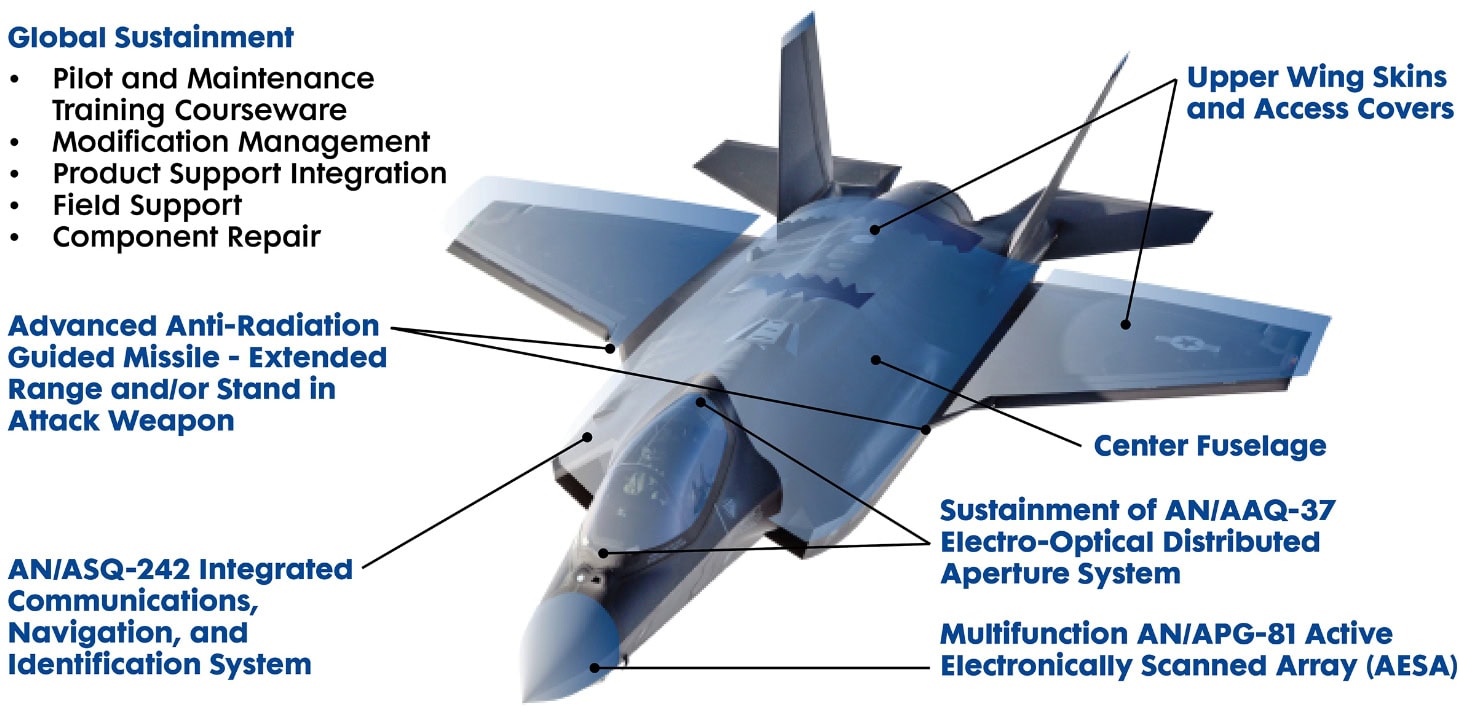
F-35 Fighter. Image Credit: Industry Handout.
Besides, Canada has already started paying for long-lead components for additional F-35s, according to the Defence Post. That’s because of the nature of the defense industrial base and the complex capabilities of these fighters. Long-lead items must be ordered years in advance to be ready in time.
Paying for these long-lead items keeps Canada’s production slot active with Lockheed Martin, the maker of the F-35. Most experts assess that the review initiated by Ottawa is little more than political theater.
But that political theater could be detrimental to both the already ailing Canadian economy and Canada’s national security.
As my colleague on this website, Steve Balestrieri, rightly pointed out last year, Ottawa funding those early parts of the F-35 deal is a “practical signal” that the Canadians intend to proceed with the full purchase.
One Continent, One Dominance Airpower
Lastly, one of the most important functions of the F-35 is its threat sensing. The F-35 is literally a flying sensor node. Given the vast geographical area both Canada and the United States must defend, notably in the Arctic, having a plane fully integrated into a vast and complex radar and sensor network is key.
The F-35 can further integrate into the missile defense architecture, thereby enhancing the capabilities of the NORAD binational alliance charged with defending North American airspace.
Still, Canada clearly wants to be seen as equal to the United States, even though it is not. The US correctly prefers an integrated continental defense—and should Ottawa keep pushing the issue, it might prompt the very dismantling of the Canadian project that Carney’s government claims it’s trying to protect with its recent antics on the world stage.
This whole thing is about who controls North American airpower in the twenty-first century. No matter how much balking Canada does. The United States is a dominant player here. And because of that, Ottawa will ultimately accept the full order of the F-35s from the United States.
About the Author: Brandon J. Weichert
Brandon J. Weichert is the Senior National Security Editor at 19FortyFive.com. He was previously the senior national security editor at The National Interest. Weichert is the host of The National Security Hour on iHeartRadio, where he discusses national security policy every Wednesday at 8 pm Eastern. He hosts a companion show on Rumble entitled “National Security Talk.” Weichert consults regularly with various government institutions and private organizations on geopolitical issues. His writings have appeared in numerous publications, among them Popular Mechanics, National Review, MSN, and The American Spectator. And his books include Winning Space: How America Remains a Superpower, Biohacked: China’s Race to Control Life, and The Shadow War: Iran’s Quest for Supremacy. Weichert’s newest book, A Disaster of Our Own Making: How the West Lost Ukraine, is available for purchase wherever books are sold. He can be followed on Twitter/X at @WeTheBrandon.