

Summary and Key Points: As U.S.-Canadian relations reach a low point under President Trump and Prime Minister Carney, Saab has pivoted its strategy, pitching a “dual fighter fleet” to the Royal Canadian Air Force (RCAF).
-Saab CEO Micael Johansson confirmed on February 10, 2026, that Canada is exploring a mix of F-35s and JAS 39 Gripens to reduce dependency on Washington.
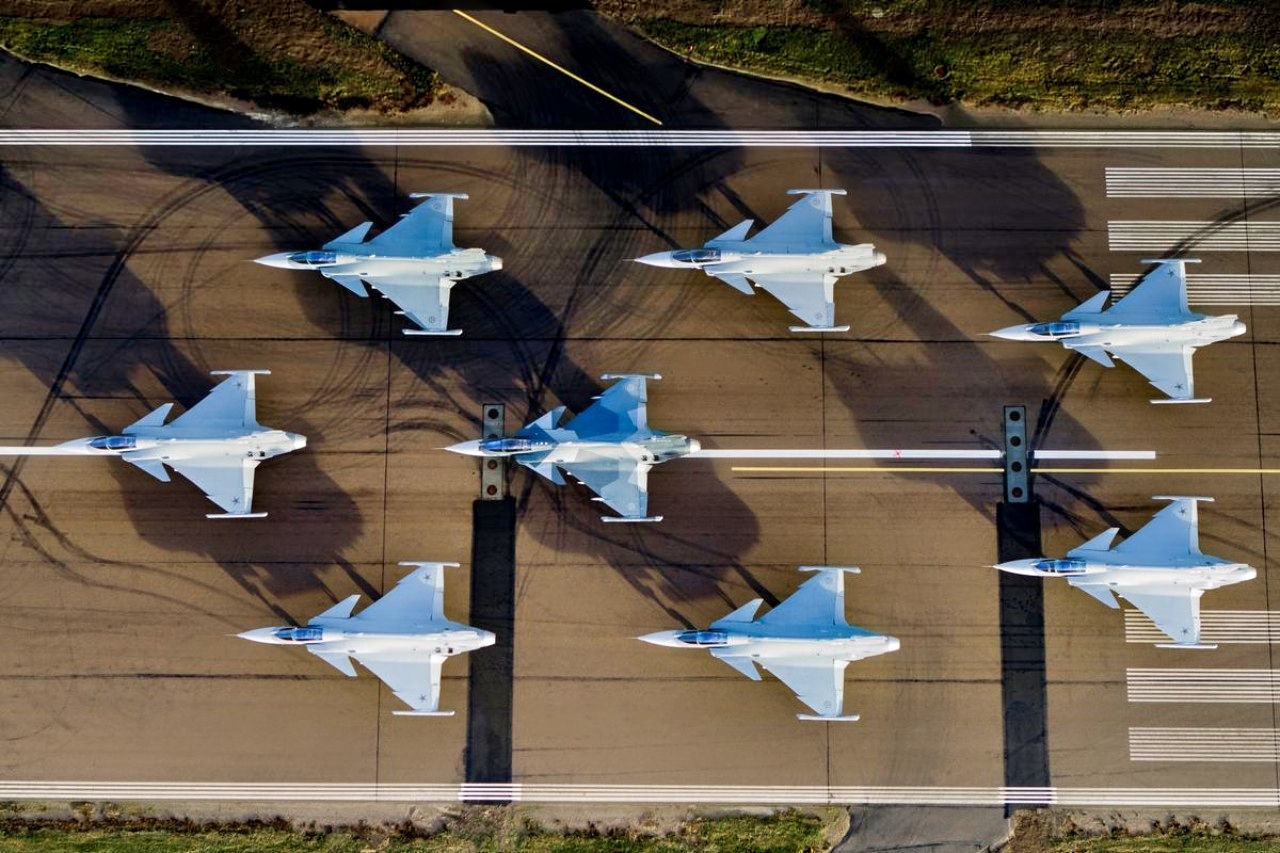
JAS 39 Gripen E. Image Credit: Creative Commons.
-While a dual fleet mirrors U.S. “high-low” tactics, critics point to the RCAF’s limited budget and the logistical nightmare of maintaining two separate supply chains.
-With 40% of the aging CF-18 fleet currently grounded, Ottawa faces a critical choice between political sovereignty and operational simplicity.
CF-18 Fighters Are Falling Apart: Why Saab is Pitching a “Dual Fleet” of F-35 and JAS 39 Gripen Warplanes to Canada
The ongoing debate on whether the Royal Canadian Air Force (RCAF) should continue to purchase the 5th Generation American-made Lockheed Martin F-35 Lightning II stealth fighter or switch over to the 4.5 Generation Swedish-made Saab JAS 39 Gripen non-stealth fighter has taken multiple twists & turns (not entirely unlike two fighter planes in a dogfight).
Thanks to the animus between U.S. President Donald John Trump and Canadian Prime Minister Mark Joseph Carney and the resultant nadir in Can-Am relations, many pundits, such as editorial columnist Tony Keller of the Toronto Globe & Mail, are stirring the pot by calling for the Canadian government to completely drop the F-35 deal and go gaga for Gripen.
Conversely, you have subject matter experts (SMEs) like retired RCAF LCol Bille Flynn (a proud air combat veteran of the 1999 Kosovo campaign and post-retirement F-35 test pilot for Lockheed Martin), who most certainly is *not* a fan of Donald Trump but considers a prospective RCAF cancellation of the F-35 to be petty politics prevailing for common sense.
So then, how is Saab handling this whole kerfuffle? Well, as might naturally be expected, they’re doubling down on their efforts to sell their JAS 39 to Canada.
What’s slightly unexpected is the specifics of their sales pitch. Instead of a mutually exclusive, all-or-nothing, all-proverbial-eggs-in-one-basket approach, the Saab execs are proposing a compromise in which Canada could have its cake and eat it too, i.e., both the Gripen and the Lightning II.
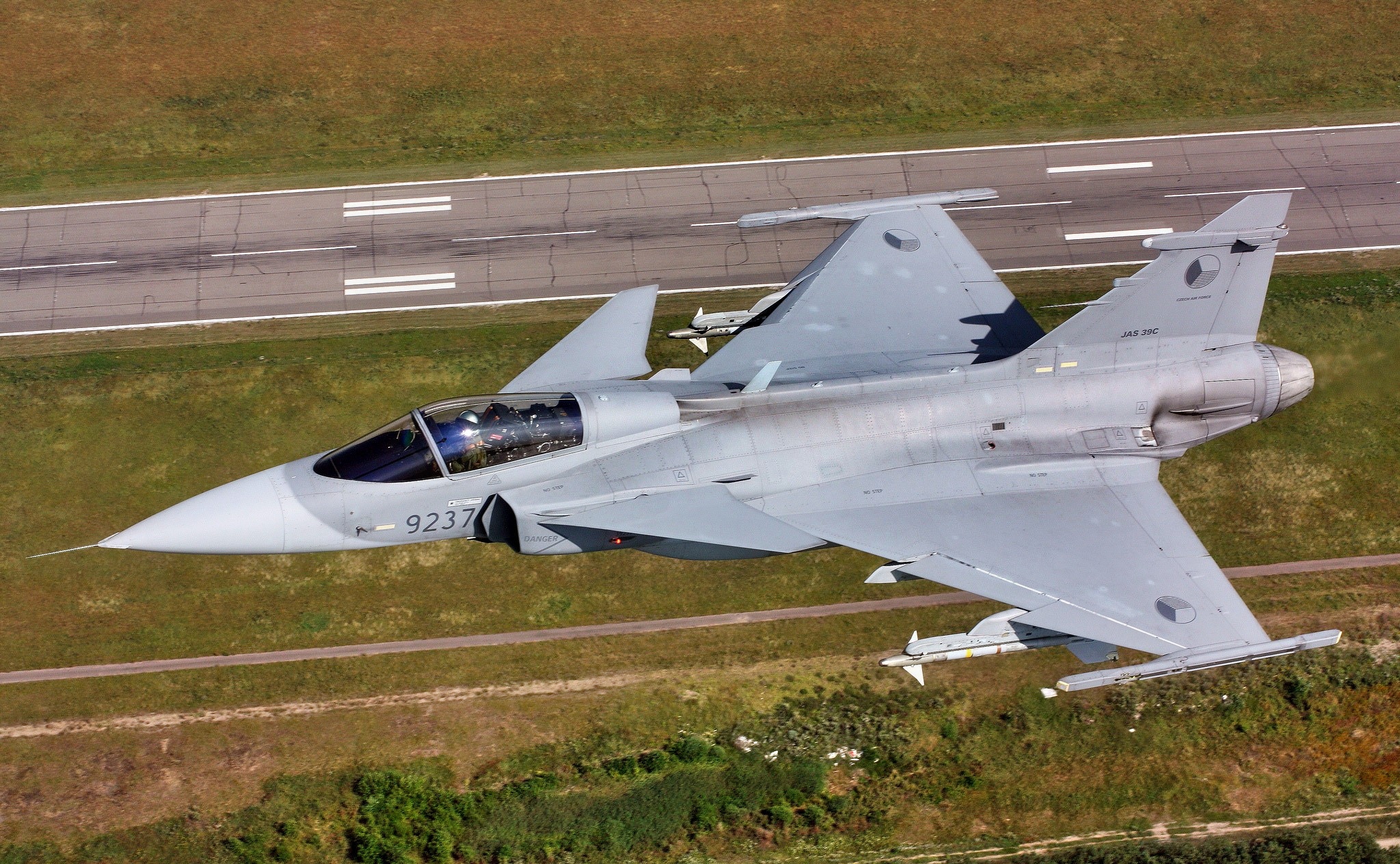
JAS 39 Gripen over a Road. Image Credit: Creative Commons.
The Scoop: F-35 vs. JAS 39 Gripen
This latest development comes to us courtesy of a February 10, 2026, article in Defence Industry Europe titled “Saab steps up Gripen pitch to Canada, sharing detailed data as Ottawa weighs dual fighter fleet,” penned by Martin Chomsky.
Therein, Mr. Chomsky cites Saab Chief Executive Micael Johansson, who, in a call with investors, “said Canada was exploring options’ not to be too dependent on the US by having a dual fleet, both F-35 and the Gripens.” He added, ‘We are providing all [the] detailed information that they need to understand.'”
Mr. Johansson stated that his company has shared specifics on the speed of technology transfer and “how quickly” a local Gripen production line could be established in “The Great White North.” “He also raised the prospect that such a facility could build aircraft for export, asking, ‘How would they [Canada] be involved in the full export market perspective of a fighter business?'”
Johansson stressed that any Canadian decision would hinge on “high-level political decisions” and hastened to add, “I don’t know” when a contract award might occur, but “of course, we have intensive discussions around this.”
Best of Both Worlds? The Case for a Dual-Track Canadian Fighter Fleet
Objectively speaking, a compelling case can be made for the prospective dual-track (“Dynamic Duo,” if you will) RCAF fighter program.
For example, in the U.S. Armed Forces, you have 4.5 Generation and Gen 5 fighters working hand-in-hand and acting as force multipliers for one another in the Air Force and the Navy alike; in the USAF, you have the F-35A and the F-22 Raptor stealth jets in tandem with the F-15EX Eagle II and the latest variants of the F-16 Fighting Falcon (AKA the “Viper”), whilst in the USN, you have the F-35C variant tag-teaming with the F/A-18E/F Super Hornet.
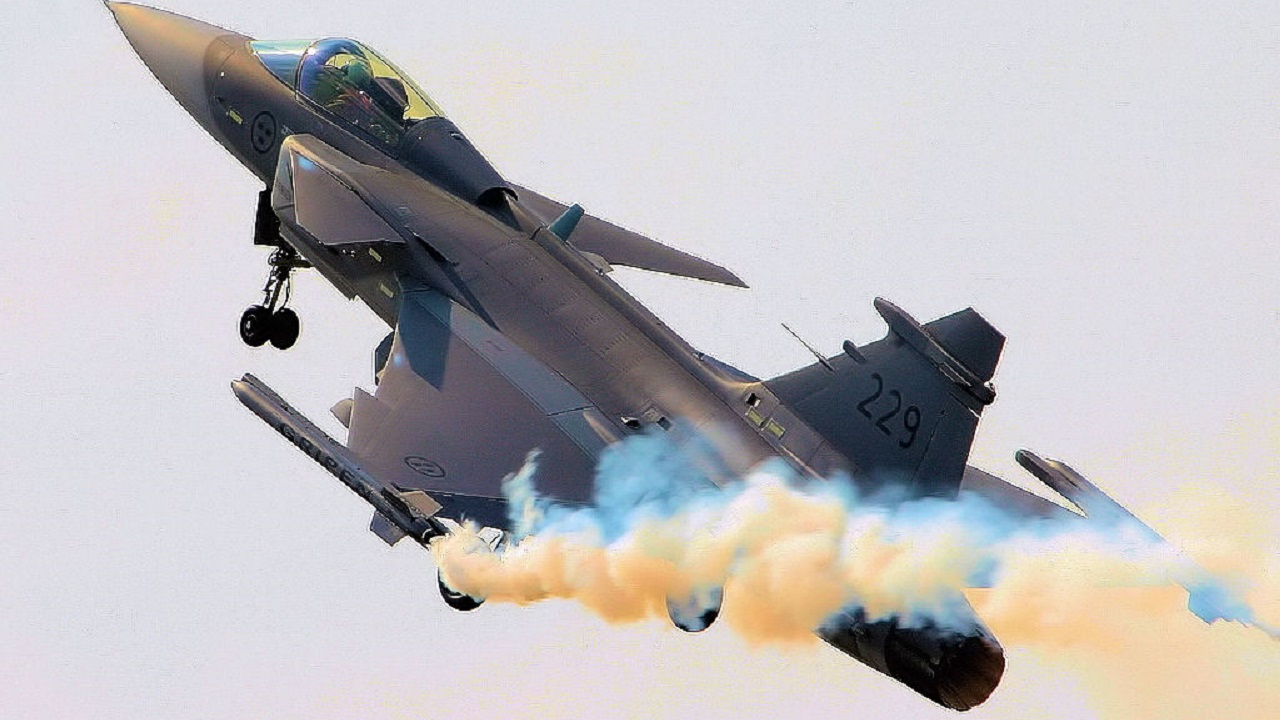
JAS 39 Gripen. Image Credit: Creative Commons.
In the case of the Gripen, it’s designed for interoperability with allied forces via shared datalinks and standardized communication systems; the efficacy of this interoperability has been aptly demonstrated by Hungarian and Czech pilots conducting air policing operations over the Baltic since 2004.
“Not So Fast, My Friend”: The Case Against a Dual-Track Canadian Fighter Fleet
Whilst the interoperability capabilities of the Swedish warbird are certainly all well and good, they still pale in comparison to its U.S.-made sales competitor. The current political soreness in U.S.-Canadian relations notwithstanding, seven other NATO member nations use the F-35 (out of 19 total nations signed onto the Lightning II program), thereby a continuation of the stealth jet acquisition would be a major boon to the RCAF’s interoperability with allied air forces.
What’s more, the USAF and USN have multiple fighter types because they can afford them; by contrast, the RCAF’s budget allocation is nowhere near as generous (remember that whole 5 percent of GDP commitment to defense spending by NATO member nations that President Trump pushed for so heavily in the first place?). The RCAF’s senior logisticians would be extremely hard-pressed to deal with the bureaucratic nightmares of (1) standing up two pipelines to purchase spare parts, (2) dual training programs for RCAF pilots, and (3) separate doctrines for operational employment.
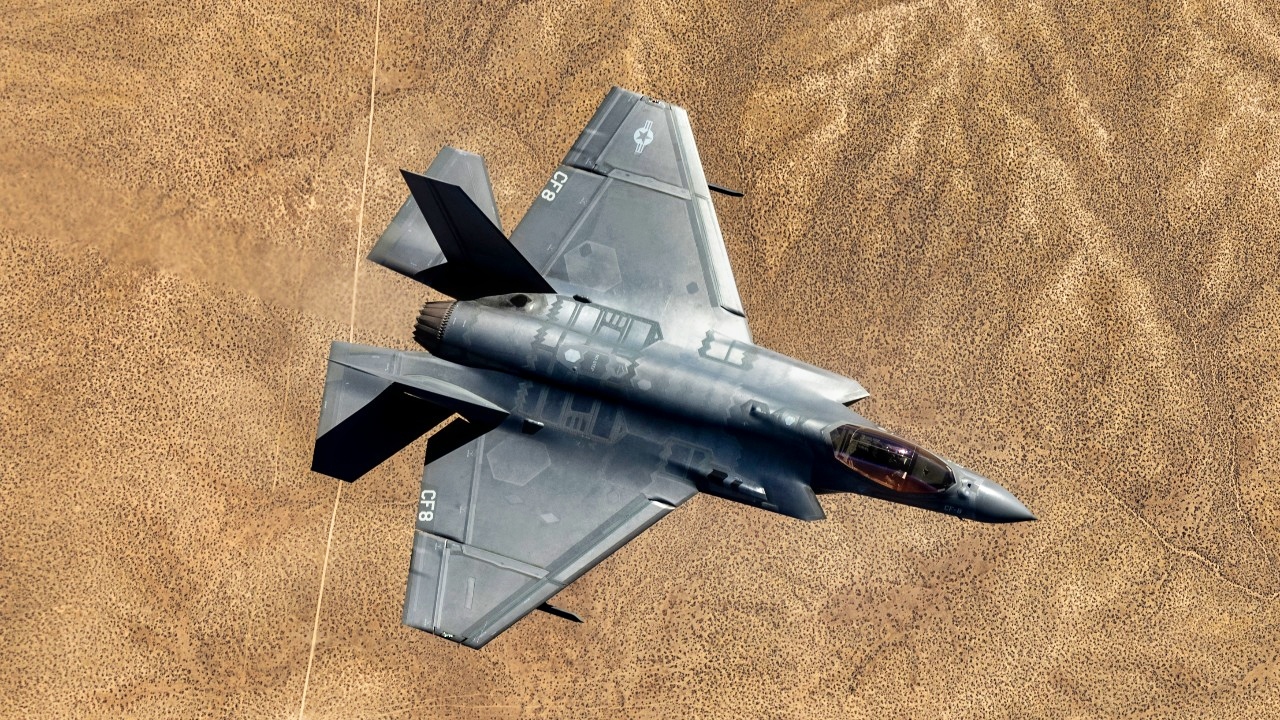
Maj. Nicholas Helmer conducts a mission over the Mojave Desert on October 8, 2024. The F-35C aircraft is assigned to the 461st Flight Test Squadron, F-35 Integrated Test Force at Edwards Air Force Base, California. The aircraft’s dual markings of United States Navy Air Test and Evaluation Squadron Nine (VX-9) and 461st FLTS represents the joint mission of the Integrated Test Force. The F-35 ITF includes people and aircraft from the United States Air Force, United States Navy, United States Marine Corps, foreign partners, Air Force Reserve Command 370th FLTS, and the Air Force Operational Test and Evaluation Center’s 31st TES. (Courtesy Photo, Lockheed Martin Edwards Team)
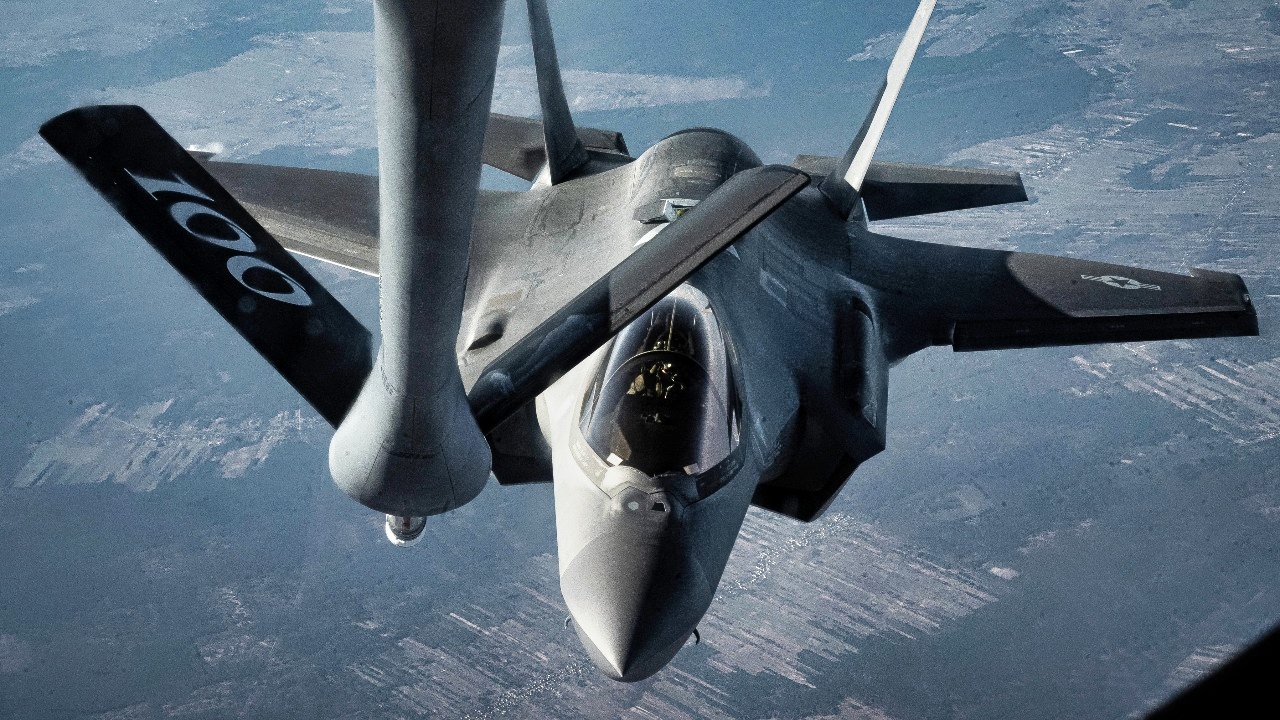
The 388th Fighter Wing’s F-35 Lightning II fifth-generation fighter prepares to receive fuel from a U.S. Air Force Boeing KC-135 Stratotanker attached to the 100th Air Refueling Wing in Eastern European airspace, Feb. 28, 2022. The KC-135 platform is key to enabling U.S. Air Forces in Europe – Air Forces Africa to project credible air power and air operations in concert with NATO allies and partners. (U.S. Air Force photo by Airman 1st Class Edgar Grimaldo)
As far as weaning Canada off dependence on U.S. military equipment for geopolitical reasons, the Gripen would be a less-than-perfect solution (something that the Canadian politicians and Saab execs alike seem to overlook conveniently): its Swedish national pride withstanding, the JAS 39 is actually dependent on an American powerplant, namely the General Electric F414-GE-39E, the same engine that powers the Super Hornet!
Gripen vs. F-35 Debate Only Hurts Canada
Until the JAS 39 v. F-35 debate is finally resolved, Canada continues to scrape by and make do with its fighter fleet consisting of the American-made F/A-18 Hornet and the Canada-customized CF-18 Hornet. The World Directory of Modern Military Aircraft (WDMMA) reports that the RCAF has seven of the former and 79 of the latter.
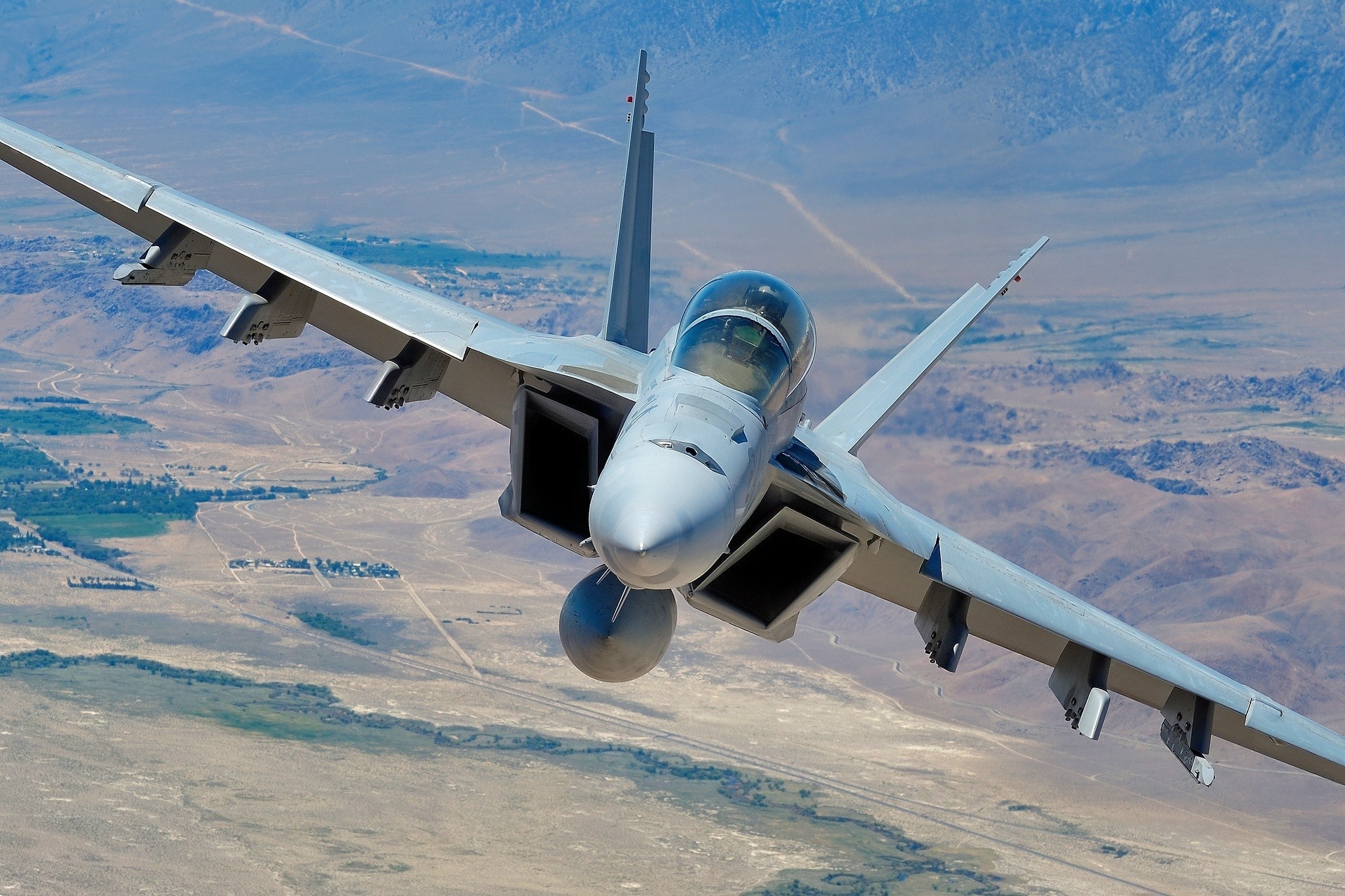
CF-18 Canada. Image Credit: Creative Commons.
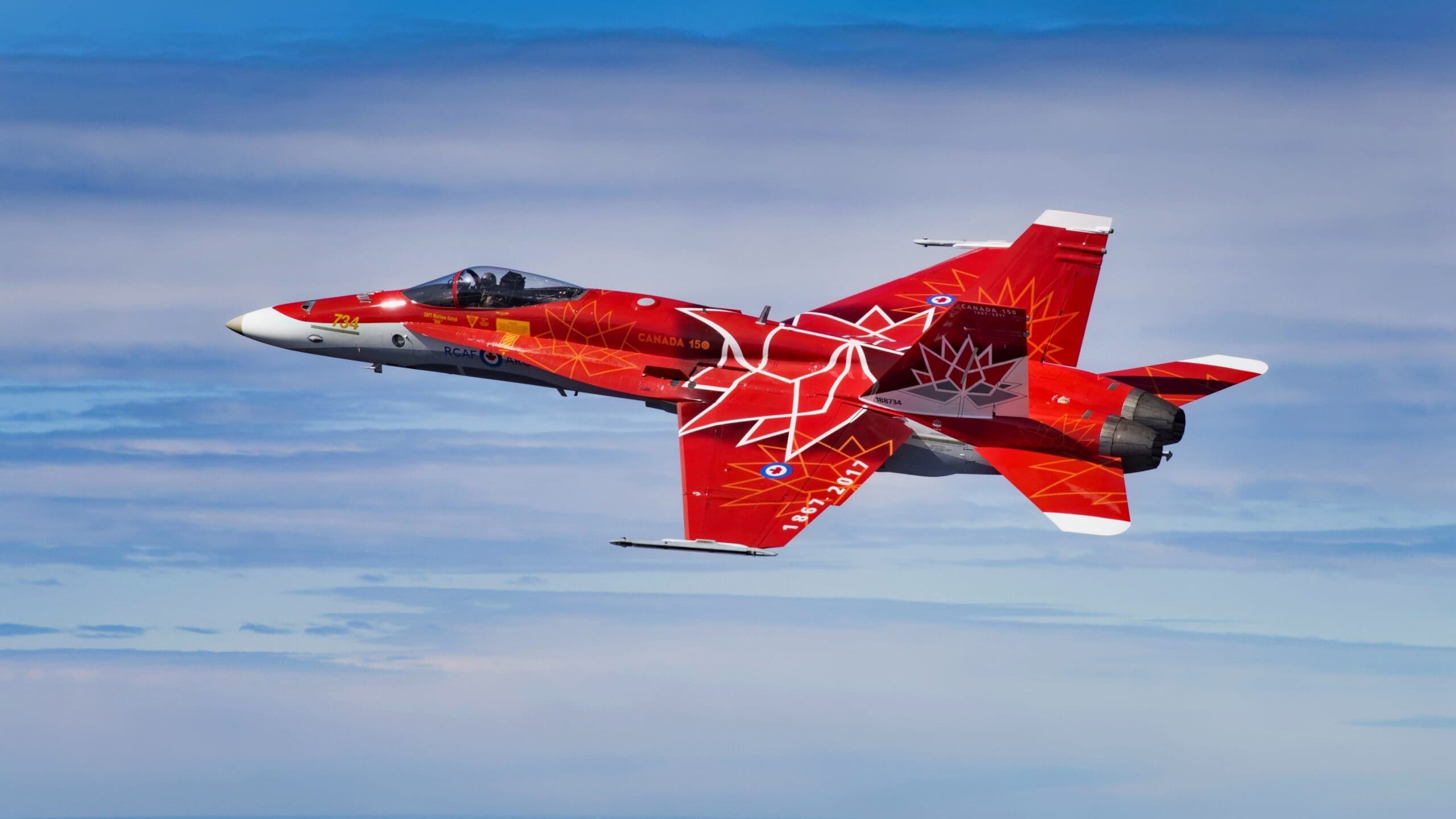
CF-18 Fighter from Canada. Image Credit: Creative Commons.
While the CF-18 version of the Hornet is certainly a battle-proven warbird (ask Billie Flynn), the problem is that it’s getting way too long in the tooth; the Canadian Hornet fleet is 45 old now, and accordingly, a shocking 40 percent of these planes are not in a state of operational readiness, thus leaving six in ten fighters that will actually be fit to fight if World War III were to break out tomorrow.
Ergo, an influx of F-35s and/or JAS 39s would be a welcome relief to the RCAF’s fighter-readiness crisis.
About the Author: Christian D. Orr, Defense Expert
Christian D. Orr is a Senior Defense Editor. He is a former Air Force Security Forces officer, Federal law enforcement officer, and private military contractor (with assignments worked in Iraq, the United Arab Emirates, Kosovo, Japan, Germany, and the Pentagon). Chris holds a B.A. in International Relations from the University of Southern California (USC) and an M.A. in Intelligence Studies (concentration in Terrorism Studies) from American Military University (AMU). He is also the author of the newly published book “Five Decades of a Fabulous Firearm: Celebrating the 50th Anniversary of the Beretta 92 Pistol Series.”