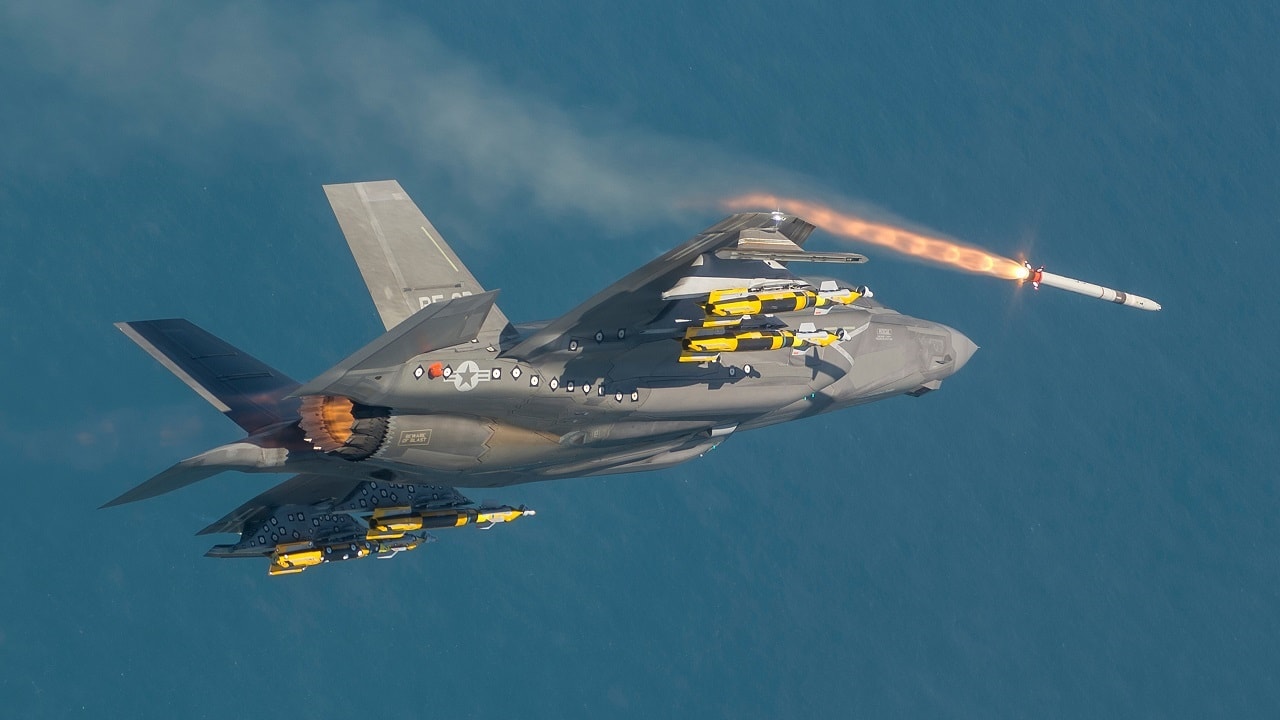
Summary and Key Points: The global fighter jet market is approaching a breaking point, as sustainment costs for advanced U.S. platforms such as the F-35 are growing 11 times faster than in the previous decade.
-With the F-35’s lifetime price tag ballooning to a staggering $2 trillion, even close allies are beginning to view these advanced 5th-generation fighters as “budgetary black holes.”
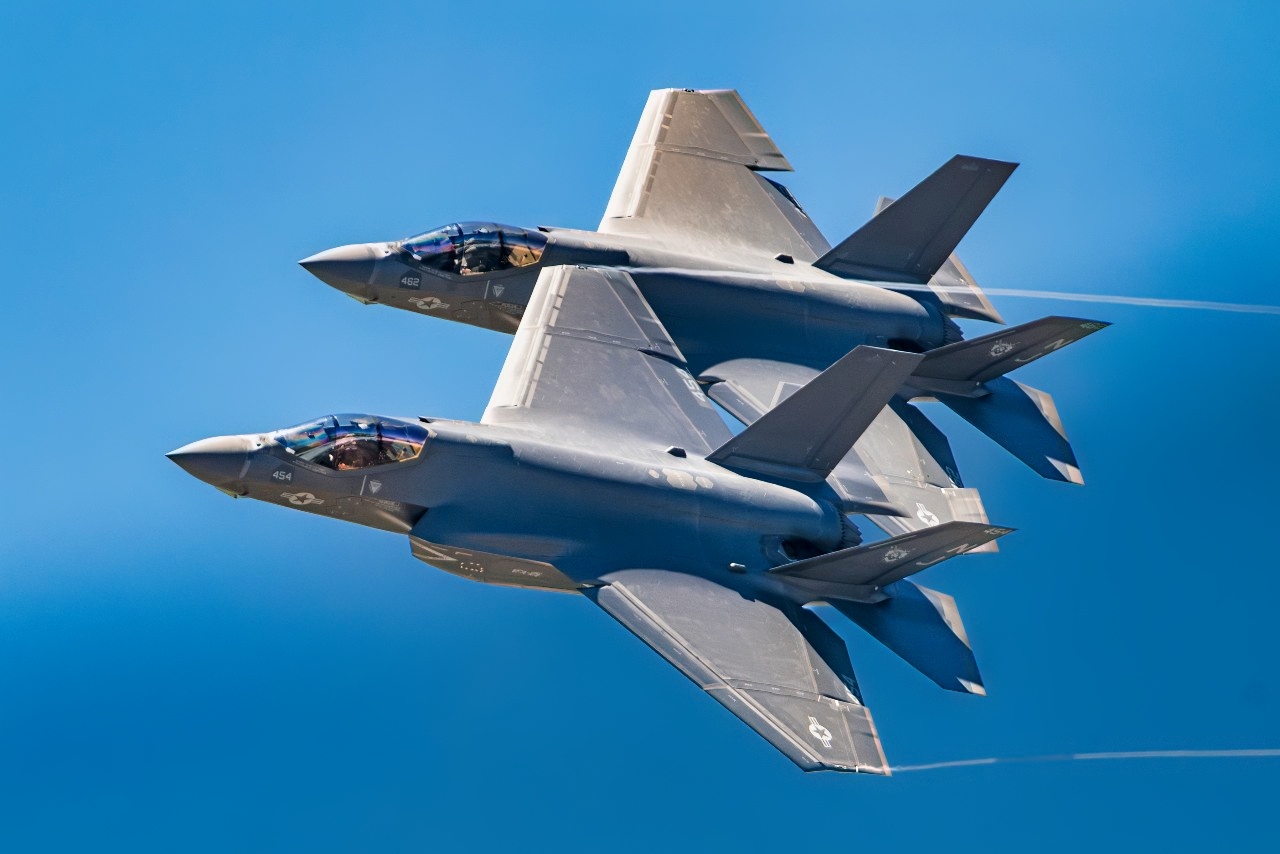
The U.S. Navy F-35C Lighting II Demo Team performs a flight demonstration at the Wings Over South Texas Air Show. This year’s air show marks Wings Over South Texas’s first return to Naval Air Station Corpus Christi since 2019.
This fiscal crisis is driving a massive shift in air power, particularly in Southeast Asia, where nations are abandoning expensive U.S. models and sanctioned Russian spares in favor of South Korea’s affordable, high-performance FA-50.
The End of U.S. Air Dominance? How Budget Crises are Sinking the F-35 Program
Do you think your fighter aircraft’s cost per flight hour is high? It is about to get significantly worse.
The increase is largely driven not by fuel costs or by increased hours flown. It largely reflects a steep rise in sustainment costs for the increasingly advanced and complex designs of the latest US models.
A recent report by the American consulting firm Oliver Wyman projects that global military aircraft spending will increase dramatically over the next decade.
These increases are driven by an annual growth rate in sustainment costs of 1.1 per cent through 2036.
That is an annual cost growth rate about 11 times faster than in the previous decade.
The report’s commentary discusses the costs of US aircraft “soaring” in the coming years. The F-35, which has had its share of troubles with engine deficiencies and delayed software releases, is one of the types projected to become a budgetary black hole.
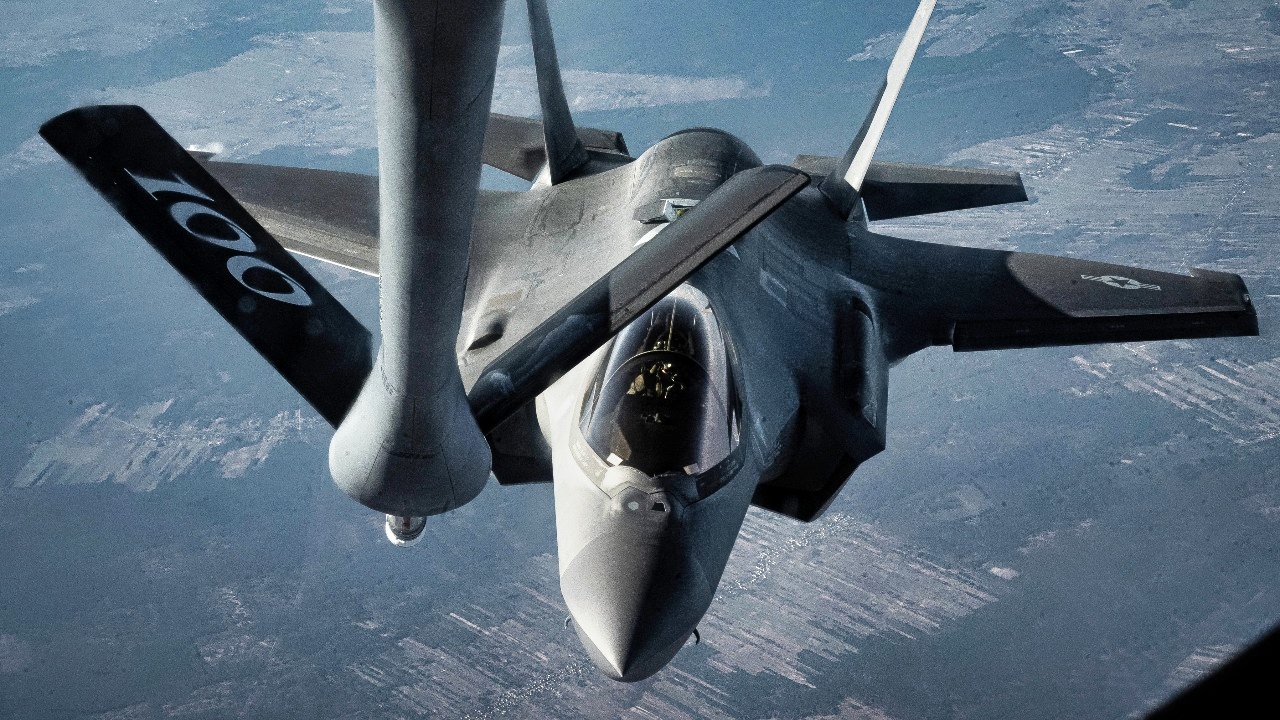
The 388th Fighter Wing’s F-35 Lightning II fifth-generation fighter prepares to receive fuel from a U.S. Air Force Boeing KC-135 Stratotanker attached to the 100th Air Refueling Wing in Eastern European airspace, Feb. 28, 2022. The KC-135 platform is key to enabling U.S. Air Forces in Europe – Air Forces Africa to project credible air power and air operations in concert with NATO allies and partners. (U.S. Air Force photo by Airman 1st Class Edgar Grimaldo)
The report forecasts a spike in deliveries of advanced 4th-generation aircraft, such as the F-16V Block 70/72 and F-15EX, as well as 5th-generation aircraft. It also foresees greater aggregate numbers of aircraft in active service and in inventory worldwide.
“Costs may stabilize in the near-term as older fleets leave service,” while the cost of keeping those systems running decreases, the report reads. “But US costs will continue to rise as replacement aircraft with complex/costly designs enter service in large numbers late in the decade.”
Lighting Still Strikes More Than Once
Despite problems with the program, demand for the F-35 Lightning II Joint Strike Fighter is expected to remain strong. Sales of this aircraft are expected to comprise more than 50 per cent of the fighter market.
A 2024 Government Accountability Office (GAO) report estimated that the program’s lifetime cost would increase to $2 trillion. That is a figure 44 per cent higher than the 2018 projections.
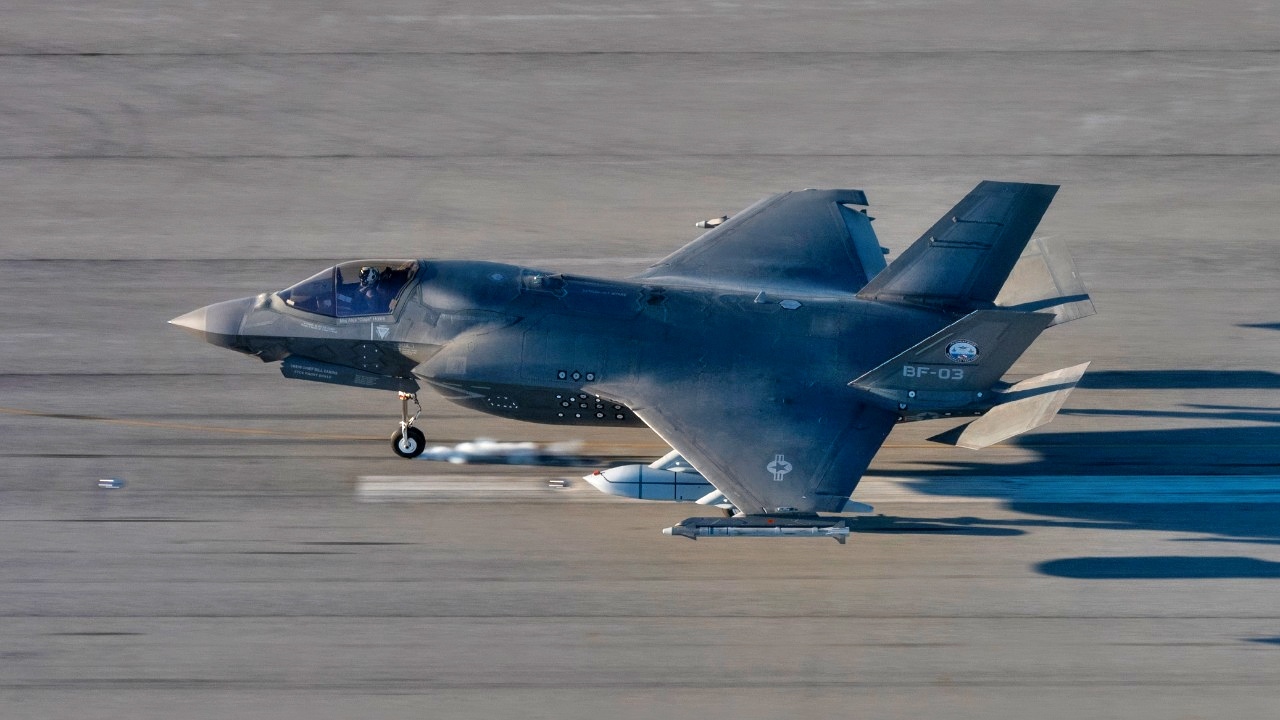
NAS PATUXENT RIVER, Md. — An F-35 Lightning II test pilot conducts the first flight test to certify the F-35B short takeoff and vertical landing variant of the fighter aircraft for carrying the AGM-158C Long-Range Anti-Ship Missile (LRASM). As part of ongoing weapon integration efforts, the Pax River F-35 Integrated Test Force (Pax ITF) team for the first time flew test flights Jan. 14 with two AGM-158 loaded on external stations. LRASM is a defined near-term solution for the Offensive Anti-Surface Warfare (OASuW) air-launch capability gap that will provide flexible, long-range, advanced, anti-surface capability against high-threat maritime targets. The Pax River ITF’s mission is to effectively plan, coordinate, and conduct safe, secure, and efficient flight test for F-35B and C variants, and provide necessary and timely data to support program verification / certification and fleet operational requirements.
The cost increase was attributable to the aircraft’s service life extending beyond the original program plans, compounded by inflation.
Add in the skyrocketing sustainment numbers, and partner nations like Canada begin to look at other options besides F-35.
The military has sought to reduce costs by shortening aircraft flight times, but this is considered self-defeating because it degrades pilot performance.
The cause of the unusually high growth in costs is not just that these newer aircraft are more complicated, have millions of lines of software code, and are about to enter a costly upgrade program.
The other factor is that air forces around the world are buying new aircraft to replace an increasing number of legacy aircraft that are becoming less practical to own and operate.
An in-depth article from last year focused on the replacement trends in Southeast Asia points out that “these [legacy] combat aircraft are increasingly obsolete in the face of high-speed, complex military operations that rely on information technology and networked communications to improve decision-making and combat effectiveness. In response, governments are now seeking more modern fighters to replace their outdated fleets.”
The article continues to discuss how increasing questions about the reliability of the US as a supplier, and Russia’s inability to supply spares and support to its customers due to sanctions stemming from the Ukraine war, are driving customers away. “Acquiring combat aircraft from sources other than Russia and the United States seems to be the trend in Southeast Asia.”
ROK To the Rescue
The Republic of Korea (ROK) is now emerging as a solution and a favoured destination for Southeast Asian states seeking to upgrade their air forces.
The Philippines has an escalating confrontation with the People’s Republic of China over territorial disputes in the South China Sea, as one example, and has already taken steps in this direction.
The Southeast Asian nation is now acquiring 12 additional South Korean FA-50s, which will double its fleet. This acquisition of the newer and more advanced FA-50PH models is a harbinger of events to come, with nations now seeking affordable, non-US options for aircraft that still can use US weapons.
Korea Aerospace Industries (KAI), the FA-50 manufacturer, told the Korea Times this past December that “under the program, the FA-50PH fleet will gain enhanced precision-guided munitions capability, extended operational range, and improved endurance for sustained missions. The upgrades will also strengthen network-based interoperability, enabling more effective joint military operations.”
“We will continue to expand KAI’s presence in the global defense market through customized performance upgrades and systematic follow-on support programs,” an official from the aircraft’s OEM said. The future may be a case of US industry losing sales due to rising costs, which may be the ROK’s gain.
About the Author: Reuben F. Johnson
Reuben F. Johnson has thirty-six years of experience analyzing and reporting on foreign weapons systems, defense technologies, and international arms export policy. Johnson is the Director of Research at the Casimir Pulaski Foundation. He is also a survivor of the Russian invasion of Ukraine in February 2022. He worked for years in the American defense industry as a foreign technology analyst and later as a consultant for the US Department of Defense, the Departments of the Navy and Air Force, and the governments of the United Kingdom and Australia. In 2022-2023, he won two awards in a row for his defense reporting. He holds a bachelor’s degree from DePauw University and a master’s degree from Miami University in Ohio, specializing in Soviet and Russian studies. He lives in Warsaw.